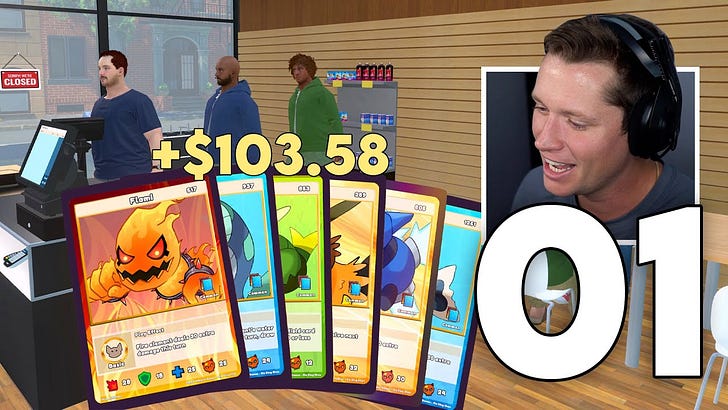
The rapid success of TCG Card Shop Simulator serves as a primary case study for the viability of the "vendor simulator" genre on Steam in 2024. The game, developed by the solo creator OPNeon Games, achieved approximately 400,000 unit sales within its first ten days of release and reached a peak of 38,000 concurrent users. This performance mirrors the earlier 2024 success of Supermarket Simulator, which has sold 2.6 million units to date. These titles demonstrate a growing market for accessible, first-person simulation games that leverage highly repeatable gameplay loops and strong influencer appeal to achieve organic growth.
Key drivers for this success include the strategic application of established simulation mechanics—such as inventory management and store expansion—to trending real-world hobbies like trading card collecting. The game’s popularity is bolstered by a broad range of content creators, as the title is inherently watchable and encourages viewer engagement. Furthermore, the developer utilized a "Prologue" demo to build momentum shortly before the full launch. Data indicates that the game’s player base has a high affinity for other popular simulation titles, including PC Building Simulator and House Flipper, suggesting a dedicated audience for the genre.
The analysis emphasizes that successful game publishing in the current market relies less on traditional marketing efforts and more on portfolio strategy. Effective publishers prioritize deep genre expertise, the identification of undersaturated niches, and the selection of titles with strong, immediate hooks that facilitate long-term streamer engagement. By focusing on gameplay-dense, cost-effective projects, developers and publishers can successfully navigate the competitive Steam landscape and reach a global audience, effectively bypassing the limitations of niche filter bubbles.
The primary objective of this analysis is to quantify the specific number of wishlists required for unreleased titles to appear on Steam’s "Top Wishlists" chart. By examining the mechanics of this high-visibility discovery feature, the research provides developers with a clearer understanding of the threshold necessary to achieve placement on one of the platform's most influential promotional pages.
The scope of the investigation is limited to the Steam ecosystem, focusing on the platform's internal ranking algorithms for unreleased games. While the full dataset is restricted to paid subscribers, the core thesis centers on demystifying the visibility requirements for independent and mid-market developers aiming to leverage Steam’s organic discovery tools. The methodology relies on observing real-time platform data to identify the correlation between total wishlist counts and the resulting rank on the popular wishlist page.
Ultimately, the findings serve as a benchmark for developers to gauge their pre-launch marketing success. By establishing a concrete relationship between wishlist volume and chart placement, the analysis highlights the importance of early community building and visibility strategies. Understanding these metrics allows creators to better forecast their potential reach and adjust their promotional efforts to secure a position on the platform's most competitive discovery charts prior to release.
The success of the tactical RPG Tactical Breach Wizards serves as a case study for effective game discovery in the modern, crowded Steam marketplace. Developed by a three-person team at Suspicious Developments, the title achieved over 100,000 sales within weeks of its August 2024 release. This performance is attributed to a strong conceptual hook—described as "SWAT wizards"—combined with high-quality character art and witty narrative writing. The game’s development spanned five years, with the team prioritizing deep, handcrafted content and iterative design over procedural generation.
Data highlights reveal the importance of pre-launch momentum. The game entered its launch window with 284,002 wishlists, a figure bolstered significantly by a successful showing at Steam Next Fest and a trailer feature in the June 2024 PC Gaming Show. Conversion rates were strong, with a 9.6% one-day conversion and a 16% seven-day conversion. While the game outperformed the developer’s previous title, Heat Signature, in initial sales, the team noted a sharper post-launch decline, which is attributed to the current saturation of the Steam platform rather than a lack of player engagement.
The analysis also covers broader industry shifts, including new Steam store page regulations and tools. Valve recently introduced "Pinned Bundles," allowing developers to customize the order of bundles on their store pages, and set an October 15, 2024, deadline for removing external website links from store pages. These updates reflect Valve’s ongoing efforts to refine discovery and platform management. The report concludes by noting that while Tactical Breach Wizards found success without localization, the broader industry continues to grapple with the necessity of reaching global markets, particularly in Asia, to maximize long-term sales potential.
The Fortnite user-generated content ecosystem is undergoing a subtle but significant shift as developers move beyond traditional player-versus-player shooter mechanics. While the platform’s Creative mode has historically been dominated by standard combat-oriented maps, the emergence of sophisticated, non-combat experiences—specifically roguelike titles—demonstrates a growing maturity in the types of content finding success within the Unreal Editor for Fortnite. This trend suggests that professional game developers are increasingly leveraging the platform to build complex, genre-bending experiences that challenge the long-standing dominance of simple shooter variants.
The rise of titles like Havoc Hotel 2 highlights a departure from the platform's typical engagement models. By prioritizing mechanics rooted in roguelike progression rather than reflexive PvP combat, these creators are capturing player interest through depth and replayability. This evolution mirrors broader industry trends where masocore and niche micro-genres gain traction by offering distinct, high-intensity challenges that stand out in a crowded marketplace. Such developments indicate that the Fortnite creative landscape is becoming a viable space for professional-grade game design rather than just a repository for amateur-built shooter maps.
Despite these emerging successes, the broader Fortnite Creative ecosystem remains in a nascent stage of development. The majority of concurrent user traffic is still heavily concentrated in legacy PvP shooter modes, suggesting that while innovation is occurring, it has yet to fully displace the platform's foundational gameplay loops. The ongoing transition reflects a wider industry movement toward platform-agnostic discovery, where high-quality, specialized gameplay experiences can thrive alongside established blockbusters. As professional developers continue to experiment with the platform's toolsets, the diversity of available content is expected to expand, potentially reshaping player expectations and engagement patterns within the Fortnite environment.
The successful launch of the factory automation game Shapez 2 serves as a case study for effective community-driven development and strategic release planning. Within its first month of Steam Early Access, the title achieved over 260,000 units sold, peaking at 18,800 concurrent players. The game maintained a high median playtime of over seven hours and a notably low 7.7% refund rate, signaling strong player satisfaction and product stability.
The project’s success is attributed to a rigorous, long-term engagement strategy that began years before launch. The development team prioritized community feedback by conducting over 100 surveys, involving players in art style decisions, and utilizing formal playtesting with more than 400 participants to refine onboarding and mechanics. By the time of its August 2024 release, the game had secured 330,000 wishlists, bolstered by a well-received demo and participation in Steam’s themed festivals.
The strategy deliberately avoided heavy reliance on traditional press or paid advertising, focusing instead on organic influencer outreach and community-led virality. The team also optimized revenue through a balanced pricing model, offering a $24.99 base price alongside a $10 "Supporter Edition" for dedicated fans. This approach, combined with a high-quality, bug-free initial build, created a positive feedback loop that sustained sales momentum. Ultimately, the performance of Shapez 2 demonstrates that for niche genres, deep integration with a dedicated player base and a commitment to technical polish can significantly outperform market expectations, even in a saturated digital landscape.
Strategic discounting serves as a primary post-launch discovery tool for video games, particularly within the PC market. While the necessity of discounting is well-established, the optimal duration for these promotional periods remains a critical, under-analyzed variable for developers and publishers. The core inquiry focuses on determining whether a seven-day or fourteen-day discount window yields superior results for visibility and sales conversion.
The analysis emphasizes that discounting is not merely a revenue tactic but a fundamental mechanism for driving player acquisition and maintaining game relevance in a crowded digital marketplace. By leveraging promotional periods, developers can effectively re-engage potential customers and capitalize on platform-specific algorithms that prioritize discounted titles. This approach is essential for sustaining long-term interest in titles beyond their initial release window.
Although specific quantitative data regarding the comparative performance of seven-day versus fourteen-day cycles is restricted to paid subscribers, the overarching industry guidance suggests that developers must move beyond anecdotal evidence to adopt data-driven strategies. By systematically testing discount lengths, studios can better understand consumer behavior and optimize their promotional calendars to maximize both reach and profitability. This focus on duration highlights a broader shift toward precision in digital storefront management, where small adjustments in timing can significantly influence a game’s discovery trajectory and overall commercial performance.
Steam’s recent updates to its cross-promotion policies represent a strategic pivot that favors specialist publishers and developers with cohesive franchises. While Valve initially moved to restrict external links within game descriptions, the platform has introduced new, native tools allowing developers to curate which titles, publishers, or franchises are highlighted on their store pages. This shift enables developers to maintain control over their ecosystem by specifying the sort order and priority of related games, effectively replacing previous, less-regulated promotional methods with a more uniform, platform-integrated approach.
The analysis highlights that this change disproportionately benefits publishers with deep, genre-specific catalogs, such as Hooded Horse, while potentially disadvantaging publishers that utilize fragmented corporate structures or small developers with limited title counts. Beyond cross-promotion, Valve has also introduced enhanced curation tools for DLC, allowing developers to flag specific items as recommended or new, further centralizing promotional control within the Steam interface.
Industry data from August 2024, provided in collaboration with Stream Hatchet, underscores the continued dominance of evergreen titles alongside notable shifts in player interest. Apex Legends saw an 85% increase in hours watched following a seasonal update, while Black Myth: Wukong achieved 41.7 million hours watched outside of China. Additionally, the report examines the long-term performance of the winemaking simulator Hundred Days, which surpassed 100,000 units sold across all platforms since its 2021 release. The data reveals that while Steam accounts for over 50% of paid units, strategic participation in subscription services like PlayStation Plus Extra and Google Stadia Pro played a critical role in the game’s total revenue lifecycle. These findings emphasize the importance of multi-platform distribution and subscription-based revenue models for smaller, niche studios.
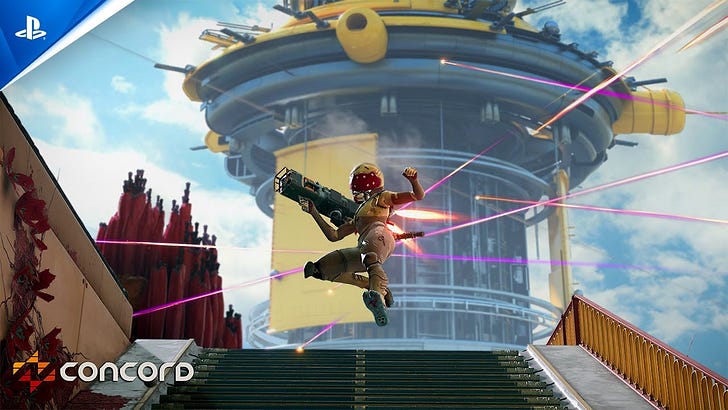
The commercial underperformance of the hero shooter Concord serves as a critical case study for the challenges of game discovery and market saturation in 2024. By contrasting the title’s launch trajectory with the success of previous PlayStation live-service offerings like Helldivers 2, the analysis highlights the increasing difficulty of establishing new intellectual property within the highly competitive multiplayer shooter genre. The failure underscores a broader industry trend where high-budget, premium-priced live-service titles struggle to gain traction against established incumbents and shifting consumer preferences.
The analysis focuses on the intersection of platform-specific performance, specifically examining data from Steam and PlayStation 5 to gauge player engagement and market penetration. By evaluating the disparity between development investment and actual player acquisition, the findings suggest that market visibility and audience resonance are no longer guaranteed by high production values or platform backing. The scope of this inquiry is limited to the contemporary landscape of the PC and console gaming sectors, emphasizing the volatility inherent in the current live-service model.
Ultimately, the situation illustrates that discovery in the modern gaming ecosystem is increasingly dictated by a game's ability to differentiate itself immediately upon release. The lack of sustained interest in Concord points to a market environment where players are less inclined to adopt new, paid multiplayer experiences that do not offer a compelling or unique value proposition compared to existing free-to-play alternatives. These observations provide a sobering perspective on the risks associated with large-scale, premium-priced multiplayer projects in an era defined by intense competition for limited player attention.
The success of the idle-farming simulator Rusty’s Retirement provides a compelling case study in how unique design hooks and strategic release timing can drive significant commercial performance. Since its launch in late April 2024, the title has sold over 330,000 copies on Steam. The game’s primary differentiator is its "idle-farming" concept, which allows players to manage a farm in a window at the bottom of their screen while performing other tasks. This low-stress, multitasking-friendly design, combined with a $7 price point, successfully bridged the gap between casual idle games and more complex farming simulators.
Key performance data highlights the importance of platform-specific events and community engagement. The game achieved an initial surge of approximately 20,000 units sold per day during its first five days, bolstered by its alignment with the Steam Farming Fest. Additionally, the developer utilized a $4 "Supporter Pack" DLC, which achieved an 11% attach rate and contributed over $111,000 in additional revenue. International reach was also a significant factor, with 26% of sales originating from China, followed by Japan, Korea, and Taiwan.
The methodology behind this success involved a combination of social media promotion—specifically via Twitter, Instagram, and TikTok—and the integration of Twitch-friendly features that allowed viewers to interact with the game. Despite the challenges of tracking engagement for a game that often runs in the background, the developer maintained consistent sales through strategic discounting during seasonal sales. Ultimately, the game demonstrates that a well-executed, niche-filling gimmick, paired with accessible gameplay and smart pricing, can achieve substantial market penetration for independent developers.
The breakout success of the action RPG Black Myth: Wukong serves as a primary case study for analyzing modern game discovery and market performance. The central thesis examines the factors behind the title’s unprecedented engagement, specifically focusing on its record-breaking performance on the Steam platform. By evaluating regional player distribution and concurrent user data, the analysis seeks to demystify the mechanics of a global gaming phenomenon that has captured significant industry attention.
The most notable data point is the game’s peak performance, which reached over 2.35 million concurrent users on Steam. This figure underscores the title's massive reach and highlights the importance of regional market dynamics in driving such high-volume engagement. The analysis emphasizes that understanding the geographic split of the player base is essential for contextualizing the game's success, as regional interest has become a focal point for industry observers and analysts alike.
The scope of this investigation is limited to the immediate post-launch period in August 2024, focusing on the PC gaming segment via the Steam ecosystem. The methodology relies on a combination of verified platform data and proprietary estimates to map out the player demographics and regional trends. By synthesizing these metrics, the analysis provides a professional overview of how a high-profile, culturally specific title can achieve massive, record-setting scale in a globalized digital marketplace.
The narrative game The Operator, developed by Bureau 81, achieved significant commercial success by selling nearly 50,000 units on Steam within its first month of release in July 2024. This performance highlights a successful model for small-scale developers in a saturated market, driven by a combination of high-concept design, strategic localization, and effective influencer engagement. The game’s core appeal centers on a "fake OS" mechanic that allows players to simulate investigative work, tapping into a popular interest in conspiracy-themed narratives and immersive, deduction-based gameplay.
Key factors contributing to this success include the game's ability to attract prominent streamers, which generated organic word-of-mouth momentum. Furthermore, the developer prioritized comprehensive localization at launch, translating the 30,000-word script into multiple languages. This investment proved vital for a text-heavy title, with France alone accounting for 20% of total sales due to targeted local promotion and streamer outreach. Despite the game’s relatively short 3-4 hour runtime and linear structure, its high quality and immersive voice acting resulted in a 93% positive review rating on Steam, effectively mitigating potential player concerns regarding length.
Beyond this specific case study, the broader industry analysis suggests that the role of game demos has shifted from a "try before you buy" tool to a primary driver of pre-release publicity. While demos can significantly boost visibility during events like Steam Next Fest, the long-term utility of keeping a demo live post-release remains debated. Developers are encouraged to monitor page traffic and conversion data empirically to determine if a permanent demo aids discovery or inadvertently cannibalizes full-game sales.
Steam has recently implemented a series of rapid, significant updates to its platform, signaling a shift in how games are surfaced and promoted to users. These changes, characterized by a sudden flurry of platform-side activity, focus on refining discovery mechanisms and cross-promotional capabilities. While the platform has not issued a formal, comprehensive announcement detailing every adjustment, the modifications represent a notable evolution in Steam’s algorithmic and interface strategies for game visibility.
The primary objective of these updates is to optimize the New and Trending sections, which serve as critical drivers for game discovery. By adjusting how titles are highlighted, Steam aims to improve the efficiency of its storefront, ensuring that new releases gain appropriate traction. These adjustments reflect a broader, ongoing effort by the platform to manage the high volume of content being released and to provide developers with more effective tools for reaching their target audiences.
These developments underscore the dynamic nature of the PC gaming market, where platform-level changes directly impact the commercial viability of individual titles. By streamlining discovery and enhancing cross-promotional features, the platform is attempting to balance the needs of a crowded marketplace with the user experience of its global player base. These shifts are particularly relevant for developers and publishers who rely on organic discovery to drive sales, as even minor adjustments to the storefront’s architecture can lead to significant fluctuations in visibility and revenue. The current trajectory suggests that Steam will continue to iterate on its discovery algorithms to maintain its position as the dominant distribution channel for PC games.