Gamecity Hamburg
Association402 documents
Documents
Article
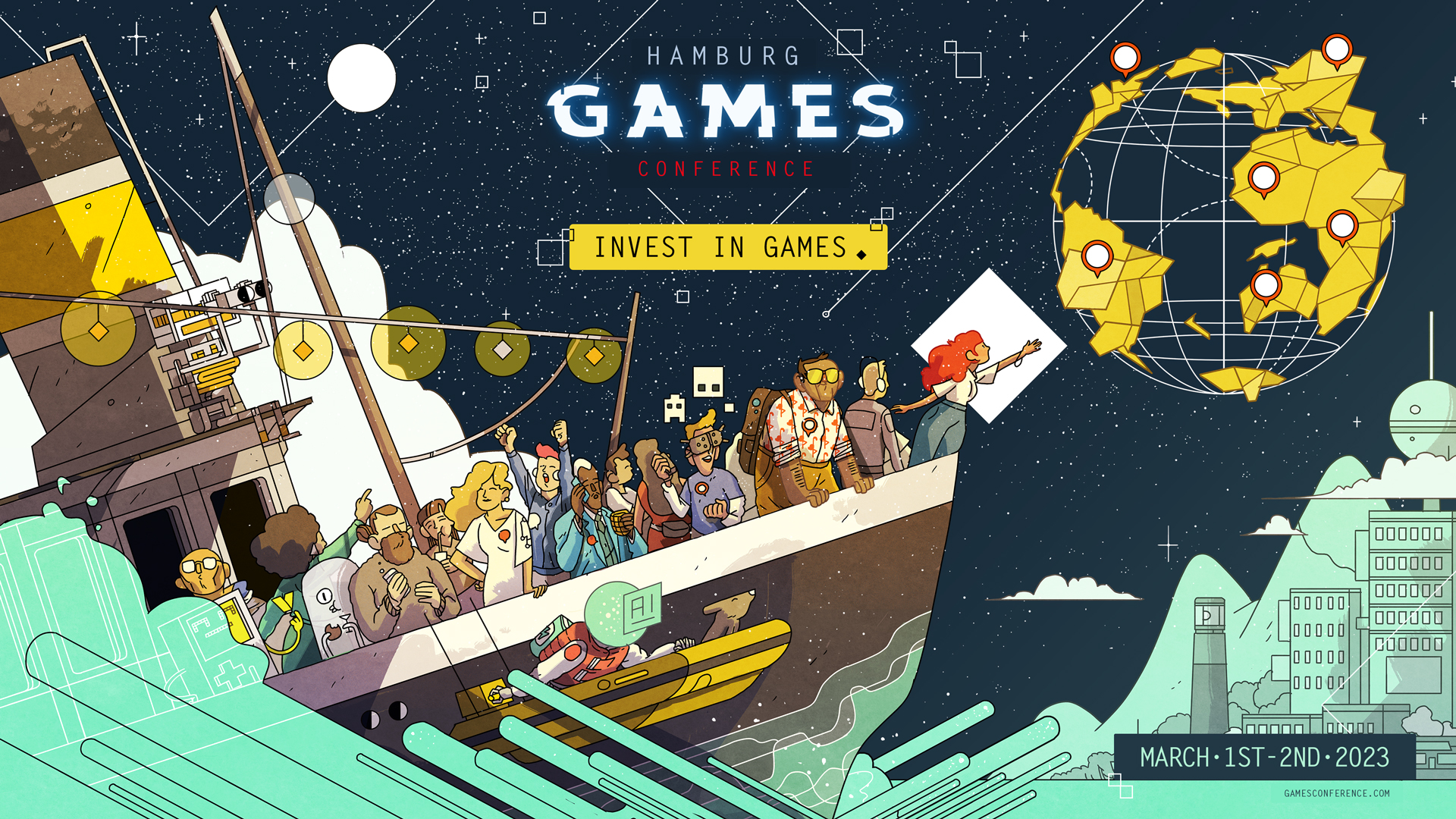
Hamburg Games Conference 2023: First Speakers Announced
The Hamburg Games Conference 2023, scheduled for March 1 and 2, 2023, at the Altonaer Museum in Hamburg, marks a return to an in-person format following two years of hybrid and digital events. The primary objective of the conference is to facilitate knowledge exchange regarding the financial and operational aspects of the games industry, centered around the theme Invest in Games. The event aims to provide attendees with professional insights into investment strategies, mergers and acquisitions, and best practices for studio growth and sustainability.
The conference program is divided into two main tracks. The first track, Invest in Games, features industry experts from organizations such as Kolibri Games, DDM, Modern Times Group, Rockfish Games, Endava, and Exit Games. These speakers address critical topics including successful M&A strategies, self-funding models, and the navigation of investment disasters. The second track focuses on practical industry concerns, including funding, game development, and start-up management, with contributions from leaders at FemDevMeetup, Bippinbits, and Overhype Studios.
The event serves as a networking hub for the international games industry, offering opportunities for developers, founders, and investors to connect. Early bird ticket pricing was made available through January 12, 2023, with additional concessions provided for students and start-ups. Furthermore, the organizers issued a call for papers, inviting industry professionals to submit proposals for additional talks and presentations to further enrich the conference agenda.
- The Hamburg Games Conference 2023 will take place in-person on March 1 and 2, 2023, at the Altonaer Museum, returning to a physical format after two years of digital and hybrid events.
- The conference is centered on the theme 'Invest in Games,' focusing on financial and operational industry aspects such as investment strategies, mergers and acquisitions, and studio sustainability.
- The 'Invest in Games' track features expertise from organizations including Kolibri Games, DDM, Modern Times Group, Rockfish Games, Endava, and Exit Games, covering topics like M&A strategies and self-funding models.
- A second conference track addresses practical operational concerns, including game development and start-up management, with contributions from FemDevMeetup, Bippinbits, and Overhype Studios.
- The event serves as an international networking hub for developers, founders, and investors, with early bird ticket pricing available until January 12, 2023.
Gamecity Hamburg
Article
Goodgame Studios Achieves One Billion with Empire
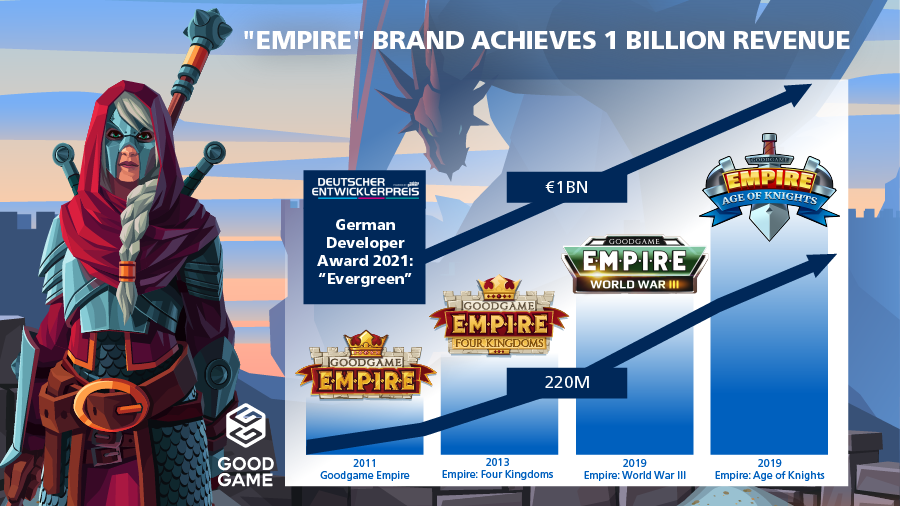
Goodgame Studios has achieved a significant financial milestone, surpassing one billion euros in lifetime revenue with its Empire franchise. This accomplishment highlights the enduring commercial viability of the series, which originated in 2011 with the browser-based title Goodgame Empire. The franchise has since expanded to include three mobile spin-offs, collectively attracting over 220 million registered users.
The success of the Empire series is attributed to the studio's long-term commitment to consistent content updates and high-quality production standards. This dedication was formally recognized in 2021 when the original browser game received an Evergreen award at the German Developer Awards, acknowledging its sustained relevance a decade after its initial launch.
This revenue benchmark positions Goodgame Studios as the second Hamburg-based game company to reach the one-billion-euro threshold, following a similar achievement by InnoGames in 2019. Leadership at the studio credits this performance to a combination of persistent innovation, specialized industry expertise, and the collective efforts of its development teams. The milestone underscores the studio's ability to maintain a competitive international brand within the global gaming market.
- Goodgame Studios' Empire franchise has surpassed one billion euros in total lifetime revenue since its 2011 launch.
- The franchise has expanded from its original browser-based title to include three mobile spin-offs, accumulating over 220 million registered users.
- Goodgame Studios is the second Hamburg-based gaming company to reach the one-billion-euro revenue milestone, following InnoGames' achievement in 2019.
- The original Goodgame Empire browser game received an Evergreen award at the 2021 German Developer Awards for its decade of sustained market relevance.
- The studio attributes its long-term commercial success to consistent content updates, high production standards, and persistent innovation.
+2
Gamecity Hamburg
Article
Federal Games Funding: Germany
The German federal government initiated a new funding cycle for the video game industry effective January 1, 2023, allocating 20 million euros to support domestic developers and studios. This program operates on a first-come, first-served basis, incentivizing timely applications from eligible companies maintaining headquarters or branches within Germany. The initiative aims to bolster the national games sector by providing non-repayable grants for both prototype development and full-scale production.
To qualify for these funds, projects must satisfy specific financial and cultural criteria. Prototype development requires costs between 30,000 and 400,000 euros, while production funding is reserved for projects with development costs exceeding 100,000 euros. Additionally, all applicants must pass a mandatory cultural test regarding game content and background to ensure alignment with European Commission standards. The funding covers up to 50 percent of eligible development costs.
The German Aerospace Center (DLR) serves as the project management organization, overseeing the application process and providing mandatory consultation services to interested studios. By establishing clear minimum criteria and a structured application framework, the program seeks to provide greater financial predictability for German game developers. This federal effort represents a significant commitment to sustaining the growth and competitiveness of the German games industry through direct public investment.
- The German federal government has allocated 20 million euros for a new video game funding cycle that began on January 1, 2023.
- The program provides non-repayable grants covering up to 50 percent of eligible development costs for domestic studios.
- Prototype funding is available for projects costing between 30,000 and 400,000 euros, while production funding requires development costs exceeding 100,000 euros.
- Applicants must pass a mandatory cultural test to ensure project alignment with European Commission standards.
- Funding is distributed on a first-come, first-served basis to eligible companies with headquarters or branches located in Germany.
Gamecity Hamburg
Article
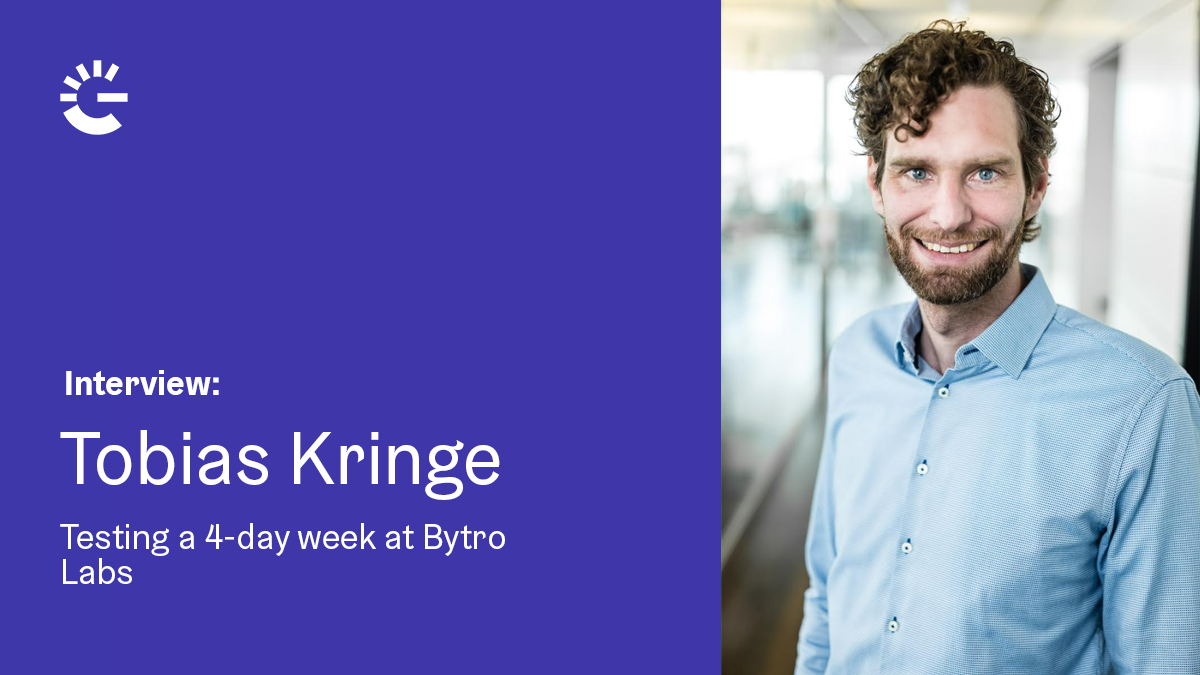
Bytro Labs Tests 4-Day Week: Interview with Tobias Kringe
Bytro Labs, a Hamburg-based game studio with over 70 employees, initiated a three-month trial of a four-day work week from October to December 2022. The primary objective of this experiment was to foster a healthier, more productive work environment while evaluating whether reduced working hours could be offset by increased efficiency, higher work quality, and improved employee retention. The studio sought to determine if a results-oriented culture could maintain or exceed existing output levels without the traditional five-day structure.
The methodology relied on a decentralized, results-first approach rather than rigid scheduling. To ensure success, the company encouraged employees to minimize distractions, prioritize high-impact tasks, and limit meeting participation to essential contributions. While the trial allowed for significant flexibility—with some staff choosing to spread tasks across the week or weekend—the studio maintained a clear benchmark for success: no loss in overall productivity or output. Challenges identified during the process included managing team support on Fridays and ensuring equitable distribution of flexibility across different roles.
The initiative reflects a broader shift within the games industry, where studios are increasingly exploring flexible models to combat the sector's reputation for excessive crunch. By prioritizing employee well-being and autonomy, Bytro Labs aimed to enhance its competitive edge in talent acquisition and retention. The studio concluded that even if a strict four-day model is not permanently adopted, the emphasis on flexibility and output-based management represents a sustainable evolution for modern game development, particularly for companies operating long-term, live-service titles.
- Bytro Labs, a Hamburg-based studio with over 70 employees, conducted a three-month trial of a four-day work week from October to December 2022.
- The primary goal of the trial was to evaluate whether reduced working hours could be offset by increased efficiency, higher work quality, and improved employee retention.
- The studio utilized a decentralized, results-first management approach that required employees to minimize distractions, prioritize high-impact tasks, and limit meeting participation.
- Bytro Labs set a clear performance benchmark for the experiment, requiring that there be no loss in overall productivity or output compared to the traditional five-day structure.
- Key operational challenges identified during the trial included maintaining team support coverage on Fridays and ensuring the equitable distribution of flexibility across different roles.
Gamecity Hamburg
Article
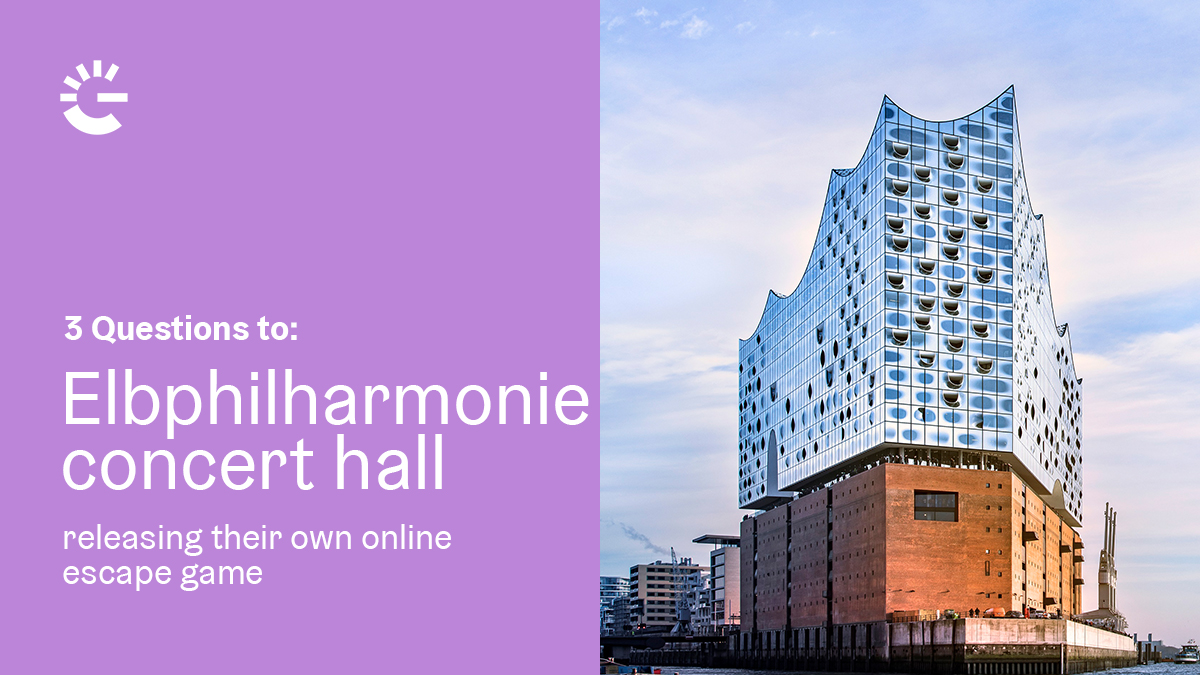
Three Questions to: Elbphilharmonie Concert Hall About Their New Online Escape Game
The Elbphilharmonie concert hall in Hamburg has expanded its digital outreach by launching a free, browser-based online escape game. Developed in collaboration with the local digital agency Pop Rocket Labs, the project aims to provide audiences with an interactive, behind-the-scenes perspective on the complex logistics and teamwork required to stage live musical performances. By gamifying the concert preparation process, the institution seeks to engage both existing fans and new audiences who may not be traditional classical music enthusiasts.
The game, which takes approximately 45 minutes to complete, challenges players to solve puzzles to save a concert from various backstage mishaps. It is accessible via laptop or tablet in both German and English. As an incentive for completion, participants receive a 20% discount code for tickets to live performances at the venue. The project originated from a desire to maintain cultural engagement following the COVID-19 pandemic and serves as a case study in interdisciplinary collaboration between a traditional cultural institution and the professional game development sector.
The initiative highlights the growing intersection between classical arts and digital entertainment. Beyond the game itself, the Elbphilharmonie continues to bridge these worlds by curating programming that appeals to gaming audiences, such as live orchestral performances of film and game soundtracks. This effort reflects a broader strategy to modernize the concert hall's brand identity and leverage digital tools to make its physical space more tangible and accessible to a diverse, tech-savvy demographic.
- The Elbphilharmonie concert hall launched a free, browser-based escape game developed with Pop Rocket Labs to provide an interactive, behind-the-scenes look at concert logistics.
- The 45-minute game serves as a lead-generation tool, offering players a 20% discount code for live performance tickets upon completion.
- The project is part of a broader strategy to modernize the venue's brand identity and attract non-traditional audiences, including tech-savvy demographics and gaming enthusiasts.
- The initiative originated from a post-COVID-19 effort to maintain cultural engagement through digital outreach and interdisciplinary collaboration.
- The game is accessible via laptop or tablet and supports both German and English languages.
+1
Gamecity Hamburg
Article
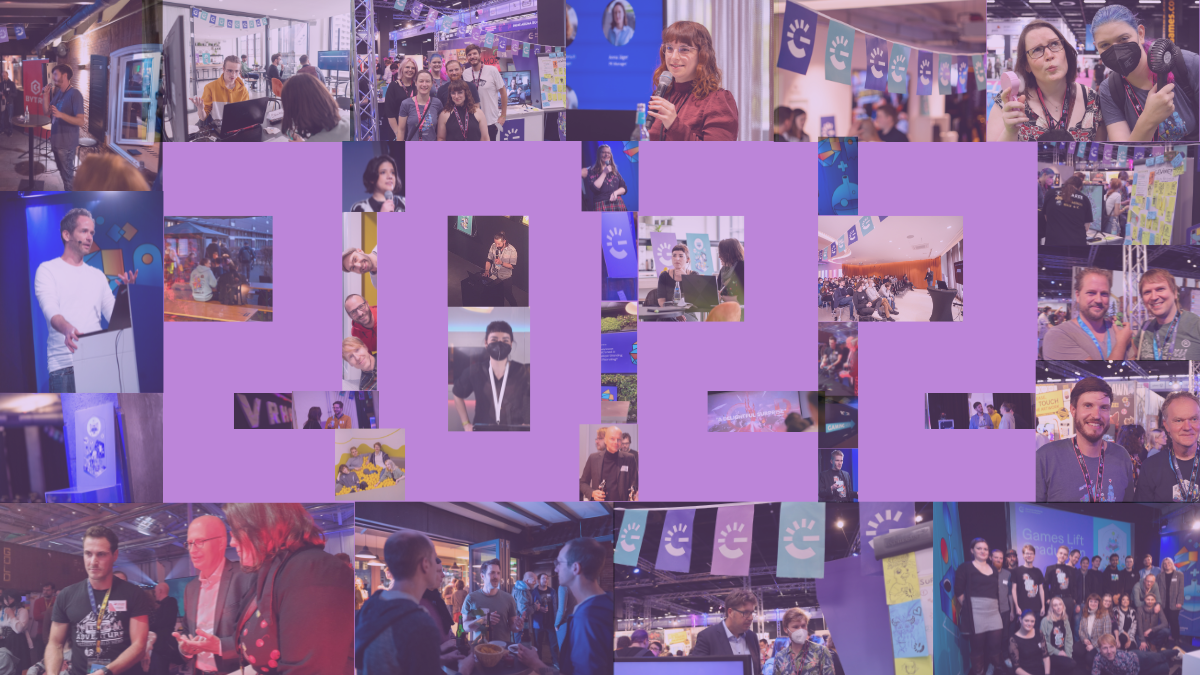
Gamecity Hamburg 2022 in Review
The 2022 review for Gamecity Hamburg highlights a pivotal year of recovery and growth for the local games industry, marked by the return of in-person events and the continued expansion of regional support programs. The primary objective of the organization remains the cultivation of Hamburg’s gaming ecosystem through strategic networking, financial backing, and professional development initiatives. By facilitating connections between industry leaders, local government, and emerging talent, the initiative aims to solidify Hamburg’s position as a premier hub for game development in Germany.
Key activities in 2022 included the successful return of the hybrid Hamburg Games Conference, which hosted over 600 international guests, and the launch of new event formats such as the Pitch Level Up, which provided 1:1 feedback sessions for over 20 development teams. Financial support remained a cornerstone of the organization’s efforts, with 398,000 euros distributed to six projects through the Prototype Funding program. Additionally, the Games Lift Incubator supported five teams with funding, expert mentorship, and professional development, culminating in a graduation showcase.
The scope of these efforts encompasses the entire Hamburg games sector, ranging from indie studios and student developers to established industry leaders. The organization utilized a mix of physical trade fair presence—notably at gamescom and the inaugural Polaris Convention—and ongoing digital knowledge-sharing series to maintain industry engagement. As the organization looks toward its 20th anniversary in 2023, the focus remains on sustaining this momentum through continued investment in local talent and the promotion of Hamburg as a center for innovation and professional collaboration.
- Gamecity Hamburg distributed 398,000 euros in Prototype Funding to six specific game development projects in 2022.
- The Games Lift Incubator provided funding, mentorship, and professional development to five development teams.
- The Hamburg Games Conference returned as a hybrid event, attracting over 600 international attendees.
- The Pitch Level Up program was launched to provide 1:1 feedback sessions for more than 20 development teams.
- The organization maintained industry presence through physical trade fairs, including gamescom and the inaugural Polaris Convention.
Gamecity Hamburg
Article
3 Years of Games Lift: Getting Better with Age
The Games Lift Incubator, an initiative by Gamecity Hamburg, serves as a developmental hub for independent game studios in Germany. Established in 2020, the program aims to bridge the gap between creative game development and professional business operations. By providing financial support, expert mentorship, and structured workshops, the incubator assists early-stage teams in refining their concepts, securing publisher interest, and navigating the complexities of founding a company.
Over its first three years, the program has evolved by incorporating feedback from participants to refine its curriculum and support services. The incubator’s impact is evidenced by the tangible progress of its alumni, many of whom have successfully transitioned from concept development to producing marketable prototypes, securing additional funding, and establishing formal business entities. Notable outcomes include teams gaining increased market visibility, negotiating with publishers, and successfully applying for further industry-specific grants, such as prototype funding.
The program relies on a network of over 50 experts, mentors, and instructors who provide specialized guidance on topics ranging from marketing and branding to technical development. This collaborative environment fosters professional growth, with participants frequently citing the program as a catalyst for their increased confidence and project viability. As the incubator prepares for future iterations, it continues to emphasize a flexible, participant-centered approach, ensuring that the support provided remains aligned with the shifting needs of the German games industry.
- Established in 2020 by Gamecity Hamburg, the Games Lift Incubator supports early-stage independent game studios in Germany by bridging the gap between creative development and business operations.
- The program utilizes a network of over 50 experts and mentors to provide specialized guidance on business topics including marketing, branding, and technical development.
- Participants receive financial support, structured workshops, and mentorship to help transition from initial concepts to marketable prototypes and formal business entities.
- Alumni outcomes include increased market visibility, successful negotiations with publishers, and the acquisition of additional industry-specific grants such as prototype funding.
- The incubator has refined its curriculum and services over its first three years by incorporating direct feedback from participating teams.
Gamecity Hamburg
Article
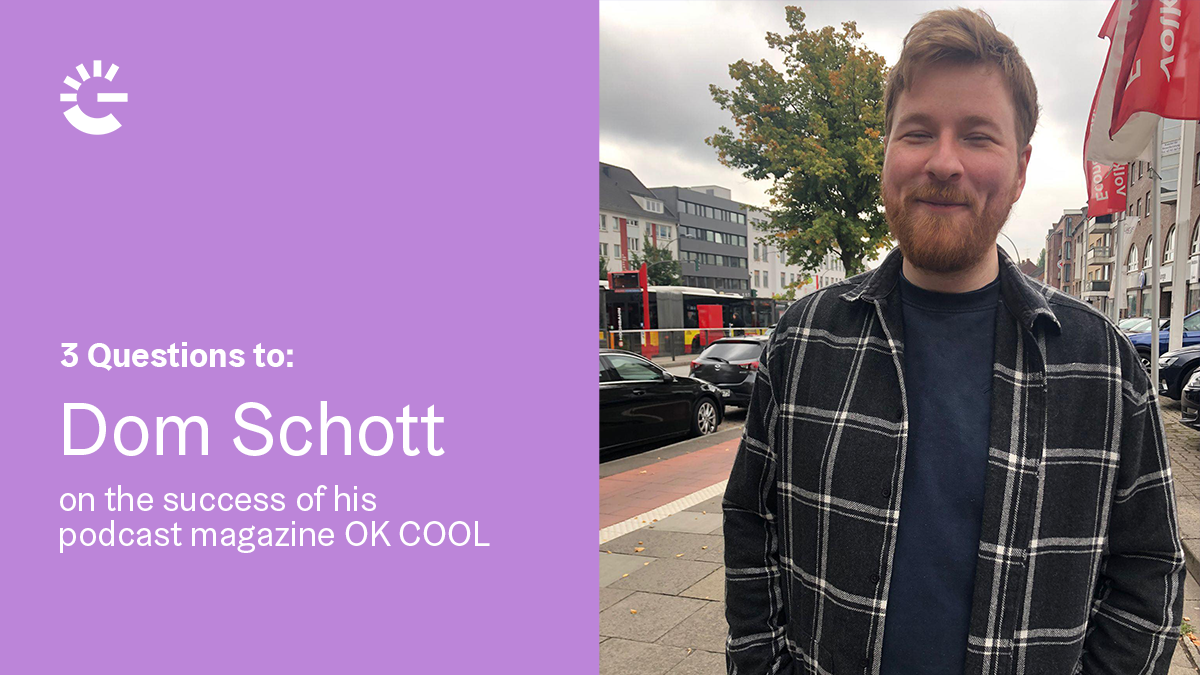
Three Questions to: Dom Schott, Creator of the Podcast OK COOL
The podcast OK COOL, created by freelance journalist Dom Schott, serves as an alternative platform within the German games journalism landscape. Established in 2019, the outlet prioritizes long-form storytelling and human-centric narratives over traditional metrics such as review scores, technical specifications, or game length. By focusing on the individuals behind game development and addressing systemic industry issues—including working conditions, crunch, and social themes like colonialism and racism—the project seeks to foster more profound, nuanced discussions about the medium.
The initiative has transitioned from a personal collection of freelance work into a collaborative endeavor, recently expanding its team to include additional contributors supported by a growing community of subscribers. This growth reflects a broader ambition to challenge the limitations of established media outlets, which are often perceived as constrained by industry ties or commercial pressures. The project aims to increase audience empathy for developers while shedding light on the realities of the production process.
Operating within the German games industry, the project also provides a unique perspective on regional development hubs. Observations highlight a distinction between the Berlin and Hamburg scenes, noting that while Berlin maintains a larger, more established network, the Hamburg industry is currently in a dynamic phase of identity formation and network building. By documenting these shifts and prioritizing critical, human-focused reporting, the outlet aims to elevate the standard of discourse surrounding the German games sector and the people who drive it.
- Founded in 2019, the OK COOL podcast serves as a German-based alternative to traditional games journalism by prioritizing long-form, human-centric storytelling over metrics like review scores and technical specs.
- The platform focuses on systemic industry issues such as crunch, working conditions, and social themes like racism and colonialism to foster nuanced discourse.
- OK COOL has evolved from a solo freelance project into a collaborative team supported by a growing community of subscribers.
- The outlet aims to challenge the limitations of established media by operating independently of the commercial pressures and industry ties that often constrain traditional outlets.
- The project provides regional insights into the German games industry, noting that Berlin maintains a large, established network while the Hamburg scene is currently in a phase of identity formation and network building.
Gamecity Hamburg
Article
School Internship Games January 2023: Hamburg
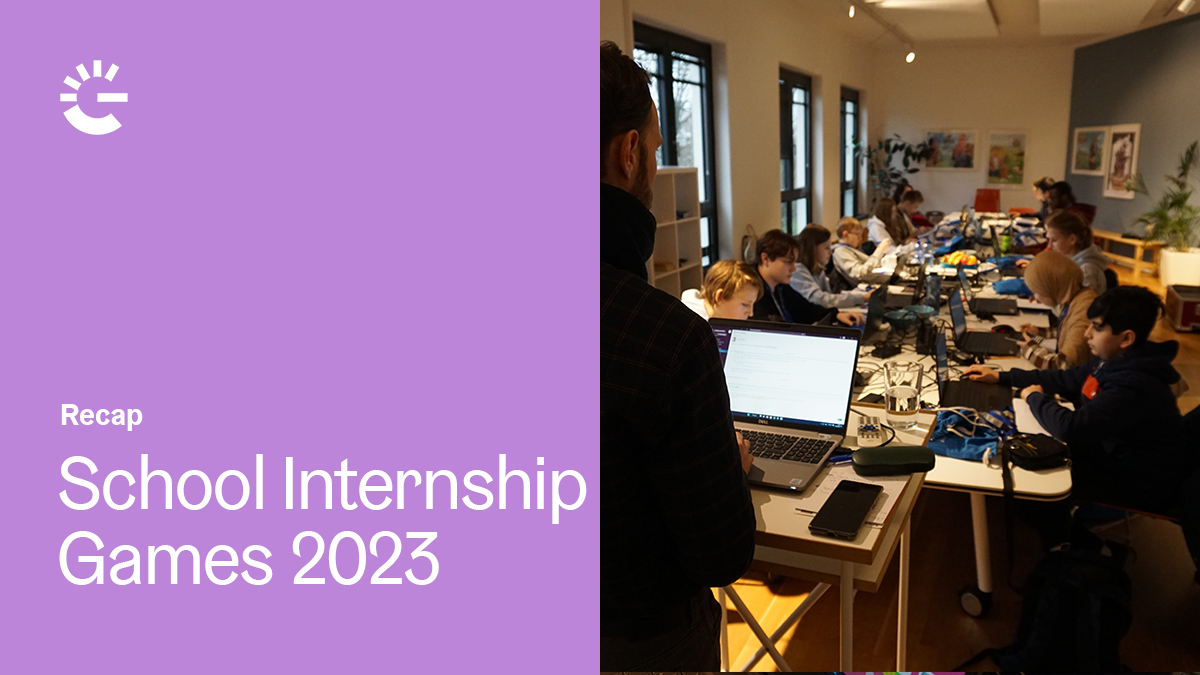
The School Internship Games program, held in January 2023, serves as a strategic educational initiative designed to introduce 9th-grade students to the professional landscape of the games industry. By facilitating direct engagement between students and established studios, the program aims to provide a realistic overview of diverse career paths, including game design, art, development, data analysis, and sound design.
During the three-week initiative, 16 students participated in hands-on workshops hosted at InnoGames, Fishlabs, Goodgame Studios, and the HAW Hamburg University of Applied Sciences. The curriculum emphasized practical skill acquisition, requiring participants to develop their own games and build professional portfolios. Media educators from the Initiative Creative Gaming provided continuous support throughout the program, which concluded with a final presentation where students showcased their completed projects.
This collaborative effort involves a partnership between Hamburg-based games companies, the regional chapter of the industry association game, HAW Hamburg, and the Initiative Creative Gaming. Since its inception in 2021, the program has successfully completed three iterations, consistently focusing on fostering local talent and bridging the gap between secondary education and the professional gaming sector. Future sessions are planned to continue this outreach, with further details managed through the program’s dedicated digital channels.
- The School Internship Games program, active since 2021, provides 9th-grade students with three-week internships to introduce them to professional roles in game design, art, development, data analysis, and sound design.
- The January 2023 iteration hosted 16 students for hands-on workshops at InnoGames, Fishlabs, Goodgame Studios, and HAW Hamburg University of Applied Sciences.
- Participants are required to develop their own games and build professional portfolios, with continuous support provided by media educators from the Initiative Creative Gaming.
- The program is a collaborative partnership between Hamburg-based game companies, the regional industry association 'game', HAW Hamburg, and the Initiative Creative Gaming.
- The initiative has successfully completed three iterations since its inception, with future sessions planned to continue fostering local talent and bridging the gap between secondary education and the industry.
Gamecity Hamburg
Article
Hamburg Games Conference 2023: 30+ Speakers, Panels, Networking and More
The Hamburg Games Conference 2023, held on March 1 and 2 at the Altonaer Museum, served as a central hub for the German and international games industry to address critical topics in investment, development, and marketing. The event featured over 30 speakers across two primary tracks: a main track focused on the "Invest in Games" theme and a secondary track dedicated to funding, development, and marketing strategies.
Key sessions included insights into the long-term sustainability of independent studios, analysis of recent mergers and acquisitions within the games market, and discussions on industry-wide challenges such as salary transparency. The program also incorporated practical professional development, such as a workshop on crafting equity stories for investors and a "Pitch Royal" competition, which provided indie developers the opportunity to present projects to a jury of publishers for a chance to secure a spot at the gamescom Indie Arena Booth.
The conference emphasized networking and business development, utilizing the MeetToMatch platform to facilitate professional connections. By bringing together diverse stakeholders—including investment firms, independent studios, and industry consultants—the event aimed to foster knowledge exchange and growth within the sector. The gathering functioned as a comprehensive forum for navigating current market trends and strengthening the collaborative ecosystem of the global games industry.
- The Hamburg Games Conference 2023, held March 1–2 at the Altonaer Museum, convened over 30 speakers to address investment, development, and marketing strategies for the global games industry.
- The event featured two primary tracks: a main track focused on 'Invest in Games' and a secondary track dedicated to funding, development, and marketing.
- Key industry discussions centered on the long-term sustainability of independent studios, recent market mergers and acquisitions, and the implementation of salary transparency.
- Practical professional development included a workshop on crafting equity stories for investors and the 'Pitch Royal' competition, which offered indie developers a chance to secure a spot at the gamescom Indie Arena Booth.
- The conference utilized the MeetToMatch platform to facilitate professional networking and business development between investment firms, independent studios, and industry consultants.
Gamecity Hamburg
Article
Meet the Road to Hamburg Games Conference Indie Teams: 2023
The "Road to Hamburg Games Conference" initiative serves to bolster the local independent game development sector by providing Hamburg-based studios with professional exposure at major industry events. The primary objective of the program is to facilitate business growth by offering selected indie teams free-of-charge exhibition space, enabling them to showcase their projects, network with industry stakeholders, and pursue potential investment or publishing deals.
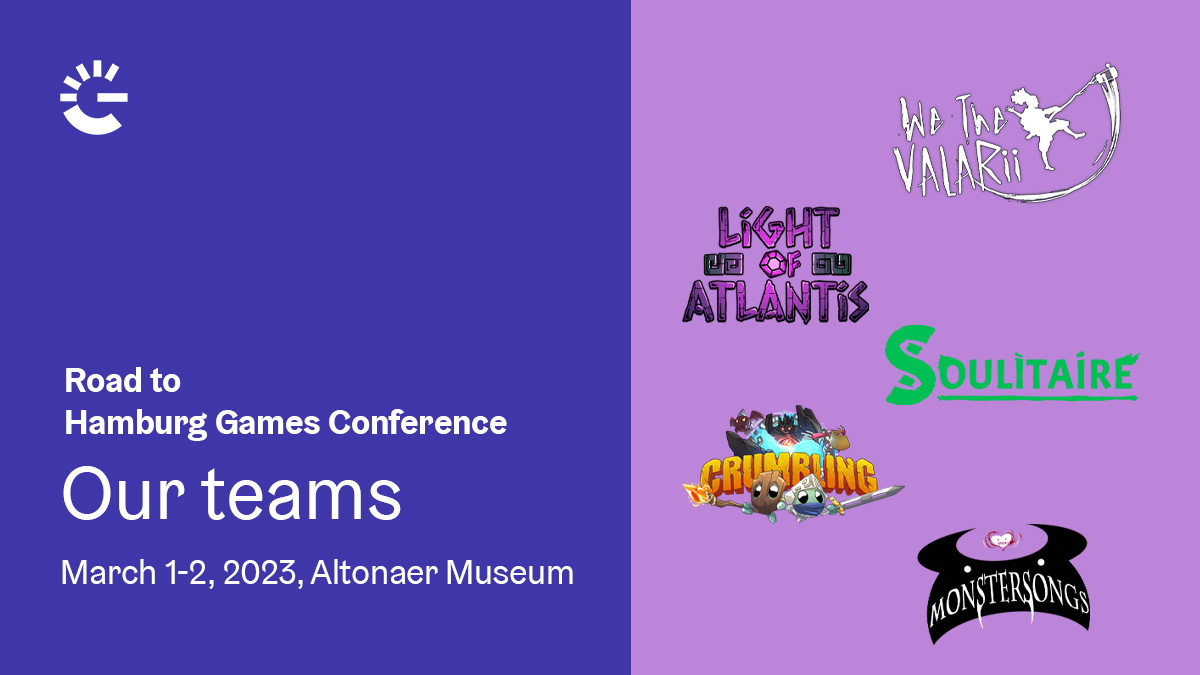
For the 2023 iteration of the Hamburg Games Conference, five local studios were selected to participate in the expo area. The featured projects represent a diverse range of genres and platforms, including Bagpack Games’ multiplayer title We the Valarii, DrownTown’s puzzle-exploration game Lights of Atlantis, Beardshaker Games’ card-based narrative experience Soulitaire, Crumbling Games’ VR roguelike Crumbling, and Denise Koch’s musical-adventure hybrid Monstersongs VR.
This initiative is part of a broader regional strategy managed by Gamecity Hamburg to support the local games ecosystem through various funding, mentoring, and networking programs. By lowering the barrier to entry for international and national conferences, the program aims to increase the visibility of Hamburg-developed content and strengthen the commercial viability of independent studios within the competitive global games market.
- The 'Road to Hamburg Games Conference' initiative provides selected local indie studios with free exhibition space at major industry events to facilitate business growth, networking, and investment opportunities.
- Five Hamburg-based studios were selected for the 2023 program: Bagpack Games, DrownTown, Beardshaker Games, Crumbling Games, and Denise Koch.
- The 2023 cohort showcased a diverse portfolio of projects, including We the Valarii (multiplayer), Lights of Atlantis (puzzle-exploration), Soulitaire (card-based narrative), Crumbling (VR roguelike), and Monstersongs VR (musical-adventure).
- Gamecity Hamburg manages this initiative as part of a broader regional strategy to support the local games ecosystem through funding, mentoring, and networking programs.
- The program aims to increase the global visibility and commercial viability of Hamburg-developed content by lowering the financial barriers to entry for international and national industry conferences.
+1
Gamecity Hamburg
Article
Senator's Roundtable 2023: Hamburg
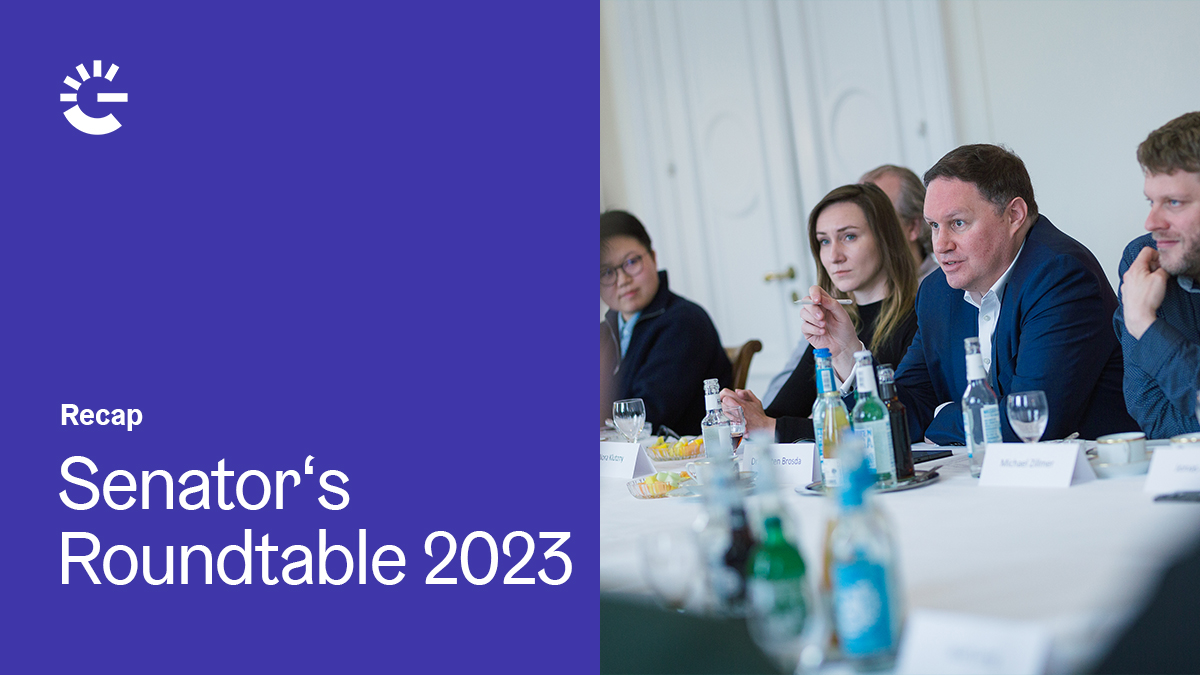
The Senator’s Roundtable 2023 serves as a strategic forum designed to foster collaboration between Hamburg’s municipal government and the local games industry. Hosted by the Minister for Culture and Media, Dr. Carsten Brosda, and organized by Gamecity Hamburg, the event functions as a recurring platform for public-private dialogue. Its primary objective is to identify the specific needs and operational challenges faced by game developers and publishers, thereby informing future policy initiatives to strengthen Hamburg’s position as a competitive hub for the gaming sector.
The 2023 session, held on February 3 at the Senate Guest House, convened a diverse group of stakeholders representing the breadth of the regional ecosystem. Participants included established industry leaders such as InnoGames, Bigpoint, Fishlabs, and Square Enix, alongside specialized entities like Rocket Beans Entertainment, Twitch, and Razer. The assembly also incorporated academic and advocacy voices, including HAW Hamburg and the Initiative Creative Gaming, ensuring that the discussion encompassed both commercial interests and the broader cultural and educational landscape of the industry.
By facilitating direct communication between city officials and industry practitioners, the roundtable aims to refine the support structures available to local studios. These efforts are part of a wider regional strategy that includes dedicated funding programs, incubator initiatives, and networking events designed to sustain innovation. The event underscores the recognition of the games industry as a vital, high-growth component of Hamburg’s economy, emphasizing a commitment to long-term investment and infrastructure development to maintain the city's status as a premier location for game development and digital media.
- The Senator’s Roundtable 2023, held on February 3 in Hamburg, serves as a formal mechanism for aligning municipal policy with the operational needs of the local games industry.
- The event convened key industry stakeholders including InnoGames, Bigpoint, Fishlabs, Square Enix, Rocket Beans Entertainment, Twitch, and Razer to facilitate public-private dialogue.
- Hamburg’s government utilizes this forum to refine support structures, such as dedicated funding programs and incubator initiatives, to maintain the city's competitive status as a gaming hub.
- The roundtable integrates diverse perspectives from academia and advocacy groups, such as HAW Hamburg and the Initiative Creative Gaming, to balance commercial interests with cultural and educational development.
- The municipal government formally recognizes the games industry as a high-growth economic sector, prioritizing long-term infrastructure investment to sustain regional innovation.
+1
Gamecity Hamburg