Gamecity Hamburg
Association402 documents
Documents
Article
Successful Premiere of Pitch Level Up
The inaugural Pitch Level Up event, held on May 3, 2022, at the Hamburger Ding in Hamburg, Germany, served as a specialized professional development forum for game developers, students, and industry creators. The primary objective of the event was to provide actionable guidance on optimizing game pitch decks and navigating the complexities of securing partnerships with publishers, investors, and funding institutions.
The event attracted 89 participants and featured a dual-track format consisting of expert-led presentations and personalized 1:1 feedback sessions. Four industry experts delivered talks covering critical topics, including publisher selection, communication strategies, effective pitching techniques, and the legal considerations inherent in game development contracts. These sessions were complemented by individual consultations with eight industry professionals, who provided direct, constructive critiques of participants' existing pitch materials.
By facilitating direct interaction between emerging developers and established industry figures, the event addressed a significant gap in the professional ecosystem: the lack of transparent, constructive feedback following project rejections. The initiative aimed to empower development teams to refine their game concepts and presentation strategies, ultimately improving their prospects for future funding and commercial success. The successful turnout and the focus on practical, hands-on mentorship underscore the ongoing demand for specialized support within the regional gaming sector.
- The inaugural Pitch Level Up event held on May 3, 2022, in Hamburg, Germany, provided 89 participants with professional guidance on securing game funding and partnerships.
- The event utilized a dual-track format featuring four expert-led presentations and 1:1 consultations with eight industry professionals to critique pitch materials.
- Key educational topics included publisher selection, communication strategies, effective pitching techniques, and the legal nuances of game development contracts.
- The initiative was designed to address the industry-wide gap in transparent, constructive feedback for developers following project rejections.
- The successful turnout demonstrates a high demand for specialized, hands-on mentorship within the regional gaming sector to improve commercial success prospects.
+1
Gamecity Hamburg

Article
Applications Open for Gamecity Hamburg Games Lift Incubator 2022
The Games Lift Incubator, managed by Gamecity Hamburg, serves as a strategic support program designed to foster the growth of independent game development teams. The primary objective of the initiative is to provide early-stage studios with the necessary resources, financial backing, and professional guidance to successfully navigate the competitive games market. By offering a structured environment for development, the program aims to mitigate the risks associated with resource allocation and project scaling for indie developers.
Key components of the incubator include a financial grant of 15,000 euros per team, a comprehensive three-month workshop curriculum, and ongoing individual mentoring. Additionally, participants receive a dedicated coaching budget of 1,000 euros to address specific project needs. The program extends its support beyond the initial workshop phase, culminating in participation at international industry events to facilitate networking and market exposure.
To assist potential applicants in evaluating their readiness for the program, Gamecity Hamburg hosts informational sessions, such as the "Games Lift Insights" workshop. These sessions provide guidance on essential industry skills, including market analysis, and offer direct access to program organizers for clarification on application requirements. While these events are open to the broader development community, priority is given to those intending to apply for the incubator. The initiative reflects a broader commitment to strengthening the Hamburg games ecosystem by providing structured pathways for professional development and commercial success.
- The Games Lift Incubator provides selected independent game development teams with a 15,000 euro financial grant.
- Participants receive a dedicated 1,000 euro coaching budget to address specific project requirements.
- The program features a structured three-month workshop curriculum supplemented by ongoing individual mentoring.
- The incubator facilitates international market exposure by supporting participant attendance at global industry events.
- Gamecity Hamburg hosts 'Games Lift Insights' workshops to provide applicants with guidance on market analysis and program requirements.
+1
Gamecity Hamburg
Article
Prototype Funding 2022: Hamburg
The 2022 Prototype Funding program, managed by Gamecity Hamburg, serves to bolster the local games industry by providing financial support for the development of digital game prototypes. The primary objective is to assist Hamburg-based developers, studios, and start-ups in creating high-potential projects capable of competing in the international market. By awarding these grants, the program aims to foster innovation and professional growth within the regional gaming ecosystem.
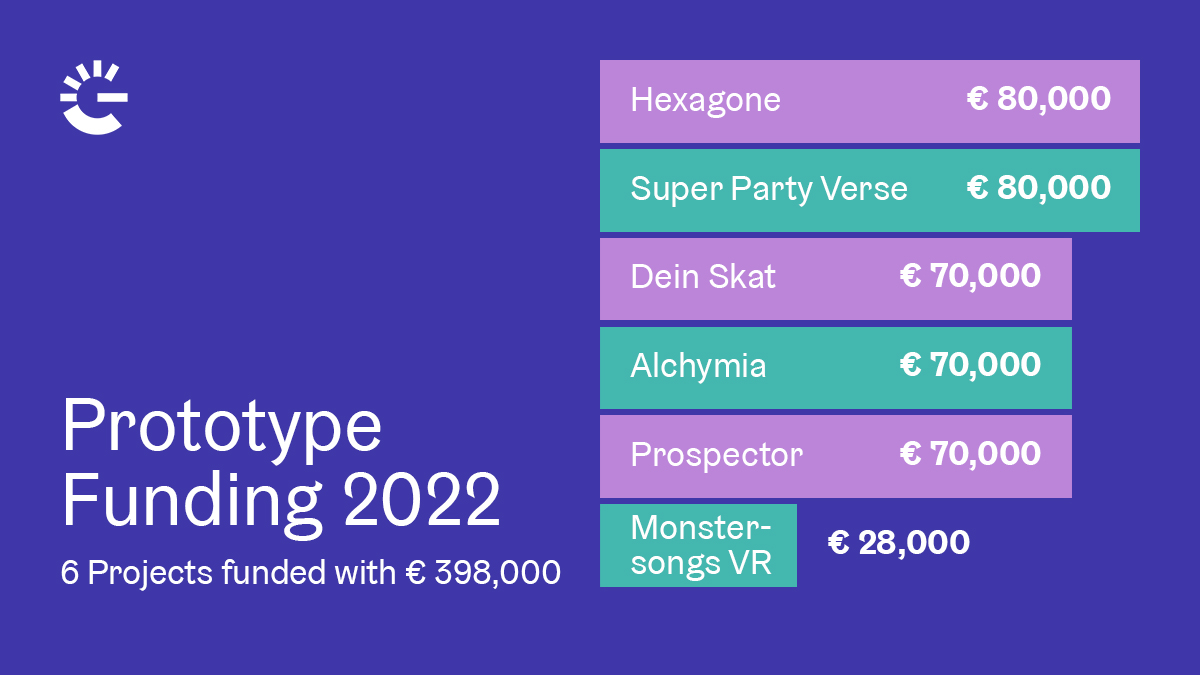
In the 2022 funding cycle, a total of 398,000 euros was distributed among six selected projects. The recipients included Tiny Roar and Super Crowd Entertainment, which each received 80,000 euros, followed by Bestjack Entertainment, Pseudoscience Interactive, and Symmetry Break Studio, which were awarded 70,000 euros each. Additionally, Denise Koch received 28,000 euros for a VR project. These selections were made from a pool of 18 applicants, with the awarding committee opting to utilize the entire available budget due to the high quality and potential of the submissions.
The program demonstrates a clear commitment to long-term industry development, as evidenced by the fact that half of the 2022 recipients previously participated in the Games Lift Incubator. Since the program’s current iteration began in 2020, it has supported 22 prototypes with a cumulative investment of 1,240,000 euros. This initiative, alongside other regional support structures like the Games Lift Incubator and various networking events, highlights a strategic effort to cultivate talent and maintain a robust, interconnected games industry within Hamburg.
- In 2022, Gamecity Hamburg distributed 398,000 euros in prototype funding across six selected projects from a pool of 18 applicants.
- Since the program's 2020 inception, it has invested a cumulative 1,240,000 euros to support 22 game prototypes.
- Tiny Roar and Super Crowd Entertainment received the largest individual grants of 80,000 euros each, while Bestjack Entertainment, Pseudoscience Interactive, and Symmetry Break Studio were awarded 70,000 euros each.
- Denise Koch received 28,000 euros for a VR project, completing the list of six recipients for the 2022 funding cycle.
- Half of the 2022 funding recipients were alumni of the Games Lift Incubator, indicating a strong pipeline between regional support structures and prototype development.
+1
Gamecity Hamburg

Article
Celebrating Pride Month: Germany
Gamecity Hamburg utilizes Pride Month as a platform to advocate for increased diversity, equity, and inclusion within the German games industry. The primary objective is to amplify LGBTQ+ voices and promote a more welcoming environment for both developers and players. By highlighting inclusive game content and fostering industry-wide dialogue, the organization seeks to combat ongoing discrimination and prejudice, emphasizing that the unifying power of gaming transcends factors such as sexual orientation, gender, and origin.
A central component of this initiative is the promotion of the Team Diversity (Hier spielt Vielfalt) declaration, a joint commitment established by the German games industry association, game. This declaration serves as a formal industry stance against discrimination, encouraging companies and individual developers to foster an open society where diverse perspectives enrich game culture. To support these goals, Gamecity Hamburg organizes educational programming, including digital events such as the Gamecity Impulse talk series, which focuses on themes like queer authenticity in gaming history.
The scope of these efforts is focused on the German games sector, specifically targeting the Hamburg development community. Through a combination of curated resources, game recommendations, and public advocacy, the initiative aims to integrate diversity as a core value of professional game development. By aligning with national industry standards and local community engagement, the organization reinforces the necessity of representation in both the workforce and the interactive media produced for global audiences.
- Gamecity Hamburg is leveraging Pride Month to mandate diversity, equity, and inclusion as core professional values within the German games industry.
- The initiative promotes the 'Team Diversity' (Hier spielt Vielfalt) declaration, a formal industry-wide commitment established by the association 'game' to combat discrimination.
- Educational programming, including the 'Gamecity Impulse' digital talk series, is being used to address specific topics such as queer authenticity in gaming history.
- The primary objective of these efforts is to increase LGBTQ+ representation both within the development workforce and in the content of games produced for global audiences.
- The strategy focuses on the Hamburg development community, utilizing curated resources and public advocacy to foster a more inclusive environment for developers and players.
Gamecity Hamburg

Article
Three Questions to: Explorlings
The Hamburg-based studio Explorlings, founded in 2021 by Bernhard Mies, focuses on the development of child-friendly digital applications designed to provide a responsible introduction to mobile devices. The studio’s primary thesis is that digital media for children should prioritize media-pedagogical principles over traditional engagement mechanics, such as time-pressure, competitive goals, or addictive design patterns. By deconstructing standard gaming conventions, the studio aims to create safe, self-determined, and age-appropriate digital experiences.
The studio’s inaugural release, Sheeplings, exemplifies this approach by offering a non-goal-oriented simulation where children interact with animals in a virtual meadow. The game utilizes simple touch gestures and avoids elements that create stress or encourage prolonged, compulsive usage. To ensure these standards, the development process incorporates professional media-education guidance, allowing parents to set usage limits that provide a clear, natural conclusion to the play session.
Explorlings operates within the German game development ecosystem, specifically targeting the niche of early-childhood digital literacy. The studio’s methodology relies on minimalist design and pedagogical frameworks to act as a catalyst for future projects. Following the release of Sheeplings on major mobile platforms, the studio intends to expand its portfolio with additional titles that continue to explore the intersection of cautious, child-centered game design and interactive technology.
- Founded in 2021 by Bernhard Mies, the Hamburg-based studio Explorlings specializes in developing child-friendly digital applications that prioritize media-pedagogical principles over traditional engagement mechanics.
- Explorlings explicitly rejects industry-standard design patterns such as time-pressure, competitive goals, and addictive mechanics to promote safe and self-determined digital experiences.
- The studio’s inaugural title, Sheeplings, is a non-goal-oriented simulation that uses simple touch gestures to facilitate interaction with virtual animals.
- Development processes at Explorlings integrate professional media-education guidance to ensure age-appropriate content and provide parents with tools to set clear usage limits.
- The studio operates within the German game development ecosystem, focusing on the niche of early-childhood digital literacy as a foundation for future interactive technology projects.
+1
Gamecity Hamburg
Article
Games Lift Incubator: Good for You?
The Games Lift Incubator, an initiative based in Hamburg, Germany, serves as a professional development program designed to help early-stage game development teams refine their projects, improve their pitching capabilities, and achieve commercial viability. The program targets teams of up to five members, requiring participants to either reside in or establish a branch in Hamburg. The primary thesis is that structured mentorship, financial support, and access to industry expertise significantly accelerate a studio’s ability to secure further funding and reach market milestones.
Over its first two years of operation, the incubator has supported 10 teams through 36 workshop sessions, distributing a total of 150,000 euros in funding. Each participating team receives 15,000 euros, alongside three months of intensive workshops, personalized coaching, and access to a co-working space. The program’s success is evidenced by the subsequent achievements of its alumni, with five teams successfully securing additional prototype funding and others launching public demos for their titles.
The methodology relies on a network of seasoned industry experts—including producers, journalists, and consultants—to provide tailored guidance. By focusing on individual project needs rather than a rigid curriculum, the incubator aims to foster self-sufficient studios capable of navigating the competitive landscape of game publishing and investment. The program emphasizes that while financial capital is a foundational element, the long-term value lies in the knowledge transfer and professional network integration that enable teams to plan more realistically and communicate their value propositions effectively to stakeholders.
- The Games Lift Incubator in Hamburg provides early-stage teams with 15,000 euros in funding, three months of intensive workshops, and personalized coaching to improve commercial viability.
- Over its first two years, the program supported 10 teams through 36 workshop sessions and distributed a total of 150,000 euros in financial support.
- The incubator’s effectiveness is demonstrated by the fact that 50% of its alumni have successfully secured additional prototype funding following their participation.
- To qualify for the program, development teams must consist of no more than five members and must either reside in or establish a branch in Hamburg, Germany.
- The program prioritizes tailored mentorship from industry experts—including producers, journalists, and consultants—over a rigid curriculum to foster long-term studio self-sufficiency.
+1
Gamecity Hamburg

Article
Pride and Diversity: Links, Tips and Resources
The primary purpose of this resource guide is to foster inclusivity and support for LGBTQ+ individuals within the German games industry. By providing a curated selection of organizations, networks, and educational materials, the guide serves as a foundational tool for developers, employers, and allies seeking to advance diversity, equity, and inclusion. It emphasizes that while the industry has made significant progress in representation and empowerment, ongoing efforts are required to address persistent challenges and promote equitable workplace cultures.
The guide highlights several key resources, including comprehensive diversity handbooks from the Association of the German Games Industry, the LGBTQ Video Game Archive for historical context, and initiatives like "Hier spielt Vielfalt" and #RaiseTheGame, which encourage companies to formally commit to inclusive practices. Additionally, it identifies professional networks such as Gay Gaming Professionals and community-focused platforms like the Orbital Discord server as vital hubs for career development and peer support.
Geographically focused on the German games sector with a specific emphasis on the Hamburg ecosystem, the information is intended to be a living, evolving starting point. It includes details on industry-specific events, such as the DIGIPRIDE festival and various hackathons, which offer opportunities for networking and collaborative problem-solving. By centralizing these links, the guide aims to lower the barrier to entry for those looking to engage with diversity initiatives, while inviting further contributions from the community to ensure the list remains current and comprehensive.
- The resource guide serves as a central repository for fostering LGBTQ+ inclusivity specifically within the German games industry, with a focus on the Hamburg ecosystem.
- Industry-wide initiatives such as 'Hier spielt Vielfalt' and #RaiseTheGame provide frameworks for companies to formally commit to diversity, equity, and inclusion practices.
- Professional development and peer support for LGBTQ+ individuals are facilitated through networks like Gay Gaming Professionals and the Orbital Discord server.
- The Association of the German Games Industry provides formal diversity handbooks, while the LGBTQ Video Game Archive offers essential historical context for developers.
- Industry-specific events, including the DIGIPRIDE festival and various hackathons, act as primary hubs for networking and collaborative problem-solving.
+1
Gamecity Hamburg
Article
New Feature: The Company Index
Gamecity Hamburg has launched a new digital feature, the Company Index, designed to centralize information regarding the local games industry. The primary purpose of this initiative is to streamline the process for users seeking specific services, job opportunities, or general information about the diverse range of businesses operating within the Hamburg region. By aggregating these details into a single, accessible platform, the index replaces the need for fragmented manual searches.
The index currently features over 200 companies, including game studios, service providers, and educational institutions. The data powering this directory is sourced from gamesmap.de, an established online database maintained by the German Games Industry Association, which tracks industry entities across the country. This integration ensures that the information remains consistent with broader national industry records while providing a localized focus on the Hamburg ecosystem.
To maintain the accuracy and utility of the directory, companies are encouraged to create or update their profiles on the primary gamesmap.de platform. By doing so, businesses ensure their information is reflected across both the national database and the local Gamecity Hamburg index. This dual-platform visibility is intended to help companies better communicate their specific offerings and professional capabilities to potential partners, employees, and the wider public. The index serves as a foundational tool for fostering connectivity and transparency within the Hamburg games sector.
- Gamecity Hamburg has launched a centralized Company Index to streamline access to local industry services, job opportunities, and business information.
- The index currently aggregates data for over 200 entities, including game studios, service providers, and educational institutions within the Hamburg region.
- The platform utilizes data sourced from gamesmap.de, the national database maintained by the German Games Industry Association, to ensure regional information aligns with national records.
- Companies must update their profiles on gamesmap.de to ensure their information is accurately reflected and visible on the new local index.
- The initiative aims to improve industry connectivity and transparency by providing a single, consolidated directory that replaces fragmented manual searches.
Gamecity Hamburg
Article
Games Influencers From Hamburg: Influencer Guide Pt. 1
The influencer landscape in Hamburg serves as a vital resource for developers and gaming startups looking to expand their reach and visibility. By identifying and collaborating with prominent content creators, studios can effectively promote their titles to broader audiences. This guide highlights five influential figures and groups based in Hamburg as of 2022, emphasizing their role in bridging the gap between game developers and the gaming public.
The featured influencers represent a diverse range of content styles and audience sizes. Amar, a former esports professional, maintains a significant presence across Twitch, YouTube, Instagram, and Twitter, focusing on online multiplayer titles like Fortnite and Valorant. Similarly, MckyTV commands a large following with a focus on GTA Roleplay, while Trymacs stands out as a major figure in the region, specializing in mobile games and variety content. Other notable entries include Der Hardi, a versatile streamer covering everything from first-person shooters to Nintendo titles, and Rocket Beans, a long-established collective that blends traditional media experience with modern streaming formats.
These profiles illustrate the professionalization of gaming content creation, where influencers act as key stakeholders in the industry. For smaller studios, securing a feature from these creators can be a transformative event, potentially driving significant discovery for indie projects. By mapping out these local leaders, the industry provides a practical roadmap for developers to navigate the influencer ecosystem within one of Germany’s primary gaming hubs. The data provided for each influencer includes current subscriber counts across major social platforms and their preferred gaming genres, offering a snapshot of their reach and content focus as of mid-2022.
- Hamburg serves as a strategic hub for game developers to increase title visibility through partnerships with local content creators.
- Influencers like Amar, MckyTV, Trymacs, Der Hardi, and Rocket Beans act as key industry stakeholders capable of driving significant discovery for indie projects.
- As of mid-2022, the influencer landscape includes diverse content focuses ranging from competitive multiplayer titles like Fortnite and Valorant to mobile games and variety streaming.
- Trymacs is identified as a major regional figure specializing in mobile gaming, while MckyTV maintains a large following centered on GTA Roleplay.
- Amar leverages a multi-platform presence across Twitch, YouTube, Instagram, and Twitter, utilizing his background as a former esports professional.
+1
Gamecity Hamburg
Article
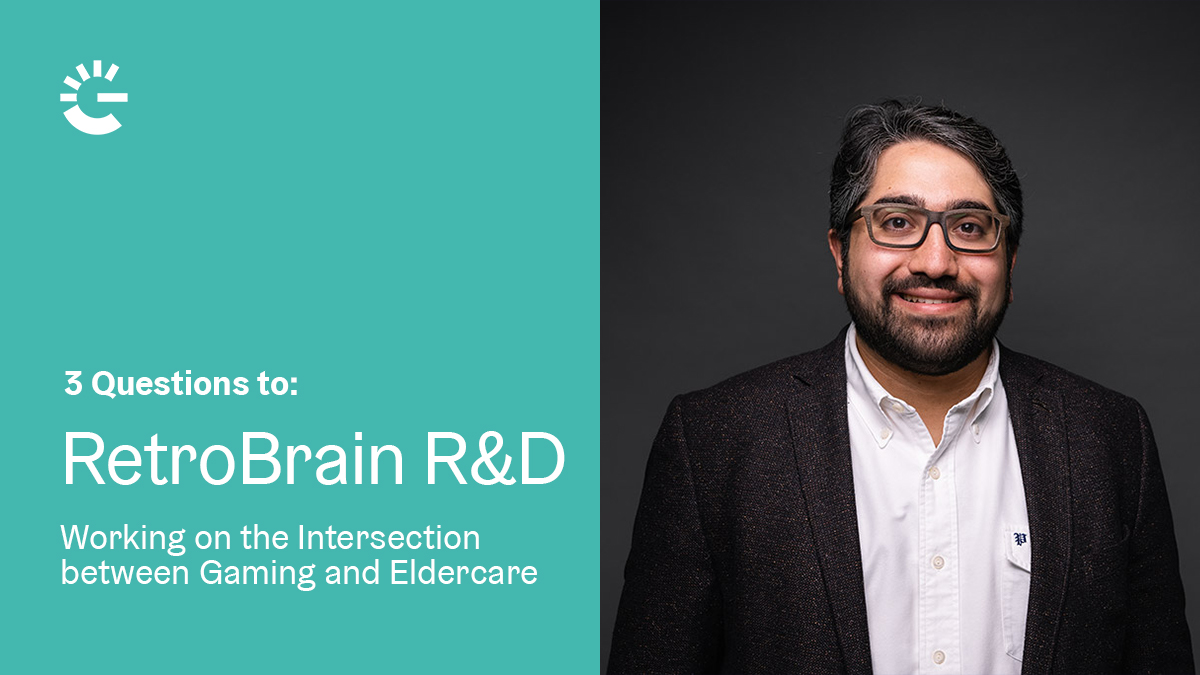
Three Questions to: RetroBrain R&D
RetroBrain R&D, a Hamburg-based social enterprise, operates at the intersection of digital health and gaming by developing the memoreBox, a gesture-controlled gaming console designed specifically for the elderly. The primary objective of the device is to serve as both an accessible entertainment platform and a certified medical tool that promotes physical and mental fitness. By integrating serious games into standard nursing care, the company aims to provide sustainable, non-pharmaceutical interventions that improve the quality of life and autonomy of aging populations.
The effectiveness of the memoreBox is supported by peer-reviewed research, including a long-term study conducted by psychologists Prof. Dr. Reinhard Beyer and Prof. Dr. rer. nat. Luzi Beyer. Findings indicate that regular engagement with the console’s serious games positively impacts the cognitive abilities of seniors. Consequently, the device has achieved significant regulatory milestones in Germany, becoming one of the first video games to be certified as a medical device and gaining eligibility for reimbursement by statutory health insurance providers.
Headquartered in Hamburg to leverage the city's robust ecosystem of gaming, digital health, and social entrepreneurship, RetroBrain R&D is currently scaling its operations. Through strategic partnerships, such as the collaboration with Schenker Technologies, the company is addressing rising demand and expanding its reach into Austria, Switzerland, and Luxembourg. The broader industry outlook suggests that health-focused gaming is becoming an increasingly recognized and essential component of modern healthcare, with growing support from German national health insurance funds and policy stakeholders.
- RetroBrain R&D’s memoreBox is a gesture-controlled gaming console certified as a medical device in Germany, making it eligible for reimbursement by statutory health insurance providers.
- Peer-reviewed research conducted by Prof. Dr. Reinhard Beyer and Prof. Dr. rer. nat. Luzi Beyer confirms that regular use of the memoreBox improves cognitive abilities in elderly populations.
- The company is scaling operations beyond Germany into Austria, Switzerland, and Luxembourg to meet rising demand for non-pharmaceutical health interventions.
- RetroBrain R&D utilizes a strategic partnership with Schenker Technologies to manage the production and distribution of its hardware.
- The firm is headquartered in Hamburg, positioning itself within a specialized ecosystem that integrates gaming, digital health, and social entrepreneurship.
+1
Gamecity Hamburg
Article
Queer Games Bundle 2022: Our Top 5
The Queer Games Bundle 2022 serves as a promotional highlight for a significant digital collection of independent titles developed by LGBTQ+ creators. Published in June 2022 to coincide with Pride Month, the initiative aims to increase the visibility of queer game makers and celebrate the diversity of their creative output. The bundle, hosted on the itch.io platform, featured 588 distinct games, offering a wide variety of genres and thematic approaches to queer identity.
The selection process focused on identifying titles that offer unique narrative experiences, educational value, or emotional depth. Featured games include What’s Your Gender, which explores identity through a labyrinthine structure; A Mortician’s Tale, a title examining funeral practices and professional ethics; Good Morning Hon, a short-form narrative piece; Just Cosplay, which addresses the complexities of gender expression; and We Should Talk, a game centered on communication mechanics. An honorable mention was also provided for Gender Dysphoria, a title noted for its impactful, albeit triggering, portrayal of the trans experience.
The distribution model for the 2022 collection included both a fixed-price option of $60 and a pay-what-you-can edition, with all proceeds distributed evenly among the contributing developers. By curating these titles, the initiative provides a structured entry point for players to engage with a vast catalog of indie games while providing direct financial support to the queer development community. The effort reflects a broader industry trend of prioritizing diversity and inclusion by highlighting marginalized voices and their contributions to the gaming landscape.
- The 2022 Queer Games Bundle hosted on itch.io featured 588 independent titles created by LGBTQ+ developers.
- The initiative utilized a dual-pricing model consisting of a $60 fixed-price option and a pay-what-you-can edition, with all proceeds distributed equally among the participating creators.
- Launched in June 2022 to coincide with Pride Month, the bundle serves as a promotional vehicle to increase the visibility of marginalized voices within the gaming industry.
- The curated selection prioritized titles with unique narrative and educational depth, highlighting games such as What’s Your Gender, A Mortician’s Tale, Good Morning Hon, Just Cosplay, and We Should Talk.
- The project reflects a broader industry trend of leveraging collective distribution models to provide direct financial support to queer game developers.
Gamecity Hamburg
Article
Games Internship: Insights into Hamburg's Game Studio
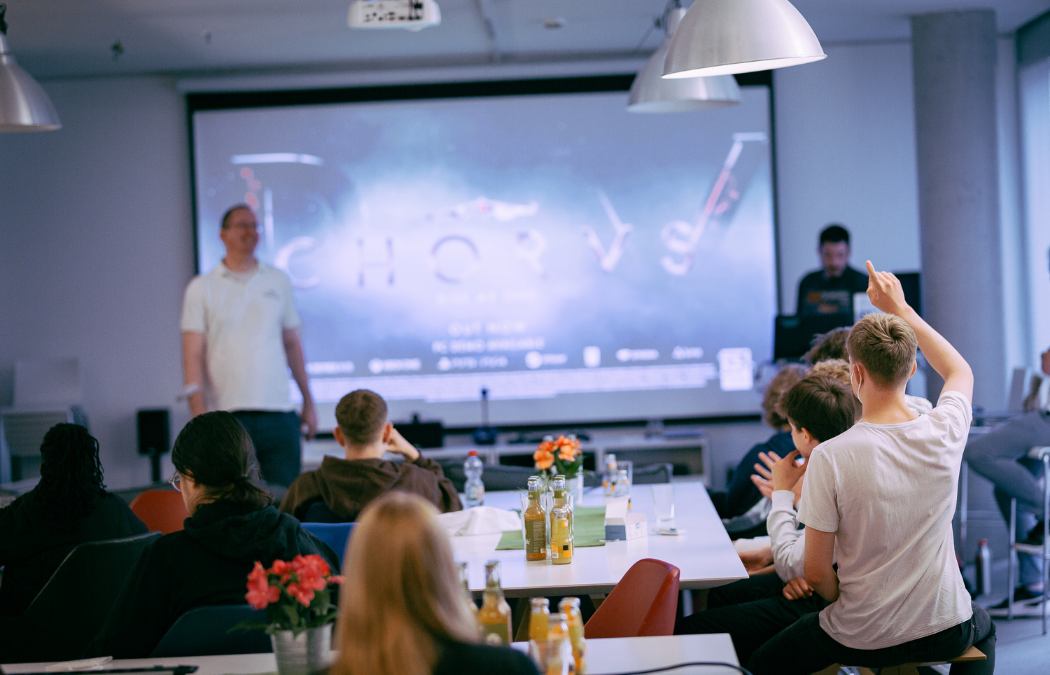
The Games Internship program in Hamburg serves as a strategic initiative to introduce secondary school students to the professional landscape of the video game industry. By providing a comprehensive three-week immersive experience, the program aims to demystify various career paths within game development and foster early interest in the sector. The initiative is a collaborative effort involving local industry stakeholders, including InnoGames, Deep Silver FISHLABS, Tivola Games, the HAW University of Applied Sciences, the local game association, and Gamecity Hamburg, with pedagogical guidance provided by the Initiative Creative Gaming.
During the 2022 iteration, 20 ninth-grade students participated in a curriculum that balanced theoretical instruction with hands-on application. The program spanned multiple studio environments, where participants engaged in workshops covering core game design principles, audio production, and quality assurance. Students were tasked with creating their own board games and developing conceptual portfolios, which included character design and mood boards. These projects were presented to industry professionals at the conclusion of the internship, demonstrating the participants' ability to synthesize technical and creative concepts within a short timeframe.
The program emphasizes the importance of foundational academic subjects—specifically English, physics, and mathematics—as essential prerequisites for a career in game development. By offering direct exposure to studio operations, such as motion capture facilities and development environments, the internship successfully bridges the gap between academic interest and professional reality. The positive reception from participants and the ongoing commitment from Hamburg’s game studios underscore the program's role as a vital pipeline for cultivating future talent within the regional games ecosystem.
- The Hamburg Games Internship is a three-week immersive program designed to introduce ninth-grade students to professional game development career paths.
- In 2022, 20 students participated in the program, rotating through studio environments to learn game design, audio production, and quality assurance.
- The initiative is a collaborative effort involving major industry players including InnoGames, Deep Silver FISHLABS, Tivola Games, HAW University, and Gamecity Hamburg.
- Participants applied theoretical knowledge by creating board games and conceptual portfolios, which were presented to industry professionals at the end of the internship.
- The program explicitly emphasizes the necessity of academic proficiency in English, physics, and mathematics as foundational requirements for a career in the games industry.
Gamecity Hamburg