Gamecity Hamburg
Association402 documents
Documents
Article
Games Lift: tool1 Build on Their Community
The Hamburg-based development studio tool1 is leveraging community engagement as a core strategy for the development and growth of its debut title, The Invitation. As participants in the Games Lift Incubator, the team—comprised of Martin Kleingräber, Timo Becker, and Stephen Sommerfeld—is focusing on modular development and transparent communication to differentiate their project from larger AAA competitors. The studio’s primary objective is to cultivate a loyal player base through direct interaction, utilizing platforms like Discord and planned Patreon integration to foster long-term relationships with their audience.
The project, a looter-shooter featuring realistic 3D graphics, emphasizes player-driven mechanics, such as the ability for users to assign custom missions and bounties. While an initial Kickstarter campaign did not meet its financial target, the effort successfully established a dedicated community of hundreds of backers who are now actively involved in testing early builds. This community-centric approach serves as a vital feedback loop, allowing the studio to refine the game’s mechanics while building anticipation for future releases.
Operating within the Hamburg indie scene, tool1 utilizes the Games Lift Incubator to access professional mentorship and networking opportunities. By maintaining transparency regarding development decisions and engaging directly with players through developer streams, the team aims to build a sustainable studio model that grows in tandem with their game. The studio continues to prioritize steady, incremental progress as they prepare for an eventual Early Access launch, relying on both freelance expertise and community input to navigate the complexities of the competitive multiplayer shooter market.
- Hamburg-based studio tool1 is developing its debut looter-shooter, The Invitation, by prioritizing community-driven development and transparent communication to compete with AAA titles.
- The studio utilizes the Games Lift Incubator to access professional mentorship and networking, supporting their goal of building a sustainable, community-integrated business model.
- Although their initial Kickstarter campaign failed to reach its financial target, it successfully converted hundreds of backers into an active testing group for early game builds.
- The Invitation features player-driven mechanics, specifically allowing users to create and assign custom missions and bounties within the game.
- The development team, consisting of Martin Kleingräber, Timo Becker, and Stephen Sommerfeld, relies on Discord and planned Patreon integration to maintain direct engagement and a feedback loop with their player base.
Gamecity Hamburg
Article
Hamburg Games Conference 2022: Moving Markets
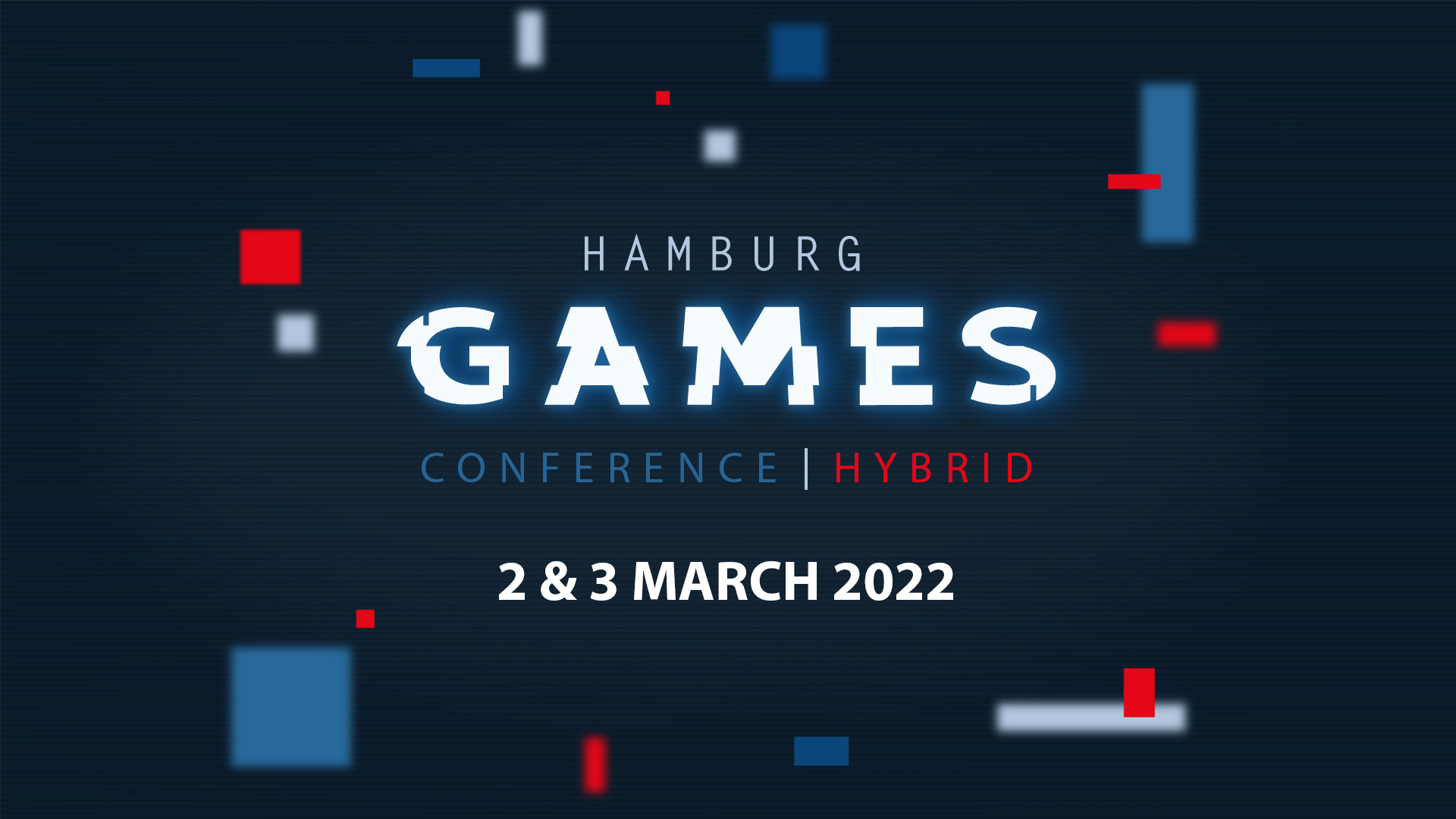
The Hamburg Games Conference 2022, scheduled for March 2–3, 2022, was designed to address the evolving landscape of the global games industry under the theme "Moving Markets." The event aimed to provide strategic insights into how companies can maintain a competitive edge amidst rapid shifts in business models, emerging sales channels, and the accelerated digital transformation driven by the global pandemic.
The conference introduced a hybrid format for the first time, combining a digital platform for the inaugural day with an in-person experience at Hamburg’s Zeise Cinemas for the second day. The program featured a comprehensive agenda including keynotes, panel discussions, networking opportunities, and an expo. A dedicated track focused on games funding was also integrated into the schedule to support industry growth.
Organized by Gamecity Hamburg and GRAEF Rechtsanwälte, with production managed by Super Crowd Entertainment, the event catered to industry professionals through various ticket tiers. Early bird business tickets were priced at 119€, while basic access tickets were available for 25€. By facilitating a mix of digital and physical engagement, the conference sought to foster collaboration and knowledge sharing within the international games community, emphasizing the importance of innovation and adaptability in navigating future market trends.
- The Hamburg Games Conference 2022 took place on March 2–3, 2022, focusing on strategic adaptation to evolving business models and digital transformation in the global games industry.
- The event utilized a hybrid format, featuring a digital platform on the first day and an in-person experience at Hamburg’s Zeise Cinemas on the second day.
- The conference program included dedicated tracks for games funding alongside standard keynotes, panel discussions, and an expo to support industry growth.
- The event was organized by Gamecity Hamburg and GRAEF Rechtsanwälte, with production management provided by Super Crowd Entertainment.
- Ticket pricing for industry professionals was segmented into early bird business tickets at 119€ and basic access tickets at 25€.
Gamecity Hamburg
Article
Games Lift: Supernatural Games and Their Little Green Friends
The Games Lift incubator program, managed by Gamecity Hamburg, serves as a developmental platform for independent game studios, providing mentorship, financial support, and industry networking. A primary focus of the initiative is to assist experienced professionals in transitioning from established careers to independent game development. By offering structured guidance, the program aims to help teams refine their creative visions, develop sustainable business models, and prepare for market entry through crowdfunding and community building.
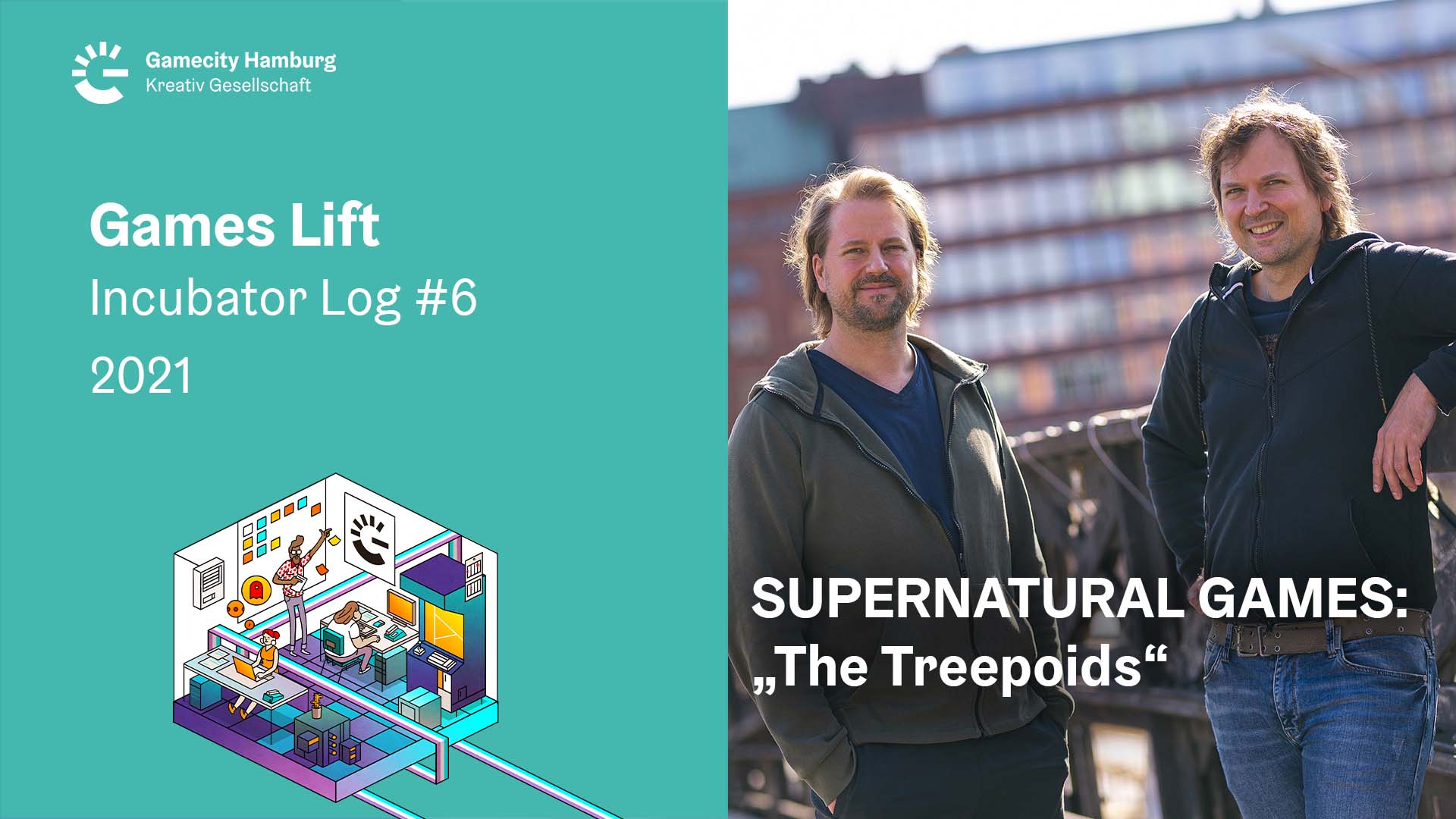
A notable case study within this framework is Supernatural Games, a studio founded by brothers Gerrit and Patrick Henschel. Leveraging their combined expertise in art direction, advertising, and game development, the duo has utilized the incubator to advance their project, The Treepoids. This title is a hand-painted, puzzle-oriented adventure game that emphasizes non-violent problem-solving and environmental themes. The project distinguishes itself through a unique gameplay loop that combines traditional adventure mechanics with strategic, character-driven challenges.
The incubator’s methodology centers on iterative feedback and professional development. Supernatural Games’ experience highlights the program's role in helping developers evolve from conceptual hobbyists into commercially viable entities. By addressing gaps in presentation and business strategy, the incubator enables teams to translate creative concepts into actionable assets. The program’s ongoing support structure, which includes workshops and international industry exposure, is designed to foster long-term growth for independent developers within the Hamburg gaming ecosystem. Through these initiatives, the program successfully bridges the gap between artistic ambition and the practical requirements of the modern games industry.
- The Games Lift incubator, managed by Gamecity Hamburg, provides independent studios with mentorship, funding, and networking to transition professionals into sustainable, commercially viable game development businesses.
- The program focuses on bridging the gap between creative concepts and market readiness by assisting teams with business strategy, crowdfunding preparation, and community building.
- Supernatural Games, founded by Gerrit and Patrick Henschel, is a key case study demonstrating how the incubator helps developers evolve from conceptual hobbyists into professional entities.
- The studio’s project, The Treepoids, is a hand-painted, puzzle-oriented adventure game that utilizes non-violent mechanics and environmental themes.
- The incubator’s methodology relies on iterative feedback, workshops, and international industry exposure to help studios refine their creative visions and develop actionable business assets.
Gamecity Hamburg
Article
Games Lift: From One Milestone to the Next
The Games Lift Incubator, an initiative based in Hamburg, Germany, serves as a developmental accelerator for independent game studios. Its primary purpose is to provide emerging developers with structured mentorship, workshop-based education, and professional guidance to refine their game concepts and business strategies. The program emphasizes the transition from early-stage ideas to viable, market-ready products through periodic milestone evaluations.
The program’s methodology involves a series of intensive workshops and pitch sessions where participants present their progress to an awarding committee and industry mentors. These sessions focus on critical areas such as defining a game’s core hook, establishing effective social media and marketing strategies, managing production workflows, and navigating legal requirements like music licensing. By providing a platform for direct feedback, the incubator ensures that teams can pivot or refine their development goals early in the production cycle.
Recent milestone evaluations highlight the tangible progress made by participating teams, ranging from the development of interactive VR experiences to minimalist mobile racing games and narrative-driven adventure titles. Mentors and program organizers note that the teams demonstrate high levels of engagement, successfully applying theoretical workshop lessons to their practical development tasks. These milestones act as essential checkpoints that prepare participants for final graduation pitches, ensuring that projects are technically and commercially sound before reaching the broader market. The initiative remains a key component of the Hamburg gaming ecosystem, fostering innovation by bridging the gap between creative vision and professional execution.
- The Games Lift Incubator in Hamburg functions as a developmental accelerator that guides independent studios from early-stage concepts to market-ready products.
- The program utilizes a structured methodology of intensive workshops and milestone evaluations to refine game hooks, production workflows, and business strategies.
- Participants receive professional mentorship on critical operational areas, including social media marketing, legal requirements like music licensing, and project management.
- The incubator facilitates direct feedback loops through pitch sessions, allowing teams to pivot development goals and refine their strategies before final graduation.
- Recent project portfolios supported by the program span diverse genres, including interactive VR experiences, minimalist mobile racing games, and narrative-driven adventure titles.
Gamecity Hamburg
Article
Goodgame Studios Opens a Publishing Division
Goodgame Studios, a prominent Hamburg-based developer of online and mobile games, officially expanded its operations in October 2021 by establishing a dedicated publishing division. This strategic move aims to leverage the company’s extensive market reach, which includes a player base exceeding 500 million registered users. The initiative is designed to support external developers in bringing their titles to market, marking a transition for the studio from a purely internal development model to a broader publishing role.
The launch of the division was accompanied by the release of its first published title, War Alliance, a mobile real-time strategy game developed by Magnific Games. To lead this new business unit, the company appointed Nina Müller, an industry veteran with previous management experience at both Goodgame Studios and the Hamburg-based developer Bigpoint. Her appointment underscores the studio's commitment to integrating professional publishing expertise into its existing operational framework.
This development reflects the ongoing growth and diversification of the Hamburg gaming ecosystem. By opening its publishing infrastructure to third-party developers, Goodgame Studios seeks to capitalize on its established industry presence to foster new partnerships. The studio continues to invite interested developers to engage with its publishing services, signaling a long-term commitment to this new segment of its business model.
- Hamburg-based Goodgame Studios launched a dedicated publishing division in October 2021 to support external developers.
- The studio is leveraging its existing infrastructure and a player base of over 500 million registered users to facilitate the market entry of third-party titles.
- Nina Müller, a veteran with management experience at Goodgame Studios and Bigpoint, was appointed to lead the new publishing business unit.
- The division’s inaugural release is War Alliance, a mobile real-time strategy game developed by Magnific Games.
- This strategic shift marks a transition for Goodgame Studios from a purely internal development model to a broader role as a third-party publisher.
Gamecity Hamburg
Article
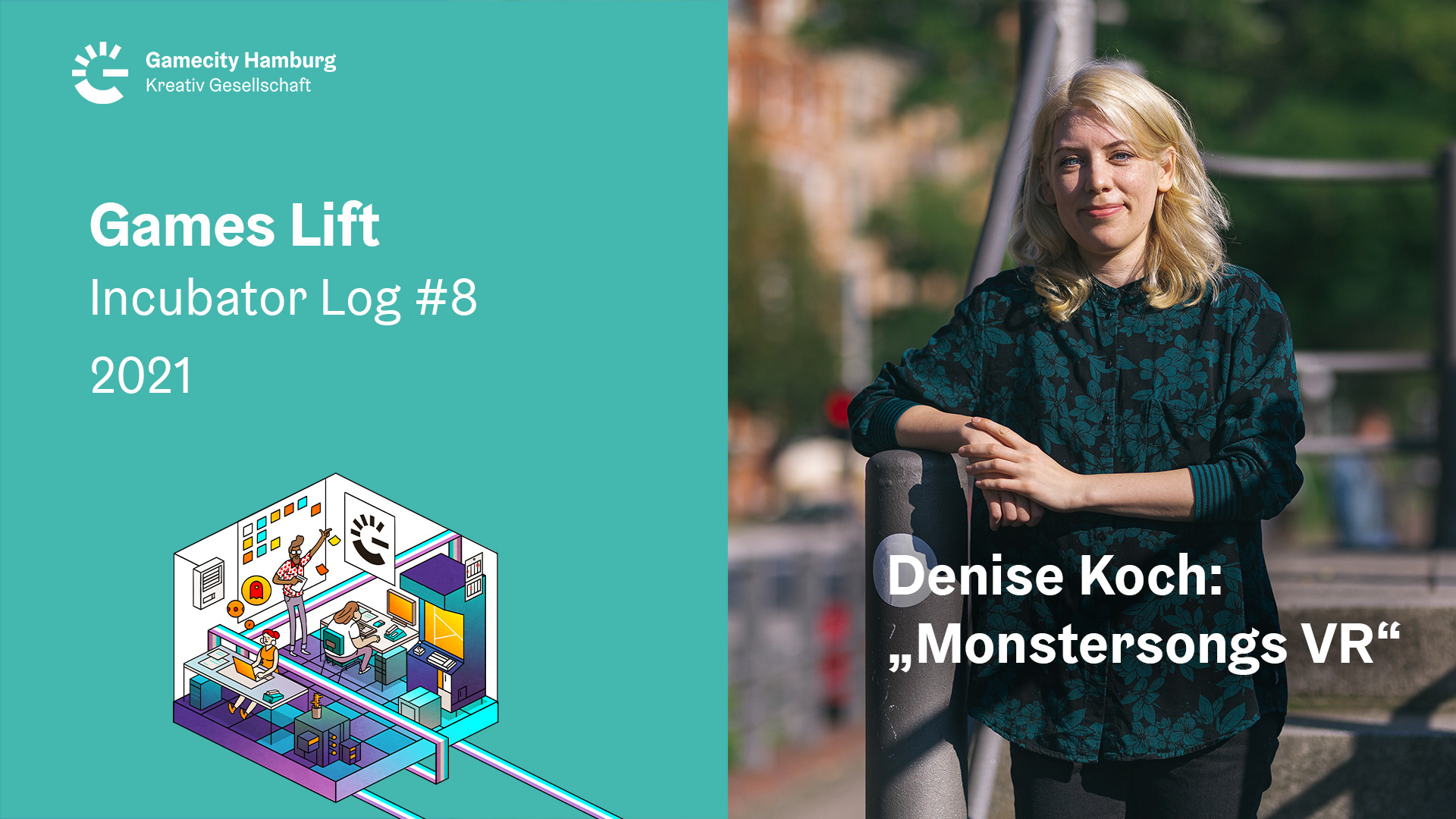
Games Lift: Denise Koch and Her Wicked Plans
The Games Lift Incubator, an initiative based in Hamburg, Germany, serves as a professional development platform designed to support independent game developers in refining their projects and business strategies. The program provides participants with financial backing, access to a network of mentors, and a structured workshop environment to facilitate the transition from conceptualization to market-ready product. By fostering a collaborative community, the incubator enables developers to overcome technical and communication hurdles, such as refining pitch decks and navigating complex development cycles.
A primary example of this support is the development of "Monstersongs VR," an interactive virtual reality experience that adapts a rock musical into an immersive, narrative-driven game. Project manager Denise Koch utilizes the incubator to bridge the gap between traditional theatrical production and interactive digital media. By leveraging her background in creative producing and technical proficiency in Unreal Engine and Blender, she has assembled a multidisciplinary team to explore innovative mechanics, such as motion capture and puzzle design inspired by escape rooms.
The incubator emphasizes the importance of professional networking and cross-disciplinary collaboration. Participants benefit from a continuous exchange of ideas with tutors and peers, which is instrumental in shaping fundamental design decisions during the early "workshop phase." Through this program, developers like Koch are encouraged to establish a long-term presence within the Hamburg games industry, contributing to the region's growth as a hub for creative and technical talent. The initiative remains a vital resource for creators seeking to translate ambitious, experimental concepts into viable commercial ventures.
- The Games Lift Incubator in Hamburg provides independent developers with financial support, mentorship, and structured workshops to transition projects from conceptualization to market-ready products.
- The program focuses on overcoming technical and communication barriers, specifically assisting developers with pitch deck refinement and navigating complex development cycles.
- Denise Koch is utilizing the incubator to develop 'Monstersongs VR,' a narrative-driven project that adapts a rock musical into an immersive virtual reality experience.
- The development of 'Monstersongs VR' integrates multidisciplinary techniques including motion capture and escape-room-inspired puzzle design using Unreal Engine and Blender.
- The incubator facilitates cross-disciplinary collaboration and peer-to-peer idea exchange during its early workshop phase to influence fundamental design decisions.
+2
Gamecity Hamburg
Article
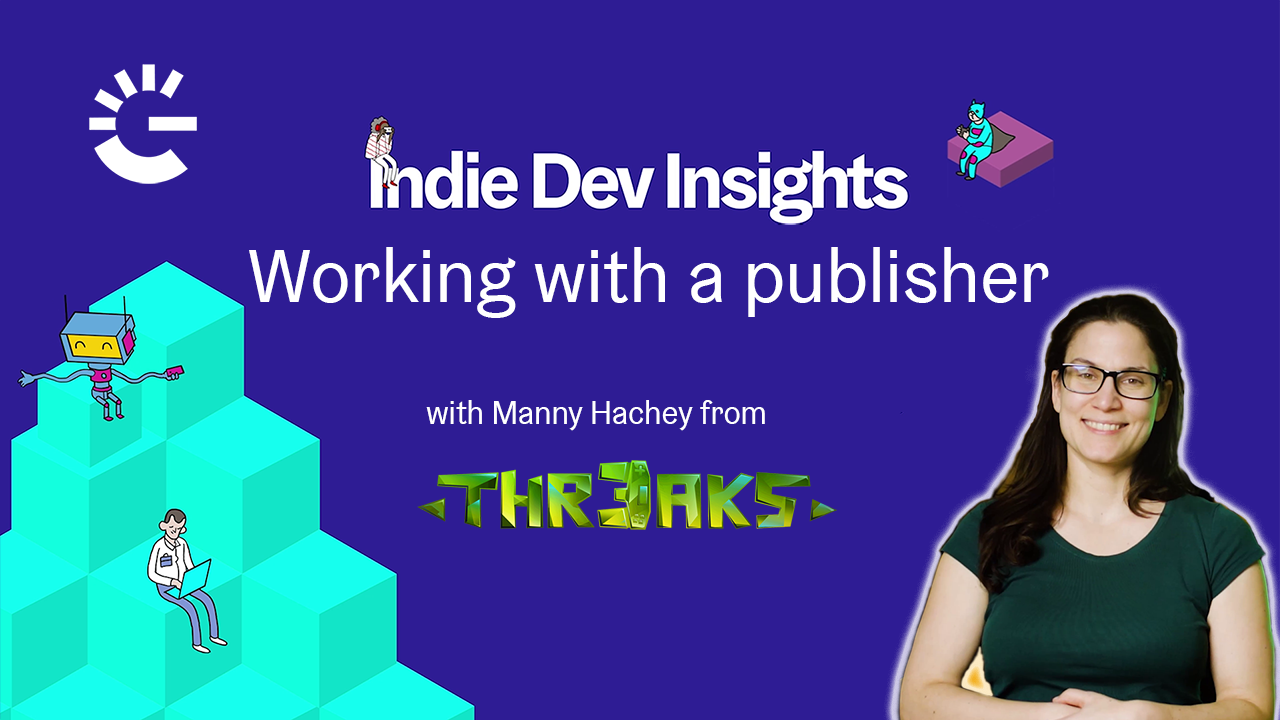
Indie Dev Insights #2: Finding the Right Publisher
The second installment of the Indie Dev Insights video series, produced by Gamecity Hamburg, focuses on the strategic challenges independent game studios face when selecting and partnering with a publisher. The primary objective is to provide actionable guidance for developers navigating the complexities of publishing agreements, emphasizing the importance of finding a partner that aligns with a studio’s specific goals for game success and market reach.
The content features an interview with Manny Hachey, Chief Operating Officer at the Hamburg-based studio THREAKS, who offers a practitioner’s perspective on the publisher-developer relationship. By sharing firsthand experiences, the discussion highlights critical considerations for indie teams, such as evaluating the value-add of a publisher, understanding contractual expectations, and ensuring that the partnership effectively supports the game’s lifecycle beyond initial development.
This initiative is part of a broader educational series by Gamecity Hamburg that addresses non-developmental aspects of the industry, including marketing, funding, and organizational management. By contrasting this developer-centric advice with previous insights from the publisher’s perspective, the series aims to bridge the communication gap between the two parties. The scope of the project is centered on the German indie game ecosystem, specifically leveraging local expertise to support the professional growth of independent developers.
- Independent studios must prioritize selecting a publisher whose strategic goals and market reach align with the specific needs of their game.
- Developers should rigorously evaluate the tangible value-add a publisher provides rather than focusing solely on funding.
- Partnerships must be structured to provide comprehensive support throughout the entire game lifecycle, extending well beyond the initial development phase.
- Indie teams need to maintain a clear understanding of contractual expectations to ensure the publisher-developer relationship remains balanced and productive.
- Manny Hachey, COO of the Hamburg-based studio THREAKS, serves as the primary practitioner source for these insights on navigating publisher agreements.
Gamecity Hamburg
Article
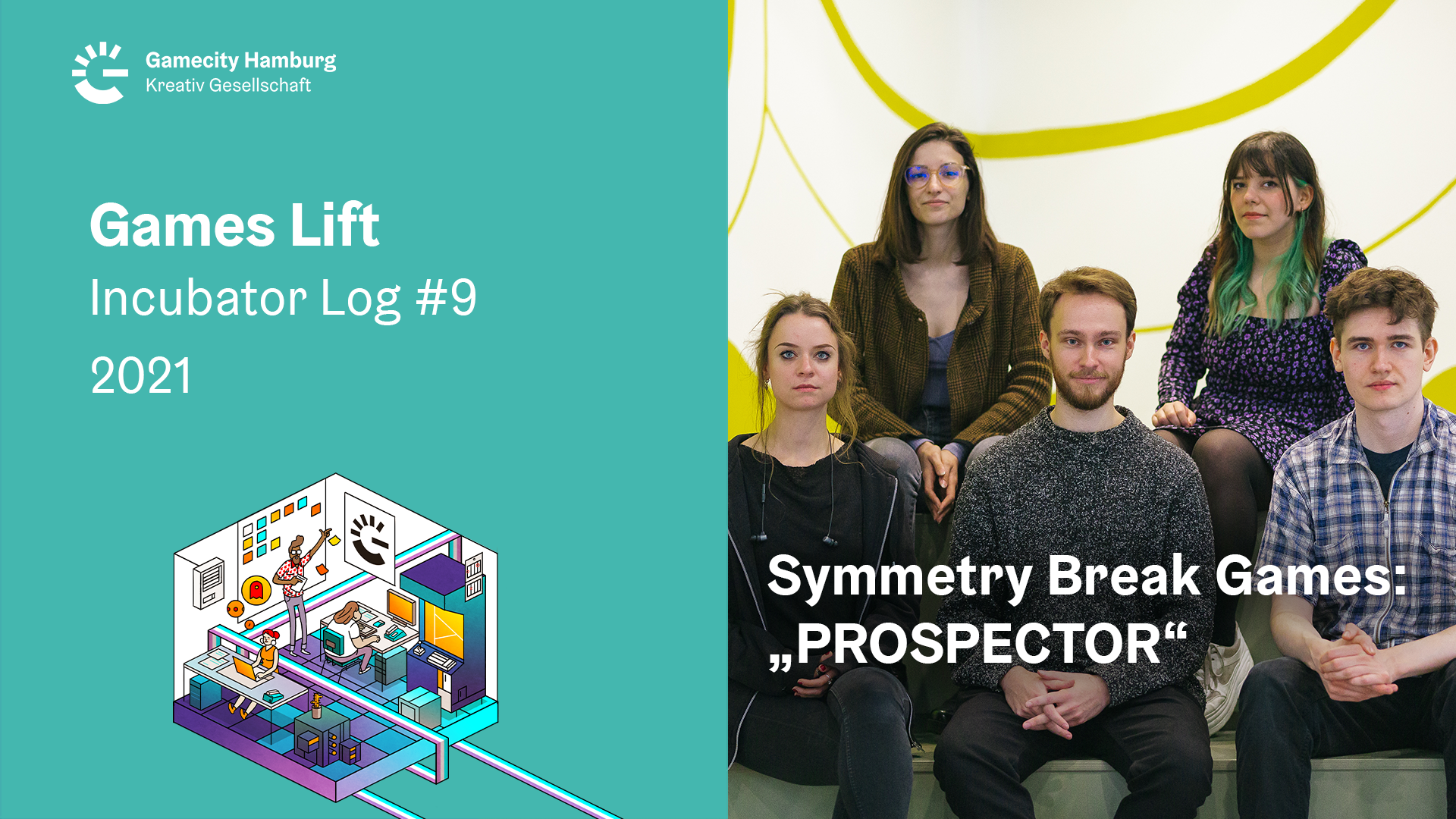
Games Lift: Symmetry Break on Finding Words and Time
The Games Lift Incubator, an initiative based in Hamburg, Germany, provides a structured support system for emerging game development teams. The program focuses on professionalizing studio operations through workshops, mentorship, and project management guidance. By offering a blend of financial support and expert advice, the incubator aims to help small, independent teams transition from initial concepts to viable commercial products.
A primary case study of this support is the development team Symmetry Break, which utilized the incubator to refine their narrative-driven project, Prospector. The team, consisting of three core members and two contractors, leveraged the program to overcome challenges related to team scaling, communication, and project management. Specifically, the team adopted professional workflows provided by industry mentors to improve their pitching capabilities and internal organization, while explicitly prioritizing sustainable development practices to avoid industry-standard crunch culture.
The project itself, Prospector, represents a shift away from traditional, puzzle-heavy adventure games toward a more fluid, story-centric experience. The game features a unique dialogue system where player choices are influenced by character behavior and emotional states, emphasizing self-expression and narrative discovery. By the conclusion of the incubator cycle, the team aimed to produce a polished demo suitable for securing further development funding and establishing their long-term identity as a sustainable game studio. The program serves as a critical bridge for such teams, providing the necessary infrastructure to scale operations and prepare for competitive market entry.
- The Hamburg-based Games Lift Incubator provides financial support and professional mentorship to help independent game studios transition from early concepts to commercially viable products.
- The development team Symmetry Break, comprised of three core members and two contractors, utilized the incubator to implement professional workflows and improve project management for their game, Prospector.
- Symmetry Break prioritized sustainable development practices during the incubator cycle to explicitly avoid the industry-standard practice of crunch culture.
- The incubator program focuses on scaling studio operations, enhancing pitching capabilities, and establishing internal organizational structures for small development teams.
- The project Prospector differentiates itself from traditional puzzle-heavy adventure games by utilizing a dialogue system centered on character behavior and emotional states.
+1
Gamecity Hamburg
Article
Job Alert: Project Manager at Gamecity Hamburg
Gamecity Hamburg, a location initiative under the Hamburg Kreativ Gesellschaft, issued a recruitment notice in November 2021 for a Project Manager to support the local games ecosystem. The primary objective of this role is to conceptualize, manage, and supervise service offerings, events, and industry programs, including the Games Lift Incubator, to strengthen Hamburg’s position as a prominent hub for the games industry.
The position was offered as a one-year, fixed-term parental leave replacement, available on either a full-time or part-time basis. Key responsibilities for the successful candidate included the independent planning of industry events, execution of location marketing measures, and the expansion of professional networks among games companies, universities, and relevant stakeholders. The role required proficiency in both German and English, as the incumbent would be responsible for moderating panels and workshops.
Candidates were expected to possess a relevant degree or extensive professional experience in project management, alongside strong communication and organizational skills. The organization emphasized a collaborative work environment, offering the successful applicant creative autonomy and the opportunity to work within a broader network of over 50
- In November 2021, Gamecity Hamburg, an initiative of Hamburg Kreativ Gesellschaft, sought a Project Manager to oversee local industry programs and the Games Lift Incubator.
- The position was a one-year, fixed-term parental leave replacement offered on either a full-time or part-time basis.
- The role focused on strengthening Hamburg’s position as a games industry hub through event management, location marketing, and professional networking.
- The incumbent was responsible for managing relationships across a network of over 50 stakeholders, including games companies and universities.
- Candidates were required to be proficient in both German and English to facilitate the moderation of industry panels and workshops.
Gamecity Hamburg

Article
Games Germany Steam Sale 2022: Enter Your Game
The Games Germany initiative, in collaboration with the digital distribution platform Steam, announced a dedicated promotional event scheduled for February 2022. The primary objective of this campaign is to increase the global visibility of the German video game industry by highlighting a diverse selection of titles developed by domestic studios, ranging from established flagship products to independent projects.
Participation in the sale is open to any game development studio headquartered in Germany. The eligibility criteria require that submitted titles, whether already released or upcoming, must hold a user rating of at least mostly positive on the Steam platform. Interested developers were invited to submit their entries through a centralized digital application process, with a submission deadline set for January 31, 2022.
This initiative represents a strategic effort to consolidate and showcase the creative output of the German games sector on an international stage. By leveraging Steam’s extensive reach, the organizers aim to provide a significant marketing opportunity for local developers to engage with a broader audience, ultimately fostering growth and recognition for the German gaming ecosystem.
- The Games Germany initiative launched a dedicated Steam promotional event in February 2022 to increase the global visibility of German-developed video games.
- Participation was restricted to game development studios headquartered in Germany.
- Eligible titles, whether released or upcoming, were required to maintain a user rating of at least 'mostly positive' on the Steam platform.
- Developers were required to submit their entries through a centralized digital application process by the deadline of January 31, 2022.
- The event featured a diverse range of titles, spanning from established flagship products to independent projects.
+1
Gamecity Hamburg
Article
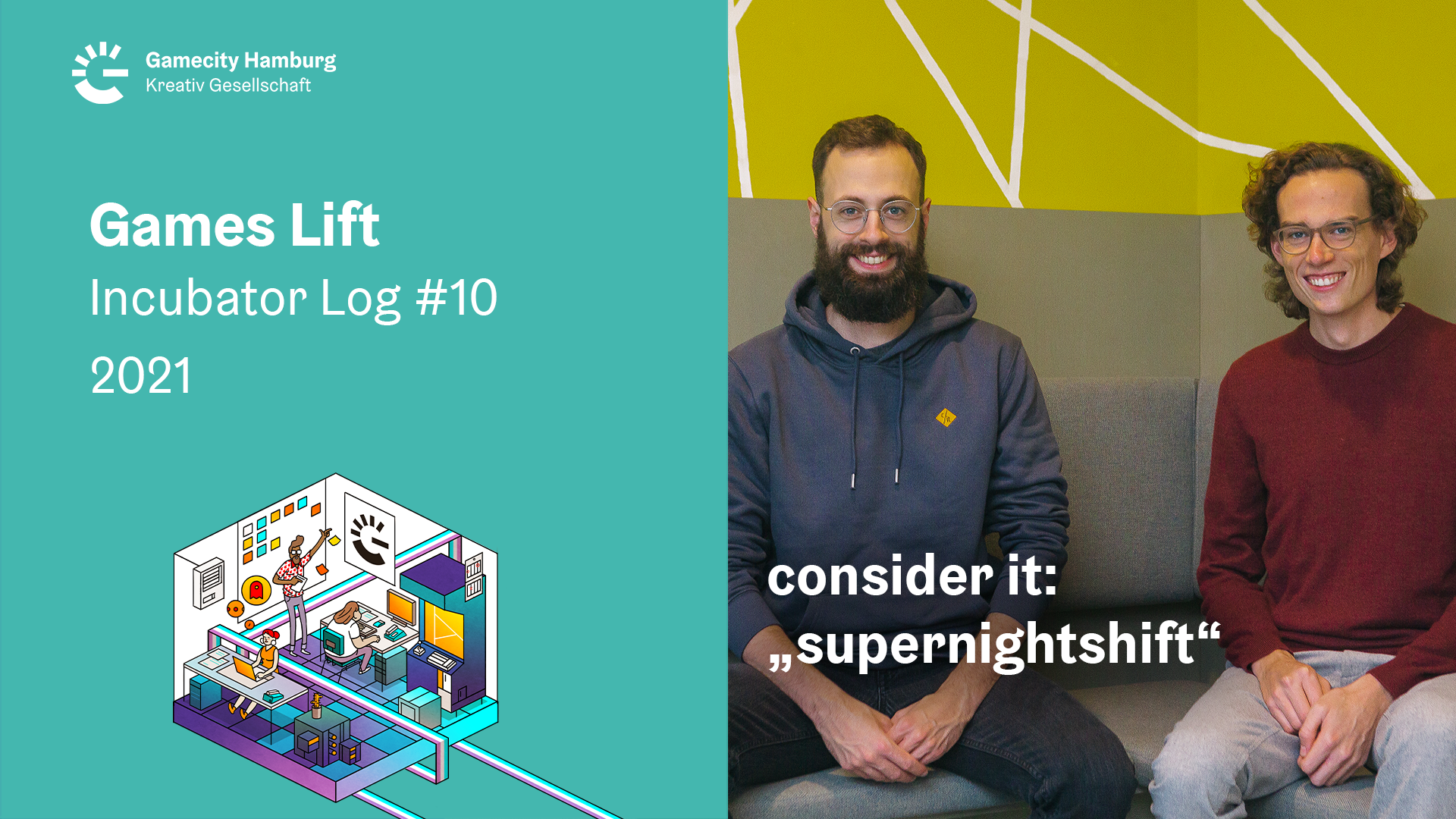
Games Lift: 'consider it' Get the Green Light
The Games Lift Incubator, an initiative based in Hamburg, Germany, serves as a professional development platform for emerging game projects. The program provides participants with access to workshops, industry mentoring, and networking opportunities to refine game mechanics and business viability. The primary objective is to assist teams in transitioning from conceptual ideas to functional, market-ready demonstrations.
A notable case study within the incubator involves Timo Schneider and Kevin Westphal, software developers from the company "consider it." The duo utilized the program to pivot from enterprise software development to game design. Their project, titled "supernightshift," originated from a mobility-tracking application developed for the World Congress on Intelligent Transport Systems. By leveraging real-world city map data and transport infrastructure, they created a strategy-based mobile game that incorporates mechanics inspired by titles like "Mini Metro" and "Scotland Yard."
The incubator process emphasizes the importance of iterative testing and expert feedback to identify core gameplay loops. For the "supernightshift" team, the program provided the necessary guidance to refine their engine and prepare a live demonstration for the Games Lift Graduation. This project highlights the potential for cross-industry collaboration, as the developers aim to integrate their game with real-world public transit partners to promote urban mobility. The initiative continues to support various teams annually, offering financial grants and structured mentorship to foster innovation within the regional gaming sector.
- The Hamburg-based Games Lift Incubator provides emerging game developers with workshops, industry mentoring, and financial grants to transition projects from conceptual ideas to market-ready demonstrations.
- Developers Timo Schneider and Kevin Westphal of 'consider it' successfully pivoted from enterprise software to game design by utilizing the incubator's resources.
- The project 'supernightshift' originated as a mobility-tracking application for the World Congress on Intelligent Transport Systems before being adapted into a strategy-based mobile game.
- The 'supernightshift' game mechanics utilize real-world city map data and transport infrastructure, drawing design inspiration from titles such as 'Mini Metro' and 'Scotland Yard'.
- The incubator process focuses on iterative testing and expert feedback to help teams refine core gameplay loops and prepare live demonstrations for the Games Lift Graduation.
Gamecity Hamburg
Article
Games Lift Graduation: 2021
The Games Lift Graduation 2021 marks the conclusion of a three-month incubator program hosted by Gamecity Hamburg, designed to accelerate the development of local independent game projects. The primary objective of the initiative is to provide emerging developers with the financial, structural, and professional support necessary to refine their game concepts and prepare for future market entry.
The 2021 cohort featured five Hamburg-based teams: Absolute Matter, Denise Koch, Symmetry Break Games, Consider It, and Supernatural Games. Throughout the program, which ran from September to December, these participants received 15,000 euros in start-up financing, dedicated co-working office space, and access to a comprehensive curriculum of workshops, coaching, and mentoring. This support structure is intended to help developers polish their visions and establish sustainable development plans.
The graduation event, held on December 2, 2021, served as a public showcase for these projects, allowing the teams to present their progress and future development roadmaps to both an on-site audience at Factory Hammerbrooklyn and a global audience via live stream. By facilitating this platform, the incubator aims to increase the visibility of Hamburg’s local game development talent and foster connections within the broader industry. The program reflects a regional commitment to strengthening the games sector through targeted investment and professional development.
- The 2021 Games Lift incubator program provided five Hamburg-based independent game development teams with 15,000 euros in start-up financing each.
- The three-month program, hosted by Gamecity Hamburg from September to December 2021, offered participants co-working space, workshops, coaching, and professional mentoring.
- The five participating teams were Absolute Matter, Denise Koch, Symmetry Break Games, Consider It, and Supernatural Games.
- The program concluded on December 2, 2021, with a public showcase event held at Factory Hammerbrooklyn and broadcast to a global audience.
- The primary objective of the initiative is to accelerate the development of local game projects and prepare emerging developers for market entry.
Gamecity Hamburg