Final Fantasy X
2 documents in the library are about Final Fantasy X, from writers such as Extra Credits, the newest from 2016. Each has a summary and key insights with the page they come from.
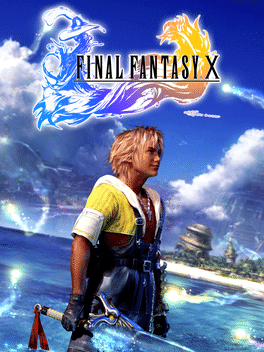
Final Fantasy X is the tenth main installment in the FF series and the first title released on sixth-generation consoles. It was also the first game to feature fully three-dimensional areas rather than including pre-rendered backdrops, and the first to include voice acting. Final Fantasy X tells the story of a star blitzball player, Tidus, who journeys with a young and beautiful summoner named Yuna on her quest to save the world of Spira from an endless cycle of destruction wrought by the colossal menace Sin.
- Released
- Jul 19, 2001
- Developer
- Square Product Development Division 1
- Publishers
- Square Electronic Arts, Square, Sony Computer Entertainment
- Genres
- Role-playing (RPG), Adventure
- Platforms
- PlayStation 2
- Links
- Official site, Wikipedia
Game data from IGDB.com
Documents about Final Fantasy X
Letter to My Nephews 3 - This Is Your Story - Extra Credits
Video games serve as a powerful metaphor for personal agency, teaching players that they possess the capacity to overcome adversity and shape their own destinies.
- Individuals can cultivate personal agency and resilience by internalizing the protagonist's role, translating the problem-solving skills practiced in video games into real-world perseverance.
- Life’s obstacles should be reframed as challenges inherent to a hero’s journey, encouraging a proactive approach to overcoming adversity rather than viewing barriers as insurmountable.
- Self-determination is essential for navigating non-traditional career paths, as demonstrated by the author's decision to prioritize professional goals over immediate financial security despite facing homelessness.
Free-to-Play's MECHANICS are Great - The Mini-Game Revolution - Extra Credits
Free-to-play mechanics, often criticized for their predatory pay-to-win structures, can serve as highly effective foundations for engaging mini-games when decoupled from real-world currency.
- Free-to-play mechanics can be repurposed as engaging mini-game systems by replacing real-world microtransactions with in-game resources earned through standard gameplay.
- Decoupling collection-based loops and strategic progression from financial barriers eliminates the exploitative nature of traditional Skinner box designs while maintaining player engagement.
- Integrating acquisition mechanics and armory-style progression into mini-games provides players with a sense of long-term investment, preventing side content from feeling shallow or forgettable.