Transcript
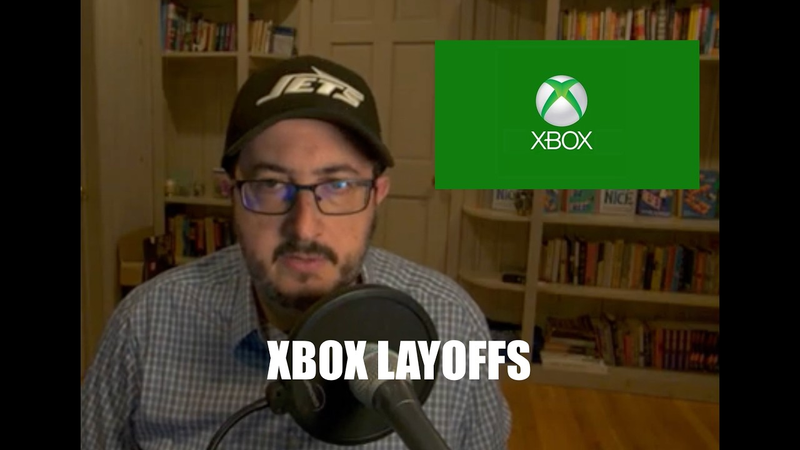
Hello. Today we're going to talk about Xbox, which is about to hit the reset button. As I reported on Bloomberg last week, massive layoffs are coming to Xbox after the end of Microsoft's fiscal year on June 30th. And as I reported on Bloomberg this week, studios such as Compulsion, the maker of South of Midnight, and Double Fine, the maker of Kill N Keeper, and Ninja Theory, the maker of Hellblade, are all currently in negotiations with Xbox to figure out what happens next because all of them are on the chopping block. And those are just the three that I've confirmed so far. I know that there are other studios in trouble. I know that layoffs are about to hit the entire organization in a huge way. Full picture isn't clear yet. We'll find out a little bit more in the days and weeks to come, but I wanted to talk a little bit about how we got here. In 13 years, Xbox has gone from competing
with PlayStation for console supremacy to hiring a new CEO who's like saying publicly about how troubled the They've been talking publicly about how troubled the business is and writing memos that include lines like, "This cannot continue." Um I think it's worth noting before we start getting into the history that uh Xbox Microsoft is a complicated organization with a lot of different branches. Um and and within Xbox you have a lot of these different temples. You have hardware, you have software, you have services, and those are all three different businesses with kind of competing um uh models, and sometimes they're at odds with one another. What's good for uh the Xbox as a platform might not necessarily be good for Xbox games and the studios that are making them. Um this is true of a lot of companies, but it's even more pronounced at Microsoft where people are incentivized to stay in their jobs for as long as possible and to make sure that they are seen as doing a good job and make sure they do not
rock the boat because much of their compensation, um, which is which is very good at Microsoft, is, uh, is stock. Um, and what happens at Microsoft is that their stock vests over time. They get new tranches over time and and each of it is kind of like vesting over over a certain period. And so, they, to get their full comp, they need to stick around. Um, there's this kind of infamous, uh, program that they have called 55 and 15, which is basically if you've been there for 15 years and you are age 55 or older, you can retire and then all of your stock will vest as a result. Um, and so, essentially, again, more incentive to just stick around at the company to keep your job. So, just keep that in the back of your head as we kind of go through the Xbox story. Um, all right. So, how do we get here? Let's go back to 2013. Um, so, this is the end of the Xbox 360 era. The Xbox 360 is up there with the PlayStation 3 duking it out for for number one. Um, I I believe the 360 is number one at one point. I don't
remember. I think they're both kind of like neck and neck towards the end in terms of hardware sales. Um, I believe the PS3 might have slightly slightly inched out the 360 by the end of things, but essentially, they were on par at that point. Um, and the Xbox, I mean, a lot of people associate it with big hits like Halo and Gears and Forza. Um, but it also really innovated and and brought to the games industry this idea of indie games that weren't just kind of like these random garage hits that you are garage garage creations that you might find on your PC if you if you know the right file share programs to look for, but also the these legitimate, um, potential hits like Braid and Limbo and Super Meat Boy and even Minecraft. All of those games became hits in part or mostly because they were on Xbox's, uh, Xbox Live Arcade program, which allowed some of these indie games not just to be distributed to Xbox console owners, but
also gave them promotion on the Xbox UI and really helped these people just kind of stand out. They got support from an internal organization within Xbox, ID@Xbox, and so worth worth noting here that like without Xbox in this generation, indie games would not be quite what they are today. Um then 2013 comes along and we have the Xbox One debacle under Don Mattrick who is running the org. The idea of the Xbox One, the next console, was not just to be a gaming platform, but also an all-in-one entertainment machine. The messaging in their announcement in May 2013 is completely incoherent and inconsistent. You have executives contradicting each other in interviews because nobody really knows what's going on. It's bundled with Kinect. It's online only. Nobody is really clear exactly how that works. You have to plug it in to Do you have to connect it to an internet connection every once in a while, every 24 hours, or all the time, or What does that look like? It's not clear. But one thing is clear, people hate it. People
revolt. At this point, I think it's worth noting today the idea of an online-only console is more palatable. I think more people are kind of accustomed to that notion, but back then that was not the case. People did not have quite the same internet infrastructure that they do today and this idea of not being able to own your own games, which is a huge part of it. part of this, by the way, a little bit of quick context here is that at this point used games were seen as the bogeyman for the video game industry. And a lot of game companies wanted to go to digital. They wanted to find ways to make it so you couldn't just buy a game and then trade it back into GameStop and allow GameStop to sell your used game to other people. This was seen as a as a big problem for gaming back then. Anyway, so is announced. It's a debacle. About one or two months after 2 months, I believe it was July of 2013, um, they reverse course on the online only thing and say, "Actually, we're going to make this so it's you can play it offline. Don't worry about the online stuff." Um, and eventually they get rid of Don
Mattrick during this period, but it's kind of too late to recover. Um, and one of the biggest problems is still intact, which is that the Xbox One is still sold with the Kinect bundled in. The Kinect, for people who don't remember, is the kind of the mo- body motion sensing device that Microsoft used to manufacture and had its pros and cons. Um, and so as a result of that, the Xbox One was sold for $500, whereas the competing PlayStation 4, which came out around the same time, November of 2013, was sold for $400. With that, the console war was essentially over. Um, the next year, they wind up detaching the the the Kinect and selling the Xbox One for 400 to try to compete, but a little bit too little, too late. So, Phil Spencer takes over. Phil Spencer takes over in 2014. He's a Microsoft lifer, been there for for like his entire life. It was the only job he had was being at Microsoft, and uh, he is uh, kind of uh, seen as as a he's well-liked, he's gregarious, he's amicable, um, and he is seen as someone
with a vision for what Xbox could look like 1 year, 5 years, 10 years down the road. One of his first big bets in the two or three years after he takes over is this initiative called Xbox Game Pass that they see as their version of Netflix for gaming. And, um, Phil Spencer, I think pretty wisely recognizes that as production costs keep going up, um, the volatility of the games industry just keeps increasing. And so, you need to sell more and more copies to get a hit. This is becoming a problem for Microsoft, and so why not take after the software initiatives within the org and get people on a subscription, get a stable source of recurring revenue, get people paying $10 a month, and just continuing to do so. Um, this is also a time when like Netflix that we're seeing the rise of streaming services in film and TV. So, it seems like a viable business model and Phil Spencer sees this as as the kind of the North Star for Xbox at this point. Game Pass launches in 2017. Soon it's getting day one versions of every Xbox game. Um, around the same
time, quick kind of side note here, um, with Xbox One sales struggling, uh, Spencer decides to put all of their games on PC, which is essentially the end of Xbox exclusivity, which, um, I think that people kind of point to the recent initiatives of PlayStation being on PlayStation and Switch as like, "Oh, Xbox isn't exclusive anymore." But really this is it because if you can get Xbox games on PC, um, that means that if you are a PC user and there are many millions of them out there, you have very little reason to buy an Xbox. Um, more on that stuff in a bit, but let's get back to Game Pass. For Game Pass to work, it needs a lot of games and, uh, Spencer and the Xbox org wind up paying a lot of developers to put their games on Game Pass and those deals wind up help helping a lot of developers. A lot of developers stay solvent over the years. But it it's not enough and Spencer wants a a way bigger back catalog and ju- just he wants hundreds of games on there because the only way for a um, a Netflix of gaming
to work is to have a huge catalog of of software out there. So, he goes on a shopping spree. Um, and that is in part buoyed by the success of the big 2014 uh, acquisition that Xbox made, which was, uh, Minecraft and Mojang, um, which is for $2.5 billion and worked incredibly well. I mean, Minecraft is still to this day, um, many, many years later, it's still one of the biggest games in the world. So, 2018-2019 era he buys Double Fine and Compulsion and Obsidian and in Exile and Ninja Theory and a whole bunch more, Playground. Um, and, uh, then in 2020 he buys Xbox buys ZeniMax, the company behind Bethesda, for 7.5 billion, which gives them access to franchises like Fallout and Elder Scrolls and Doom. Essentially, takes this massive third-party publisher and puts them into the Xbox umbrella. And one of the first things that they say is like, "Hey, we're going to put all these games, they're going to be part of they're all going to be day one on Game Pass. They're all going to be part of our just kind of broad strategy. We're going to
put them on Xbox and PC." Part of the arrangement behind all of these acquisitions is that these studios get to keep their autonomy. ZeniMax becomes its own entity or stays its own entity, still reporting to its CEO, Jamie Leader, while studios like Double Fine and Obsidian turn into what's called limited integration studios. They're told, "Make great games, take risks, try to win awards. It's okay if a game isn't a huge hit because it can still be useful to Xbox as part of this broad strategy to get games on Game Pass." So, Double Fine might be a perfect example of that. This is an independent studio in San Francisco that has been around for many, many years. It's one that you might know well if you've watched the Double Fine documentary series, including PsychOdyssey about the making of Psychonauts 2, which once again, I will say I cannot recommend enough if you want to understand how games are made and get a little glimpse behind the curtain into the messy development process. So, please go watch that. But yeah, so these guys, I mean, Double
Fine is is an example of a good of a studio that like has kind of survived, but never really had a huge hit. It's not the type of studio you buy if you want to if you want extreme profit profitability. If you want Call of Duty level numbers, we'll get to that. So, that's not the mandate. The mandate is is like you can be successful at the studio as long as you are making a game that contributes to the overall value of Game Pass, which is our main mission. At the end of 2020, around in same period, Xbox launches the Xbox Series X and Series S. Um one is more powerful, one is more affordable. And uh the idea is hopefully get back to get back it get back in the the hardware race after really losing this Xbox One generation because at this point Xbox hardware sales have truly kind of fallen off a cliff. The PlayStation is outselling it two to one by many estimates. We don't know the real numbers because things have gotten so bad that Microsoft decided to stop reporting Xbox sales numbers, Xbox hardware sales numbers, which uh one
rule of thumb in the games industry is that if you've sold well, if you're doing well, you share numbers. If if a game does not share sales numbers, chances are it is it is not delivering the expectations that people um were hoping for. Um but one of the problems with the Xbox Series, other than just kind of losing a lot of people to PlayStation over the last generation, one of the problems is that it doesn't have a killer app because the new Halo game, Halo Infinite, which was planned for launch, is delayed to fall 2021. It is having all sorts of development issues. Um that's a story for another day. And man, I talked about budgets on a previous video. Uh maybe one day I'll I'll talk a little bit about Halo Infinite and its challenges and its budget. The The budget behind that game is is I think larger than most people would ever even guess. Um that game winds up coming out in fall of 2021 and I I think has has a bit has a kind of strong start, but like ultimately winds up disap- disappointing players. Again, story for another time.
So, it's 2021. Um Xbox hardware sales are not where they need to be. Um its initiatives like cloud, which is the idea that like um you could stream a game to a device and play it using Microsoft's servers, and so you don't need to buy an expensive piece of hardware to play it, that initiative has not really taken off in a big way. Um Game Pass has done fairly well, but subscriptions have kind of plateaued. Um there isn't a ton of growth in it. Um, COVID has led to a lot of big gaming growth. Uh, interest rates are at zero. A lot of crazy acquisitions going on, and Phil Spencer takes a big swing. Um, Activision Blizzard at this point is facing a lot of turmoil. Uh, it's dealing with misconduct lawsuits and a lot of exposés written about it. Um, and Phil Spencer decides to buy it for nearly $70 billion. The equivalent of 28 Minecrafts in a deal that is announced in January of 2022. So, there are a few reasons that this deal makes sense from Xbox's
perspective. Um, Call of Duty is one of the biggest franchises in the world, and it could be a huge growth driver for Game Pass. You get the new Call of Duty as day one on Game Pass every year. You get a lot of people subscribing to Game Pass for that. Um, Blizzard isn't quite what it used to be. You can read that story in in Play Nice, um, the the book that I published a couple of years ago. But, uh, but it still has killer franchises. Uh, Diablo, Overwatch, and World of Warcraft was and remains a guaranteed money maker, so that's always a good investment. Um, Activision, uh, also owns Activision Blizzard also owns King, um, the makers of Candy Crush, which gives Xbox a presence on mobile that it never had before. I think Xbox is looking at mobile as a growth opportunity at this point. Um, mobile's a really tough market to get into and to find success in, but Candy Crush is one of the one of the games that has found found success over the years. So, that's a good investment. Um, now I won't get into all the nitty-gritty of the regulatory process,
but essentially it was a very messy battle that wound up taking 18 months to close. The deal was announced in January of 2022, and it didn't close until October of 2023. And during that period of time, the climate changed quite a bit. All of that COVID growth went away and started sputtering, and it became clear that, um, the video game industry was not going to see double-digit growth again. Roblox started explode exploding. Um a lot of other service initiatives did not failed. Um AI began to take over. ChatGPT launched in that same around this time that Activision uh the Activision deal closed and became this sensation, this kind of cultural phenomenon, and companies including Microsoft were looking over and saying, "Hmm, how about this AI thing?" Um and I wonder after that 18-month messy process that really led to a lot of problems, I wonder how many people at Xbox were still thrilled about that particular acquisition. Um because
around then is when Microsoft began to issue a new mandate to Xbox. Microsoft, its CEO, its CFO, they began to put on a little bit more pressure than there had been on Xbox before. Suddenly, it became all about profitability. Um because Microsoft is looking over and between the $69 billion acquisition, a lack of Game Pass growth, and this newfound focus that Microsoft wants to have on AI, they say, "Hey, we want to see a bit a more of a return on this massive investment that we made into Xbox." And by the way, I I think that like $69 billion is a huge number. $69 billion is an incredible amount of money that uh that Xbox went up paying for Activision Blizzard. But that's just the start. Like, the number the actual number that you are paying is so much bigger than you could even because in addition to what you're paying for the acquisition itself, whatever closing costs and regulatory like lawyer costs for the regulatory battles that come with it, you are also bringing in
thousands, 10,000 new employees who all need to be paid and managed, and you need managers within the Xbox org to spend their time watching over that org. Um and suddenly your organ your your organization is way more expensive than it was a year ago and those costs are not going away. They are continuing. So, you got to consider that as well. If you want to know more about burn rates and why these game companies cost so much to operate, check out my previous video about why games cost so much to make. Um but basic rule of thumb uh is that it used to be about $10,000 per employee per month. Um that number has gone up. Uh I think it's closer these days especially in expensive cities to 15,000, maybe even 20,000, somewhere between those two. Um and that number is not just salary, it also includes overhead and costs associated with employees. You can kind of fold rent into there, office rent into there, um benefits here in the US. Employers
have to pay a lot of money for health insurance and other benefits including 401k matching and other things that employees like to have and deserve to have. So, huge burn rate that is coming along with that $69 billion acquisition cost. And so, that around then, that uh around the time of that acquisition and suddenly the push for profitability, that's when we start to see things getting really bad. Xbox has four mass layoffs in 2 years. We see the shutdowns, the closures of studios under the Xbox umbrella like Arkane Austin and Tango Gameworks, um which wound up going to Krafton. Um which which saved that studio. Um we see cancellations of big expensive projects like Perfect Dark and Everwild and Blackbird, which is the code name that I reported at Bloomberg for the project that ZeniMax Online Studios was working on. They made Elder Scrolls Online and they were working on this Blackbird thing, which by the way, uh so I've seen footage of that game, it's pretty cool and it's kind of it's an
online shooter. Um Destiny just died and if Xbox had a game like Blackbird ready to go to kind of fill that void that Destiny has left, man, that that could have been a hit. Uh I've heard nothing but good things about that game. Some of the people who were that game granted big very expensive project spent a lot of time in development was having struggles of its own. But everything I've heard about that game is so positive that I I it's really a shame that it was canceled I think because I think it could have helped fill a much needed gap for Xbox right now. But anyway, so more pressure for profitability. This is around the time that Xbox and the beginning of 2024 starts dabbling with Switch and PlayStation. Soon it's putting everything on multiple consoles as it tries to fix its P&L's. Um becomes much harder to get straight answers if you're working at one of these studios as to what your goals are as to
what you should be trying to do. Becomes much more complicated to get games greenlit. You're dealing with Xbox finance a lot and trying to figure out like why you're hearing different things depending who you ask. Remember at the beginning of this how I mentioned that Microsoft is this big complicated organization with a lot of different tentacles, a lot of people who have different goals and kind of their own like objectives that sometimes are in conflict with one another. That becomes even more pronounced at this point. You have even within the Xbox or you have a lot of political fights, a lot of people who are at odds with one another, who are not on the same page. It is messy. The last couple of years at Xbox have been quite messy. People start opening openly questioning Game Pass and talking about how it cannibalizes their sales. And my colleague Cecilia D'Anastasio at Bloomberg has reported on the huge numbers that are estimated hundreds of millions that were estimated to have been lost on Call of Duty by putting that on Game Pass because when you put a game on Game Pass you are
you are losing a lot of money as a result even though you are like again, like I said, different orgs have different within the organization different groups have kind of competing goals. And so, what might be really good for the Game Pass folks and for subscriptions there, might not be so good for um individual studios and the the revenue brought in from individual games. Um by the way, just a little bit of quick a little quick side note is that like the way the accounting works at Xbox is that um you have your if you're a game studio, you have your P&L and um the org actually attributes a certain amount within that P&L as like revenue imagine revenue essentially for what you um uh for like the the number of hours that people are playing your game on Game Pass. I believe they call it member weighted value is the term that they use. Microsoft has a lot of funny terms. Um instead of profit margin, they call it accountability margin. And the big number there was 30% as I reported on Bloomberg with my colleague Dina Bass. Um and so, on your P&L on your profit and loss sheet, um you might see a
number that is like, "Hey, here's how much you would have made or here's how much you you are getting an attribution um in revenue from being on Game Pass." And uh people question that number, I think because it's all just kind of funny math. Um so, it's it gets a little bit messy. And again, expectations are not 100% clear. A lot of people are just kind of unhappy with the situation. People have different beliefs throughout the org as to whether Game Pass really cannibalizes sales or not. Um I I don't think there's kind of you can't AB test that sort of thing. So, there isn't really evidence one way or another, but I I think it's uh to me the eye test, I mean, I think it's pretty obvious to me that like if a game is on Game Pass and you could buy it or you could play it just for by paying $10 for a couple of months, um or you could or you could spend $70 on it, that seems like a no-brainer choice that you would just get Game Pass for a month or two instead. But, I mean, the this is not this is all estimates. This is all just people kind of conjecturing.
Um so, yeah, things are bad. And then at DICE of this year, I was actually I was talking to someone in management at an Xbox studio who was like, this is paraphrase, but who was like, man, there's so much uncertainty. We don't really know like how to do proper planning as we're planning ahead for the next year, the next 2 years, the next 3 years, but like I really trust Phil Spencer. I think he's a good leader. I think he has our backs. Roughly 1 week after that conversation, Phil Spencer was replaced by Asha Sharma, the new CEO who is currently running Xbox. And here we are. Asha Sharma has had a lot of time to go around, ask people questions. What she's done is really asked a lot of people for advice and their thoughts on the business. She's brought in new people. She's gotten rid of some people and she is about to hit the reset button. She's used that word several times, reset. The full picture isn't yet clear, but it will be within the next few weeks. And
one thing I want to end on is that you might see pundits out there pointing out that a lot of Xbox studios, including the ones that are going to get hit in this current reorganization, have struggled to come up with hits. We've seen a lot of games from the Xbox org that have not been profitable, games like South of Midnight and Keeper. The Hellblade games have never really been huge hits. Killin, which came out earlier this year, has really not found a player base. And that's the problem, don't get me wrong. And also I think it's worth noting that like none of these games are like critically acclaimed masterpieces. None of them are 90 plus Metacritic games that are that are winning game of the year or nominated for game of the year or anything like that. But I think it's worth noting and hopefully having a little bit of empathy for these studios and their the people who work there Um the messaging from above has just changed so much over the last 5 years.
Um and games start development like 4 or 5 years before they actually come out. So, when you start a project in 2020 or 2021, and that's under one mandate, and suddenly that mandate changes 2 or 3 years later, but it's too late to change course, that can be a problem. And the messaging from above during a lot of this this kind of this acquisition spending spree, when some of these projects started getting greenlit and starting to to um enter development, the messaging was not you must hit X amount of profitability. The messaging was make a games, help us fill out Game Pass, try to win awards. Of course, don't lose money, break even, um but like this is this is not a profit play. This is kind of Game Pass is the North Star. Um don't get me wrong here. I mean, Xbox the studios, including the ones that are getting shut down, uh made plenty of their own mistakes, and all sorts of production problems, all sorts of cost problems. I mean, there there were
lots of mistakes made along the way that you could point to. Uh Mm. That's my laundry. My laundry is is ready. See, I I don't I don't cut this stuff out. I I record my videos raw. So, uh hope you got that that that's a little inside baseball into the way that that uh I work. Um anyway, so a lot of these studios, they trust me, they made plenty of their own mistakes, but like in a lot of ways, they are being punished today for following orders, for listening to what they were told a few years ago. Um and that I think is just a shame, and what's happening is is going to be pretty brutal. Um the word bloodbath has been thrown around among people that I talk to who know what's happening. Um it's going to be bad. So, stay tuned. I'll be reporting more as I learn more on Bloomberg about who's being affected, how big the scope is, um but those three studios that I mentioned are just the beginning. There's going to be more. There are a lot of negotiations going on right now.
Um one more thing is that you might see headlines right now saying, "Hey, Xbox is shutting down X studio." And while that's kind of true, it's not entirely true because, again, all of these studio heads are in conversations, in negotiations with Xbox at the moment. Um in some cases, we might see studios spinning off. In some cases, we might see studios trying to find other buyers, like other publishers who might be interested in them. Um So, so it's not like nothing No nothing has been kind of executed just yet. That is going to happen in a few weeks. Um so, again, the full full picture is not entirely clear. We will see it happening soon. Um we will find out more in the next few days and weeks. A lot of uncertainty, a lot of turmoil. And man, it's just so hard to be an Xbox employee right now. To not know what's going on, to have to hear rumors on the internet that are like not entirely true or or not secure not like people corroborated
or confirmed. Just people being like, "Oh, I heard this studio might be in trouble." Which may very well turn out to be true, but is really really bad um to just be hearing and really hard to make great games under those conditions. And by the way, if you're wondering, one of the reasons that Xbox has such a struggle over the last decade making great games is cuz of a lot of this uncertainty. Um it's very hard to make great art when you are working under fear of layoffs and turbulence and shutdowns and cancellation and just trying to make games under these conditions. That's not how you make good stuff. All right, we will find out more soon. And uh man, just just yeah, I don't know what to say. It's going to be bad. Um God, hopefully there will be good news to talk about in this year, the rest of this year. Good news to make videos about too. I'll
try to I'll try to do some positive stories on this YouTube channel too. I promise. All right, see you guys next time.
Auto-generated captions from YouTube — names and numbers may be misheard.
Key insights
7 takeaways · ~3 min read- 01Xbox is undergoing a major organizational overhaul under new CEO Asha Sharma, involving significant layoffs and potential studio closures as the company pivots to prioritize higher profit margins.
- 02The $68.7 billion acquisition of Activision Blizzard, which took 18 months to close, significantly increased Xbox's operational costs by adding thousands of employees during a period of industry-wide market cooling.
- 03Xbox's financial strategy has been complicated by the conflicting goals of its hardware, software, and services divisions, leading to internal debates over whether Game Pass cannibalizes full-game sales.
- 04The shift toward a 'Netflix of gaming' model via Game Pass has failed to achieve sustained growth, with subscription numbers plateauing and internal questions rising regarding the revenue attribution of titles like Call of Duty.
- 05Xbox hardware sales have struggled significantly since the 2013 Xbox One launch, with the platform losing the console war to PlayStation by an estimated two-to-one margin, leading Microsoft to stop reporting official hardware sales figures.
- 06Rising operational costs, estimated at $15,000 to $20,000 per employee per month including overhead, have made it increasingly difficult for Xbox studios to secure project greenlights without delivering massive commercial hits.
- 07Recent Xbox titles, including South of Midnight, Keeper, and the Hellblade series, have struggled to achieve both critical acclaim and the high profitability levels required by current corporate mandates.
Ask AI about this video
Cite this video
Citation
Generating citation…



















Comments