LegalNacon
Monthly Declaration of Transactions by an Issuer on Its Own Shares: March 2020
1 Mar 20201 pages~1 min full read
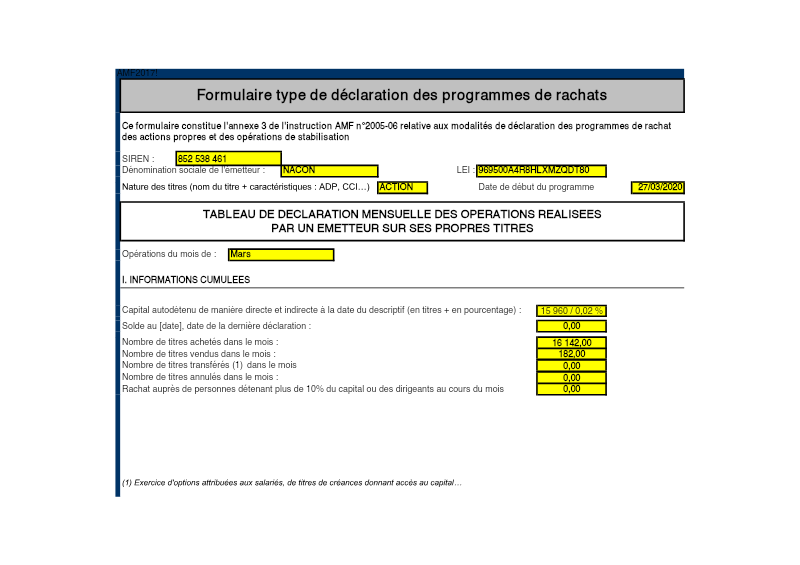
Nacon, a prominent French video game publisher and hardware manufacturer, initiated a share buyback program on March 27, 2020, following regulatory guidelines established by the Autorité des Marchés Financiers. This initial phase of activity reflects the company's strategic management of its equity shortly after its initial public offering. The reporting period covers the final days of March 2020, providing a snapshot of the company's immediate market interventions and the establishment of its treasury share position.
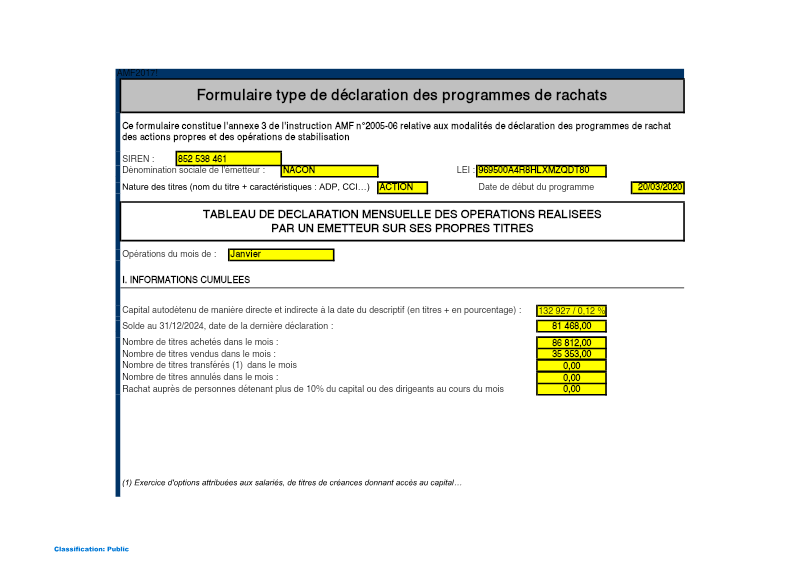
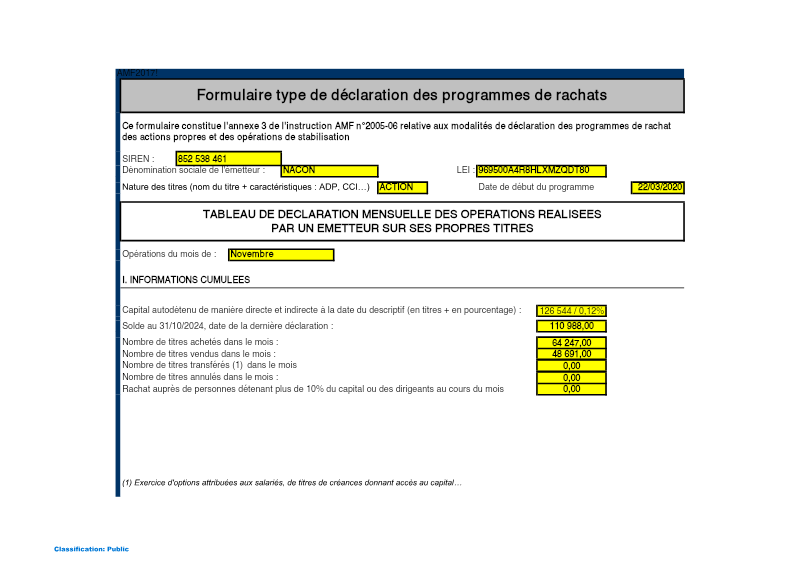
During this period, the company acquired a total of 16,142 shares and executed sales of 182 shares. These transactions resulted in a month-end net holding of 15,960 shares, representing approximately 0.02% of the company’s total share capital. The data confirms that no shares were transferred for employee stock options or debt conversions, and no shares were canceled during this timeframe. Furthermore, the company reported that no buybacks were conducted from individuals holding more than 10% of the capital or from company directors, indicating that the liquidity was sourced from the open market.
The scope of these financial activities is limited to the French equities market and specifically concerns Nacon’s common stock. By establishing a starting balance of zero at the beginning of the period and concluding with a minor percentage of self-held capital, the data illustrates the very early stages of a capital management strategy. This systematic reporting serves to ensure transparency in accordance with European market abuse regulations and French financial oversight standards, documenting the company's direct and indirect control over its own securities.
Nacon · 2026
Nacon · 2026
Nacon · 2026
Nacon · 2026
Nacon · 2025
Nacon · 2025
Nacon · 2025
Nacon · 2025
Nacon · 2025
Nacon · 2025
Nacon · 2025
Nacon · 2024

Ubisoft · 2026
Pullup Entertainment · 2025
Nacon · 2024

Nacon · 2024
Nacon · 2023
Nacon · 2023
Nacon · 2020
Nacon
Nacon
Ubisoft · 2026

Aream & Co · 2026
Drake Star Partners · 2026