LegalNacon
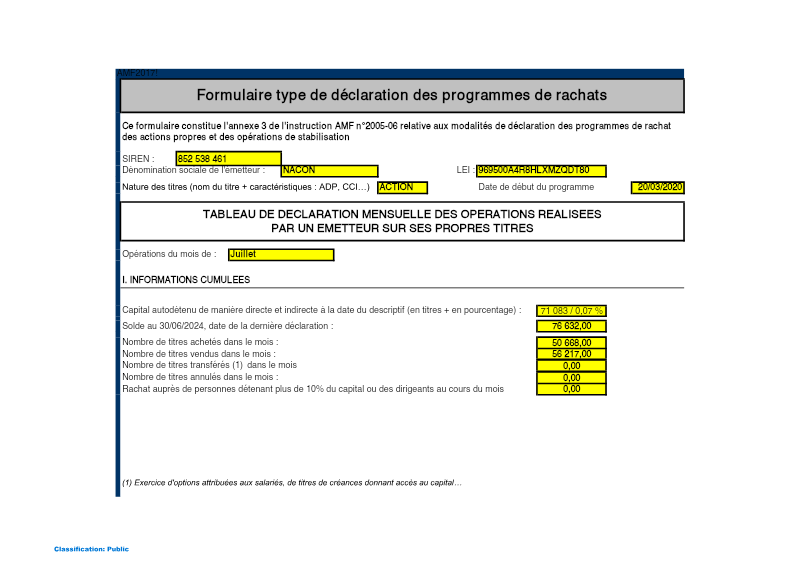
Monthly Declaration of Transactions Realized by an Issuer on Its Own Shares: July 2024
1 Jul 20241 pages~1 min full read
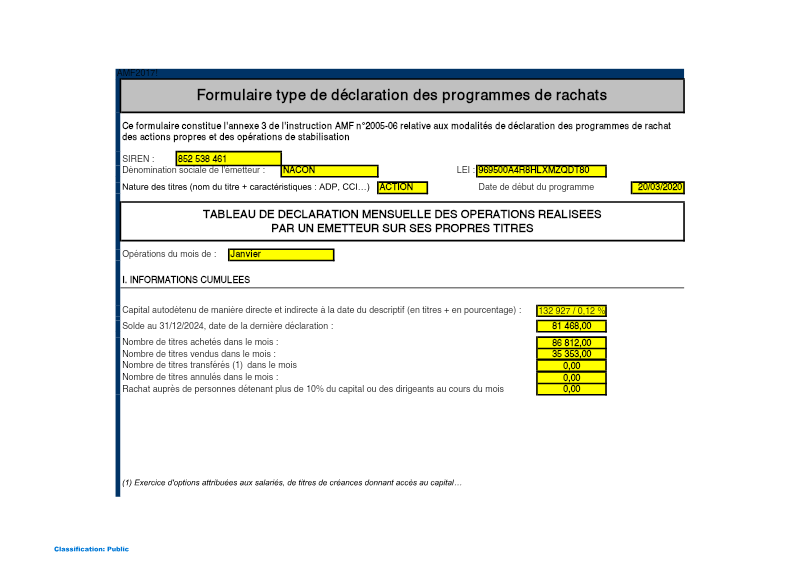
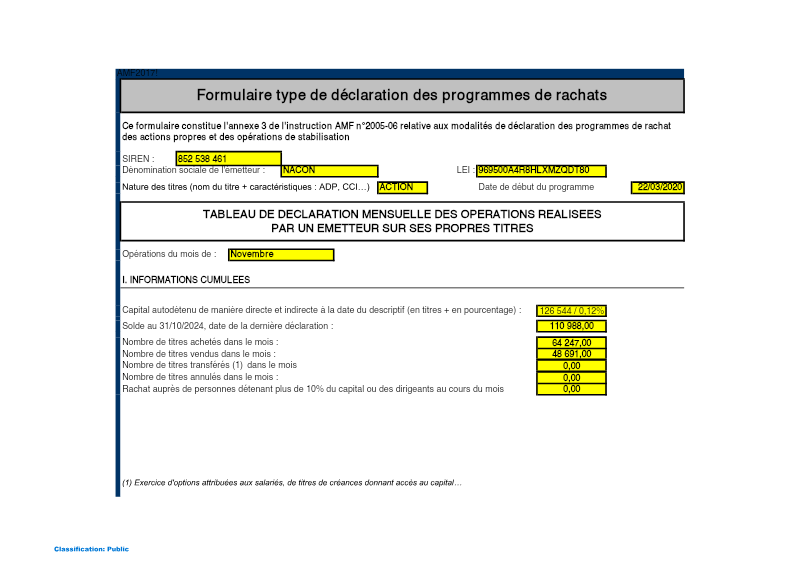
Nacon, a prominent player in the video game publishing and peripheral industry, executed a series of share buyback transactions throughout July 2024 as part of a long-standing program initiated in March 2020. These activities were conducted in accordance with French financial market regulations and reported via the standard AMF framework. The primary objective of these transactions is the management of the company’s own equity, a common practice for stabilizing share price or fulfilling obligations related to employee share schemes and debt instruments.
The data indicates a high level of liquidity management during the period, with the company purchasing 50,668 shares while simultaneously selling 56,217 shares. This net reduction in treasury holdings resulted in a closing balance of 71,083 shares by the end of July, down from the 76,632 shares held at the end of June. Consequently, the total direct and indirect self-held capital represented a marginal 0.07% of the company’s total share capital.
The scope of the reporting is limited to the issuer's activities on the French market during the single month of July 2024. Notably, there were no share transfers related to the exercise of employee options or debt conversions, nor were any shares cancelled during this timeframe. Furthermore, the company reported zero transactions involving individuals or entities holding more than 10% of the capital or members of the executive leadership team. This suggests that the monthly activity was focused on routine market liquidity rather than significant structural changes to ownership or capital reduction.
Nacon · 2026
Nacon · 2026
Nacon · 2026
Nacon · 2026
Nacon · 2025
Nacon · 2025
Nacon · 2025
Nacon · 2025
Nacon · 2025
Nacon · 2025
Nacon · 2025
Nacon · 2024
Ubisoft · 2026
Ubisoft · 2026
Ubisoft · 2026
Ubisoft · 2025
Ubisoft · 2025
Ubisoft · 2025
Ubisoft · 2025
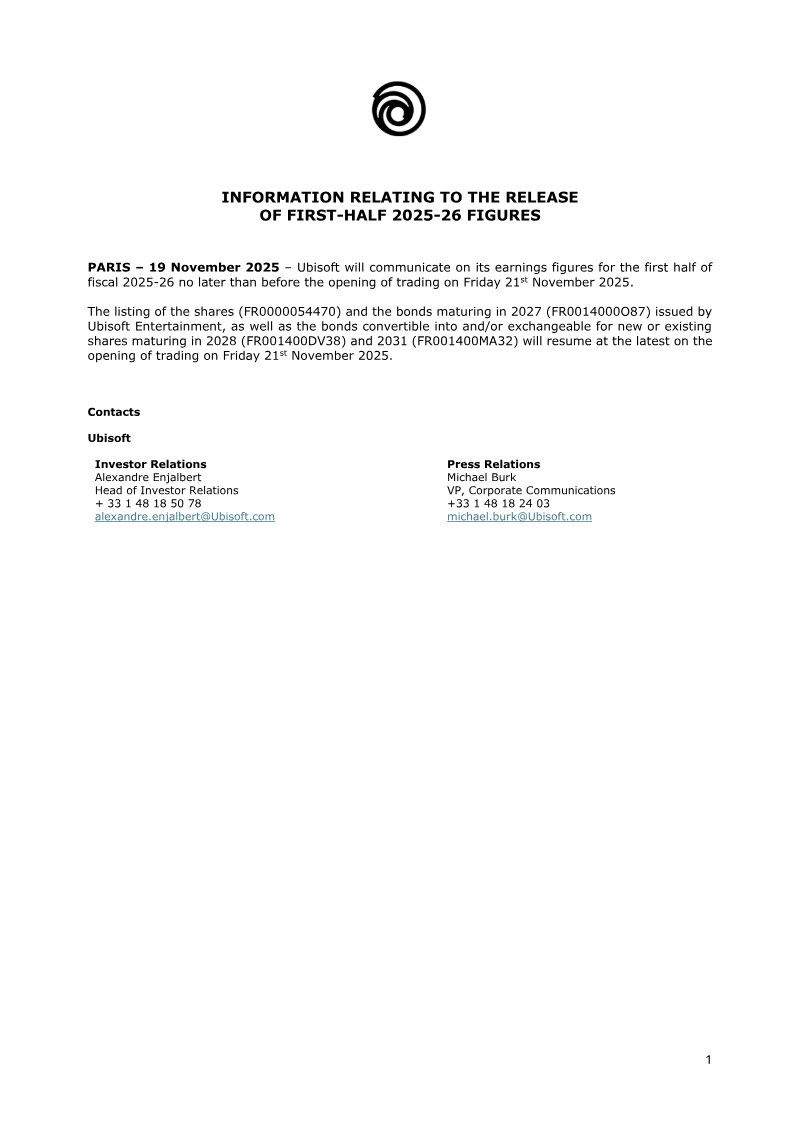
Ubisoft · 2025
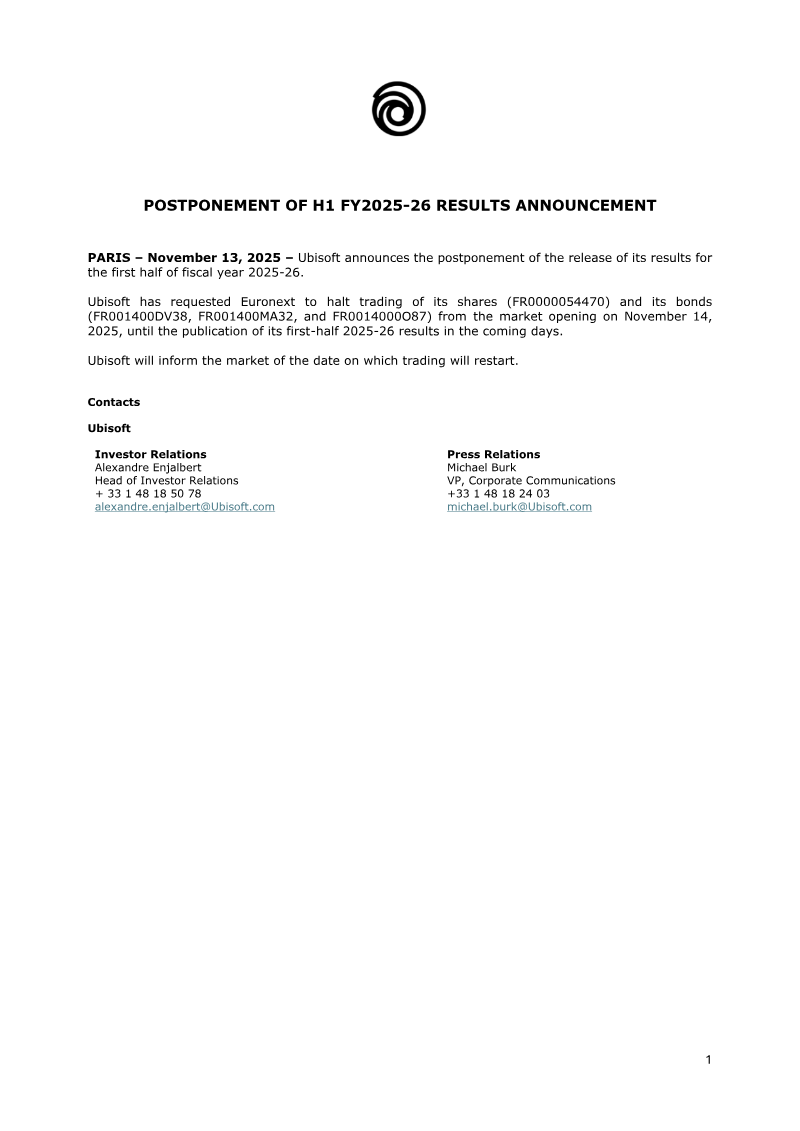
Ubisoft · 2025
Pullup Entertainment · 2025
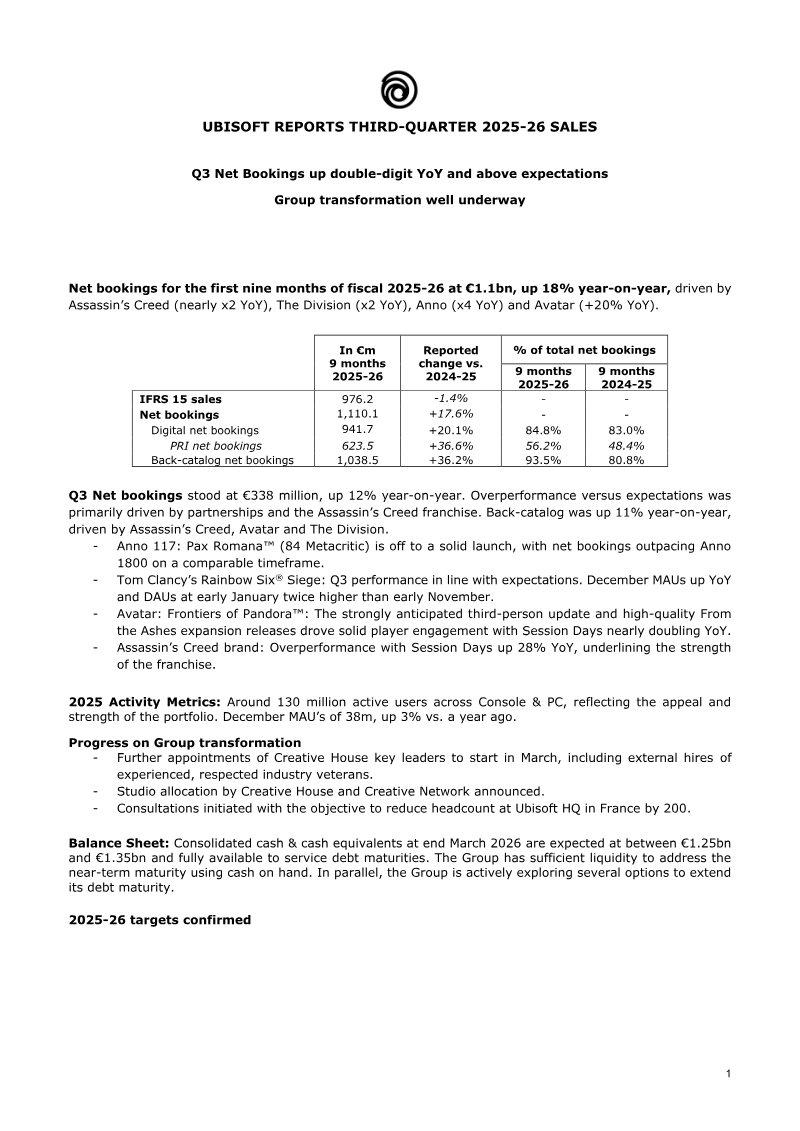
Ubisoft · 2025