1 free read left. Create a free account for unlimited reading + AI research.
Create free accountArticle Eludamos: Journal for Computer Game Culture
1 free read left. Create a free account for unlimited reading + AI research.
Create free accountArticleEludamos: Journal for Computer Game Culture
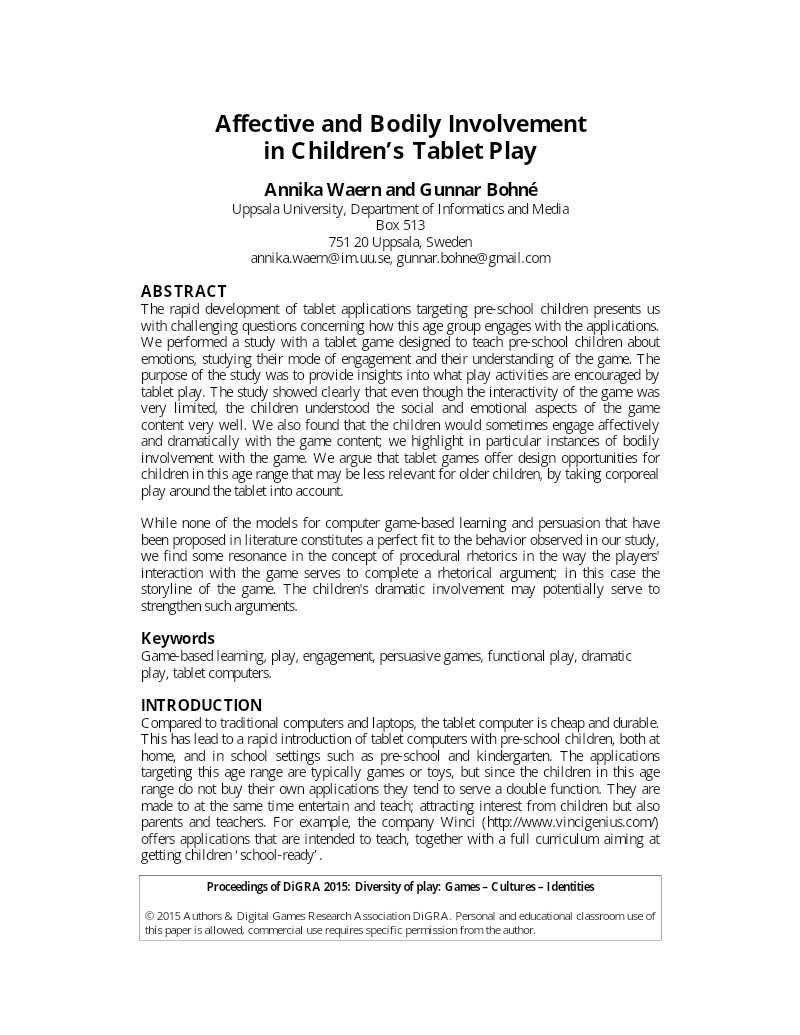
Its playful affordances are treated as worthy of analysis rather than dismissed as gimmicks.
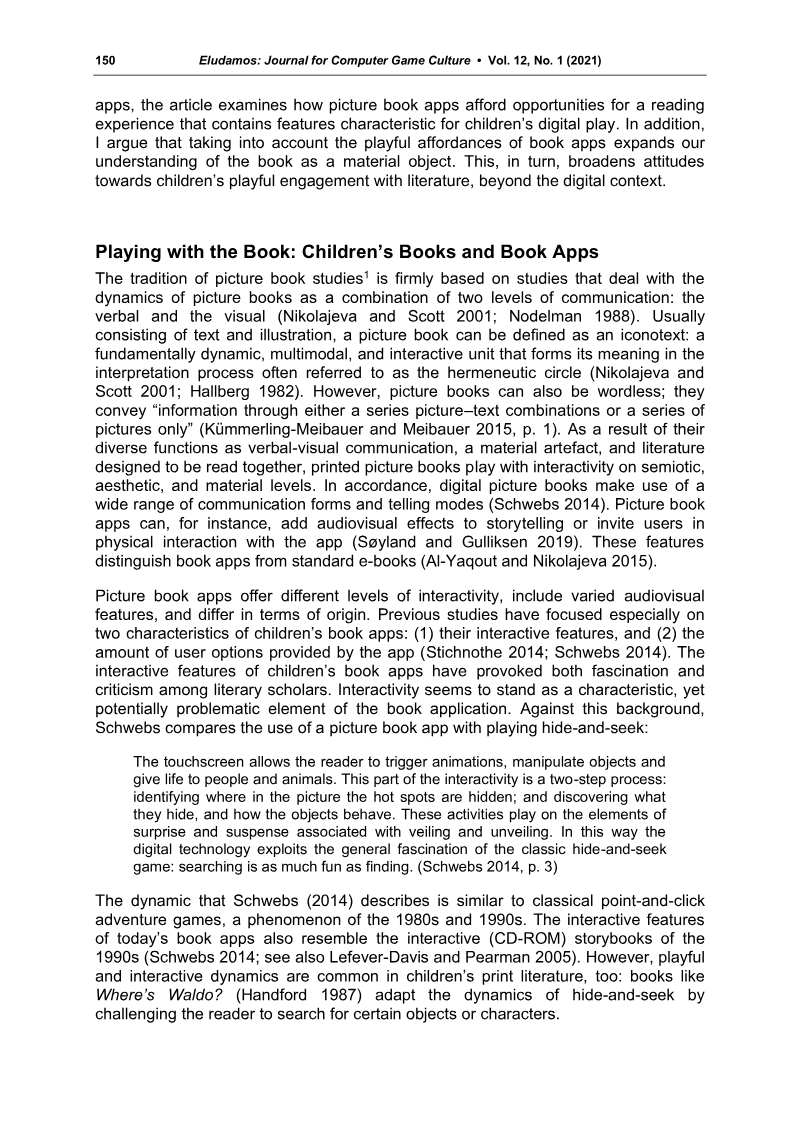
Järvenpää's study, published in Eludamos in 2021, argues that children's picture book apps occupy a hybrid space between the traditions of illustrated and movable print books and the conventions of mobile games. Rather than dismissing the interactive features of these apps as gimmicks, the work treats their playful affordances, including interactivity, engagement, and fun, as worthy of analysis in their own right. It challenges the tendency of earlier scholarship to overlook the long history of interactive print books and to frame children's play primarily as developmental. The analytical framework draws on concepts such as affordances, the distinction between playfulness and gamefulness, and engagement.
Through close readings of five case studies, the work examines how apps blend print reading traditions with digital play along a spectrum from near-traditional reading to game-like interaction. Examples include branching narratives that echo book-like page turning, tap-and-drag tasks that gate story progression, an edutainment title with a persuasive mechanic addressing segregation, and a wordless app designed for adult-child co-creation. The analysis finds that these apps frequently address dual audiences, and that some designs nudge children toward parental goals such as bedtime routines.
A central case study, the augmented reality-enhanced Mur, which pairs a 2016 printed book with a 2017 app, illustrates how interactive features can extend reading rather than merely decorate it. The app requires readers to understand how print and digital components work together, and it supports shared intergenerational play while offering limited guidance on how to do so. The work concludes that children's book apps share features with mobile games, such as the sandbox-style Toca Life World, yet are largely not gamified in a strict sense.
The study's scope is media-aesthetic and multidisciplinary rather than empirical; it is explicitly not an audience study and presents no new data on children's experiences. Play and gamefulness are treated as a continuum rather than as opposites. The authors call for further research on playful reading and intergenerational play in digital picture books.

Eludamos: Journal for Computer Game Culture · 2026

Eludamos: Journal for Computer Game Culture · 2026

Eludamos: Journal for Computer Game Culture · 2026

Eludamos: Journal for Computer Game Culture · 2026

Eludamos: Journal for Computer Game Culture · 2026

Eludamos: Journal for Computer Game Culture · 2026

Eludamos: Journal for Computer Game Culture · 2026

Eludamos: Journal for Computer Game Culture · 2025

Eludamos: Journal for Computer Game Culture · 2025

Eludamos: Journal for Computer Game Culture · 2025

Eludamos: Journal for Computer Game Culture · 2025

Eludamos: Journal for Computer Game Culture · 2025



European Conference on Games Based Learning (ECGBL) · 2026
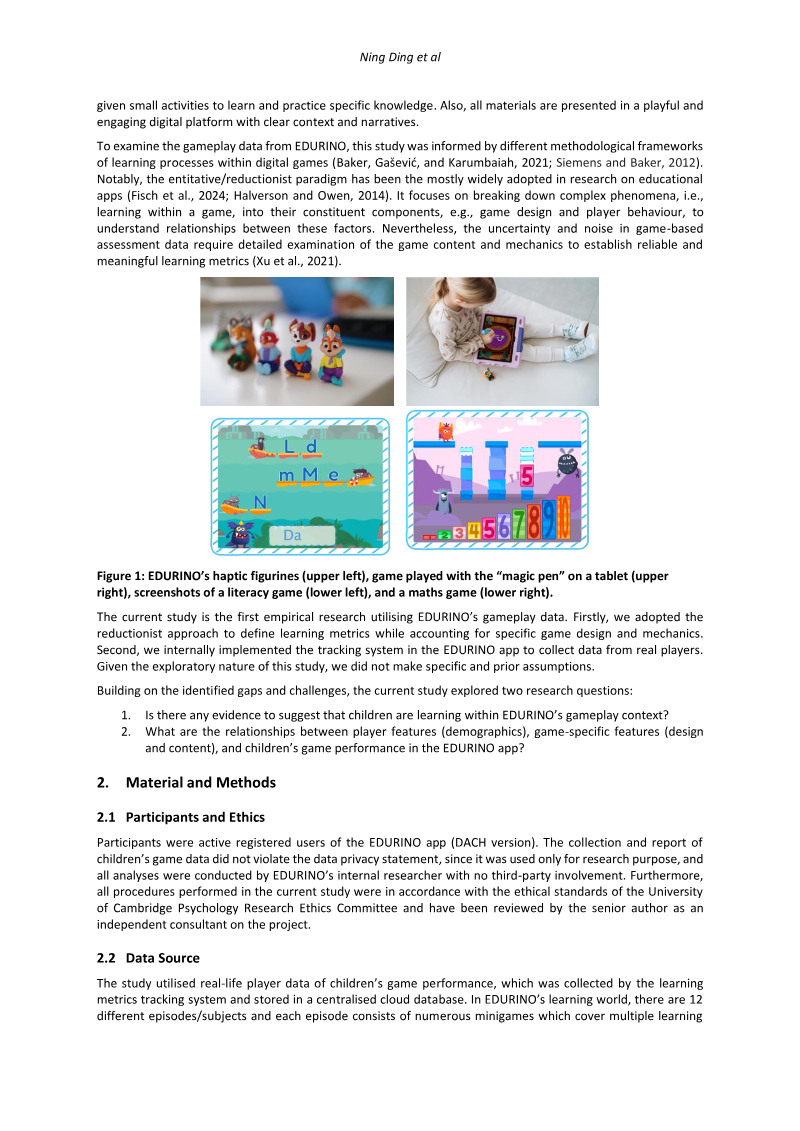
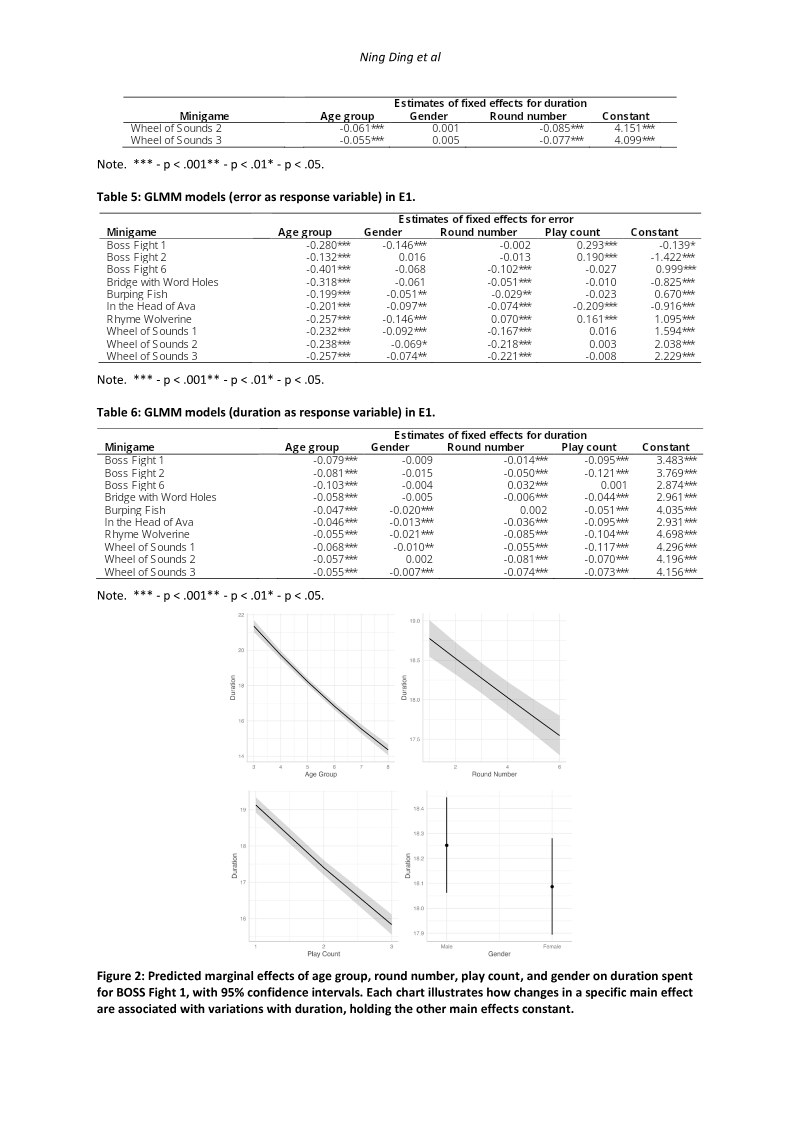
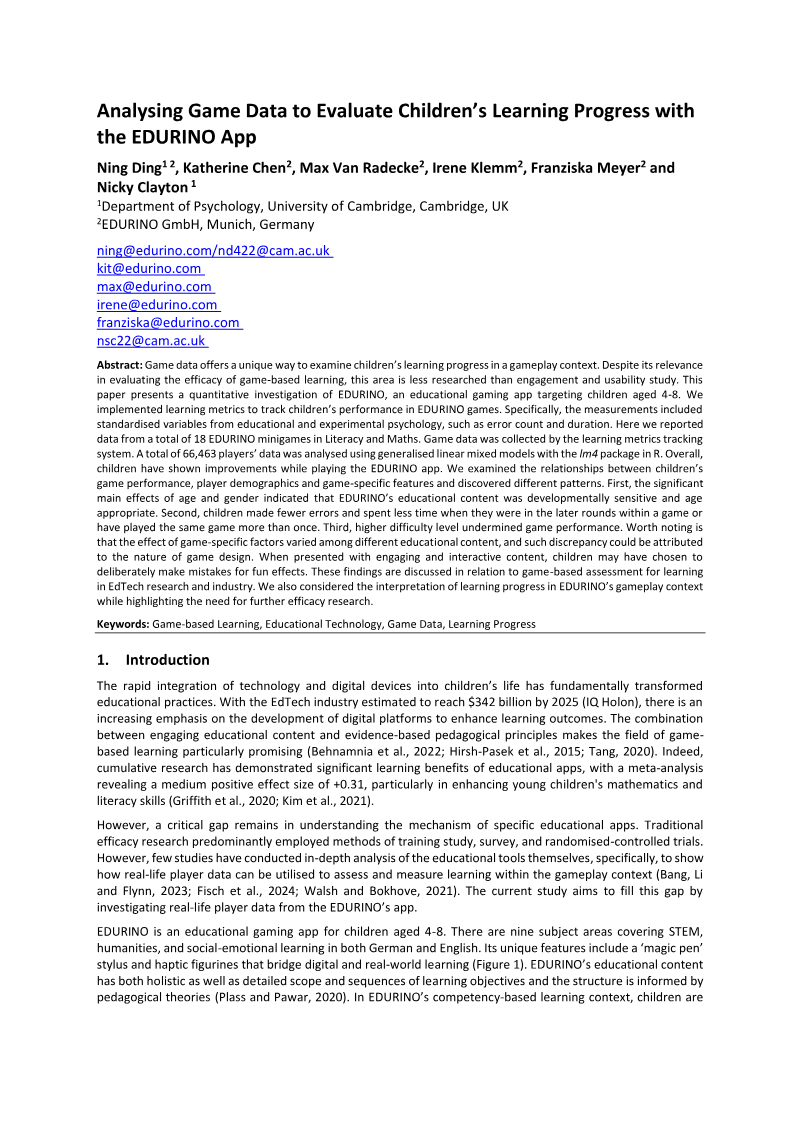
European Conference on Games Based Learning (ECGBL) · 2024
DiGRA · 2023