1 free read left. Create a free account for unlimited reading + AI research.
Create free account
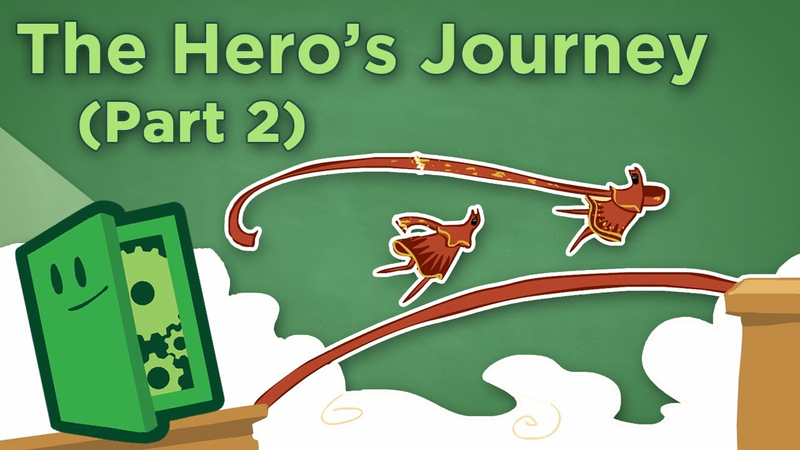
The Hero's Journey - II: Analyzing Journey's Mechanics as Metaphors - Extra Credits
Key insights
7 takeaways- 01Game mechanics should function as metaphors for character growth and thematic development rather than serving as simple plot devices.
- 02Supernatural aid, such as the scarf in Journey, serves the dual purpose of providing necessary gameplay tools while grounding the character's history.
- 03Transitions between game environments are most impactful when they coincide with shifts in the player's experience, such as the introduction of new gameplay threats.
- 04Mechanical progression must align with thematic resonance, ensuring that actions like acquiring items or changing environments mirror human struggles.
- 05Stages like the 'belly of the whale' can be utilized through descent-based level design to force moments of inward reflection for the player.
- 06The 'return' stage of the hero's journey can be gamified by having experienced players mentor newcomers, effectively passing on wisdom and mechanical mastery.
- 07The hero's journey framework is most effective when developers prioritize the underlying meaning of narrative beats over a formulaic, structural application.
Ask AI about this video
Transcript
[Music] [Music] all right onto the second half of the hero's journey picking up the Reigns this week is our dear friend gab and we couldn't be happier having you back on the show if you missed last week's episode we covered what the hero's journey is and started looking at the various stages as they are portrayed in the game Journey today we're going to start with the third stage of Journey and see if we can power all the way through all right so the third stage is called Supernatural Aid which is the moment when our hero gears up when they get some device or power that lets them face the trials ahead it's where they get their lucky charm or magic sword or giant Mech so what is it in Journey yep it's the moment you get the scarf this is the very archetypical Supernatural Aid moment the key that many creators often forget is that the supernatural Aid as Campbell discusses it is something you hold on to that gives you the hero the strength to do what you need to do while these items play a very literal role in the story they lose their efficacy in delivering a heroic narrative if they don't have meaning with in the world they're presented in
and to the character they're presented to a giant robot built of your mother crafted by your father the scarf of your lost people so out of place in the desert or perhaps a sword from your Mentor in an age of guns An Elegant weapon from a more civilized age all tell us about the characters they're bestowed to and give us a better understanding of the world they're bestowed in they also help us to understand the deeper narrative the personal non-heroic narrative within these stories that helps us to better understand ourselves this Aid doesn't have to be an object it can be Athena's protection of odyss or the assistance of Sun wuk Kong zubay and sha Wu Jing in Journey to the West but however we portray this moment in games it's essential that this Supernatural Aid isn't simply a plot device but rather helps us to understand the story character and the world the story takes place in in some meaningful way too often in games this is simply delivered as you got an awesome sword now you can fight all the things which means that even though they are following the structure of the hero's journey it tends to fall flat because it doesn't utilize the actual power of the structure the fourth stage is crossing the threshold the point at which the hero truly moves from their Ordinary World to the more
magical realm of Adventure usually this act has a certain amount of finality about it once they've crossed the threshold the hero usually can't return to the Ordinary World until their Journey's complete in Journey the game this is arguably one of two points if you're looking for a very literal crossing of the threshold it's when you pass through the first gate after you get the scarf this moment separates the tutorial from the game proper and is what separates us from the last and arguably most complicated mechanic in the game other people but I lean a little bit more towards the second interpretation that the crossing of the threshold is the moment when you first get to meet the being in white often Campbell talks about the threshold Guardian The Entity which both ties the world together and separates the world of Adventure from our everyday World Journeys being in white certainly accomplishes that the lesson here for games is simply that crossing the threshold has a great deal more impact when it happens not only to the character in the game but to the player themselves a good example of this is Silent Hill 3 where after running down the alley in the Mist the player enters the world of Silent Hill and now has to deal with monsters combat and real in-game threats for the first time in general this may be a phenomenal place
to end the tutorial segment of the game and begin the game proper as that way the player experience coincides with what they're supposed to be feeling narratively then there's the fifth stage the belly of the whale this is the thonic part of the narrative it's where the hero must face inward before they're ready to overcome the trials in front of them this is often represented by a descent a moving away from the Sun towards our more sgian Beginnings in Journey this is very clearly the underground segment where you first meet the dragons this is where you must confront the former status of your civilization and understand your own origins in well- constructed games you'll see the inherent power of this Ascent descent metaphor used to help reinforce the narrative going under the lake in Silent Hill 2 or going up the tower in Zars this Trope has been with us so long that we can't help but subconsciously be affected by it even if it does seem a little cliche the sixth stage is the road of Trials we've now passed into the second phase of the hero's journey initiation initiation is the section when the hero has accepted their role and now has to prepare themselves for the final goal and this section begins with the road of Trials these are the labors of Hercules or the Summoners pilgrimage in Final Fantasy 10
here in jurny it's the entrance to the mountains which forms a very literal Road of Trials this is what the player has to endure and overcome before they're ready for the conclusion of their Journey the next two stages the meeting with the goddess and woman as temptress Journey skips past and jumps right to atonement with the father but I'll mention them in passing anyway the first of these the meeting with the goddess is the point at which the hero comes to understand love either romantic or maternal this is often a necessary step in growth towards the apotheosis the second one is woman as temptress despite the name name I interpret this one more as physical as temptress than specifically woman as temptress it can be the Allure of money Fame sex or power that derails our hero from their quest which is something they have to overcome before they can reach their final goal go and the Green Knight is a good example of this next we get the ninth stage atonement with the father this title is also a little bit misleading as the father really just means supremely powerful entity confronting and reconciling with this entity is the penultimate step before the hero can complete their Journey this is an act of faith and usually happens when the hero other resources have failed them
arguably they touch on this in Journey when they show the group of entities in white at the end of the mountain although equally arguably they skip this step and that moment's the meeting with the goddess I think it could go either way the only reason I see it as atonement with the father is its proximity to physical death which in a much more detailed explanation in his book Campbell links to atonement with the Father the 10th stage is apotheosis the total abandonment of the physical world the Ascension to something more this is the step that finally allows the hero to achieve their goal this is often represented by death and rebirth which means you can probably guess what moment it is in Journey after coming back from the dead the hero is a perfected being able to see things as they are rather than through the illusions of ID and ego in games this is often the moment where your character changes from their normal state to having powers orders of magnitude greater the problems and distractions that were barriers to your progress fall away and become trivial and now you can charge straight to the final obstacle that stands between you and your goal then comes the final stage the return there are many different archetypical returns laid out in the hero's journey but to save time we'll just go over the one that's used in the
game it's one of the most common anyway this is the crossing of the return threshold which is the hero returning to society and bringing back whatever knowledge or wisdom they found in their Journey for the good of mankind and here is where Journey really shines here you get the backwards Journey the return of the star and then then many of us start the game over but this time it's different if your playthroughs were anything like mine the first time through people helped you and showed you the way the second time you were that person guiding people on their Journey over time you build up a longer scarf represent presen in this gained wisdom and ability but really what makes this incredible is that they deliver the metaphor directly through play that you yourself as a player bring back to the world which you've learned on your journey and give that knowledge over to the next generation of players trying to make it through their own journey I should point out that this is just one interpretation of the hero's journey this is how we see it and how we use it but even with a two-parter we really aren't able to do it justice I'd recommend the hero with a thousand faces to any student of media the original is going to be a much better Source than us if you take one thing away from this I hope it's that the hero's journey is in some way intended as a parable too many
works today simply cut and paste the literal steps but the steps by themselves aren't interesting it's how they let us imbue meaning into our work that gives the hero's journey its power so don't just stick a threshold or a road of Trials into your story look at the meaning of those events and how it might strengthen your work the hero's journey is a powerful tool but it's not a formula all right thanks everybody for indulging Us in that and thank you again gab for your help see you next week [Applause] [Music] [Applause] [Music] nah [Applause] [Music] [Applause] [Music] [Applause] [Music] [Applause] [Music] [Applause] [Music] [Applause] [Music]
Summary
The hero’s journey serves as a foundational narrative framework for game design, functioning not merely as a structural checklist but as a metaphorical tool to imbue games with deeper meaning. By analyzing the game Journey through the lens of Joseph Campbell’s monomyth, it becomes clear that successful implementation requires aligning mechanical progression with thematic resonance. When game mechanics—such as acquiring an item or transitioning between environments—are tied to character growth and world-building, they transform from simple plot devices into meaningful experiences that mirror personal human struggles.
The analysis breaks down several key stages of the hero’s journey, illustrating how they manifest in interactive media. Supernatural aid, such as the acquisition of a scarf in Journey, provides the player with necessary tools while simultaneously grounding the narrative in the character’s history. Crossing the threshold marks the transition from the ordinary world to the realm of adventure, a moment that is most effective when it coincides with a shift in the player’s own experience, such as the introduction of new gameplay threats. The belly of the whale, represented by descent-based environments, forces inward reflection, while the road of trials prepares the protagonist for their ultimate goal.
The final stages—atonement with the father, apotheosis, and the return—highlight the potential for games to deliver metaphors through play. In Journey, the return is realized when experienced players guide newcomers, effectively passing on wisdom and mechanical mastery. This demonstrates that the hero’s journey is most powerful when it transcends a formulaic "cut and paste" approach. Developers are encouraged to prioritize the underlying meaning of these narrative beats, ensuring that every stage of the journey reinforces the game’s core themes and enhances the player's emotional connection to the world.















Comments