1 free read left. Create a free account for unlimited reading + AI research.
Create free account
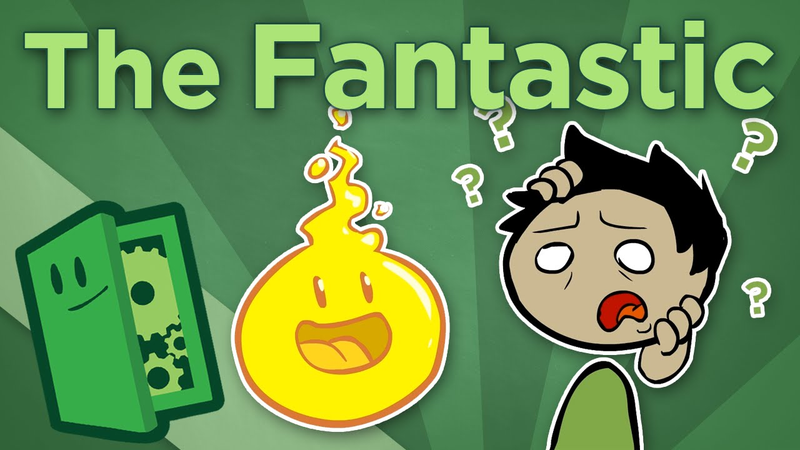
The Fantastic - How to Make Compelling Games Set in the Real World - Extra Credits
Key insights
5 takeaways- 01The 'fantastic' is a narrative framework defined by Tzvetan Todorov that relies on creating a state of hesitation in the player regarding whether an event is a rational illusion or a genuine supernatural occurrence.
- 02Leveraging the fantastic allows developers to ground complex or intimate stories in relatable, modern environments, transforming mundane settings into spaces of profound mystery and suspense.
- 03To effectively implement the fantastic, the game must maintain a setting perceived as the player's own reality, ensure characters share the player's confusion, and treat supernatural events as literal rather than allegorical.
- 04Game designers often struggle with this framework because players are conditioned to accept supernatural tropes as standard, and protagonists frequently adapt to extraordinary circumstances too quickly to maintain the necessary tension.
- 05The fantastic is inherently temporary, existing only during the period of uncertainty before the narrative resolves into either the 'uncanny' (a rational explanation) or the 'marvelous' (a confirmed supernatural reality).
Ask AI about this video
Transcript
The re-release of Indigo Prophecy, or Fahrenheit if you're outside the US, got me thinking about how rarely we seem to set games in our present day, unless we're making a war game, and how when we do, we rarely do so successfully. We're starting to get better at portraying the mundane slices of ordinary life, which is great, and I think it's going to lead us to produce games that explore vital parts of the human experience. But today I want to talk about something else, the thing which let Indigo Prophecy be successful, the thing which I believe might be one of the keys to creating a compelling enough hook to make a game about the modern world marketable, while still allowing its creators to explore aspects of the life we all know and live. Today I want to talk about the fantastic. In 1970, a Bulgarian sociologist and literary critic named Tzvetan Todorov defined the concept of the fantastic by saying, "In a world which is indeed our world, the one we know, when there occurs an event which cannot be explained by the laws of this same familiar world, the person who experiences the event must opt for one
of two possible solutions. Either he's a victim of an illusion of the senses, of a product of the imagination, and the laws of the world then remain what they are, or else the event has indeed taken place. It is an integral part of reality, but then this reality is controlled by laws unknown to us. The fantastic occupies the duration of this uncertainty. The fantastic is that hesitation experienced by a person who knows only the laws of nature confronting an apparently supernatural event." Any of you who have played Indigo Prophecy know exactly what he's talking about. The game starts off in the real world, but then something totally inexplicable happens. Are you hallucinating? Are you dreaming? Or are you insane? Or have you just been exposed to a side of the world that you never believed in? Do you have to fundamentally change what you think of as reality? This is a powerful starting point because it hooks us with a good mystery. It lets us have all the excitement of the supernatural, while still allowing us to explore our modern-day setting, and it forces us to question reality, and thereby forces us to examine it. To put us in the space
where we feel the fantastic, Todorov says that there are three conditions that must be present. First, that we believe the world our narrative occupies is the world we know. Second, that the characters within the narrative are as unsure of the reasons behind the fantastic thing they experienced as we are. And third, that we accept the events in the story as happening within the story, rather than simply jumping to poetic or allegorical meanings for the events. In games, we sometimes struggle with each of these conditions. In the case of the first condition, as players, we're not really prone to assuming that our game's narrative is taking place in our own reality. Because of how many games focus on fantasy or the supernatural, I think we've been trained to just assume that anything that seems supernatural in a game is actually just part of that game's world, that it's just how things normally are there. We actually have to work a bit harder than most other media to get our audience to stop and consider whether the magical things happening in the story are actually happening for rational, real-world reasons. Games like Life is Strange trip this line. In the case of the second condition, the characters in
our games rarely seriously question the reasons behind the fantastic things they experience. When something supernatural happens, our protagonists usually just roll with it. Often, it very quickly becomes the new normal. "Whoa, I got superpowers. All right, let's fight some crimes then." And finally, the third condition requires that we accept the reality of the events of the story instead of jumping right to the search for allegorical meaning. Even games like Kentucky Route Zero, which are amazing and do an incredible job delivering on magical realism, still don't actually put us in that fantastic space very often, because the nature of the game makes us quick to look for the meaning, the interpretation for any supernatural events that happen. We jump right to this search for meta-narrative meaning, which by the way is something I love, and I think may ultimately be even more valuable than the fantastic. I'm just trying to define the difference between the two. As soon as you start hunting for meta-narrative meaning, though, you're no longer questioning the reality of the event within the world the character occupies because you the player are already outside of that world looking at it as an interpretive piece of art. If we can deliver on these three
fronts though, then we can use this technique to engage and to explore. But there's one more important piece we have to understand about the fantastic before we can really truly utilize it. And that's the fact that the fantastic is the time in which you can't decide if the events are real and have a rational explanation or they're real and your previous understanding of reality was simply too limited to include them. The key here is that this is almost always a limited time. Both the characters and the players will eventually decide on one of these two ways to perceive the events they've been exposed to. If the events have a rational explanation, they become the uncanny in Todorov's formulation. If rather the events are truly real, then the story becomes the marvelous. Either of these tax can make for a powerful narrative, but as the creator of that narrative, you need to decide on which way you're going early. You need to know when you think the player's going to come to their decision on it and to decide what their decision means for their interpretation of your narrative. In many ways, you can look at the failings of Indigo Prophecy, especially later on, as a failure on these fronts. What's perhaps most
interesting to me though is how far we can stretch this concept to engage. Even though it isn't the strictest use, I would argue that Gone Home uses the fantastic to bring us in and to keep us questioning and exploring. It takes a subject matter that would seem dull or off-putting to some, but then brings the player in by starting us with a disappearance. Seeded in the player's mind is the question of whether this disappearance is something supernatural like we'd expect from most games or simply something natural. And the player's character shares this doubt. She's a rational normal person who won't jump to any wild conclusions or accept anything beyond her ken. But as she starts to explore, she has these tiny doubts creep in in the way that they so easily can in an empty home alone in a storm. I bring this up to show the power of the fantastic to engage us regardless of subject. It's power to turn the ordinary and the everyday, the world we understand, into a place full of mystery and questions. It gives us an entry point into narratives that exist in the time in which we live, and forces us by its very nature to question that world.
It's not a panacea or even perhaps one of the most frequently usable tools in the designer's tool belt, but it's one every designer should have. Catch you all next week.
Summary
The concept of the fantastic, as defined by literary critic Tzvetan Todorov, offers a compelling framework for game designers to create engaging narratives set in the modern, real-world environment. By introducing inexplicable, seemingly supernatural events into a familiar setting, developers can foster a state of uncertainty in both the player and the protagonist. This hesitation—the struggle to determine whether an event is a rational illusion or a genuine, previously unknown facet of reality—serves as a powerful hook that encourages players to examine the mundane world with renewed curiosity and suspense.
To successfully implement the fantastic, a narrative must satisfy three core conditions: the setting must be perceived as the player’s own reality, the characters must share the player’s confusion regarding the supernatural occurrences, and the events must be accepted as literal occurrences rather than mere allegories. Games often struggle with these requirements because players are conditioned to accept supernatural elements as standard genre tropes, and protagonists frequently adapt to extraordinary circumstances too quickly. Furthermore, the fantastic is inherently temporary; it exists only during the period of uncertainty before the narrative resolves into either the uncanny, where events have a rational explanation, or the marvelous, where the supernatural is confirmed as a new reality.
While not a universal solution for all game design, the fantastic provides a versatile tool for grounding complex or intimate stories in relatable settings. By leveraging the tension between the known and the unknown, developers can transform ordinary environments into spaces of profound mystery, effectively drawing players into narratives that explore the human experience within the context of the contemporary world.
















Comments