1 free read left. Create a free account for unlimited reading + AI research.
Create free accountWhitepaper Eludamos: Journal for Computer Game Culture
1 free read left. Create a free account for unlimited reading + AI research.
Create free accountWhitepaperEludamos: Journal for Computer Game Culture
The paper argues that a desire to keep playing can sustain participation even when an experience is not pleasurable.
This paper argues that player engagement, rather than enjoyment, can drive learning about serious topics, and it advances this claim through the OA3 framework (Objectives, Activities, Accomplishments, Affect), which was derived from surveys of 131 respondents and aligned with Malone and Lepper's taxonomy of intrinsic motivation for learning. The central contention is that a desire to keep playing, arising from exploration, curiosity, story, and problem-solving, can sustain participation even when an experience is not pleasurable, thereby enabling serious themes to be taught through experiential scenarios.
The framework is tested through "First Person Victim," an emergent narrative of 42 events depicting civilian victims of war, designed to spark classroom discussion. Early prototype testing with 40 lower-secondary students, who played for roughly 15 to 30 minutes without explicit goals, combat, or the possibility of dying, found that 40 percent wanted to continue, 27.5 percent were undecided, and 32.5 percent did not. Those who wished to continue were drawn to the theme of victimhood and reported emotions such as helplessness and shock, and 64 percent of them said they had learned something relevant, compared with only 8 percent of those who did not wish to continue. Common objections centered on design gaps such as the absence of goals and direction, along with technical problems like lag on school computers.
A subsequent playtest of a refugee-experience variant across three schools produced similar distributions, with engagement tied to exploration and theme-related feelings, and disengagement after about 15 minutes linked to repetition, missing extrinsic goals, and technical issues. Teachers and post-game discussions suggested the game could serve as a useful catalyst for classroom conversation. These findings are subject to notable limitations, including a non-representative sample, reliance on self-reported learning, and possible social-expectancy effects, so the results cannot yet be generalized beyond the settings studied.

Eludamos: Journal for Computer Game Culture · 2026

Eludamos: Journal for Computer Game Culture · 2026

Eludamos: Journal for Computer Game Culture · 2026

Eludamos: Journal for Computer Game Culture · 2026

Eludamos: Journal for Computer Game Culture · 2026

Eludamos: Journal for Computer Game Culture · 2026

Eludamos: Journal for Computer Game Culture · 2026

Eludamos: Journal for Computer Game Culture · 2025

Eludamos: Journal for Computer Game Culture · 2025

Eludamos: Journal for Computer Game Culture · 2025

Eludamos: Journal for Computer Game Culture · 2025

Eludamos: Journal for Computer Game Culture · 2025
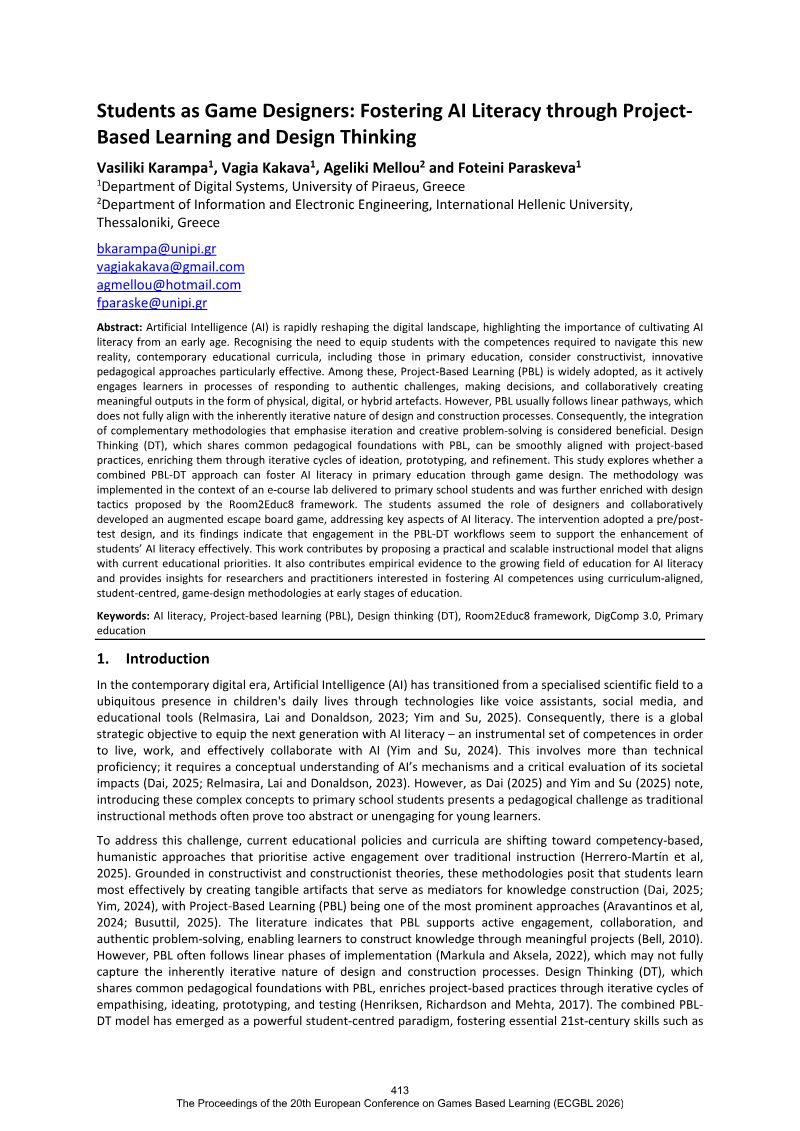
European Conference on Games Based Learning (ECGBL) · 2026
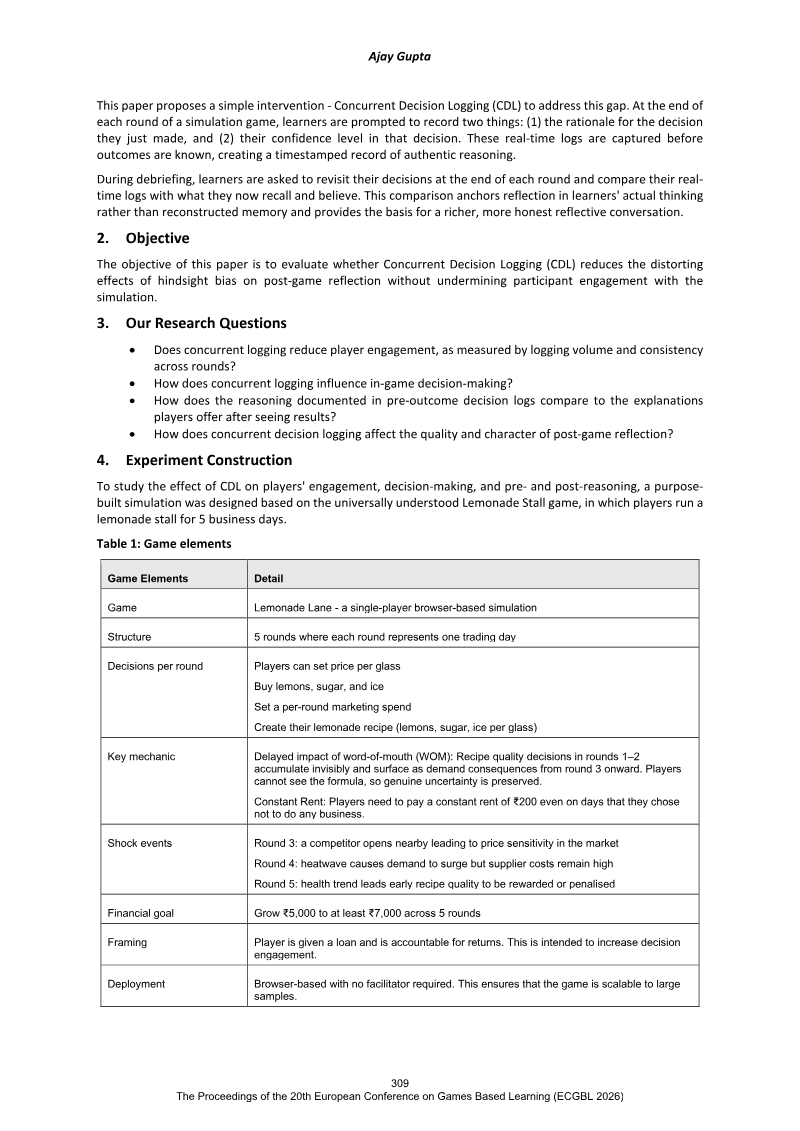
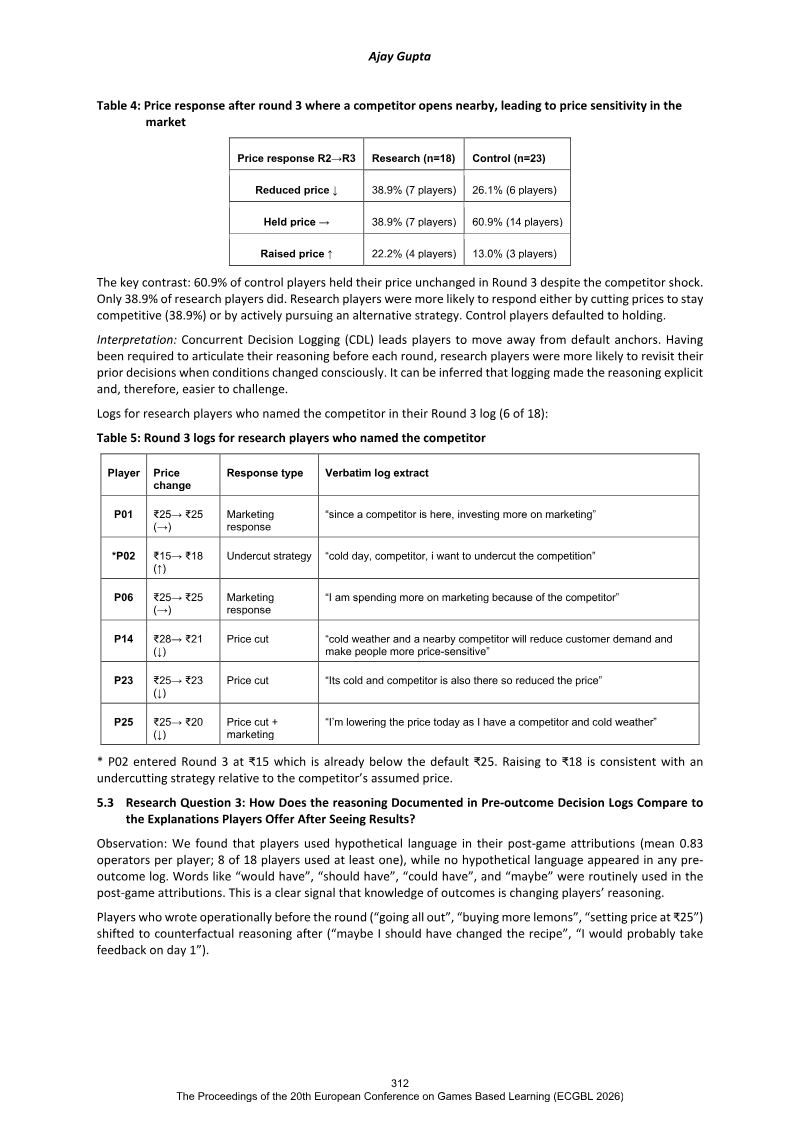
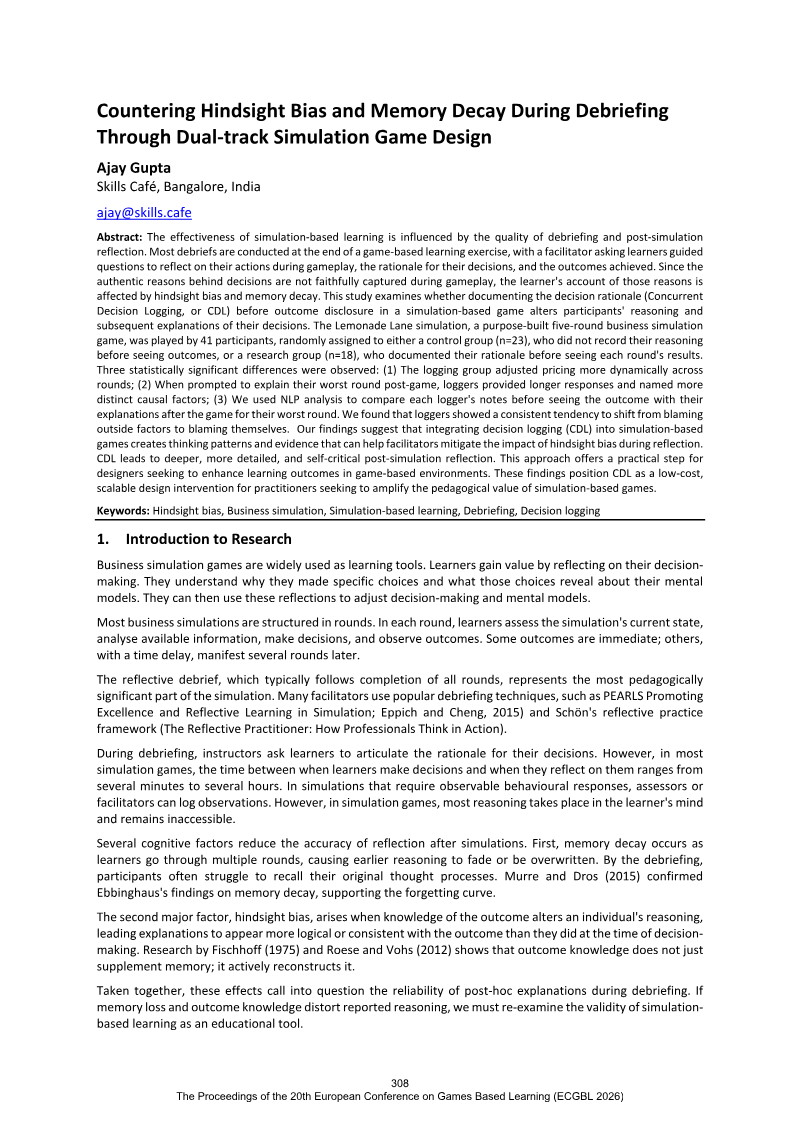
European Conference on Games Based Learning (ECGBL) · 2026



European Conference on Games Based Learning (ECGBL) · 2026