1 free read left. Create a free account for unlimited reading + AI research.
Create free accountWhitepaper DiGRA
1 free read left. Create a free account for unlimited reading + AI research.
Create free accountWhitepaperDiGRA
Variable positioning offers dramatic and narrative advantages that design has yet to fully explore.
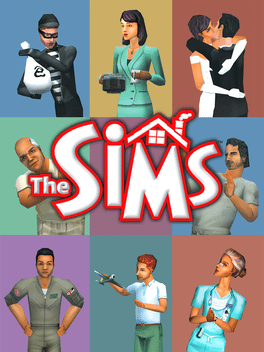
"Stepping Back: Players as Active Participators" argues that single-player third-person games can position players flexibly among multiple characters, rather than binding them to a single fixed role, and that this variable positioning offers dramatic and narrative advantages that game design has yet to fully explore. The paper frames this as an "active participator" model and situates it against existing critiques of games such as The Sims and SimCity, which have shaped how scholars think about player agency and representation in interactive narrative.
The central case study is Common Tales, a 1999–2000 prototype developed by Sony and Cambridge researchers in which players alternate control between two heroes, Thomas and Fiz. The authors examine how the game structures their relationship through three interaction types, teamwork, anguish, and rescue, and through spatial and cinematic design. Their key finding is that players shift among actor, spectator, and director or co-author positions, and that each player accumulates a personalised character history through unique "character extras" collected across episodes. The paper concludes that flexible camera control and controls can support character-driven drama, although a "reaction shot" feature was removed because it interrupted gameplay focus during moments of danger.
The work's scope is focused on a single prototype and a specific design approach within third-person, single-player games, drawing on narrative theory, embodiment research in virtual environments, and game studies. Its contribution lies in articulating design principles for variable player positioning rather than in presenting large-scale empirical data.
DiGRA · 2005