1 free read left. Create a free account for unlimited reading + AI research.
Create free accountArticle DiGRA
1 free read left. Create a free account for unlimited reading + AI research.
Create free accountArticleDiGRA
Stasis is inaction produced by game mechanics, whether designed by developers or injected by players. Stillness is inaction produced by aesthetics.
Rainforest Scully-Blaker's paper, presented at DiGRA 2018, introduces a framework for understanding inaction in videogames through two concepts: stasis, inaction produced by a game's mechanics whether designed by developers or injected by players, and stillness, inaction produced by aesthetics. The work positions these as an initiatory exploration rather than a definitive taxonomy, drawing on speedrunning research and slow-living theory while cautioning about the privilege embedded in leisurely play. Its central question asks whether moments of non-action can serve as a form of critique through play.
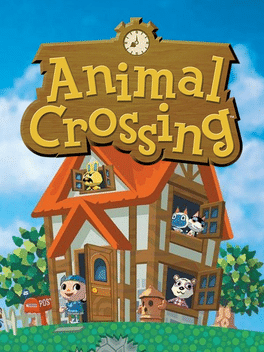
The analysis distinguishes between injected stasis, where players halt their inputs to observe what happens, and designed or player-discovered stillness, which is aesthetic and subjective. Examples from Man vs Wild and Mario Party 2 suggest that injected stasis often exposes design shortcuts or weaknesses in artificial intelligence, yet its critical intent is typically undercut by the entertainment-driven contexts in which such moments are shared. Stillness, by contrast, can be encouraged through design, as Animal Crossing's discouragement of running and its invitations to sit demonstrate, but it cannot be forced, which marks a meaningful distinction between the two categories.
The concluding discussion argues that stillness can be both designed toward and injected by players. The most striking case study involves World of Warcraft players who reached the level cap without killing enemies, most notably a player who remained a neutral Pandaren for a year. Such player-injected stillness demands substantial time investment, and the author suggests it may offer a path toward critique through play. This is presented as an open research direction rather than an established finding. The work ultimately contends that games uniquely enable critique through interaction rather than through new creative works, while acknowledging an unresolved tension between academic and popular forms of critical engagement.
Each row is a game or company this document names, each column a document, oldest first. A mark means that document names it. Select a row to see those documents.
DiGRA · 2022
DiGRA · 2022
DiGRA · 2022
DiGRA · 2022
DiGRA · 2022
DiGRA · 2022
DiGRA · 2022
DiGRA · 2022
DiGRA · 2022
DiGRA · 2022
DiGRA · 2022
DiGRA · 2022