1 free read left. Create a free account for unlimited reading + AI research.
Create free account
Spectacle Creep - When Sequels Try Too Hard - Extra Credits
Key insights
6 takeaways- 01The Call of Duty franchise illustrates this trend, shifting from early, plausible, character-driven military conflicts to increasingly illogical, gravity-defying action sequences.
- 02Spectacle creep occurs when franchises feel compelled to continuously escalate the scale and intensity of content, often forcing narratives into absurd, world-ending stakes to maintain audience engagement.
- 03Prioritizing surface-level adrenaline over coherent storytelling risks transforming grounded, compelling franchises into parodies of their original iterations.
- 04As narrative stakes become overly inflated, they lose emotional resonance, forcing developers to rely on extreme shock-value scenarios to elicit player reactions.
- 05When franchises reach a ceiling of escalation, developers often resort to reboots or lateral narrative shifts to reset the scale and return to more manageable storytelling.
- 06The industry's reliance on high-budget, annual release models creates a structural pressure that incentivizes visible spectacle over the core qualities that initially established a franchise's success.
Ask AI about this video
Transcript
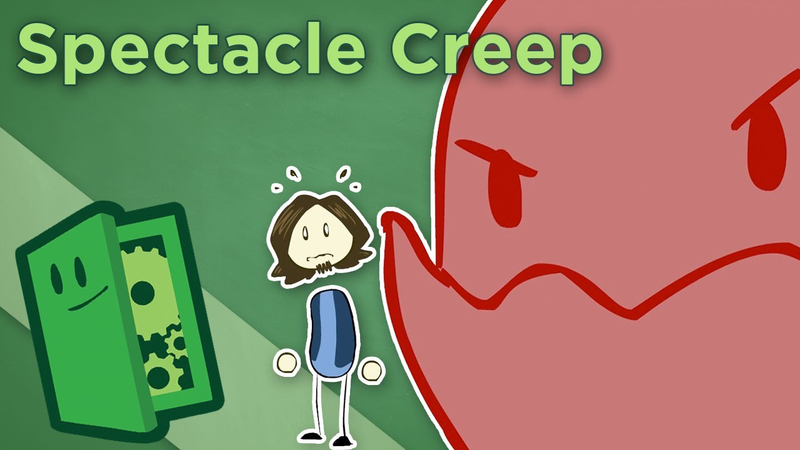
[Music] Often in terms of game design, we talk about power creep, which is what happens to the general power level of content in a game, like weapons, monsters, and spells, as the game ages and new expansions or downloadable content is added on. But we very rarely talk about spectacle creep. Spectacle creep is this idea that as time goes on, all your content has to be bigger, flashier, and more adrenaline-packed or immediately riveting than before. And it's by no means limited to our medium. In film, we see this all the time. We see this everinccreasing need for bigness, for spectacle, for ratcheting up the scale of a story. The transition from Pitch Black to Chronicles of Riddic is one of the examples that immediately springs to mind. In order to keep the audience's attention, the filmmakers decided that they had to up the stakes. The story could no longer be about the plight of a single ship of starf farers, but had to be about the fate of the galaxy. Anything less would seem unimportant. And we see this on a broad scale with our summer blockbusters. Not only have we increased the size and frequency of
our explosions and fight scenes, but perhaps most telling is the fact that we've come to a point where most of our summer blockbusters can't be about anything less than saving the world. There's a fantastic quote by Damon Lindelof, the writer for things like Prometheus and the film version of World War Z that typifies this. He said, "Once you spend more than a hund00 million on a movie, you have to save the world." And when you start there and basically say, "I have to construct a mcguffin based on if they shut off this or if they close this portal or they deactivate this bomb or they come up with this cure, it'll save the world." You're very limited in terms of how you execute that. And in many ways, you can become a slave to it. And again, I make no excuses. I'm just saying you kind of have to start there. In the old days, it was just as satisfying that all Superman has to do was basically save Lois from this earthquake in California. The stakes in that movie are that the San Andreas fault line opens up and half of California is going to fall into the ocean. That felt big enough, but there is a sense of bigger, better, faster. Seen it before, done that. And now we're there with games. The Call of Duty games may be the best example. General plot spoilers ahead, just so you know. In the
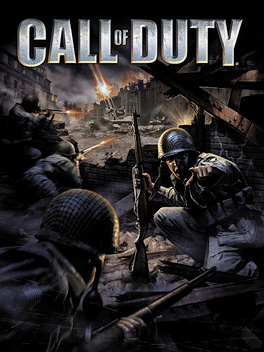
first Modern Warfare, we have a series of reasonably plausible scenes with the big punch to the gut moment being when a nuclear bomb explodes and your character slowly crawls from their downed helicopter until they're overcome by their wounds. In Modern Warfare 2, we start to ramp up the ridiculousness, forcing the absurd just to top what was delivered in the first one. Russia invades the US eastern seabboard, which by the way, that makes no sense whatsoever. Even if you accept the semi-ludicrous notion of Russia invading the United States, why they would ever go west through or past Europe and over the Atlantic rather than just crossing the Pacific. Anyway, Russia invades the eastern seabboard just so that we can show Washington DC being occupied and up the stakes. And now the punch to the gut involves the player being forced to participate in a terrorist attack on an airport, pandering to the fears and hot button issues of an American audience at the time. In game three, we enter what almost seems like full parody mode, forced by the spectacle creep of the series. We blow up most of New York. Americans flippantly knock over the Eiffel Tower. There's a zeroravity gunfight in a crashing plane as the sections are separating. And I can
almost imagine the meeting that resulted in the punch to the gut moment. All right, guys. We're stuck. How do we want up making the player be a terrorist? I got nothing. Yeah, me either. That seems pretty big. I got it. Wait. All right. We have the player be a father who accidentally videotapes his daughter getting gassed to death while on vacation. And and then we gas him to death, too. That's it. High five. Now, none of this is meant to diminish the Call of Duty folks achievements. Even in the later borderline parody iterations, they managed to pack enough ridiculous action in that sometimes it's hard to even take in how ludicrous everything might be while it's happening. They are masters at this sort of thing. And they make feel awesome what other people would be laughed out of the room for. But it still serves as a good example of the dangers of having to continually one up your last product, especially now that many games are on a yearly production cycle. Which leads us to reboots. One of the reason that we see so many game series diving into reboots these days is that a reboot is an easy way to level out your spectacle creep and bring things back down to a manageable level where you can still tell a story or have a coherent plot. Even efforts like Call of Duty Ghosts,
where they branch the series and make a strong lateral shift away from the central story line, is an attempt to find a new starting point for the inevitable creep upward in spectacle. After you've saved the world, there's just not that much farther you can go. Unfortunately, as this industry continues to depend more and more on franchises, and the investment in game creation becomes so enormous that we have to produce these franchises on an annual basis just to keep revenue up, spectacle creep becomes an even greater issue. The fresher a game is in the minds of a player, the greater the need to top the last iteration in an immediately visible surface level way. And it's this very spectacle creep, this ever growing need to become bigger and faster and more intense that breaks so many franchises, forcing them away from what originally made them great and instead leaving us with mere parodies of what we once loved about the series. See you next week. [Music]
Heat. Heat. [Music]
Summary
Spectacle creep represents a recurring phenomenon in entertainment media, particularly within the video game and film industries, where successive installments of a franchise feel compelled to escalate the scale, intensity, and visual flashiness of their content to maintain audience engagement. This pressure to constantly surpass previous iterations often forces narratives into increasingly absurd territory, where stakes must inevitably involve global catastrophe or world-ending threats to remain relevant. By prioritizing surface-level adrenaline over coherent storytelling, creators risk transforming grounded, compelling series into parodies of their former selves.
The progression of the Call of Duty franchise serves as a primary case study for this trend. Early entries focused on relatively plausible military conflicts and impactful, character-driven moments. However, the demand for annual releases and the need to one-up previous spectacles led to increasingly illogical plot developments, such as improbable geopolitical invasions and chaotic, gravity-defying action sequences. This cycle eventually reaches a point of diminishing returns where the narrative stakes become so inflated that they lose their emotional resonance, forcing developers to resort to extreme, shock-value scenarios to elicit a reaction from the player.
When franchises reach this ceiling of escalation, developers frequently turn to reboots or lateral shifts in the narrative to reset the scale. These resets provide a necessary mechanism to return to more manageable, grounded storytelling. However, as the industry continues to rely heavily on high-budget, annual franchise models, the pressure to deliver immediate, visible spectacle remains a significant structural challenge. Ultimately, this cycle of escalation threatens the long-term viability of game series, as the relentless pursuit of bigger and faster experiences often undermines the core qualities that initially established a franchise's success.















Comments