1 free read left. Create a free account for unlimited reading + AI research.
Create free accountWhitepaperInteractive Institute
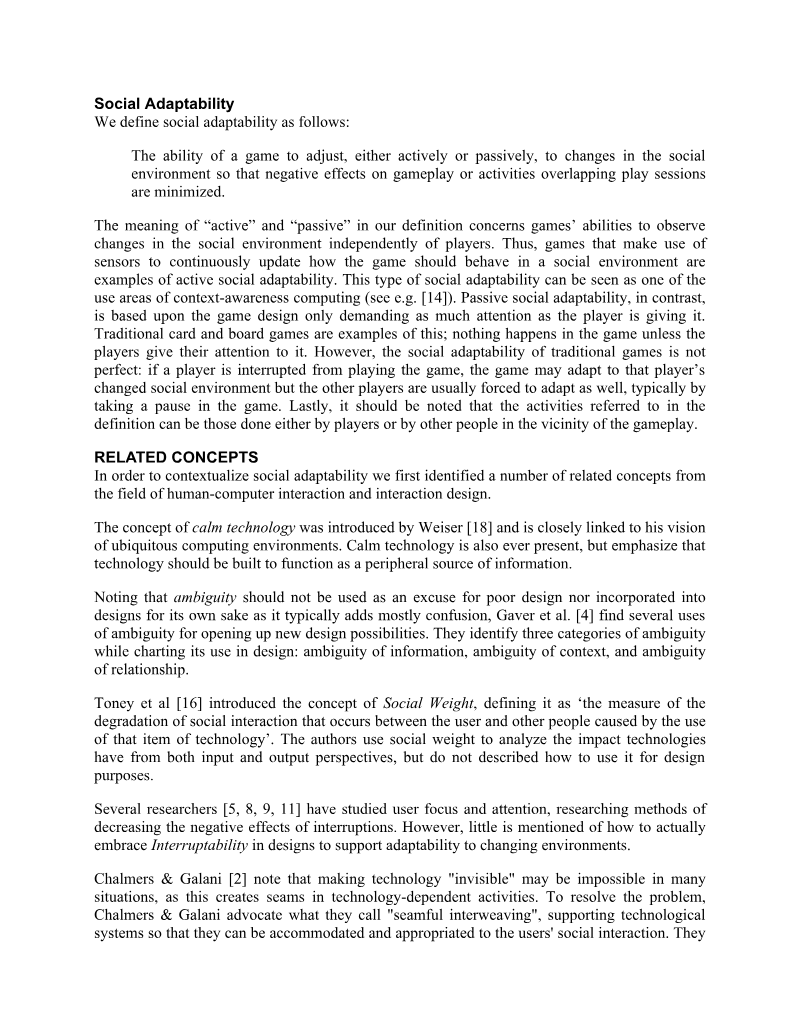
A game can adjust actively through sensing or passively through design. The aim is to minimize negative effects on gameplay and bystanders.
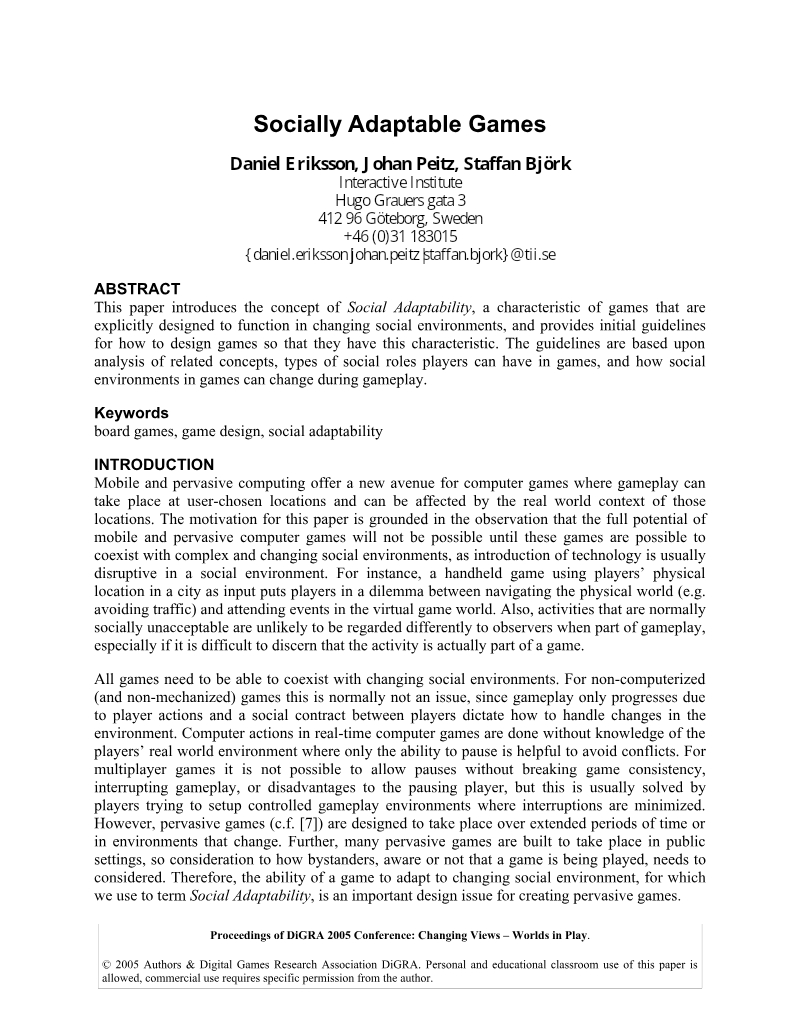
This paper introduces "Social Adaptability," defined as a game's ability to adjust, either actively through sensing or passively through design, to changes in its social environment so that negative effects on gameplay and on bystanders are minimized. Its central thesis is that pervasive and mobile games, which are played over extended periods, in changing locations, and often in public settings, cannot realize their potential unless they can coexist with complex social contexts. The authors argue that traditional board and card games achieve only partial social adaptability, since their pause-based solutions force all players to adapt to one player's interruption.
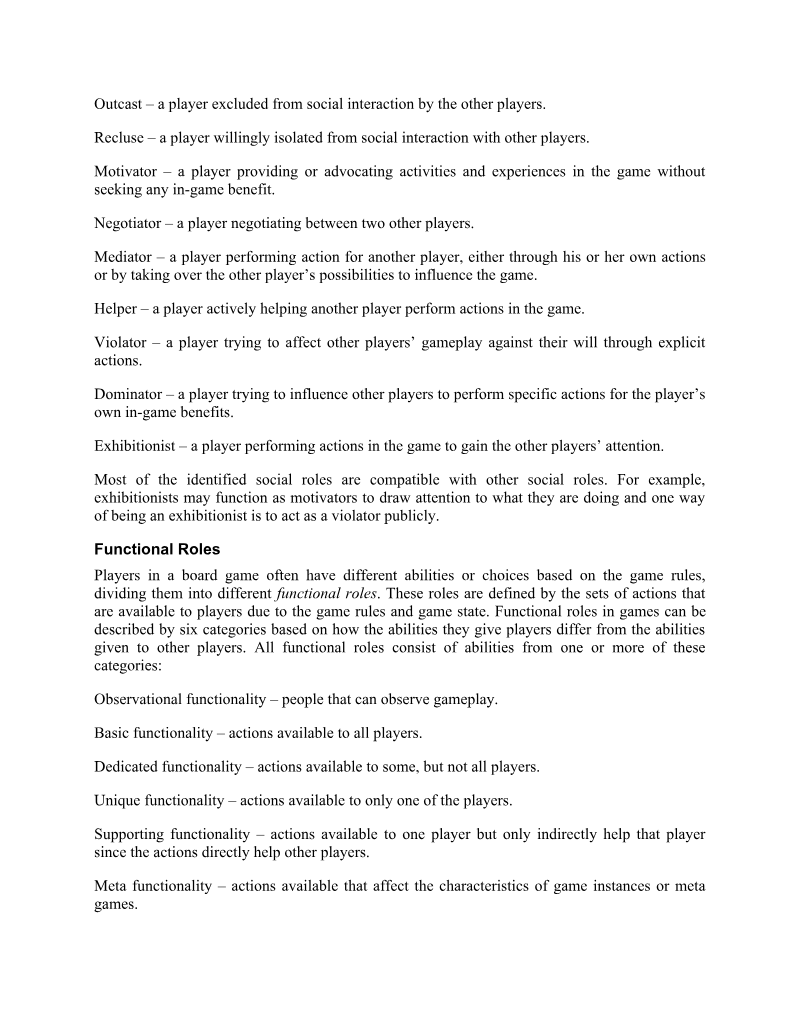
The paper grounds its argument in related concepts from human-computer interaction, including calm technology, ambiguity, social weight, interruptibility, and seamfulness. It then categorizes the changes that can occur during play using the magic circle as a model, distinguishing intra-ludic events, such as players leaving or rejoining or technology breaking down, from extra-ludic events, such as outside communication or bystanders overhearing play. The authors also propose a framework of social roles, including Lurkers, Spectators, Mediators, and Dominators, alongside a six-part taxonomy of functional roles based on the actions available to players.
The main contribution is a set of design guidelines intended to help developers explicitly consider social adaptability. These recommend supporting interruptibility, allowing multiple communication channels, using ambiguity so that play resembles everyday activity, designing for external events, enabling modes of play tied to social roles, minimizing social weight for bystanders, and analyzing player groups from several perspectives. The work is primarily conceptual and based on literature analysis and observations from board game play; the authors acknowledge that the guidelines require validation through prototypes still under development.

Two & a Half Gamers · 2026

Two & a Half Gamers · 2026

Two & a Half Gamers · 2026

PocketGamer.biz · 2026

Digital Dragons · 2026

Two & a Half Gamers · 2026

Two & a Half Gamers · 2026

Two & a Half Gamers · 2026

Deconstructor of Fun · 2026

PocketGamer.biz · 2026

Two & a Half Gamers · 2026

Gamota · 2026
Comments