1 free read left. Create a free account for unlimited reading + AI research.
Create free accountWhitepaper International Journal of Serious Games
1 free read left. Create a free account for unlimited reading + AI research.
Create free accountWhitepaperInternational Journal of Serious Games
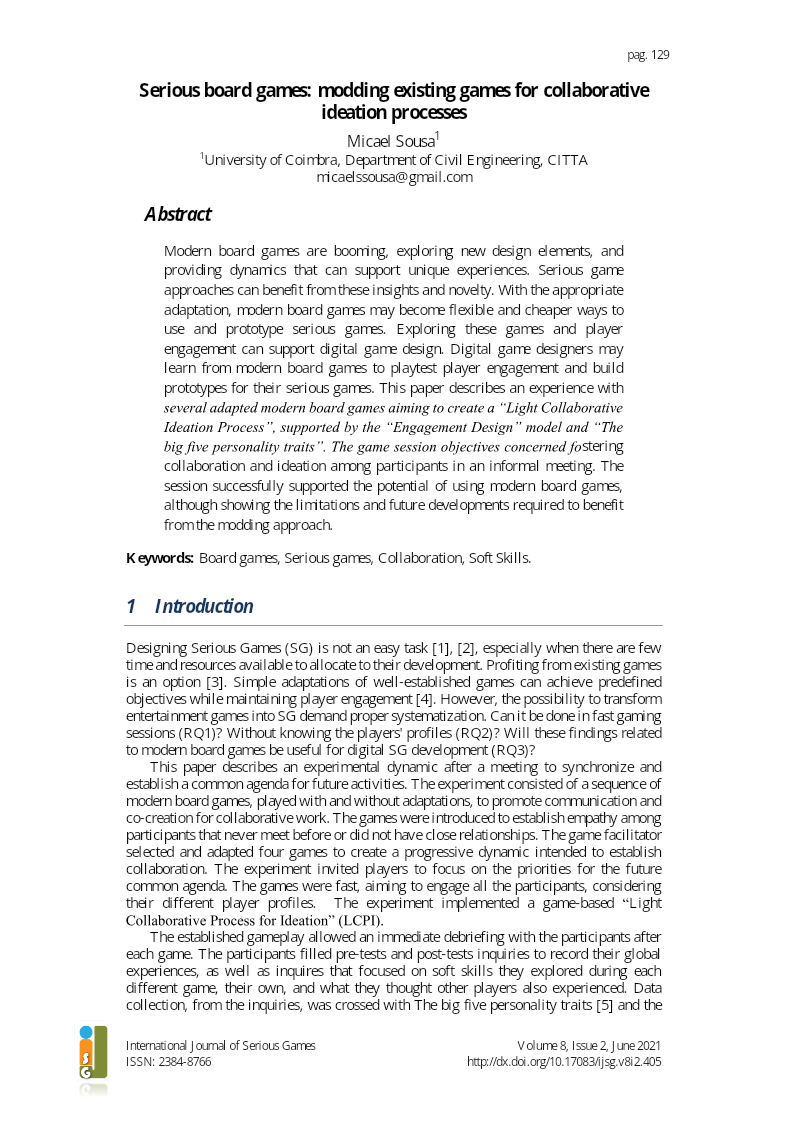
Adapting popular titles like Team3, Magic Maze, and Telestrations provides a scalable framework for developing soft skills in professional settings.
It's like using off-the-shelf parts to build a custom machine, saving time and money.
Key Benefit. Modding existing board games provides a cost-efficient, scalable framework for fostering collaborative ideation and soft skill development.
Modding existing board games offers a highly effective, cost-efficient strategy for fostering collaborative ideation and soft skill development within professional environments. By adapting popular titles such as Team3, Magic Maze, and Telestrations, organizations can implement a Light Collaborative Ideation Process that encourages empathy, motivation, and group cohesion. This approach leverages the inherent engagement of modern tabletop mechanics to create structured, low-tech environments where participants can practice communication and problem-solving, regardless of their prior gaming experience.
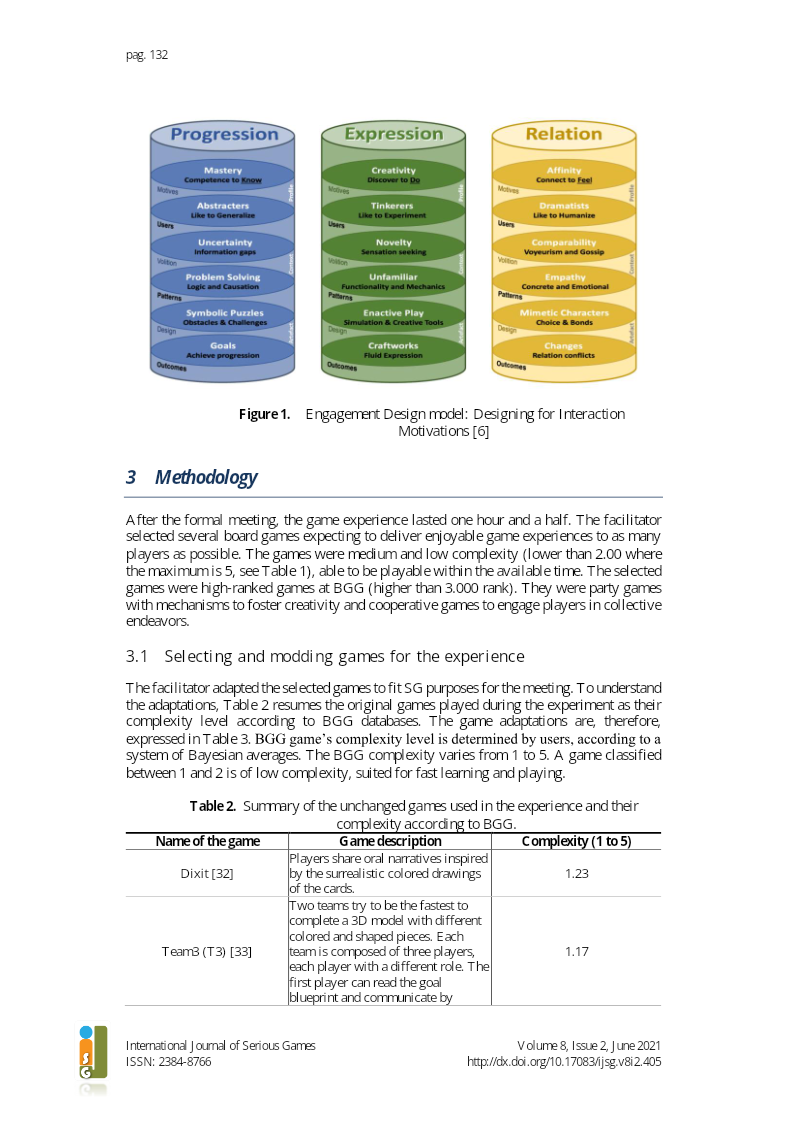
The effectiveness of these serious games relies heavily on the integration of the Engagement Design model and the Big Five personality traits, which allow facilitators to tailor gameplay to diverse professional profiles. Empirical evaluations indicate that specific mechanics—such as time constraints and restricted communication—successfully generate a balance of challenge and excitement. While these elements can occasionally induce anxiety, they consistently result in high levels of participant engagement and a positive perception of the collaborative process. The structured use of pre-test and post-test questionnaires confirms that these sessions not only improve immediate group dynamics but also serve as a viable prototyping method for future digital serious game development.
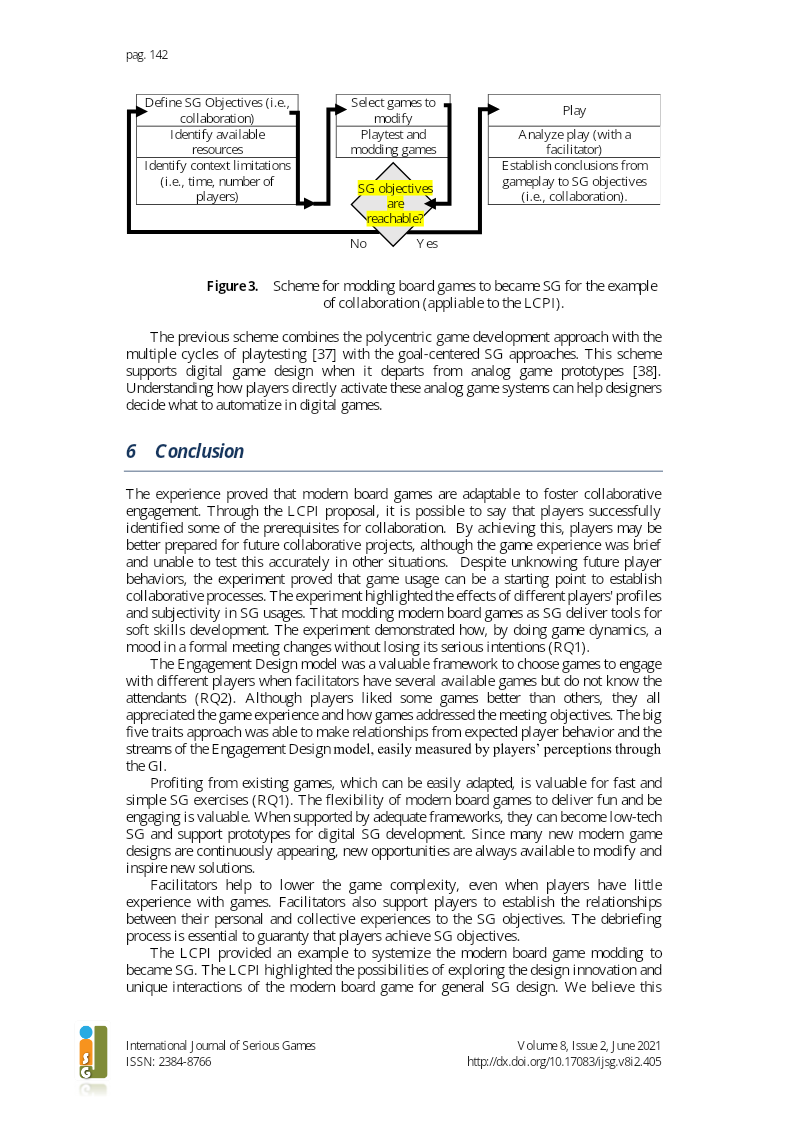
Ultimately, this methodology provides a flexible framework for facilitators to address specific organizational objectives through play. By carefully managing the debriefing process and aligning game mechanics with desired soft skill outcomes, professional teams can transform recreational board games into powerful tools for innovation. This research establishes that the strategic modification of existing games is a scalable solution for enhancing workplace collaboration, offering a practical alternative to more resource-intensive serious game development projects.
International Journal of Serious Games · 2026
International Journal of Serious Games · 2026
International Journal of Serious Games · 2026
International Journal of Serious Games · 2026
International Journal of Serious Games · 2026
International Journal of Serious Games · 2026
International Journal of Serious Games · 2026
International Journal of Serious Games · 2025
International Journal of Serious Games · 2025
International Journal of Serious Games · 2025
Serious Games Society · 2025
International Journal of Serious Games · 2025
Serious Games Society · 2026