1 free read left. Create a free account for unlimited reading + AI research.
Create free accountFinancial report Sega Sammy Holdings
1 free read left. Create a free account for unlimited reading + AI research.
Create free accountFinancial reportSega Sammy Holdings
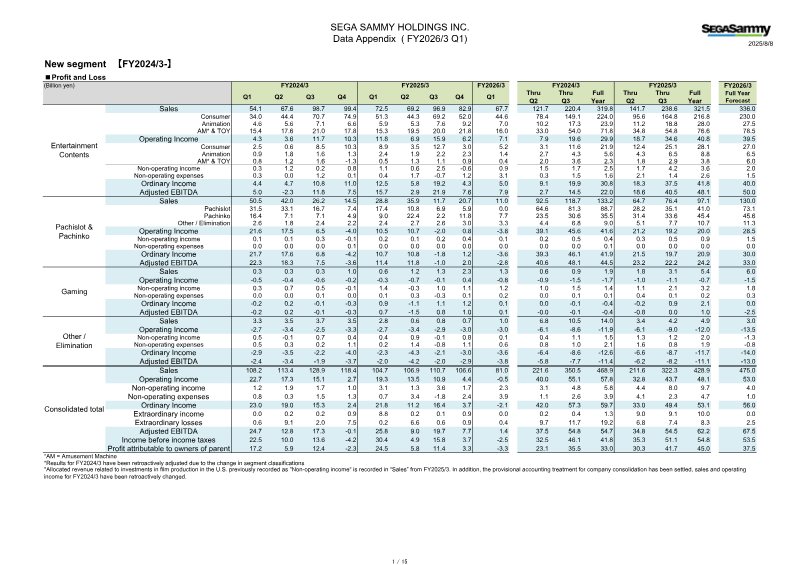
The fiscal year ending March 2018 served as a transitional period for Sega Sammy, characterized by a strategic focus on the Road to 2020 initiative despite missing initial financial targets. The company reported total sales of 323.6 billion JPY and operating income of 17.7 billion JPY, falling short of the 380 billion JPY and 20 billion JPY projections, respectively. These deficits were primarily driven by regulatory shifts impacting the Pachislot and Pachinko machine business, which necessitated significant revisions to sales schedules, and delays in the launch of new digital game titles.
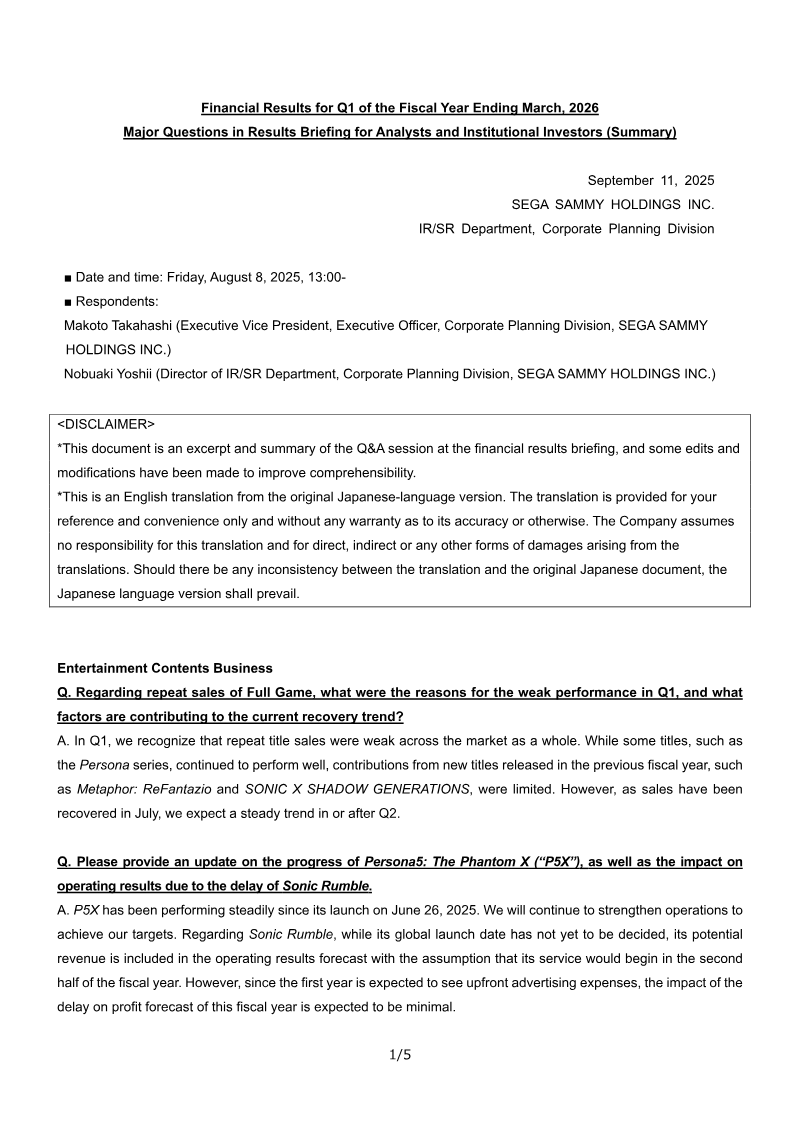
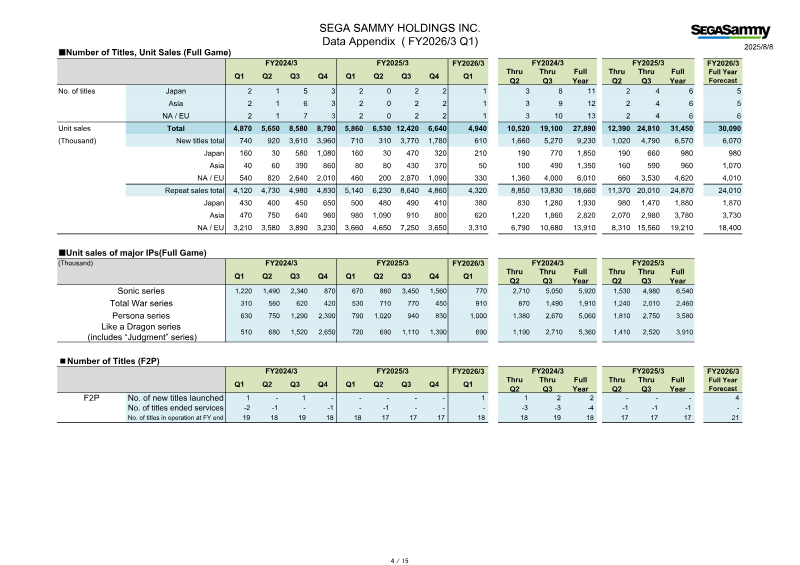
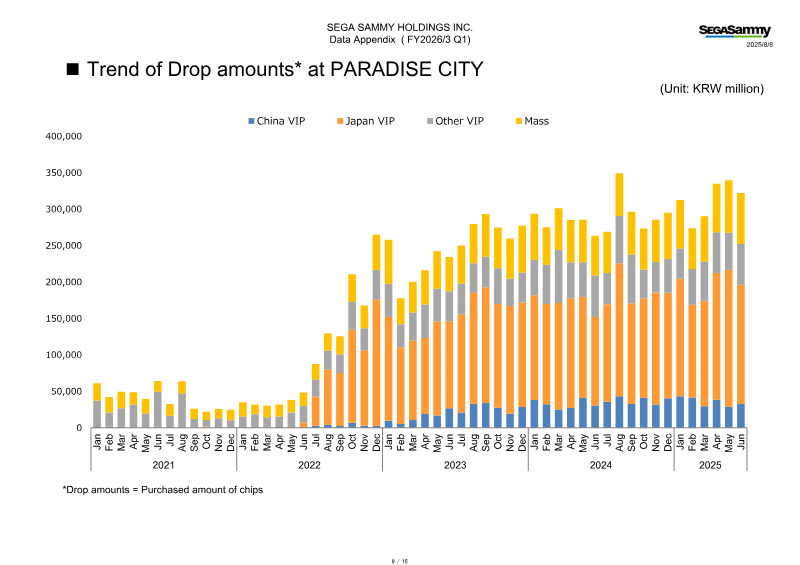
Despite these setbacks, the Entertainment Contents business demonstrated resilience, achieving earnings growth for the third consecutive year. Strong performance in packaged games, such as Persona 5, which reached 2.2 million units sold globally, and the Sonic and Total War series, bolstered the segment. Simultaneously, the Resort business achieved key milestones, including the opening of the first phase of Paradise City and the acquisition of gaming machine licenses in Nevada, signaling a broader diversification strategy.
Looking toward 2019 and beyond, the company is prioritizing the launch of Type-6 Pachislot machines and ZEEG-made cabinets to adapt to new industry regulations. Digital expansion remains a core pillar, with a robust pipeline of titles including new entries in the Sonic, Ryu ga Gotoku, and Total War franchises. To support these long-term objectives, the organization is consolidating 20 group companies and approximately 6,500 employees into a unified headquarters in the Osaki area of Tokyo. This structural integration aims to enhance management efficiency, foster inter-departmental collaboration, and streamline operations as the company navigates the evolving landscape of the global gaming and resort industries.
Sega Sammy Holdings · 2026


Sega Sammy Holdings · 2026


Sega Sammy Holdings · 2026


Sega Sammy Holdings · 2026


Sega Sammy Holdings · 2026


Sega Sammy Holdings · 2026


Sega Sammy Holdings · 2026
Sega Sammy Holdings · 2025
Sega Sammy Holdings · 2025


Sega Sammy Holdings · 2025
Sega Sammy Holdings · 2025
Sega Sammy Holdings · 2025
Bandai Namco · 2026