LegalPCF Group
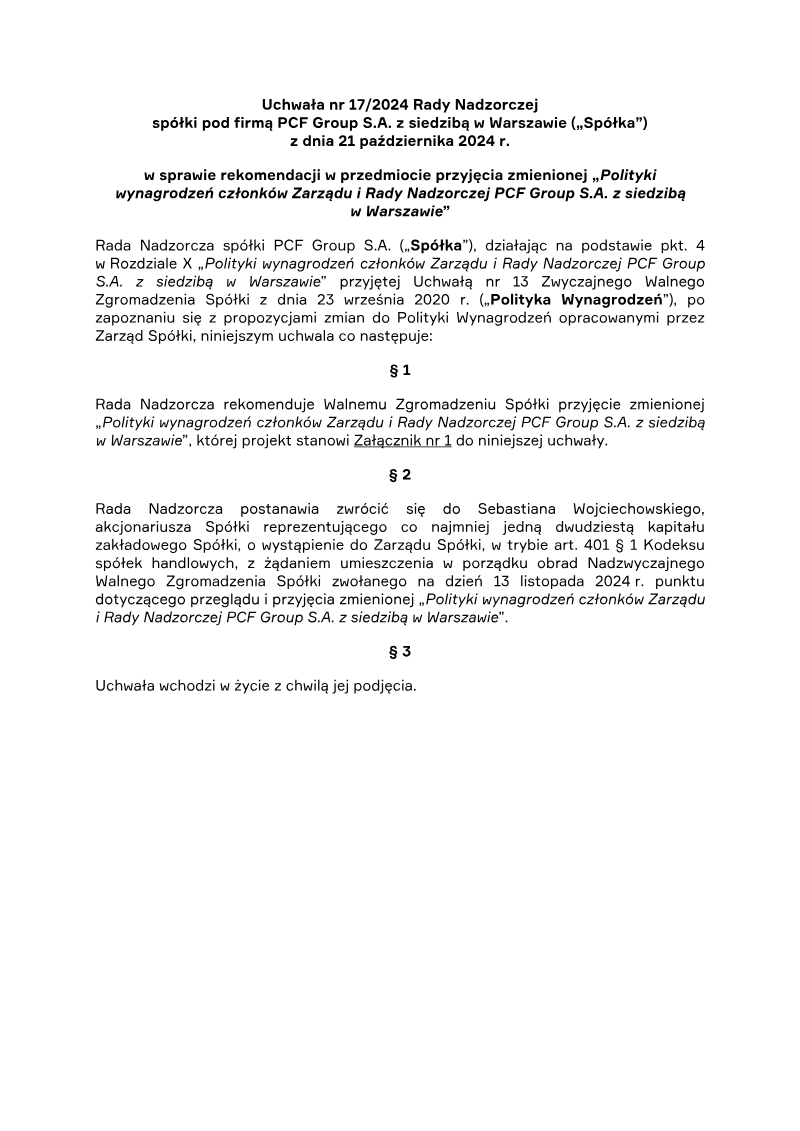
Uchwała nr 17/2024 Rady Nadzorczej Spółki pod Firmą PCF Group S.A. z siedzibą w Warszawie
21 Oct 202413 pages~21 min full read
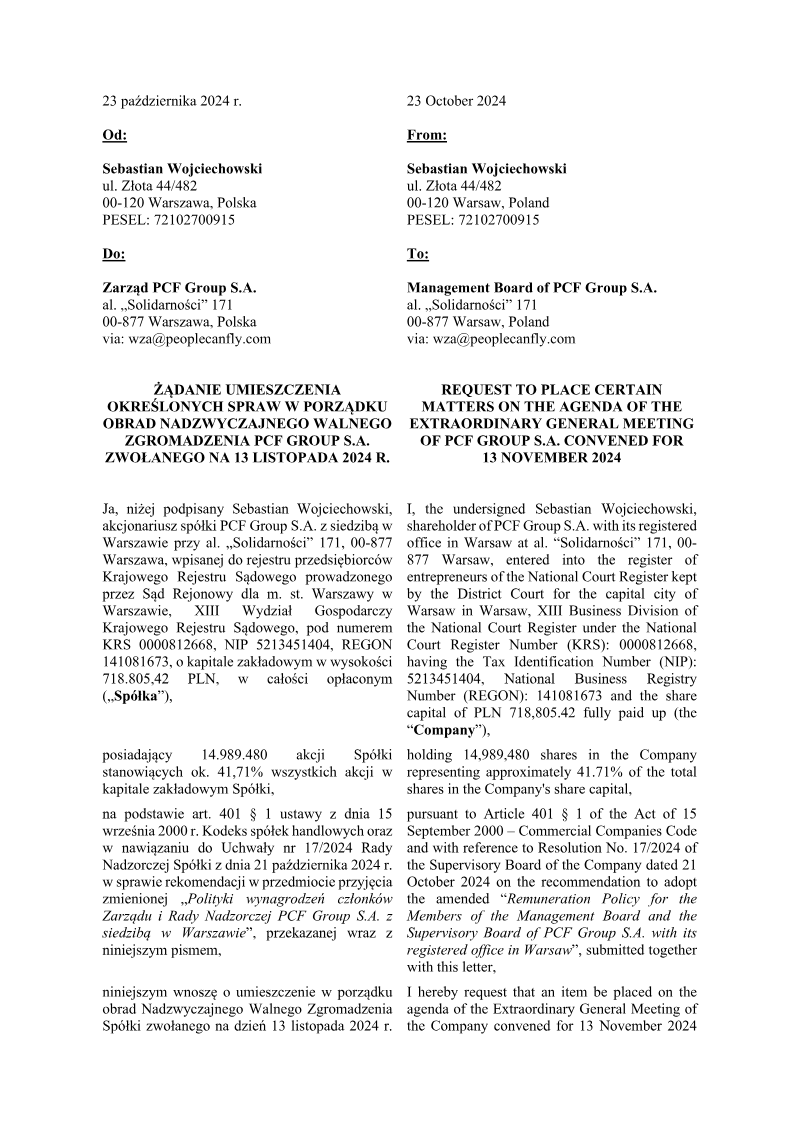
PCF Group S.A. has proposed a revised remuneration policy for its Management and Supervisory Board members to align corporate incentives with its updated long-term business strategy. Finalized in Warsaw on October 21, 2024, and scheduled for review at the Extraordinary General Meeting on November 13, 2024, the updates reflect a shift in how the company defines and rewards executive performance. A primary change involves decoupling the remuneration policy from specific, pre-defined short- or long-term strategic goals, allowing for greater flexibility while maintaining a rigorous framework for variable compensation.
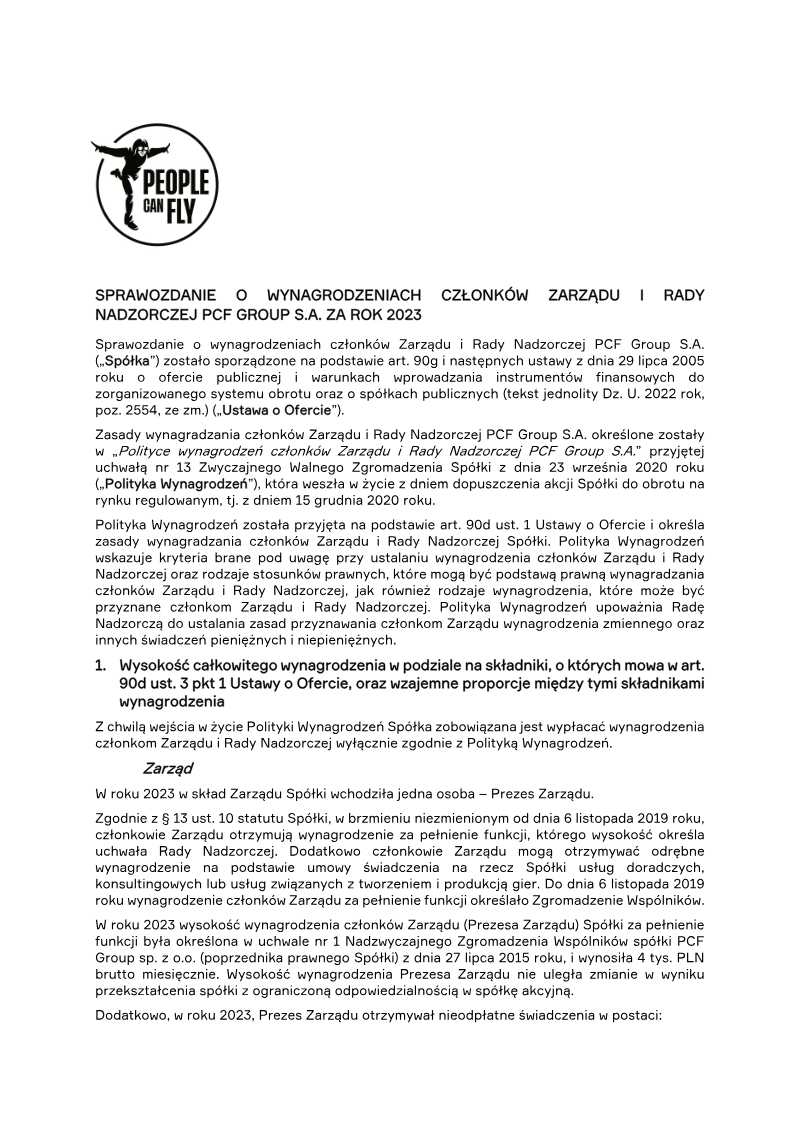
The updated policy establishes a clear cap on variable pay for Management Board members, limiting it to five times their fixed annual salary. These performance-based incentives are tied to specific key performance indicators, including net profit, stock price performance, and qualitative metrics such as game quality. While Supervisory Board members receive fixed monthly compensation, the new policy introduces additional fees for attendance at board and committee meetings to better reflect their active involvement in corporate oversight. Notably, neither board currently receives stock-based incentives, though the Supervisory Board retains the authority to temporarily deviate from established rules to safeguard the company’s financial stability during exceptional circumstances.
To ensure transparency and ethical governance, the framework includes formal procedures for managing conflicts of interest and mandates annual reporting on remuneration practices. The resolution received unanimous support from participating Supervisory Board members, signaling internal consensus on the necessity of these editorial and structural improvements. By refining these compensation structures, the organization aims to balance competitive executive rewards with the sustainable financial health of the group within the global gaming industry.
PCF Group · 2026
PCF Group · 2026
PCF Group · 2026
PCF Group · 2026
PCF Group · 2025
PCF Group · 2025
PCF Group · 2025
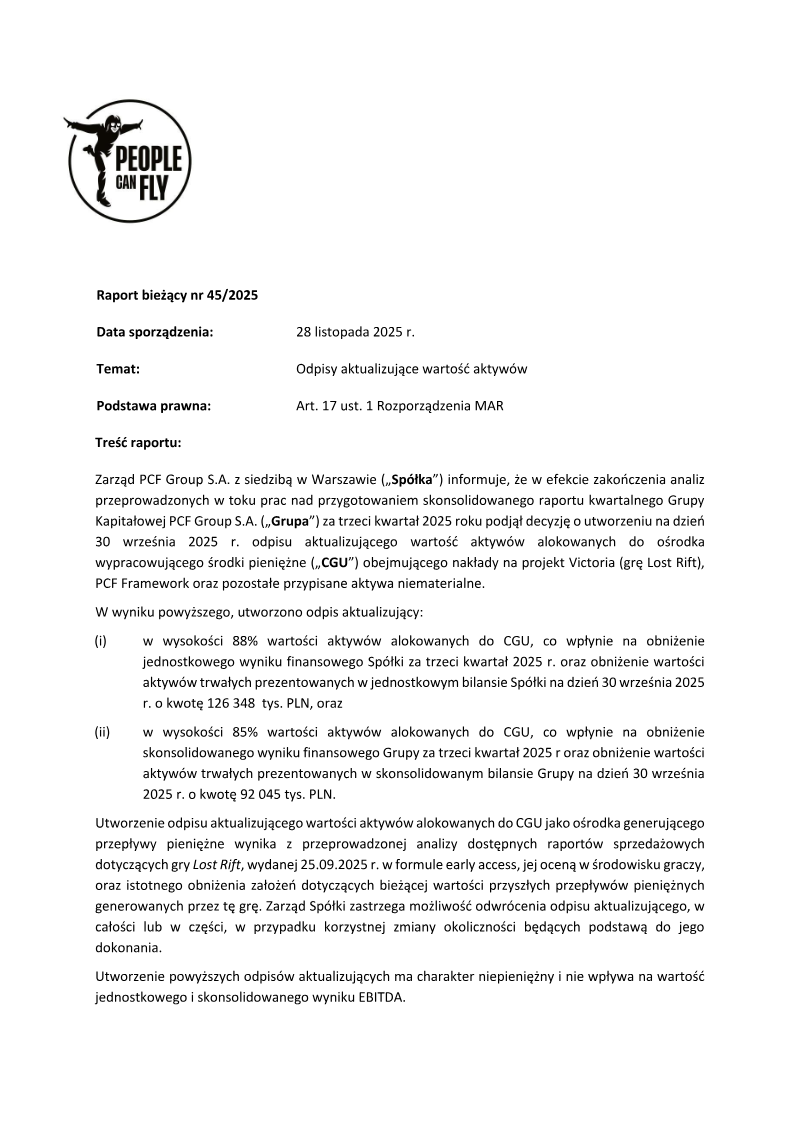
PCF Group · 2025
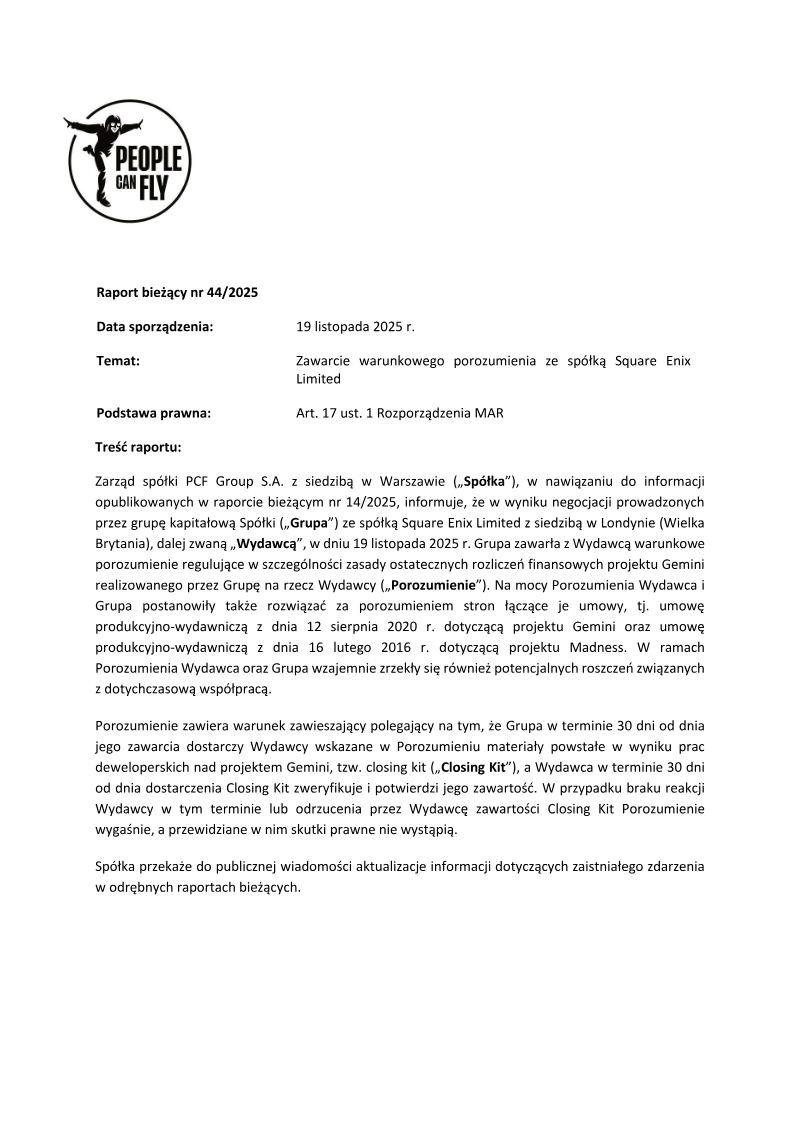
PCF Group · 2025
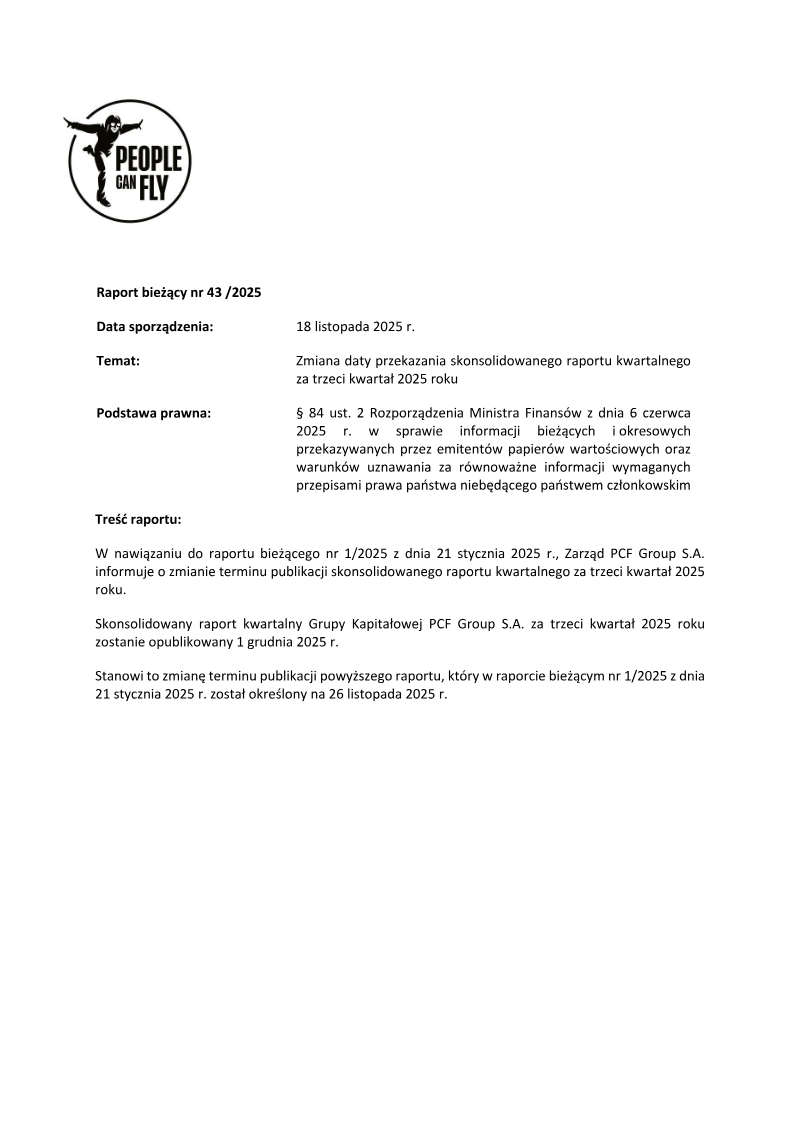
PCF Group · 2025
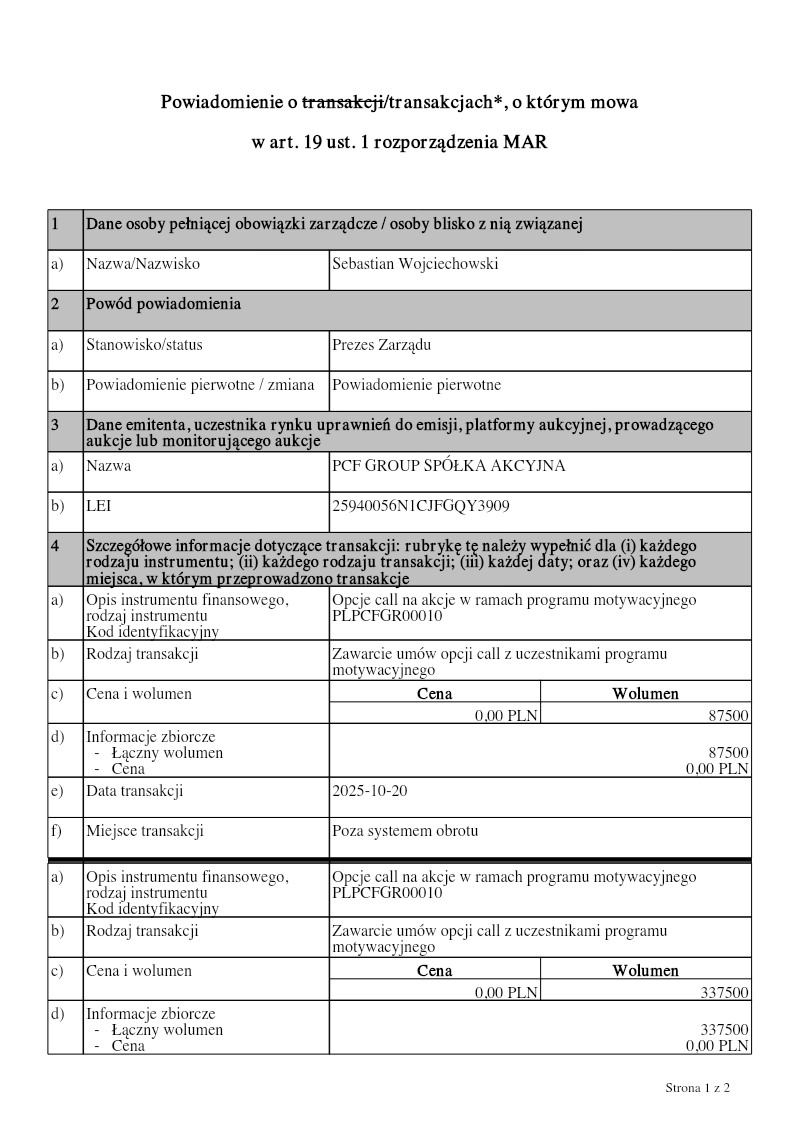
PCF Group · 2025
PCF Group · 2025

PCF Group · 2025
PCF Group · 2025
PCF Group · 2024
PCF Group · 2024
PCF Group · 2024
11 bit studios · 2024
PCF Group · 2024
PCF Group · 2023
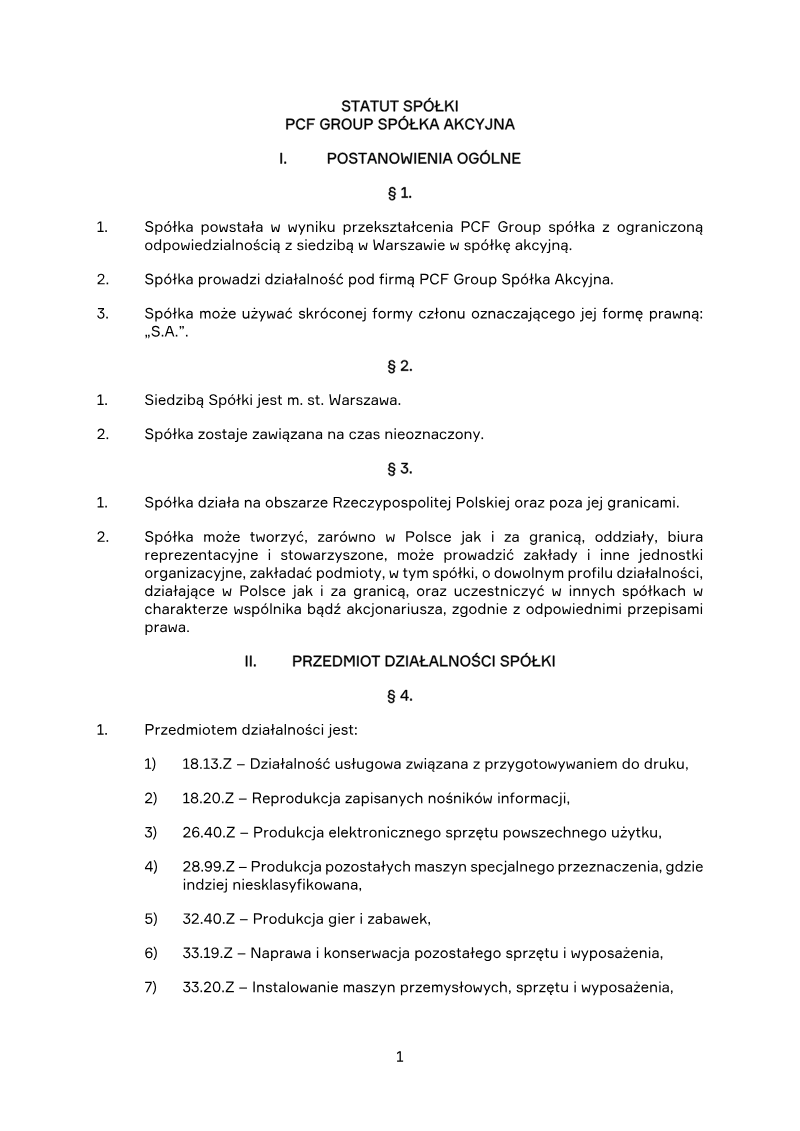
PCF Group · 2023
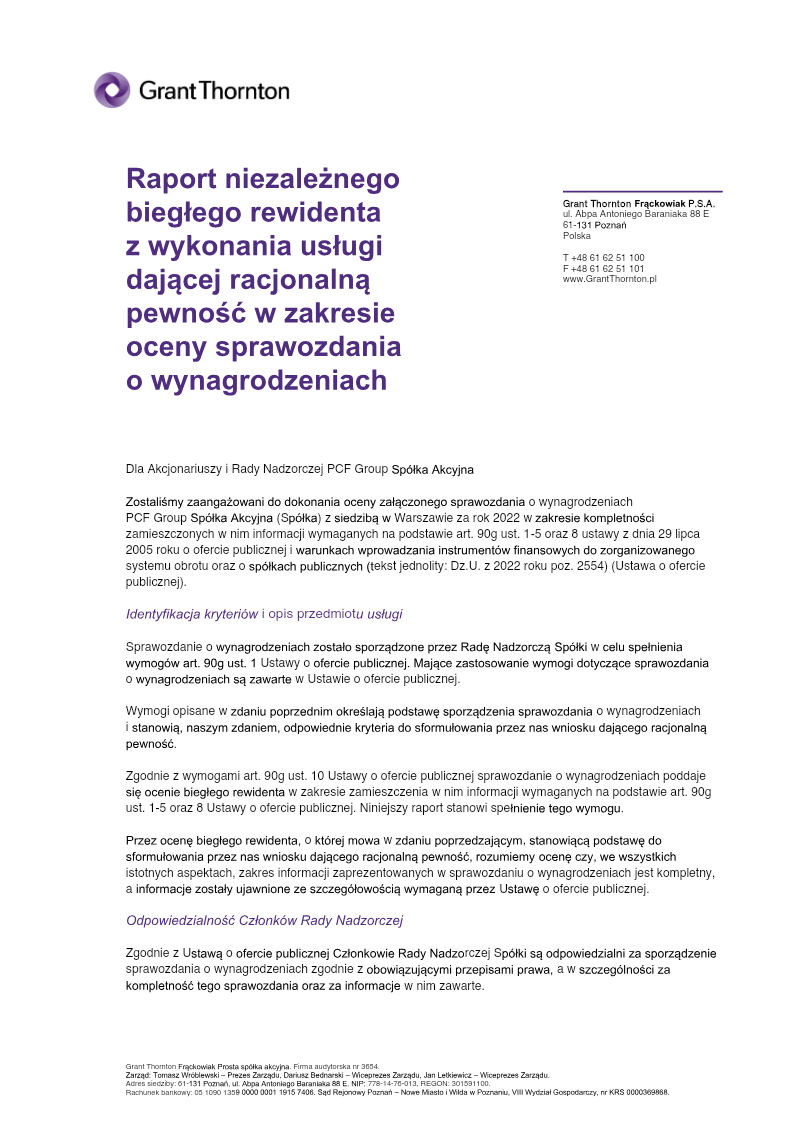
Grant Thornton Frąckowiak P.S.A. · 2023
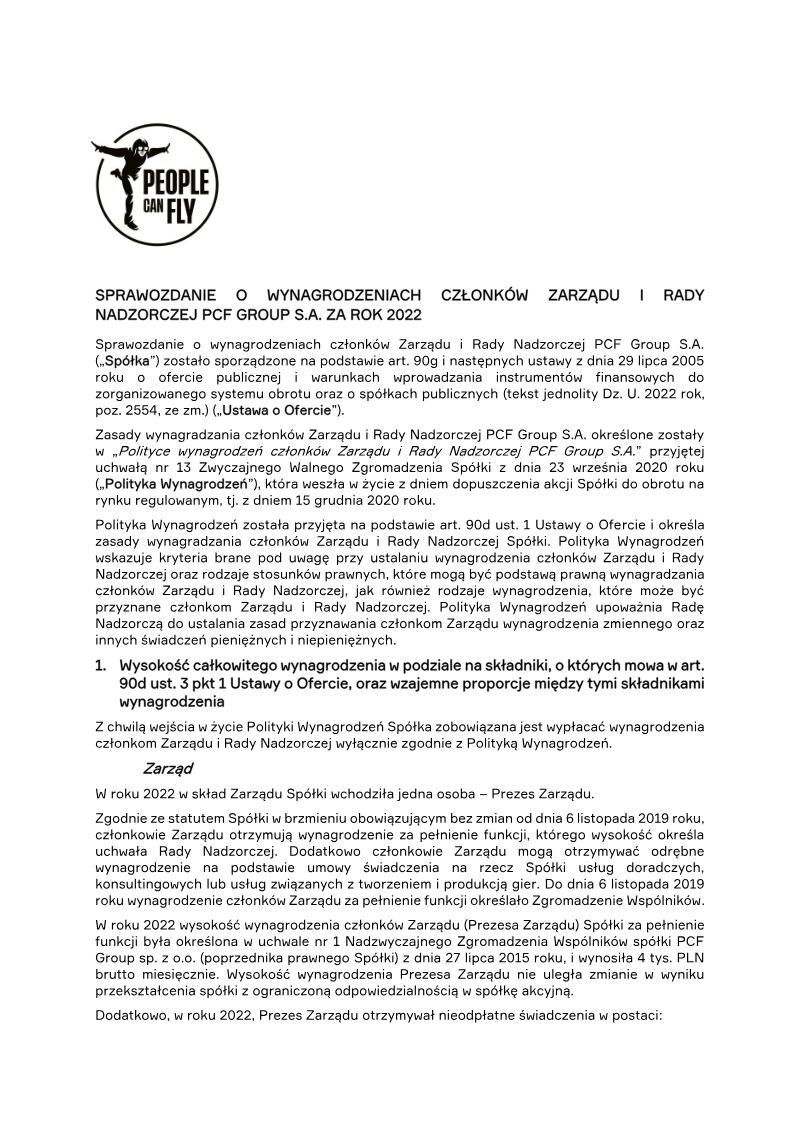
PCF Group · 2023
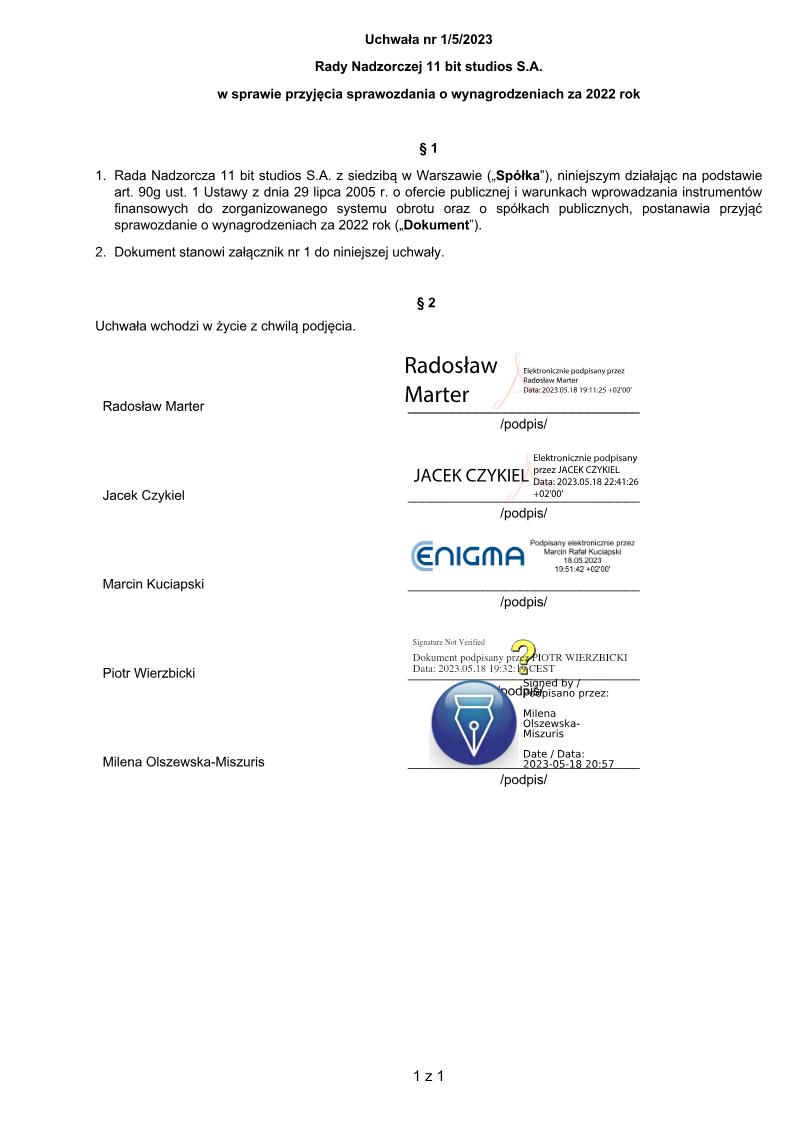
11 bit studios · 2023