LegalPCF Group
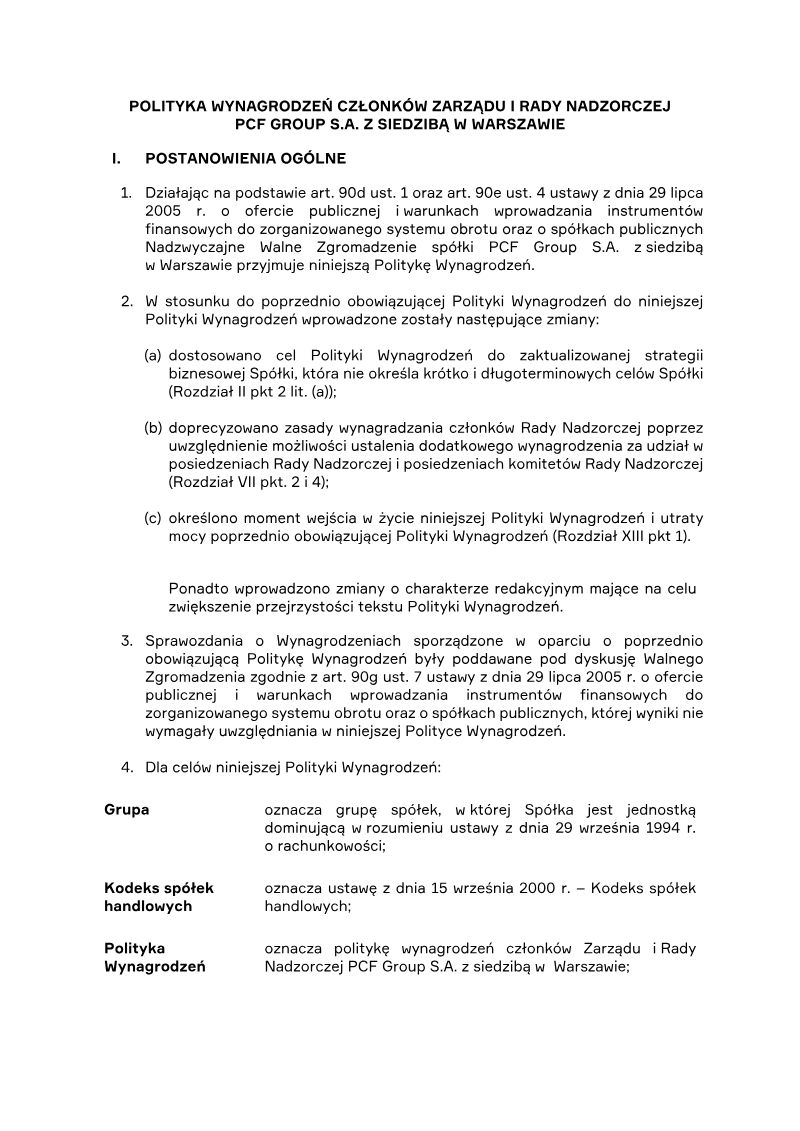
Polityka Wynagrodzeń Członków Zarządu i Rady Nadzorczej
1 Apr 202210 pages~18 min full read
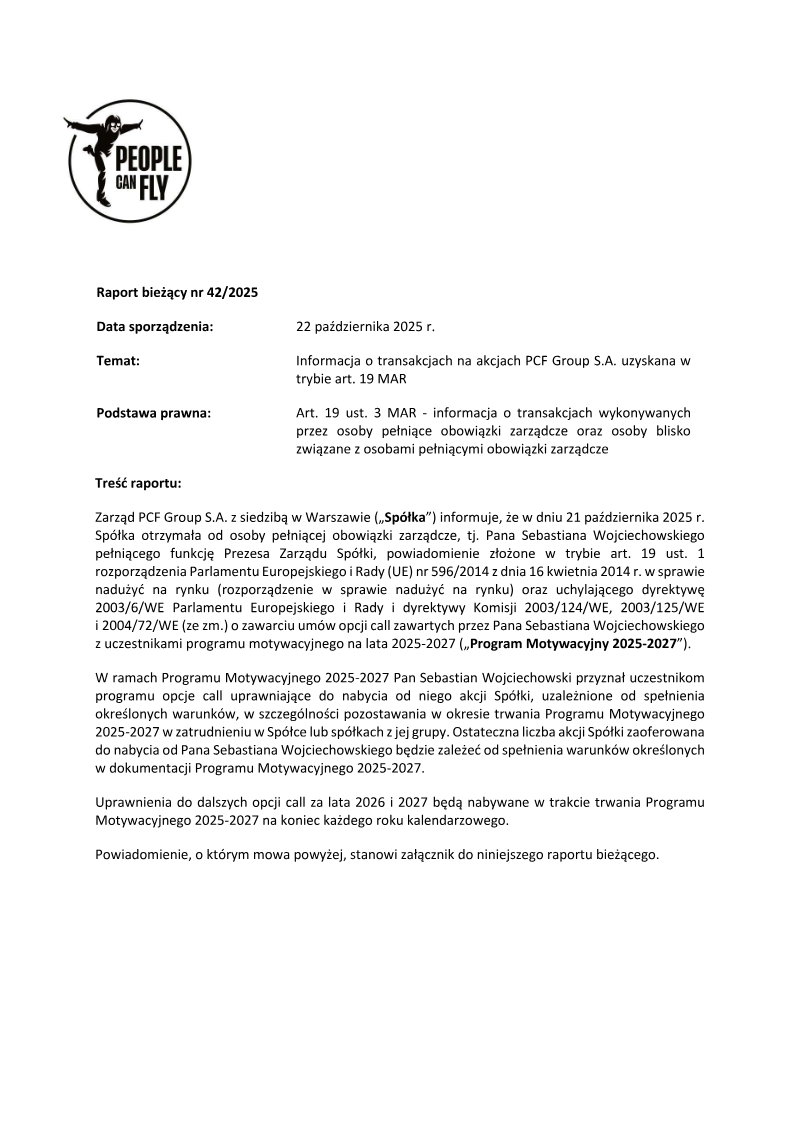
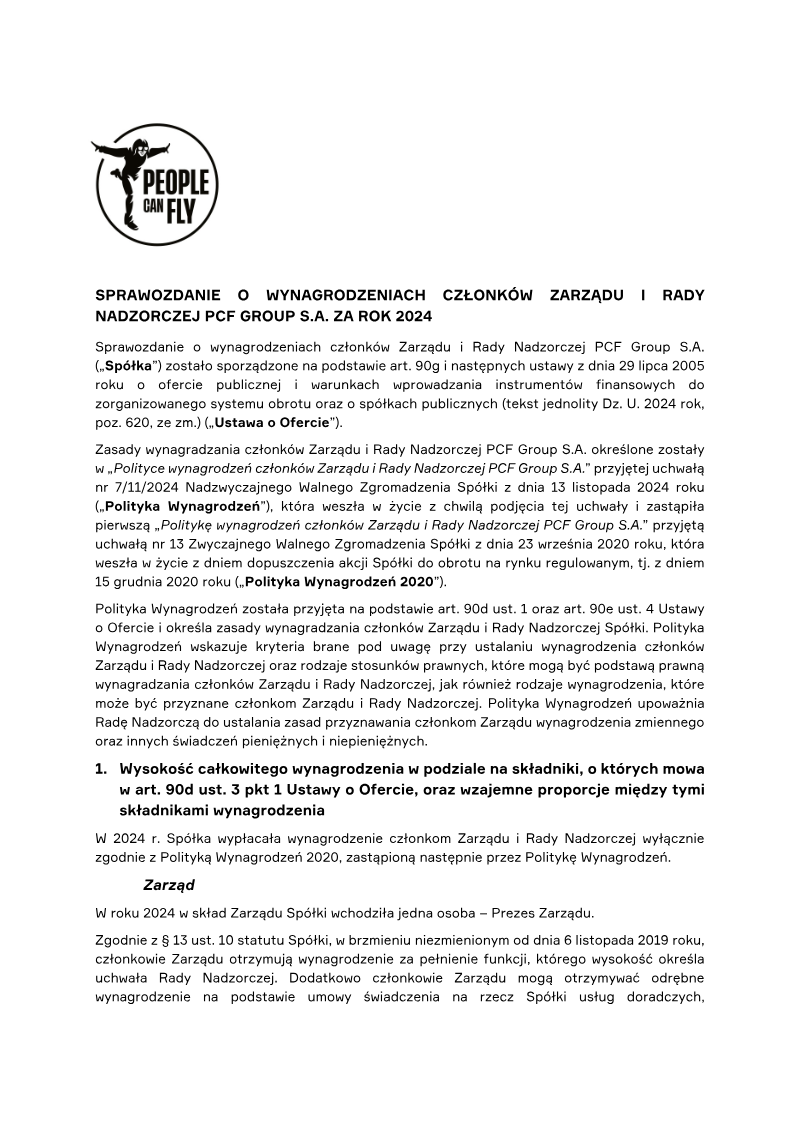
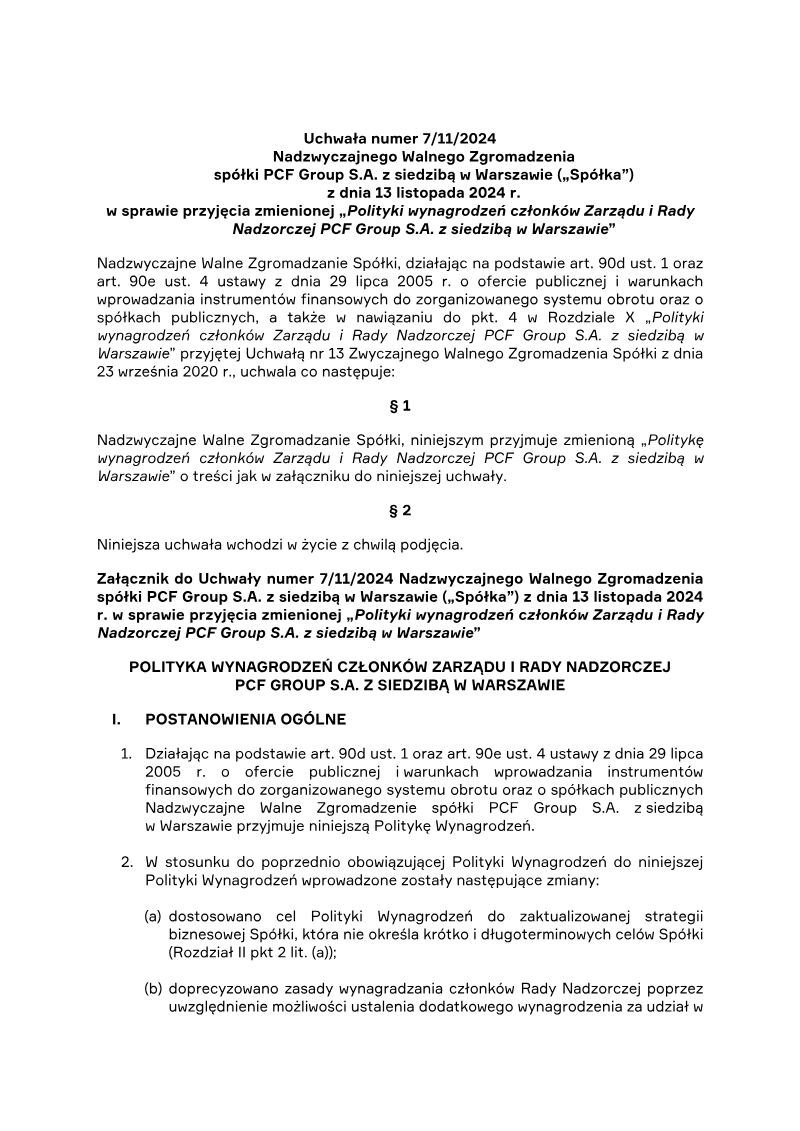
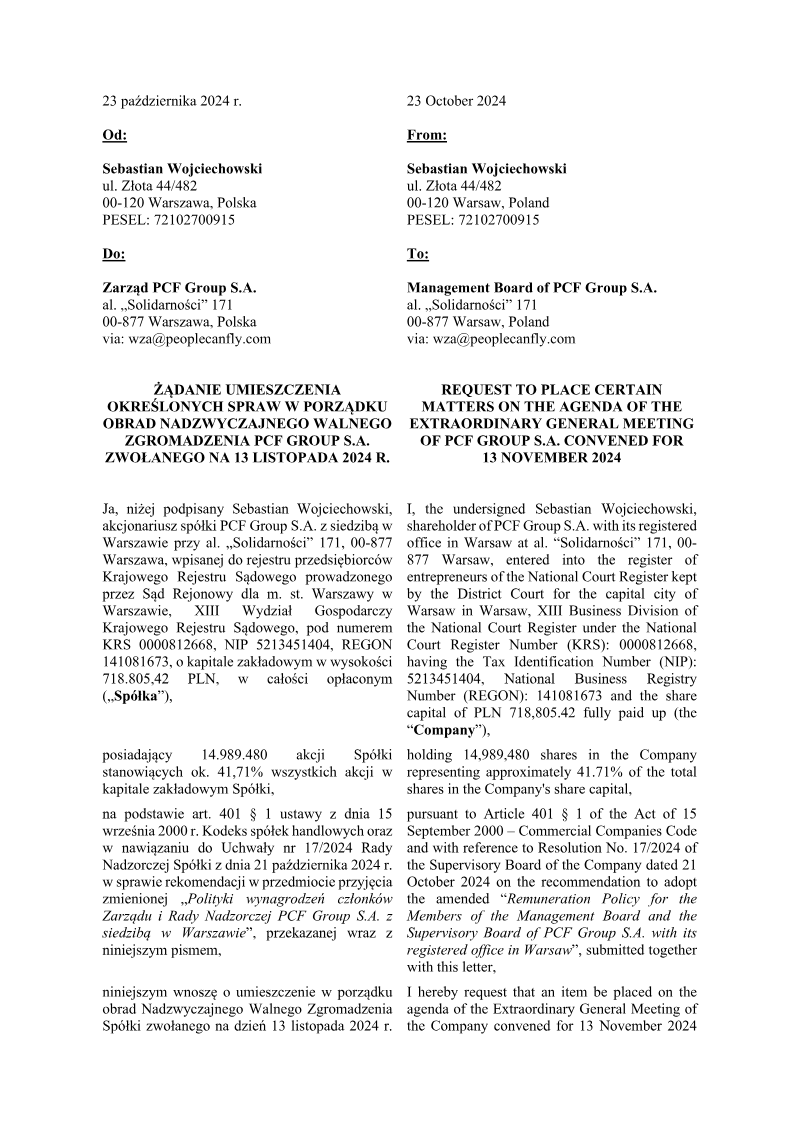
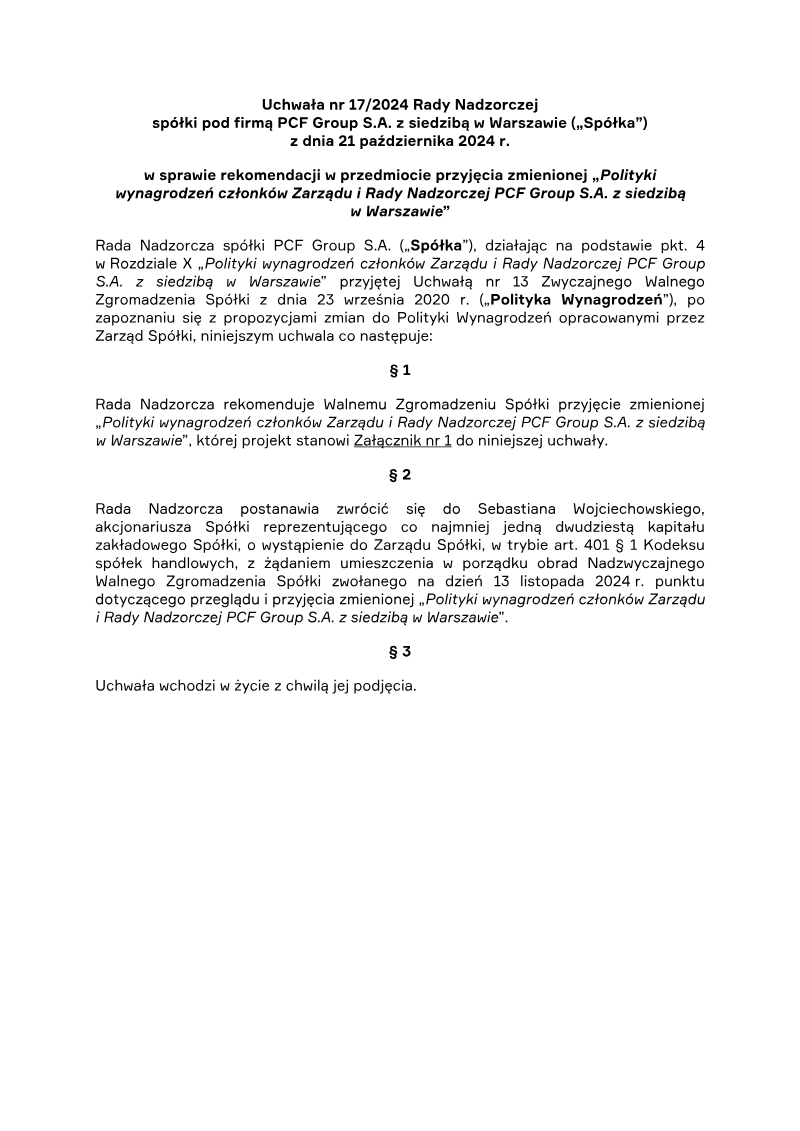
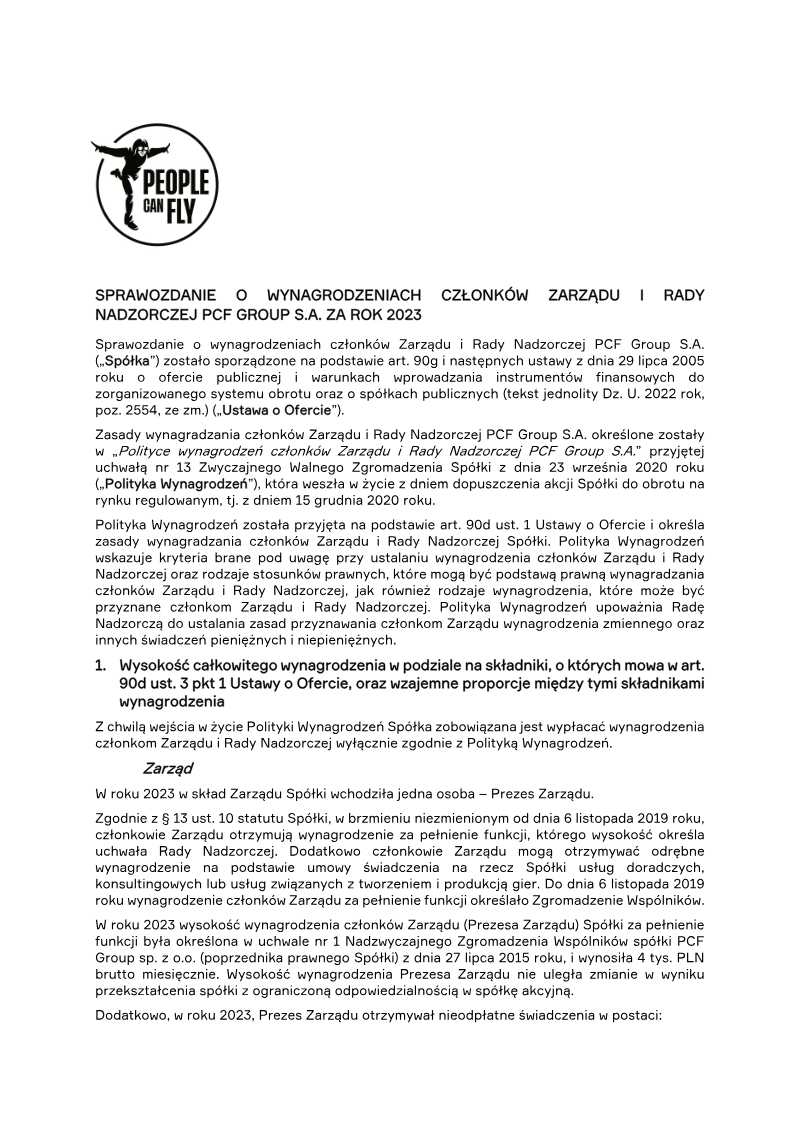
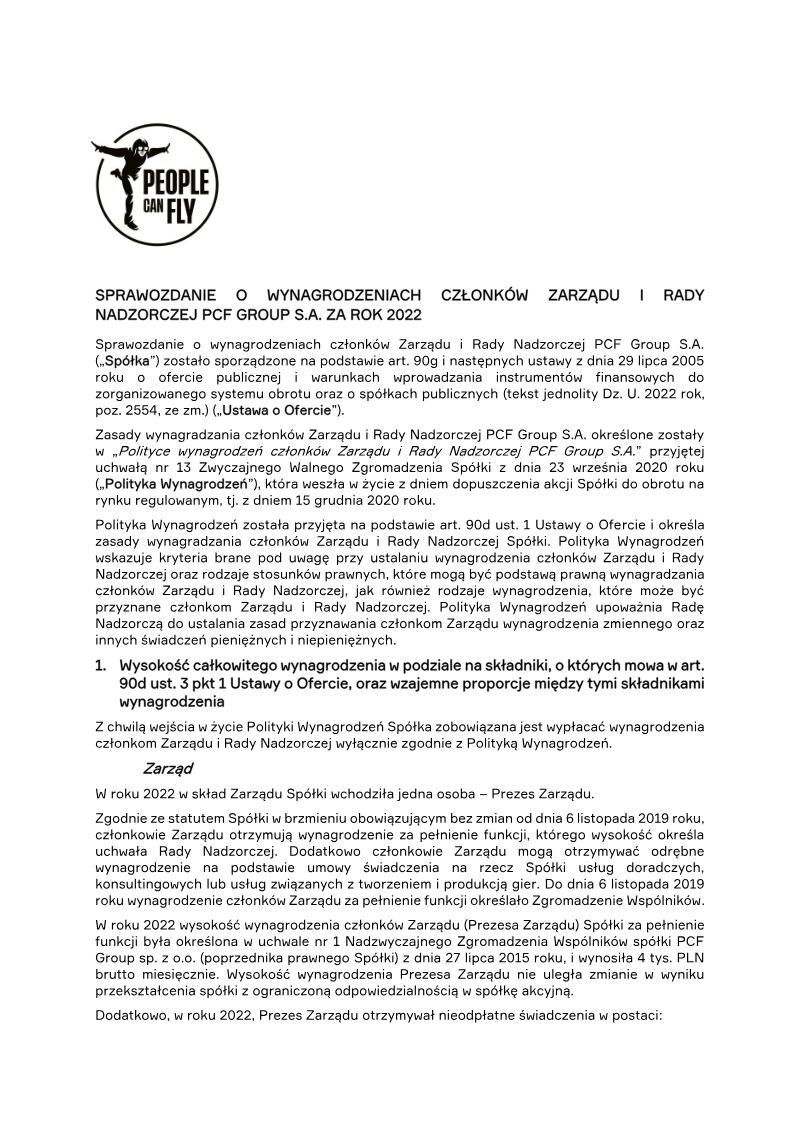
The Remuneration Policy for PCF Group S.A., a Warsaw-based public company in the gaming industry, establishes a formal framework for compensating members of the Management Board and Supervisory Board. Adopted by the Extraordinary General Meeting, the policy aligns executive incentives with the company’s updated business strategy, long-term stability, and shareholder interests while mitigating conflicts of interest. It covers the parent company and its subsidiaries, ensuring that pay structures reflect market standards within the gaming sector and the specific responsibilities of each role.
Management Board compensation consists of fixed monthly pay, variable performance-based bonuses, and additional benefits. Variable remuneration is tied to specific financial and non-financial targets, such as net profit, stock price performance, strategic milestones, and game quality metrics. To ensure fiscal prudence, variable components are capped at five times the annual fixed salary. While the company does not currently issue stock-based incentives, the policy allows for the future implementation of share-based motivational programs subject to shareholder approval. Management contracts may include non-compete clauses with compensation for up to 12 months and notice periods generally ranging from three to 12 months.
Supervisory Board members receive fixed monthly fees determined by the General Meeting, regardless of the number of meetings held. The policy introduces the possibility of additional compensation for participation in specific board or committee meetings, such as the Audit Committee. Unlike the Management Board, Supervisory Board members do not receive variable performance-based pay or severance benefits upon dismissal.
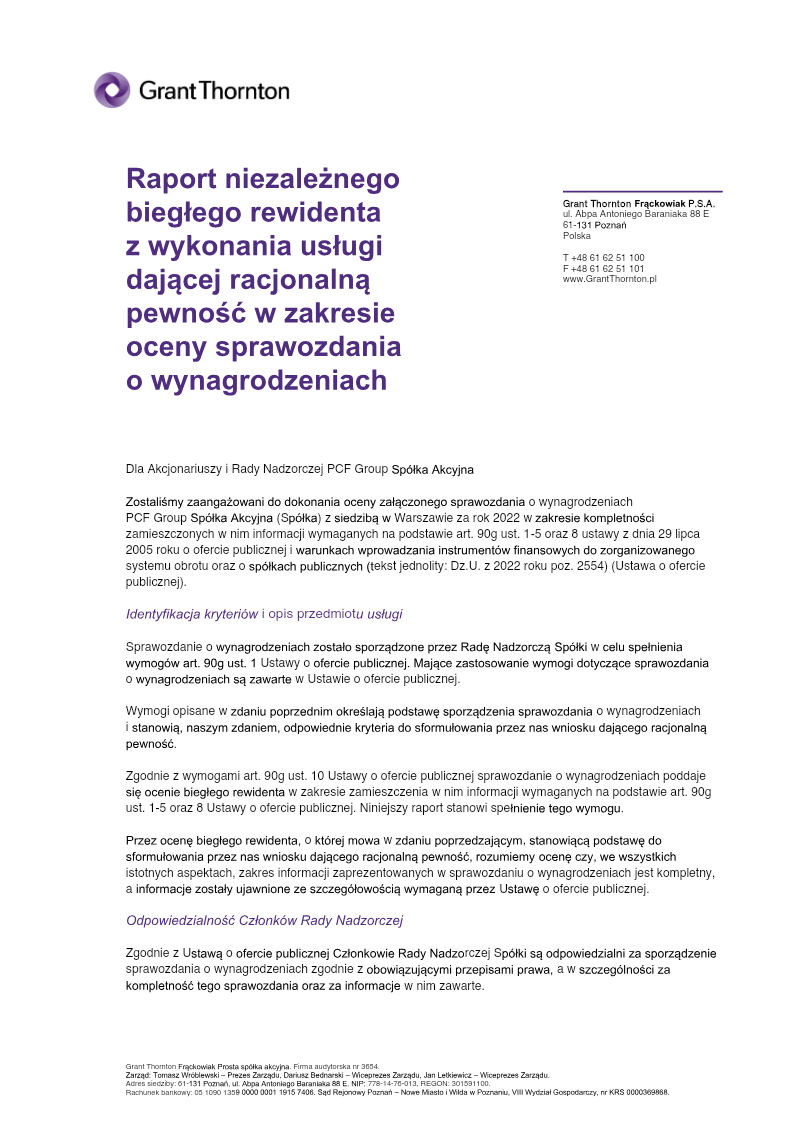
The Supervisory Board is responsible for the annual preparation of a remuneration report, which must be audited by an external entity. The policy requires a formal review by the General Meeting at least every four years. Provisions are included for temporary derogation from these rules if necessary to protect the company's long-term financial viability or profitability, requiring a formal resolution by the Supervisory Board detailing the justification and duration of the exception.
PCF Group · 2026
PCF Group · 2026
PCF Group · 2026
PCF Group · 2026
PCF Group · 2025
PCF Group · 2025
PCF Group · 2025
PCF Group · 2025
PCF Group · 2025
PCF Group · 2025
PCF Group · 2025
PCF Group · 2025
PCF Group · 2025
PCF Group · 2024
PCF Group · 2024
PCF Group · 2024
PCF Group · 2024
PCF Group · 2023
Grant Thornton Frąckowiak P.S.A. · 2023
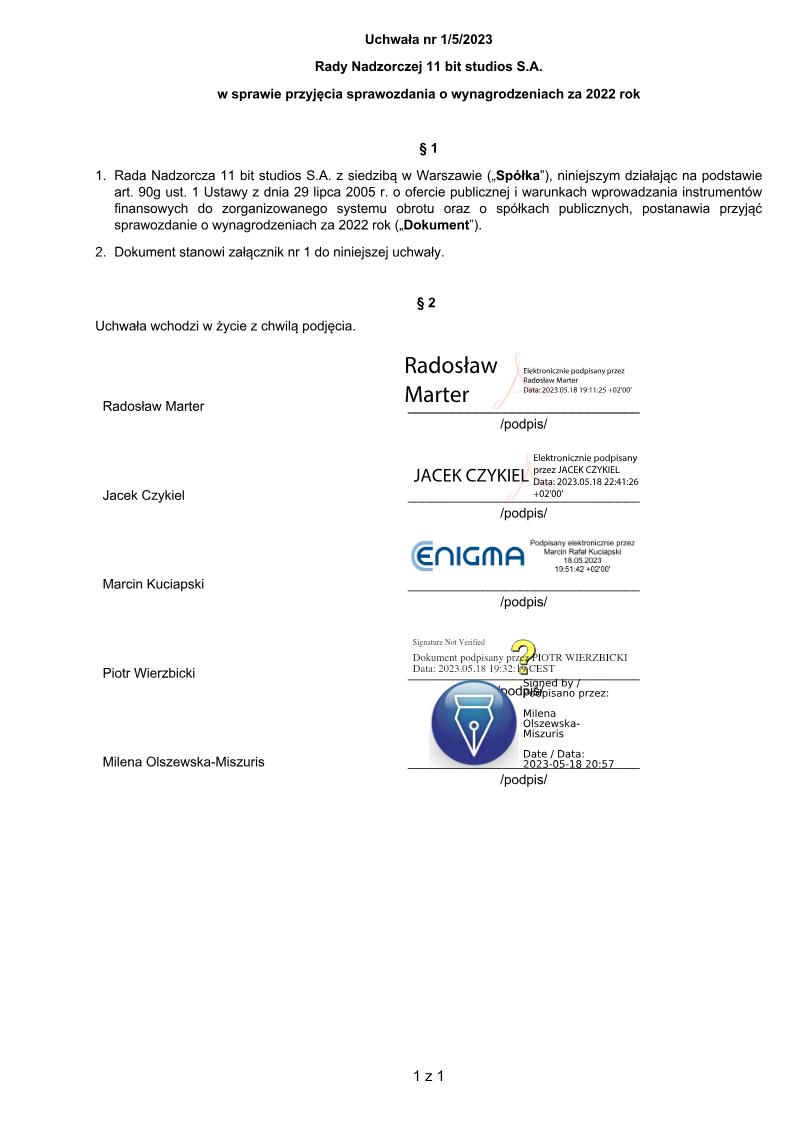
11 bit studios · 2023
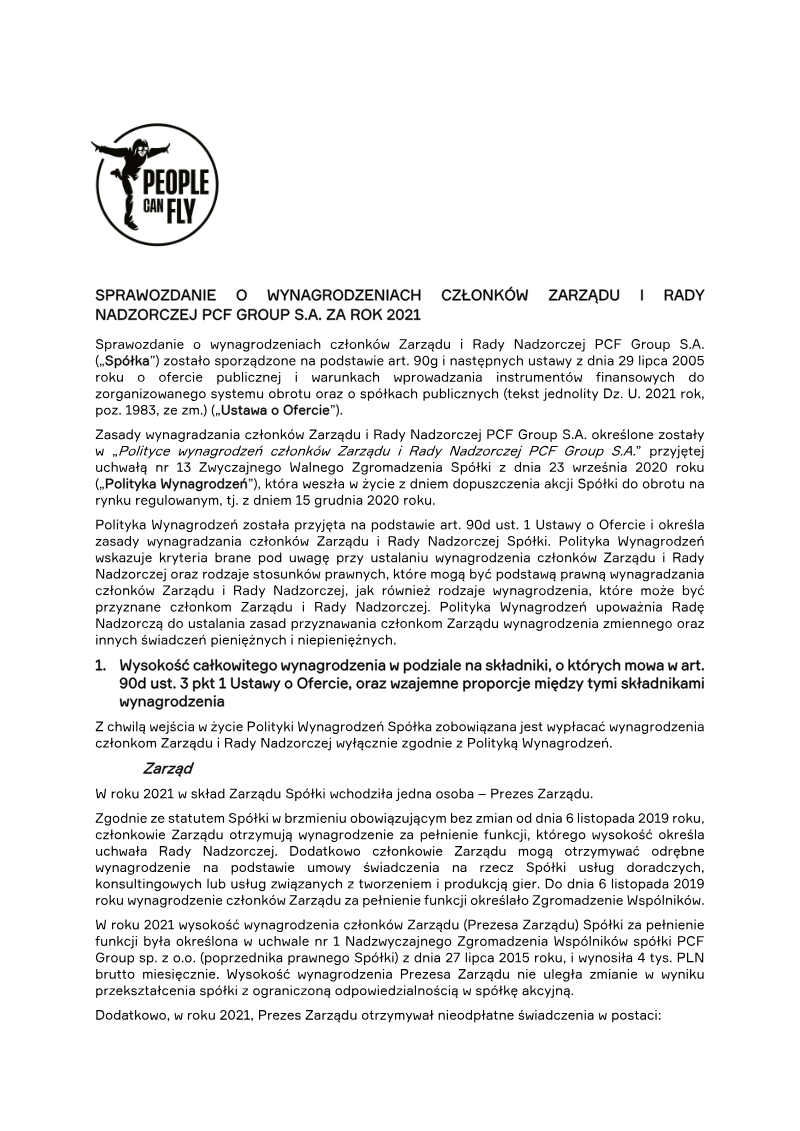
PCF Group · 2022
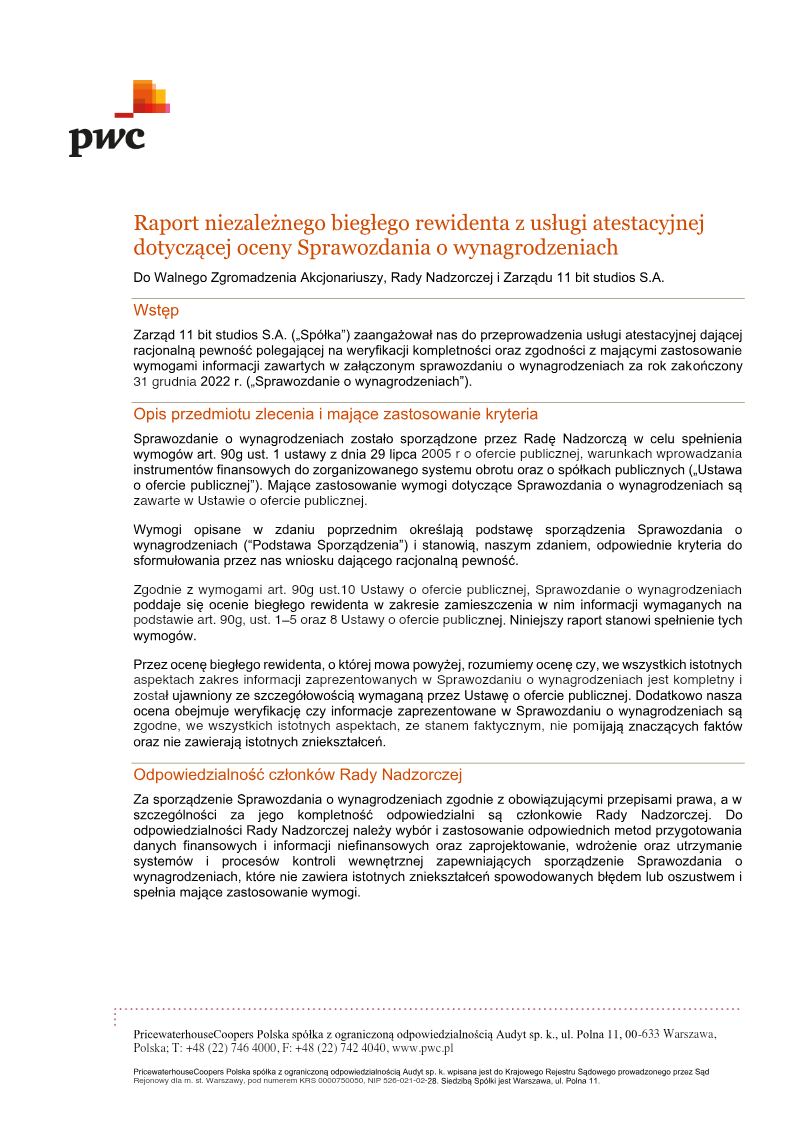
11 bit studios · 2022
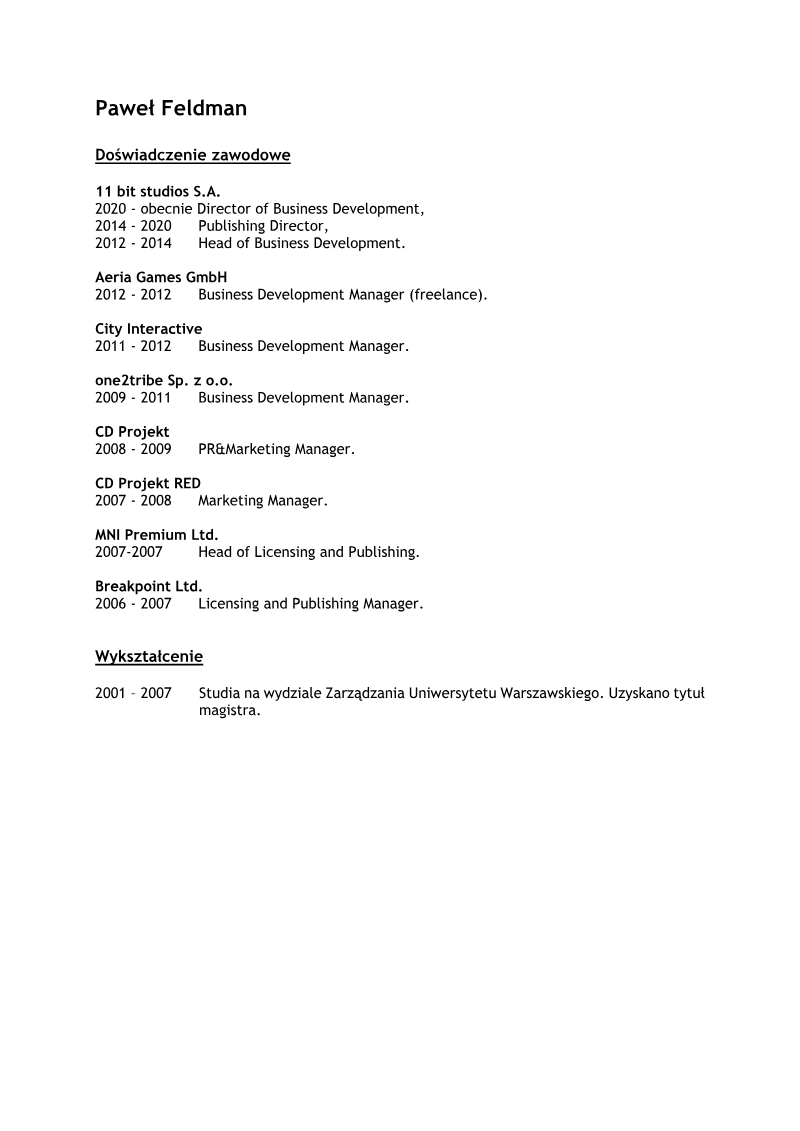
11 bit studios · 2020
11 bit studios · 2019