1 free read left. Create a free account for unlimited reading + AI research.
Create free accountArticle Eludamos: Journal for Computer Game Culture
1 free read left. Create a free account for unlimited reading + AI research.
Create free accountArticleEludamos: Journal for Computer Game Culture
Non-player character guards, game masters, access quests, and reputation systems regulate conduct, much as real-world infrastructure governs behavior.
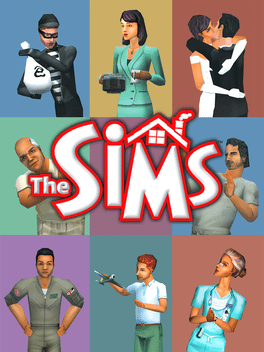
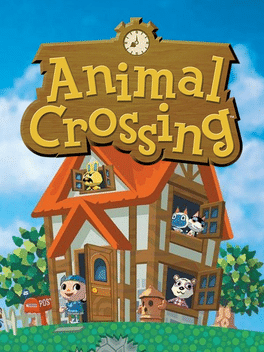
Joshua Zimmerman's essay "Really Fake" examines how the boundary between play and everyday life erodes within massively multiplayer online role-playing games, using as its primary case study Everquest 2 and drawing comparative examples from The Sims, World of Warcraft, and Animal Crossing: Wild World. Building on Huizinga's notion of the magic circle and Michel de Certeau's distinction between institutional strategies and individual tactics, the work argues that in persistent virtual worlds the magic circle becomes entangled with what it calls the mundane circle, the routines of ordinary life such as decorating homes, cooking, and paying recurring costs. The analysis is primarily theoretical and conceptual, grounded in close readings of game design and in the scholarly literature of game studies rather than in quantitative data.
The essay identifies two intertwined levels of everyday experience in these games. The first is the everyday of play, in which developers regulate behavior through mechanisms such as non-player character guards, game masters, access quests, and player reputation systems, much as real-world infrastructure governs conduct. The second is the mundane everyday, in which household objects and player housing lend the fantasy setting a sense of presence and inhabitability. Crucially, the author observes that these mundane elements are themselves converted into play: maintaining a virtual home requires earning rent through gameplay, so leisure and labor become difficult to distinguish.
The central conclusion is that when the mundane enters the magic circle, the division between playing and living collapses, and living can assume greater significance than playing. The game's rules increasingly resemble the rules of the real world. The essay proposes that this convergence gives rise to a hybrid everyday life belonging fully to neither the virtual nor the physical realm, a condition that invites further scholarly inquiry and playful exploration, and it raises open questions about how players relate to virtual space and whether such spaces might diffuse meaningful social action.
Eludamos: Journal for Computer Game Culture · 2026