1 free read left. Create a free account for unlimited reading + AI research.
Create free accountArticle DiGRA
1 free read left. Create a free account for unlimited reading + AI research.
Create free accountArticleDiGRA
The work is positioned against the art world's institutional embrace of games, including MoMA's 2012 acquisition and the V&A's game designer residency.
Leino's "Playability and Its Absence: A Post-Ludological Critique" argues that single-player computer games and interactive art occupy distinct territory, and that the defining feature separating them is playability: a "gameplay condition" that makes players responsible for their freedom through constraints on interpretation and clear feedback about right and wrong actions. He positions playability as the contemporary endpoint of a historical trajectory running from Allan Kaprow's 1960s Happenings through reactive environments and interactive installations to single-player games such as Tetris, framing games as the latest stage of automated, machine-mediated audience participation. The work is positioned against the institutional embrace of games by the art world, including MoMA's 2012 acquisition and the V&A's game designer residency.
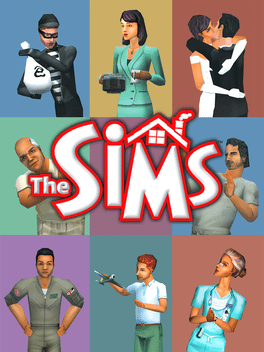
The central contention is that "non-playable" art games, exemplified by Proteus, retain game-like features such as failure and significance while removing goals and winning conditions, and that this absence can serve as a deliberate artistic strategy. Such works shift meaning from self-referential play toward aesthetic and existential reflection, inviting players to confront purposelessness and ambiguity. Leino's evidence here is theoretical and qualitative rather than quantitative, drawing on Woods, Kirkpatrick, Samÿn, and Bogost, along with case analysis of works including The Sims, Elektroplankton, Homes, and Continue.
Leino's critique becomes more pointed in its treatment of these works' ethics. Without playability, he argues, there is no material resistance, so transgression remains merely symbolic and audiences fulfill the artist's vision without genuine opportunity to question it. Drawing on Sartre, Sicart, and Aarseth, he concludes that such works are ethically problematic from a playable-art perspective. The analysis relies largely on theoretical reasoning and anecdotal examples rather than systematic data. Ultimately, he contends that art games can only be meaningfully distinguished from interactive installations, toys, and in-jokes for gamers if they are genuinely playable, and he calls for future works to be challenging, engaging, and fun, while leaving the mediated social dimensions of interactive art as a topic for further research.
Each row is a game or company this document names, each column a document, oldest first. A mark means that document names it. Select a row to see those documents.
DiGRA · 2019
DiGRA · 2019
DiGRA · 2019
DiGRA · 2019
DiGRA · 2019
DiGRA · 2019
DiGRA · 2019
DiGRA · 2019
DiGRA · 2019
DiGRA · 2019
DiGRA · 2019
DiGRA · 2019
Thomas Brush · 2026