1 free read left. Create a free account for unlimited reading + AI research.
Create free account
Plan, Practice, Improvise - Understanding the Three Types of Play in Games - Extra Credits
Key insights
6 takeaways- 01Improvisational gameplay prioritizes adaptation and reaction, requiring players to utilize resources to solve unpredictable or randomized scenarios on the fly.
- 02Practice-based gameplay focuses on mastery through repetition, utilizing static environments and fixed challenges that force players to internalize specific patterns and timing.
- 03Planned gameplay requires providing players with sufficient information to formulate a strategy, which they then adjust based on minor variables or execution challenges.
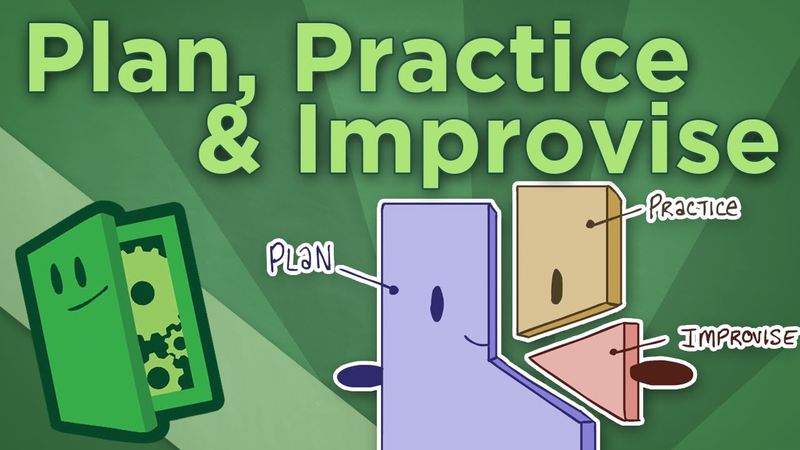
- 04Game design can be categorized into three distinct pillars—improvisation, practice, and planning—which serve as a diagnostic tool to align mechanics with the intended player experience.
- 05Successful game design requires identifying the primary pillar of the experience to ensure mechanics support the core loop rather than causing player frustration.
- 06Designers should intentionally decide whether to lean heavily into one of the three pillars or balance them to provide variety within the game's systems.
Ask AI about this video
Transcript
Taxonomies are great. They're not the be-all end-all of understanding your game, but as a player, these systems are useful to understand what types of games you like, and to better see what the designers were trying to get at when they put the pieces together. As a designer, taxonomies are incredibly useful in sussing out why your game systems are having problems, or figuring out what you should focus on to make your game really sing. And it's been a while since we've done a full-blown design theory episode, so we're going to indulge James today and go over one of the categorization systems he often uses, which I'm going to call plan, practice, improvise. While that may sound like a good set of life instructions, or like something that belongs on a depressing office break room poster, it's actually one of the ways James categorizes how games are played. Pretty much all games can be broken down into how much they rely on each of these three types of player behavior. Plan, practice, improvise. Knowing which ones your game focuses on heavily and which ones your game is weaker at is essential for making design decisions. Sometimes it'll tell you
which areas you need to shore up. Sometimes it'll tell you which areas you should focus on exclusively, completely casting the others aside. It's different for every game, but it's always useful. So, let's talk about these three types of play. First, let's talk about improvisational gameplay, as it gives some context for the other two. Improvisational games are games where you don't have any idea what's coming, and so you're figuring out what to do on the fly. Rogue-like games are probably the typical example of this, with games like Spelunky being the extreme case, and games like Rogue Legacy trying to bring more of other types of play into the Rogue-like genre. In these games, the player's continuously adapting to the situation at hand. The joy of the game comes from using whatever game elements you find around you to solve whatever problem the game happens to present to you. Be those elements a block of cover, a magical potion you just found, or that rocket launcher you've been saving for a rainy day. Heavy randomization is usually indicative of improvisational play, but it's not required. Anybody who's ever accidentally triggered an army of cops in Grand Theft Auto knows what it's like to have to improvise. You're grabbing
whatever car is at hand, turning down any unblocked street you can, trying to lose the police, using weapons as you find them, hopping over fences without having any idea of what's on the other side. You haven't practiced this moment, and you sure didn't plan for it. You're adapting to it as it comes to you, and it's awesome. Any section of a game that's intended to be beaten in one go is generally improvisational in nature. So, that's improvised. Now, let's talk about practice, as that's sort of the polar opposite. Games that emphasize practice are games which have static scenarios that the player's expected to play over and over until they learn them thoroughly. Dust Force, or pretty much anything in the bullet hell genre, might be the epitome of this, but it's a common element in games ranging from Mario Brothers to Dark Souls. The joy in these games is in mastering an area through repetition. Because the environment, the placement of the enemies, the shot patterns, and the power-ups all stay in the same location every time through, the player naturally gets better at an area the more times they play it. In any section of a game focused on practice, the expectation is that the player won't beat it in one go.
As a general rule, any time where that's the expectation, you have practice gameplay. The joy in practice games comes from the mastery of an environment or an encounter, from the experience as the human playing the game of improving at the task the designer set before you. These games tend not to allow the player to freely level up or increase in power, as the designer needs to be able to know the tools the player will come into the area with in order to create a level that demands practice to complete. As a corollary to this, these games also require very finely honed design. The difference of a pixel or a half-second change in timing can often ruin a game built around practice. These games frequently require more testing on the micro level than on the macro level. It's more about level or encounter design, rather than the broader system design. Practice games are also some of the games most likely to accidentally frustrate the player. It is always important for for to understand why they failed, but it's even more important for it to be crystal clear in these types of games as most of the enjoyment comes from the players improvement as a human being, which leads us to plan gameplay.
Planning gameplay is sort of the hybrid between the other two types, but and I want to make this very clear, it's not simply a mixture of the two. Each of these is its own distinct type of gameplay and you have to conceptualize them as such in order to use this framework. Just trying to add some improvisational gameplay and some practice gameplay will not, I repeat, not result in planned gameplay. This distinction is subtle, but it's really important and it's a problem that I often see new designers struggle with. Okay, so what is planned gameplay? Planned gameplay is when the player has a good enough sense of the challenges they're going to be presented with in order to formulate a general strategy or plan, but then has to adapt to circumstances as the play evolves or has to use high levels of skill in order to keep their plan on track despite adverse circumstances which they might not have been able to anticipate. Collectible card games are one of the better examples of this. In constructed play in games like Hearthstone, you have a general plan for what your deck is designed to do, but then you have to wrestle with an opponent and the random draw of the cards to keep that plan on track. One of the reasons that it's so
easy to confuse planned gameplay for a conflation of improvised and practiced gameplay is that very often planned gameplay relies on minor randomized elements. In most tactics games, you'll find that if you do the same actions the same way over and over, you don't end up with the same exact result, preventing you from learning it by rote and mastering a section through practice alone. But the randomization isn't such a major factor that it prevents you from having a generalized strategy to complete your goal. The joy found in planned games is in trying to make a plan come to fruition. Seeing your plan come together validates all of the thought that went into it, reinforces that you're clever enough or in touch enough with how the game works to adopt a winning strategy and adroit enough to execute it. These games lend themselves to having learnable generalities, but not learnable specifics. The problems they set forth have a generalized path to a right answer, but not a specific right answer. They don't necessarily force adaptation in play, but they encourage it as the player becomes aware of small ways to tweak their overall plan. If the player isn't able to formulate thoughts about how the
gameplay works because the system or the mechanics are too obtuse, planned gameplay just falls apart. Lastly, although it may not always be the primary focus, planned gameplay is important in many different types of games, from Tetris to Call of Duty. So, don't get caught in the trap of thinking of planned games as something exclusive to tactics or strategy. So, now that you understand this taxonomy and you can hopefully identify these elements within a game, there's just one thing to say about this particular system for observing an aspect of games, and that's that there is no universal right way to apply it. Some games choose one of these elements to focus on in their entirety, and anything that doesn't serve that focus needs to be cut. But, in most games you'll find that they incorporate a balance of the three, perhaps focusing on one primary type, but not by any means excluding the other two. Some games focus on one central pillar, but use the other gameplay types to break up the play and provide a difference in kind, like the GTA example we listed before. Some games specifically try to introduce other types of gameplay into a genre or a set of mechanics that's known for delivering very heavily on one of these. So, as a designer, you have to
assess your own games and see what mixture of practice, planning, and improvisation is right for you. We'll see you next week.
Summary
The taxonomy of game design can be categorized into three distinct pillars: improvisation, practice, and planning. This framework serves as a diagnostic tool for developers to evaluate whether their game mechanics align with their intended player experience. By identifying which of these modes a game prioritizes, designers can better refine their systems, address player frustration, and ensure that mechanics support the core loop of the experience.
Improvisational gameplay centers on adaptation, requiring players to react to unpredictable elements or randomized scenarios on the fly. Games like roguelikes or open-world titles often rely on this, where the joy stems from utilizing available resources to solve unforeseen problems. Conversely, practice-based gameplay focuses on mastery through repetition. These games feature static environments and fixed challenges, such as bullet hell shooters or high-difficulty platformers, where the player is expected to fail repeatedly until they internalize the specific patterns and timing required to succeed.
Planned gameplay functions as a distinct third category rather than a mere hybrid of the other two. It involves providing players with enough information to formulate a strategy while requiring them to adjust that plan in response to minor variables or execution challenges. This is common in collectible card games and tactical titles, where success validates the player’s strategic foresight. While many games incorporate elements of all three, successful design requires a clear understanding of the primary focus. Designers must decide whether to lean heavily into one pillar or balance them to provide variety, ensuring that every mechanic serves the overarching goal of the experience.
























Comments