Financial11 bit studios
Annual Report 11 Bit Studios S.A. for 2019
1 Mar 2020134 pages~261 min full read
In 2019, 11 bit studios S.A. demonstrated a period of significant financial consolidation and strategic expansion, characterized by a transition toward a multi-project development and publishing model. The company reported sales revenues of 71.2 million PLN and a net profit of 21.7 million PLN. While these figures represent a decrease from the record-breaking results of 2018, the firm significantly strengthened its balance sheet, increasing total assets to 155.7 million PLN and growing its cash reserves and financial assets to nearly 100 million PLN. This robust liquidity was supported by the sustained monetization of core titles such as Frostpunk and Moonlighter, alongside the successful debut of Children of Morta.
A key driver of profitability was the implementation of the IP Box tax relief, which reduced the effective tax rate from 21.94% to 13.26%. This fiscal efficiency, combined with the decision to allocate the previous year’s entire profit to reserve capital rather than dividends, has enabled the company to self-finance an ambitious growth strategy. This strategy involves expanding the internal workforce to 135 employees and establishing three distinct development teams to support a release cycle of one proprietary game every 12 to 18 months. Current internal investments are focused on "Project 8," "Project 9," and "Project 10," alongside the continued development of a proprietary game engine.
The publishing division emerged as a critical pillar of the business, increasing its revenue contribution from 18% to 40% in 2019. To sustain this momentum, the company signed several new external publishing agreements and increased its investment cap for third-party projects. While the company faces risks related to currency fluctuations—with 90% of revenue denominated in USD—and the competitive global market for specialized talent, its operational stability remained high. Even with the onset of the COVID-19 pandemic in early 2020, the studio reported no material impact on liquidity or sales, having successfully transitioned to a remote work model.
11 bit studios · 2026
11 bit studios · 2025
11 bit studios · 2025
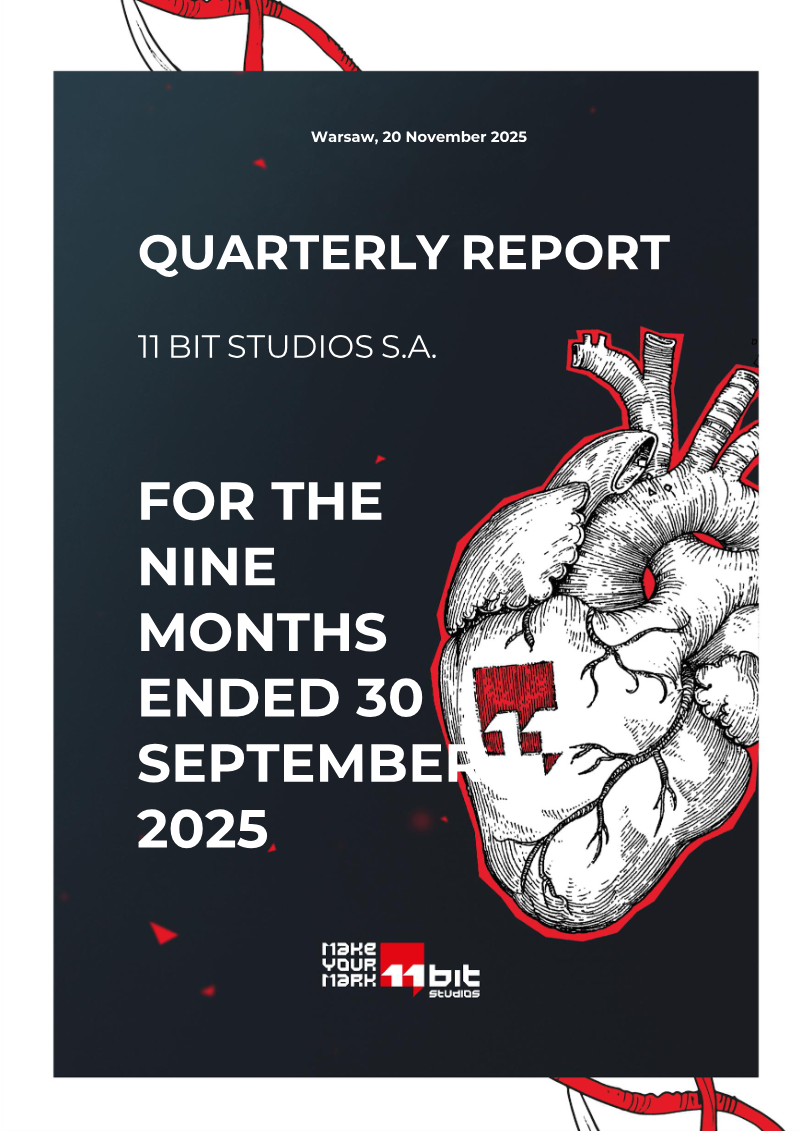
11 bit studios · 2025
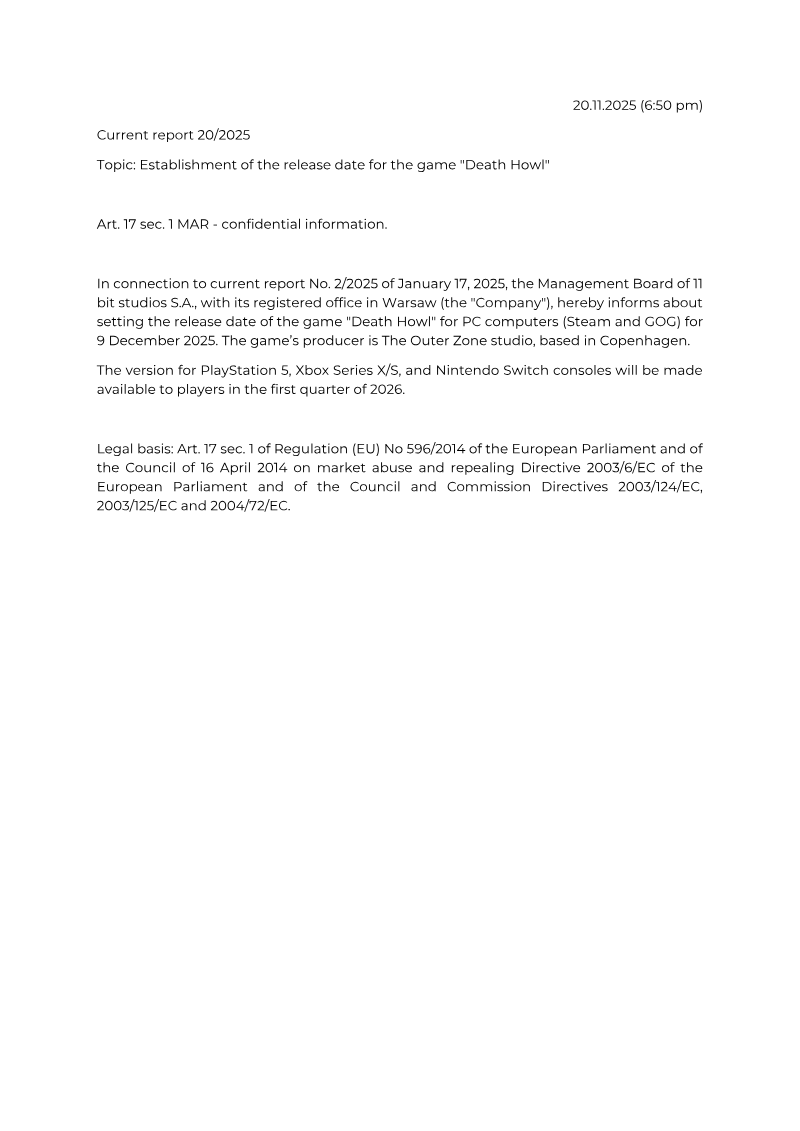
11 bit studios · 2025
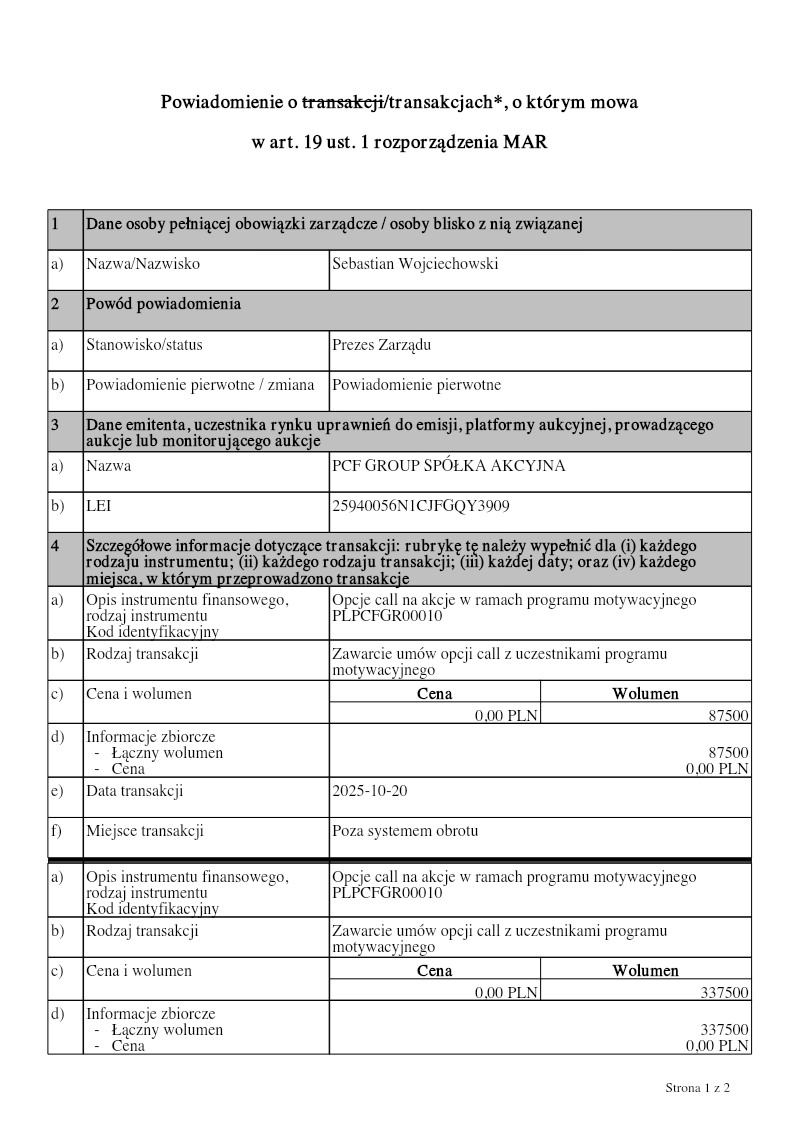
PCF Group · 2025
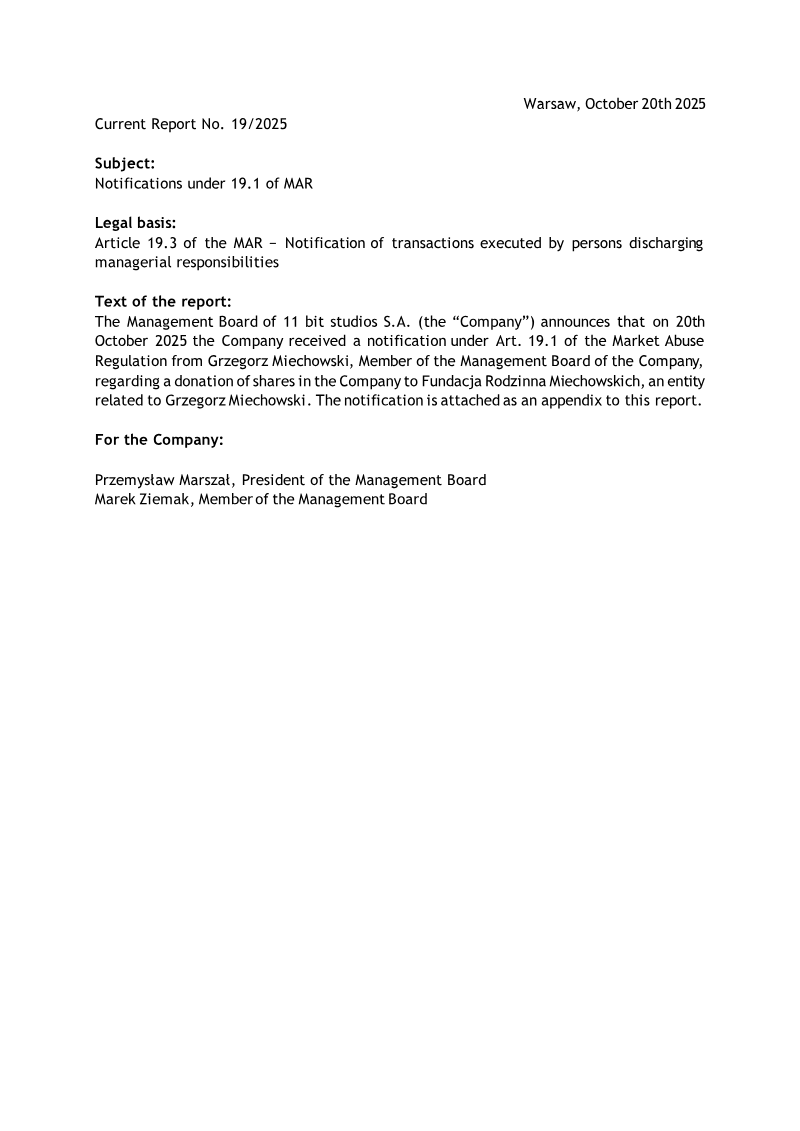
11 bit studios · 2025
11 bit studios · 2025
11 bit studios · 2025
11 bit studios · 2025
11 bit studios · 2025
11 bit studios · 2025
PlayWay · 2026
PlayWay · 2026
PCF Group · 2025
PCF Group · 2025
PCF Group · 2025
People Can Fly Group · 2025
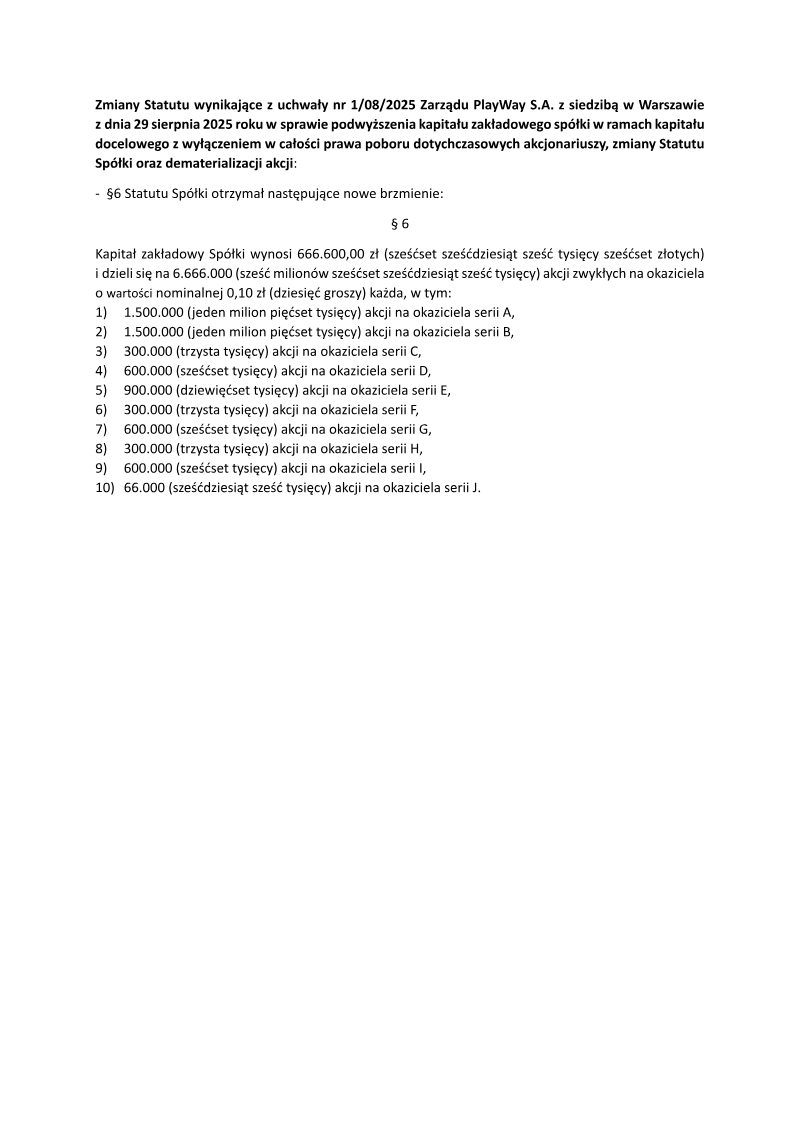
PlayWay · 2025
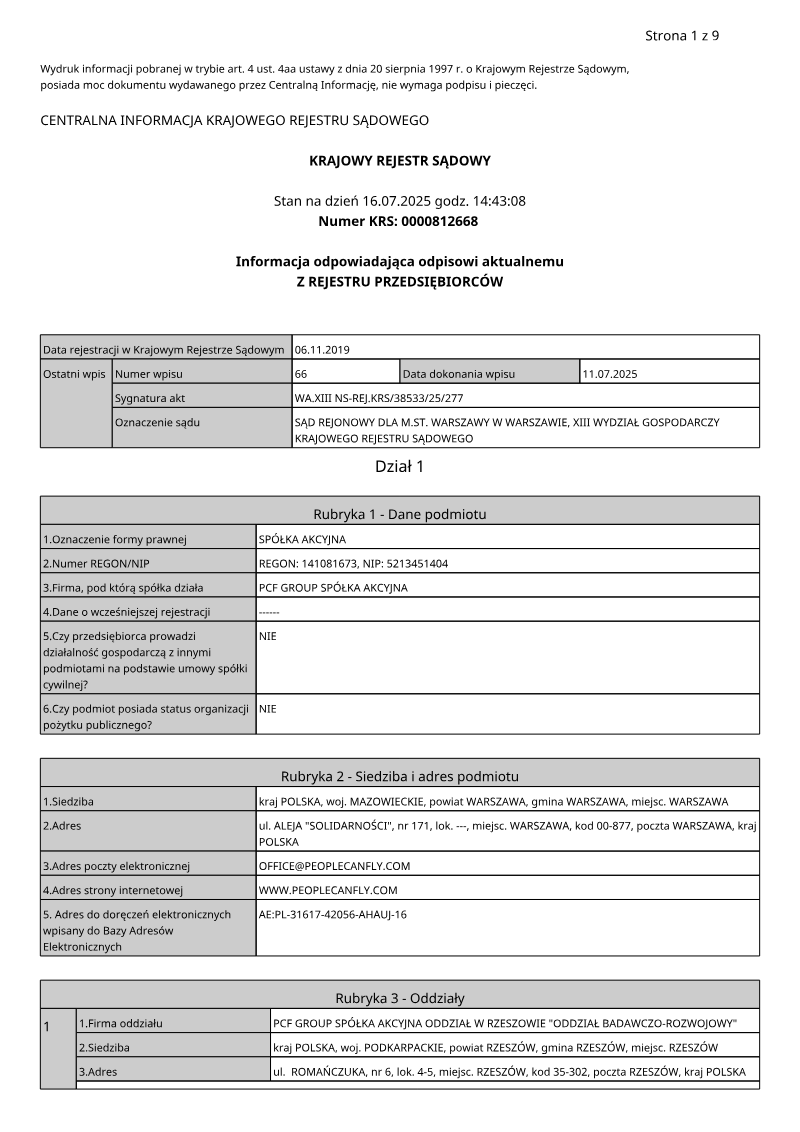
Centralna Informacja Krajowego Rejestru Sądowego · 2025
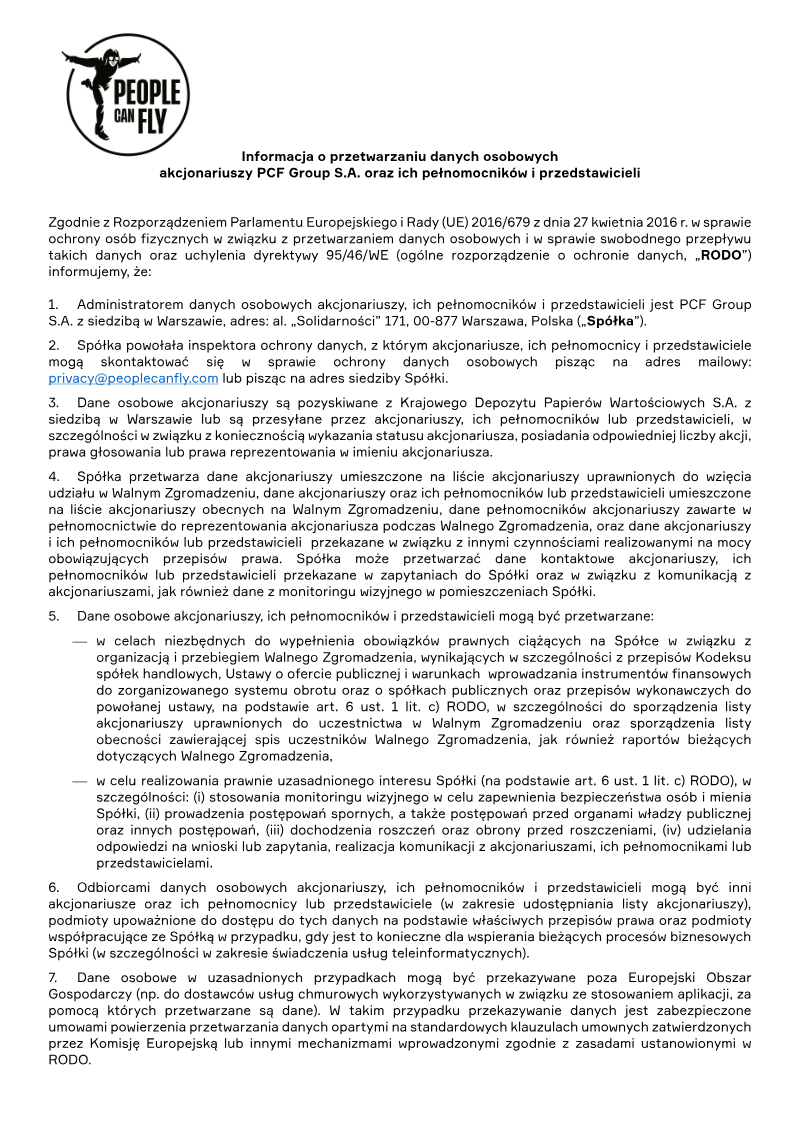
PCF Group · 2025
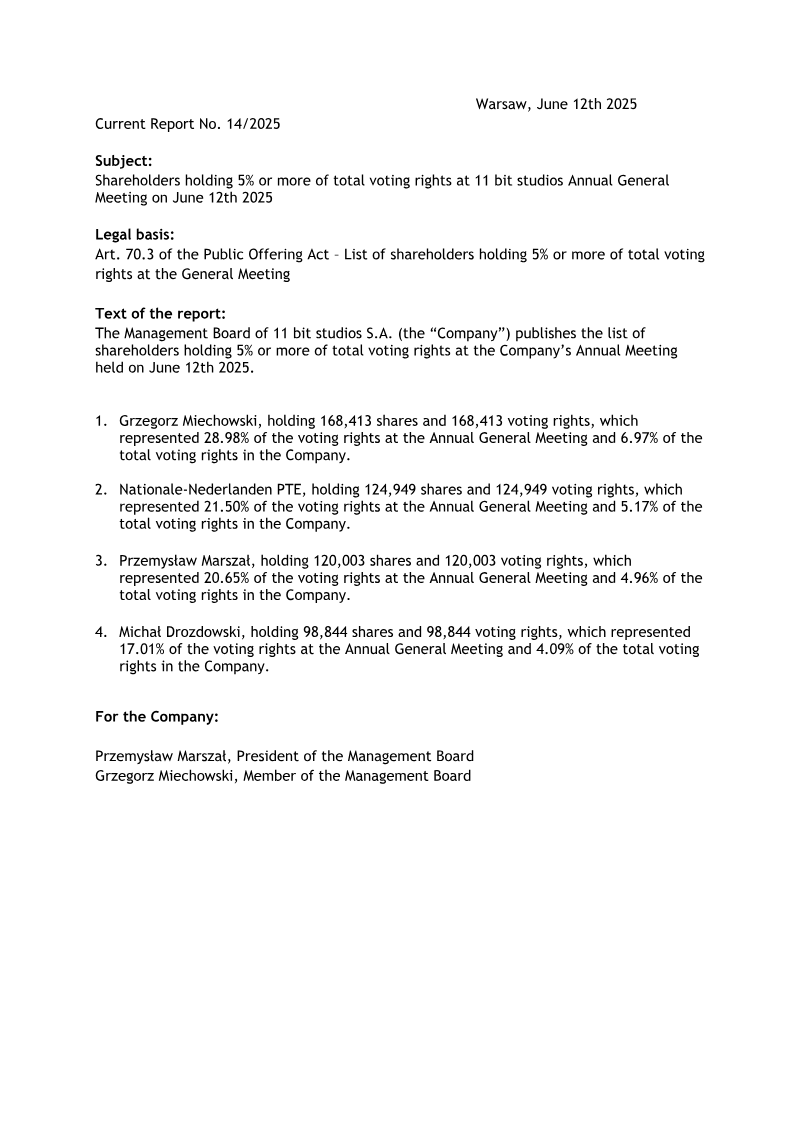
11 bit studios · 2025
PCF Group · 2025
PCF Group · 2025