1 free read left. Create a free account for unlimited reading + AI research.
Create free account
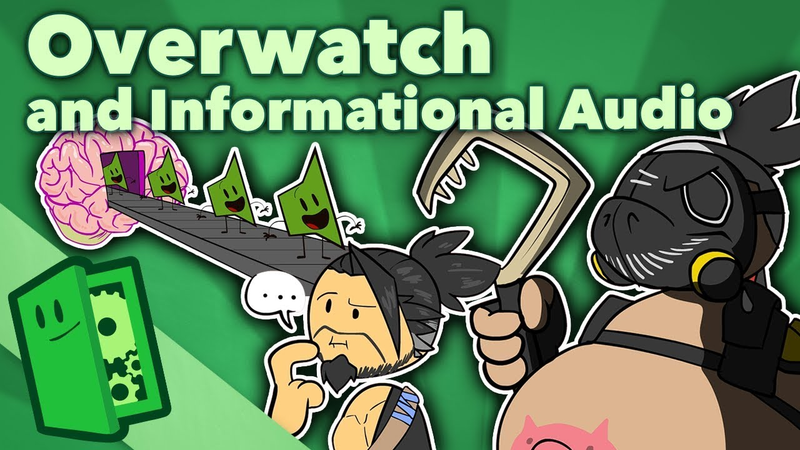
Overwatch and Informational Audio - Sound Design in Games - Extra Credits
Key insights
6 takeaways- 01Game audio functions as a critical informational layer that must be prioritized to prevent cognitive overload and ensure players can react to essential gameplay data.
- 02Audio cues must be distinct and non-conflicting to avoid player error, a design principle historically demonstrated by the clarity of sounds in titles like Super Mario Brothers.
- 03Poorly managed soundscapes, such as those seen in high-intensity environments like Counter-Strike, can lead to critical information masking, where excessive noise obscures vital events like bomb plants.
- 04Strategic sound design can leverage audio density as a tool for distraction, provided the developer maintains a balance that keeps the most relevant tactical information clear.
- 05Overwatch utilizes a dynamic audio mixing system that automatically adjusts volume levels during high-chaos, 12-player team fights to ensure critical cues like ultimate abilities and enemy footsteps remain audible.
- 06Effective sound design requires a strict hierarchy where high-impact threats are consistently prioritized over ambient or less critical background noise.
Ask AI about this video
Transcript
When people think about audio in games, they typically think about how it makes them feel. Often, they think of a game's soundtrack or maybe how an audio cue makes them excited when they get a kill streak or complete a level. But, many people don't realize that one of audio's great all-encompassing purposes in a game is to actually be informative. Thanks so much to Skillshare for sponsoring this episode. The first 500 people to sign up at the link below will get their first 2 months free. Before we begin, please say hi to Ryan from blipsounds.com who guest wrote this episode. Thanks, Ryan. One of the greatest challenges for a game designer is in making sure the player gets all the information they need. Not only tutorial stuff, but information like where bullets are coming from or when they're getting hit. And the more efficiently a game designer can transfer this stuff to your brain, the more they're able to put in their game without overloading the player. So, one of the great quests in game design is to deliver information more and more
efficiently. And any good game designer knows one place you can do that is through sound. Audio is an excellent way to provide information to a player, but it has to be done well because audio can be very misleading if it's done poorly. Take a game like Super Mario Brothers. When you get damaged, you'll become small Mario and hear a sound like this. And when you collect a mushroom, you'll hear a sound when you become big Mario like this. But, what if Nintendo got really lazy and decided to use the same sound for both? Rather than convey information, this would just serve to confuse the player because now, on a really busy screen, when the player hears that sound, they'll have to check, "Oh, did I just get hit? Or, did I just accidentally get a mushroom?" And while actually counterproductive sound design like this is rare, you know what's common? Cluttered audio. Let's take Counter-Strike as an example. When playing Counter-Strike, you see what's directly in front of you, which covers a 90° spectrum. But, there's an
entire other 270° that isn't being accounted for in your vision. So, thankfully, we have the audio at our disposal to give us the information about what we can't see. But, in a really high-intensity moment in Counter-Strike, there can actually be too much audio. And while this sort of mimics a real firefight with people screaming in your ears, grenades going off, the sounds of shots being fired, and others impacting things, this can also be a little like having a really cluttered UI. You might miss that telltale sound of the bomb being planted because of everything else going on. But, this of course also creates interesting strategies and the option for a team to go and create a distraction while one of their other members does something sneaky. But, it has to be used very carefully because, like a cluttered UI, a cluttered audioscape tells the player nothing. That's not to say that audio can't be complex, either. Audio is incredibly dynamic because, while it doesn't have a nice 4K screen to display itself on, what it does have is a set of speakers, volume, panning,
and 20,000 hertz of human hearing range. And while this can get cluttered very quickly, if we look at a game like Overwatch, the design group and the audio team have worked together to expertly craft its audio to be dynamically informational. In an Overwatch team fight, we can have up to 12 players making footsteps sounds, voice lines, weapon sounds, secondary weapon sounds, and their ultimate sounds. And then, on top of that, we also have 11 players fighting in front of us from a first-person perspective. That is a lot of clutter. And it's a lot of information being given to the player at once. So, how does Overwatch make this gigantic team fight into something that can clearly inform the player about what is happening? It all comes down to how the audio is mixed. Overwatch will prioritize the most important sounds in a team fight by making the volume louder than the less important ones. So, which sounds are more important? The ones that are the most dangerous to the listening player. For instance, you'll always hear
your enemy team's footsteps over your own team's footsteps. You'll always hear something as dangerous as Widowmaker's sniper rifle at full power over Lucio's sonic amplifier. You'll always hear an enemy team's ultimate over everything else in the game. Die. Die. Die. And you'll always hear more dangerous ultimates over less dangerous ones. If you could please stop living, that would be nice. And it's because these things dictate the flow of the long-term game at hand. And when all this informational audio is combined with memorable characters, distinctive animations, and clear VFX, it allows players to process a huge amount of information in almost any team fight. So, when you're designing the sound in a game, ask yourself, what does the player need to know? And how can you convey that with sound? Then ask yourself, are you making your sounds distinct enough from one another? And finally, if it seems like you have too much going on in your game altogether, can the audio be reorganized to be clearer and more informative? Because if
it can't, then it might be time to scale back a bit. If you can do all that, then a player will be able to pick up the most important information in your game with ease. See, I get that. Good giant Zoe. Uh No. NO. NO, I DON'T WANT TO PLAY. ONCE AGAIN, THANK YOU to Skillshare for sponsoring this episode. Skillshare is an online learning community with thousands of classes in design, business, technology, and more. In fact, after completing this episode, I dove back into Skillshare's treasure trove of instructional videos, where I learned about sound mixing, digital illustration, and attention management. Wha- um What was I What was I doing again? Haha, just kidding. That doesn't happen anymore. And for the first 500 people who click the link in the description below, Skillshare is offering their first two months free. And you can learn a lot in two months. So, check them out and let them know Extra Credits sent you.
Summary
Effective game design relies on audio as a critical tool for information delivery, extending beyond atmospheric immersion to provide players with essential gameplay data. The primary thesis posits that audio must be meticulously organized to prevent clutter, which can otherwise obscure vital cues and confuse the player. By prioritizing sounds based on their tactical importance, developers can communicate complex environmental information—such as enemy positioning or impending threats—without overwhelming the user’s cognitive load.
The analysis highlights the necessity of distinct, non-conflicting audio cues. Using examples from classic titles like Super Mario Brothers, the discussion illustrates how ambiguous sound design leads to player error. In more complex environments like Counter-Strike, the challenge shifts to managing high-intensity soundscapes where excessive noise can mask critical events, such as a bomb plant. While this density can be leveraged for strategic distraction, it requires careful balancing to ensure the most relevant information remains audible.
Overwatch serves as a primary case study for successful dynamic audio mixing. In high-chaos team fights involving twelve players, the game employs a sophisticated prioritization system. It dynamically adjusts volume levels to ensure that the most dangerous elements—such as enemy footsteps, high-impact sniper fire, and ultimate abilities—are consistently audible over less critical sounds. This hierarchy allows players to process vast amounts of data in real-time. Ultimately, the effectiveness of game audio depends on the designer's ability to identify what information is essential, ensure sounds are distinct, and reorganize the soundscape to maintain clarity. When audio is treated as a core informational layer rather than mere background noise, it significantly enhances the player's ability to navigate and react to the game environment.
















Comments