

Updated Mar 17, 2026 by New Zealand Game Developers Association
What can I help with?
AI-powered answers with citations from the library.
What can I help with?
AI-powered answers with citations from the library.
Report · January 1, 2025
Published by New Zealand Game Developers Association
Video gaming has become a mainstream activity across New Zealand households, with the majority of homes now possessing multiple gaming devices. Seventy‑three percent of residences own two or more consoles or similar hardware, and eighty‑one percent of the population engages in gaming, most of them adults; the average player is 36 years old and eighty percent are aged 18 or older. Parental motivations for allowing children to play centre on enjoyment, educational value and problem‑solving, while a strong majority of parents enforce rules around gameplay. Over three‑quarters of parents set limits, and nearly four‑tenths consider those limits “very much” enforced, with a similar proportion applying them “to some degree.” Adult respondents display solid awareness of New Zealand’s game‑classification system, though familiarity drops for the R13‑R16 categories. The findings derive from a nationally representative sample of 820 households surveyed in May 2025, encompassing 1,309 individual gamers—including 282 parents—and demographic data on 1,731 persons across the sampled homes. The study achieved a 3.5 percent margin of error and collected detailed information on device ownership, playtime, attitudes and knowledge of classification standards. Results highlight the entrenched role of gaming in everyday life, the prevalence of parental regulation, and a generally high level of consumer understanding of content ratings, albeit with gaps for mid‑range age classifications. Overall, the research underscores the maturity of the New Zealand gaming market, the integration of gaming into family routines, and the need for clearer communication around specific rating bands to support informed parental decision‑making.
CONTENTS The Family Experience Why parents play video games with their children ...........12 Why do parents let their children play ...............................13 Foreword ................................................................................1 Parents use of rules for children’s game play ....................13 Key findings ............................................................................2 Adults’ familiarity with game classifications .....................14 New Zealand Plays Video Games Adults correctly identifying restricted classifications ........14 Game households over time ................................................4 Adults’ familiarity with family controls on game devices 15 Number of game devices per household ........................... 6 Adults’ familiarity with in-game controls ............................15 Types of game devices in households .................................6 Why Do New Zealanders Play Games? Average player age ..............................................................7 Game-related content creation objectives ......................17 Age category of players ......................................................7 Only play games alone by age group .............................. 18 Age proportion of all players ................................................7 Potential of games for personal growth ............................ 19 Proportion of players within age categories ....................... 8 Potential of games for mental wellbeing ..........................
........ 18 Age proportion of all players ................................................7 Potential of games for personal growth ............................ 19 Proportion of players within age categories ....................... 8 Potential of games for mental wellbeing .......................... 19 Gender proportion of all players ..........................................8 Children using games at school .........................................20 Total play time by age and gender .....................................9 Potential of games for student experience .......................20 Preferred genres ..................................................................10 Using games at work ...........................................................21 Multiplayer preferences ......................................................10 Potential of games for skills development .........................21 Play By The Ages Players Aged 18-34 ..............................................................22 Players Aged 35-64 ..............................................................24 Players Aged 65+................................................................. 26 Credits & citation ................................................................ 28 Methods, samples and subsamples ................................... 29
FOREWORD <sub>by </sub> Professor Jeffrey Brand The 2025 New Zealand Plays report is the 9th in a series of studies that we have published since 2010. The purpose of this research has been to provide evidence and encourage conversation about who among us plays video games, why we play, how we play and what we think of this dynamic and often breathtaking medium. For one-and-a-half decades, we have seen the rapid maturation of the video games audience. While the early reports in this series surprised many in our community that video games were so popular – and the typical player was an adult – today the reality that video games are not only popular, but that they are popular for everyone at every age has been well documented through this research. We have long argued that video games give rise to digital fluency. The digital economy is flourishing, if not because of video games creating capacity, then at least in part because they contribute. We have also argued that the technologies underpinning video games has been an important part of innovation, giving rise to new capabilities.
rise to digital fluency. The digital economy is flourishing, if not because of video games creating capacity, then at least in part because they contribute. We have also argued that the technologies underpinning video games has been an important part of innovation, giving rise to new capabilities. Trends we have been surprised by this year include the bias toward cooperative play among younger players and competitive play by older players. We have been impressed by parents’ clarity about controls, ratings, and the value of games for their children’s learning. Compared with other countries, parents in New Zealand have more positive attitudes toward the benefit of game play, generally, compared with non-parents. It also seemed from quantitative and qualitative findings that social interactions and creativity are both motivations for and outcomes from video game playing. Finally, we are sensitive to evidence that the number of us who play video games and the amount of time we spend playing them are limited by the natural amenity and outdoors lifestyle in New Zealand, and by the practical value that is discovered when New Zealand Plays.
73% of New Zealand households have 2 OR MORE GAME DEVICES with the most popular being a console Over 77% 65% 81% of parents have of parents are aware UP FROM rules around play of family controls and 79% in-game controls of all New Zealanders play video games 47% 81% FEMALE The average age of video game players in New Zealand is YEARS of parents play with their children to connect as a family 80% of all players in New Zealand are AGED 18+
New Zealanders play games to... New Zealand video game players’ TOP GENRE CHOICES: 96% 95% 94% 1. ACTION/ADVENTURE ...have fun ...relax and ...pass the de-stress time 2. PUZZLE 3. BOARD AND CARD 76% NEW ZEALAND PARENTS... ...play games with ... let their children play of New Zealanders children because: games because: play video games with others 1. Games are a fun way for 1. Children enjoy the family to connect playing games 2. Games provide a way to 2. It’s a fun way to learn 27% spend time together 3. They can improve 3. A child asks their parent to problem solving skills play games with them of New Zealanders have made New Zealanders play games new friends through playing games for personal growth to: New Zealanders play games for 1. Bring joy mental wellbeing to assist in: 2. Create feelings of enjoyment 1. Managing stress 3. Stimulate the mind 2. Managing depression and anxiety 3. Building resilience
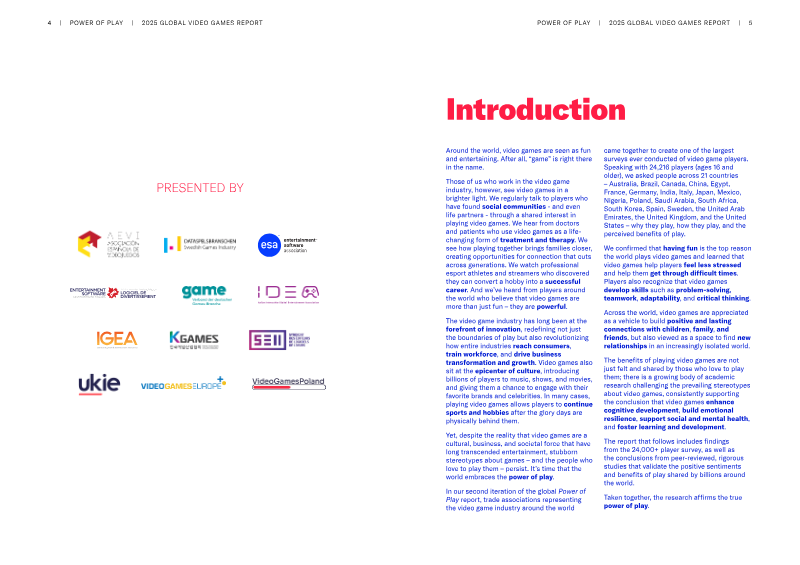
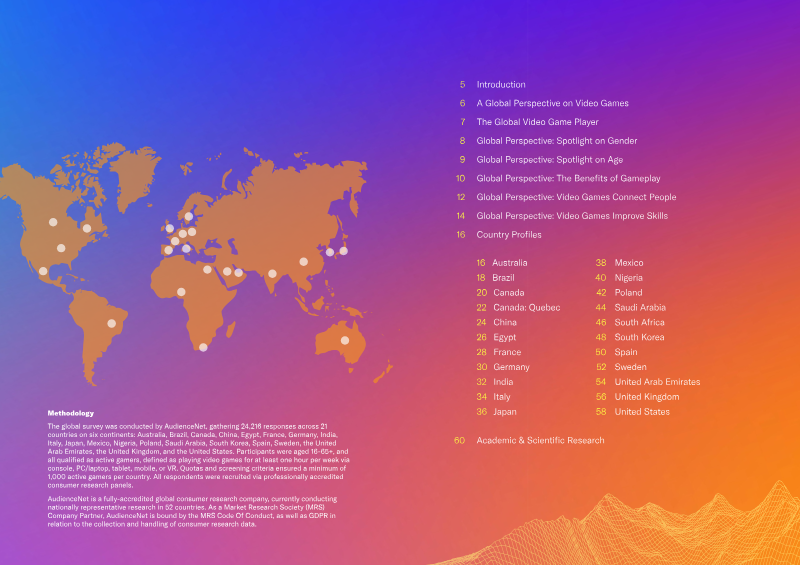
The research surveyed more than 24,000 active gamers from 21 nations on six continents, representing a broad cross‑section of the global gaming population (average age 41, 48 % female). Its central thesis is that video games function as a powerful catalyst for cognitive, social, educational, and mental‑health benefits, extending far beyond entertainment. Across all regions, a majority of players report gaming primarily for fun (56 %), stress relief (55 %) and mental stimulation (46 %). Mobile devices dominate usage (55 % of respondents), followed by PCs/laptops and consoles, while 73 % say gaming reduces feelings of isolation and 81 % view it as mentally stimulating. Perceived skill development is strong: 77 % associate gaming with enhanced creativity, 74 % with problem‑solving, and substantial portions note improvements in teamwork, resilience and social interaction. The survey highlights a professional impact, with 43 % globally—reaching 76 % in Nigeria and 70 % in India—believing gaming positively shaped their education or career. Mental‑health outcomes are equally pronounced; 70‑90 % report reduced stress, increased happiness and a healthier outlet for daily challenges, with the highest well‑being scores in India, Nigeria and Mexico. Online multiplayer is identified as the primary social connector, cited by up to 96 % of respondents. Complementary academic research corroborates these findings, showing that digital games boost learning engagement, reading skills and decision‑making, while immersive technologies such as AR/VR enhance performance in high‑stress professional settings, including medical surgery and aerospace training. Collectively, the evidence positions video games as a validated tool for skill development, education, and mental‑health recovery across diverse global markets.
Across more than twenty national markets, the majority of gamers report that playing video games reduces stress and enhances happiness, with 70‑90 % indicating lower stress levels and 57‑91 % feeling happier. Respondents also cite diminished anxiety and isolation, while parents observe a positive shift in relationships with their children, ranging from roughly one‑third in Sweden to nearly four‑fifths in Nigeria. Mobile devices dominate the landscape, accounting for 60‑96 % of play sessions, and online multiplayer emerges as the most prevalent social mode. In the United Arab Emirates, United Kingdom and United States, surveys of roughly three thousand gamers reveal consistent benefits: about 70‑80 % experience reduced stress and increased well‑being, and roughly two‑thirds of parents note improved parent‑child interaction. Genre preferences diverge, with UAE players favoring teamwork, collaboration and creativity, whereas UK and US gamers gravitate toward problem‑solving, critical‑thinking and cognitive‑skill development. Approximately half to sixty percent of participants perceive gaming as supportive of career‑related or hobby pursuits, and a similar share report enhancements in professional competencies. Research spanning multiple sectors demonstrates that video‑game‑based training yields measurable gains in cognition, decision‑making speed and technical performance. Gamers outperform non‑gamers in robotic‑surgery simulations, emergency‑response drills and retail‑seasonal‑sales scenarios, with meta‑analyses confirming statistically significant improvements in perception, attentional control and procedural accuracy. These outcomes translate into higher job performance, reduced error rates and stronger return on investment, prompting organizations such as NASA, the U.S. Air Force and elite sports teams to integrate game‑based platforms into their training pipelines.
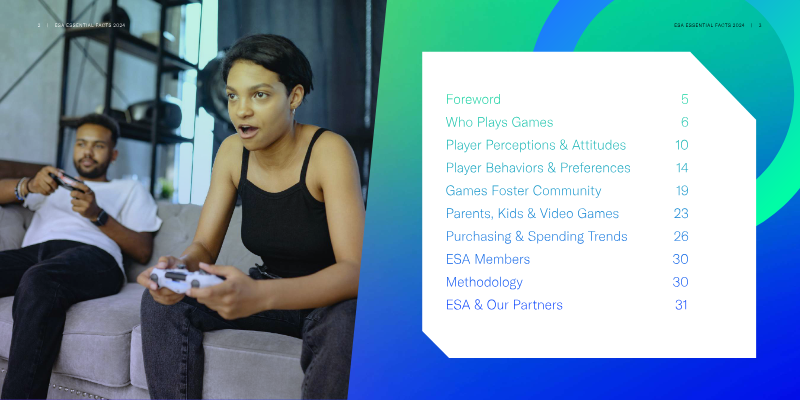
The U.S. video game industry has evolved into a mainstream, multigenerational pastime that encompasses 190.6 million weekly players. Findings indicate that 61% of the American population plays at least one hour of video games per week. The demographic profile of the average player has shifted significantly over the last two decades; the average age is now 36, compared to 29 in 2004. This aging player base has fostered a strong culture of family gaming, with 83% of gaming parents playing alongside their children to strengthen bonds and improve communication. Technological advancements have fundamentally altered how and where Americans engage with games. Mobile devices are now the primary platform, used by 78% of players, a dramatic increase from 33% in 2012. Furthermore, the rise of internet connectivity has transformed gaming into a social hub, with 88% of players engaging in online gameplay and 72% agreeing that video games create a sense of community. Beyond entertainment, players report significant mental health and cognitive benefits, with over 75% of adults agreeing that games provide stress relief, mental stimulation, and joy. Economically, the industry remains a powerhouse, contributing nearly $66 billion to the U.S. GDP in 2023 and supporting over $101 billion in total economic impact. Total consumer spending reached $57.2 billion during the same period. The data, gathered by YouGov via a survey of 5,000 respondents and supplemented by qualitative ethnography, highlights that 63% of players view video games as providing the highest value for their money compared to other entertainment media. This comprehensive look at the 2023-2024 landscape confirms that video games are an inclusive, essential component of American social and economic life.
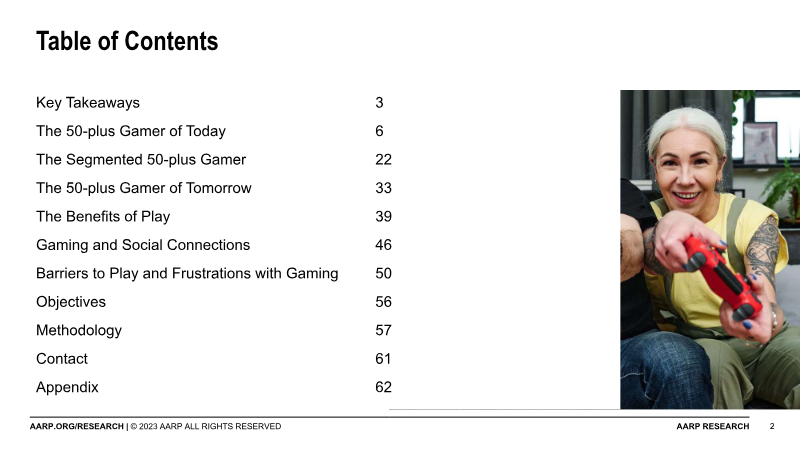
The population of gamers aged 50 and older has expanded to 52.4 million individuals, with average weekly engagement rising over 40% since 2019 to reach 12 hours per week. While mobile remains the dominant platform due to the popularity of puzzle, card, and word games, there is a notable increase in console and PC usage among high-engagement segments. This demographic is segmented into five distinct cohorts, where the most passionate 26% of players—classified as Enthusiasts and Immersives—account for nearly half of all total spending. Although current biannual spending averages $49 per person, the market is poised for significant growth as the 40-49 age bracket, which boasts a 62% participation rate, transitions into this older demographic. Primary motivations for play center on mental acuity and passing time, with 70% of these gamers viewing play as an essential component of healthy aging and cognitive stimulation. Despite this high level of engagement, a significant gap exists between consumer behavior and industry representation. Approximately 70% of older gamers feel the industry treats them as an afterthought, citing a lack of age-inclusive design and a dearth of marketing that reflects their demographic. Furthermore, these players express strong dissatisfaction with aggressive monetization strategies, such as progress-gating ads and microtransactions, which serve as primary barriers to enjoyment. The industry currently faces a critical disconnect where older adults struggle to find titles specifically designed for their needs. While gaming peaks for this group during evening hours, their preferences remain concentrated in logic and tile genres, though higher-engagement segments increasingly seek narrative-driven and social experiences. To capture the full potential of this expanding market, developers must address sensitivities regarding cost and representation while leveraging the deep-seated belief among older players that gaming is a vital tool for maintaining mental health and social connection.