
Marketing intelligence is defined as the systematic collection and analysis of data related to marketing activities, enabling advertisers to benchmark competitors’ strategies and refine their own plans. The text outlines three primary data sources—creative analysis, audience profiling, and cost metrics—and explains how each contributes to a comprehensive intelligence framework. Creative intelligence is derived by aggregating and sorting ad creatives from prominent brands, revealing trends such as the prevalence of war imagery in “Three Kingdoms” mobile games and the emphasis on brand reputation versus eye‑catching design among smaller advertisers. Audience intelligence is obtained through keyword‑based reports on Facebook and Google, providing demographic breakdowns (gender, age, marital status, education), device usage, and interest clusters; an example shows that “puzzle” interests skew female, 25‑34, iOS users in the U.S. Cost intelligence is captured via CPC, CPM, CTR data from platforms like SocialPeta, illustrating shifts in average spend and highlighting regional variations—for instance, sports keywords command a $21.15 CPM in the U.S. The document argues that these data streams give advertisers an 80 % competitive advantage by enabling real‑time monitoring of industry dynamics, timely strategy updates, and ROI optimization. The scope covers digital advertising across major platforms (Facebook, Google) with a focus on mobile games, apps, and e‑commerce, using publicly available analytics tools. The methodology relies on automated report extraction and manual filtering rather than large‑scale surveys, emphasizing actionable insights over academic rigor.

SocialPeta · 2026

SocialPeta · 2026

SocialPeta · 2026

SocialPeta · 2026

SocialPeta · 2026

SocialPeta · 2026

SocialPeta · 2026

SocialPeta · 2026

SocialPeta · 2026

SocialPeta · 2026

SocialPeta · 2026

SocialPeta · 2026

SocialPeta · 2026

SocialPeta · 2026

SocialPeta · 2025
SocialPeta · 2025

SocialPeta · 2021
Gamesight · 2026
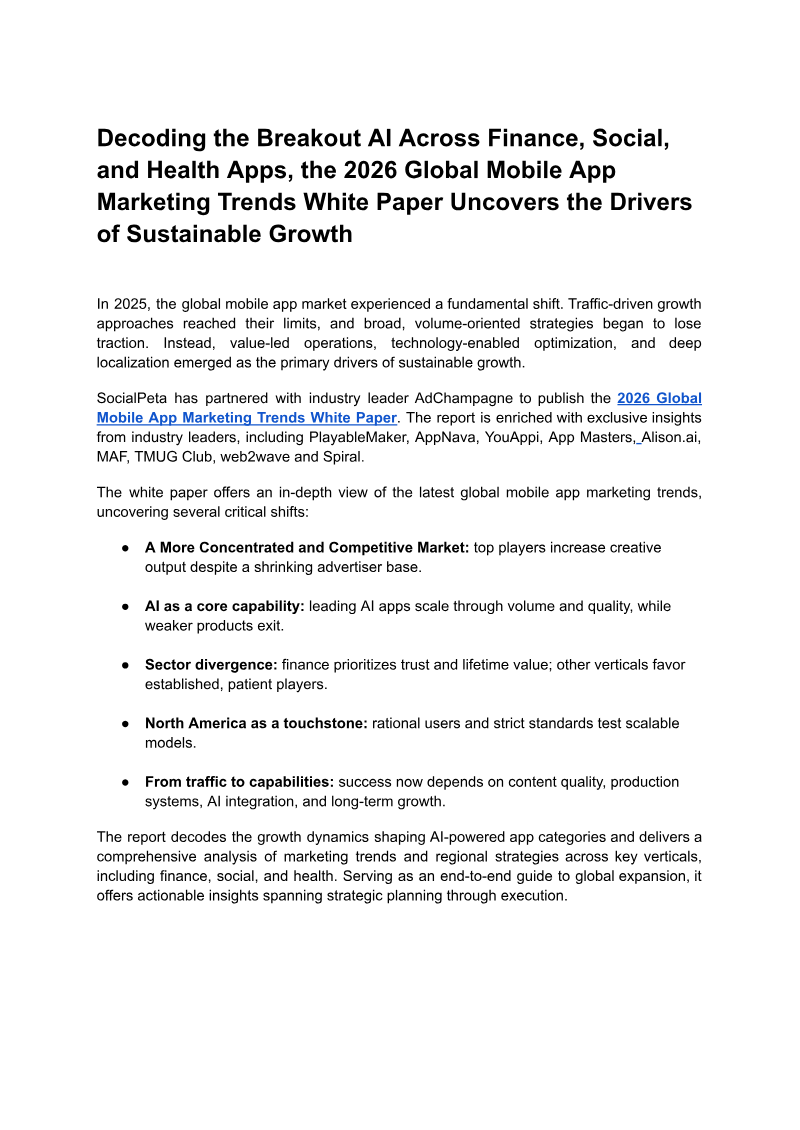
SocialPeta · 2026

Anzu · 2026

Raptive · 2026

Moloco · 2026

Sensor Tower · 2025

Sensor Tower · 2025