Related Documents
Report
Mobile Gaming Spender Report: Decoding Today’s Mobile IAP Spenders to Understand Motivations, Engagement
The 2024 Mobile Gaming Spender Report by Mistplay examines the evolving motivations, behaviors, and shifting financial priorities of mobile in-app purchase (IAP) spenders. The analysis is based on a survey of approximately 2,000 active spenders in the United States and Canada conducted between December 2023 and January 2024, supplemented by behavioral data from millions of users on the Mistplay platform from Q2 2023 through Q1 2024. The report segments players into high-value ($100+), mid-value ($10–$99), and low-value (<$10) cohorts to provide granular insights into the current market maturity. A primary thesis of the research is that mobile spenders are becoming increasingly discerning due to economic headwinds. Findings indicate that 32% of all spenders—and 41% of high-value spenders—plan to reduce their in-game expenditures in 2024. To combat this, the data suggests a shift toward hyper-personalization and loyalty-driven retention. Approximately 40% of spenders are influenced by personalized offers, and 79% engage with loyalty programs. Furthermore, 51% of respondents indicate they would spend more if they earned tangible rewards or points for their purchases, highlighting a demand for value-driven discretionary spending. The report also identifies distinct genre-based personas: "Casual Candace" (Puzzle/Simulation), "Midcore Mike" (RPG/Strategy), and "Lucky Lucy" (Social Casino). While social factors and referrals are effective for top-of-funnel discovery—with 73% of spenders installing a game via referral in the past year—they rarely drive actual spending, as 69% of respondents claim social influence does not affect their financial decisions. Ultimately, the findings conclude that sustainable growth in 2024 will require publishers to move beyond traditional user acquisition toward sophisticated lifecycle marketing, direct-to-consumer web stores, and transparent ad creative that accurately reflects gameplay.
MistplayJan 2024
Report
Mistplay Mobile Gaming Spender Report 2024: Decoding Mobile IAP Spenders
The mobile gaming landscape in 2024 is defined by a shift toward a more discerning consumer base, as economic headwinds prompt 32% of all spenders and 41% of high-value spenders to plan for reduced in-game expenditures. While gameplay progression and relaxation remain the primary motivators for engagement, publishers face increasing pressure to justify costs. Retention and monetization now depend heavily on the first month of play, during which 79% of spenders make their initial purchase. However, player churn is rising due to perceived imbalances in game mechanics, lack of progression value, and aggressive pricing structures that alienate low-to-mid-value segments. To combat these challenges, the industry is pivoting toward value-driven incentives and personalized engagement strategies. Loyalty programs have emerged as a critical tool for sustainability, with 79% of spenders actively engaging with rewards and 60% of high-value players indicating a higher likelihood of spending when redeemable rewards are offered. While social recommendations and paid advertisements remain the primary drivers for game discovery and initial installs, they rarely influence long-term spending. Instead, financial commitment is triggered by tailored in-app deals and limited-time promotions that align with specific gameplay milestones. Strategic growth in the current market requires a move toward diversified revenue streams and direct-to-consumer models. Implementing web shops can increase revenue by up to 25% by bypassing traditional app store fees and offering more flexible pricing. Although RPG and Strategy genres continue to dominate high-value spending through deep progression systems, success across all segments now requires a focus on lifetime value through frequent, lower-cost purchase options and transparent, fair-play mechanics. By prioritizing loyalty-driven in-app purchase strategies, publishers can maintain stability despite a more cautious spending environment.
MistplayMar 2024
Report
A Global Analysis of Mobile Gaming Benchmarks: 2018 Edition
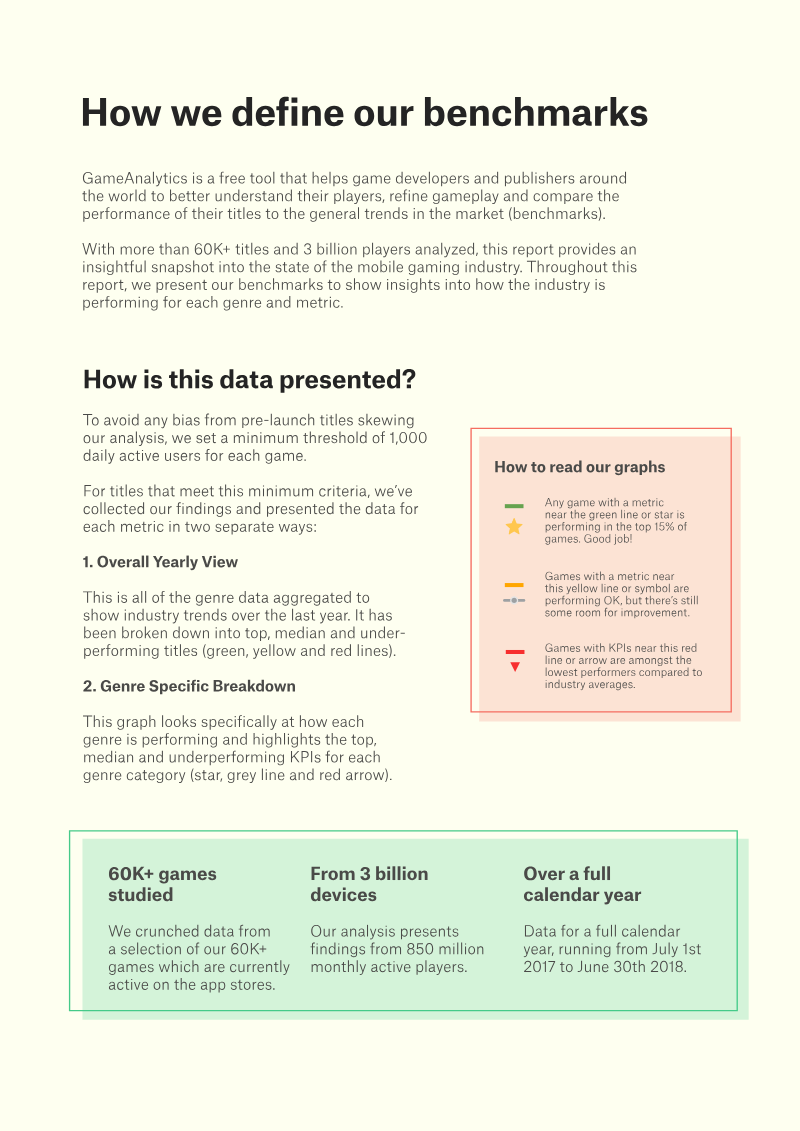
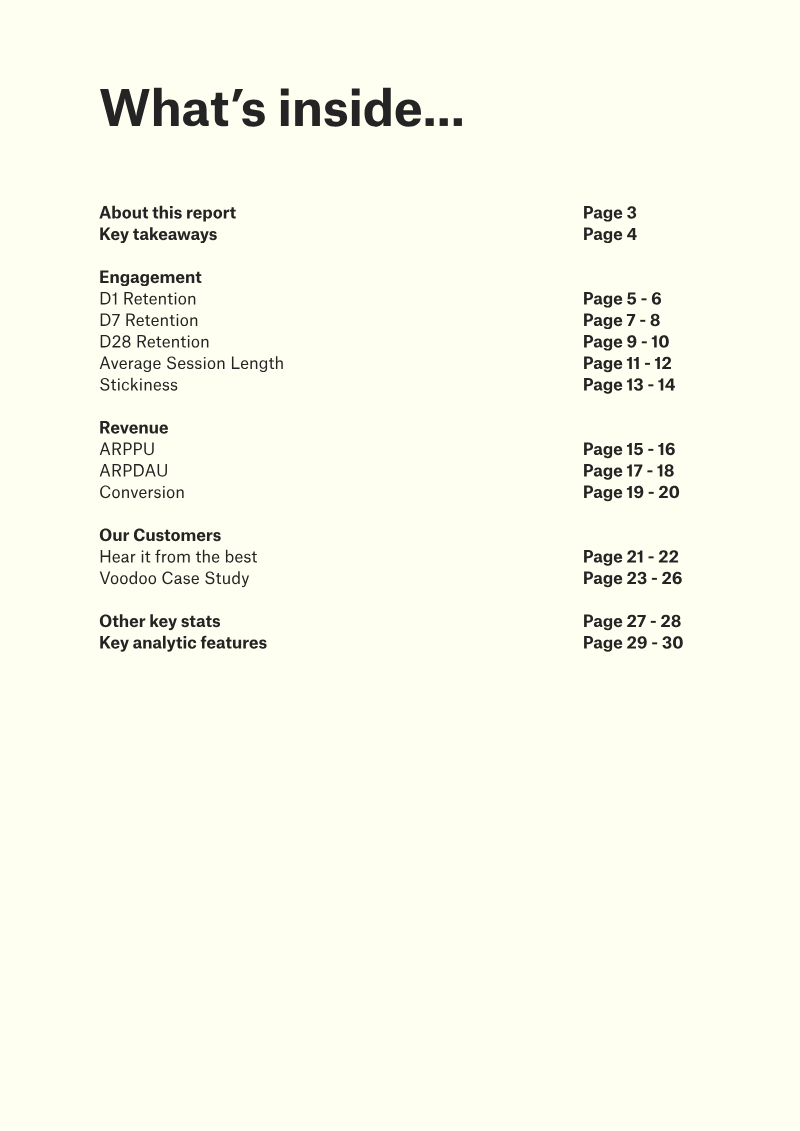
The mobile gaming landscape between July 2017 and June 2018 was characterized by a widening performance gap between elite titles and the market median. Analysis of over 60,000 games and 850 million monthly active players reveals that top-tier titles in the 15th percentile maintain Day 1 retention rates exceeding 35%, whereas Day 28 retention across the board rarely surpasses 6%. This retention decay underscores the difficulty of long-term player engagement, leading industry leaders like Voodoo to implement strict 50% Day 1 retention thresholds to identify potential hits early in the development cycle. Monetization metrics further illustrate this disparity, with top-performing games generating three to four times more revenue per paying user than average titles. The Role Playing, Strategy, and Casino genres dominate financial benchmarks, with elite performers achieving an average revenue per paying user of up to $40. Furthermore, the average revenue per daily active user for top-tier games is six times higher than the median, a success largely attributed to sophisticated A/B testing of price points and the implementation of reactive in-game offers. As mobile games are projected to account for 76% of global app revenue, the ability to convert and retain players remains the primary differentiator for commercial success. While average games struggle with low conversion rates, top-performing titles achieve conversion metrics triple those of the median. These findings suggest that data-driven development and aggressive optimization of monetization funnels are essential requirements for competing in a market where the majority of value is concentrated among a small percentage of high-performing titles.
GameAnalyticsJan 2018
Report
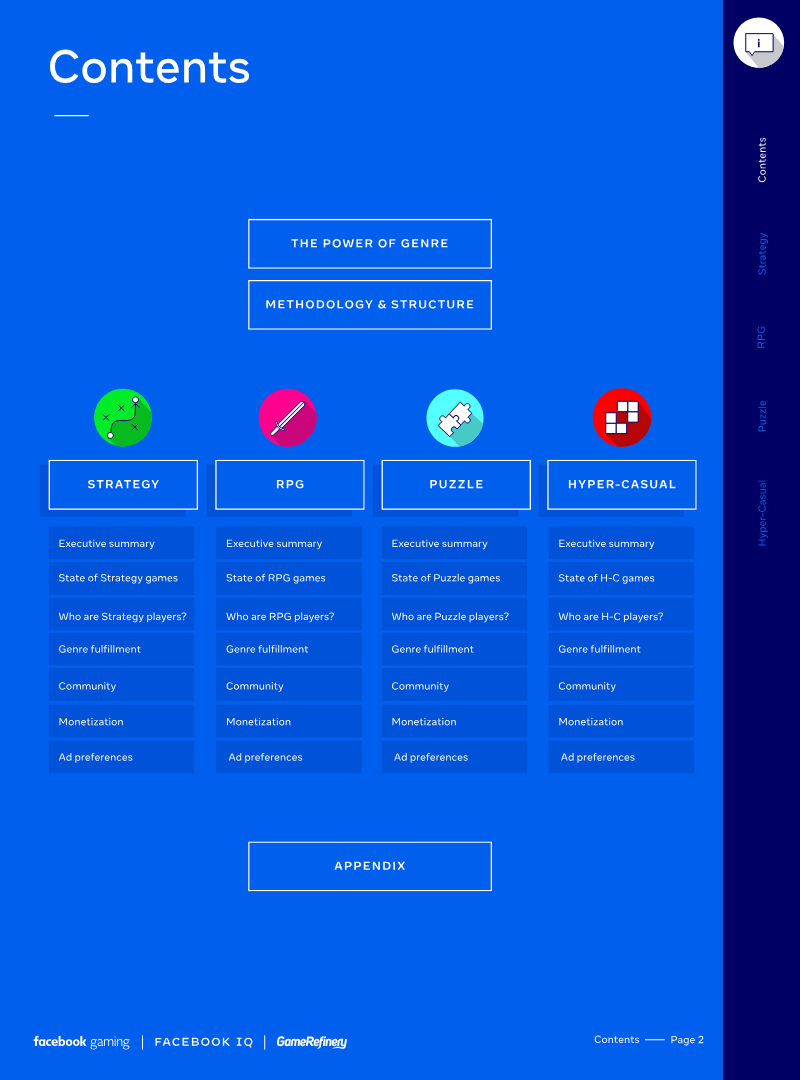
Understanding Audiences and Designing Better Mobile Games
The analysis establishes that genre is the primary driver of mobile‑game discovery, influencing 49 % of players across nine major markets and outweighing recommendations and advertising. Within this framework, strategy titles deliver the highest lifetime value and revenue per install, a result of dense monetisation layers such as consumable boosts, speed‑ups, loot‑box bundles and limited‑time offers. Player motivations and churn factors differ markedly by genre and region: Japanese action‑RPG/MMORPG users play chiefly for stress relief (47 %) and item collection (37 %), while boredom, repetitiveness and aggressive monetisation trigger attrition, mirroring the experience of over a third of Korean RPG players who abandon games due to pushy in‑app purchases. Puzzle gamers are predominantly female (≈ 70 %) and older (≈ 60 % aged 35 +), favor short solo sessions, and seek stress relief and time‑killing. A pronounced mismatch exists between their expectations—learning, accomplishment and unique experiences—and current offerings, with only 17‑32 % feeling satisfied, leading to churn driven by boredom, slow progress and intrusive ads. Successful titles mitigate this through frequent live events, special‑event currencies and diverse level‑goal designs, while modest social engagement (20‑30 %) still influences retention. Notably, more than 80 % of U.S. puzzle players and roughly 68 % of Japanese players would return after a 30‑day hiatus if informed of new content, and 30‑36 % cite such updates as a decisive factor. Hyper‑casual audiences in the United States, United Kingdom and South Korea also demonstrate high receptivity to developer communication, exceeding 80 %. A comprehensive catalogue of core gameplay and monetisation mechanics—battle‑passes, consumable boosts, crafting, limited‑time bundles, VIP tiers, loot‑boxes
NewzooJan 2025