FinancialKLab
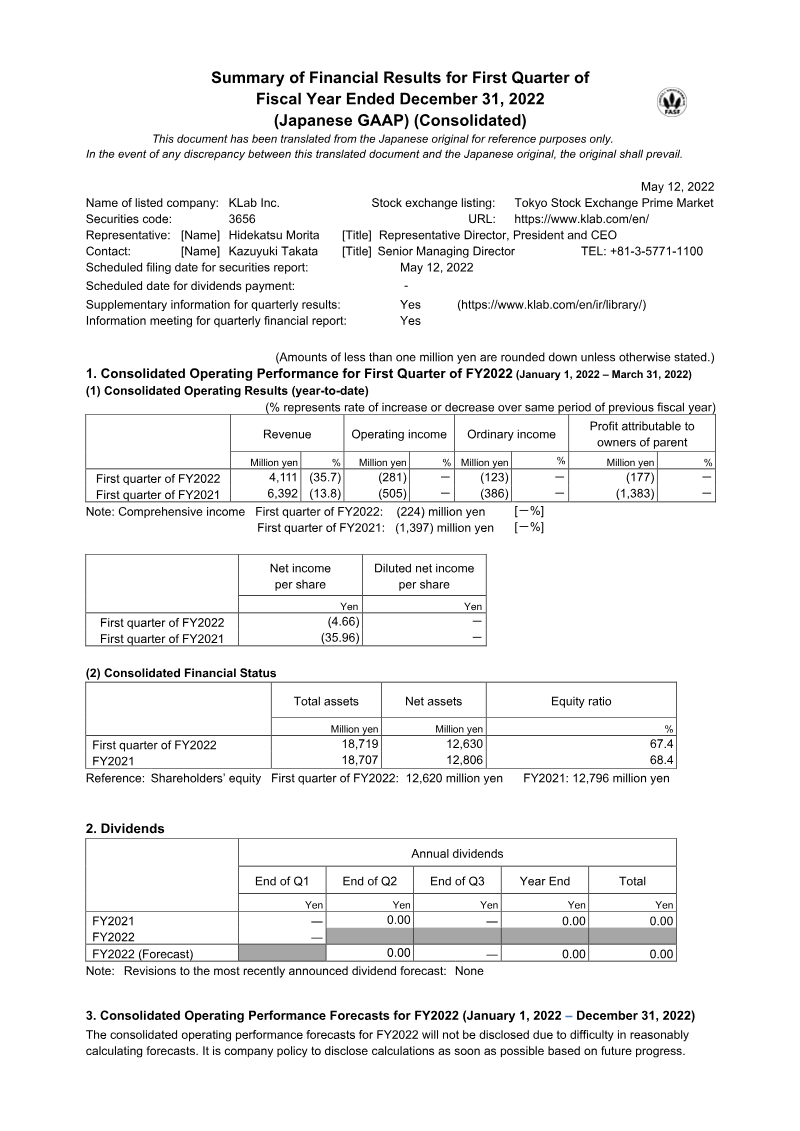
Summary of Financial Results for First Quarter of Fiscal Year Ended December 31, 2022
9 pages~14 min full read
KLab Inc. reported a first‑quarter operating loss of ¥281 million, down from a ¥505 million loss in the same period of FY2021. Revenue fell 35.7 % to ¥4.11 billion, driven by a decline in game‑business sales; the company recorded a ¥1.54 billion impairment loss on software, eliminating the prior year’s extraordinary loss and reducing net loss to ¥177 million. Comprehensive income for the quarter was a ¥224 million loss, reflecting foreign‑exchange gains and valuation adjustments on available‑for‑sale securities. Total assets stood at ¥18.72 billion, with shareholders’ equity of ¥12.63 billion and an equity ratio of 67.4 %. No dividends were declared for FY2022, and the company withheld a forecast of annual operating performance due to forecasting difficulty.
The financial statements are prepared under Japanese GAAP and include a detailed segment analysis. The game business remains the sole reported segment, with revenue from paid customers at ¥3.44 billion and contract‑based revenue at ¥1.57 billion, yielding a gross profit of ¥608 million. The company applied the Accounting Standard for Revenue Recognition from the beginning of FY2022, shifting revenue recognition to a period‑of‑use basis for in‑game currency and a one‑time method for license grants, which increased revenue by ¥9 million and improved operating loss by the same amount. The change had no impact on retained earnings or prior‑year figures.
The quarterly report covers Japan only, covering January to March 2022, and is based on consolidated financial statements with no restatements or significant accounting changes beyond the revenue‑recognition policy shift.
KLab · 2026
KLab · 2025
KLab · 2025
KLab · 2025
KLab · 2025
KLab · 2024
KLab · 2024
KLab · 2024
KLab · 2024
KLab · 2023
KLab · 2023
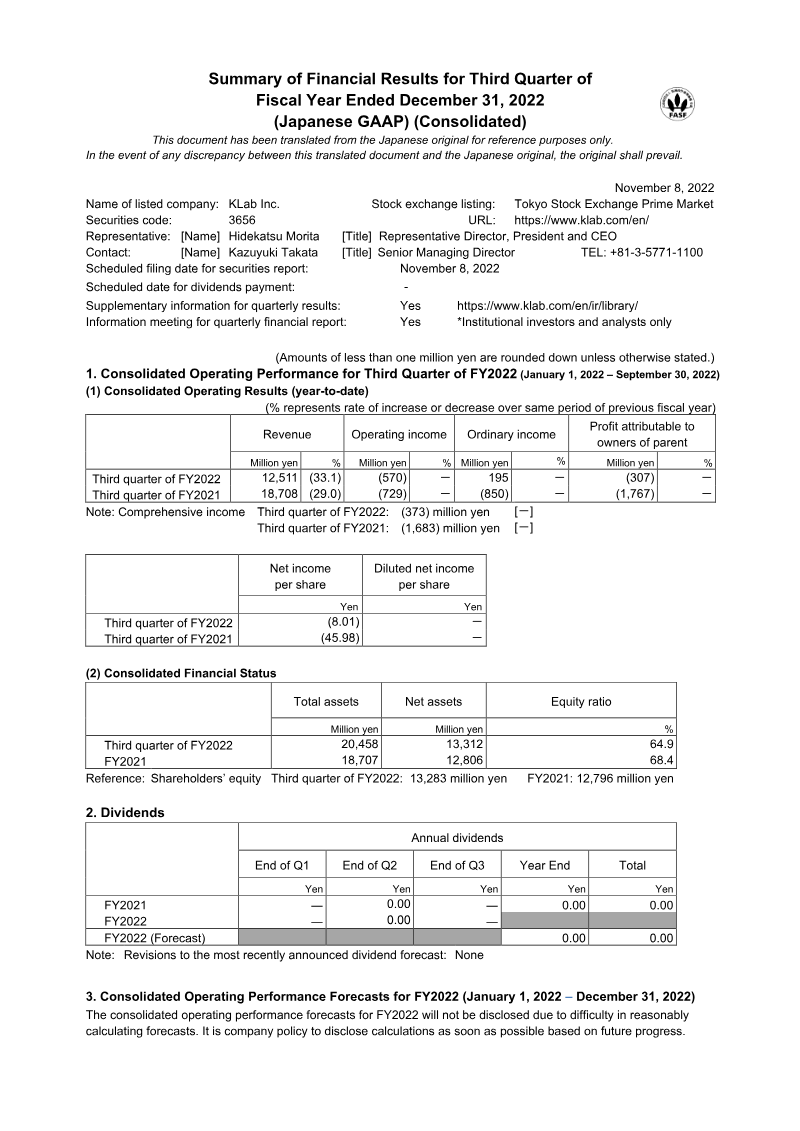
KLab · 2022

Bandai Namco · 2021
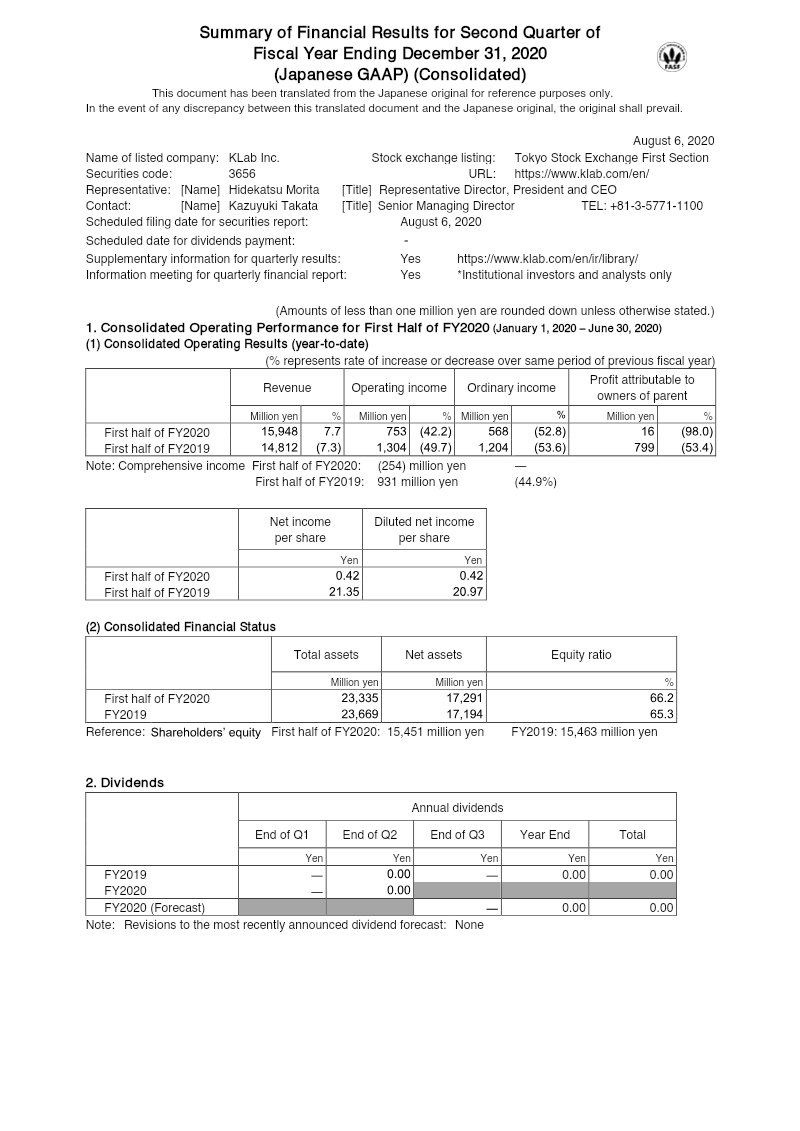
KLab · 2020
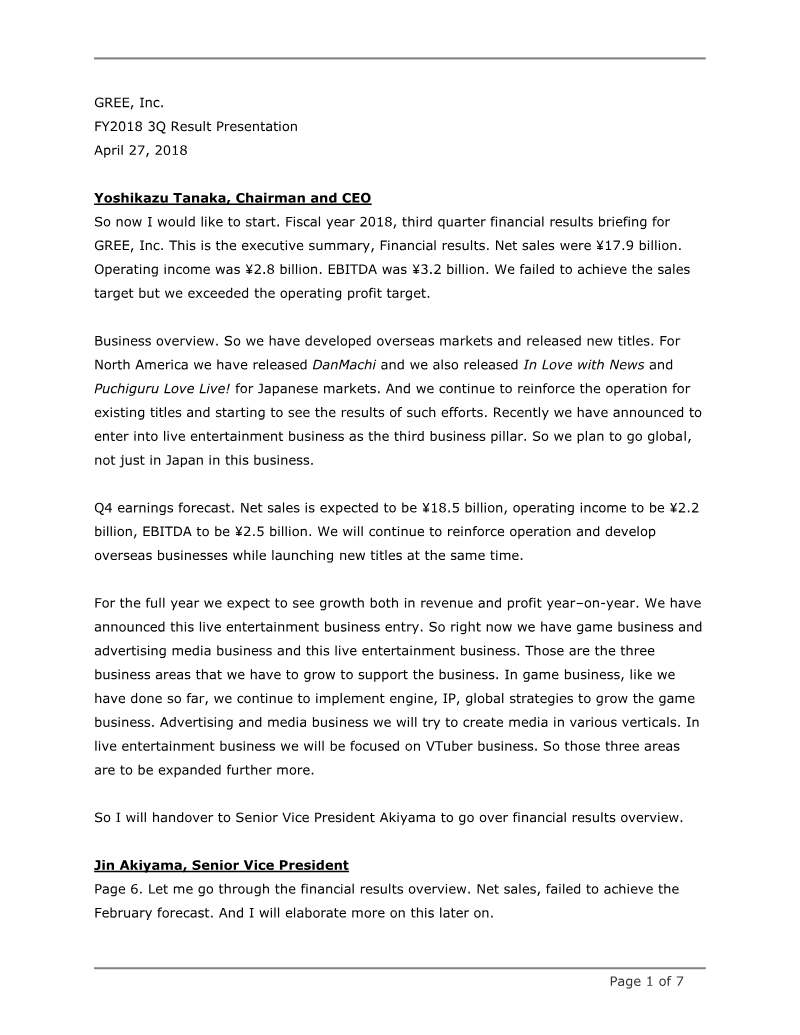
GREE · 2018
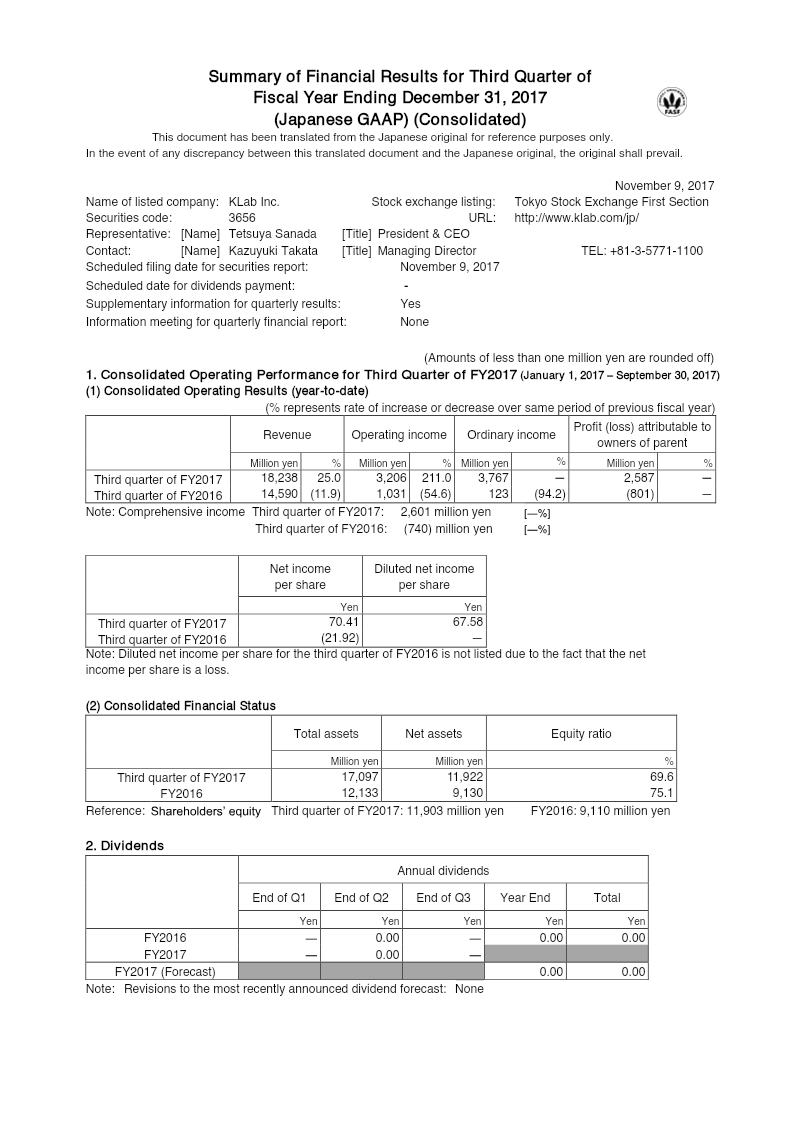
KLab · 2017

Bandai Namco · 2017
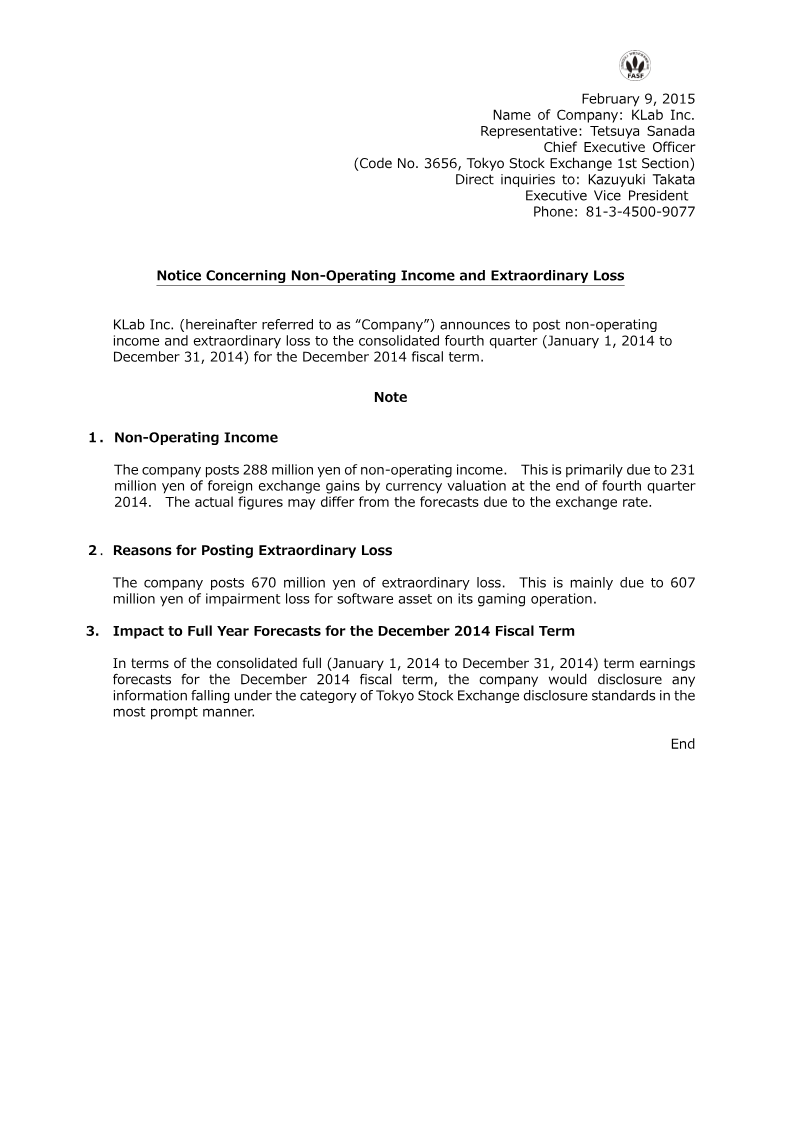
KLab · 2015
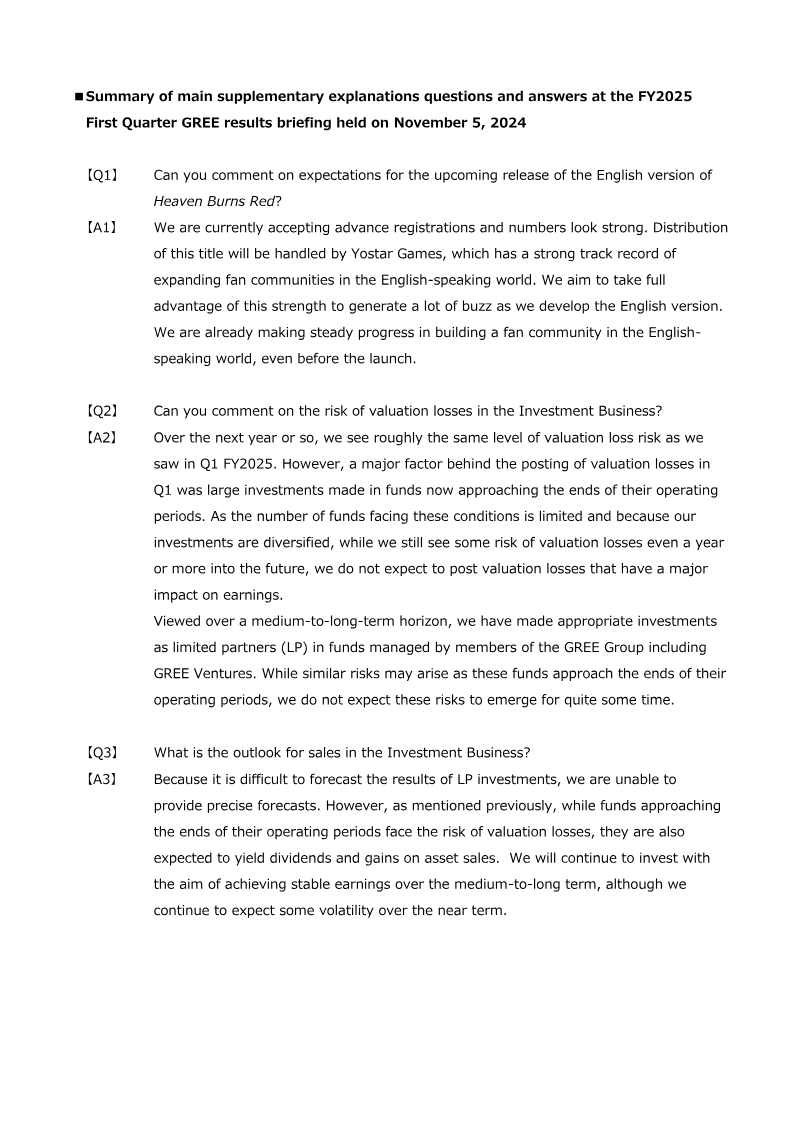
GREE

Koei Tecmo
Square Enix
GREE
CyberAgent
GREE