1 free read left. Create a free account for unlimited reading + AI research.
Create free accountFinancial report Kadokawa Corporation
1 free read left. Create a free account for unlimited reading + AI research.
Create free accountFinancial reportKadokawa Corporation
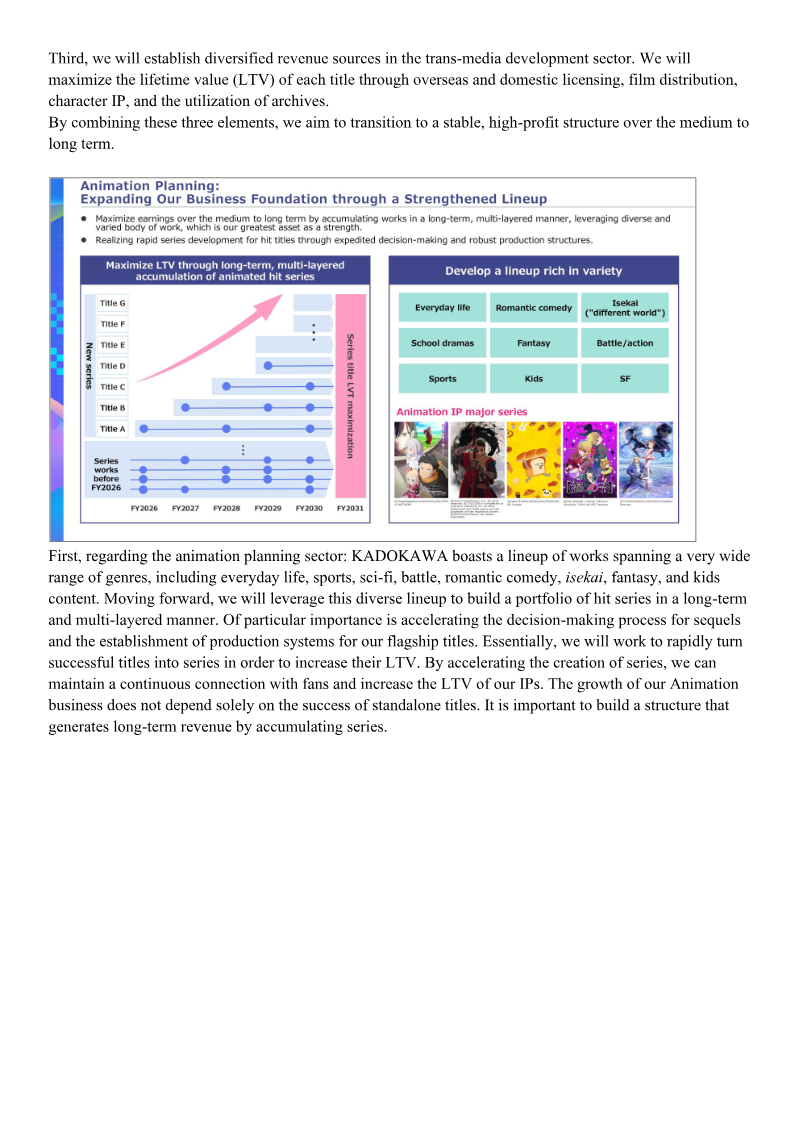
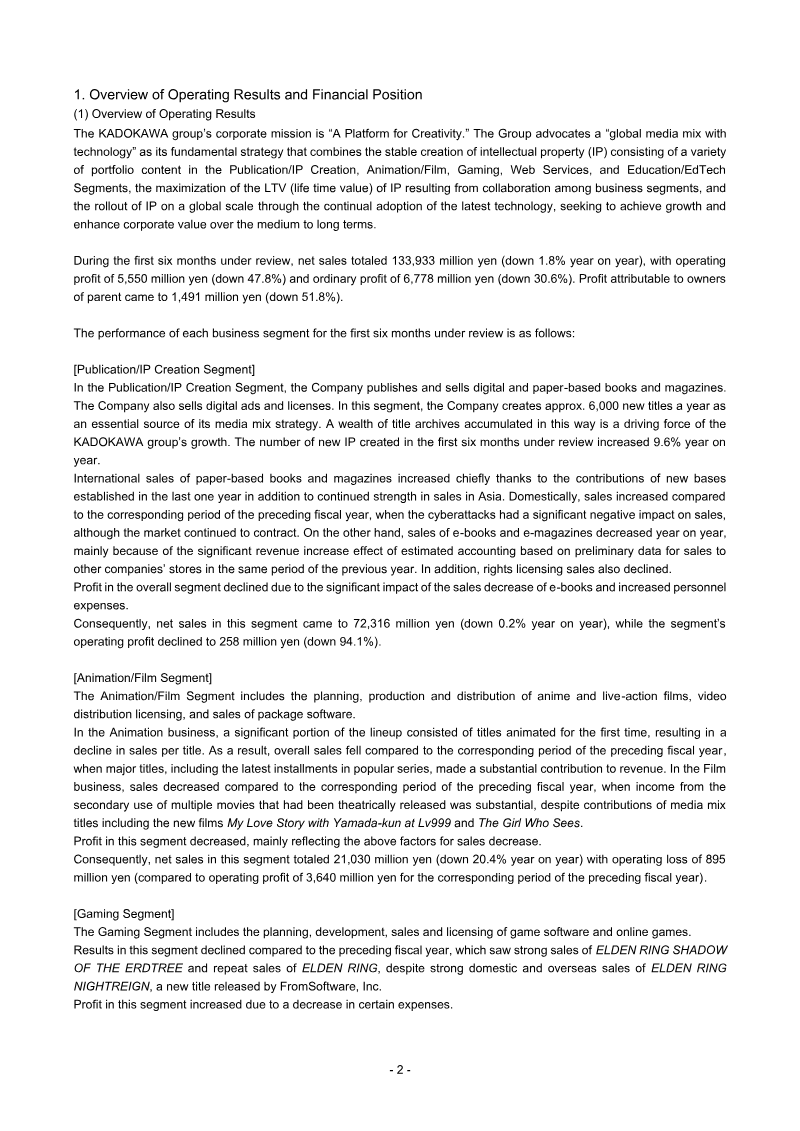
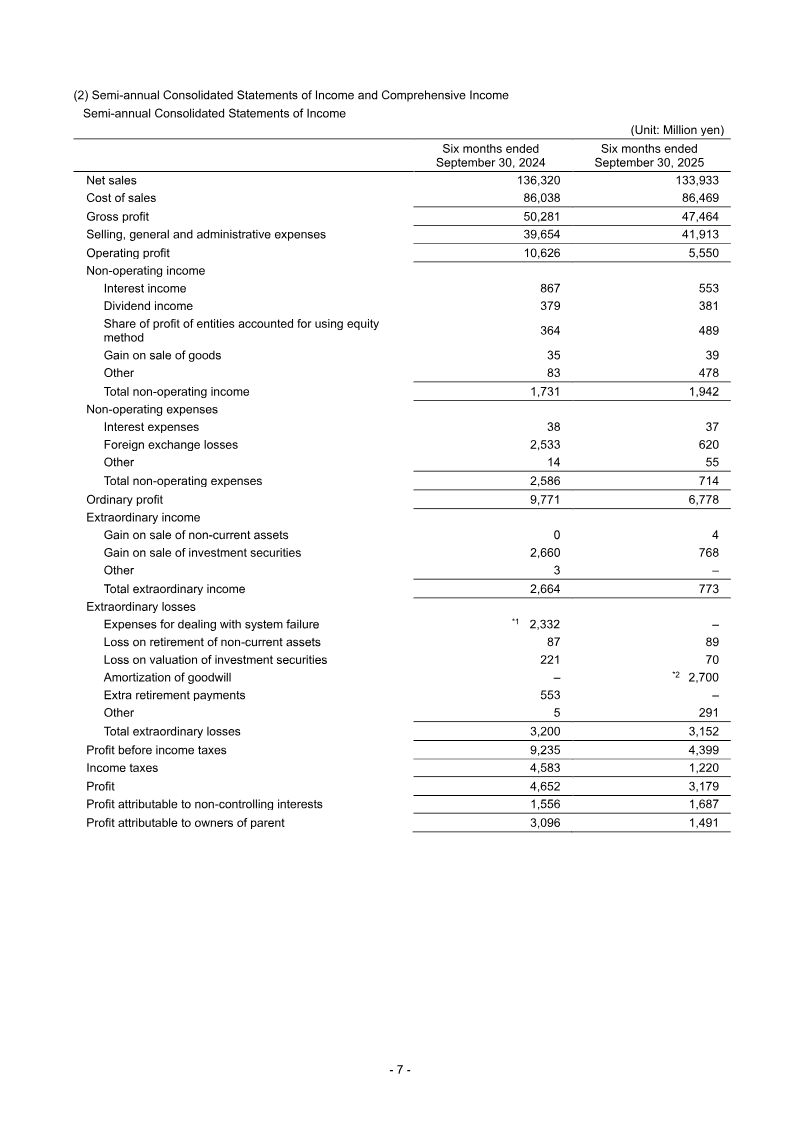
Kadokawa Corporation maintains a diversified business model centered on the strategic exploitation of intellectual property across the publishing, animation, film, and gaming sectors. The primary objective of its financial operations is to leverage a robust portfolio of creative assets to drive long-term consolidated growth while balancing the inherent volatility of the entertainment industry. By integrating traditional media with digital services and educational technology, the company seeks to maximize the lifecycle value of its IP, ensuring consistent revenue streams despite fluctuating performance in individual business segments.
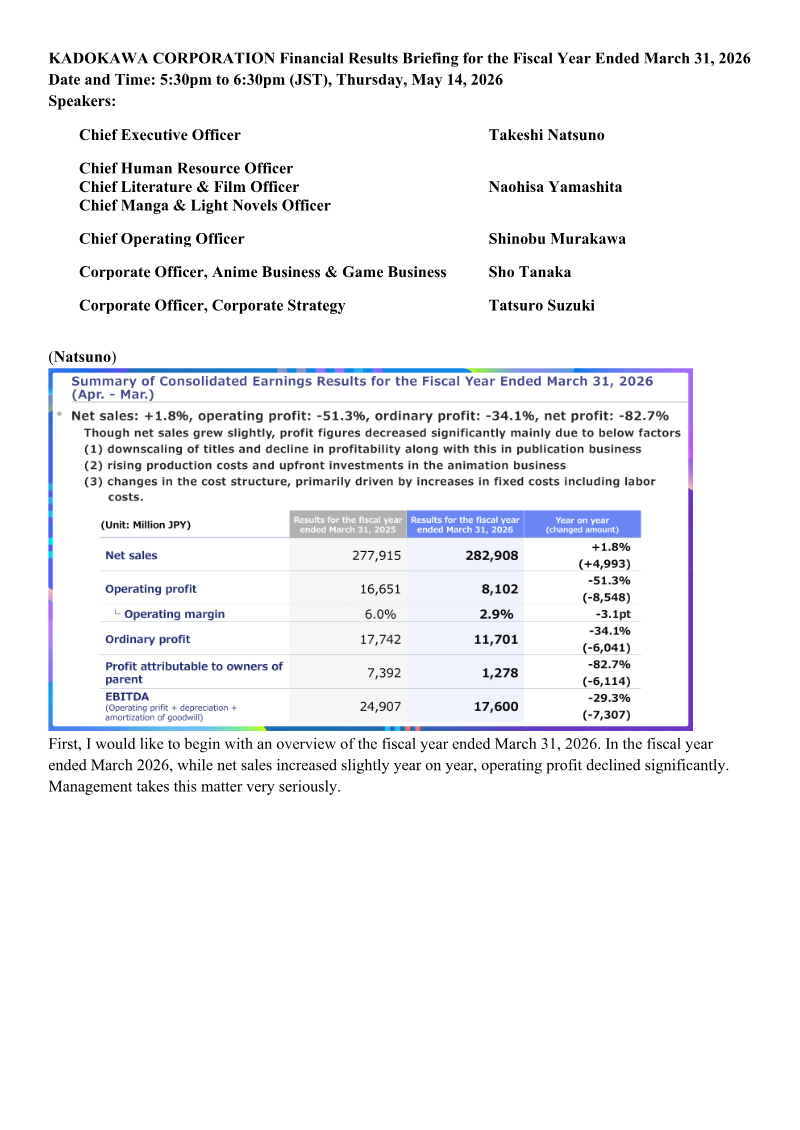
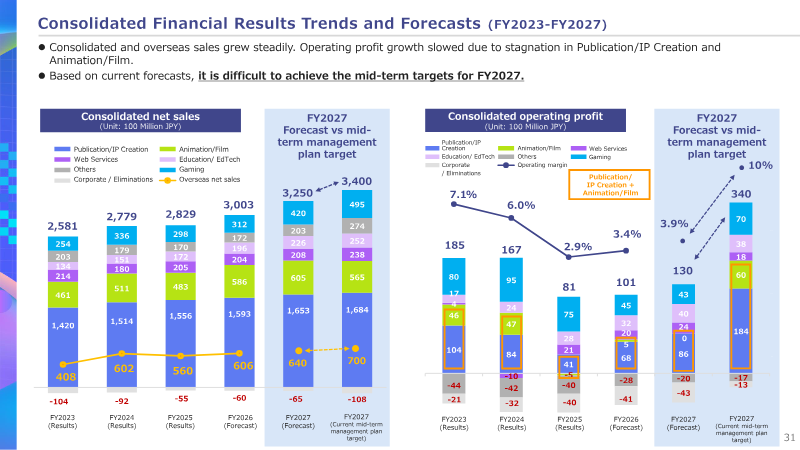
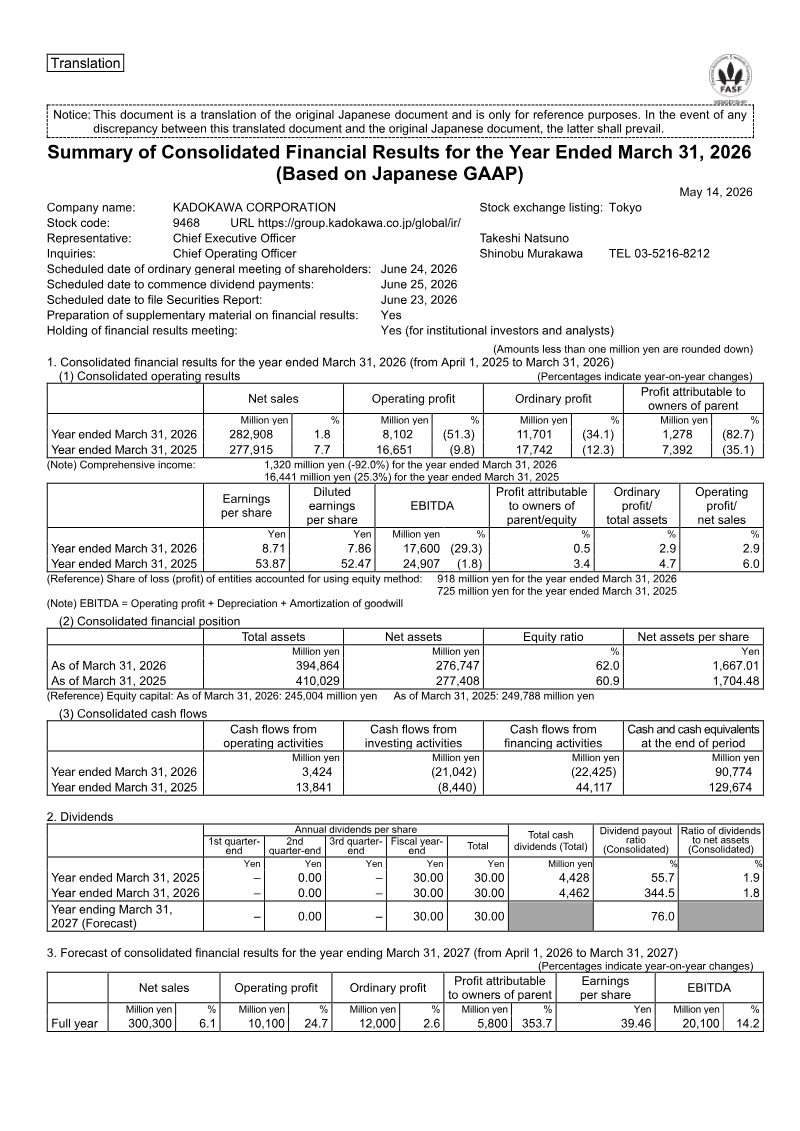
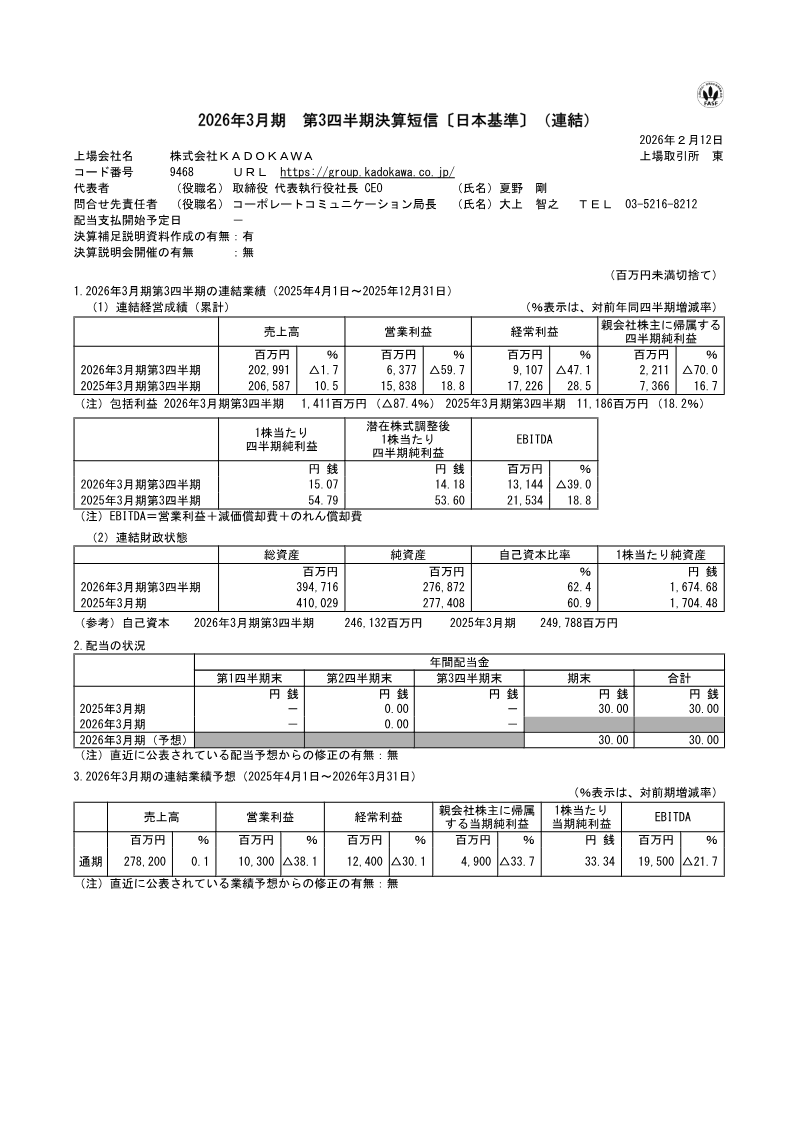
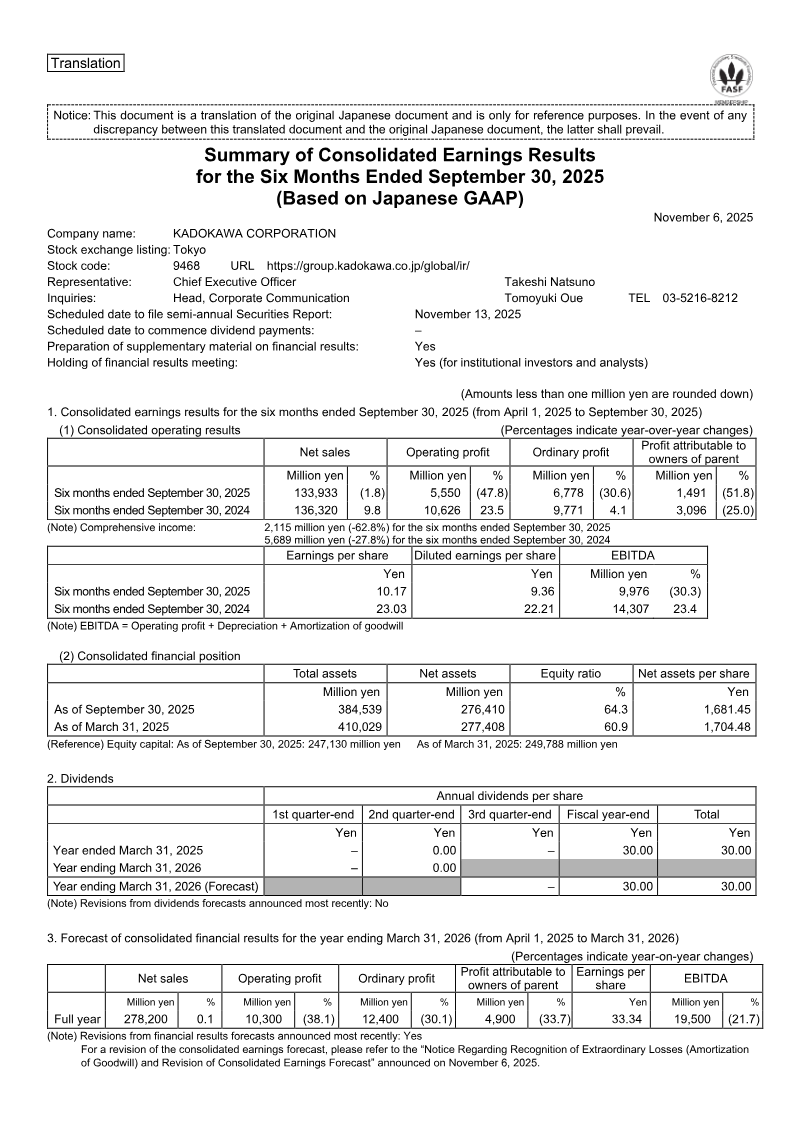
Financial performance from the fiscal year ended March 2018 through the first quarter of 2027 reveals a pattern of steady expansion in the publication and IP creation divisions, which serve as the company’s foundational pillars. While these core areas demonstrate consistent profitability, the animation, film, and gaming segments exhibit greater sensitivity to market cycles, leading to periodic fluctuations in operating margins and cash flows. Despite these variances, the company has successfully managed its capital structure, evidenced by a significant reduction in interest-bearing debt from over 65,000 million yen to approximately 11,958 million yen in the most recent reporting period.
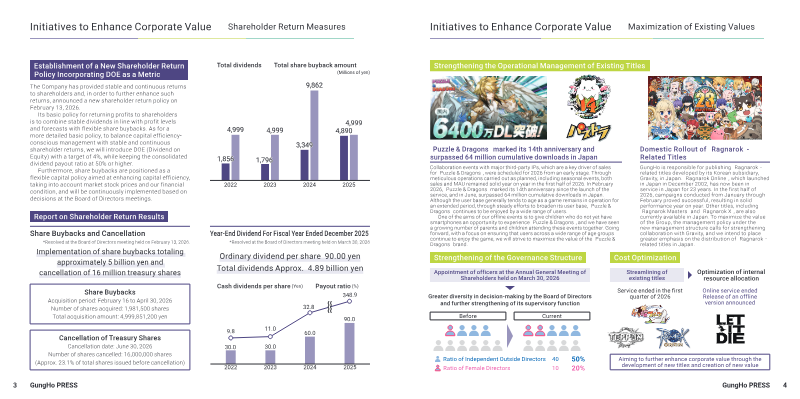
The company’s commitment to shareholder returns remains a central component of its financial strategy, characterized by a stable dividend policy of 30 yen per share. Recent data indicates a notable shift in the dividend payout ratio, which reached 3.445% in the final period, reflecting an evolving approach to capital allocation. As the organization continues to navigate the intersection of global media consumption and digital transformation, its focus remains on maintaining a healthy balance sheet, optimizing segment-specific profitability, and sustaining long-term equity value through disciplined fiscal management and strategic investment in high-growth sectors.



Kadokawa Corporation · 2026

Kadokawa Corporation · 2026

Kadokawa Corporation · 2026
Kadokawa Corporation · 2026



Kadokawa Corporation · 2026


Kadokawa Corporation · 2026


Kadokawa Corporation · 2026
Kadokawa Corporation · 2026
Kadokawa Corporation · 2026



Kadokawa Corporation · 2025
Kadokawa Corporation · 2025
Kadokawa Corporation · 2025
Nihon Falcom · 2026