1 free read left. Create a free account for unlimited reading + AI research.
Create free account
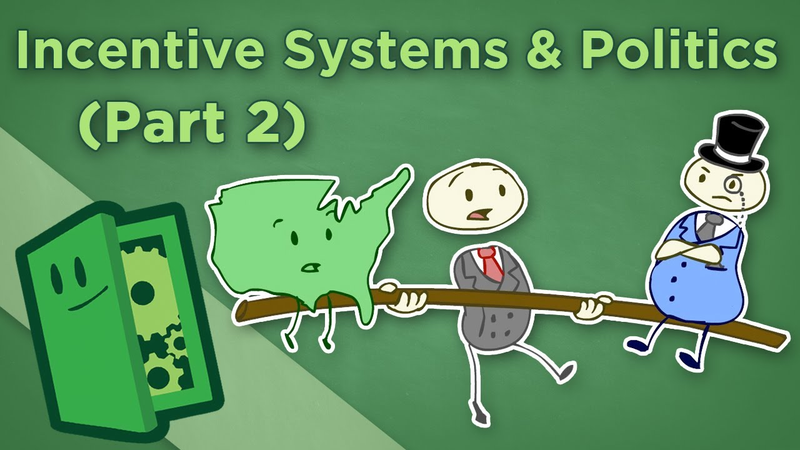
Incentive Systems and Politics II - Limiting Corporate Influence on Policy - Extra Credits
Key insights
5 takeaways- 01The current political system is structurally flawed because it incentivizes fundraising and future employment prospects over effective governance and constituent representation.
- 02Legislative integrity can be restored by treating the government as an evolving system that requires iterative policy patches to counter the influence of mass media and corporate lobbying.
- 03To eliminate the 'revolving door' phenomenon, former legislators should be legally prohibited from lobbying for or working with any entity impacted by legislation they voted on during their tenure.
- 04Campaign finance reform should include strict spending limits on both individual campaigns and third-party entities like super PACs to ensure votes, rather than capital, remain the primary currency of politics.
- 05Providing generous, guaranteed pensions for former officials would compensate for restricted post-office career paths and insulate representatives from the need to curry favor with future corporate employers.
Ask AI about this video
Transcript
Before we get started, I just want to give a big thank you and welcome to returning guest artist Grey Jenkins for helping us out with part two. Last week we discussed some of the flawed incentive systems that govern American politics and proposed some basic ideas for alternative systems that don't fall into those same traps. But for any of those ideas to have a chance of succeeding, we have to fix two of the underlying problems with our legislative incentive system. The problems of how you keep your job in politics and what to do when you leave. Right now for many politicians, keeping their jobs and being able to continue championing the policies they believe in is at the top of their priority list. And hey, that's totally fine. That's how it should be in a democratic system. But in order for that to work as it was originally intended, doing good for your constituents has to be the principal factor in getting reelected. Unfortunately, right now many of our politicians, no matter how good they are or well-intentioned, end up as full-time fundraisers and part-time lawmakers. From the day they're elected, many of
our politicians have to go right back to raising the cash they need for their next election. This doesn't allow them to focus on governing. It forces them to spend much of their time on things other than simply being the best senator or congressperson they can be. And it means that many of the decisions they make may be governed by factors other than simply what's best for the people they were elected to serve. Limiting the amount politicians are allowed to spend on campaigning would remove the distraction of having to be a continuous fundraiser and would mean that politicians wouldn't have to balance serving the people and serving the people who can fuel their campaigns. Of course, this would mean we'd also have to limit the amount that entities outside of a campaign could spend on things that were overtly about the campaign. Otherwise, we'd just end up with the same system under a different name. You'd end up with the McDonald's super PAC spending tens of thousands of dollars on ads to support a candidate instead of giving it directly to the campaign. So, even though I'm a fan of the free market, the currency in politics has to be the votes of the people. The men who put together the system we use today never envisioned television ads or 24-hour news. So, we have to update the system they put together in order to reflect the modern reality. We can't be afraid of that. In
a game when something's busted, you patch it. If the patch has consequences you don't like, you patch it again. It's an evolving system. It has to be because mankind has never created a system that we couldn't also find a way to break. Deciding we're not going to fix our political system just because we're too afraid we might break it is as silly as leaving a game broken just because you're worried your patch won't fix absolutely everything. Which brings us to the second problem. What senators and congresspeople do when they lose an election or choose to leave office. You see, many folks in Congress don't personally benefit most from being the best congressperson they can be, but rather in what they get to do after they're done. Right now, leaving Congress and becoming a lobbyist is far more lucrative than simply being in Congress. It doesn't incentivize our congresspeople to focus solely on the job at hand and govern as well as they possibly can, but rather to be continuously thinking of their future after their days in office are done. It's hard to vote no on a bad bill when you know voting yes might land you a sweet gig with a company years later that'll be your golden meal ticket for the rest of your life. Think of it in game terms. Have you ever played a game where you spent hours performing an activity you didn't really enjoy just so
you could unlock something you really wanted down the road? Grinding in an MMO so you can craft that one sweet piece of gear or go on that raid with your guild. Collecting stars or keys you don't really care about so you can unlock the really cool part of the game. When you're doing that sort of activity, you'll take any shortcuts available to you. It doesn't matter. Performing the task isn't the goal, the prize at the end is. Our politics shouldn't be that way. You ever find it remarkable how many people cheat to get a full roster of competition-worthy Pokémon? It's because playing in the competitions is what matters to them, not the actual act of painstakingly training the Pokémon to be ready for those competitions. And for a lot of people, they don't even consider it cheating. That's the sort of system we've set up for our Congress. Congress is like training for a Pokémon competition, and that would be kind of cool. So, we need to get Congress back to focusing on the work of Congress, not what's going to be happening a few years down the line. It needs to be illegal for any congressperson to lobby for or ever work with a company affected by a bill they voted on so they can make unbiased decisions and focus entirely on the job of governing for the American people doing what's in the country's best interests. Of course, that pretty
much means that they won't be able to work for any major company once they're done with their time in Congress and they'll only be able to write their memoirs, work in some other branch of government, or teach, which means that we, the people of the United States, will have to be okay giving a sizeable pension to anyone serving their country in national office regardless of how young they are when they leave. In the long run, it'll cost us a lot less to ensure that we, the people they're supposed to serve, take good care of our congresspeople when they quit rather than giving them incentives to do something other than honestly and faithfully serving us while they're in office. That's as much as we have time for right now. Next week, we'll talk about filibustering and gerrymandering, two systems within the game of politics that make it very hard for our government to function for the people in the way that it's supposed to. Once again, these are simplified systems I've been presenting here. Just take all these ideas as a foundation, just a place to start the conversation. Thanks for watching and we'll see you here for part three next week.
Summary
The current American political system suffers from flawed incentive structures that prioritize fundraising and post-legislative career prospects over effective governance. The primary thesis posits that to restore democratic integrity, the legislative environment must be treated as an evolving system requiring iterative patches to address modern realities like mass media and corporate lobbying. By decoupling political success from financial influence, the government can refocus on its core purpose: serving the interests of the constituents.
Two critical areas require reform: campaign financing and post-office employment. Currently, politicians function as full-time fundraisers, forcing them to balance public service with the demands of donors. Implementing strict spending limits on both campaigns and third-party entities, such as super PACs, would mitigate these distractions and ensure that votes, rather than capital, remain the primary currency of the political process.
Furthermore, the "revolving door" phenomenon, where former legislators transition into lucrative lobbying roles, creates a perverse incentive to prioritize future employment over current legislative duties. To eliminate this, legislation should prohibit former congresspeople from working for or lobbying on behalf of any entity affected by bills they voted on during their tenure. To compensate for these restricted career paths, the public should provide generous, guaranteed pensions for former officials. This investment would effectively insulate representatives from corporate influence, ensuring their decisions remain unbiased and focused on the national interest. Ultimately, treating the political system as a dynamic game that requires constant maintenance allows for the identification and correction of structural failures that currently undermine democratic representation.























Comments