1 free read left. Create a free account for unlimited reading + AI research.
Create free account
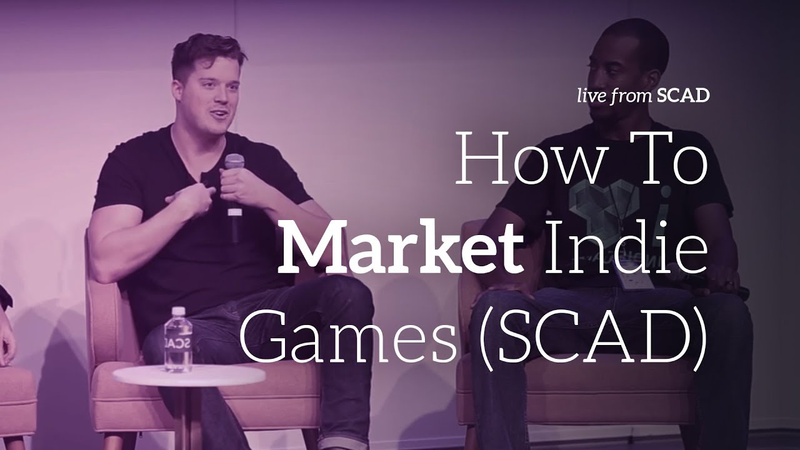
How To Market Your Indie Game — Exclusive SCAD Panel Discussion
Key insights
7 takeaways- 01Developers should avoid broad audience targeting in favor of identifying a specific niche and cultivating a dedicated community of evangelists through authentic, personal storytelling early in development.
- 02Long-term financial sustainability is best achieved by using reproducible technology to lower overhead costs while maintaining active community management.
- 03Building genuine, long-term relationships with influencers and streamers is more effective for organic reach than relying on standard promotional posts.
- 04Success in the current indie market requires treating marketing as a core business skill rather than an afterthought, as technical quality alone no longer guarantees commercial viability.
- 05Aspiring developers should prioritize specialized portfolios and participate in game jams or entry-level roles like quality assurance to gain visibility and experience within established studios.
- 06Industry networking at events like GDC is superior to cold-applying for roles, as professional growth and project success are heavily dependent on trust and personal recommendations.
- 07Crowdfunding success on platforms like Kickstarter requires rigorous market research, tiered budgeting, and the ability to generate significant momentum within the first twenty-four hours of a launch.
Ask AI about this video
Transcript
All right, good afternoon everybody. We'll start with our next session. So, welcome to the Indie Game Session. This is the Promoting Indie Games in the Southeast Indie Game Studio Panel. And with us, we're going to have a uh several studios represented from their uh representations. Uh in order to introduce them, I'm going to introduce our moderator, Mr. Malcolm Howard. He's going to be uh he is starting a new service called Project MQ that's going to be discovering new indie games and offering it to you guys in more ways that you can filter out quality. So, he's going to be able to able to talk about it a little bit more. Welcome, please come on to the stage. Hey everyone. Mic one. Hello, testing. All right, thanks. All right, so uh quick things. Your mics over here are a little bit different than the ones that you all had in the
hall. It takes about 1 second to turn on, so just let it do that. These are all on real quick. Thank you. All right, 1 2 3 4 and 6. All right. Thanks everyone for coming out. We're here to talk about promoting indie games and promoting in the Southeast and beyond. So, this panel is going to cover all of the challenges that our panelists have experienced as well as their triumphs. And we're just going to share some wisdom with you all on something either you're here because you currently make games or you're aspiring to be game makers and want to impart some wisdom uh to you that you can use with your future projects. So, without further ado, I'd like to invite my panelists on the stage. We have Jeremiah Kunal Patel Thomas Brush and Anthony Barksdale. And I'm going to let each of them do a quick intro uh because they can introduce themselves better than I can. Then we're going to just start talking about the subject matter a little bit and then at
the end we will leave with uh some time for some question and answers. All right, then so we'll just start here with Thomas. So just an intro? Yeah, just an intro maybe a minute or 30 to 60 seconds. Hey guys, thanks for coming out. Um my name's Thomas Brush. I live in Greenville, South Carolina. I drove 4 hours to get here. Um I run an indie game studio called Atmos Games um and I was speaking earlier and I talked about how we make indie games and we do amazing things. But it's just me um and I think that's the way it is for a lot of indie game developers. Um they they know how to market themselves and they look great on the internet but it's really just one person um in a studio or maybe even in their bedroom. Um so I've been making games since I was in middle school um and I think well about 2 years ago was my big break where I was able able to go full-time um pay for my salary and my wife and we just had a daughter. Um so it is possible to you know, have a home and not be homeless and make video games.
So I want to sort of share how we made that happen and how I was able to pay the bills with indie games. Hi, my name is Jack Womack. I'm a professor here at SCAD, professor of game design. Love it. And I was in the game industry since 1994 and worked on a lot of AAA games uh for Activision and Crytek and Ubisoft and EA and a whole bunch of people and found out that you work a lot of hours and don't make a lot of money when you work for other people. So I decided I want to have my own company and I partnered with a friend of mine from Vermont and we opened a studio called Impeller Studios and we decided to our first game to be a hard science fiction combat space sim called Starfighter Inc. And we've been working I've been working on it for 3 years to design it. This is a hard science. It's rocket science, literally.
And we are now at alpha stage. We did a Kickstarter in April and we were successful. We got 170,000 funding, which enabled me to actually pay people, which was a nice change cuz most people don't get paid. Uh we actually have a team of about 30 people and it's a virtual studio. So, I've got people all over the United States. I've got people in the Netherlands. I've got people in the UK. Uh I've got a guy from Beirut who is our physics guy. We've got a physics doctorate that we have to bounce all the designs off to get it past by to get in the game. And uh we're excited cuz we're getting ready to come out. So, could be good. Could be a big flop. You never know. So. Hey, can you guys hear me? I I'm Kunal Patel. Uh I uh wear many hats. Uh you know, I studied computer science uh at the University of Miami. I went into corporate America for a good number of years. Did IT consulting all around the world and eventually started a video game studio, an indie studio,
in 2012 called Viking Media. And we had a couple of mobile games. So, we had some successes, some failures. Uh but mainly what I realized is that it's really, really, really, really, really hard work. And there's a lot that you end up having to do yourself. You can hire other people and sometimes you can get more things out of there, but like even if you have multiple people in your studio, there's a lot that goes into creating a successful game, let alone a successful studio. And in doing all of that, I realized that it's not just having a lot of people in the company. You need a lot of other resources around you. You need a community. And so, really the jumping off point for, you know, what I did after that game studio was building everything else that could help a game studio become successful. Uh So, you know, discovering that hey, you know, it'd be really great not to feel alone. Um So, we started doing some community building work and co-founded a group called Indie NanoCon.
And then from there, once you start meeting more people, you say wow, this feels great not to be so lonely, you start discovering other people have other talents. And you realize working with other people helps you fill in the gaps that you have within yourself, within your team, and within other people, too. Um so, from there I realized you know what? This we need to start collaborating all over the place. And so, from founding Indie NanoCon, then ended up co-founding a game jam series and a festival called Indie Galactic Space Jam, where we then got to uh take all the game developers and work with people from NASA and SpaceX in Florida. And so, then from there we started working with other industries. And then we started creating space games. And then from there, that started creating like other studios. So, in on all this, you know, I ended up not just becoming a part of one studio, I became a part of like four or five different companies. This now makes me a crazy person, but
uh what I realized is that having connections with all different types of industries can help strengthen uh your core as well. So, uh I'm I'm involved with a lot of different things. So, Indie NanoCon for community, Bread VR, which is my new studio, uh new company, works on on virtual reality, augmented reality. Uh and then also uh Indie Galactic Space Jam, uh working with the space industry. And then now coming up something called Mega Health Jam, working with the healthcare industry. So, um crazy person doesn't Uh so, my name is Anthony Petrie. I am staff alum. I graduated 2007, and I went off and I worked in AAA games and EA for a few years. I worked on a little under the game, Tiger Woods. You might have heard of it. Maybe. Um but uh I suddenly had to leave that because in AAA, as many of you may or may not
know, sometimes they just let people go. And I you know, I had many people tell me that it was not due to work or you know, talent or ability. They just like, "Hey man, we laid off 1,400 people for for money today. You just had to have luck to be one of them." Um and then so I did some other things and then I ended up founding Any given in all of here and about a year ago, year and a half ago, I started my own company called the Orgy Art House, which is kind of like a contracting art collective, I guess. Um basically these guys need art, they don't have an artist, they come to me and they're like, "We need art." And I'm like, "I got you back." And we make sure to get I either do it myself or I make sure to get people to get it done. And we take care of that. And then also helped out Game Jams. I'm not going to reiterate a lot of what I said. And
then recently became a part of the brain trust of the Orlando Game Space. And so I'm going to go over these guys helping out. All right. All right. So thanks everyone for your introductions. I think one of the things that a lot of game developers, especially on the indie side, miss out on in terms of game development is that yes, games is a an awesome modern interactive art form, but it's also a business. And a lot of times I think that that part gets forgotten. And uh see these amazing games sometimes that release and you just look at it and you think this is innovative, it's beautiful, they're doing cool stuff, and then it just it lands in the market to crickets. Why do you think that is? If you have any personal experiences where that's happened to you or you've seen that are memorable to others, and what would you recommend to prevent that from happening? Cuz we've all heard of the indie apocalypse, uh but it's really kind of a
summation of market conditions that's happened with the advent of indie development. But what have you What have you seen that causes people to launch games to uh no success commercially? Um I can speak to that cuz I I launched my first game last year in April. Um it's called Pinstripe. It raised uh $106,000 on Kickstarter. So, huge success on Kickstarter. Not as successful as you guys, but it was uh really successful for me and uh you know, you think, "Okay, I mean, $106,000 on Kickstarter. Surely I'm going to get that kind of response on Steam." Um so, you can imagine like you get pretty hyped up. You do everything you can. And we had a good launch. We had a good launch. I had a publisher. Um and so, they helped out with the launch as well. Um but I think it was 7,000 games were released on Steam last year. Um it's really depressing, isn't it? Um
and Pinstripe was one of the I think it was top 20 10% of performance of games. Um but you know, you're not you're not rolling in millions of dollars like Jonathan Blow. You know, you're you're like I my studio didn't make enough money to support itself, to be honest with you. Um so, that's why you have to be innovative and like look all through the industry um for ways to continue production of games. Um and one of those can be Kickstarter crowdfunding, finding publishers, and finding other studios to partner with, which is what I'm doing now for the next game, Once Upon a Coma. Um but I think to answer your question, um one of the big problems we've got going on right now is you say market conditions and I I agree. I think it's I think it's just so easy to make games and I think we need to It's I think it's sad but people need to lower the barrier increase the barrier of entry is the right way to say it. Just make it a little bit more difficult to get on to the to the
platforms and I know that sounds sad but good games need to be put on the platform. Bad games should not be put on the platform. That's that's my opinion. Um and if that means Binstripe shouldn't be on the platform, that's that means that it shouldn't be on the platform. That's kind of my opinion on it. Well, let's see. I've worked on games that were real successful and I've worked on one bomb that actually was one of my favorite games and I worked at Activision. I worked at a warrior two franchise and they sold lots of copies. Like 6 million, 7 million and I mean the budget on one of them was $250,000 and it sold 8 million copies. So, you know, that gave Activision the power to buy Call of Duty and buy all the stuff that it did. And uh that was the power of IP or intellectual property. We after FASA took back the MechWarrior license, uh Activision decided to get another
giant robot license and they did it without me cuz I was I was like, "Hey, let's do Gundam. Let's do Voltron. Let's do Evangelion as a giant robot license." and they said, "No, we can get the Heavy Gear license for $70,000. So, we're going to do Heavy Gear cuz you guys know how to do giant robot games. It doesn't really matter that it's Heavy Gear or MechWarrior." and I said, Mhm. And uh Heavy Gear 2 came out, we worked on it. My new programmer said it was my Vietnam cuz we crunched for 3 years on that game. I mean, crunched. And, had every kind of cool feature you could have. Had strategic modes, had multiplayer, had a huge 30-hour single player experience. We were the first game that required a graphics card. That was one of our big mistakes is you had to have a graphics card to play our game. So, it it leaped in quality, but everybody didn't have a graphics card. So, I think that has a lot to do with VR today. Games aren't just necessarily
going to sell because they're VR. It's what people don't have. And, we put it out. We got the ratings. We got the review back from PC Gamer, a 90. They said the best mech game ever created. 250,000 sold. Right? So, IP is everything. And, we had a good press and everything like that. Uh I think it's important that you have a hook to your game that other games don't have. And, something that makes it stand out. Now, I don't understand how PlayerUnknown's Battlegrounds has sold 30 million copies. Cuz I mean, H1Z1 is the same game and that didn't sell 30 million copies, right? So, who knows? You know, there's the cool things going on and stuff like that. Word of mouth. Um I think the key these days and I think one of the keys and and you really have to you have to stay up with what's going on. And, I think that the PlayerUnknown's Battlegrounds is successful because they had a lot of Twitch streamers playing the game. And,
I think that now, if you can get people if you can get one of these stars that have millions of people that play the game and they like it and they sell it for you. Cuz that's what they're doing. They're just doing one long commercial for you. If you can get in with them or you can become one of them, I think that's a key to early success. And, you know, just because you put it on Steam does not mean it's going to sell. In fact, it's really hard to get the word out there because there's a lot of other people working against you to get the word out there about their title. So, definitely a strong core. It gives you, you know, know your audience. Don't try to sell to everybody and try to try to own a niche. That's kind of what we're doing with our game is we're trying to own uh crazy people who want to play a game that wants hard science science and no we call it we're avoiding the hand-wavy that you see in other games where it's people make up stuff uh to make it work. And uh we're fighting the aspect that George Lucas broke all space games cuz
he when he did the original Star Wars, he took the movie uh Battle of Britain and cut that together into a rip-o-matic and he used that as a basis for his special effects. So, now everybody thinks start spaceships move like airplanes. And they don't move like airplanes, they move like spaceships. So, like we're fighting that. That's a whole thing we have to get out. So, own your niche, know your audience, use Twitch streamers and I think you'll probably hopefully we'll see. We'll put the game out and it'll probably fail, but you know, we're we're definitely going to try. Wow, that that was like amazing advice. Uh you know, cuz truly like you hit on a lot of really great items and you know, just seeing like you know, at least from our local community, I'm seeing a lot of game developers that are producing really great titles. Um something I've I've come to understand is that most game developers suck at marketing. And and really if you think about it, these people are developers. And if you ask them to stop what they're doing, what they're good at, and then become
marketers, their product is going to suffer. They're not going to be as good as market you know, marketers, people who are doing this 24/7 and they're going to under-serve the they're not going to do enough marketing. And then once let's say they did it, you know, some marketing, the product game out and it's a failure, like it's it didn't you know it wasn't fully baked yet. So, really the fact that game developers are trying to do sometimes the game developers are trying to do marketing themselves, you're doing yourself a disservice. And and really, you know, there's so much noise that's out there. Uh people are just not going to care unless like you give them something truly compelling. Uh so, I think overall in terms of game development developments, there's going to have to be people that focus only on marketing. The people that can keep their eyes and ears open on what's actually going to sell, what actually going to connect with people, uh so the developers can have that guidance while they're developing. And you know, if you put all
of your time into developing all the bells and whistles into every single feature you can think of, it's going to cost a lot of money. A lot of money, a lot of time, and in the end it may not resonate with anybody. Uh you know, so and the other thing is maybe thinking in a different way. Uh you know, I've lived in two different worlds. I've lived in, you know, software development, technology development, as well as like game development, like having something crazy, you know, something that's an entertainment product. You know, I'm thinking game developers should think along the lines of how can I make reproducible tech? How can I create building components so that when I'm building this a second time around, another game, that the amount of work that I do is less. Because let's just say uh I There's a game developer I saw that's building a um like a brawler, like a beat 'em up. He's, you know, almost like if if you remember the game Streets of Rage, you know, uh you're just kind of moving along. And it's two generic characters, and you know, I think the game was fun,
and you're beating up people, and then moving along, and putting in like 2 years worth of work. And I asked like, are you building this in a way that if you were to make another one, it would be easy just to make it another one. And they said, "Well, you know, some things are are are reproducible. Some things are very costly." Well, you know what? Like, you should put more time into that so that you can make that game again very easily because let's just say, you know, you know, random Joe and random Jane walking down the street eating up people is not going to resonate with people. Like, the random kid in Iowa is not going to pay for that. Well, let's just say you meet somebody that owns the IP to Teenage Mutant Ninja Turtles, right? And you took that tech and you slapped Leonardo and Donatello and Raphael and Michelangelo onto onto it, that thing's going to sell. And, you know, whoever owns that licensed IP, they go, "You can get this done in 6 months instead of rebuilding it for 2 years?" Well, guess what? Like, you know, all that time you put into game development and all your talents is now
like, you know, it's rewarded. Uh you have the ability to do a lot more. So, changing the way that you develop so that you lower your cost and lower your overhead will go a long distance. And get to know some marketers because all of you guys suck at marketing. Uh I suck at marketing. Um and and it's it's not, you know, uh it shouldn't be anything offensive to you. It's just do focus on something that you're good at. And then find other people that are really good at that, too. All right. So, you guys hit on a lot of good points already. It's not really that much. Uh I got a couple of things I can add kind of touching on what some of the stuff Jack and all was saying. Um So, I think community is a big thing. And community management is a big thing. It's just kind of what we do. Um And I agree with John, like, your lead engineer is not a marketer. And you should not try and waste his time or your lead designer's time trying to have
them market your game. If you're in a studio, you can really only afford to pay four people. Uh so, trying to get him with those Twitch streamers and in with those YouTubers is key. And so, so for us, I think our solution has been to try and build them into the community so that, you know, we're helping them do their job by having them help us do our job. So, that's a possible solution. That's That's all the great advice. Um how do you handle So, let's say let's assume that the indie The average indie doesn't have a marketing budget that's high enough to go to Gamescom, right? Or E3. What What's the next closest reasonable option for trying to go to a conference and kind of spread the word on the ground about what you're doing? So, there are a lot of local events. Um
I don't know specifically with Savannah, but in Atlanta or in Orlando, we do uh we do Orlando IX. We do Omnicon. Uh we also have uh the comic book one coming up. Megacon? Megacon. So, we do events like that that are smaller. They're a little bit more low-key. They still have a lot of foot traffic. Um we're really trying to build up a local support. Well, I kind of like your local teams. You got to support the uh local sports team. You got to support the local indie game, right? We found a great way. We reached out to hardware developers. Like we reached out to Alienware and told them about the game we're making. We reached out to Thrustmaster, Logitech, uh a few other people, and they sent us gear, first of all, which was great. You get an Alienware, you get a Thrustmaster joystick, or whatever. But then Alienware was at PAX East, and they said, "We're We'll set up a computer, and you can bring your game and show it in our booth." So, if your game looks good and you you join with them for the branding, they'll
show you. Right? Cuz we were invited to do GDC, we were invited to do E3, and usually E3 costs you $100,000 to get a tiny little booth in there, and you know, PAX is the same thing. Costs a lot of money to set it up, but then all of a sudden we're there, and you kind of look like one of the big boys when you do that. So, reach out to those hardware developers. They're pretty nice, and they will help you as much as they can. Nvidia is the same thing, Intel, they all have marketing budgets in there. They all They're always looking for new aspects that are made with their equipment, so they can say we're part of this. Epic is the same thing. Epic is really cool, and Unreal Unreal has been real supportive of of us. They They took our game, and they put it on their front page of their their engine, and we were on there for a couple of weeks, which is You can't pay for that, right? So, you know, it's all It's always a pretty good thing. That's really, really good advice. Um how many of you know Unity? Anybody use
Unity? Okay, so almost all of you. Um so, Unity started my indie game career. So, they basically reached out to me because I had written an article on their website. So, all of you can go home tonight, or your dorm, or whatever your apartment, write an article about your experience with Unity, and post it on Unity's website, and see what happens. Because Unity reached out to me, and they wanted to do a documentary, so they flew a film crew out from Los Angeles to Greenville, South Carolina, which that's crazy that they would even come to South Carolina. Um but they did. They filmed um my story, and that gave me the confidence um and the publicity, cuz it was shown at the Game Awards, the mini documentary. Um that gave me the confidence to um kind of offering a little bit of a contrasting opinion here to start marketing myself. So, um I spend about 60% of my time not making games, but rather marketing myself, just me. Um and
so I started filming myself, filmed a Kickstarter campaign, posted vlogs, and becoming forming friendships with other game developers, and they kind of supported me on Kickstarter. Um Also, it was really, really important for me in terms of marketing myself, especially to Twitch streamers and YouTubers. Um Like we've talked about a few here, a lot of us, you know, we don't have the resources to to get a PR agency um to to get involved in reaching out to YouTubers. And let's Let me just be honest and tell you I have not had a good experience with PR companies reaching out to YouTubers. Um YouTubers such as PewDiePie, which I have a relationship with PewDiePie, at least an email one, and he voice acted in this trailer. Um uh and Jacksepticeye and GameGrumps and Markiplier, they um Jacksepticeye, GameGrumps, and Markiplier played in this trailer. Um those relationships were formed not via a PR agency being paid 20 grand to
go reach out to these people and buy their influence. These relationships were formed because I wanted to form a friendship with them. So, it's all based on friendship. So, I guess my big point is that marketing yourself, um might sound cheesy, but marketing yourself should really be just forming friendships with people who have influence. So, I dare you guys to go home tonight and just reach out to 20 YouTubers and tell them that you want their advice about your game, if you have a demo to show them. Just ask for their advice. Um and see if they respond, cuz that's that's how my relationships were formed with some of the biggest YouTubers. I mean, it wasn't wasn't marketing, it was forming friendships. A lot of times, uh I don't know if you've heard the joke, but there's this indie game developer joke where someone says, "Well, uh I just launched my game. When should I start marketing?" And the person says,
"6 months ago." What advice would you give in terms of if you had to market yourself, you know, cuz again, the average indie developer won't have enough money to hire someone? What types of content should they look to create? Or are there certain platforms where communities already exist that they should start posting? What types of strategies would you use? You know, there there's going to be a multitude of strategies to use here. You know, what was being mentioned recently, like the the kind of the term for it is like influencer marketing. And and and it's true that you really should start marketing your marketing plans like while you're in development itself. If you start like as you're about to launch or worse, like after, like you messed up, you know. But just starting friendships like like you mentioned with influencers, with, you
know, YouTubers, Twitch streamers, that can start getting them on board a lot earlier. Cuz then they'll be like, "Oh, it's only about your game." You know, and you can be friendly and they can get to, you know, if they give you advice, they're invested in your game. They kind of feel like they were there for the journey and they're like, "Oh man, remember that really shitty feature you had and then you changed that? I really like, you know, this this thing that you did." And and then they kind of feel like they were a part of that journey, too. And then, you know, people friends want to help friends. So, I think that's a really great, you know, strategy right there. And that's something you start like like you said, do it tonight. Um the other is, you know, have screenshots. People like the underdog, right? They they, you know, of course EA and Activision and we saw the always people are going to like the most amazing graphics and it's it you know, but you are not that. You know, you're the underdog. You're the one that's like the common man, you know, the the person that you know what? I want them to make
it. And so if you have screenshots very early on, people can you know, take a look at that and they can see the progression of it. And they might come along for that journey. So I'd say like you take screenshots, share it and just don't share it into like, you know, an empty void. Use hashtags so people can actually find it. You know, maybe share with other influencers so that people can actually see it. You know, it's one of those things that if you know, a tree falls in the forest and no one is there to hear it, did it make a noise? Like that's true for anything, any kind of content that you're also putting out there on social media. So if you take screenshots, do it along the way, but use proper hashtags, you know, tag the right people, befriend you know, some of these influencers and so when you start sharing it along the way, people will actually see it. So I would say you know, those two things. They also say a person if you wake in the dark no one will see it, right? So you're you've got to be out there, you've got to be in the light. We felt Kickstarter itself was a really
good way to get the word out. So because Kickstarter promotes your product and we did Kickstarter twice. The first time we went in we asked for 250 and we got 220, right? So painful, so sad. Uh cuz it's a lot of work to do Kickstarter and and you you work your you work your butt off and you're going to do the launch on Kickstarter and you've got all these screenshots and you've got all this text written and you've got all this story and you've got the team and everything like that and then you put it out and then like the next day they're like, "Okay, now what?" And you literally for that 30 days of Kickstarter, you have to have content coming in every day to keep them interested or you lose them. You lose them. But, we had 30 when we first did the first one, we had about 2,500 people that were interested in the game and they they bit, right? So, even though we didn't make it, we had a mailing list of those people. So, we knew that people were interested in the game. So, when we came the second
time, we were like, "Let's just go for 150 and say that we're working on it for a year." Which we were. And we went out and we made it. So, and then we also learned along the way uh there's We live in a generation now where there's a lot of free ways to get your your info out. Facebook page is uh certainly free and you can put it out there and you can update it and you get a lot of people following it. Twitter is super valuable and and we learned that you make a Twitter page and then you go follow other people's Twitter and then they'll sometimes go follow you. So, if you go follow like 10,000 other Twitter people, you'll get 2,000 of those people that'll follow your site. And that's 2,000 people, right? That means something. So, Instagram, I know, is becoming very very popular, so that's another way. Uh so, take advantage of every single free way that you can get your name out and uh you know, scare a little money out. We found we did some advertising on
Facebook and as we advertised on Facebook, we saw like we were trying to do the the Kickstarter, we saw that for every dollar we spent on Kickstarter would actually bump the Kick- would bump the thing up a little bit. Uh we also did an AMA Reddit and that was amazing. That got so many people uh upvoting us and we had a ton of questions and people were totally interested in it. And that's where we saw while we were doing the Reddit, we did it on a Saturday cuz Kickstarter will give you a graph as you're doing it and it'll tell you how many people are pledging. And as we we were like flatlining and then we did the Reddit and all of a sudden we were like going up, right? And we were like, "Oh god, we got to do more of this stuff." And that's free, right? They'll do it and and you you know, you'll get people looking at it and they'll promote it on the front page. So, they're doing the promotion for you and you're just providing the information. So, those are those are great ways to market yourself. Make sure you guys almost like go ahead. No, I was going to say something you can also say. So, let's
say you launch your game and not even launch your game, but you you get your first like 100 followers. These guys are your best and and gentlemen, your best followers, right? Your best soldiers. Evangelists. Evangelists, that's what I'm going for. That's right. So, these are your best evangelists. Challenge them to go out there and get more people involved because they love your game more than anybody else that's there first. And they love your game and they're going to love to tell other people about it. And if they get other people hooked, then you try and get those people to tell other people. Well, just to touch on the Reddit thing, just make sure you guys know the platform that you're promoting on because Twitter is a lot different than Reddit. Okay, Reddit can be really scary because people can like get really pissed off for no reason. So, just be on the platform for a couple months and understand how people talk to one another cuz Twitter you can kind of tweet promos
and people like it, but if you if you're obviously promoting something on Reddit, you'll get in trouble pretty quick. And just the same way? Yeah, Imgur is the same way. So, just just know the platform and another piece of advice that I'd like to touch on what you were saying is that it's really important to I mean, is anybody working solo on a game? Anyone alone or have like two people working on a game? Okay, it's small. Those small stories are beautiful. So, if you can tell those stories to your your army I don't know what to call it an army of people or your evangelists, tell that story. They want to hear They want to hear a story that kind of relates to them. So, it's an it's an advantage to be small. So, take advantage of that storytelling. And so, for me, what I like to do is like on the way here, I'm about to launch a Kickstarter campaign in February 2015. I spent a month working on it. Good luck. Yeah. Yeah, it's going to be tough. Um but, I spent a month working on a
campaign and then probably a month of just reaching out to press in preparation. Um my point is is that it's really really important to be thinking creatively. So, I I like to think of like marketing your game as a big maze, right? And AAA indie studios are all in this maze trying to get to the the the right point, right? The getting publicity. Well, on this maze, there are there are secret entrances that you can find. Um for me, my secret entrance or the shortcut was just telling my personal story, honestly. And that just resonated and worked. And that won't work for AAA studios. They can't really be personal. They can try, but it kind of doesn't come across well. Imagine EA trying to tell a personal story. Especially what happened with Final Fantasy 14. But, um on the way here, you know, on the drive here, I just spent an hour and a half just thinking and sort of meditating almost.
Um what are some creative ways that I can get my story out there for this Kickstarter campaign? There are things that haven't been done. You don't have to just constantly post screenshots on Twitter and do what everybody else is doing. Think of something really creative, something strange um to get to get noticed. Just think. Spend more time thinking than doing anything. Make sure it's legal. Yeah. Yeah, I I going to say like uh just don't be mediocre. Nobody cares about mediocre, so there has to be something interesting about it. And yeah, don't be illegal, also. And then you, be honest, be be true to you because it's your story, and that's what people are going to come to. Don't copy some other guy's story. Only Blizzard can do that. It's important, and and several of the panels have mentioned this, that you remember that your player base, that's your community. It's your community. And they want to see you succeed, maybe even more than you want to see yourself succeed, but you've got to find a way to
keep them involved and keep them engaged. There are a couple of things I love to see and and when I know that there's a game that's got the community management part uh really done well. Uh like when I see one of my I'm a cosplayer. So, if you ever see me at like Dragon Con or Momo Con, which by the way, if you want to get a chance to to get some exposure for your game, apply for those. They have indie game arcades. Uh but if you see someone walking around that looks like Frozone in the Incredibles, like the David Ringer for Frozone in the Incredibles, that's me. But uh no, like I was at Momo Con and saw someone doing a cosplay for Bendy and the Ink Machine. And that's incredible to me. Uh or Hyper Light Drifter. Like that find ways to get your fans involved and and they want to That's free promotion for you. Anytime someone sees a like a a black and white cartoon character that looks like from an old Mickey Mouse cartoon, and as a cosplayer, they say, "Who is that?" And then that person now has a chance to share your game, your IP with new individuals. Or like when I
love to see this in in um in Kickstarters and crowdfunding campaigns, like a fan art competition. I love to see fan art. So, you just got to think about ways to keep your community involved because those are your advocates, and they're going to help spread the word for you better than you can because word of mouth is the most effective form of marketing. And I think that a lot of us probably feel a little guilty or weird constantly being a squeaky wheel asking our community to do stuff for us. Um but that's kind of the spotlight effect of feeling insecure like you're not worth their time. I I felt that way for like 3 months um through November to January like feeling like I was asking too much in my community. Um but believe it or not, they want to help. They want to support you. And that that really comes down to when you're marketing your game, you obviously need a call to action, right? You need to tell them to do something. So like if you post a screenshot, say, "What do you think?" That's a call to action. It's a question. Tell me what you think. Get
them involved and probably get some retweets. But I It's funny cuz sometimes I'll post an update on the Kickstarter and I'll get like zero likes, no comments on the update or anything. I've got a a base of about 3,500 people. I'm like, "Why aren't you commenting?" But for the next update if I say in the title like um "Answer this poll question." and ask a question and then also promote something else. They're They're getting involved in in in I guess receiving marketing from me, but they also get to respond to it. So people want to be involved. And so just be a squeaky wheel. Be annoying. Um just don't like I don't know don't ask people to retweet. I think asking people to retweet can sometimes be a little bit much, but um just ask them to give their opinion or their advice or share. I think you'll get a lot of good results. All right, we'll now take questions from the audience. Okay, I have the mic on.
So um obviously you guys have had a lot of uh experience in this industry and um first of all, power to you as indie developers. Uh I think that's a pretty ambitious task uh in any sort of industry especially when you're self-promoting and all those sorts of things. But I did want to know because I know a few of you do have experience with companies that are AAA or a little bit bigger, at least with a few, maybe closer to 100 people working. What kind of if maybe that's where we kind of want to start with our careers cuz we think it's you know, that's kind of where we I feel like it's got to be kind of looked to uh get ourselves involved with bigger companies first. What sort of I guess credentials would you say is a very good starting point to look for as far as a first entry-level just getting into this industry at all? Well, you're a Buddhist guy, so that's
the first thing that you do the right thing. You have got to get your foot in the door somehow, and I think the best way is to move to where the companies are, and don't try to apply because they do not want to spend time bringing someone out that is they don't know if they're going to work out or not. So, when you live in the same city and you apply and you're like, "Right around the block." That's half the battle right there. So, LA, Seattle, Austin, there's some other cities that are upcoming. I think Maryland's starting to happen. A lot of places in Canada, too. Canada's going nuts with game development. They got a ton of stuff there. So, move there first of all, and then get an entry-level position. So, the entry-level position for a designer is usually QA, and they always hire QA, so just get a job in the QA to start with. And you know, you get your foot in the door, you start to meet people. Eventually, they somebody will notice
you, and you can make Sometimes Sometimes you can get bogged down in QA, unfortunately, and you get stuck there, but other times, I know I always hire designers out of QA cuz they were the best gamers, and and you would look for talent. Um The side of discipline that hires, and that's always a good way. So, I think riggers always get jobs right at the right since they step out of the school. They learn how to do it cuz there's always not enough riggers. And animation people, they always get hired. Visual effects artists are always hired. So, be really good with particles, be able to have a really good portfolio that you're going to show people and blow them away with your portfolio. Anime artists artists, there's a lot of artists. So, artists is hard sometimes. You really just have that portfolio that blows people away. And then you're you've got to make your portfolio work with what the current project they're working on. So, if you're
applying at uh you're applying at Rockstar, you might not necessarily want your portfolio to look like Grand Theft Auto right now. You might want it to look like Red Dead Redemption cuz you know they're going to be coming out in October. And so, you have a lot of cowboy art happening, right? It looks amazing, and and get it in there. Unfortunately, you know, the bigger you are, the more resumes you have. So, at Activision, we would have tens of thousands of people applying. And you're generally always hiring when you're you're working at a big projects. You're always looking for people. But, just like getting the the name of the game out, getting your own game out, you've got to find a way to break through, and you've got to have enough You've got to have something in your resume or something in something in your portfolio that stands out. I I had one of my students come to me the other day, and he he said, "PC Gamer just did a real a a big story on us." And I said, "A PC Gamer did a story? I wish PC Gamer did a story
on me." And he had They're doing some They're taking Oblivion and making it with Skyrim art or something. So, they're redoing Oblivion as a mod. And people are going nuts over it. Yeah. People are going nuts over it. And I look at it and I say, "That looks killer." And you know, they're going to offer him a job. He's going to get an offer of a job with Bethesda. So, it's going to happen. And so, you got to find First of all, find what you're really good at cuz if you're passionate about something, most likely you're going to be better than other people than it cuz you would really dedicate your life to it. And then find the places that would hire you. And then just be, you know, be relentless. Send them emails. Try to visit them. Try to write their HR department. And then go for it. And be ready to, you know, don't be sad if you don't get the job. Just go to the next place. You know, there's a lot of studios out there. So, uh one of the things I would advise is number one, you should be out there networking. So, uh
you should have a good portfolio. And your portfolio should speak to you. And you you need that, obviously. Uh have a couple of games that you've completed like even game jams just to show that you can complete something. You can get something working in a game engine. But other than that, go to these events and just make friends. Because we talked uh we talked about this the other panel earlier. Uh So, having a good portfolio is awesome. But if this guy has a good portfolio, I don't know if he's a jerk. And I don't want to work with jerks. I'm not going to hire a jerk. But if I already know you and I talked to you like seven, eight, 12 times and I know you're not a jerk and I kind of like you, then when I have a job, I'm going to be thinking, "Hey, I know that guy. He's kind of cool to work with. Why don't we bring him in?" Because hiring somebody off a resume file, it's really hard to determine if someone's a good fit for your company
until you know them. GDCE is a really good networking place. I mean, I know it's very expensive, but every one of these talks that they have, the person who does it will always stay after and answer your questions individually. So, you can go up there and meet them, maybe get on their LinkedIn, talk to them, tell them you're a fan. And everybody likes to have their ego stroked. So, I I mean, it's a it's a good thing. It's a good way Networking definitely is the one way you actually like networking is That's the way most people get their jobs is networking. Uh I got my job at Activision cuz I was a bartender and a guy who worked at Activision and he sat down there and I told him I was a video producer and he said, "Well, we hire producers." I said, "Cool, here's my resume." Three months later, I was working at Activision. And that would never have happened if I would not have met the guy. So, that's just the way it is. You could be the best artist in the world and nobody knows you exist, you're not going to get a job. Yeah, you know, to go back to GDC, a lot
of business happens in the hotel lobby. You know, so like people will will will be your friend at the hotel bar and just, you know, people want to work with their friends. So, if you're a friendly person uh and they remember you uh from that, you're more likely to be there, you know, versus just handing a resume at each of the booths and nobody has any kind of recollection of who you were. So. Well, when I was in college at Monash University, um I was like nervous to go to like the thing. Um even going to like the internship um don't know what they call it when you you go in and look for jobs. Uh I was kind of just nervous, didn't want to talk to anybody, just wanted to get it over with. Um but you guys just got to push through, start doing it. Um 10 years later, I or six seven years Seven years later, I I'm not nervous at all at these events. South by Southwest, GDC, um and uh PAX. PAX, yeah. Um all of them you just you do it all day long and you get used to
it and then you learn that it's kind of fun getting to know people. So just start doing it and don't be afraid to be yourself. But if you have to pick one, GDC is the monster because everybody in the industry goes there and then you go to the hotels in the the remote radius around that place and there are game developers everywhere and they're meeting people, they have their guard down, you know, so you're hanging out with them a little bit and they're interested in what you want to say. So you sit at the bar. I met Last time I was there we just picked a bar in San Francisco and it's on the you know, 30th floor and had a good view. And I'm sitting down at the bar sitting next to a guy and then he introduced himself, Built Gearshon, and he's like the guy who made DirectX and you know, he's talking to me and he makes he makes Sony he used to work for Sony and all this stuff and and now we're friends on Facebook. You guys like the guy to me blew me away. I was like, "Wow, you made DirectX and you and you worked at Apple during when Apple was forming.
I mean, you're nuts, right?" And it's just totally interesting. So go to bars. Lots and lots of bars. And uh don't also like I mentioned earlier, don't discount the local conventions and conferences. Uh like I'm sure you probably know Geek end is going on right now. So definitely go check that out and I mentioned this earlier, Mobile Con and Dragon Con. But there were some panelists there from Hi-Rez at Dragon Con last year and Epic Games. So you never know like if they're just going there as a regular attendee, you may bump into them. But if you don't go to a place where the collisions can happen, you won't. And also in terms of making yourself stick out, especially if you're like a big Blizzard fan, just make some fan art or fan game and submit it as part of your portfolio. And watch the hiring call out for a Squanch Tender or I guess they're Squanch Games And then some of the work that people submitted for applications were like prototypes for games, but if they made it specifically for their application,
so that automatically shows that the person has the skill to make the thing, but they also are passionate enough to understand the art style and stuff like that. Oh, and when you go and you network at these events, do not ask the person you're talking to if you can have a job. Oh, yeah. That's like super key right there. You know, like it's I feel like this has happened like so many times, you know, like like we're all talking about, you know, networking is good. You got to know all these people. Like think about it this way. Let's just say you're a girl or a guy, like right, you you know you you want to date around, right? Like the first time you meet somebody, do you ask Do you ask them like, "Would you marry me?" Just like first first handshake, not even actually like, "I I love you." "Would you marry me?" Do you want to massage right now? No, that doesn't work. It doesn't work. It doesn't work in networking either. You can't just like, "Hey, can I have a job?" Like no, immediately shut down.
Just be their friend. Don't put their guard up instantly. Yeah. Just you know, it it it I know like everybody wants a job. I know, you know, you want to get into the industry, but it it's it's almost It sounds cliche, but it's kind of like, you know, you find love when you're not actually looking for it. Like you will find your place in some way when you're not like just trying to make it happen. Just be a friend to somebody, find that common ground, and you know, that person will then introduce introduce you to somebody else, and then they'll introduce you to somebody else, and then it'll just happen. You'll find the right place. Also, I know you're looking for a job. All right, I want to get to my next question with the last thing on that. Be willing to volunteer. A lot of people get hired because they already have a good foot in the door at the company and everyone loves free help. So, just I know that's a way that a lot of people get in the industry is PR or marketing people say, "Hey, I'll help you manage your community for free." And especially indie games, they don't have those
people so there's a need that you're filling without having the cost of any money. I would also say be willing to work for free when you get your first job. Don't expect to be paid. Go Go look at every Kickstarter game that's on there now. You know they need people and say, "Hey, I'm an artist. Let me jump on it." If you think it looks like a good game and they've already been working on it and you say, "I will work for free for you. Just tell me what assets you need." You're on the team and if they get Kickstarted, they may hire you. So, you know, it's a way. Don't be afraid to work for free. You're not that good where you can't work for free. Especially for your first couple years out looking. Next question. All right, over here. Um so, I'm a voice over artist and I'm interest- interested in doing voice work for any any games and any developers. Um I just want to ask do any of you perhaps have any uh have any advice on how I can get into the indie game market with providing voice over talent or how to be active in finding work with developers?
So, we had uh a credit launch a game called Negative Flux and he did a lot of voice over work and he honestly just uh he posted an ad or something with uh UCF. He just said uh so, he he had their uh drama department. What? University of Central Florida? You mean University of Central Florida, sorry. Uh he just posted an ad with their drama department. It was like, "Hey, accepting voice actors." And so, he had 56 applicants for four roles in like a week. Wow. Yeah. You know, another thing is um how many of you ever been to a game jam? All right. Game jam in the house? Yeah. Game jams are really really really great. You know, in a in one weekend you can get a game done, whether it's you know, crappy or not, it's it's complete. Um but you know, I would say if you're doing a you're a voice over artist, um just like something I've seen at at game jams, I've seen a lot of musicians
and sound effects artists and people like that hop from team to team. Be a voice over voice over artist, go to a game jam and just let people know this, right? And then just go to every single team and then put in your voice and be, you know, try to have something unique in each and then all of a sudden, you know, on your page you can say here's 10 games where I was a voice over artist. And then all of a sudden you have like a lot more credibility, you have a lot more experience, you have a lot more examples. It builds up the Yeah. Yeah, I would recommend uh following Jack's advice, be willing to work for free. Uh you just want to go to a game. I can almost guarantee If you look at most Kickstarters for games, like the voice acting is at the higher end of the stretch goals, so that's not one of the things they're automatically going to be looking for. So if you like games, you see games that you think might be a success, look at the characters, if they've got like some quotes or some catchphrases, you just do a read of the characters and then send it to them and say, "I'm willing to do this for free." They'll hear what your work is and if they like your work and they're not going to have
to pay for it, it's a great way to get your foot in the door and maybe they'll bring you on as a contractor if they get funded or at a minimum, you know, they give you a role for free and then you can use that for your portfolio. I certainly agree with that and I don't know how involved you are in the industry right now, but it's really competitive, the voice acting thing. Yeah. Uh so for for Pinstripe, um we we had incredible reviews for our voice acting talent. Um and I hired out the talent for like two grand, um which it was like six or seven characters and uh I did it all on voices.com. So you're competing with like these massive websites that probably take a good chunk of the revenue from the artists. So, that's that's really where the point comes down to having an incredible portfolio that you did for free. I I would say that yeah, like go go look at projects that you're really interested in. Kickstarter is a good example, and just read the lines and do your best job and just send it send it to someone.
Um send it to find find the guy who's in charge of, you know, creative director something for it. I've never even heard of voices.com. Well, I need to check that out. Yeah, it's a it's a good site. Good luck job there. I guess I'll see if they're hiring video people. It's really really cool. So, I I'd say voices.com is a great place to start. Just know that they're going to take a good chunk of the Now, I don't know how much they're going to take. They're going to take some revenue because they're doing the marketing for you. Don't forget uh you can also use social media to get access to the studios. If you do the work, then just tweet them or snap them and uh include whatever the the video or the voice recording as an attachment, and it may go viral, and they're going to see it cuz they're social They have people that are either paid or otherwise working to manage their social media. So, someone at the company will see most of their social interactions. You have to take advantage of that access. Awesome. Thank you for that advice. That's really helpful. Definitely uh You got a good voice. There you Thank you. Thank you. Yeah, one more question over here. Okay. Um in regards to like Kickstarter and, you
know, public funding like that, how do you know how much you should be asking for on the echo? And like obviously there's things like putting costs and maybe paying people over time on a project. But are there things like maybe we should include that we wouldn't know to include on the costs? And like yeah, how much should we be asking for based on like, you know, the industry or things? That's a really good question. First of all, you don't know. That's the first thing that's good. Uh you guess. You you build a budget for yourself. You you "How what will it take us to do the game?" Okay, so this many people working for this long equals to this number. Uh what other expenses are there involved in making the game? Get the software. Uh you get the number and then you're like, "Okay, let's try for that." Then you look at other Kickstarter projects and you see what they get. Unfortunately, video games just aren't hitting it now on Kickstarter. It's not a good place to go. Board games are great. People get $4 million for a
skating board game, right? And and you know, just because I think it's it's something to do with the physical. They're buying the board game, right? So they'll buy it if they think that's a good idea. Video games are really tough now. I mean, I I think we were one of the last ones who actually got funded. So it's uh you you may have to look somewhere else now, unfortunately. Um is there anything that you Kickstarted that you had funded and you're successful and then you realized like, "Oh crap, we shouldn't have asked them for money for this." Well, we you do you do layers, right? So we when we did it, we knew we had something done like if we you know, we wanted to do a 15 versus 15 multiplayer game, but we had a three versus three multiplayer game. So like our bottom layer was asking for funding for that three versus three game. So we knew if we got anything, you know, like 150 was was three V three. We already had that. So we knew we could hit that. So then we just started adding, you know, goals up to you know,
you know, $2 million or something and we knew if we had that, we're going to be in good shape. But we made sure that we had a safety margin of of aspects and stuff that we knew we could do cuz you definitely don't want to pull Star Citizen and and run it and not be able to put the game out now cuz that's death. That's death. Yeah, I would recommend Yeah, I would recommend anyone that wants to launch a Kickstarter do two things. First off, look up a Kickstarter guide guide by a um an analyst called Lobster Sundew. You can find his guide on Reddit. It is the most comprehensive analysis of how to run a Kickstarter / just a video game Kickstarter or in general for Kickstarter you'll find. Secondly, it's important that you do market research. You should look at your peer games in the industry. Those campaigns games that have failed and those campaigns that have succeeded and compare what you're planning on
doing against what they are planning on doing in terms of the scale and scope of the game as well as like the structure of the campaign. Do they have images or animations or video? Uh that's going to be the best way is to try to reverse engineer success and failure and find a way to uh find some place in between. Um Oh, sorry. I have 2 seconds? Okay, well maybe 2 minutes. Um Kickstarter is pretty grand It is pretty grand, but as someone who's going to be launching in a month um I feel I feel positive about it. Um because uh if you get to know other Kickstarter creators which I I had that conversation with um they will help you. Um they will give you advice on your campaign. They'll help you out with how much you need to raise. Um so if you're a smaller studio like me, you'll make the goal $20,000 and you hope to God that it makes $100,000 which that happened to um
but I just say get to know other Kickstarter campaigns. So just go find campaigns that are similar to what you're thinking um and message the they usually have their email address. So message them, ask them for their advice. And again, they're going to they're going to when you stroke their ego and ask for their advice, they're probably going to be willing to help promote yours when you launch. And also help you out with what what you need, like the amount of money you should be raising. We were friends with other Kickstarters that were in progress, too, and we cross-promoted. So, that worked pretty well for us, as well. Yeah, and I've got about six or seven Kickstarter campaigns that have agreed to cross-promote for my campaign on February 15th. Um and if you can get that cross-promotion to happen within the first 24 hours of your campaign, give some form of incentive, like 10% off or like get a free copy of my last game. Um if you can get that first 24 hours ahead, you're going to you're going to probably have a successful campaign. Um and what I what I mean by the first 24 hours is like if you can get very close to your goal, like 25,000 if your
goal is 28, if you can get 25,000, you're going to have a a really good campaign. That's all we have time for today. Um thank you to our anonymous um panel for giving us advice that is probably worth your weight in gold. So, please um we want to just thank you for all that wonderful information that's been here. And one more thing I want to do really quickly, uh we haven't announced this as a giveaway for the Indie Game Awards, which will be I think it's going to be at the Guildhall. I think it's going to be at the Guildhall, yeah. At 5:00, uh Thomas will be giving away 15 keys of Pitch Deck. We also have a Nintendo Switch that will be given away as These are door prizes, and
two Steam keys. These are also going to be door prizes. So, you basically just have to be present for a chance to win, and that's going to be at 5:00 at the Guildhall at Geekly sponsored by Atmos Games and Mon Games and Project MQ. That's it. Uh that's uh concludes our workshop for today. Thank you.
Summary
The modern indie game landscape has shifted from a purely creative endeavor into a highly competitive business environment where technical quality no longer guarantees commercial viability. Success in this saturated market requires developers to move beyond traditional development cycles and treat marketing as a core, essential skill. By identifying a specific niche and crafting a unique hook, developers can better navigate the high barriers to visibility. Rather than attempting to appeal to a broad audience, the most effective strategy involves cultivating a dedicated community of evangelists early in the development process through consistent, authentic engagement and personal storytelling.
Strategic outreach remains a cornerstone of professional growth and project success. Building genuine relationships with influencers and streamers often yields better results than standard promotional posts, as these connections foster organic interest. Furthermore, networking at industry events like GDC proves far more effective than cold-applying for roles, as the industry relies heavily on trust and personal recommendations. Aspiring developers are encouraged to prioritize specialized portfolios, participate in game jams, and consider entry-level positions like quality assurance to gain necessary experience and visibility within established studios.
Financial sustainability requires a disciplined approach to project management and funding. Crowdfunding platforms such as Kickstarter have become increasingly difficult to navigate, necessitating rigorous market research and realistic, tiered budgeting. To maximize the potential of a campaign, developers should reverse-engineer successful precedents and secure cross-promotional support early. Establishing significant momentum within the first twenty-four hours of a launch is often the deciding factor in reaching funding goals. Ultimately, long-term success depends on a combination of reproducible technology to lower overhead, active community management, and a proactive, collaborative approach to industry networking.