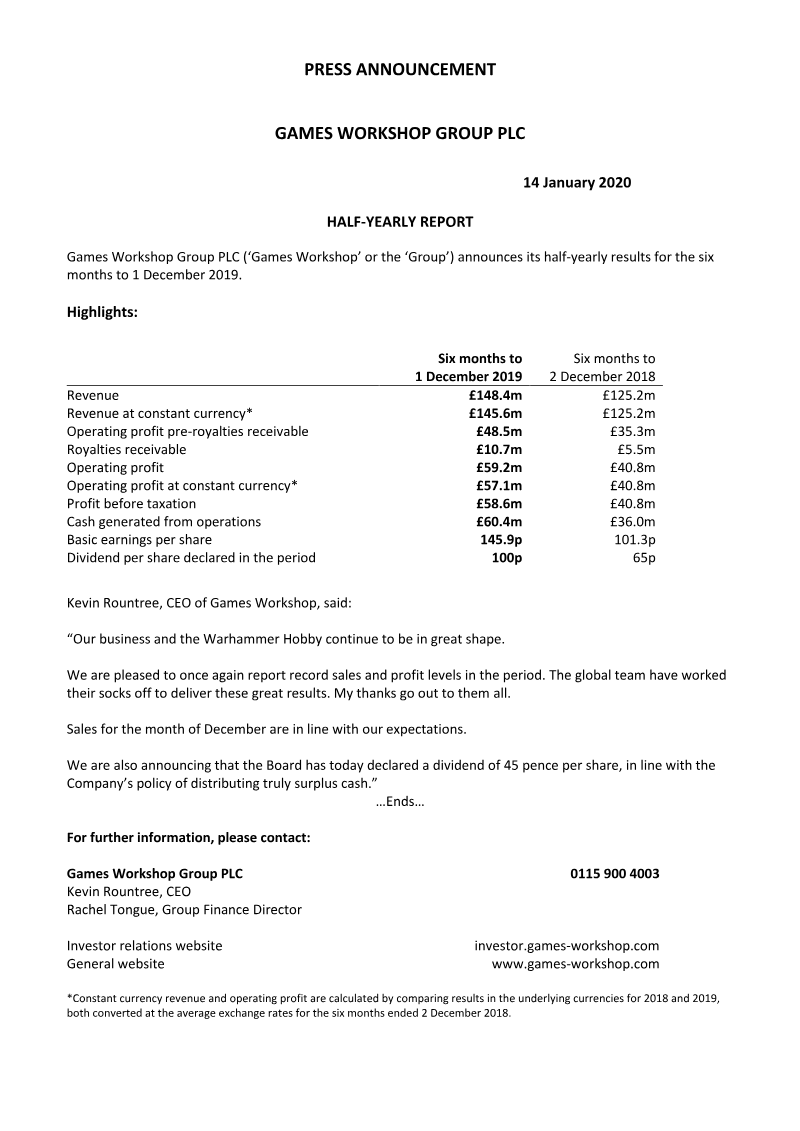
Games Workshop achieved record financial performance during the six months ending December 1, 2019, characterized by a 19% increase in revenue to £148.4 million and a significant rise in profit before taxation to £58.6 million. This growth was primarily propelled by the Trade segment, which saw a 27% increase in sales and the addition of approximately 200 new accounts, alongside a doubling of royalty income to £10.7 million. Performance was particularly robust in North American markets and bolstered by the successful launch of the Citadel Colour paint range. The company maintained an exceptional return on capital employed of 111%, allowing for the distribution of 100p per share in dividends while sustaining a strong cash position of nearly £33 million.
The financial landscape of the period was also shaped by the adoption of IFRS 16, which integrated operating leases onto the balance sheet and resulted in the recognition of £33.6 million in right-of-use assets. Despite these accounting shifts and increased capital expenditure of £4.59 million, the group demonstrated high liquidity with £60.4 million in net cash generated from operating activities. Basic earnings per share rose to 145.9p, reflecting the overall increase in operating profit from £40.8 million in the previous year to £59.2 million.
Strategic focus remains centered on intellectual property exploitation and management quality as key internal drivers. While external uncertainties such as Brexit pose potential risks to European Union trade and recruitment, comprehensive mitigation plans are in place to ensure operational continuity. The combination of a debt-free balance sheet, seasonal sales peaks during the holiday period, and a growing global trade footprint reinforces a stable outlook for the remainder of the fiscal year.

Games Workshop Group · 2025
Games Workshop Group · 2025
Games Workshop Group · 2025
Tencent · 2024
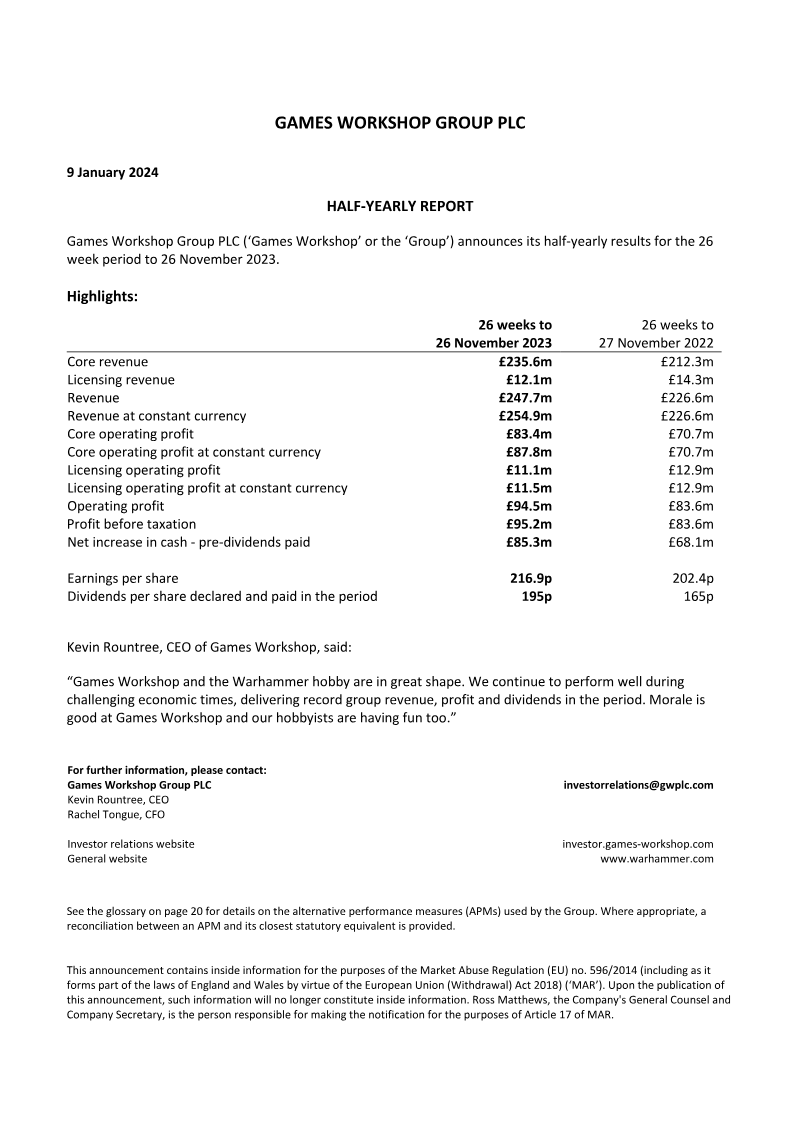
Games Workshop Group · 2024
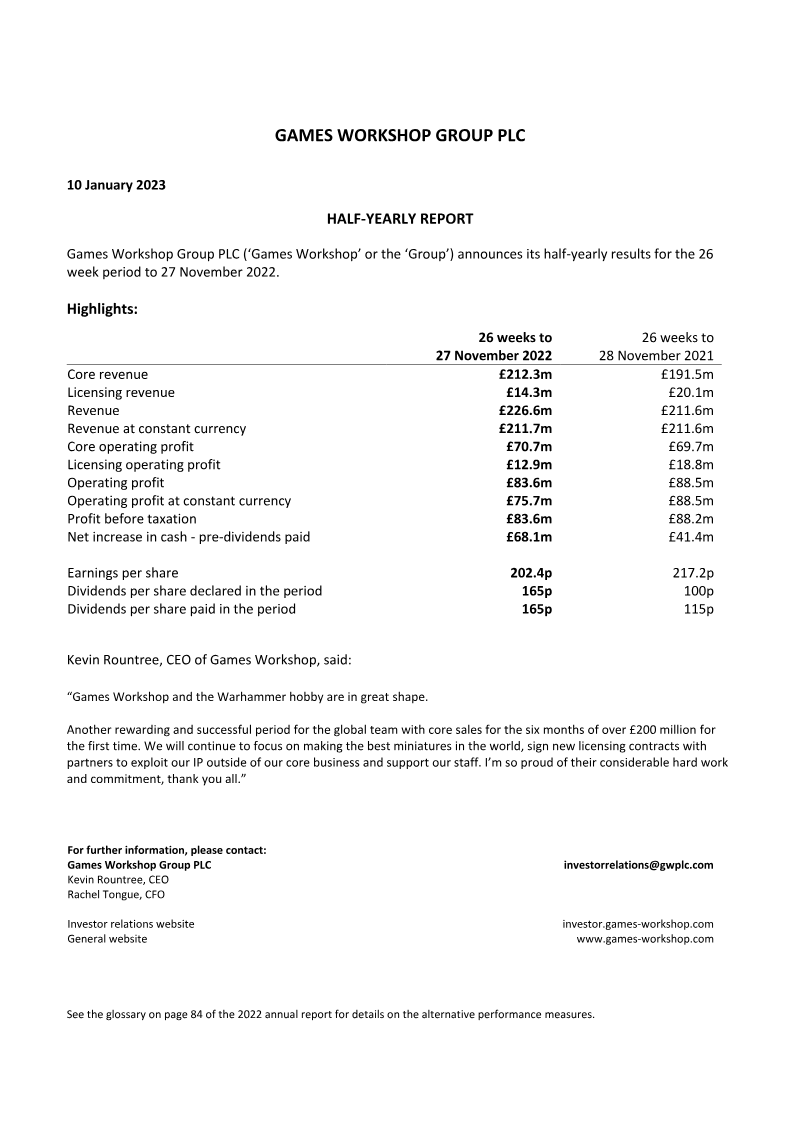
Games Workshop Group · 2023

Games Workshop Group · 2022
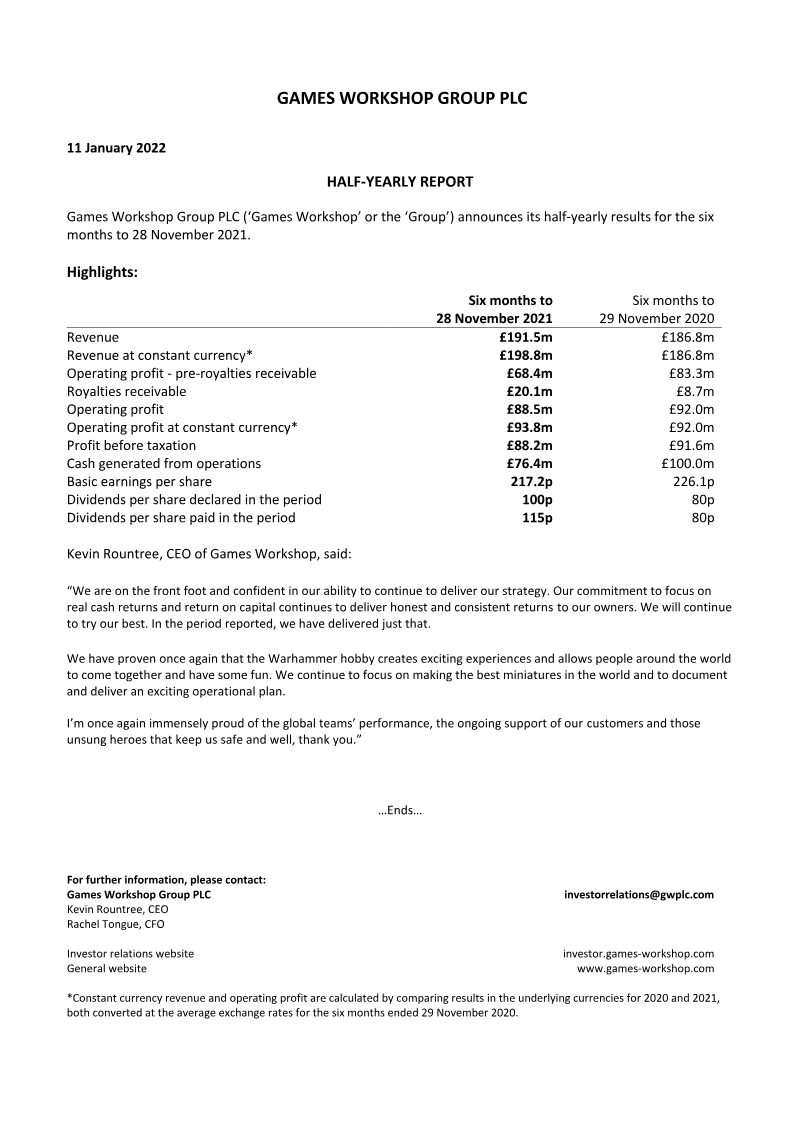
Games Workshop Group · 2022

Games Workshop Group · 2021
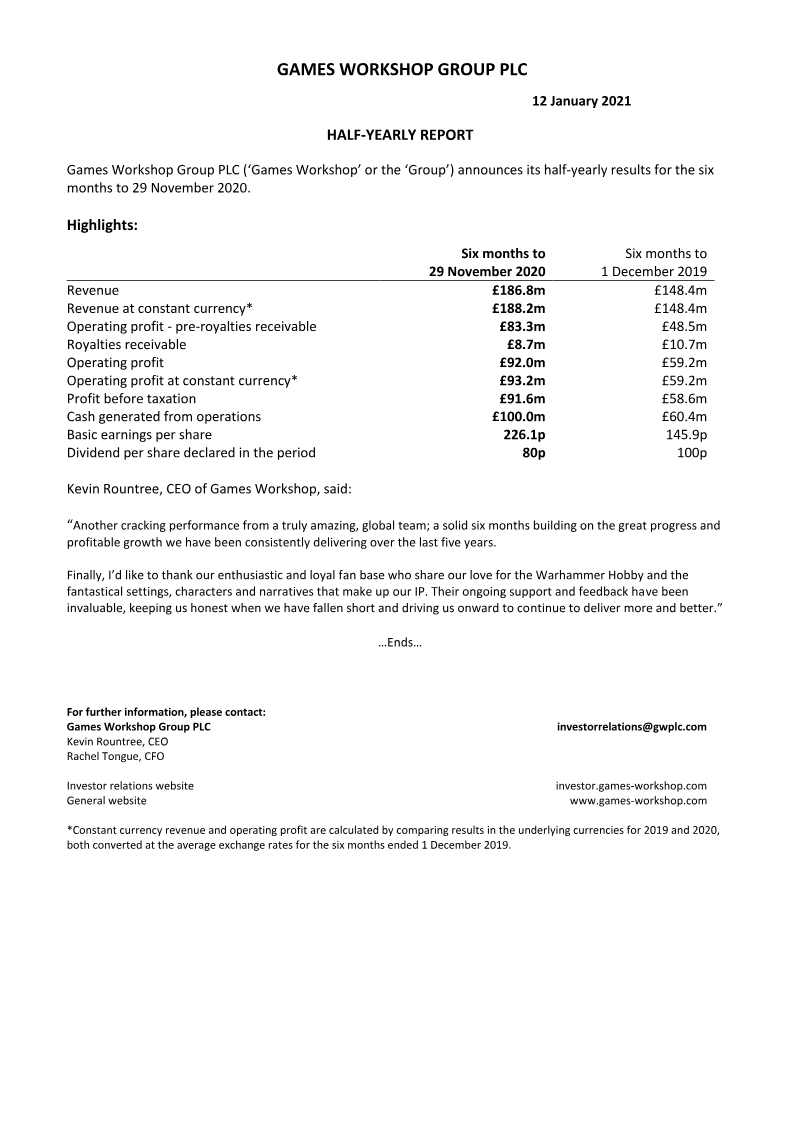
Games Workshop Group · 2021

Games Workshop Group · 2020

Games Workshop Group · 2019
Frontier Developments · 2026
Frontier Developments · 2025
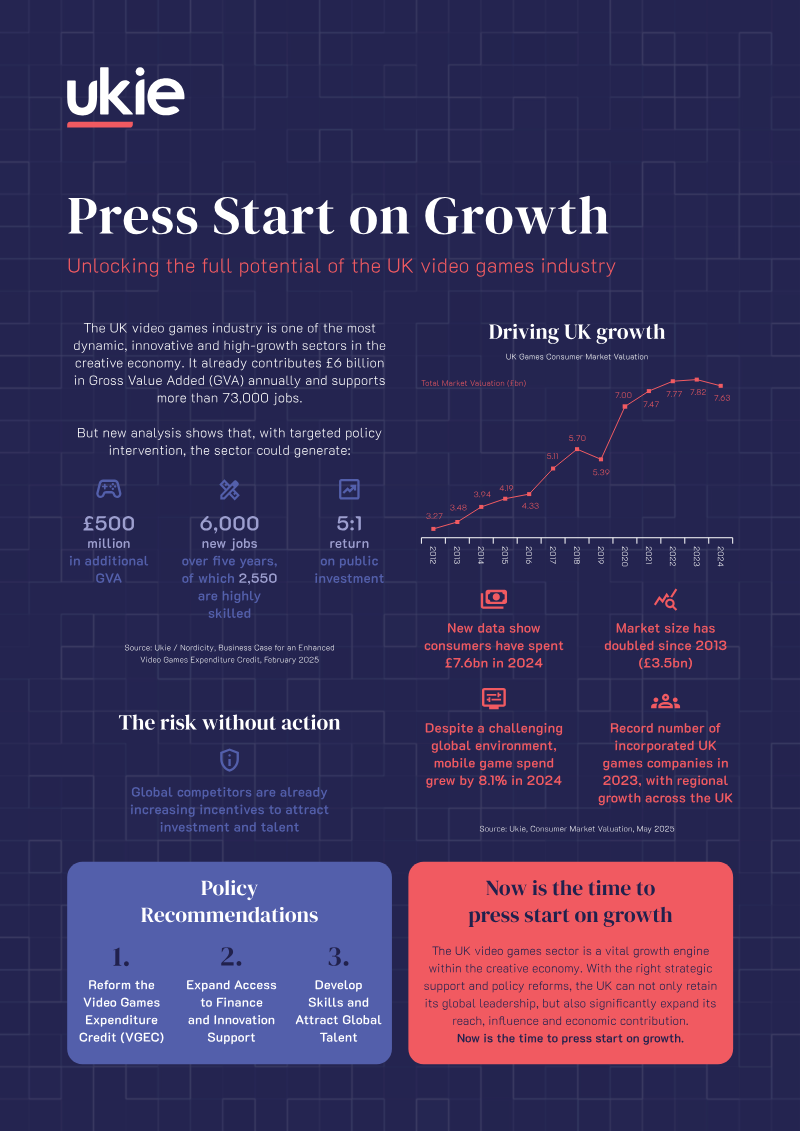
Ukie · 2025
Frontier Developments · 2025
Frontier Developments · 2024
tinyBuild · 2024

Ukie · 2024
Team17 · 2024

Ukie · 2023