FinancialGames Workshop Group
Half-Yearly Report: Six months to 2 December 2018
201915 pages~41 min full read
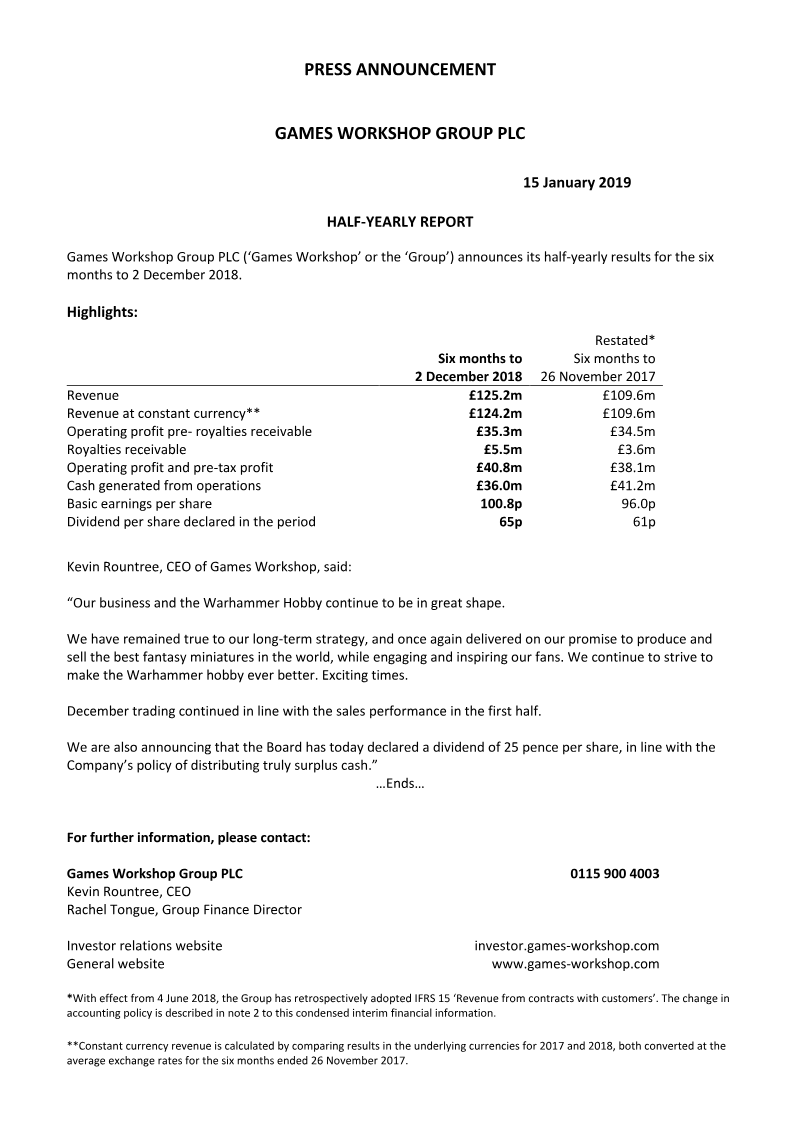
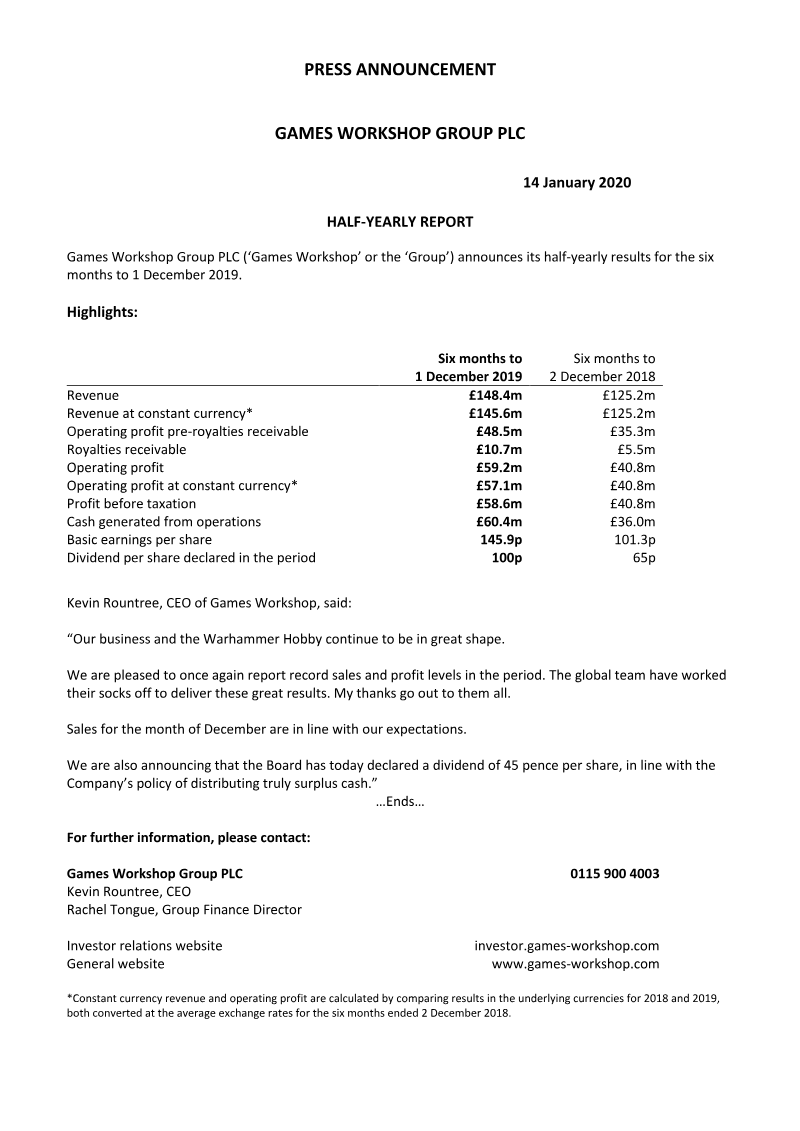
Games Workshop achieved record financial performance during the six months ending December 2, 2018, characterized by a 14.3% increase in revenue to £125.2 million and a rise in pre-tax profit to £40.8 million. This growth was primarily propelled by the trade channel, which surged 26% to reach £61.4 million, and a significant 30% increase in engagement through the Warhammer Community platform. While the retail segment also contributed £42.5 million to the total, online sales remained flat, and the product and supply divisions faced profit declines. Basic earnings per share rose to 100.8p, supporting the distribution of £21.0 million in dividends to shareholders at 65 pence per share.
The financial landscape was influenced by the retrospective adoption of IFRS 15 and IFRS 9 accounting standards, which necessitated adjustments to revenue recognition for royalty guarantees and delivery charges. Despite record profits, cash generated from operations decreased to £36.0 million as the group increased investment in working capital and inventory. Net inventory provisions more than doubled to £3.4 million, reflecting a strategic shift toward managing capacity constraints. The group maintained a robust balance sheet with net assets of £101.6 million and confirmed its status as a going concern with sufficient resources for the foreseeable future.
Operational focus during this period centered on large-scale infrastructure projects designed to sustain long-term growth. These initiatives include the construction of a new factory in Nottingham and the implementation of a comprehensive UK-wide ERP system. These capital commitments, totaling nearly £3 million, aim to optimize supply chain efficiency and address the physical limitations of current production facilities. By prioritizing these structural improvements alongside a strong trade performance, the group seeks to mitigate capacity risks and capitalize on the expanding global demand for its core hobby products.

Games Workshop Group · 2025
Games Workshop Group · 2025
Games Workshop Group · 2025
Tencent · 2024
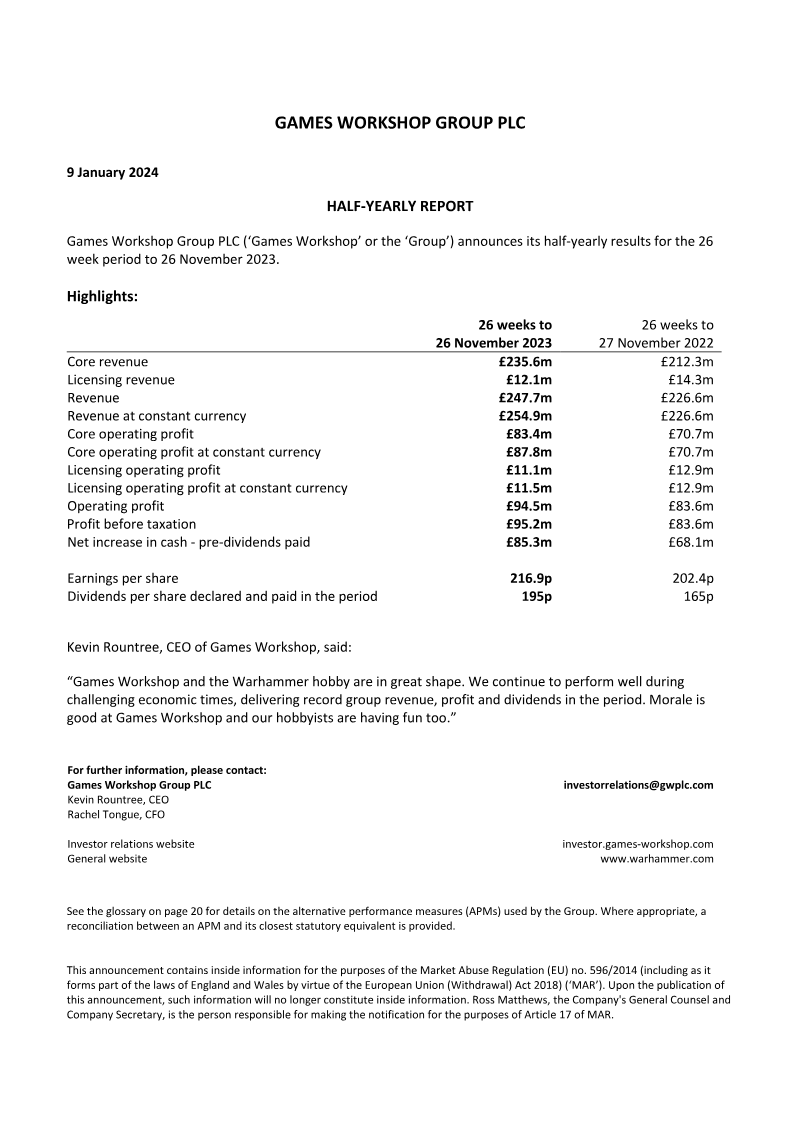
Games Workshop Group · 2024
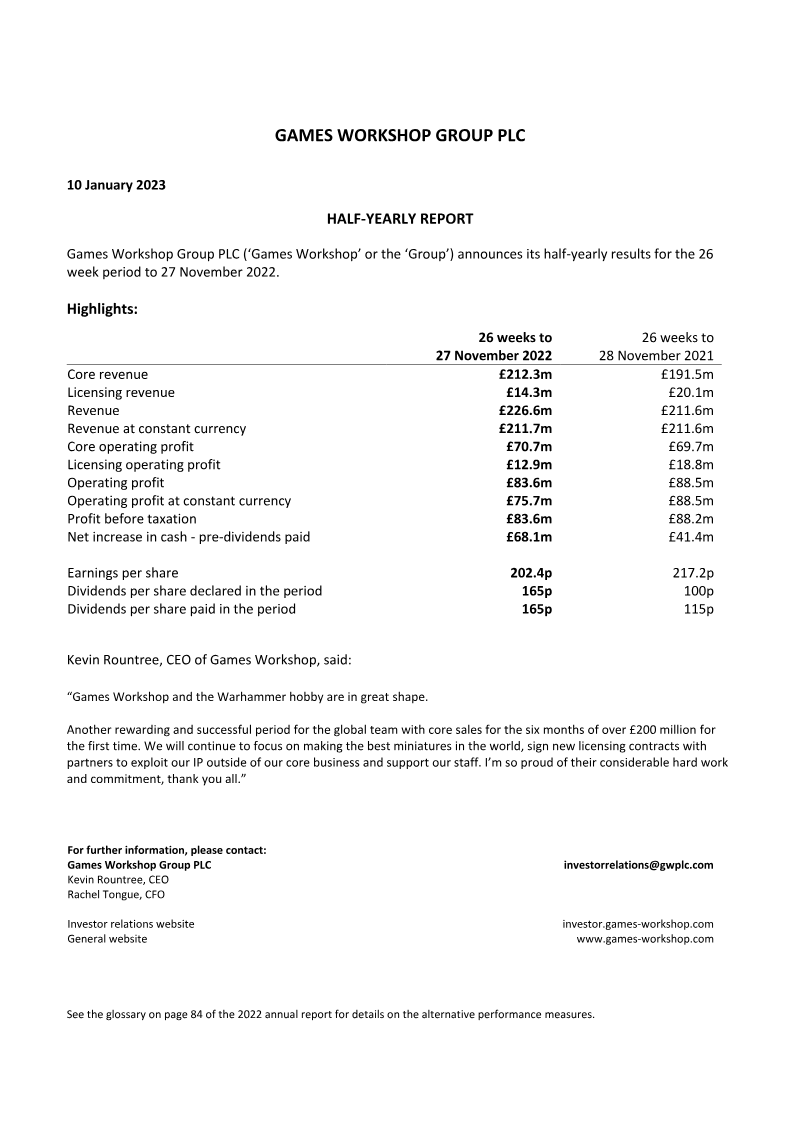
Games Workshop Group · 2023

Games Workshop Group · 2022
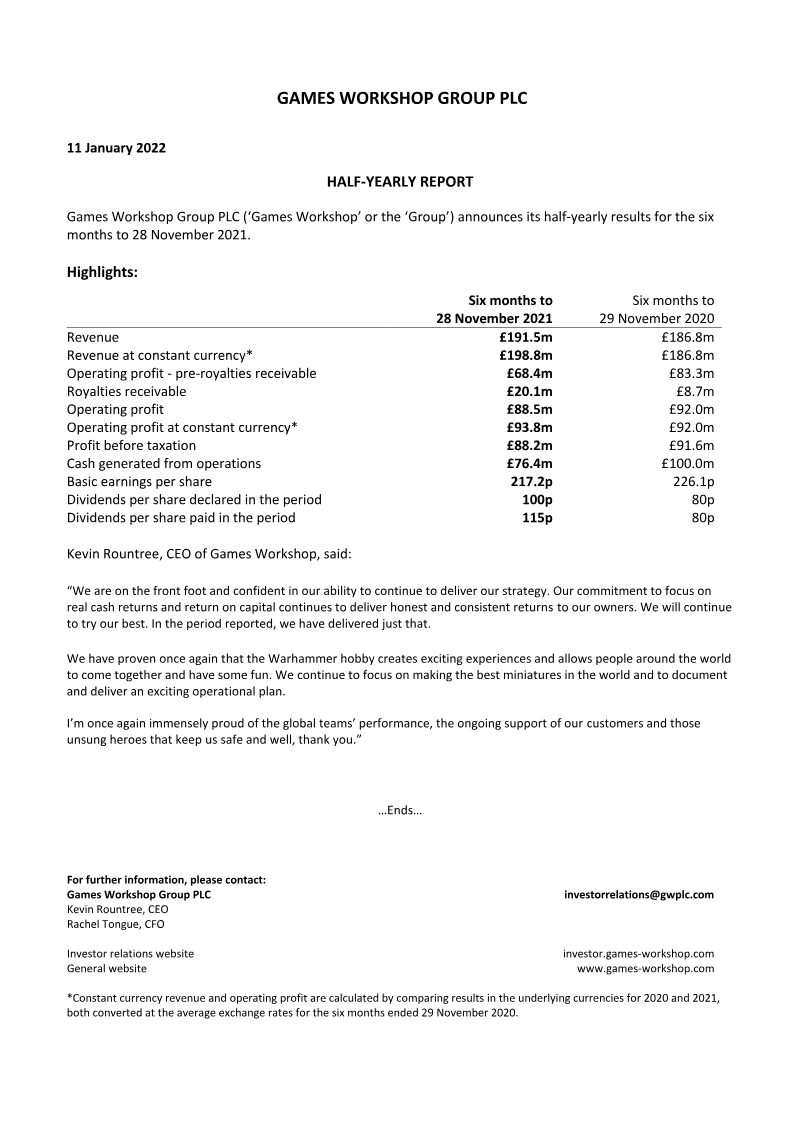
Games Workshop Group · 2022

Games Workshop Group · 2021
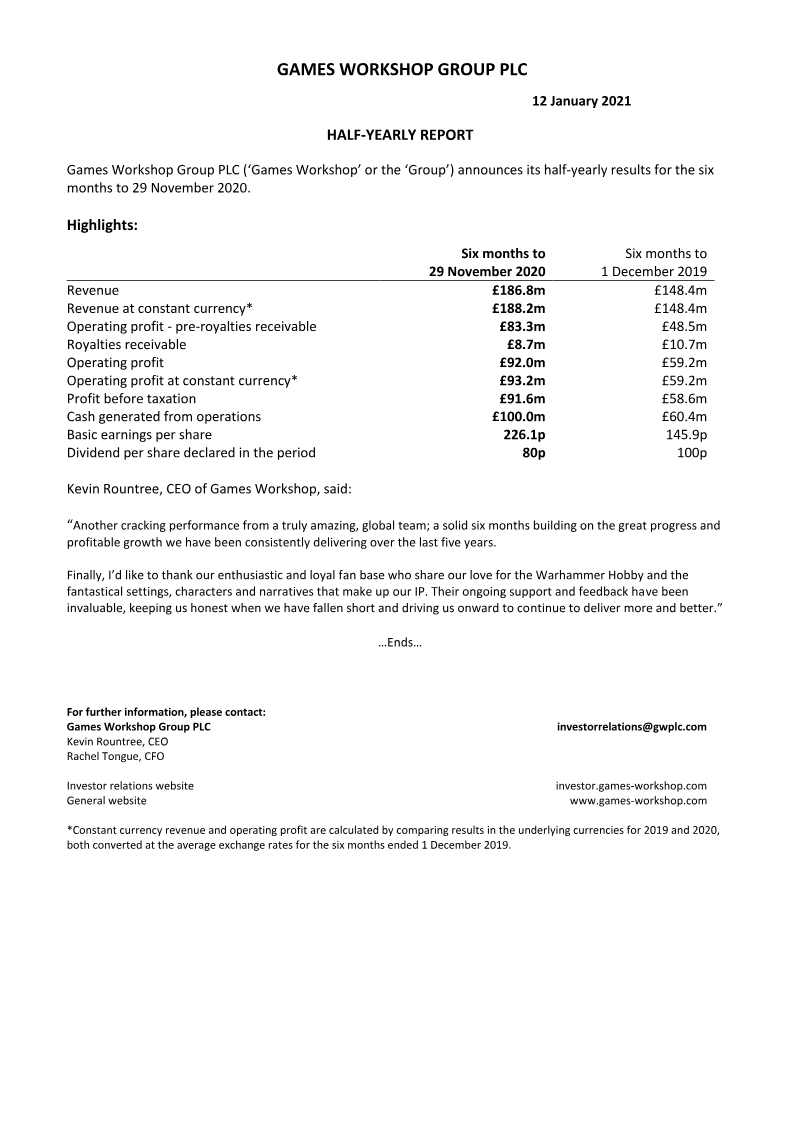
Games Workshop Group · 2021

Games Workshop Group · 2020
Games Workshop Group · 2019

Ukie · 2024
Remedy Entertainment · 2026
Frontier Developments · 2026
Frontier Developments · 2025
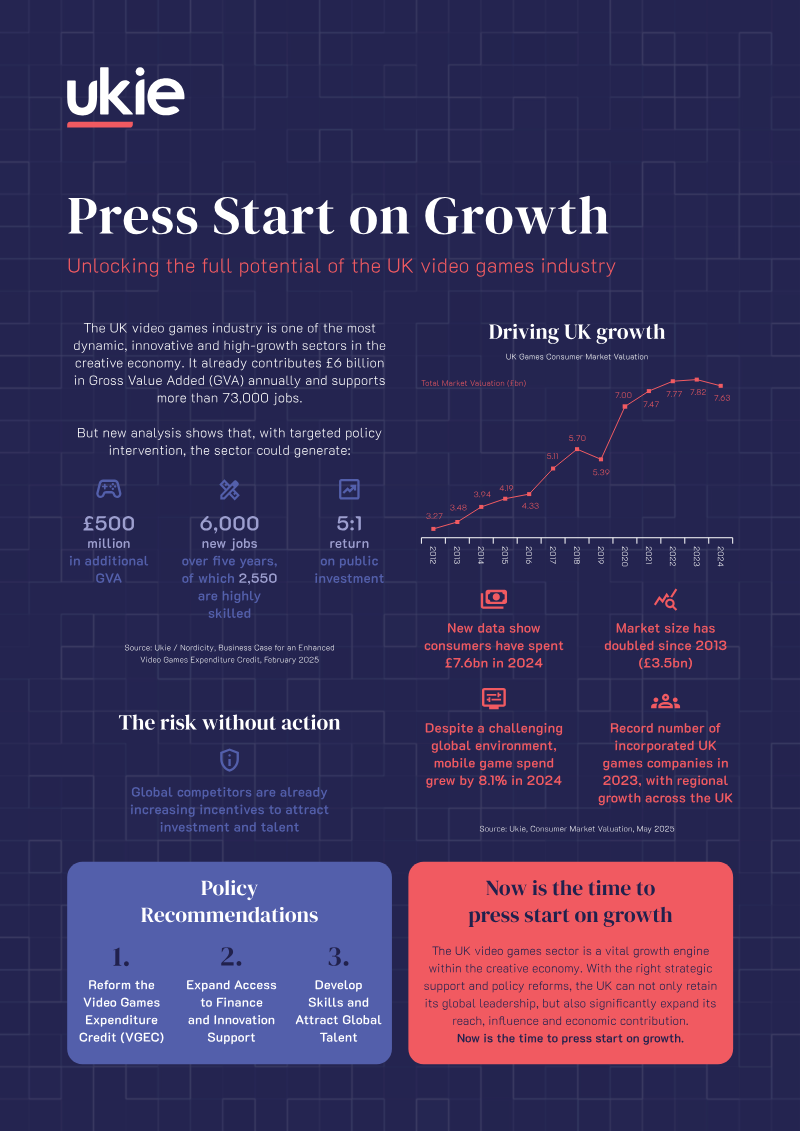
Ukie · 2025
Frontier Developments · 2025
Frontier Developments · 2024
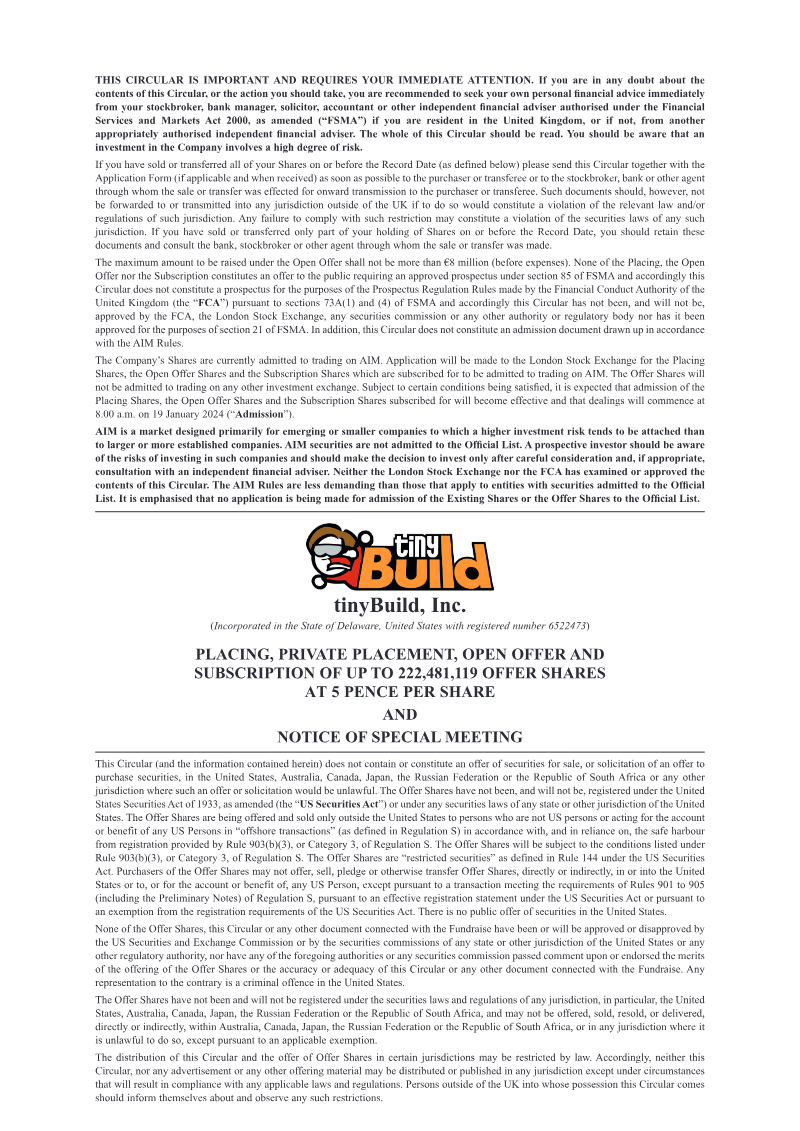
tinyBuild · 2024
Team17 · 2024

Ukie · 2023