FinancialGames Workshop Group
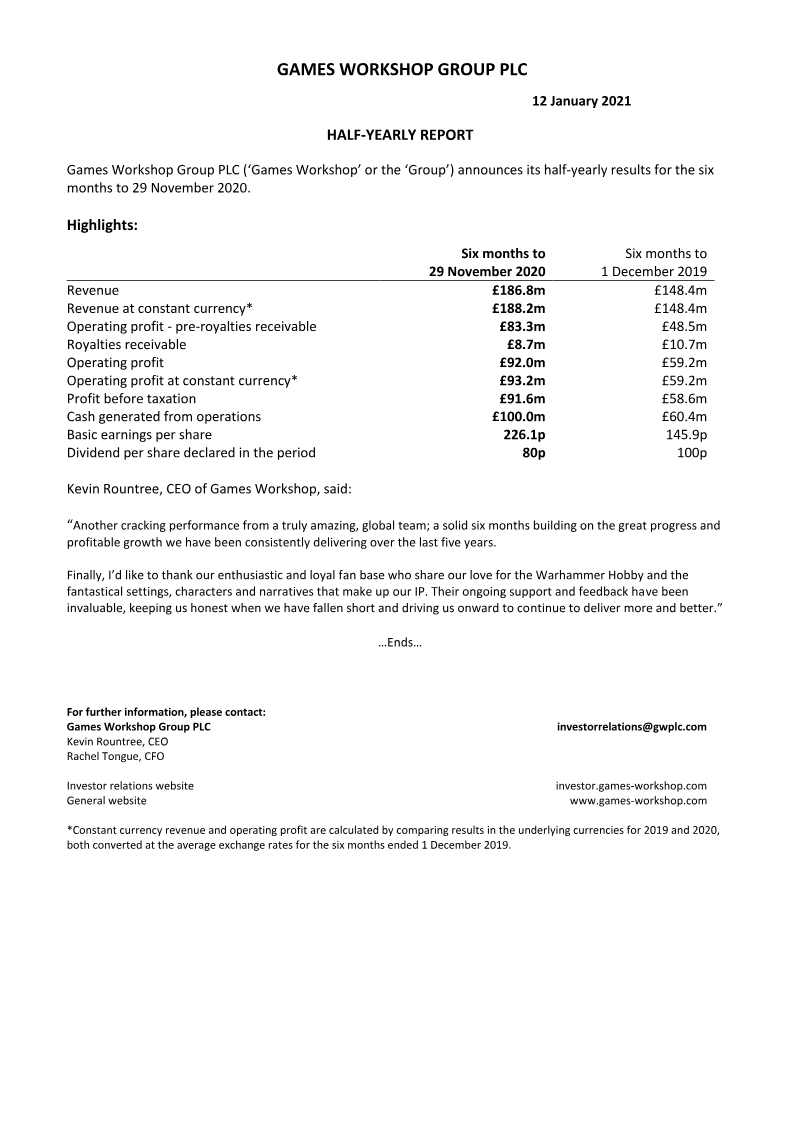
Half-Yearly Report: Six Months to 29 November 2020
202117 pages~47 min full read
Games Workshop achieved record financial performance during the six months ending November 29, 2020, characterized by a 26% increase in revenue to £186.8 million and a substantial rise in operating profit to £92.0 million. This growth was primarily catalyzed by a significant surge in Warhammer 40,000 unit sales and a strategic shift in distribution channels. While physical retail faced persistent challenges due to global pandemic restrictions, an 87% increase in online revenue and a 33% growth in trade accounts more than compensated for the decline in storefront performance.
The company’s financial position strengthened considerably during this period, with net assets reaching £182.2 million and a cash balance of £96.5 million, nearly triple the previous year's figure. This liquidity was supported by £84.3 million in net cash from operating activities, allowing for a total dividend declaration of 80p per share and a £5.0 million discretionary payment to employees. To sustain this momentum, manufacturing output was increased by 30%, supported by ongoing capital investments in logistics infrastructure across the United Kingdom and North America.
Beyond core tabletop sales, the business continued to focus on the long-term exploitation of its intellectual property through licensing and media development, including the progression of a television series. Despite a temporary decrease in royalty income and the complexities of transitioning to IFRS 16 lease accounting, the overall trajectory remains positive. Strategic investments in IT and manufacturing, alongside a stable property and equipment portfolio, position the organization to manage its seasonal peaks and maintain its expansion within the global hobby market.

Games Workshop Group · 2025
Games Workshop Group · 2025
Games Workshop Group · 2025
Tencent · 2024
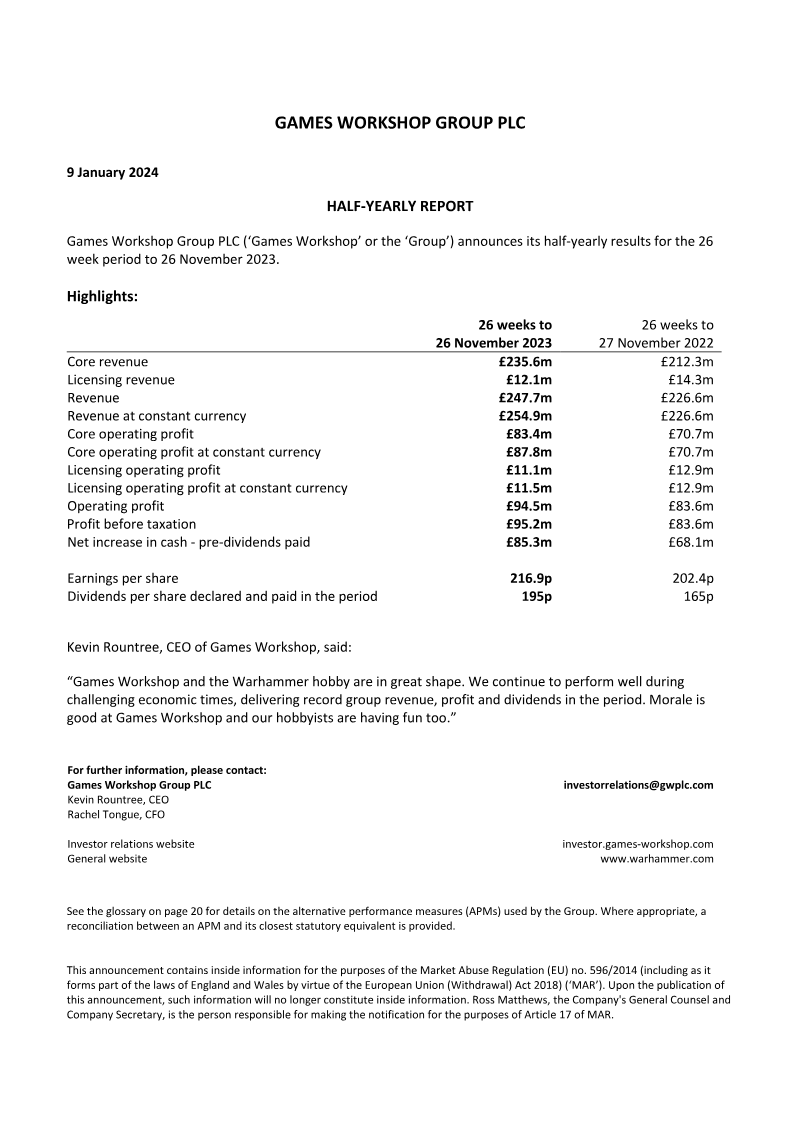
Games Workshop Group · 2024
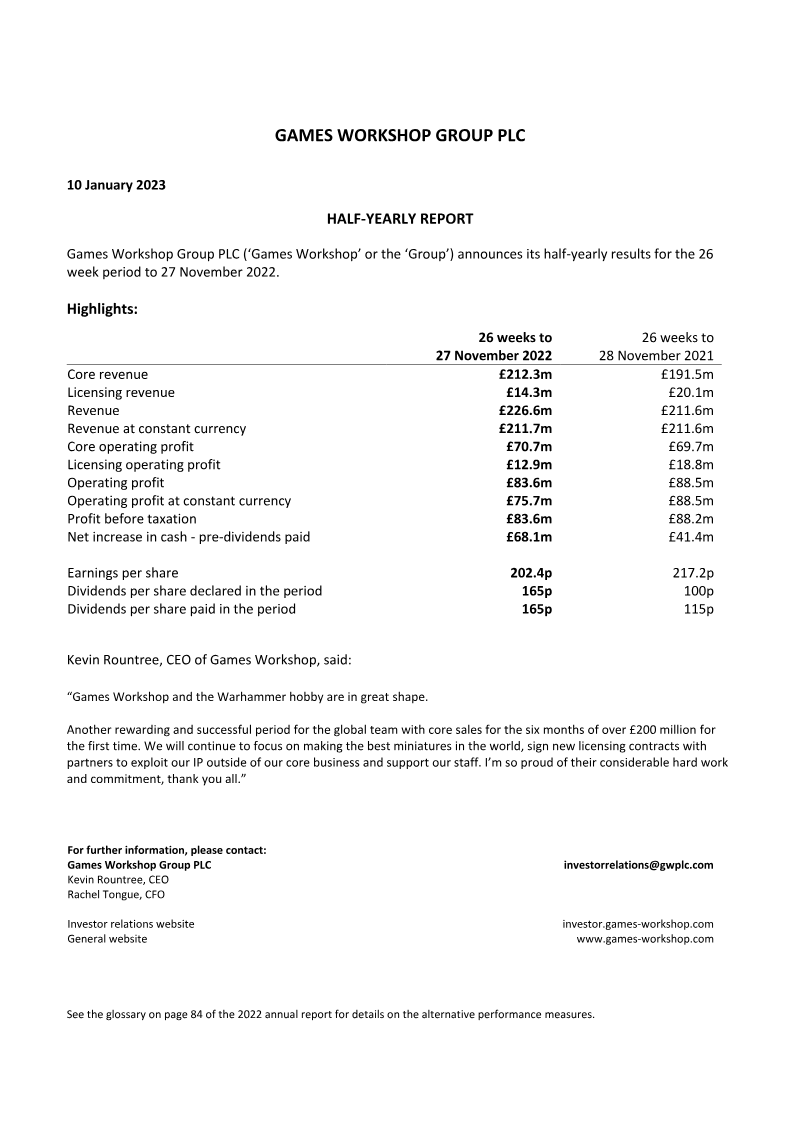
Games Workshop Group · 2023

Games Workshop Group · 2022
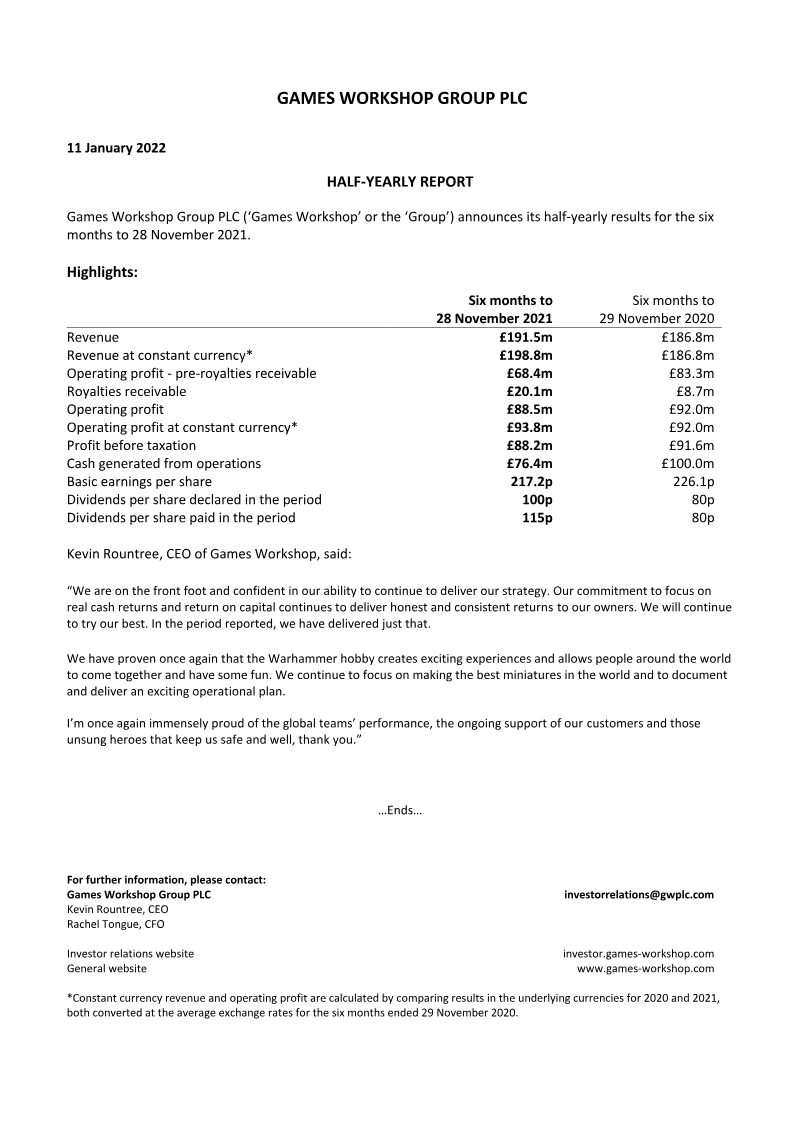
Games Workshop Group · 2022

Games Workshop Group · 2021

Games Workshop Group · 2020
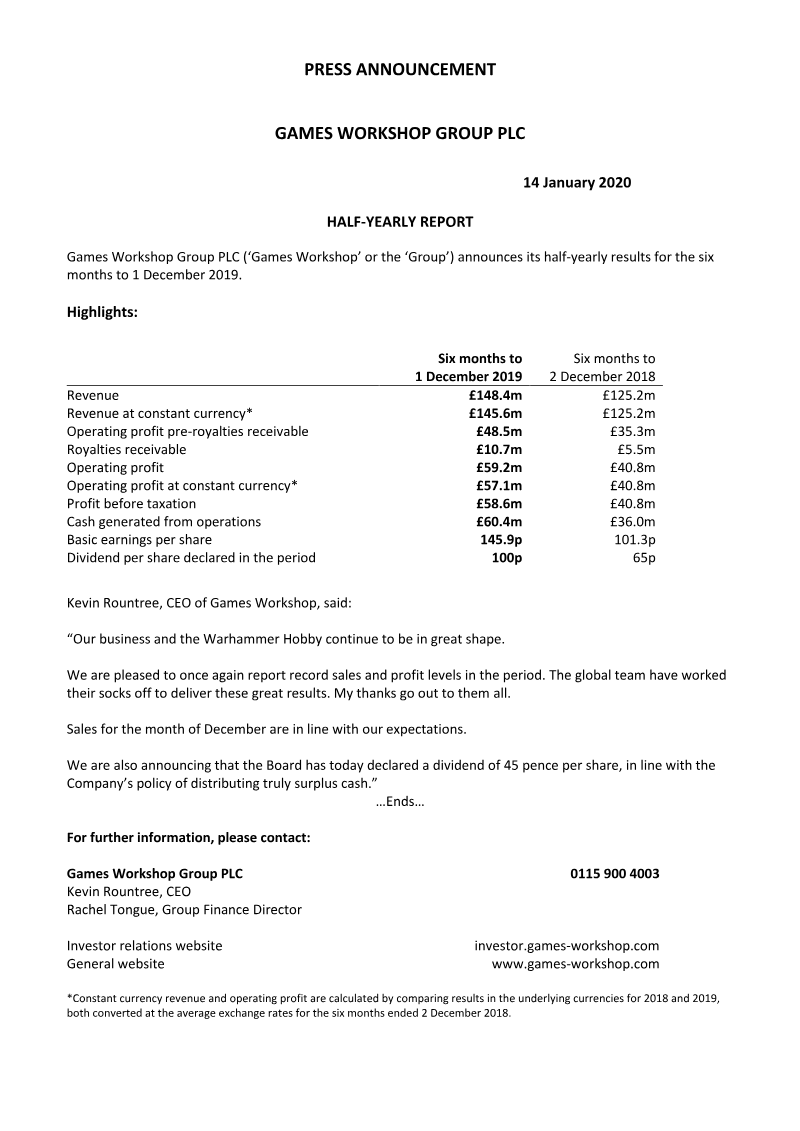
Games Workshop Group · 2019

Games Workshop Group · 2019
Frontier Developments · 2026
Frontier Developments · 2025
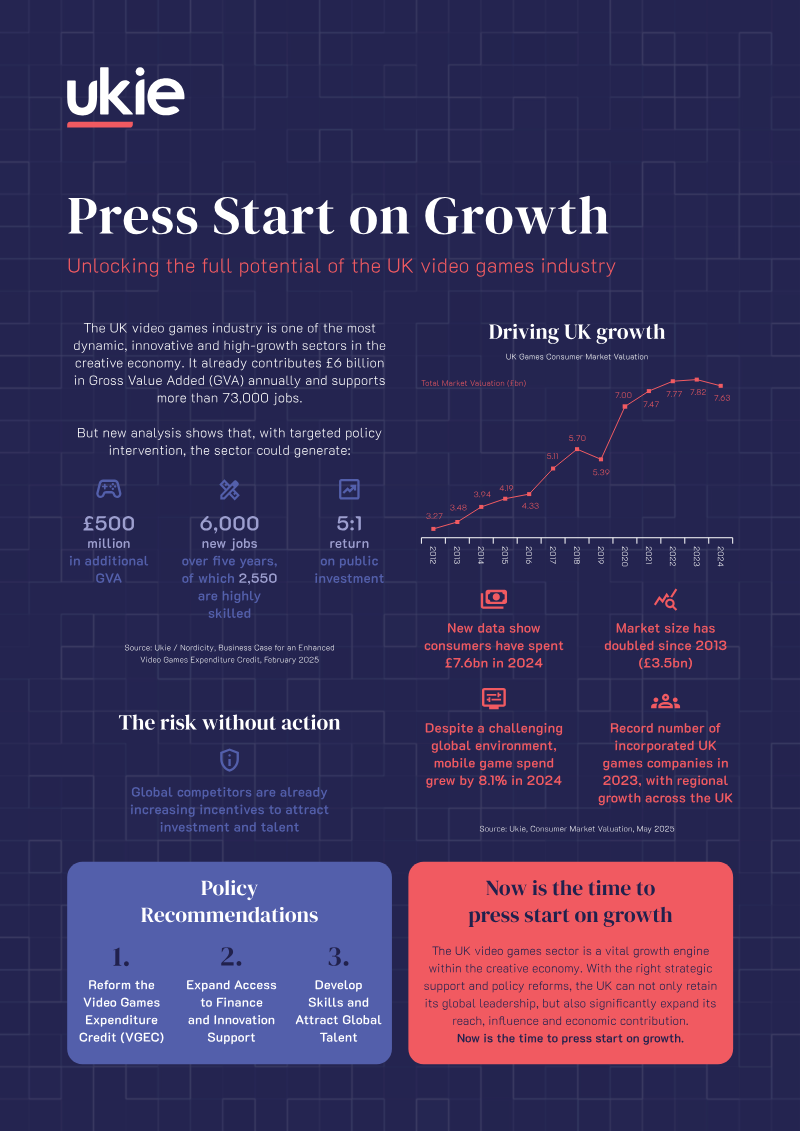
Ukie · 2025
Frontier Developments · 2025
Frontier Developments · 2024
tinyBuild · 2024
Team17 · 2024

Ukie · 2024

Ukie · 2023