1 free read left. Create a free account for unlimited reading + AI research.
Create free accountWhitepaper DiGRA
1 free read left. Create a free account for unlimited reading + AI research.
Create free accountWhitepaperDiGRA
The paper argues that realism in video games depends on the player's embodied experience rather than on visual depiction or correspondence to external reality. It draws on Maurice Merleau-Ponty's phenomenology.
This paper argues that realism in video games rests on the player's embodied experience rather than on visual depiction or correspondence to an external reality. Drawing on the phenomenology of Maurice Merleau-Ponty, it contends that the controller functions as an extension of the player's body, so that the act of playing produces a form of "gamic realism" that is body-subjective and grounded in action. The author positions this against two prominent accounts: Chris Crawford's claim that games represent a "subset of reality" and Jesper Juul's view that games are "half-real," since both locate realism in formal rules or fictional settings rather than in the player's physical engagement.
The discussion uses Eduardo Kac's distinction between virtual reality, which presents synthetic sense-data without physical correspondence, and telepresence, which links the user to a remote physical reality through action and feedback. The author suggests that video games conflate these categories: they are closed, constructed worlds, yet they allow the player to perform physical acts and observe results. Heidegger's notion of the ready-to-hand and Merleau-Ponty's account of the blind man's cane support the claim that a well-designed controller becomes transparent to the player, and that a game failing to achieve this smooth integration is likely to be judged flawed.
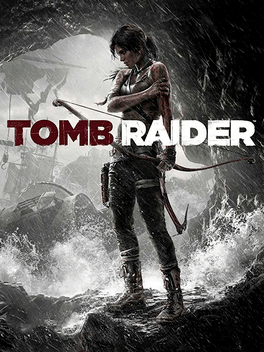
Building on Alexander Galloway's reading of realism in games, the paper argues that the realism of a game depends on whether the player's actions produce expected results, not on graphical fidelity or cinematic resemblance. Examples such as Tomb Raider and the Palestinian game Under Ash illustrate how realism can be tied to the player's experience and expectations rather than to representation. The paper also contrasts the passive, immobile cinema experience with the active, interactive experience of play, concluding that the player's control over the virtual environment is the source of experienced reality in games.
Each row is a game or company this document names, each column a document, oldest first. A mark means that document names it. Select a row to see those documents.
DiGRA · 2022
DiGRA · 2022
DiGRA · 2022
DiGRA · 2022
DiGRA · 2022
DiGRA · 2022
DiGRA · 2022
DiGRA · 2022
DiGRA · 2022

DiGRA · 2022
DiGRA · 2022
DiGRA · 2022