Key insights
4 slides
Key number
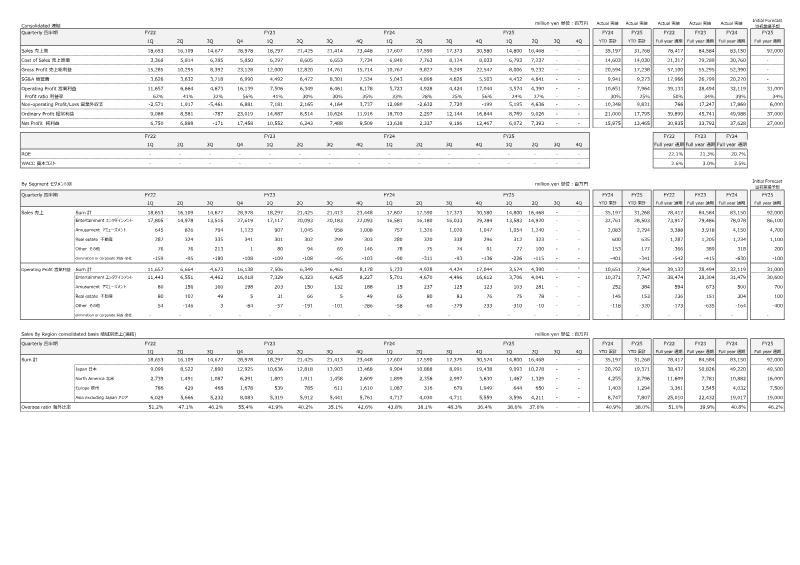
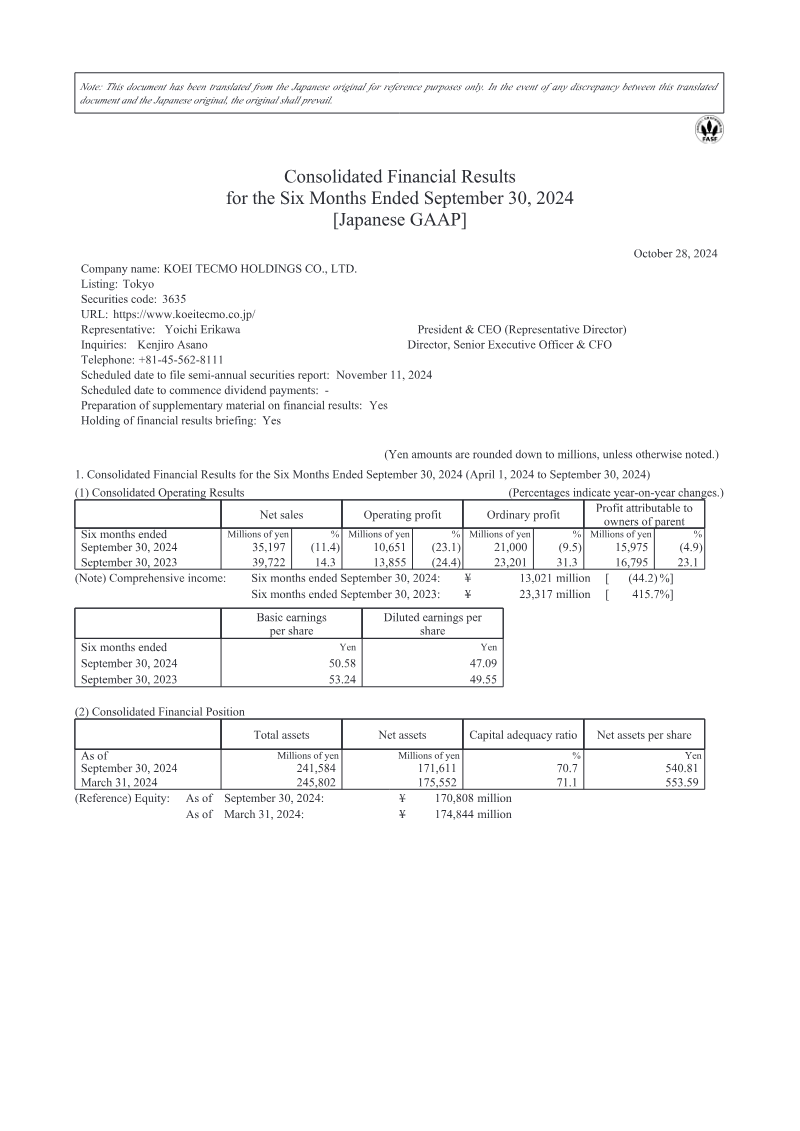
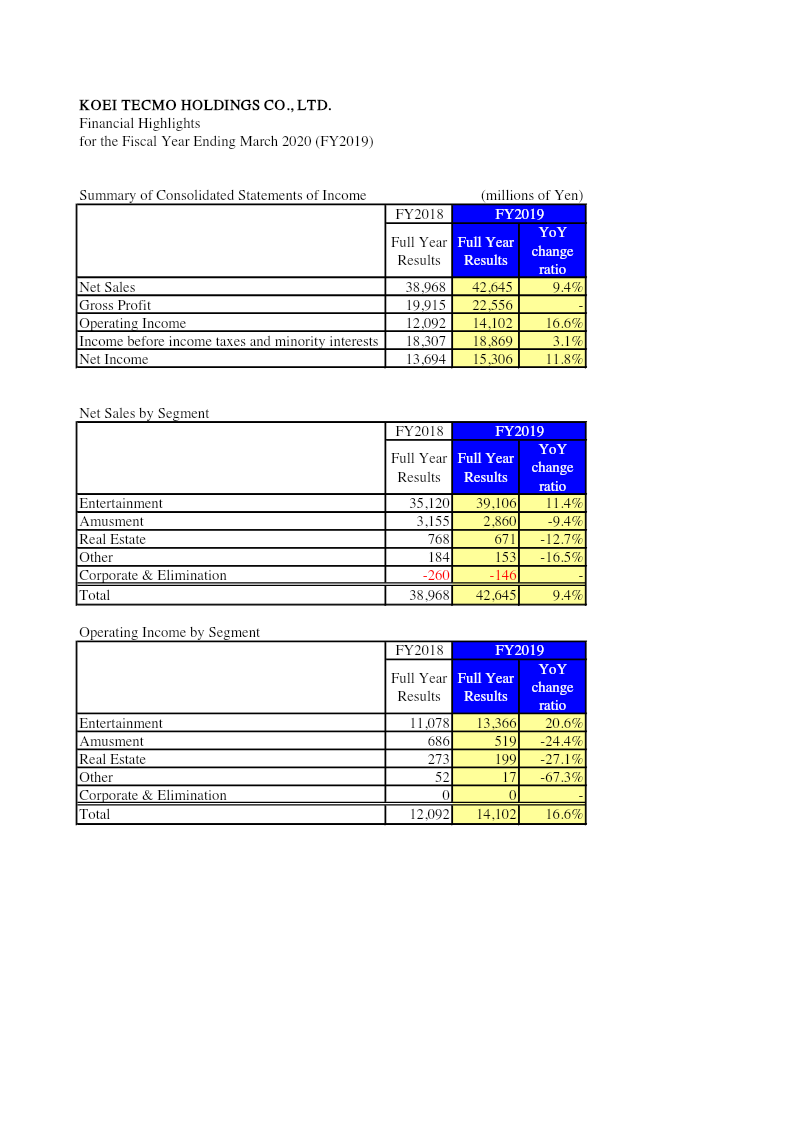
Net sales rose 9.4% to ¥42.645 billion in FY2020.
Koei Tecmo reported net sales of ¥42.645 billion for the fiscal year ending March 2020. Net income increased 11.8% to ¥15.306 billion.
Page 1 of the report¥42.645 billion
Net sales, fiscal year ending March 2020
- FY2018 net sales
- ¥38.968 billion
Growth engine
Entertainment operating income increased 20.6% to ¥13.366 billion.
It generated ¥13.366 billion in operating income, a 20.6% increase.
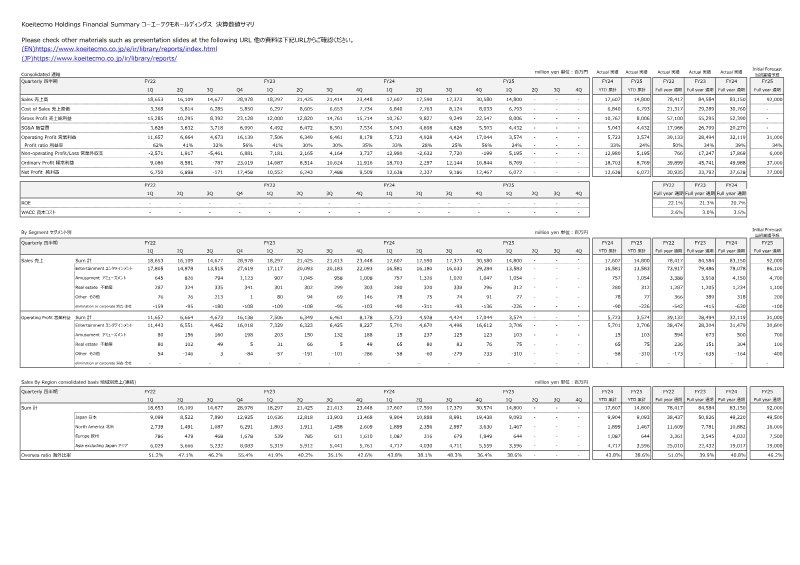
Page 1 of the report| Category | FY2018 Full Year Results | FY2019 Full Year Results | FY2019 YoY change ratio |
|---|---|---|---|
| Entertainment | 11078 | 13366 | 20.6% |
| Amusement | 686 | 519 | -24.4% |
| Real Estate | 273 | 199 | -27.1% |
| Other | 52 | 17 | -67.3% |
| Corporate & Elimination | 0 | 0 | - |
| Total | 12092 | 14102 | 16.6% |
What changed
Non-gaming segments declined by 9.4%, 12.7%, and 16.5%.
Amusement, real-estate, and other business units declined by 9.4%, 12.7%, and 16.5% respectively.
Page 1 of the report| Category | FY2018 Full Year Results | FY2019 Full Year Results | FY2019 YoY change ratio |
|---|---|---|---|
| Entertainment | 35120 | 39106 | 11.4% |
| Amusement | 3155 | 2860 | -9.4% |
| Real Estate | 768 | 671 | -12.7% |
| Other | 184 | 153 | -16.5% |
| Corporate & Elimination | -260 | -146 | - |
| Total | 38968 | 42645 | 9.4% |
Balance sheet
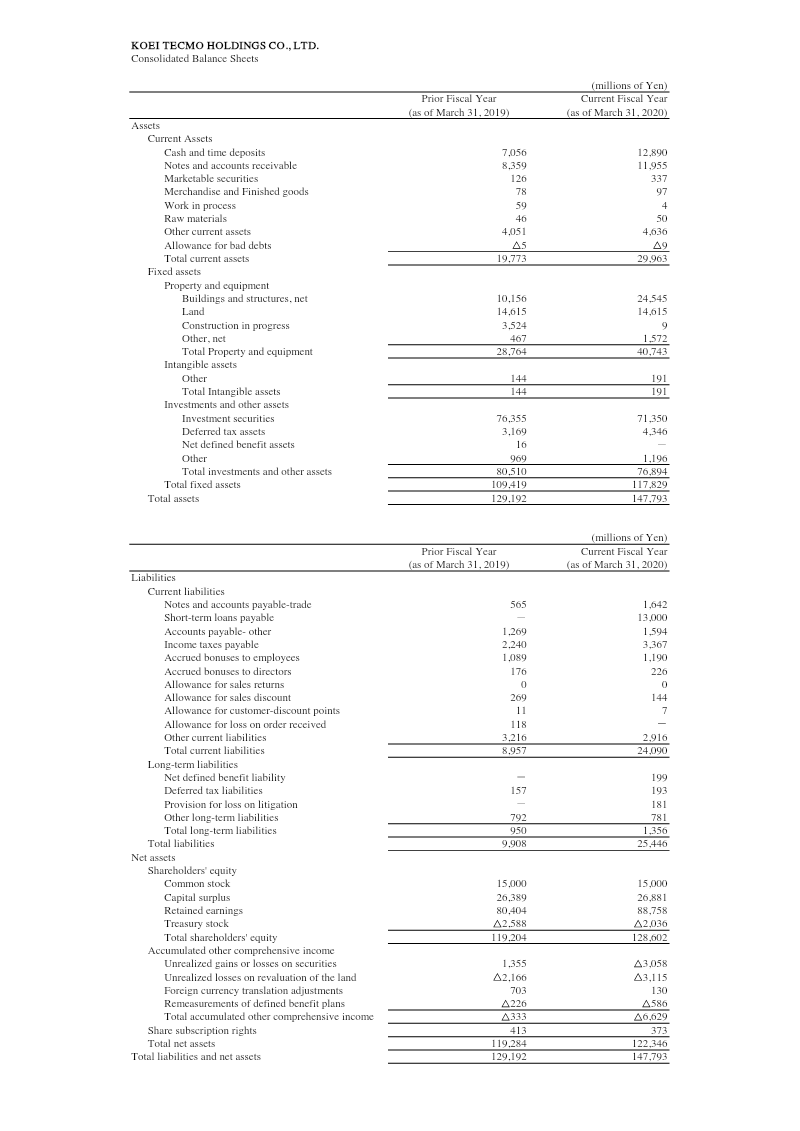
Total assets expanded to ¥147.793 billion from ¥129.192 billion.
Total assets grew from ¥129.192 billion to ¥147.793 billion. The expansion was largely due to a jump in current assets and property-and-equipment investments.
1 / 4
Ask AI about this report
Summary
Koei Tecmo Holdings reported a strong fiscal year ending March 2020, with net sales rising 9.4 % to ¥42.645 billion from ¥38.968 billion in FY2018. The entertainment segment drove growth, contributing 11.4 % of sales and generating ¥13.366 billion in operating income, a 20.6 % increase. In contrast, amusement, real‑estate and other segments saw declines of 9.4 %, 12.7 % and 16.5 % respectively, reflecting a shift toward core gaming activities. Operating income overall grew 16.6 %, and net income increased 11.8 % to ¥15.306 billion, supported by higher gross profit and efficient cost management.
Balance‑sheet expansion was notable: total assets grew from ¥129.192 billion to ¥147.793 billion, largely due to a jump in current assets (cash and receivables) and property‑and‑equipment investments. Shareholders’ equity rose to ¥128.602 billion, driven by retained earnings and capital surplus. However, current liabilities surged to ¥24.090 billion, driven by short‑term loans and trade payables, while long‑term liabilities increased modestly to ¥1.356 billion.
The company’s geographic focus remains Japan‑centric, with revenue primarily from domestic entertainment products. The fiscal period covers the 12 months ending March 2020, and financial statements follow Japanese GAAP. No external survey data are cited; figures derive from consolidated accounting records. Overall, Koei Tecmo’s FY2020 performance highlights robust growth in its core gaming segment amid a broader portfolio contraction.
Cite this report
Citation
Generating citation…