ReportKoei Tecmo
Financial Highlights: 1st Half of the Fiscal Year Ending March 2018
2 pages~3 min full read
Key insights
6 slides
Key number
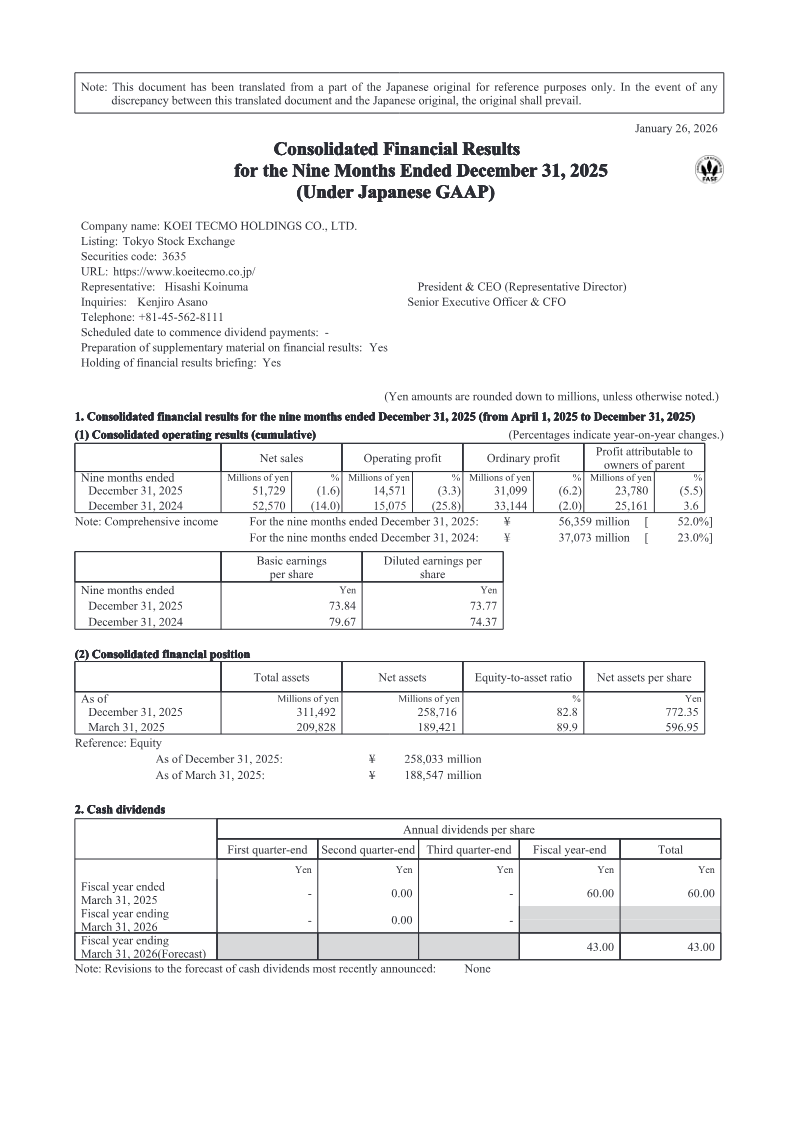
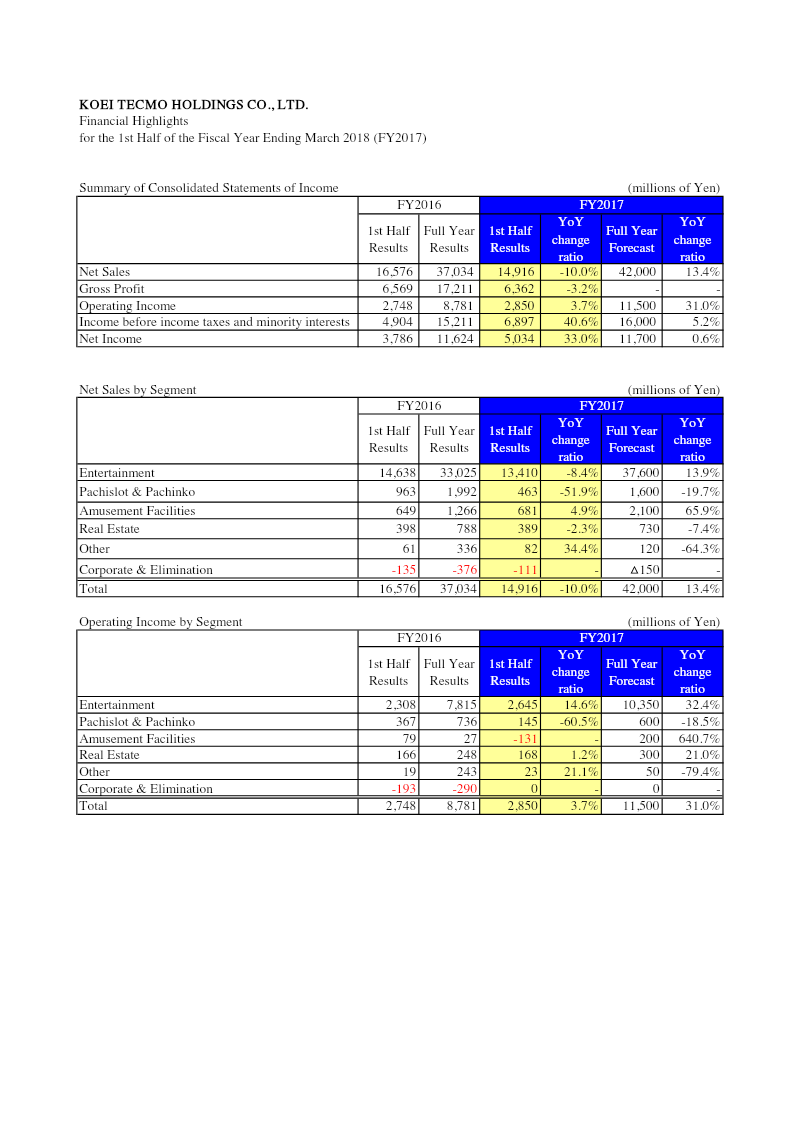
Net income rose 33.0% to ¥3,786 million despite falling sales.
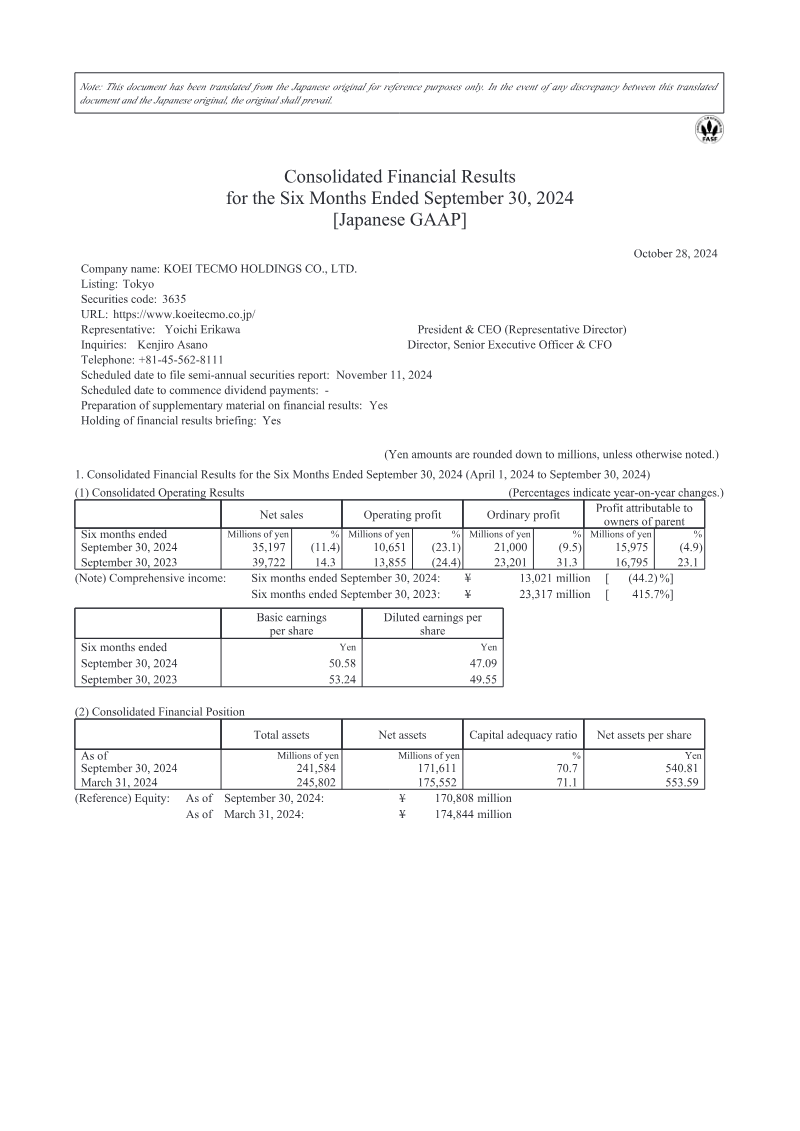
Koei Tecmo Holdings reported a 33.0% increase in net income for the first half of FY2018. Net sales fell 10% to ¥16,576 million compared with the same period in FY2016.
What changed
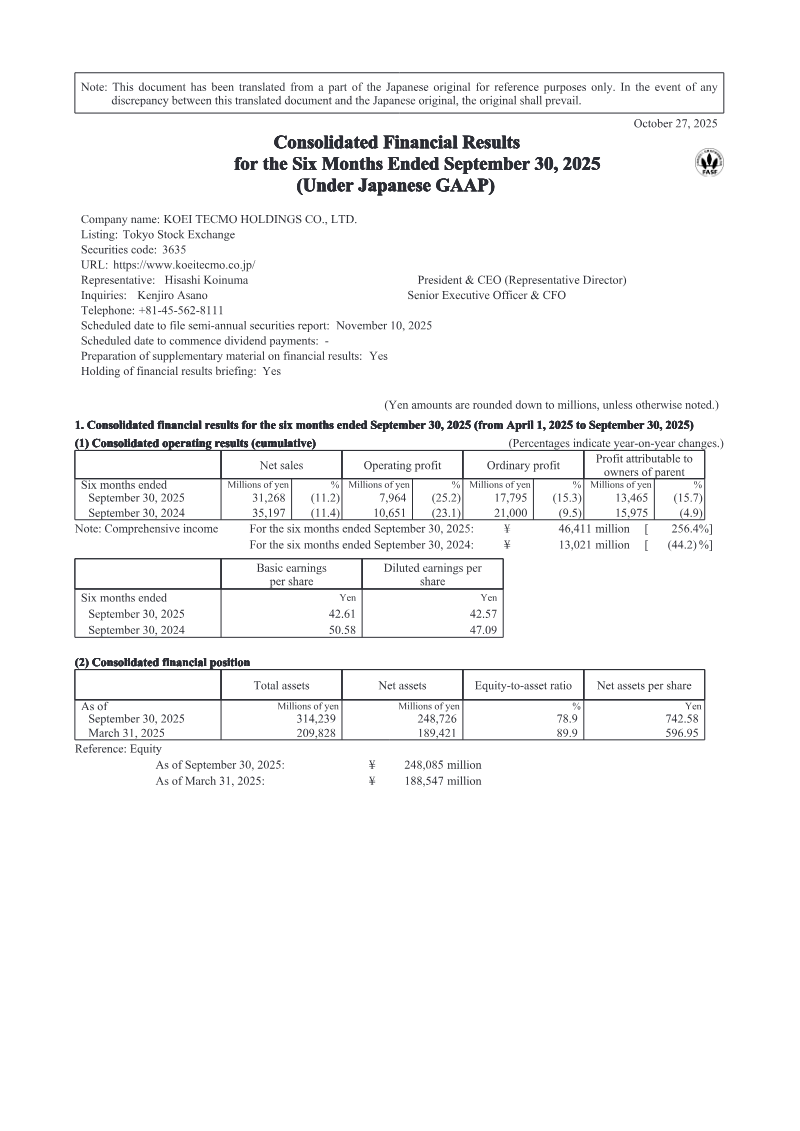
Operating income rose 31% to ¥2,748 million in the first half.
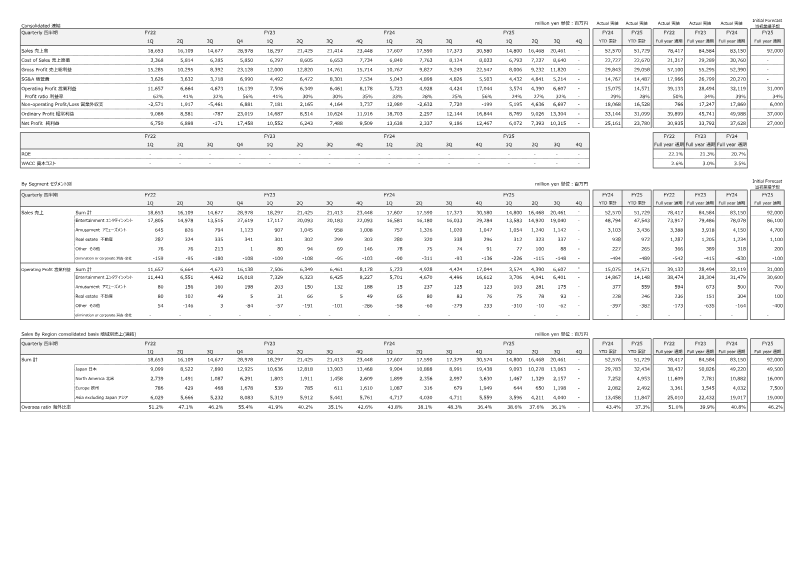
Operating income increased 31% to ¥2,748 million. This was driven by a 32.4% increase in Entertainment operating income and a 21.0% rise in Real Estate.
Balance sheet
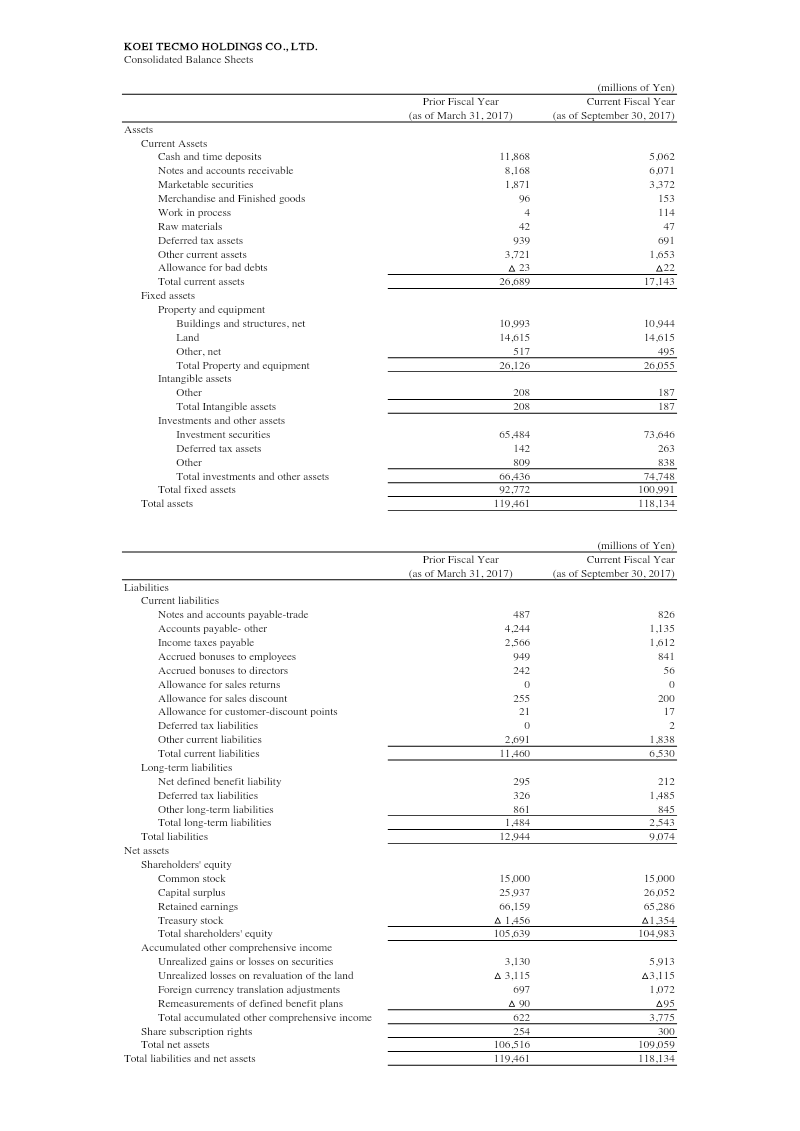
Cash and time deposits fell to ¥5,062 million by September 30.
Cash and time deposits decreased significantly from ¥11,868 million to ¥5,062 million as of September 30, 2017. Current assets decreased to ¥17,143 million.
Liability shift
Current liabilities fell to ¥6,530 million while long-term liabilities rose.
Current liabilities dropped sharply to ¥6,530 million from ¥11,460 million. Long-term liabilities increased to ¥2,543 million from ¥1,484 million, mainly due to higher deferred tax liabilities.
Overall picture
The company experienced declining sales but improved operating efficiency.
Overall, the company experienced a decline in sales but improved operating efficiency and profitability. Cash reserves were reduced, while liabilities shifted toward longer-term obligations.
Summary
Income before taxes surged 40.6% to ¥4,904 million.
Income before taxes surged 40.6% to ¥4,904 million. Net income climbed 33.0% to ¥3,786 million.
1 / 6
Ask AI about this report