Financialmixi
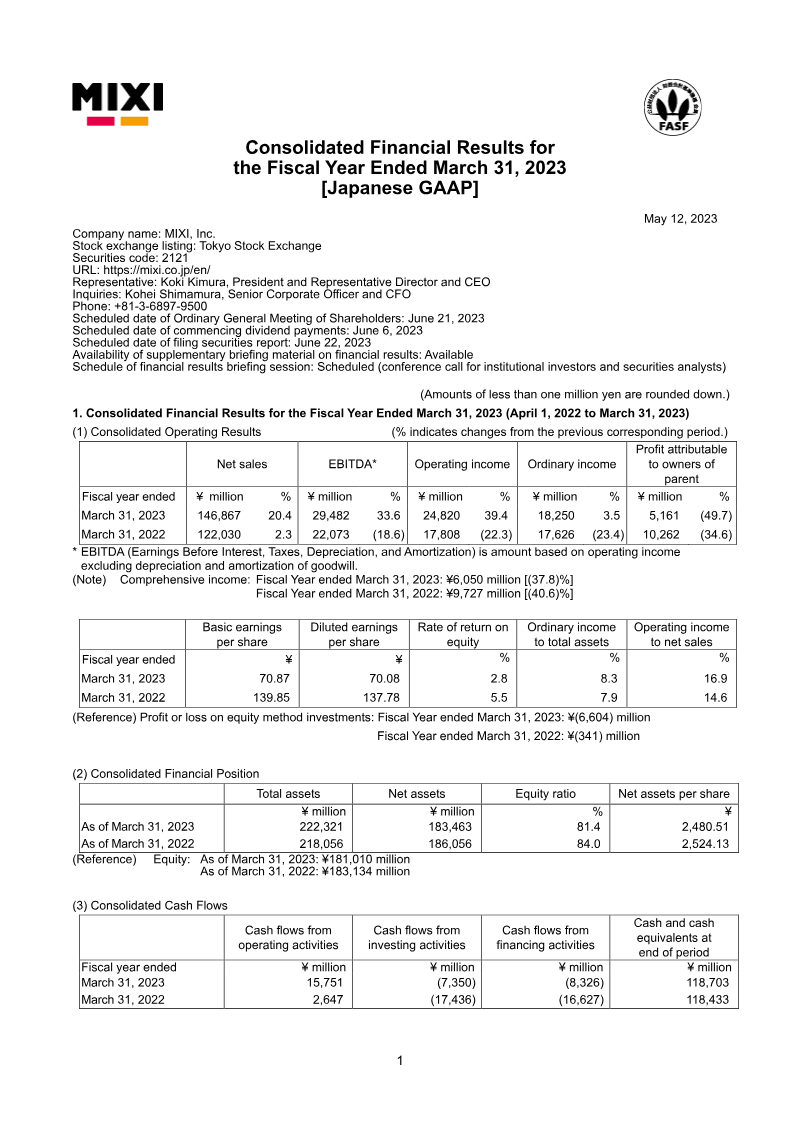
Consolidated Financial Results for the Fiscal Year Ended March 31, 2023
1 May 202325 pages~50 min full read
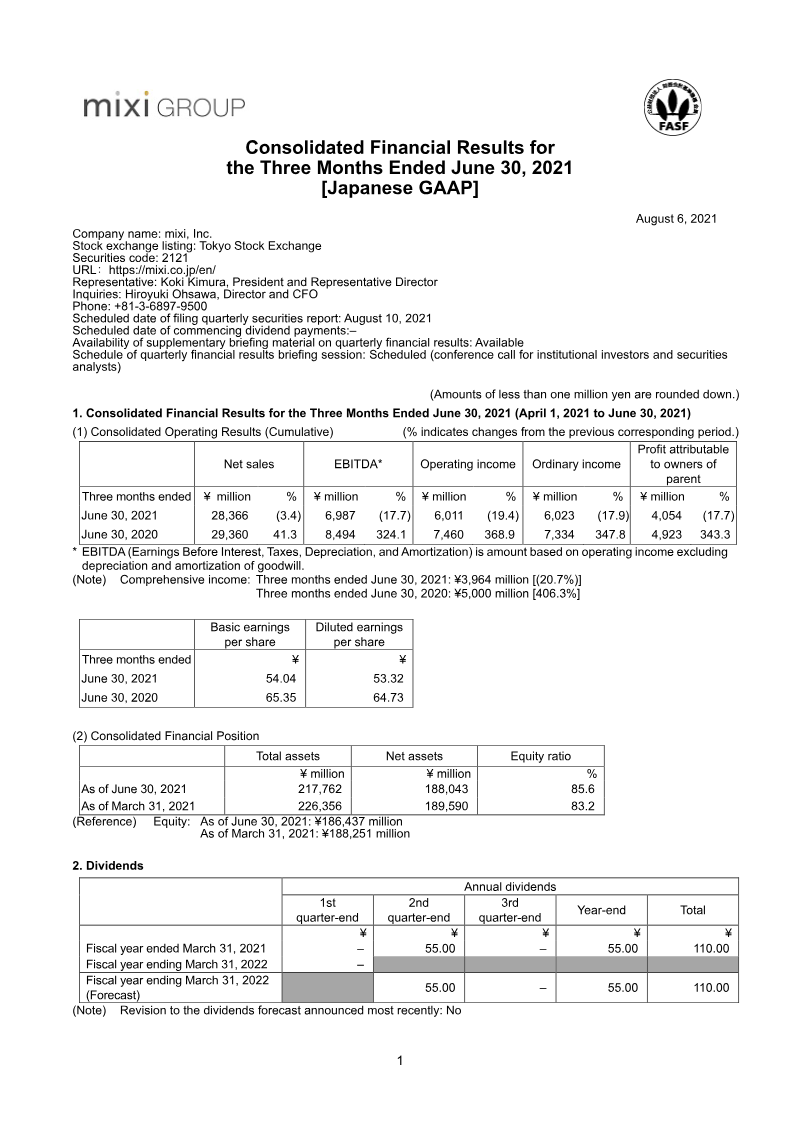
MIXI, Inc. achieved significant top-line growth during the fiscal year ended March 31, 2023, with net sales rising 20.4% to ¥146,867 million and operating income increasing 39.4% to ¥24,820 million. This performance was primarily driven by the Digital Entertainment segment and the continued strength of its flagship title, Monster Strike. Despite these gains, profit attributable to owners of the parent fell by 49.7% to ¥5,161 million. This decline resulted from substantial non-operating and extraordinary expenses, including a ¥6,604 million loss on equity method investments, a ¥4,818 million impairment loss related to bitbank, inc., and a ¥4,408 million loss stemming from business withdrawals.
The fiscal year was characterized by strategic structural shifts, most notably the reclassification of the Investment Business into a primary reportable segment. This change moved operational investment securities to current assets and integrated related gains and losses into net sales and cost of sales. While income before taxes decreased, net cash from operating activities saw a dramatic increase from ¥2,647 million to ¥15,751 million. The company maintained a robust liquidity position, ending the period with ¥118,703 million in cash and cash equivalents, supported by reduced spending on investing and financing activities compared to the previous year.
Looking forward, projections for fiscal year 2024 suggest a decline in net sales and operating income, though net profit is expected to recover by 45.3% as the impact of one-time losses diminishes. To enhance capital efficiency and shareholder value, a stable dividend of ¥55 per share was maintained, supplemented by a post-fiscal year authorization of a share repurchase program valued at up to ¥7,500 million. These actions reflect a transition toward a more diversified business model, balancing core digital entertainment assets with strategic investments and portfolio optimization.
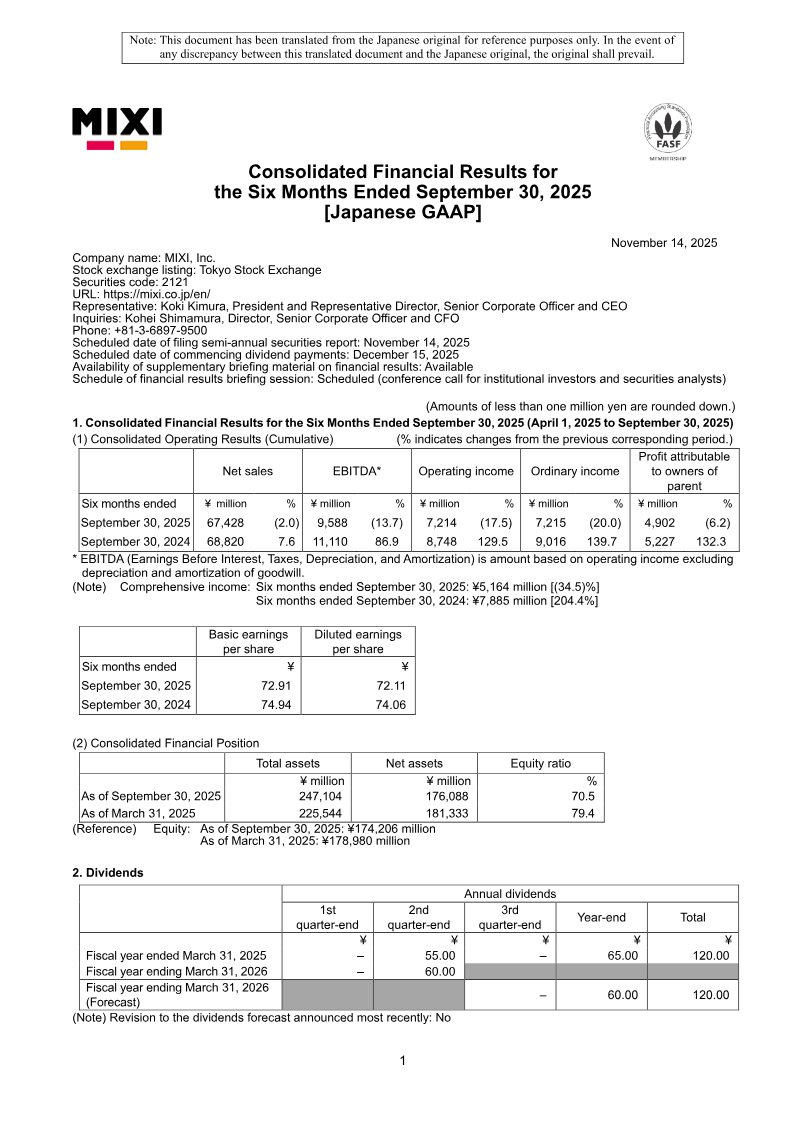
MIXI, Inc. · 2025
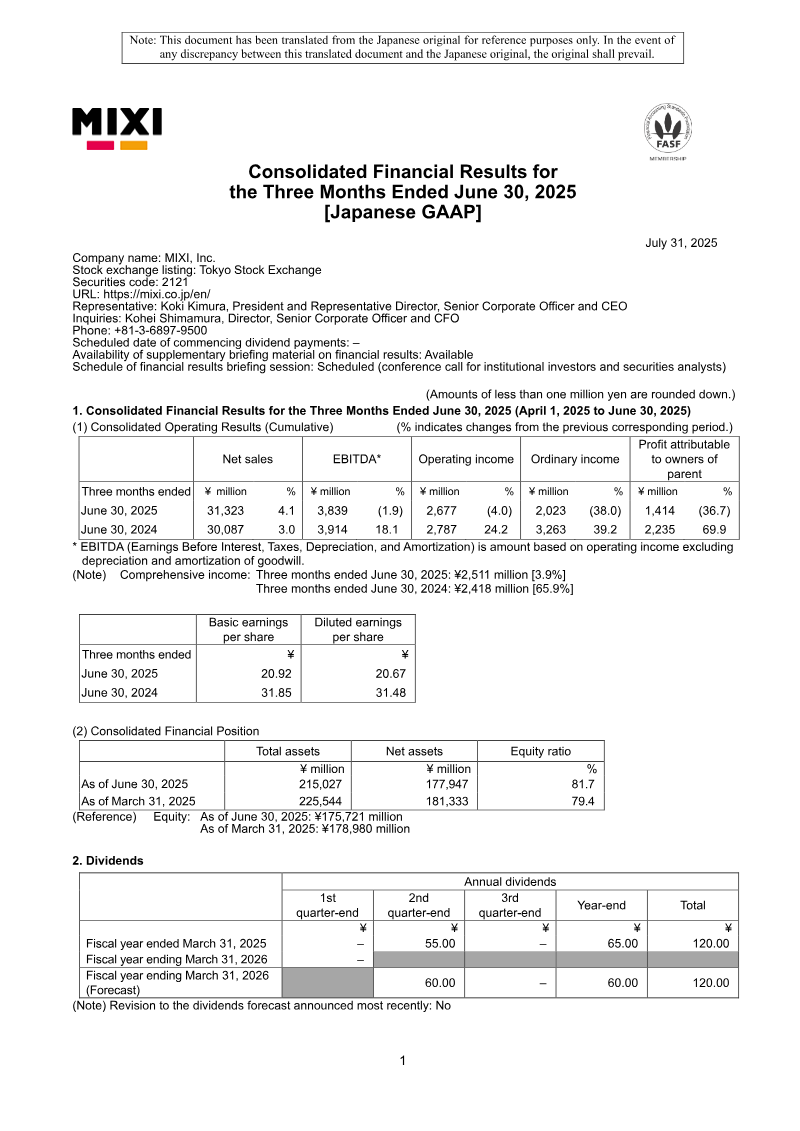
MIXI, Inc. · 2025
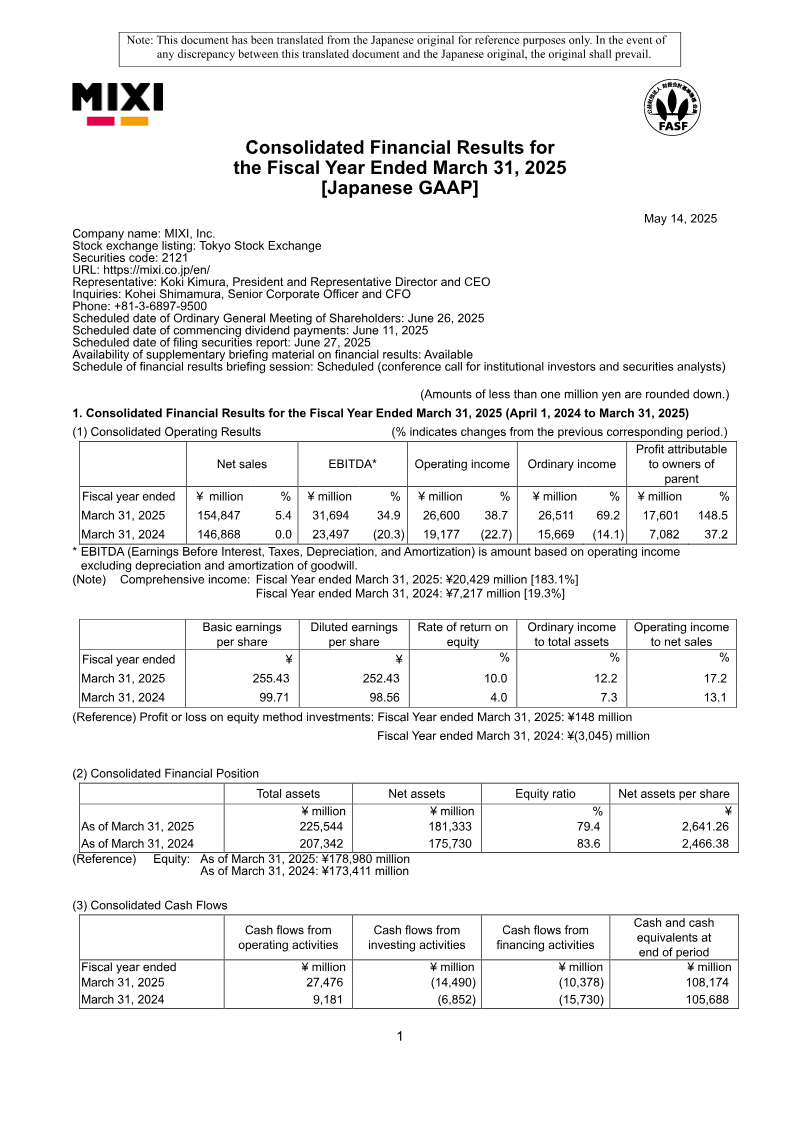
MIXI, Inc. · 2025
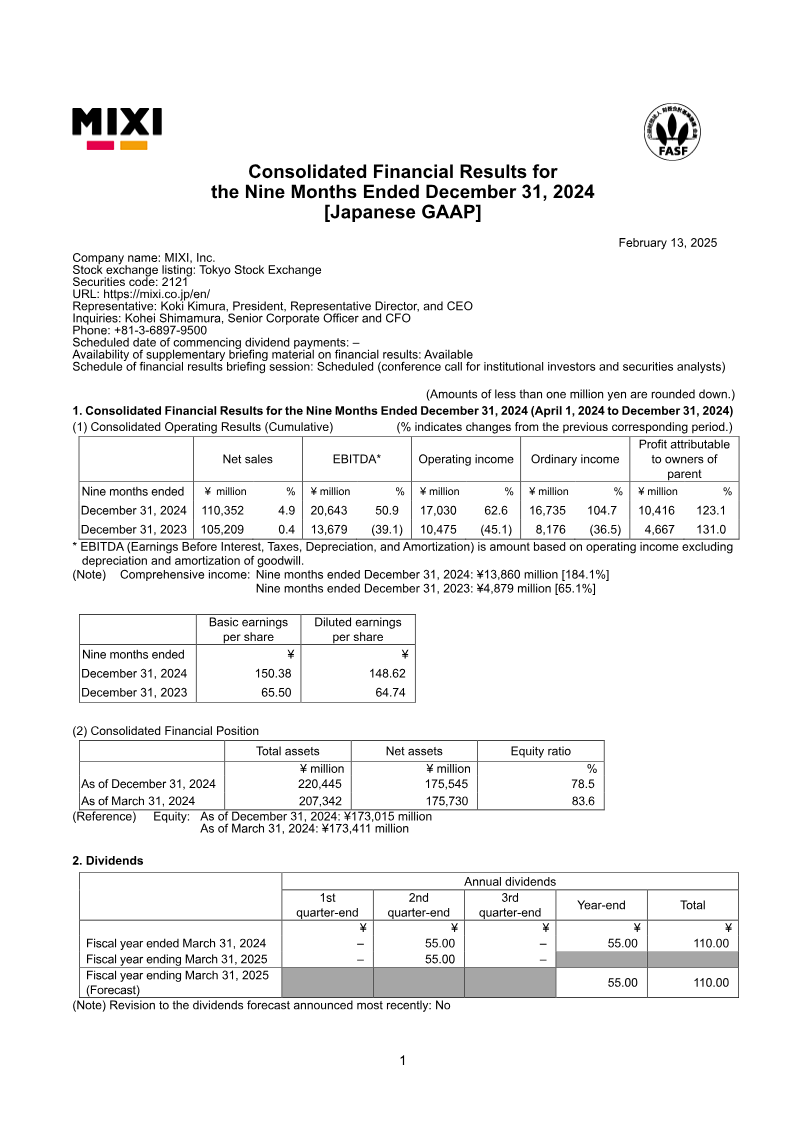
MIXI, Inc. · 2025
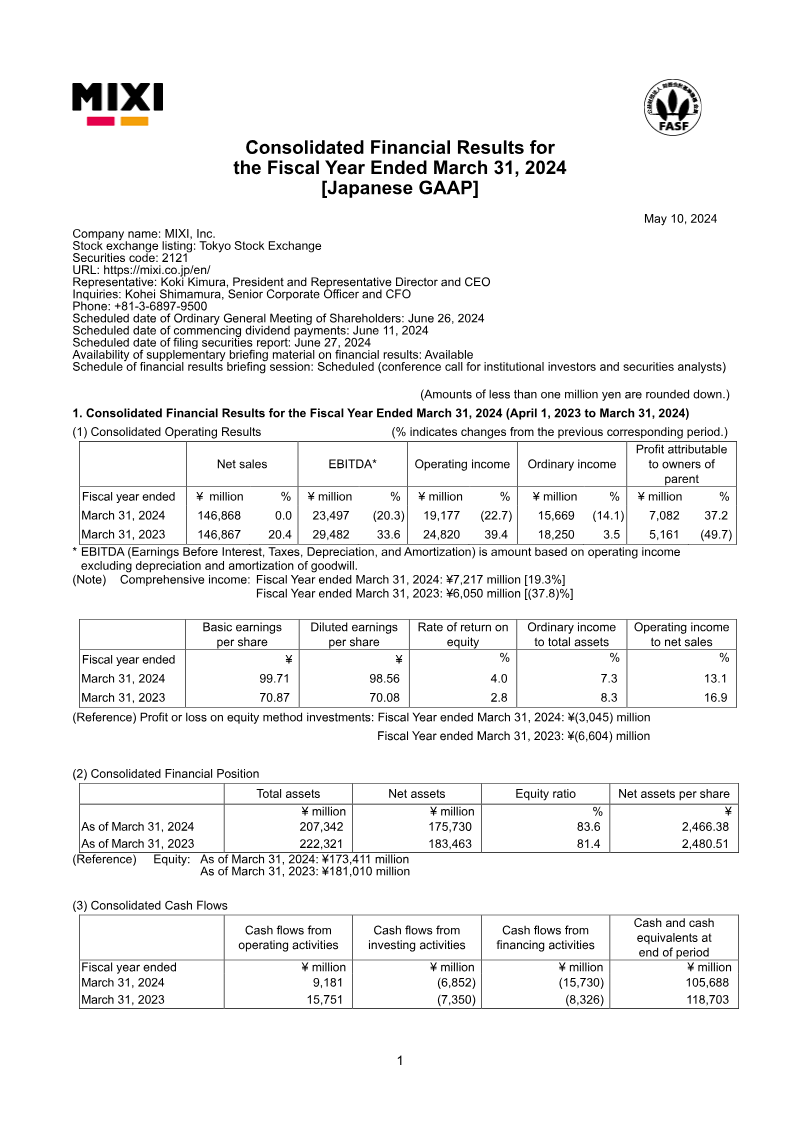
MIXI, Inc. · 2024
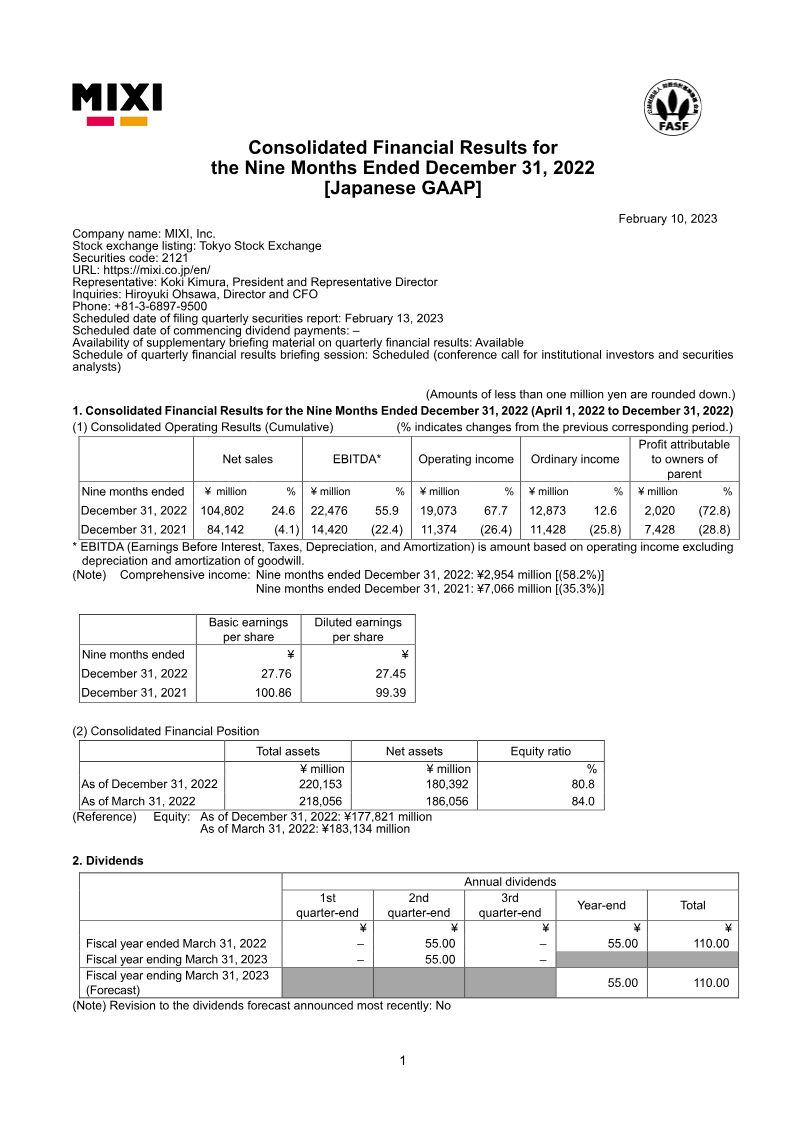
MIXI, Inc. · 2023
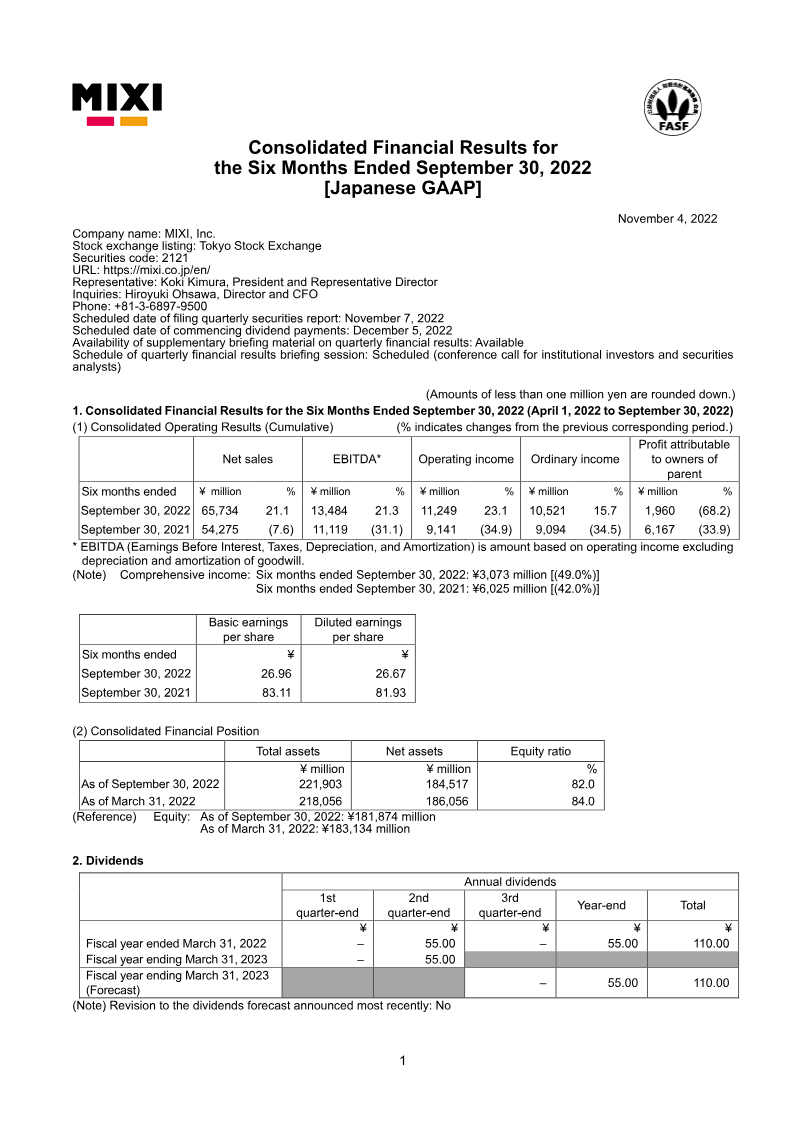
MIXI, Inc. · 2022
mixi · 2022
mixi · 2022
mixi · 2022
mixi · 2021
mixi · 2021
GREE · 2023
GREE · 2021
KLab · 2021
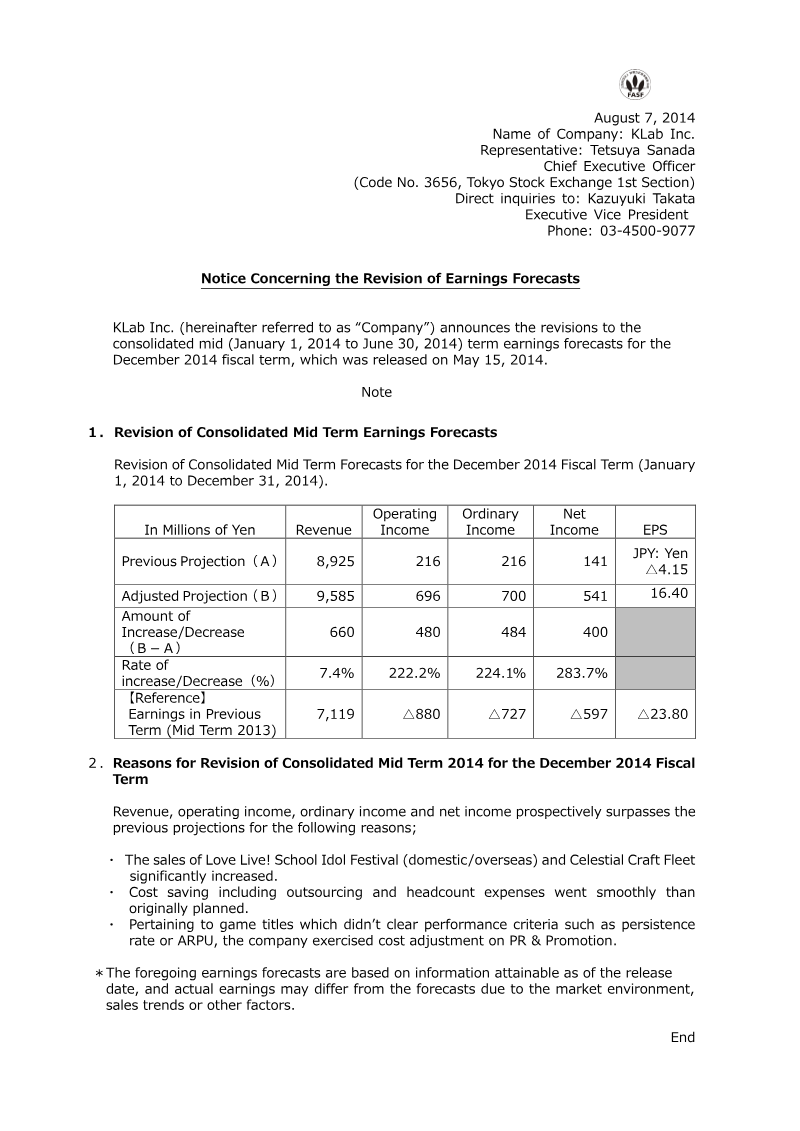
KLab · 2014
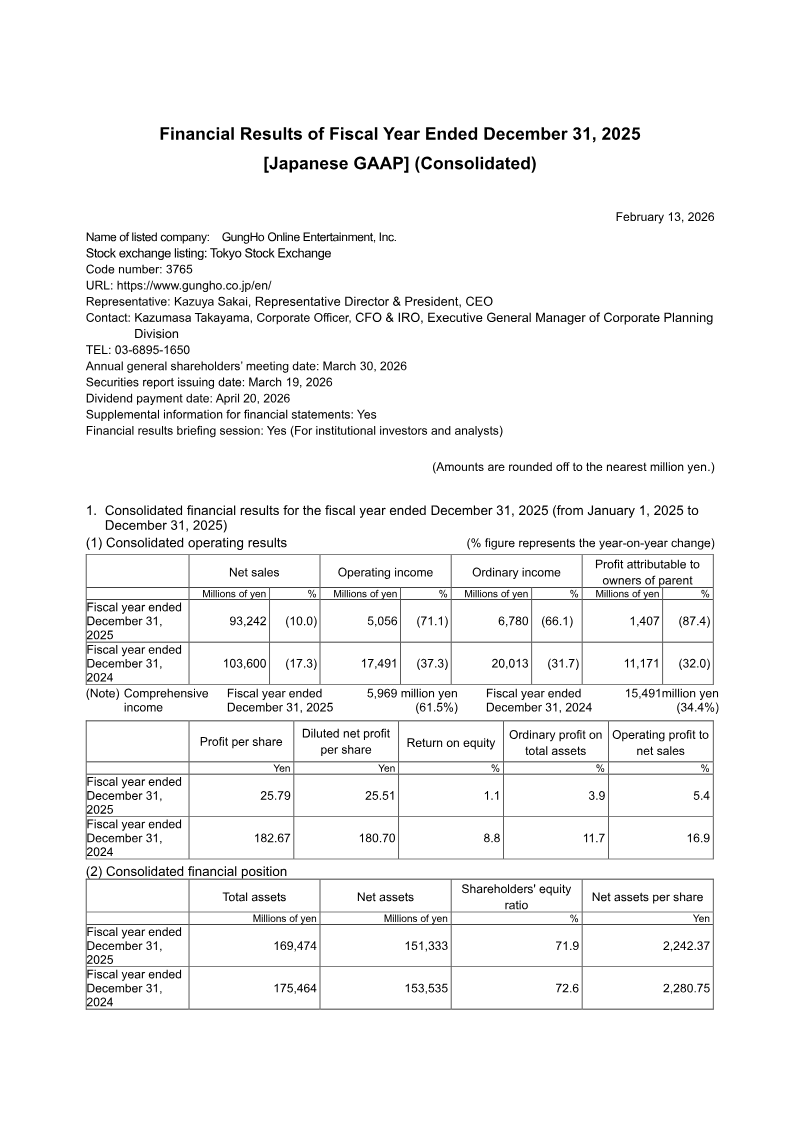
GungHo Online Entertainment · 2026
Aream & Co · 2026
Bushiroad · 2026
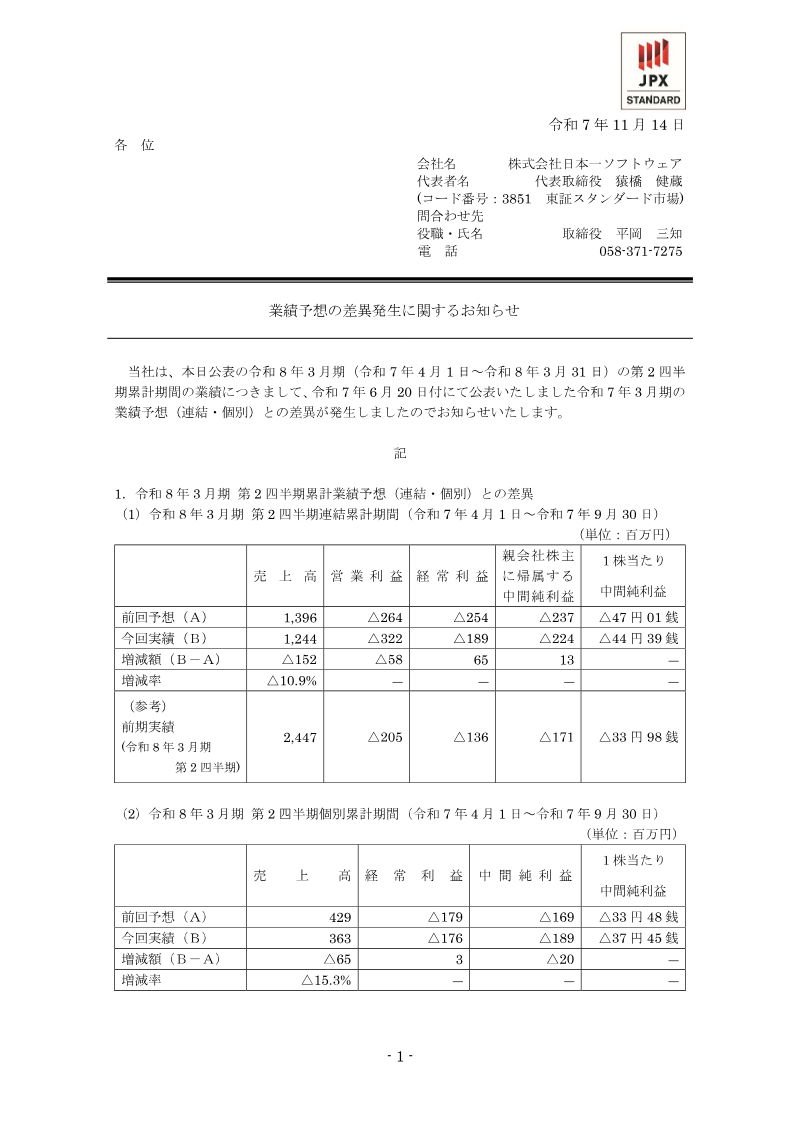
Nippon Ichi Software · 2025
Bushiroad · 2025
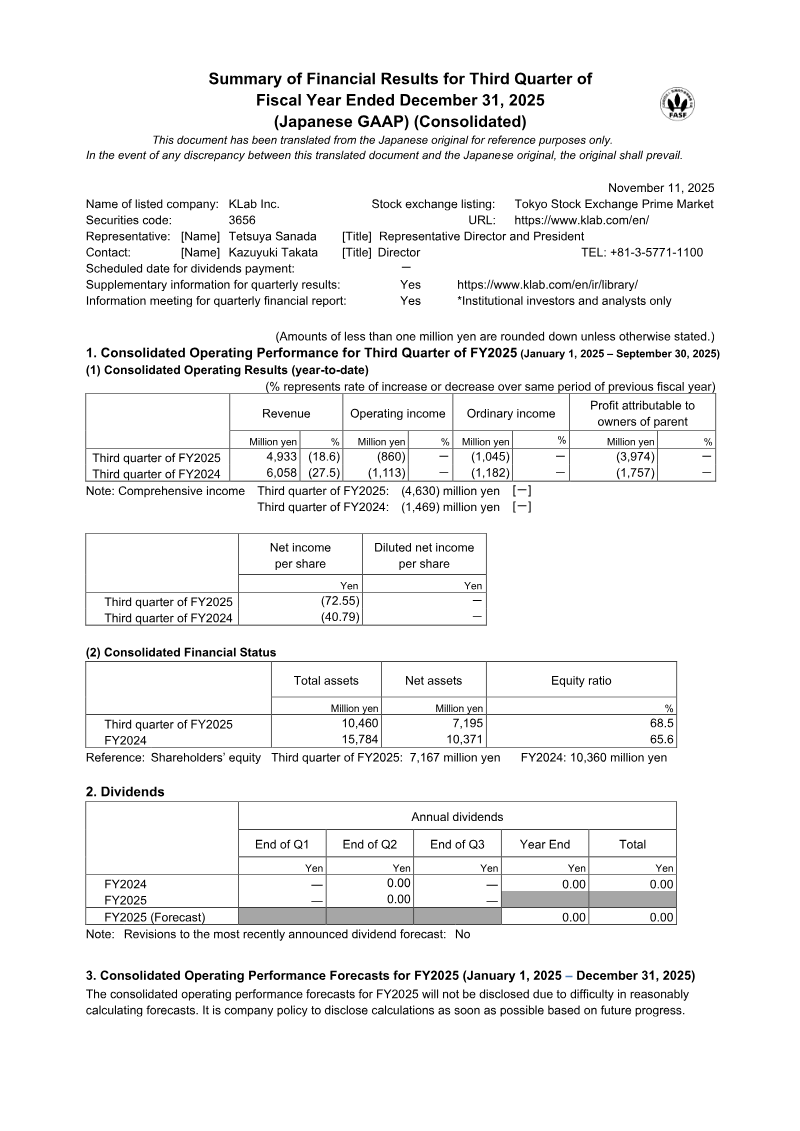
KLab · 2025
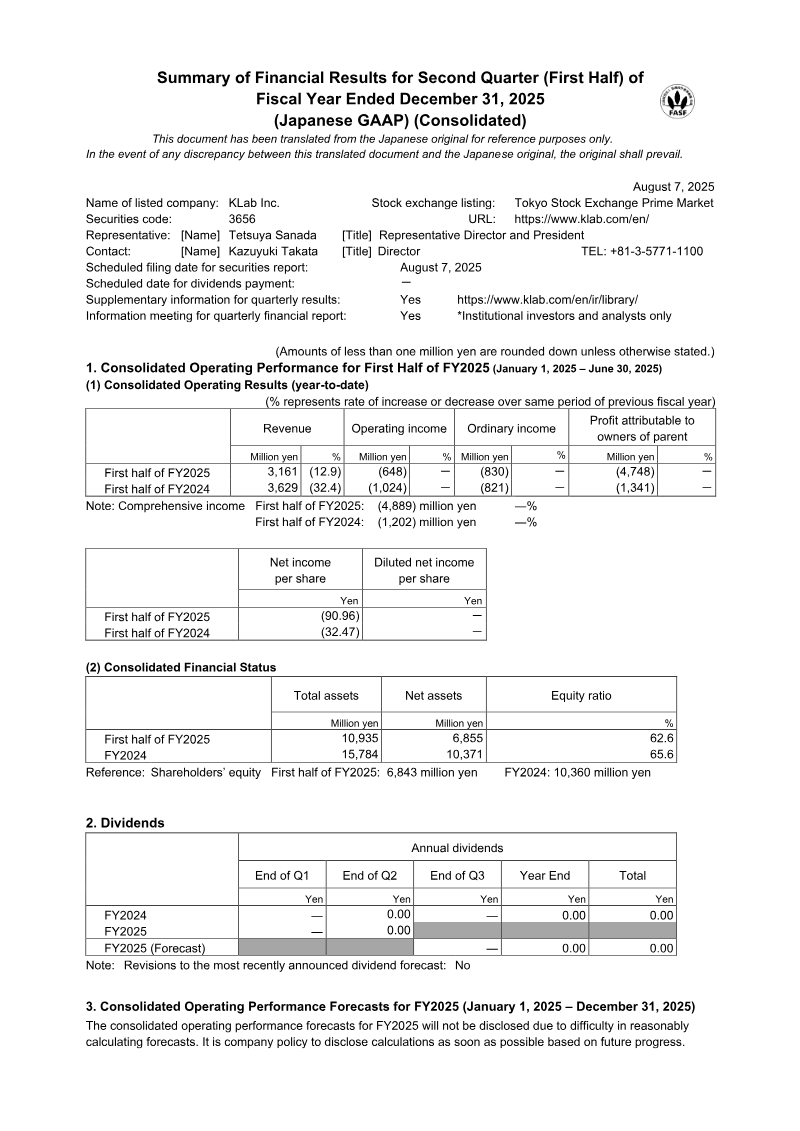
KLab · 2025
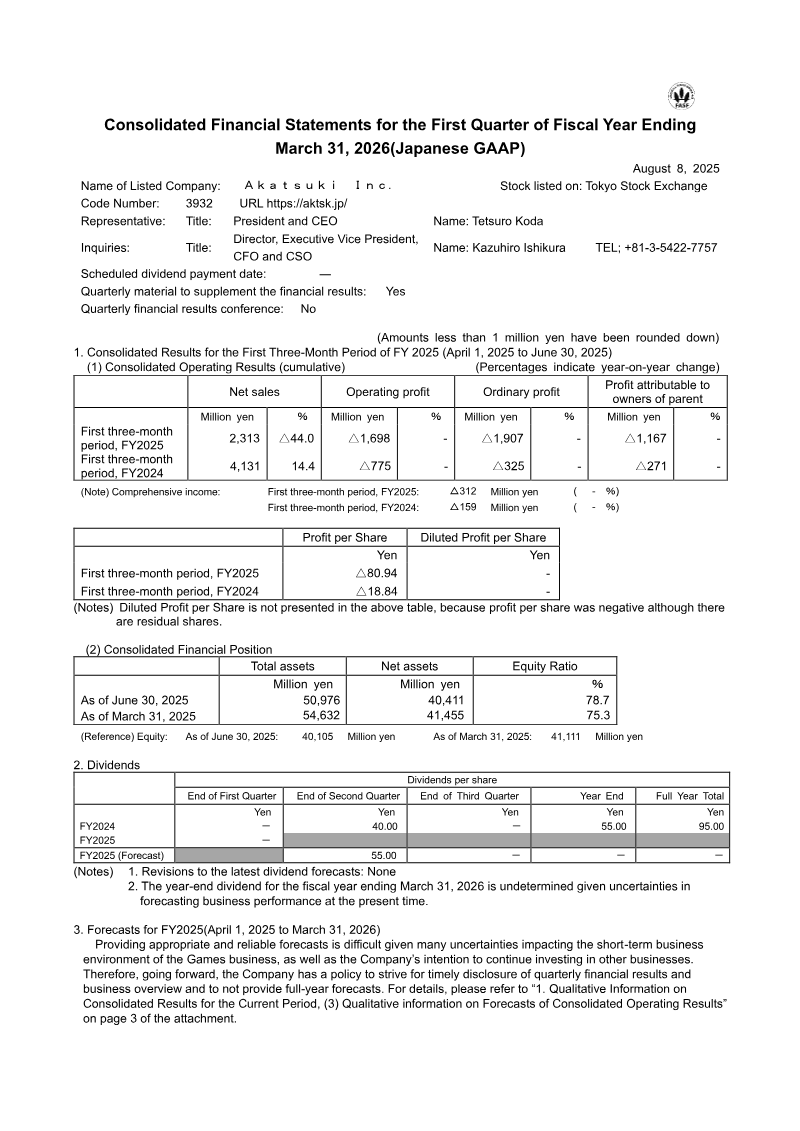
Akatsuki · 2025