LegalPCF Group
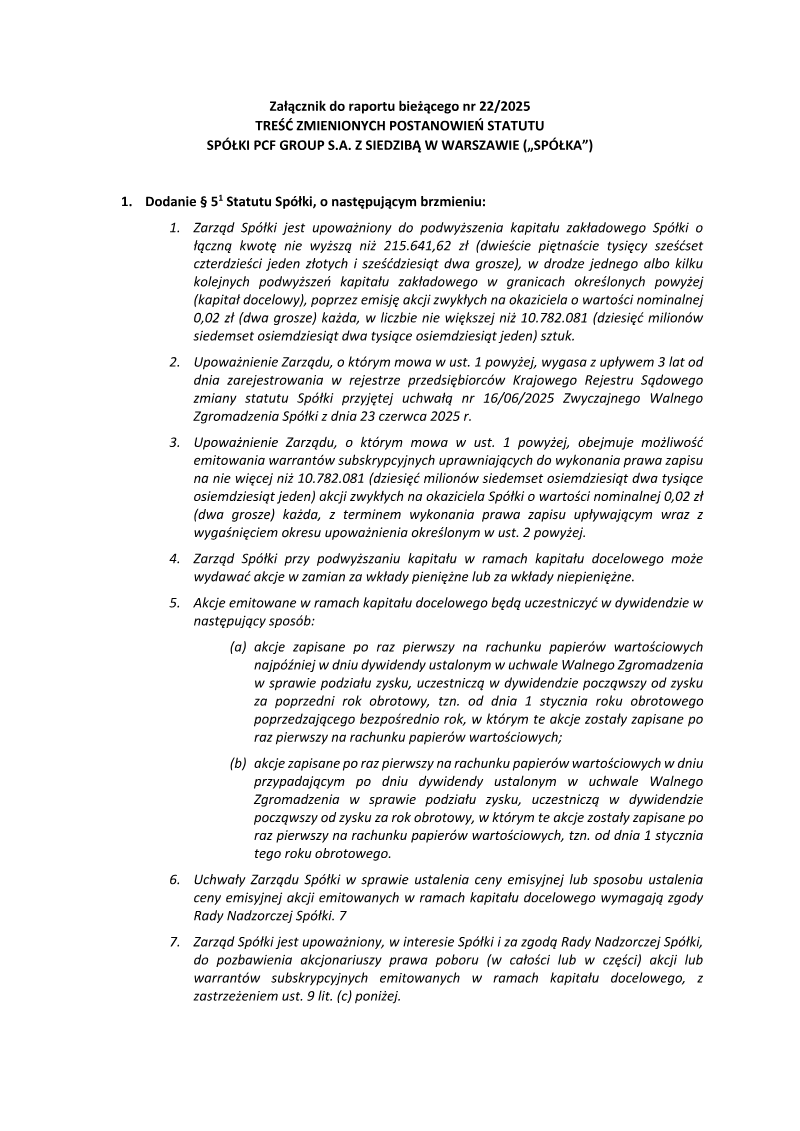
Załącznik do raportu bieżącego nr 22/2025: Treść zmienionych postanowień statutu spółki PCF Group S.A.
11 Jul 20254 pages~10 min full read
The amendment introduces a new provision authorising the Management Board to raise the share capital by up to 215 641,62 zł, corresponding to a maximum issue of 10 782 081 ordinary bearer shares with a nominal value of 0,02 zł each. The authorisation is limited to three years from the registration of the amendment and includes the possibility of issuing subscription warrants for the same number of shares, with the exercise deadline coinciding with the expiry of the authorisation. Shares issued under this “target capital” may be paid for in cash or in‑kind and will participate in dividends according to the timing of their registration on the securities account, as detailed in two specific dividend‑eligibility rules.
The amendment also restructures the governance framework. The Management Board may now consist of one or more members, with the Supervisory Board determining its size; members serve a common three‑year term and are appointed and dismissed by the Supervisory Board. Decision‑making within the Board requires a simple majority, while a tie is resolved by the President’s vote. Remuneration for Board members is set by Supervisory Board resolution, and additional compensation may be granted for consulting services related to game development. The Board may grant only joint powers of attorney, which require unanimous consent, and any issuance of shares or warrants must receive Supervisory Board approval for pricing decisions.
Further changes affect the Supervisory Board, expanding its composition to five‑seven members appointed by the General Meeting and introducing a mandatory audit committee whenever the company is classified as a public interest entity. The audit committee must comprise at least three members, the majority of whom must meet independence criteria. A co‑optation mechanism is added to allow the Supervisory Board to fill vacancies temporarily, with the General Meeting required to confirm co‑opted members within thirty days.
Overall, the statutory revisions aim to provide the company with flexible capital‑raising tools, clarify dividend rights for newly issued shares, and modernise corporate governance by defining board structures, voting procedures, remuneration, and audit oversight. The scope is limited to PCF Group S.A., a Polish joint‑stock company, and the changes become effective upon registration in the National Court Register.
PCF Group · 2026
PCF Group · 2026
PCF Group · 2026
PCF Group · 2026
PCF Group · 2025
PCF Group · 2025
PCF Group · 2025
PCF Group · 2025
PCF Group · 2025
PCF Group · 2025
PCF Group · 2025
PCF Group · 2025
PCF Group · 2025
PCF Group · 2024
PCF Group · 2024
PCF Group · 2024
PCF Group · 2024
PCF Group · 2023

PCF Group · 2023
PCF Group · 2023
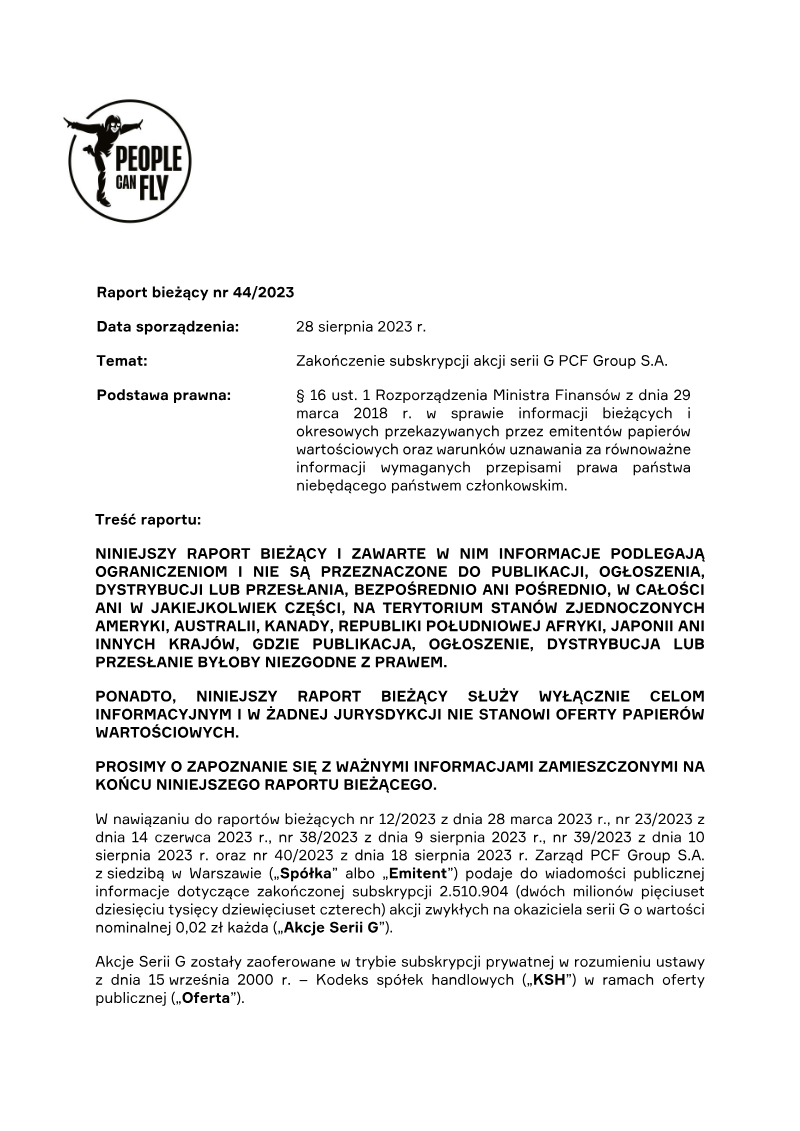
PCF Group · 2023
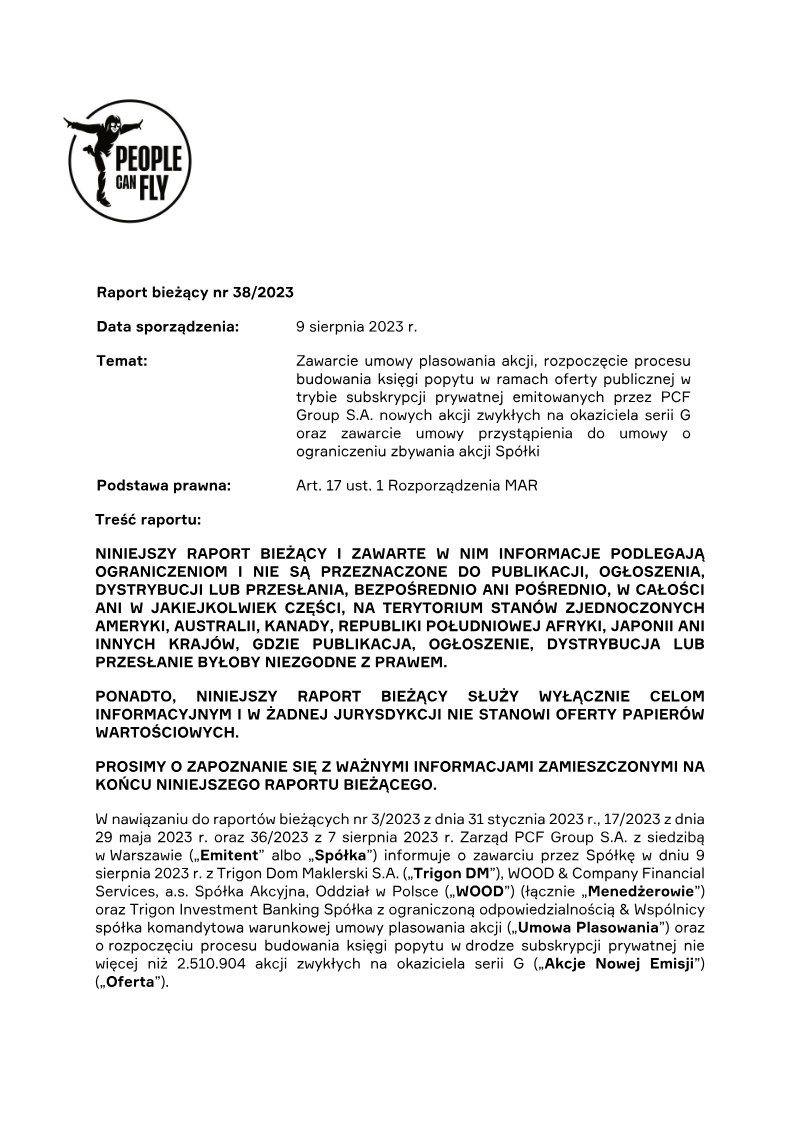
PCF Group · 2023
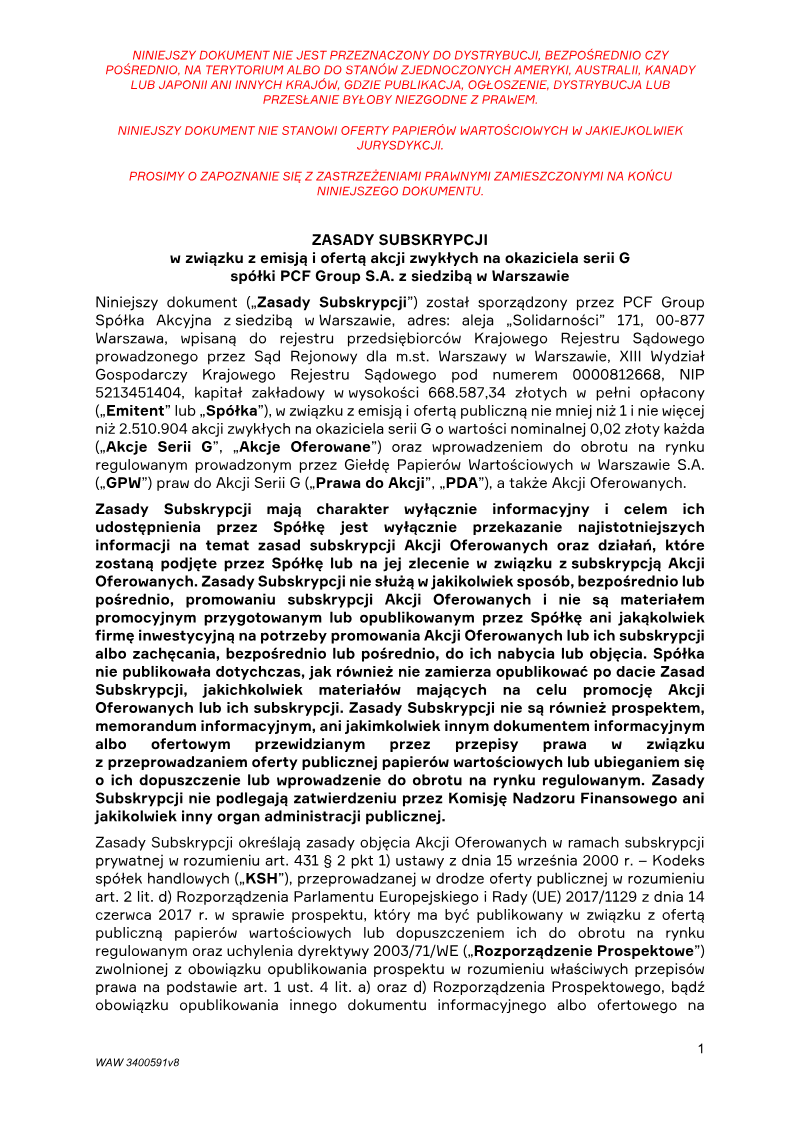
PCF Group · 2023
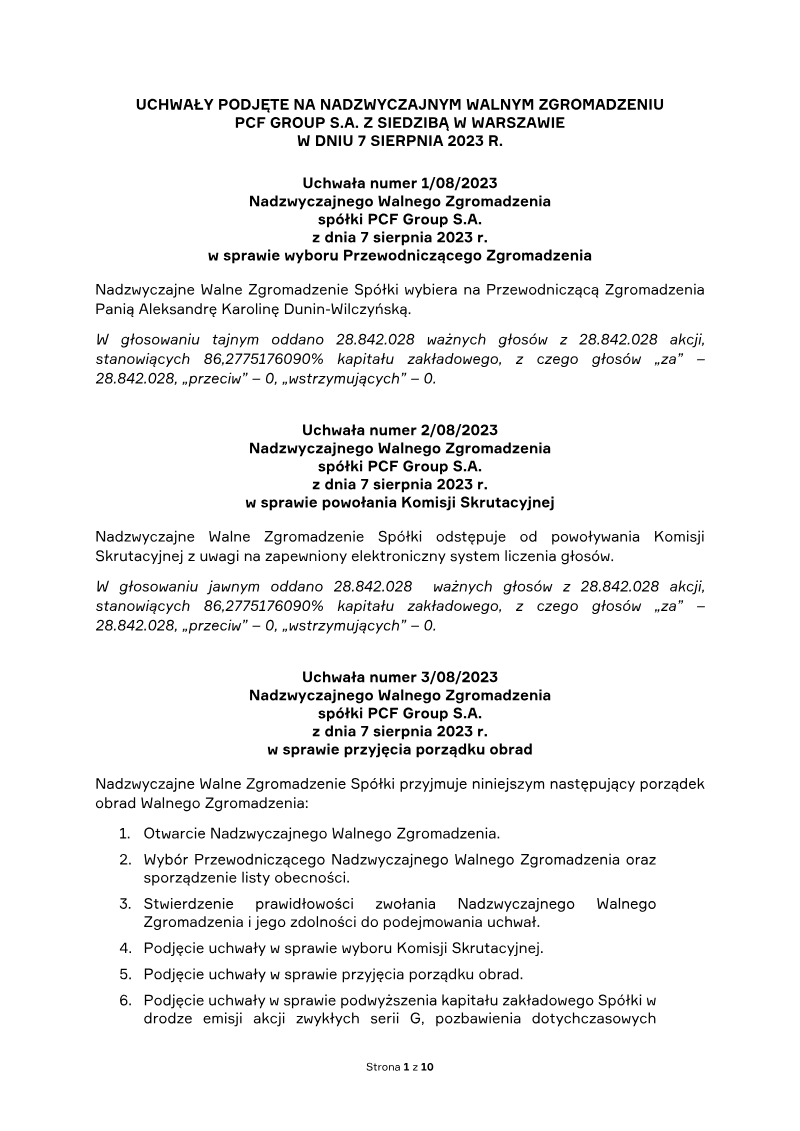
PCF Group · 2023