Key insights
6 slides
The problem
Evaluating complex 3D procedural content remains a significant challenge.
Quantifying the quality of structures like Minecraft settlements is difficult. Traditional metrics struggle to capture high-level qualities.
Key challenge. Current computational metrics are insufficient for evaluating complex 3D procedural content.
1 / 6
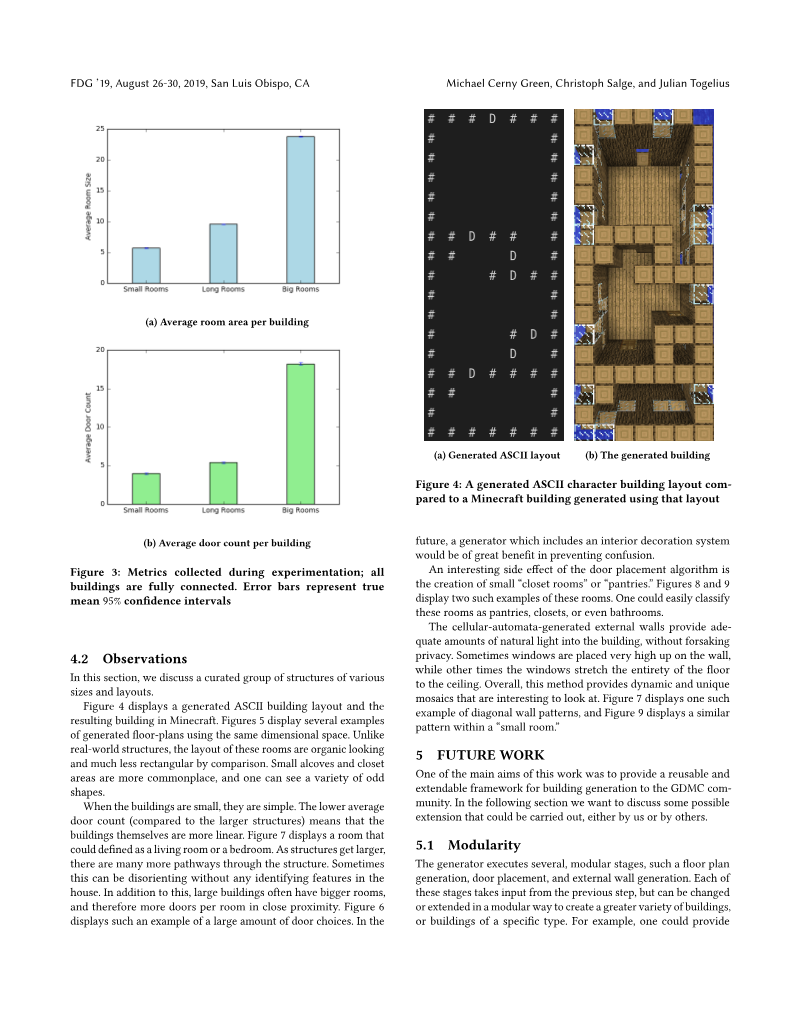
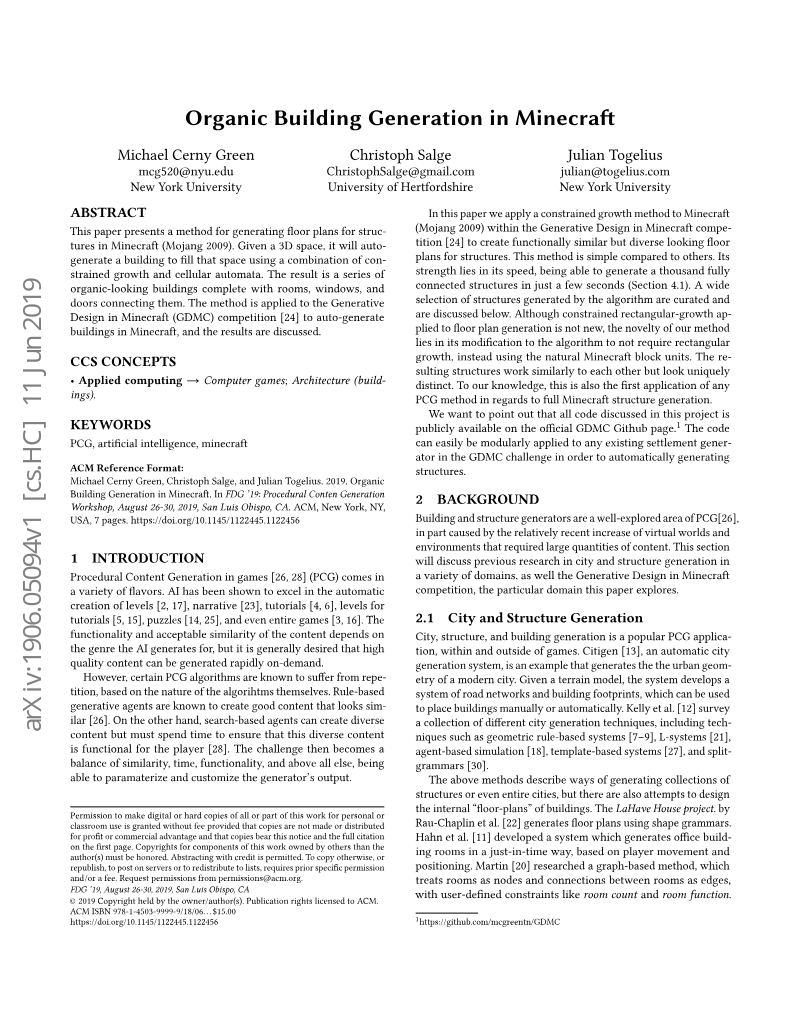
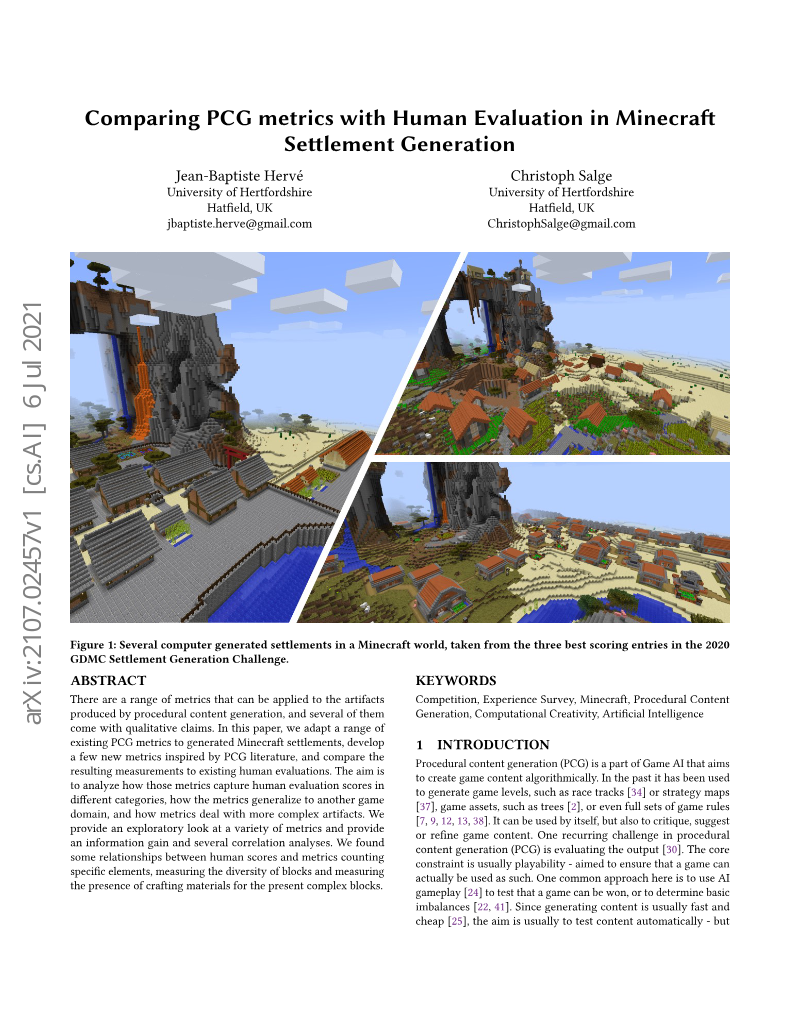
- 01Current computational metrics for 3D procedural generation are insufficient for evaluating complex structures like Minecraft settlements, as they fail to capture high-level qualities like narrative coherence and aesthetic appeal.See it on page 1
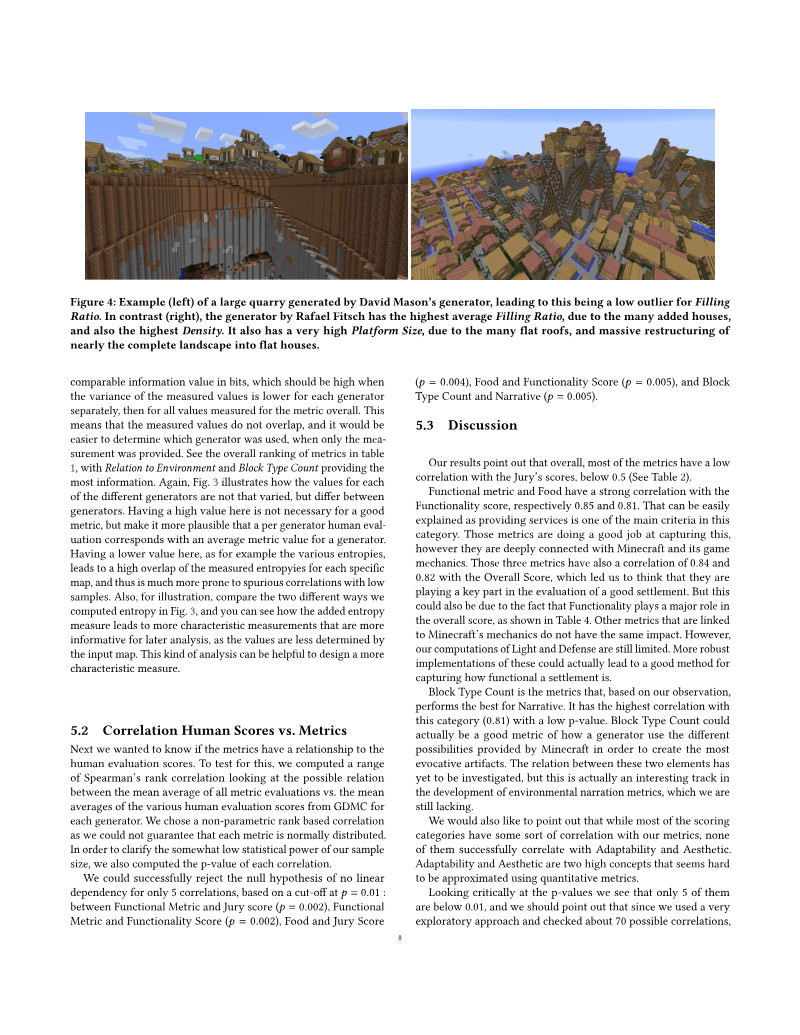
- 02While quantitative metrics for resource availability and functional block density correlate with human scores, most adapted 2D metrics remain too noisy to serve as reliable proxies for overall quality.See it on page 8
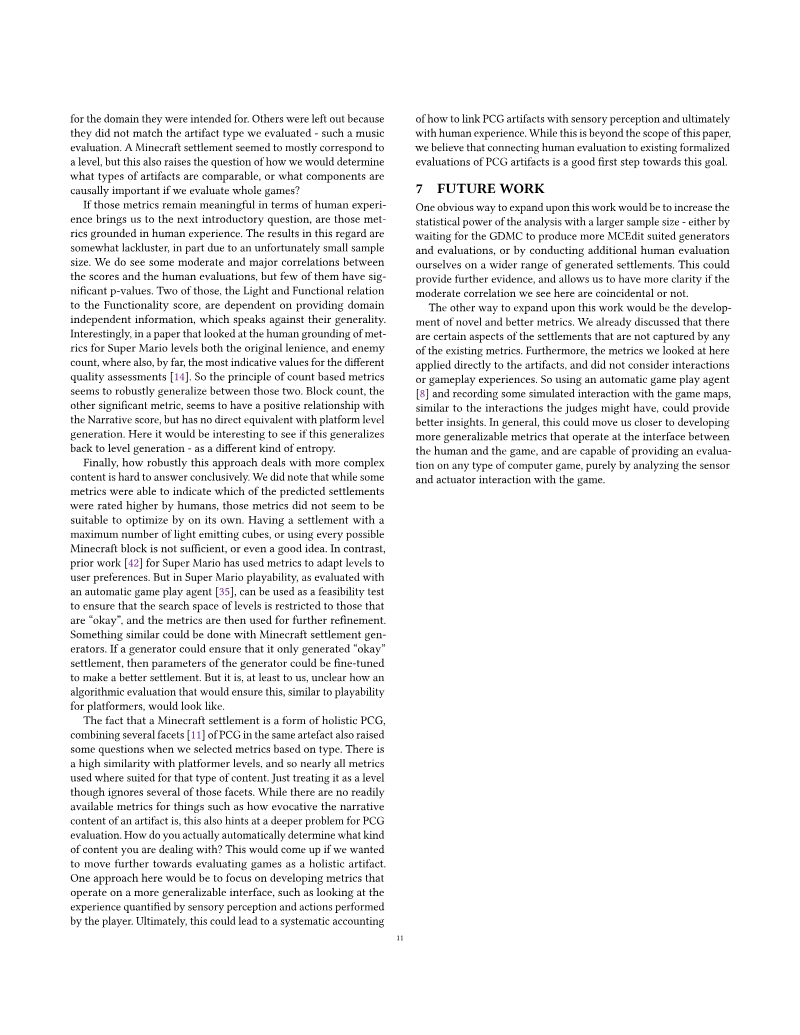
- 03Human evaluation remains essential for assessing the holistic nature of game content, as automated methods cannot yet replicate expert judgment regarding historical consistency or design nuance.See it on page 11
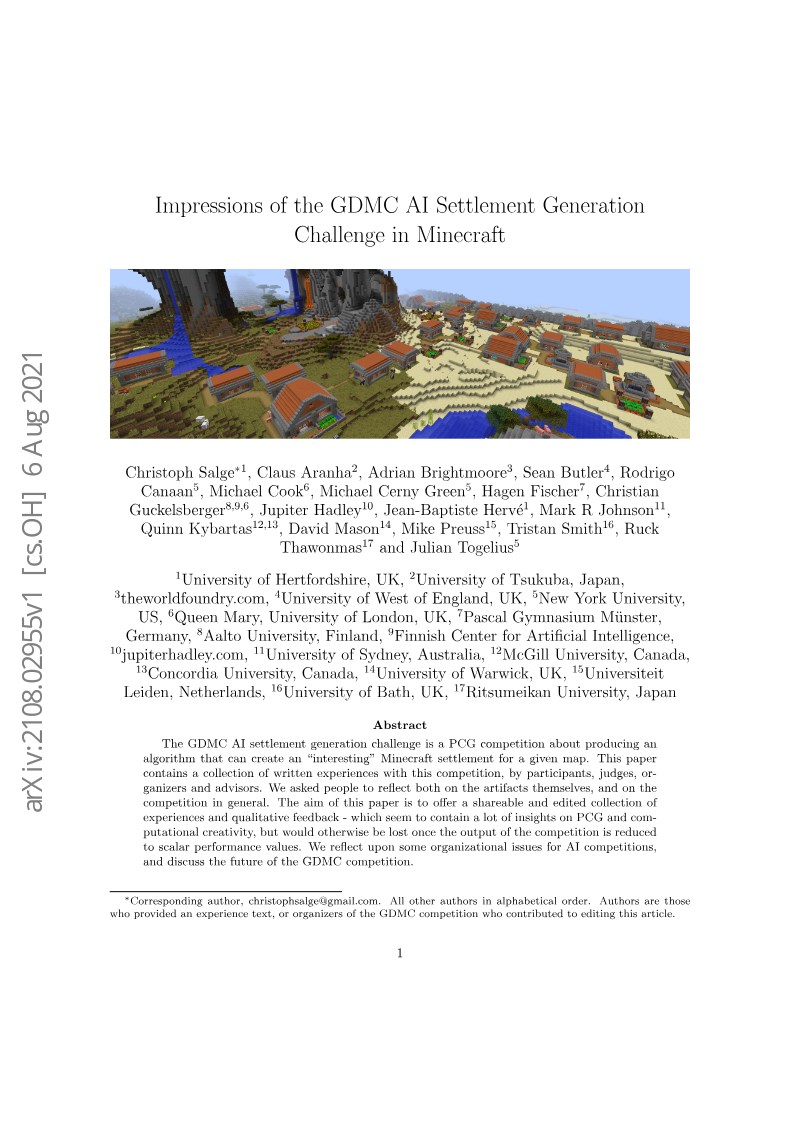
- 04The study evaluated ten distinct settlement generators from the Generative Design in Minecraft competition to establish a standardized framework for comparing algorithmic output against human perception.See it on page 1
- 05Future research must shift toward metrics that incorporate player interaction and gameplay experience to better reflect how content is actually utilized in dynamic environments.See it on page 2
- 06Advancements in procedural content evaluation will likely require the integration of automated agents capable of simulating user behavior to bridge the gap between computational analysis and human experience.See it on page 12
Ask AI about this report
Summary
Procedural content generation in three-dimensional environments remains a significant challenge, particularly when attempting to quantify the quality of complex structures like Minecraft settlements. By adapting metrics originally designed for two-dimensional platformers to evaluate spatial configuration, functionality, and aesthetic diversity, researchers have sought to bridge the gap between computational analysis and human perception. This investigation utilizes data from the Generative Design in Minecraft competition to assess ten distinct settlement generators, providing a standardized framework for comparing algorithmic output against expert human judgment.
The findings reveal a notable disconnect between traditional computational metrics and the nuanced criteria valued by human observers. While specific quantitative measures related to resource availability, such as food supply and functional block density, demonstrate a measurable correlation with human scores, most metrics fail to capture high-level concepts like narrative coherence, historical consistency, and overall aesthetic appeal. Statistical analysis indicates that many adapted metrics remain noisy or lack the necessary grounding in human experience to serve as reliable proxies for quality, suggesting that current automated evaluation methods are insufficient for optimizing complex 3D content.
Ultimately, the study concludes that while computational metrics offer a baseline for assessing structural variety, they cannot yet replace human evaluation in assessing the holistic nature of game content. The inherent complexity of Minecraft settlements necessitates a shift in research focus toward metrics that incorporate player interaction and gameplay experience. Future advancements in this field likely depend on the integration of automated agents capable of simulating user behavior, which may provide a more accurate reflection of how content is perceived and utilized within a dynamic, interactive environment.