Classic Game Postmortem: NBA Jam
17 Apr 201862 min video
Transcript
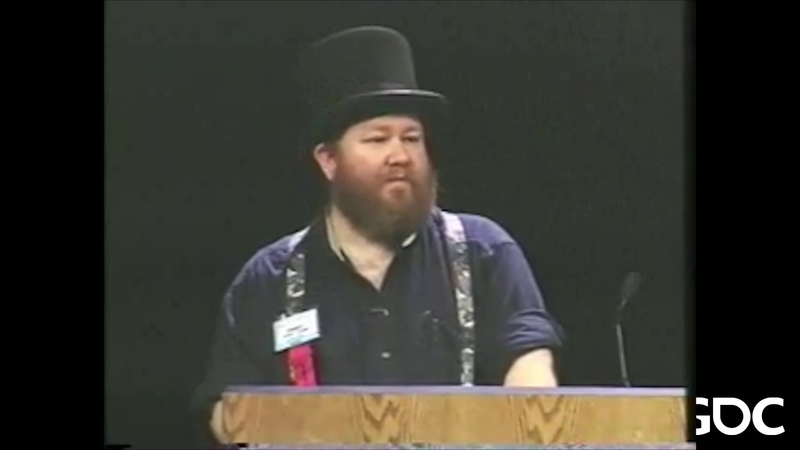
Hello everybody. Good morning. Welcome to the GDC. This is a lecture about uh digital uh pixelization in the 22nd century and in the Uh actually um I just want to let you know that uh you are in the right room. This is the NBA Jam postmortem and uh I'll be heading the surgery. Uh no uh radio playing, gambling, spitting during the uh procedures. And if you'd like to turn off your cell phones. Um imagine if you will 2001 Space Odyssey music playing behind. That's what I had in my mind. Let's go back to a simpler time. The '90s. A decade defined by profound change. World-changing events. The dissolution of the Soviet Union. Yes. The cloning of the first mammal.
Meh. It was a big moment. I remember that. But meanwhile, the Hubble telescope goes into orbit. The Gulf War. But meanwhile in Chicago at Midway Games a new era was being ushered in. A renaissance in the gaming industry would explode onto the scene shattering records in coin-op earnings and sales. The game was a turning point. It was revolutionary. It was Mortal Kombat? Wait, what? Hold up. I know what you're thinking. I I kind of thought the same thing, too. But uh then like shortly after that month, maybe 2 months tops at best, the real game changer, where are you Ed Boon? Cat, the real game changer, came
along. Welcome to NBA Jam. BOOM SHAKALAKA. The game changer the world was waiting for had come at last. The savior of the coin-op business and maybe the killer of the uh pinball gamer, but that's another story. NBA Jam would go on to become the highest-earning coin-op game of all time. That's pretty amazing. And I was one of the highest-paid performers at that time, $600 a week. Uh for a game that would earn a lot of money. Uh yeah, it was a new era and uh that's why we're all here in the room right now. It was 25 years ago today that Mark Jae Turmell gave fan gamers a new game to play. And all you gamer geeks that know codes, MJT0322 is his birthday. The man with the biggest head on the planet cuz he invented the big heads. At 6'6" HAILING FROM MICHIGAN, one of the originals of the 20 bad boys, the
man in the middle of the gaming industry Mr. Zeus himself, MJT, it's his birthday. Give him a big round of applause. The 6'6" legend. High five. Hi. All right. It's birthday. How how fitting is that? And now co-creator at 6'4", he was the guy Well, he don't maybe 5'10", 5'11". He wore shoes. 6 feet will CALL 6 FEET. SAL DIVITA. YOU MAY REMEMBER that he was also one of the actors in Mortal Kombat. He's all the great visuals. Genius Sal DiVita, Mark Turmell, we're glad you guys got up early. I know there's been a lot of partying. Thanks for being here. We're going to have some fun. And let's get the surgery and the postmortem uh to start here. Thanks, guys. Hi. Thank you, Tim Kitzrow. Uh
Tim is uh a rare talent. Uh Tim, Sal, and I uh not only did NBA Jam, but then we went on to do NFL Blitz and uh Tim was amazing uh on both products. totally unnecessary, Mark, but a whole lot of fun to hear. Uh and so it's been uh it's been great uh working with these guys over the years. Um it's an honor to be here today uh talking to my uh brethren uh in the uh the games business. Uh a lot of you are probably too young to even remember NBA Jam or have to have played it. Uh but uh you know, many probably did uh immerse themselves in it uh a time or two. Uh it's an honor to be uh representing the team, not just these guys, but uh the team that uh put the game together. Um it was really uh kind of a magical time uh back at Midway uh there in the '90s. Um so let's uh let's flash back to 1993.
Uh because again, some of you probably don't remember this. But 25 years ago, the game was introduced. Uh we did it at an NBA uh All-Star game. It was in Utah. A lot of the players came over, you know, they shuffled over, took you know, took a look at this game. Uh they all got a copy of the coin-op game, $3,500, you know, $3,900 uh piece of equipment, but they were mad. Every single one of them I talked to was mad because either they weren't in the game cuz I had selected the wrong players or they didn't like their stats. Uh so it started right right then and there. Um you know, you hear that over the years where these athletes are unhappy with their stats. But um 1993 and this slide right here uh up in the upper right corner really tells the whole story here. $2,468. That's 1 week of earnings at one of our uh locations. Uh every arcade uh around
the country, of course, what they do is they they track their revenue on a per game basis. They're trying to shuffle in new games, get rid of the games that aren't making money. Hey, Mark, give them a frame of reference. Like what did the average game make? It's there on the screen. So the number two game is uh you know, Virtual Racing. Yeah. But um so $2,468 was just such a stunning number because at a as a $3,500 or $3,900 uh price point for these coin-op machines, well, the operator, the owner of that device can pay it off in a couple of weeks and then it's pure gravy from from there forward. What it all added up to with the number of coin-op units we sent out there and that the uh actually averaging around $700, it comes out to a billion dollars in that first 12 months. That's 4 billion quarters. I mean, it's crazy. We talk nowadays about, you know, microtransactions and uh you know, these
games are are crushing it here and there, the the Candy Crushes, the Clash of Clans. Well, here's a game that really uh kind of set the tone for microtransactions when you think back on it. Uh at the same time, Jurassic Park was the breakout film, became the number one film of all time at about $350 million uh grossing. That was unheard of at the time. And so it it really kind of puts it in perspective. Uh the game just really uh blew up. Of course, then there was a lot of anticipation. a little off today. Yeah, yeah. A little late. up. Uh Uh that created a lot of anticipation uh for the the home versions. Uh and so we were on the cover of these magazines. You can see here uh uh Ed Boon, I don't know if you noticed that uh that first line it says, "Better than Mortal Kombat?" Leave it alone. But uh no, we were really uh excited uh just to see the kind of the anticipation
and uh and the coverage. Uh you know, uh you know, gaming guides and and uh so forth. Uh and indeed uh we actually delivered. Uh the home version uh came out. It was a a faithful uh conversion of the coin-operated game. Uh and we sold uh millions of cartridges uh that that year of NBA Jam. It was a Bitcoin of its day. Yeah. People couldn't believe it. Yeah. Yeah, it was uh you know, it was a crazy time. Um But so that's stepping back to '93. What we're really here to try to cover are some of the stories, some of the how it how it actually came to uh you know, came to exist and some of the problems and challenges and and kind of goofy things that happened. So that's what we're going to do today is kind of talk through some of those stories. Uh and then we're going to have a little Q&A um if anybody has questions uh toward the end. Uh both Tim and Sal will will interject uh as we go forward here. But it's not going to be like Behind the Music VH1 where everybody had drug
problems and rehabs. It's a really happy story. Postmortem but it's a happy one. No, I have that slide. Oh, you did you did you had a problem. I have that slide, yeah. Oh, you Oh, you had a We were mostly Um But I I do have to uh you know, acknowledge the team right off the bat. Uh again, we're up here, you know, I'm honored to uh to represent, but uh here on the lower left-hand picture uh Tony Goskie, uh he's still uh killing it, I'm sure, on the Mortal Kombat uh franchise there in Chicago. Uh John Carlton is the lower left, uh an artist. Uh I'm up top, Sal's there in the middle. Uh Jamie Rivett, uh kind of brooding in the back there uh with the black hair. I still have the honor of working with him on a on a daily basis uh at uh Zynga today. Uh he's he did the uh Smash TV um uh conversions for the consumer side. Uh Smash TV was my first coin-op game. Uh so he's he's been killing it for decades. Uh John Hay in the lower right-hand corner is uh the audio guy.
We always used to say the sound guy. Uh wrote a lot of the music and was in the studio with Tim uh to come up with all those phrases. Uh and then in the Yep. Yep. And uh upper right uh John Newcomer uh standing there. He's still in the business today. Uh and then I put uh Shawn Liptak here because he wasn't in any of the other photos. Um he was uh kind of our brainiac engineer. Uh did a lot of really cool things. So, wanted to acknowledge the team. And of course Tim Kitzrow uh right there in the studio in the upper He's on fire. Yeah. And in lower right, the the hairdos of the time. We didn't talk about that. That's uh the the Robert Plant and the Bon- Bono Bono Uh the wrestling. Who wore it best? You decide. Right. Right. Yeah, some uh some good good hair back in those days. Um how it began. So, it's really when you think about Midway in that era, uh you're familiar with NARC. Uh that was this new hardware platform
that Eugene Jarvis had uh developed uh there in Chicago. They crafted a game that had some digitized imagery in it. There was a a red Porsche and you know, there were characters walking around. You were trying to take out drug dealers. Uh it was really the first violent game even. There were a lot of body parts, you know, you'd blow people up with you know, bazookas. Uh but uh the rest of the industry too was starting to dabble in digitizing. Uh taking uh you know, there was claymation on this Primal Rage game. Uh you know, people were starting to try to to uh get these images off of VHS tapes or high-eight tapes and put them onto the screen. And so, we were all internally kind of you know, geeking out on that. Uh my art partner on Smash TV and Total Carnage was John Tobias. Uh an amazing artist. I have the honor to work with him actually now on a on a daily basis as well at Zinga. But he was incredible at at drawing and and painting. Uh but he wanted to do
digitized graphics. He branched off and joined up with Ed to create Mortal Kombat. Uh and then I branched off to uh to dabble in digitized graphics to do NBA Jam. Didn't start out though as an NBA licensed product. Uh we uh we knew we wanted to get characters. Basketball was it's it's uh I'm a big fan. It was something that could leverage that tech. I went out onto the streets to try to find some talent to shoot. So, I was cruising around YMCAs and you know, in kind of the inner inner parts of the city trying to look for some talent. Found some guys, you know, paid them some money to come into a studio and said, "Hey, we want to shoot you to to do this. We'll pay you this hourly rate." Uh so, we got some talent to come in and uh you can see actually a little couple of snippets here of the uh of those early sessions. Uh we had the camera rolling on a track and the characters we painted the wall uh blue. We put blue uniforms on the players. We
saw this on on TV on the you know, weather report. Uh I'll let Sal talk about that later Yeah. to explain It's a brilliant idea. the strategy behind uh blue on blue. Really smart. Yeah. Yeah, we'll we'll get to that. Don't get me started. Blue demon. So, about uh halfway through the project uh the president of the company, Neil Nicastro, he came in and he said, "You know, why not try to get an NBA license?" It didn't really even occur to me that you know, that would be in the realm of possibility. That'd never happened before. Um you know, we're just a you know, small coin-op company it it felt like. Uh but we put together a video. This is a a short little piece of the video that we sent off to the NBA. Yeah, the real video is like 10 minutes long or 5 minutes. Williams Electronics is currently developing an arcade-based four-player video basketball game. One which employs lifelike digitized graphics. If granted an NBA license, we would
elevate this game beyond any computer sports simulation ever done. Allowing players to choose their favorite team and see and hear the names of recognizable players would be fantastic. The 6-ft high NBA logo on the side of the cabinet would undoubtedly attract much attention and generate even more excitement. Thank you for viewing this work in progress and for considering our request. So, it's a little bit longer this video. We sent that off and we kind of you know, waited anxiously to hear how they'd respond. I didn't expect them to you know, uh accept it. And sure enough, we got uh a phone call back that they had you know, rejected Rejected. Yeah. And uh so, we um Good stuff on here. I could go all day. We I was surprised at the reason they rejected us. Uh they basically said, "We don't want
our NBA logo in these CD arcade locations." And we we're like, you know, "Well, yeah, I've seen a few CD arcades, but that's not the normal arcade uh experience." But their reference point was Times Square in New York City uh because that's where their offices were. And at that time there in the '80s, Times Square was very you know, grungy, a lot of you know, prostitution, a lot of drugs, and a lot of that was happening at these 24-hour if you were a corporate NBA guy, where are you hanging out? Right. Where are you spending all that money? Right. And so, they didn't want to be seen in there. But uh so, they said, "Hey, you know, we don't want our NBA logo want my wife to know where I'm going. 6-ft tall or our fans. Yep. Uh plastered there in the in those locations. And so, we were taken aback, but we said, "Oh, we can solve this." And so, we went and we created a new video that went to bowling alleys and family entertainment centers
and Warm and churches. Yeah. We had more of the normal um you know, location uh for coin-operated games. And it worked. They uh they got that. They said, "Okay, we understand." Uh and they worked out a deal that was was very reasonable. I think we were only paying them about 100 150 bucks a game uh on that you know, $3,500 uh you know, price point. So, it was a pretty good deal to get that NBA license. And that brought up of course then the problem. Uh we're halfway through development. Uh you saw kind of the state of the game, you know, players running around. You know, we'd shot a lot of footage. Um but uh it brought up all these issues of okay, players and uh you know, how do we how do we leverage all that? How do we get this content? This uh you know, small too small to read, but I'm highlighting here a couple of things. Uh one we were asking for source material. Like you know, can you take photos of of the players? Back in those days, there
were no uh you know, NBA photos they took in you know, preseason camp. Yeah. Uh we uh referenced down here at the bottom it says "What do you think about the name NBA Jam or NBA Showtime?" We eventually used both names of course. But um so, it's a it's the opening letter uh there in um August of '92 uh with kind of what our requests were including the the players. And the players again, there was no internet. Uh there was no direct TV NBA League Pass package. Uh it was just uh me and John Hay, the the sound guy um kind of looking at uh we we were fans, but we had to look at the you know, the newspaper and you know, try to figure out your favorites. Yeah, picking our favorites, you know, who would look good out there on the screen, you know, we're uh we're making those choices. I've gotten a lot of heat over the years with some of the selections. Uh some of the players you know, weren't worthy of
being in the the final two. But um yeah, it's part of the part of the lore. And you would have cut Chicago out altogether if you could have done that, right? If you could have done that. Yeah. I'm I don't even reference that in this in the deck here, but some of you who are you know, aficionados of these secret codes, I did have uh cheat codes in Against the Bulls uh when they played the Pistons because I was a big Pistons fan. So, uh I it was my only way with Jordan rising. It was my only way to kind of level the playing He was working with Chuck Daly and the Jordan rules. So underhanded. Right. Right. But so, that that brought us to okay, now we need these players. We've got to have a broadcast look. We need a broadcast announcer. We need to be you know, up our game. Uh and so, that that was the next problem. And that's where we really you know, got Sal involved to to try to solve that problem. And so, I'll let you um you know, talk about uh couple of these these things on the tech side.
Sure. Yeah, actually uh so, getting all the the challenge of getting all the the players in the game and making it look broadcast and whatever, that was you know, huge. Our our team, what, two guys, three guys, Tony as well. We we were like scratching our heads. How do we get all the players in the game? And and how do we make it look like TV? Well, luckily we had an advantage with our hardware. Our hardware was amazing. It it gave us the ability to Most hardware uh for video games at the time had like 16 colors uh of just a few palettes they could put on the screen at any one time or 32 or something like that. But we had the ability to put uh 256 palettes of 256 colors, which if we were creative enough could make you know, pretty much make it look like unlimited colors on the screen. So, give us the ability to get all these beautiful like flesh tones and all these beautiful highlights. and and so and also when the videos were shot, you know, all the details in the skin came out to an extent except for, you know, how
it was shot. So So, um we the to get the characters in the game, we thought we had an advantage by shooting them against the blue screen uh the digitized footage because it would automatically cut them out from the background and then then we'd have footage to we'd have those those frames to choose to put them in the game. And actually, there's a little little video here that shows the process of that and here I'll just go through that real quick. Everyone who has seen this work in progress agrees we have a hit on our hands. First, basketball players are videotaped in a studio performing hundreds of moves. Then, artists digitize this footage into individual frames which are stored and played back in sequence or animated to create a video basketball player capable of performing on command. Artists are also creating every other element of the basketball experience including the court.
That's enough of that. So, that's all you need to know about that. So, it looks really clean. It's like, "Oh, look cool. All the characters just pulled right out of the background." But unfortunately, like Mark mentioned, we had shot the characters against a blue screen that wasn't really lit well like where it could be easily chroma keyed away. So, that was our first challenge. The second challenge was we shot it on videotape which meant the quality was pretty blurry and all the edges of the of the of the characters just bled into the background. So, we had to go in and then also we shot with blue jerseys uniforms uniforms which against a blue screen. So, the chroma key didn't quite work for that either. So, we had a hand cut out every frame of animation on every character for for every single animation. We'd go through and pixel by pixel. And so, part of our hardware tools were a suite of custom tools that allowed us to step frame by frame, pixel by pixel, put on our headphones, you know, zone out and for months just cut out every
frame of animation. And that and then and then we had to go through and tint all the edges cuz all the blue screen from the background just bled right into them right across. So, we had to pretty much shape out every character of every and every every different character. Then we had different skin tone characters. So, we had a we had to unify all their skin tones so that we could use every animation for every character. So, we had to tint all the skin all together to like a medium tone so it could be easily with an a palette the the index colors of palette that we had which meant that we I'm not going to go into detail, but you could change that to be any any shade that you want and for skin and then jersey and we could change out the jersey colors. So, by doing that it allowed us to our hardware allowed us to have flexibility and freedom with that. But then the real challenge was that the heads, the NBA characters themselves. How were we going to get every NBA character in the game? Like we just shot
the few guys that we shot and that was daunting to strip out and to get into the game. So, we had to come up with a system for how we could actually get their faces in there and we came up with one based on tech from previous games. It was like an object attached point. Something you'd use for like, you know, holding guns or weapons or picking something up and moving it around. It's like a little we call them animation points, but it's like a little point that you stick on every single frame you stick on to the part of the body that you want the object to attach to. And we said, "Hey, why don't we use that for maybe putting heads on the guys?" So, we oops, we lopped off the heads of the animations and then we had to come up with a way of attaching the head that we wanted. But we but the characters are moving around. They're like all, you know, buzzing around. So, we had to assign a head angle and you can see it there for every frame of animation depending on which way the character was facing. So, that was truly daunting. Luckily, you know, we had a talented group of guys
that could extract the heads from things like magazines, slides. There was no internet. So, we had to go to the store and like, "Okay, let's look through these, you know, these mag Oh, cool. There's a head angle here that we could use for, you know, uh Olajuwon or whatever." Yeah. And so, we'd we'd watch the shows the the games and we'd record them on videotape. We're like, "Oh, there's one right there." And so, we'd take that tape and bring it to work and then we'd, you know, scan it and whatever. So, it was a nightmare to do and then we had to hand touch stuff. And then we got savvy in the end where we noticed that, "Oh, you know what? From the back, you know, these guys kind of look the same and these guys kind of look the same and these guys kind of totally cheated on a lot of that stuff. It might have been easier to just invent the internet. We should have totally done that looking back now. Actually, Tony Goskie Tony Goskie again he's an amazing artist on the Mortal Kombat team and he started just hand doing these things. He'd say, "No, you know what? Let me just let me just paint this guy." It was faster for him to to create it than to digitize it.
Yeah, he's a freak though. But yeah, so we we had Yeah. Our our tools allowed us a lot of flexibility and help on that. So Yeah. All right, back to you, Mark. Great. Thanks a lot. When you say a guy is a freak, he's a freak when you guys I mean Um lot of stories that I could go into on this game. A lot of interesting things. We're going to touch on a bunch here in the next 10-15 minutes. But a lot of it is tech related. A lot of it is the kind of the CPU assistance related. I've gotten a lot of heat over the years for the cheating that happens in in NBA Jam or or even NFL Blitz. But a lot of games do it. Um and we had systems in place to you know, to neuter that or to remove it. But talking about a couple of the tech challenges might sound rather mundane, but was a big technical hurdle for us. Shooting a pass to your teammate initially we had the teammate you know,
stop and turn and accept the pass. But of course, you know, your opponent would come up and knock you down while the ball's in flight. So, we realized we had to keep the player running at his trajectory. So, we locked him in and let him run and then he would you know, reach back and catch it. You know, we counted the number of ticks before the ball would receive you know, would get to him and we'd start the proper animation at the right time. But then of course, that carried him into the sideline. We didn't want to ever let a player step out of bounds or pass out of bounds. That was a fail. So, he had to get to the sideline and then he had to glance off and continue to run down the sideline and so then the ball at pass time had to take that all into account and so it was quite a challenge. We iterated on that for And really this is about the decisions that had to get made to emulate what somebody would want to be doing what somebody would expect to happen while you're playing the game. We want to eliminate frustration from our game. And that's something that the
other games had. That's why like when you when you did a pass in other games, they would literally stop and wait for the ball to come to them. Or the ball would just hit you in the body and attach to you. So, you know, we wanted to you know, rotate and you know, have this variety of catches. real and then again anticipate what you're trying to do. And so as as responsive and as seamless of a game play flow as possible is what we're trying to achieve. And lots of decisions were made and and good code written to do that. Yeah, it was a it was a can of worms because again imagine that you're shooting a pass. Well, you know the player's running in this direction. So, I'm going to shoot it like this. But he's really going to glance off the wall halfway through his run and be down there. So, I really need to you know, rotate and shoot it in this way. where he'd be after he glances off the wall and travels a little bit in that amount of time. so maybe now that opens up a behind the back pass or you know, so there were a lot of it was a big can of worms. So, that was one topic. Leap to rim for dunks. We at Midway
we created this system called Leap familiar with um NFL Blitz where when you're running at an opponent you hit the tackle button and it does like a it's like a missile a heat seeking missile that rotates and it gets to it gets to the victim in X number of ticks. Well, that same concept is the leap at for the the wrist to the rim. And so, a player would go up for a dunk and we knew we had to you know, reach the rim and based on how many ticks I would establish for that that point of connection would dictate how high the player would go. If I said, "Well, get there in 2 seconds." Well, it's going to have to go way up and then come way down. If it's 1 second then it's a little bit more normal. ironically how the big dunks happened because like you just by mistake you'd put in some number that was too big and the guy would shoot up in the air. It's like, "Whoa, that was really cool." Yeah. Yeah, I mean I I spent you know, weeks and weeks and weeks
just on animations. That was my you know, kind of my main focus once we got all this art was crafting all of it together and creating the dunks and even combining a portion of one dunk a spin a spin dunk from this angle would actually work from this angle if I combined it with this. And so, it was like this big puzzle piece that we were able to put together. So, all the dunks became very modular. Every part of a dunk could then flow into a different part of another dunk and we got really creative with that and that's what gave us a lot of what Yeah. And we you know, the high dunks were a little bit controversial. Some people like, "No, no, that's too you know, that's crazy. We're trying to make a simulation here." But you know, we tried to find a balance. Eugene Jarvis uh you know, who was my mentor and somebody that has made, you know, obviously a big dent in this business. He would come in, I would show him a doc. He'd say, "Yeah, it's pretty cool,
but why don't you go a little bit higher?" You know, and and you know, I joke with Ed, you know, I'm sure he said the same thing to Ed over the years. Like, "Yeah, that's cool, but how about a little bit more blood?" You know, and he did the same thing with Smash TV and with Mutoid Man, all these things. So, he had a really interesting take on things, but So, that was the leap at shattering backboard. We didn't think we'd get away with it, but the NBA allowed it. They they they soon shut that down. The next year they actually eliminated all the NBA games from doing such a thing. The on fire mode in Burger King. Jamie Rivett, who I mentioned, he's an Australian fellow. I work with him still today. Did the Smash TV conversion. We would walk to Burger King and for those that know me, I'm like pretty much all business all the time. I'm always talking about the task at hand and the game that we're working on in off hours. And so, we're walking to lunch. It's kind of annoying sometimes. But, I'm So, we're walking and just, you
know, talking about, you know, what do we need? This game isn't quite there and and he came up. He said, "Well, what if we went into an on fire mode? What if you got stronger somehow?" And so, over the course of the Burger King lunch, we plotted out the the whole three in a row, heating up, being able to goal tend as a as one of the benefits. And so, in that one lunch, it all kind of coalesced together. We came back. We told Sal about it. And he was like, "Absolutely not. That's the stupidest idea I've ever heard." And he said, "I'm not going to give you any art for fire." So, I I was more in towards the purest side, you know. I wanted to maintain, okay, this isn't a fantasy game, this is still basketball. I didn't mind exaggerated stuff, but then we're like it it kind of kept on going one more step. But, what if we put, you know, what if we put bunny shoes on the guy and then made him run faster? And it's like That did look good though. So, I was just trying to maintain some
sense of of still television style, right? So, but because he refused to give me any art right. I actually used I actually used the Smash TV explosion art. And we put that in the game and started piecing it together, you know, behind the ball. And and then Sal, I don't know, within a day or hour, said, "Okay, okay, okay, this might be good." desensitization of all that stuff for me to finally go, "Oh, yeah." I thought Burger King the flame broil burger was going to be the thing. Yeah. CPU assistance. Touch on this down here. Not very subtle. This is the thing I've taken a lot of heat for over the years. This bottom table actually kind of tells it all. The basic system was every player did have a base percentage, whether it was for stealing, shooting two pointers, three pointers, you know, blocking a shot because
sometimes, you know, your hand would touch it, but we would ignore the collision or just kind of flash the ball. And then this table below was basically a modifier to that base value for whatever the the topic was. And you can see them in the middle, there's a zero. Zero was when the score was tied. If the score is tied, then do no modification to your base number. But, if you are losing, then it would slide to the left. I'm down by one point, two points. So, we went all the way to down by 10 points. You can see a 25% you know, additional add on to the already 25% that was there for say, in this example, a three-point shooting. And conversely, if you were winning, up by one, two, three, four, those number of points, then it would modify. And so, you could get down to the point where, hey, I'm a great three-point shooter, but I just nullified you completely because you're up by 15 points. And so, that
basic system was running amok through the entire game. We had probably I'd say 40 different locations where I would insert this kind of logic for deflecting passes, rebounding, you know, goal tending, shooting, layups, dunks, doinked dunks. Everything had percentages that boiled back and forth based on the score. And we we played the game every day like multiple times a day. And this is when we could actually do that. And it was and every day whatever would frustrate us, we would talk about and try to smooth it out and clean it out and come up with rules for it. And we'd even argue, "You can't just do that. You can't just do this. You can't just have a big head on everybody whatever it is." But, we talk about that and figure out, okay, what's the right balance? Yeah, the best part of that story that just jogged my memory is because I was doing all these number modifications and we were a big gambling crowd inside work. People would come over and want to play
a game for cash, for vending machine prices, whatever it was. And and I I knew like, you know, what the numbers were. It's like, "Why are you trying to play me?" It's like So, I was I was John Hay, you know, probably still owes me money. But, you know, took hundreds of dollars from this poor sound guy. John Hay, I hope you're out there somewhere. So, that's CPU assistance a little story. Magic in the game. A lot of little things were magical, but uh a couple of things that are noteworthy is of course the codes. Codes were of course happening on on some of the consumer titles. It was a growing phenomenon. But, both Mortal Kombat and Jam really kind of took it over the top. This is all small print, but an example of you know, the codes. We had a CPU assistance off, so it would turn off all that all that CPU slider, you know, both the
all that cheating, yeah. Another thing here that's interesting. I'm I'm at Zynga. I've been at Zynga now for almost seven years. And we kind of live and breathe data and numbers. Making a great game in today's world, you know, takes not only good, you know, gut instincts, good sensibility, but it also takes understanding your consumer and being able to respond to that. And even back here 25 years ago, the panel on the right here is an example of some of the data we were tracking at each of these locations. A coin-op game has battery backed up CMOS RAM. And so, even when they the machine is unplugged, turned off, it can still retain that data. And we could go in to these machines and we had a secret code, a secret back door. I can still do it on coin-op machines, you know, around the country and pull up the the diagnostics.
Pull up the CMOS, you know, backed up battery backed up RAM and look at some of the data. Things like how many times they go to the second period, how many times to the third period, how many people are buying a full game up front. What are the most popular teams? What's the score differential? Which controller actually you were most likely to win from? Which which controller, right, to see if there was bias there. But, a lot of stats were kept and and a lot of decisions were made on this because of course we wanted to optimize and have players get all the way to the end. It was 50 cents per period. So, $2 for a full game. If we had a player leaving after one period, you know, it was a lost opportunity. And that is the genesis of that CPU assistance system because we found that when players were ahead by 10 points at the end of the first period, they quit. If they were
behind by 10 points, they quit. But, if it's a tight game, they're like, "Okay, I see what you got. You know, you you think you can take me?" I'll come back. And so, that's really the genesis of trying to keep it. And you see it in driving games, the rubber banding that happens. But, I could have been a little bit more subtle. But, no, also we that was also the genesis of the winning team. If you If it's a four-player game, the winning team stays on for free cuz we wanted to encourage four-player games. Yeah, in a in a in a four-player game, the winning team gets to stay on the machine for free much like a fighting game, you know, in the day. Um This is a horrific story, but it's a great story. When you put out a a coin-operated game, we put it out at maybe the 80, 90% you know, completion point into a few locations. And then we go at, you know, 10:00 p.m., we plug in the the EPROMs
and we stand back and we watch. We turn it on and we watch. arcades. Local arcades. Local arcades in our area. Yeah. And so, one of the the first test locations, we had the game set up and you'll probably, you know, recognize these panels. The bottom left there is a typical four-player control panel where there's four sticks, three buttons, and we kind of angle things a little bit to give you a little bit of elbow room. But, on the the image in the upper right, you can see the the whole unit where there's a coin door down below, typical arcade game. When you plug your token or your quarter into those slots, it would go to a kitty. The machine has X credits. Two for, you know, five. You'd put in your coins and it would just be racking up credits. Then when you hit your start button on one of those four stations, that is when the money comes from the kitty and you are controlling that that station. Right. And so we were
watching and this kid came up and you know, he looked at the game. He said, "Oh, this is kind of interesting." He took his money out. He started putting quarters into the token and he had a jacket on. It was it was you know, winter time and he tapped the player two start button. Boom boom boom boom. And he he bought into the game. the controller that was unlocked for him. Yeah, you can see the button here. And he took his coat off, set it down. But then he lined back up on the machine. He lined up on station number three. And the way of course we coded the game, there were time outs. So when you're trying to pick your team, you know, his cursor was just sitting there not picking anybody. But it auto picks and then it jump ball time. You know, the players jump up and you know, there's AI and the action begins. His stick is doing nothing. He's moving it around. his stick. moving it. He's like, "Yeah." And his the player whenever player two would get the ball, he would just stand there and he'd be dribbling the ball and it And the CPU would go and steal the ball from him. Right. A drone would steal it from him. And so
we were embarrassed. We're like, "Oh man." And you know, one of our kind of rules of thumb was not interrupt players and don't tell them who we are. Like going back into the past. Yeah. But um so I walked up and I said, "Hey, just so you know, you're actually on player two. See these It says insert coin there on station three. You're on these controls." He's like, "Oh, okay. Sorry. Thanks." And he shifted over and I went back to Sal. "Man, that's embarrassing. How are we going to fix this?" And we we kept watching. In about 45 seconds later he's playing and he stops and he shifts back over to player three. And because it was a better experience for him. He had more fun playing a dead controller than Right. Controlling his character. And so So we were like, "Oh my god." And Okay. So we went back to work that night and we invented this concept of of Bozo boxes Right. where and you've probably seen it. When you hit the start button and you get into the game, a box comes up on
your, you know, quadrant of the screen that says Here, this one, idiot. Right. You are Scottie Pippen. You are red. You only control Scottie Pippen. Yeah. I'll go ahead. Sorry. Yeah, so we we we remedied it and you know, we put the color on the shoes. You know, you are red and so and we also changed the AI Right. because the AI was, you know, juking and jiving and uh The AI was too good. It was too aggressive. It was pretty much playing for you. If you let it, it would pretty much play for you. So we had to make changes there. Yep. So I'm going to I'm going to hurry through up here. You may not have heard of this one. There was actually a hidden tank game in NBA Jam. Sean Liptak, that brainiac engineer I was telling you about, was kind of geeking out on, you know, 3D, learning 3D. So he put together on this 2D engine, you know, a 3D little engine. This was a tank that was, you know, gliding by. You could hit the shoot button and a little, you know, square bullet would go out. Boom boom boom boom. And you could blow
up these tanks that were gliding around and you could, you know, kind of rotate with your stick around this this little world. And you know, I kind of thought, "Well, you know, what are we going to do with that? You know, you're wasting your time. We really need to be fixing this other bug over here." And but you know, I relented and he kept it in and he said, "Yeah, I just want to be able to show people here in the studio how to activate it." So he put in some combination, push the stick up or this you know, swirl. And we accidentally launched with that feature in the In the attract mode. Yeah, so without putting money in cuz that the whole idea was if money in and wanted to get to it, we'd let you do it. Sure, spend your quarter on looking at a tank game. Awesome. Yeah. So so we started getting letters from distributors that, you know, "Hey, what's going on? People can play this game for free." And but luckily the game wasn't that engaging and it would time out after like 60 seconds. So you know, it didn't really cause a problem on revenue. Secret players, big topic. You can see
here we we actually snuck in some some Mortal Kombat characters. The NBA ended up having us pull those characters back out at some point. But there's some good footage out there online where you know, Raiden has some electricity and there were some effects. Ed approved it at the time but he was he was wincing I think when he approved it. And you know, Bill Clinton you know, a lot of people you know, ask me about Bill Clinton. That was really an Acclaim thing. Acclaim had the home rights to our games and they called and asked if they could put a couple more characters in and so we said, "Sure." I just I put the secret agent man up there because it's the best headline ever for me being a big NBA fan. This was from Slam magazine and you know, the story of Mark Turmell, the NBA's greatest player. Dan here is the the byline on that. Wrote that. One of my one of my favorite articles ever. Ken Griffey Jr. down there sent us
photos. Wanted to be in the game. Gary Payton wasn't in the original roster. These guys are sending their photos with headshots. Well, well first he sent us first he just sent us a picture of his head like, you know, out at the beach somewhere. Whatever he was doing. It's like, "Okay, if you want to do be serious about this." We sent them our sheet, that little sheet that we showed you earlier of all the different angles. And then he looked at that. He's like, "Okay. Yeah." All right. Yeah. So he sends us back exactly every picture. Perfect. And I'm like, "Okay." This is the best This is the best slide in the game in my opinion. You know, we were always trying to get reactions out of people and at Midway, you know, whether it be the blood and guts of of our games or the over the top, you know, dunks, the screaming the announcing. Wow. Well, here's a letter from a distributor after NBA Jam came out and you can see that your programmers have created a monster. I think that programmer creative freedom has gone too far. We thought it was a compliment at first. We made a monster. It's like, "Oh yeah, thank you. Thank you very much." this is the letter on the left. You know, he goes on he references this
these notes that people were putting on the side of the cabinet that had the secret codes. You know, kids were selling, you know, the codes for $5, $10. And this is before the internet and so it was tough to learn these things and so he thought that was, you know, bad. And here are the games making, you know, a couple thousand dollars a week. I wish I knew that. I could have been selling codes. Right. Exactly. Make money more money for Yeah. So that's a that's a feather in my cap right there. Playboy bunnies. When of course we got the NBA license, we wanted to have cheerleaders in the game. We actually called up Playboy and we asked for models and we had they sent over a couple of models and they were, you know, like current in that that era, you know, in the magazines and we we shot you know, a few scenes for them. It was Packed full packed full scenes. Hey Hef, yeah, Mark Turmell. Send over a few Playboy bunnies. Yeah, we're in California between Belmont and Addison. What world do you live in? It just it made sense
at the time. That was That was the '80s. you find models in Chicago? But um we we had we made a mistake with all these codes. So many kids you know, so many people were calling and asking about these codes and uh we communicated that the cheerleaders were in the game. And so everybody was trying to find the cheerleaders. know how to say no to people. So they would ask us, "Are there codes for the cheerleaders? Can you unlock the cheerleaders?" We're like, "Yeah. Yeah, you can. Yeah." Right. So So they you know, kids are calling Playboy to find out, you know, they're they're getting a hold of these these girls at home. Um you know, Now it didn't help that we mocked up a false image of a cheerleader actually dunking. I did that like in Deluxe Paint I think. And yeah, we'll do this someday. Yeah, so somebody asked and I said, "Sal, you got to Let's let's put a chick on the screen dunking." Great idea. Yeah, and so uh Jeffrey, you're supposed to be in bed. Who are you on the phone with? I'm calling Hef for some Playboy codes. All right. What?
Yep. But yeah, so there's We eventually did put the cheerleaders in the game because you know, we could update ROMs. EPROMs cuz we took some heat for it. Same thing had happened with the Pleasure Domes on Smash TV. That's a different story. So almost wrapping up here, you know, what the happened to Jam? It's it's actually a sorted story. We were, you know, working with Acclaim and Acclaim wanted the license for themselves, no doubt. And the head of licensing from Acclaim had shifted to the NBA and was in charge of licensing there at the NBA. in the coffin. Yeah. And exactly. And one day we got a phone call from the NBA and they said, "Hey, you know, what are you going to do with the NBA license? You going to, you know, stay the same or you know, what's your plan?" And of
course our natural reaction was, "Oh no, we're going to innovate. We're going to do great new things. You know, we're going to go bigger and better." You know, cuz we wanted to keep making NBA games. And they took that commentary as like, "Oh, they don't want to do NBA Jam anymore." And so they gave it to Acclaim. So Acclaim garnered the rights when our contract expired for the rights to NBA Jam and they just drove it into the ground. Here you can see an example, College Slam. It's a screen down below. You know, centers and forward guards. They made that. They made this NBA Jam Extreme. You you taking dunking from half court, doing all sorts of stupid things and really ruined that brand. They still gave us the NBA license though. So, while they handed over the NBA Jam name license to acclaim right after they said, "But what you can still have us, yeah. Yeah, yeah, you can still have an NBA license. Here you go. Here's a We did NBA Hangtime next. It was that game actually holds up really well. It's
more fun than Jam. better. And then we eventually did NBA Showtime, you know, 3D after we had done Blitz. But so that's the little story on that. But the legacy lives on. I was driving through LA just here a few weeks ago. Boom shakalaka on a window. I go in. Here's a NBA Jam jacket they're selling. You can see the team select for each of the different teams that were in that original game. You can buy that. And they even had a Mark Turmell Duncan funk. You can see there. As a secret character t-shirt that you can buy. And up in the upper right you can see a boom shakalaka. Some of the teams in the NBA have have grabbed Tim Kitzrow and said, "Hey, can you come in and do some something special for our NBA Jam day putting the new current players into you know, kind of that mindset. And you know, Tim, you know, you are Mr.
Boom Shakalaka. It's It's amazing. He has really almost single-handedly kind of kept the energy over the last several years. to pay rent. I got to do something, right? Yeah. I went with acclaim. I was a Took the money. Yeah. Then I came back for Hangtime. Told them way to go, guys. I'm glad you took the license. This I had to put this in here rib Tim a little bit. This is I was going through all my paperwork. I found the original contract with Tim. There in 1989. $600 we paid Tim for all of that commentary. Now, you know, so Yeah. But yeah, it's it's been amazing. So and he's got a lot of great, you know, I think publicity and gigs here. You can see he's with Fox you know, with Fox Sports. Tim and I did a NBA Jam Day at the Staples Center here just in January where everybody who went into the stadium received an NBA Jam t-shirt. Limited edition, but they're worth something now because Blake Griffin left a week later. Right. That's right.
Right. The Boom Shakalaka brothers. Yeah. So you can see Tim and I we pumped up the crowd and and you know, he's he's just been great at kind of keeping the brand alive. So thank you for that. Started my career. Thank you. Yeah. Yeah. You're the day. Good. And with that we wanted to open it up if there were any questions you know, relevant to Jam or even even beyond Jam. We'd be more than happy to to address those. There are microphones here to the sides if anybody wants to to partake in that. Hi. You kind of glanced on it in the presentation the overtime is dollars. Yes. And the scale of if you're if you're tied
then you don't mess with the stats. I missed a dunk on when the score was tied Yeah. on the buzzer. Well, remember I said there are about 40 spots. Uh-huh. I remember you said that dunk. Yeah. If you're down by three, you know, with 5 seconds left you know, you're going to make the shot. You know, you know, more more often. So there were other special rules. But if you did the CPU assistance off secret code, it nullified even those. Yeah, with Shaquille O'Neal I was a little pissed off. Yeah, I can imagine. A free throw I would have gotten, but Yeah. I'm sorry about that. My my actual question was that a midway thing? Was that something you were told to do? Just No, that was just you know, You were evil. Okay. Okay. I think I can start to heal now. Thank you.
Nothing personal. Just business. Thank you guys so much for the panel also for the game the games. Huge fan. Is there a kill switch or some sort of weird way that the versions of the game with for example Michael Jordan would just somehow find their way to the rest of the world? I say that mostly from a historical preservation perspective cuz there are a lot of people who really do want to have that sort of stuff for future generations. Thanks. Yeah. There are EPROMs out there of NBA Jam with Michael Jordan. He was in the original game. I know Gary Payton has said recently he's got it. He's shown it. I have EPROMs. I don't have a cabinet anymore. So I can't plug the EPROMs in to confirm they're still working. But it's on my list of things to do is to actually plug those in somewhere and test them out and then I would be more than happy to release them. Yeah, I understand. Yeah. Yeah, you have an arcade. Ma'am. Hey, so thank you very much for the talk. Extremely entertaining.
I'm curious since we're talking a bit about preservation here. There are several revisions of NBA Jam in MAME including revisions of TE with the now deleted Mortal Kombat characters and all the other goofy things. And you mentioned the tank game. And I'm pretty sure the ROMs for that version of the game are still in there. But is it possible to release the actual code to access that? Oh, yeah. Yeah. Yeah, we can do that. I'll give you my business card when you at the end of this. Awesome. And I will reach out to Sean and get that to you. Wonderful. Thank you. So played the game a ton in college and it actually got me interested in the NBA. And I was wondering if you ever heard from the NBA if the game itself had any impact on their business. It is. It's a great thing. It's It seems crazy to state that NBA Jam had an impact on the success of the NBA, but there's no question it did. Not just
from the anecdotal comments we've had, but from the NBA themselves have said that a lot of players were not fans of the NBA, but the millions played the game and then they became engaged. I hear it all the time. So no question. And on that point too, Russell Wilson's a good example. He's a huge fan of NBA Jam and he lived in North Carolina, but he was a Sonics fan. And he wanted to play as a Sonics guy because he loved their uniform. He said I was a bigger basketball fan and knew about players and teams he said I would never have known about. And so that's that's really everybody's experience. There was only a couple games on a week and it was the high the big market the Celtics Lakers. So it was a way to introduce those smaller market teams and players that you would have never heard of. Yeah. Hey guys. I've been working with Jarvis for the last 15 years at at Raw and I've seen you guys around at at stuff. But uh just in that line a lot of my friends like John Hay and Petro and stuff appeared in all your games and stuff. Are there any guys
that have not been revealed that have like really secret like joke combinations and stuff in addition with the initials that Yeah. nobody knows I've gotten that a lot over the years and and actually everything was exposed. So there's no no codes unexposed that I'm aware of. There's codes. I wouldn't know. Well, there you know, one interesting thing real quick. Have you ever heard the story about the haunted NBA Jam machines? Oh, yeah. Petrovic. Yeah. Yeah, Drazen Petrovic died. I think it was in a car accident or something. Tragic. Yeah, he was a starter. He was in the game for the he was on the Nets. And after he died, we were walking through the factory. leave them sitting in our It's coin up games. Yeah. The coin up game started saying, "Petrovic." You know, Tim's call. And it just every once in a while it would just say, "Petrovic." in the attract mode with the audio off. Yeah. It was crazy. Yeah, just a weird bug,
right? Yeah. Hi. Again, thank you so much for just sharing all these experiences. When you introduce in the injured stat, how much did that really affect players during games? The injured stat had no bearing. And I bring this up because for many of us who did play at home and as we all got to be very good instead of two on two we played one on one on one on one. Oh. And to try to see whoever had the highest injured stat then essentially pays everybody else. Right. That's the thing. Yeah. Yeah, that's the we would do similar to you know, use that to highlight who was you know, weak at avoidance. Injure an injury stat is when you would get knocked down. And so we would kind of laugh like, "Oh, you can't even you know, swirl around these guys effectively." Right. Yeah. Cool. Good one. Thank you. Thank you. Hi. Thanks. Just quick question. What did happen with Michael Jordan? Was it like licensing money?
they offered him $600 and he turned it down. Well, Michael Jordan he pulled out of all NBA licensing because all the players just split the licensing money equally. And so he thought, "Hey, I can cut my own deals and get a better thing." And of course he did an EA game. Probably didn't really pan out that well for him. Although he maybe Nike, you know, he was able to do something instead of Converse or something. But he eventually did get one of those NBA Jams with the Jordan EPROMs because Gary Payton and he were really tight and Gary Payton is the really the one who reached out to get himself in the game, Griffey in the game, and Jordan in the game so that Jordan would have a copy. Shaq actually bought two copies when it came out. And this is a funny story. He took one of the coin ops, had it at home, and the other one went on their team airplane. As they as they traveled around the country on road trips, they
would take it out of the plane and they would wheel it into his suite, and the players would gamble. He's told me this. They would gamble all night. They wouldn't go out to clubs and, you know, other stuff. They stayed in there gambling on NBA Jam. So, in a way we In a way we saved the world a little bit from Right. Right. Right. Yeah. Yeah. Well, thank you so much. One more. Yeah. I just wanted to say thank you guys for letting me be my brother virtually as well as in real life in basketball. So, that was Ah, that's great. That was something I really enjoyed doing. Just not so much on the, you know, shoulda coulda woulda. Was there anything you guys could have done to keep the game at Midway or was there things that you were like, man, I wish I really would have done that? Just for some other people that might be in the same situation. just the relationship. If we had had a maybe a better relationship with the licensing management people there at the NBA, we we could have, um, you know, made the opportunity extend. And we would not have driven it into the ground as they did. So, yeah. That's great. So, this is a great
birthday present for you. Great opportunity. Boom shaka laka.
Auto-generated captions from YouTube — names and numbers may be misheard.
Key insights
Distilling the key insights…
Ask AI about this video
Cite this video
Citation
Generating citation…















Comments