1 free read left. Create a free account for unlimited reading + AI research.
Create free accountFinancial report CD Projekt
1 free read left. Create a free account for unlimited reading + AI research.
Create free accountFinancial reportCD Projekt
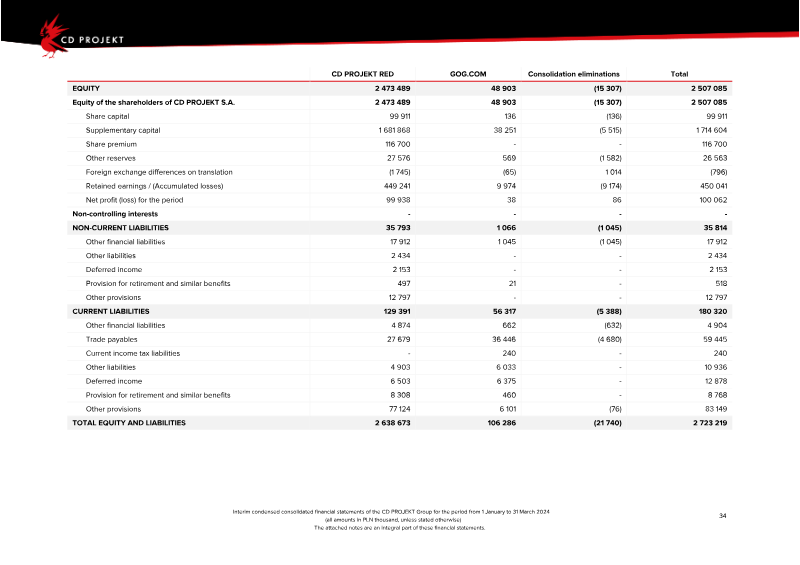
The 2019 activities of the CD PROJEKT Group were defined by robust financial growth, significant workforce expansion, and intensive preparation for the launch of its flagship title, Cyberpunk 2077. Operating through the CD PROJEKT RED development studio and the GOG.com digital distribution platform, the Group achieved a net profit of 175.32 million PLN, marking a 60.3% increase over the previous year. This performance was underpinned by the enduring commercial success of The Witcher 3: Wild Hunt—including its new release on the Nintendo Switch—and the strategic expansion of the GOG GALAXY 2.0 platform. By year-end, the company maintained a strong balance sheet with no debt, 1.106 billion PLN in equity, and a market capitalization of 26.9 billion PLN, reflecting a 92% year-over-year increase in stock price.
The Group’s operational strategy focused on transitioning toward a dual-franchise model while prioritizing creative and financial independence. To support this, the workforce grew by 18% to 1,044 employees, with a heavy emphasis on international recruitment and professional development. The company also invested in long-term sustainability and infrastructure, including the acquisition of its Warsaw headquarters and the implementation of environmental initiatives. These efforts were complemented by a commitment to corporate social responsibility and adherence to high ethical standards, as evidenced by the company’s inclusion in the WIG-ESG index.
Risk management remained a central pillar of the Group’s governance, with proactive measures taken to address technical, legal, and market-related challenges. While the development cycle for Cyberpunk 2077 necessitated significant capital expenditure and a subsequent release delay to ensure product quality, the company’s conservative liquidity management and reliance on internal cash reserves ensured stability. Looking forward, the Group continues to leverage its proprietary R&D, such as the REDengine, to maintain global competitiveness, while utilizing incentive programs to align management and employee performance with long-term growth targets.
CD Projekt · 2026
CD Projekt · 2026

CD Projekt · 2026
CD Projekt · 2026
CD Projekt · 2026
CD Projekt · 2026
CD Projekt · 2026


CD Projekt · 2026

CD Projekt · 2026
CD Projekt · 2026
CD Projekt · 2026
CD Projekt · 2026