1 free read left. Create a free account for unlimited reading + AI research.
Create free accountArticleInternational Journal of Role-Playing
The authors propose that oxytocin, linked to trust and social bonding, is released during shared stressful or high-stakes in-character experiences. Reward-system activity centered on dopamine may reinforce in-character liking through repeated exposure.
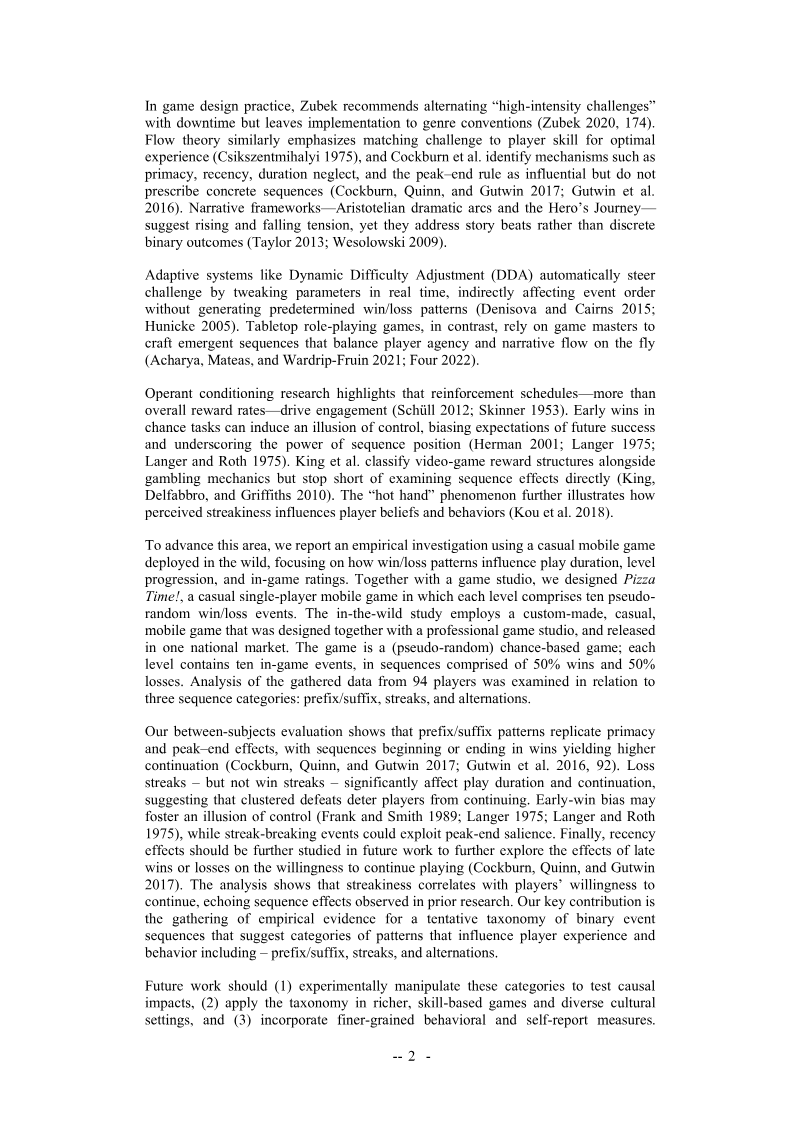
This paper examines "bleed-out," the spillover of in-character dynamics into players' out-of-character thoughts, feelings, and actions in live action role-playing (larp). Its central argument is that the neuropsychological processes underlying bleed are largely automatic and difficult to control, so managing bleed requires deliberate design and self-regulatory effort rather than individual willpower alone. The authors pair neuroscience and emotion theory with larp community literature to explain how bonding and antipathy form between players, and they focus specifically on interpersonal consequences.
On the positive side, the authors propose that oxytocin, a hormone linked to trust and social bonding, is released during shared stressful or high-stakes in-character experiences, which may foster prosocial feelings between players. Reward-system activity, centered on dopamine, may reinforce in-character liking through repeated exposure. On the negative side, in-character social rejection appears to activate neural pain responses, which can trigger defensive aggression or withdrawal that carries into community tensions. The paper also draws on the two-factor theory of emotion to argue that players may misattribute arousal caused by in-character events to other players, and it notes that the double diegetic nature of larp makes such misattribution likely.
The authors argue that compartmentalizing in-character reactions draws on self-regulatory resources that larp activities commonly deplete. They recommend informed consent, safe spaces, debriefing, implementation intentions, and diegetically embedded staff or counselors to help players preserve or restore these resources. The work is conceptual and draws on existing experimental psychology and ethnographic larp research rather than presenting new empirical data, and the authors frame it as a foundation for future empirical study of bleed management.























Comments