1 free read left. Create a free account for unlimited reading + AI research.
Create free accountWhitepaper European Conference on Games Based Learning (ECGBL)
1 free read left. Create a free account for unlimited reading + AI research.
Create free accountWhitepaperEuropean Conference on Games Based Learning (ECGBL)
Students in the AI-GBL group achieved substantially higher posttest scores than controls. The study used 113 undergraduates, with 66 in the experimental condition.
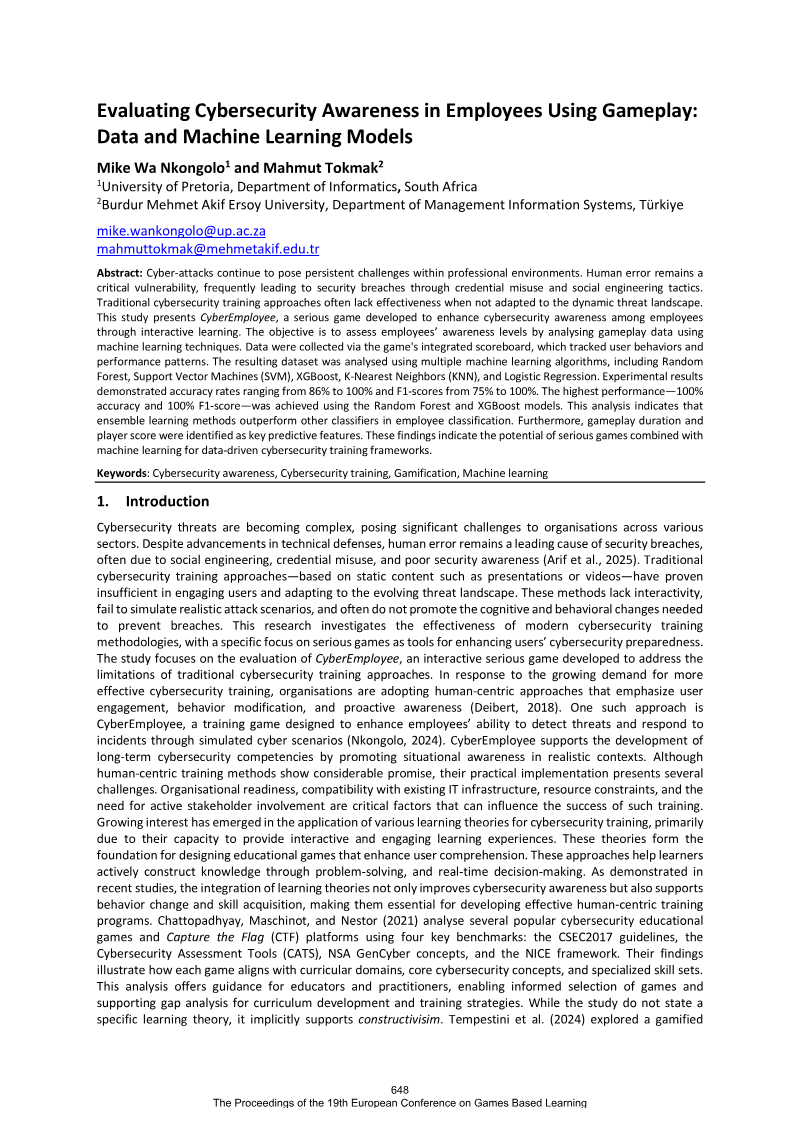
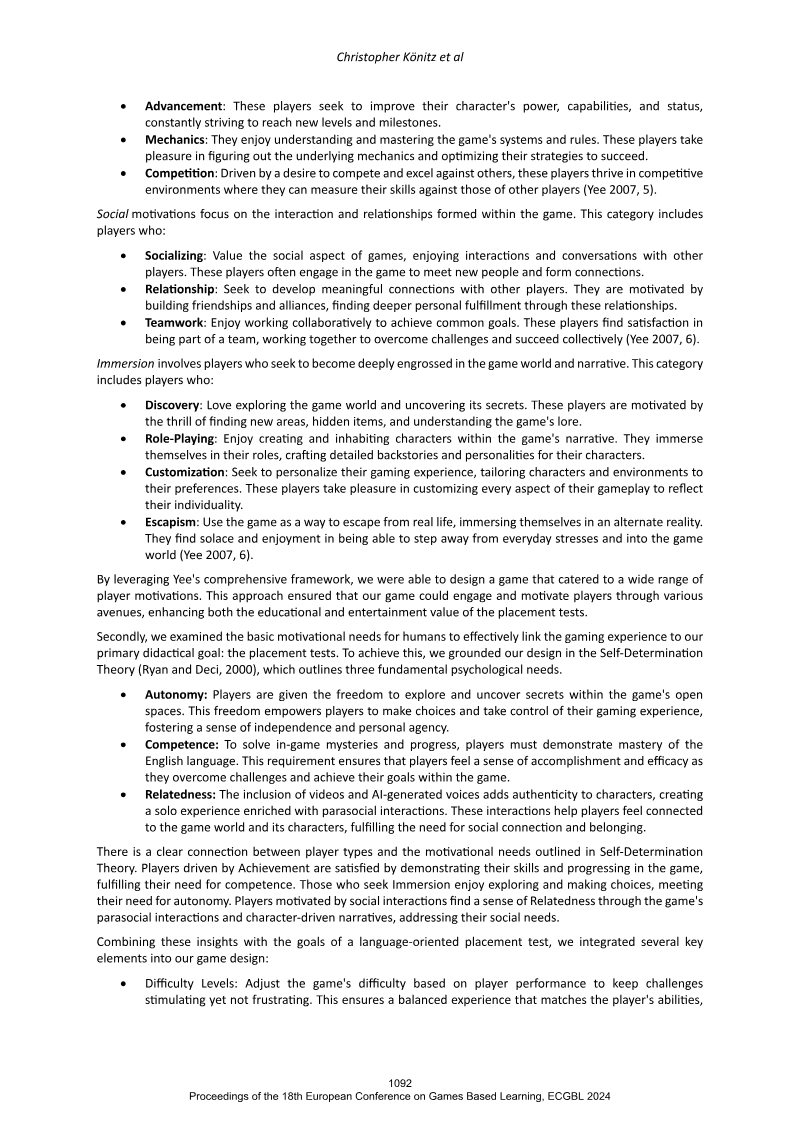
This study evaluates an AI-enhanced game-based learning (AI-GBL) framework for project management education, in which artificial intelligence serves as a pedagogical co-orchestrator within serious game mechanics such as stakeholder interviews and crisis scenarios. The central claim is that embedding AI in this way improves applied learning outcomes, provided it is paired with deliberate lecturer scaffolding. The work draws on theoretical foundations in game-based learning, experiential learning, multimodal learning analytics, and intrinsic motivation.
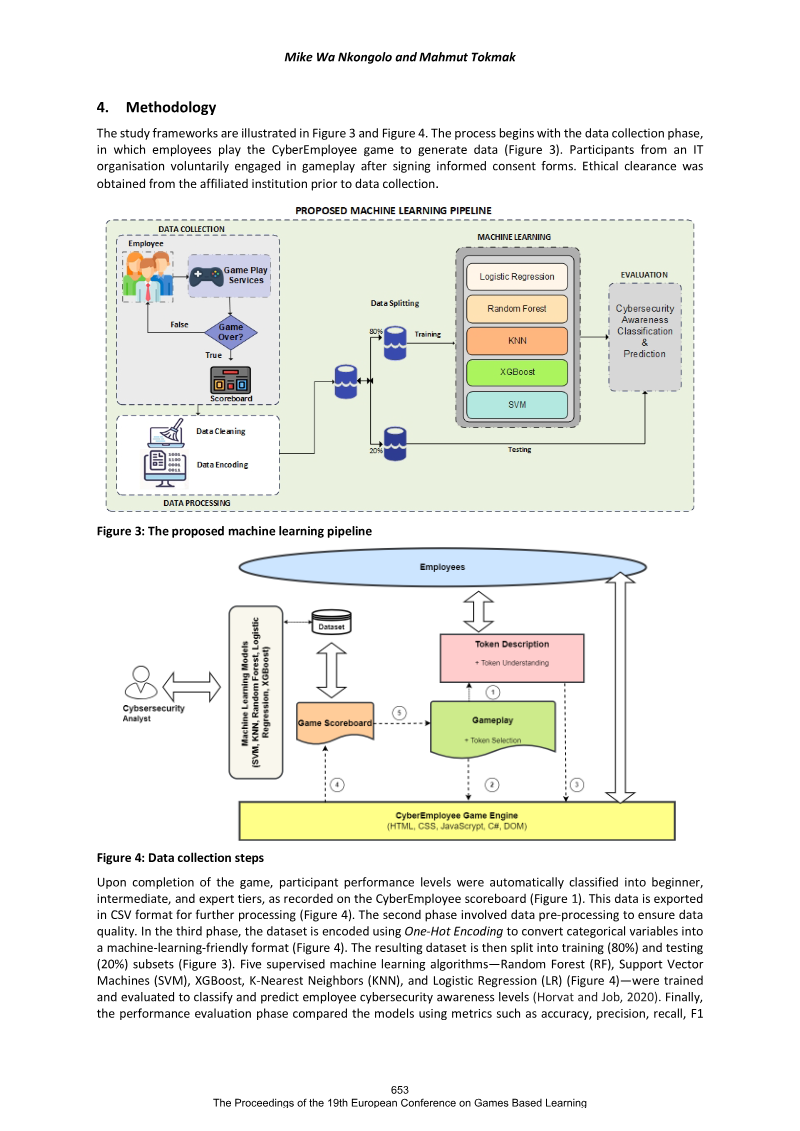
The core quantitative evidence comes from a quasi-experimental, mixed-methods design involving 113 undergraduates, with 66 in the experimental condition. Students in the AI-GBL group achieved substantially higher posttest scores than controls (adjusted group effect F(1,110) = 437.78, p < .001, partial η² = .799), and pretest scores did not significantly predict outcomes. Because allocation was non-random and the lecturer also acted as facilitator, the authors caution that causal inference and generalisability are limited, and the effect size should be interpreted with that restriction in mind.
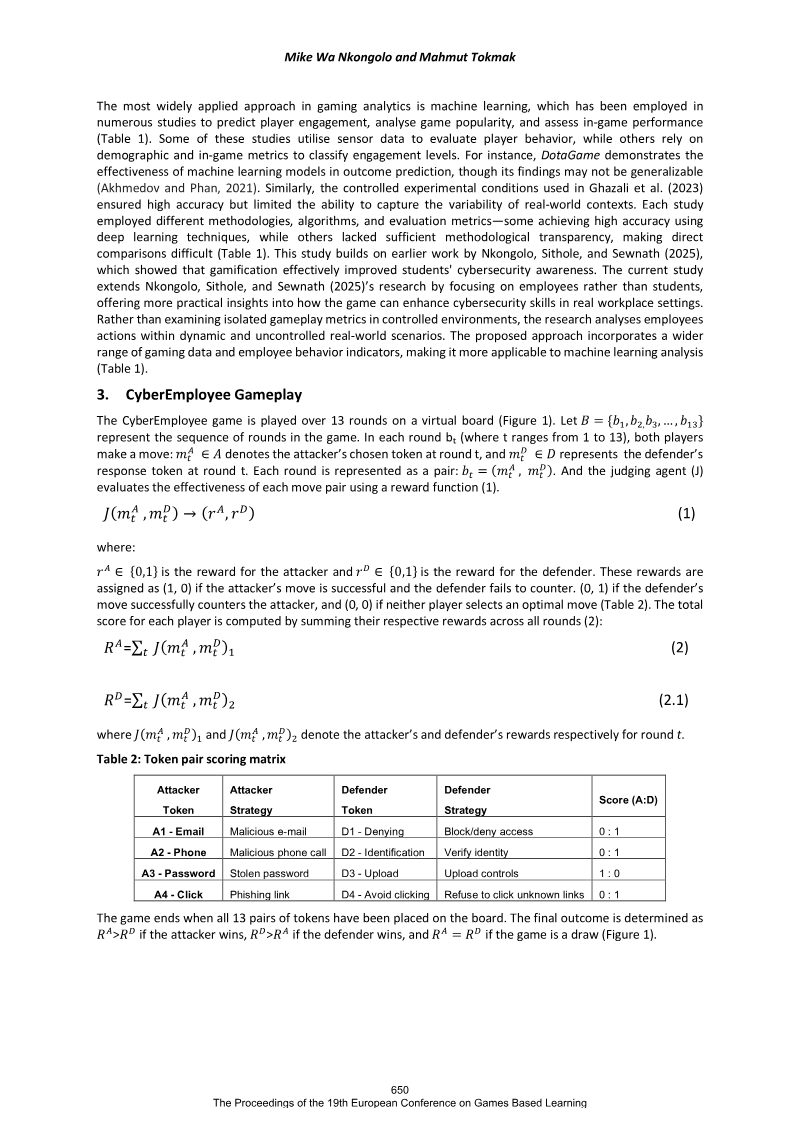
Qualitative findings from a postgraduate cohort add a more nuanced picture. Thematic analysis of reflections indicated gains in ethical reasoning and leadership identity, with roughly 22% of students demonstrating high ethical engagement. However, about 24% relied uncritically on AI outputs, particularly in the absence of tutor guidance, a pattern the authors identify as a risk requiring explicit instructional scaffolding. The study's scope is confined to higher education project management programmes and a single instructional intervention, and its conclusions are best read as evidence of promise rather than established efficacy.



European Conference on Games Based Learning (ECGBL) · 2026



European Conference on Games Based Learning (ECGBL) · 2026



European Conference on Games Based Learning (ECGBL) · 2026



European Conference on Games Based Learning (ECGBL) · 2026



European Conference on Games Based Learning (ECGBL) · 2026



European Conference on Games Based Learning (ECGBL) · 2026



European Conference on Games Based Learning (ECGBL) · 2026



European Conference on Games Based Learning (ECGBL) · 2026



European Conference on Games Based Learning (ECGBL) · 2026



European Conference on Games Based Learning (ECGBL) · 2026



European Conference on Games Based Learning (ECGBL) · 2026



European Conference on Games Based Learning (ECGBL) · 2026
European Conference on Games Based Learning (ECGBL) · 2026