Updated Apr 30, 2026 by IGG
Financial · September 8, 2016
Published by IGG
The 2016 interim period marked a phase of robust financial expansion for the Group, characterized by a 21.4% year-over-year revenue increase to US$126.0 million. This growth was primarily fueled by the successful launch of Lords Mobile and the sustained performance of Castle Clash, which anchored the company’s mobile-centric strategy. With mobile games accounting for 97.3% of total revenue, the Group successfully leveraged a global player base of 340 million to maintain a stable financial position, reporting US$26.1 million in earnings attributable to equity holders and a cash balance of US$158.7 million as of June 30, 2016. Operationally, the Group focused on scaling its international footprint while managing complex regulatory environments. To navigate foreign investment restrictions in the PRC, the company utilized structured contracts to consolidate domestic entities, though these operations represented a negligible portion of total revenue and assets. Management continues to monitor the draft Foreign Investment Law, maintaining that any potential regulatory shifts would have an immaterial impact on the company’s financial health. Strategic growth initiatives during this period included the formation of a new joint venture in Canada and a commitment to aggressive marketing and promotional spending to support new titles. Corporate governance and human capital management remained central to the Group’s strategy. Despite a noted deviation from standard governance codes regarding the dual role of chairman and chief executive officer held by Mr. Zongjian Cai, the company maintained rigorous oversight through board reviews and external legal counsel. Equity-based compensation, including pre-IPO and post-IPO share option schemes and a share award program, served as the primary mechanism for talent retention. Furthermore, the company actively managed its capital structure through significant share repurchases, totaling HK$136.7 million, while ensuring compliance with all listing and disclosure requirements.
INTERIMREPORT CONTENTS CONTENTS Corporate Information 2 Corporate Information 2 Highlights 4 Management Discussion and Analysis 5 Corporate Governance and Other Information 14 Report on Review of Interim Condensed Consolidated Financial Statements Report on Review of Interim Condensed Consolidated Financial Statements 40 Interim Condensed Consolidated Statement of Profit or Loss 41 Interim Condensed Consolidated Statement of Profit or Loss 41 Interim Condensed Consolidated Statement of Comprehensive Income 42 Interim Condensed Consolidated Statement of Comprehensive Income 42 Interim Condensed Consolidated Statement of Financial Position 43 Interim Condensed Consolidated Statement of Financial Position 43 Interim Condensed Consolidated Statement of Changes in Equity Interim Condensed Consolidated Statement of Changes in Equity 44 Interim Condensed Consolidated Statement of Cash Flows 46 Notes to Interim Condensed Consolidated Financial Statements 48 Definitions 65
INTERIMREPORT CORPORATE INFORMATION CORPORATE INFORMATION BOARD OF DIRECTORS JOINT COMPANY SECRETARIES Executive Directors Ms. Jessie Shen BOARD OF DIRECTORS JOINT COMPANY SECRETARIES Executive Directors Ms. Yin Ping Yvonne Kwong (a fellow of Ms. Jessie Shen Mr. Zongjian Cai (Chairman Ms. Yin Ping Yvonne Kwong and chief executive (a fellow Mr. Yuan Xu officer) The Hong of Kong Institute of Chartered Secretaries) Mr. Hong Zhang AUTHORISED REPRESENTATIVES Ms. Jessie Shen (elected on 3 June 2016) AUTHORISED REPRESENTATIVES Mr. Feng Chen (elected on 3 June 2016) Mr. Zongjian Cai Non-executive Director Ms. Jessie Shen Non-executive Director Ms. Yin Ping Yvonne Kwong Mr. Yuan Chi REGISTERED OFFICE Independent Non-executive Directors REGISTERED OFFICE Independent Non-executive Directors Offshore Incorporations (Cayman) Limited Dr. Horn Kee Leong Floor 4, Willow House, Cricket Square Mr. Dajian Yu P.O. Box 2804, Grand Cayman, KY1-1112 Ms. Zhao Lu Cayman Islands BOARD COMMITTEES Audit Dr. H Committee (Chairman) orn Kee Leong Mr. Dajian Yu Ms. Zhao Lu HEADQUARTERS AND PRINCIPAL PLACE OF BUSINESS IN SINGAPORE 315 Alexandra Road
orn Kee Leong Floor 4, Willow House, Cricket Square Mr. Dajian Yu P.O. Box 2804, Grand Cayman, KY1-1112 Ms. Zhao Lu Cayman Islands BOARD COMMITTEES Audit Dr. H Committee (Chairman) orn Kee Leong Mr. Dajian Yu Ms. Zhao Lu HEADQUARTERS AND PRINCIPAL PLACE OF BUSINESS IN SINGAPORE 315 Alexandra Road #04-03 Sime Darby Business Centre Singapore 159944 Nomination Dr. Horn Committee Mr. ZongjKee Leong (Chairman) ian Cai Mr. Dajian Yu Mr. Dajian Yu Ms. Zhao Lu Ms. Zhao Lu PRINCIPAL PLACE OF BUSINESS IN HONG KONG 18/F, Tesbury Centre 28 Queen’s Road East 28 Queen's Road East Wanchai Hong Kong Committee Hong Kong Remuneration (Chairman) AUDITOR Ms. Zhao Lu Mr. Zongjian Cai Ernst & Young Mr. Dajian Yu Ernst & Young Mr. Dajian Yu
INTERIMREPORT LEGAL ADVISER AS TO HONG KONG LAWS Orrick, Herrington & Sutcliffe LEGAL ADVISER AS TO HONG KONG LAWS Orrick, Herrington & Sutcliffe LEGAL ADVISER AS TO PRC LAWS LEGAL ADVISER AS TO PRC LAWS Jingtian & Gongcheng PRINCIPAL SHARE REGISTRAR PRINCIPAL SHARE REGISTRAR AND TRANSFER OFFICE Royal Bank of Canada Trust Company (Cayman) Limited 4th Floor, Royal Bank House 24 Shedden Road, George Town Grand Cayman KY1-1110 Cayman Islands PRINCIPAL PLACE OF BUSINESS IN THE PRC 20 Jinjishan Road PRINCIPAL PLACE OF BUSINESS IN THE PRC 20 Jinjishan Road Jin’an District Fuzhou, Fujian Province PRC PRINCIPAL BANKS PRINCIPAL BANKS Citibank N.A. Singapore Branch Overseas Chinese Banking Corporation Limited United Overseas Bank Limited Wells Fargo Bank, N.A. INVESTOR RELATIONS CONSULTANTS INVESTOR RELATIONS CONSULTANTS HONG KONG SHARE REGISTRAR Wonderful Sky Financial Group Limited HONG KONG SHARE REGISTRAR Computershare Hong Kong Investor Services Limited Shops 1712-1716, 17th Floor, Hopewell Centre, 183 Queen’s Road East, Wanchai Hong Kong COMPANY WEBSITE www.igg.com
INTERIMREPORT HIGHLIGHTS HIGHLIGHTS For the six months ended 30 June 2016 2015 For the six months ended 30 June US'000 HK'000² US'000 HK'000² 2016 2015 US’000 HK’000² US’000 HK’000² Revenue (Unaudited) (Unaudited)804,777 Revenue 126,041 979,023 103,794 804,777 Profit for the period 25,039 194,490 24,833 192,545 Profit for the period attributable to Profit for the period attributable to 26,109 202,802 24,804 192,320 owners of the parent 26,109 202,802 24,804 192,320 Adjusted net income¹ 27,194 211,229 26,257 203,586 The Group's revenue for the Period was approximately US$126.0 million, representing an increase of – The Group’s revenue for the Period was approximately US$126.0 million, representing an increase of approximately 21.4% over the revenue of approximately US$103.8 million for the corresponding period in 2015. Compared to the three months ended 31 March 2016, revenue increased by approximately 24.0% for the three months ended 30 June 2016. months ended 30 June 2016. – The Group’s profit for the Period was approximately US25.0 million, representing a slight increase over the profit of approximately US24.8 million for the corresponding period in 2015. Compared to the three months ended 31 March 2016, profit increased by approximately 26.3% for the three months ended 30 June 2016. – The Group’s profit attributable to owners of the parent for the Period was approximately US26.1 million, representing an increase of approximately 5.2% over US24.8 million for the corresponding period in 2015.
016, profit increased by approximately 26.3% for the three months ended 30 June 2016. – The Group’s profit attributable to owners of the parent for the Period was approximately US26.1 million, representing an increase of approximately 5.2% over US24.8 million for the corresponding period in 2015. – The Group’s adjusted net income for the Period was approximately US27.2 million, representing an increase of approximately 3.4% over US26.3 million for the corresponding period in 2015. – The Board of the Company has resolved to declare an interim dividend of HK4.3 cents per ordinary Share (equivalent to US0.6 cents per ordinary Share), amounting to approximately US$7.5 million (six months ended 30 June 2015: interim dividend of HK4.0 cents per ordinary Share, equivalent to US0.5 cents per ordinary Share). Share). 1 Adjusted net income represented profit excluding share-based compensation. It is considered a useful supplement to the condensed consolidated statement of profit or loss indicating the Group’s profitability and operational performance for the financial periods presented. for the financial periods presented. 2 Amounts denominated in U.S. dollars have been converted into Hong Kong dollars at an exchange rate of HK7.7675=US1.00 for the Period (six months ended 30 June 2015: HK7.7536=US1.00), for illustration purpose only. Such conversions shall not be construed as representations that amount in U.S. dollars were or could have been or could be converted into Hong Kong dollars at such rates or any other exchange rates on such date or any other only. Such conversions shall not be construed as representations that amount in U.S.
During the first half of 2019, IGG experienced a period of financial stabilization and strategic transition. The company generated US$354.7 million in revenue and US$70.7 million in net profit, marking year-over-year declines of 9% and 28%, respectively. These results were primarily driven by the natural maturation of flagship titles such as Lords Mobile and Castle Clash. Despite these headwinds, the company maintained a robust liquidity position with US$270.4 million in cash and no bank borrowings, while simultaneously diversifying its portfolio through the launch of new titles like Brave Conquest and increasing investments in research, development, and global marketing. The company’s operational structure underwent significant adjustments during this period, most notably the restructuring of its PRC operations. By replacing previous structured contracts with a new framework of eight agreements, the company maintained control over Fuzhou Tianmeng while mitigating regulatory risks associated with evolving foreign investment laws. These structured contracts accounted for 10.3% of total revenue and 11.1% of total assets as of June 30, 2019. Furthermore, the company actively managed its capital through the repurchase and cancellation of 5.688 million shares and the continued utilization of share option and award schemes to incentivize key personnel. Financial reporting for the period was notably impacted by the adoption of IFRS 16, which required the recognition of lease liabilities and right-of-use assets. This accounting change shifted lease-related expenses from operating rentals to depreciation and interest, resulting in a gearing ratio of 28.2%. Despite the broader market challenges, the company concluded the first half of the year with total assets of US$446.67 million and net assets of US$320.53 million. These figures reflect a disciplined approach to asset management, including the post-period acquisition of Italian property and a continued commitment to long-term growth through global expansion and portfolio diversification.
AppLovin’s Q1 2026 financial update reports a revenue of $1.842 billion, up 59% year‑over‑year, and net income from continuing operations of $1.206 billion, a 66% increase to a net margin of 65%. Adjusted EBITDA reached $1.557 billion, an 85% margin, reflecting a 66% rise from the prior year. Cash flow from operations matched Adjusted EBITDA at $1.556 billion, underscoring strong operating liquidity. Shares outstanding averaged 1.053 million, with diluted earnings per share of $3.56. The company’s balance sheet shows cash and equivalents at $2.759 billion, up from $2.487 billion, and total assets of $7.708 billion versus $7.260 billion a year earlier. Long‑term debt remained stable at $3.514 billion, while equity rose to $2.363 billion from $2.135 billion. Operating expenses grew modestly, with research and development increasing to $94 million from $56 million, while sales and marketing rose slightly to $60.8 million. Methodologically, the update presents both GAAP and non‑GAAP measures; Adjusted EBITDA is defined by excluding items such as stock‑based compensation, restructuring costs, and goodwill impairment. The reconciliation table shows cumulative Adjusted EBITDA margins climbing from 65% in Q1 2025 to 85% in Q1 2026, driven by revenue growth and controlled cost expansion. The update covers the United States market for Q1 2026, with data drawn from audited financial statements and internal reconciliations.
The 2026 State of Gaming analysis demonstrates a shifting landscape in which mobile gaming remains the largest driver of downloads—approximately 50 billion in 2025—but its growth rate is slowing. Revenue, however, continues to climb as monetization models mature and lifetime value deepens, especially within hybrid‑casual titles that now generate the most incremental income. In contrast, PC and console platforms experience record revenue growth, with Steam’s premium segment up 32 % and blockbuster releases such as Battlefield 6 capturing significant market share from incumbents. Shooter downloads on these platforms have plateaued, suggesting new titles are primarily cannibalizing existing audiences rather than expanding the category. Genre‑specific dynamics reveal that strategy games are the only mobile genre to grow in downloads, driven by 4X titles from Eastern developers. Action and shooter games dominate PC/console gains, while hyper‑casual remains the largest download engine but shows a notable lift in time spent, particularly in Tier 2 markets. Casual titles face declining day‑7 retention, indicating a stickiness challenge that could erode long‑term player value. Live‑ops and acquisition strategies have evolved toward retention‑focused events, multi‑tier season passes, and expedition‑style rewards. These mechanisms now represent the most reliable revenue drivers across competitive genres such as RPG, action, and simulation. Advertising spend remains concentrated on social channels—YouTube, Facebook/Instagram—and high‑attention formats like video, playable, and rewarded ads. Battlefield 6’s pre‑launch spend surpassed Call of Duty titles, leveraging Facebook, Reddit, and desktop display, while its post‑launch strategy pivoted to YouTube with cinematic, celebrity‑hook creatives. Geographically, the U.S. market shows a skew toward lifestyle and puzzle categories despite lower IAP shares, whereas casino titles exhibit higher spend‑to‑revenue efficiency. Overall, the industry is moving from acquisition toward deeper monetization per user, with indie shooters and simulation titles gaining traction amid intense competition in the shooter segment.
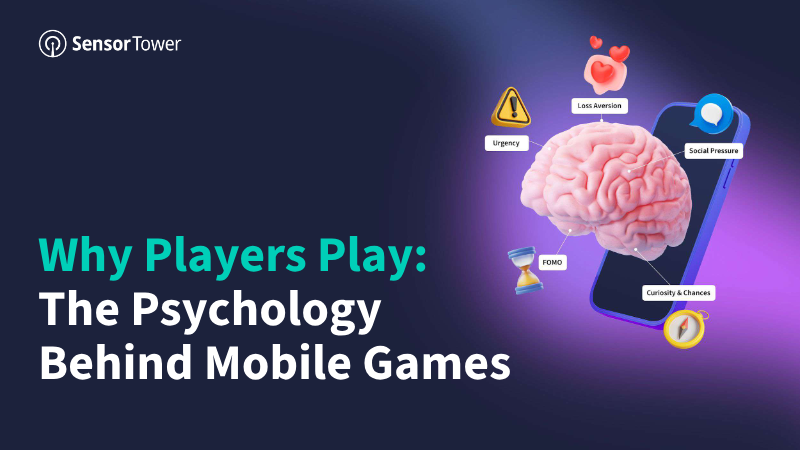
Hybrid monetization can increase revenue without eroding player retention by treating advertisements as an integral part of the game’s design system. Three core ad formats—interstitials, rewarded video (RV), and banners—are positioned strategically through careful gating on level progression, playtime, or cooldown periods. Optimal triggers and placement reduce player frustration while maximizing eCPM, ensuring that monetization flows naturally with gameplay. Rewarded video is most effective when offered during high‑stakes moments such as revives, boosters, or time‑limited rewards. Leveraging scarcity and urgency in these contexts drives conversions while preserving the core experience. Consistent visual cues, a clear distinction between coin rewards and RV value, and optional “No Ads” bundles further balance monetization with player comfort. Selling “No Ads” bundles requires thoughtful presentation. Bundles should appear side‑by‑side with regular items, use distinct visual cues and anchoring to convey high value, and be gated behind a minimum purchase tier to protect payer retention. Segmenting ad exposure—capping impressions, applying cooldowns, and filtering out disruptive creatives—maintains a positive user experience while sustaining revenue. Overall, the strategy blends ad formats with gameplay mechanics, employs scarcity and urgency for rewarded video, and offers high‑value “No Ads” options. This approach delivers robust monetization across diverse segments while safeguarding long‑term player engagement and retention.