Marketing & User Acquisition
Campaigns, ad creatives, app store optimization and the cost of a player.
236 documents

SocialPeta & Reforged Labs · 2025
Report2025 Global Mobile Game Marketing Insights & Creative Breakdown
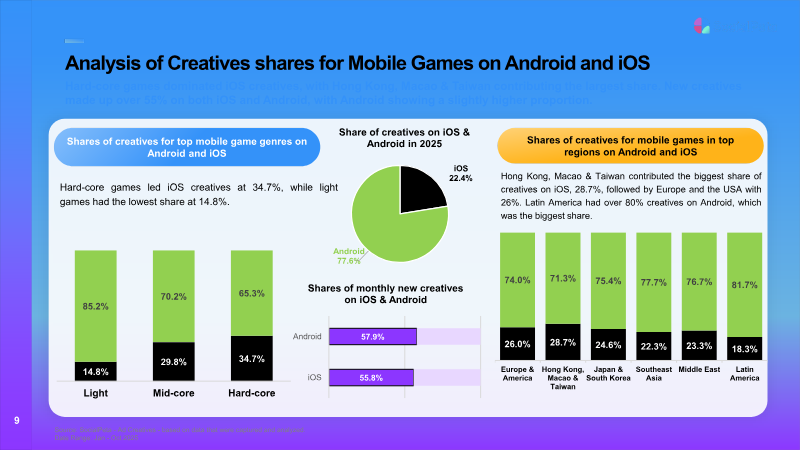
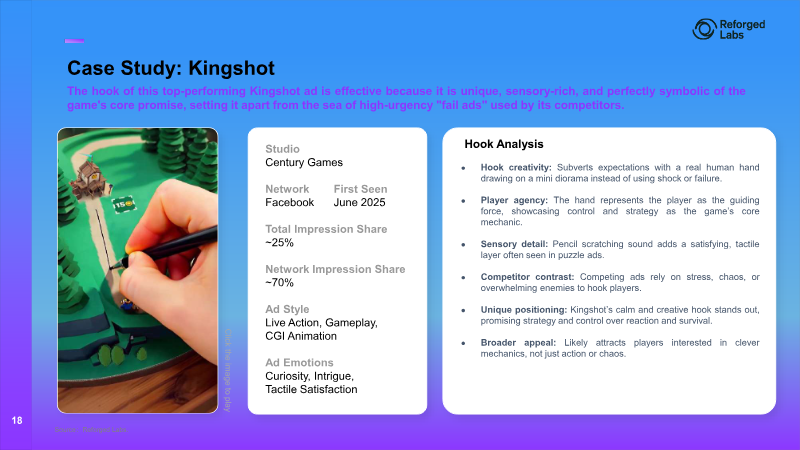
The 2025 Global Mobile Game Marketing Insights & Creative Breakdown provides a comprehensive analysis of the mobile advertising landscape, focusing on the evolution of ad creatives across more than 80 countries and 80 ad channels. Utilizing data from SocialPeta and Reforged Labs, the findings cover over 1.6 billion creatives and 10,000 tracked mobile games between January 2024 and October 2025. The primary thesis suggests that the mobile market is experiencing a significant surge in creative volume and a rapid shift toward AI-driven production to combat creative fatigue and rising competition. Key data points indicate that the average monthly creatives per advertiser rose to 123 in 2025, a nearly 20% year-over-year increase. New creatives now account for 58% of total monthly ads, peaking at over 60% in October. Geographically, North America and the Hong Kong, Macao, and Taiwan regions lead in total creative volume, while Europe maintains the highest refresh rate for new content. From a genre perspective, Strategy Games (SLGs) dominate advertising intensity with 325 monthly creatives per advertiser, while Casino games lead in creative turnover, with new assets making up 65.6% of their monthly output. The analysis highlights a clear platform divide, with Android hosting 77.6% of total creatives compared to 22.4% on iOS. Hard-core games represent the largest share of iOS creatives at 34.7%, whereas light games are more prevalent on Android. Video remains the dominant format, particularly for Puzzle games, where it accounts for 83.5% of ads. Furthermore, the industry has reached a tipping point in automation, with over 90% of advertisers now utilizing AI to generate scenes, characters, or scripts. Case studies of top performers like Royal Match and Monopoly GO! emphasize that successful marketing currently relies on "hook" innovation—such as diegetic sound, tactile satisfaction, and subverting brand expectations—to maintain high return on ad spend in an oversaturated market.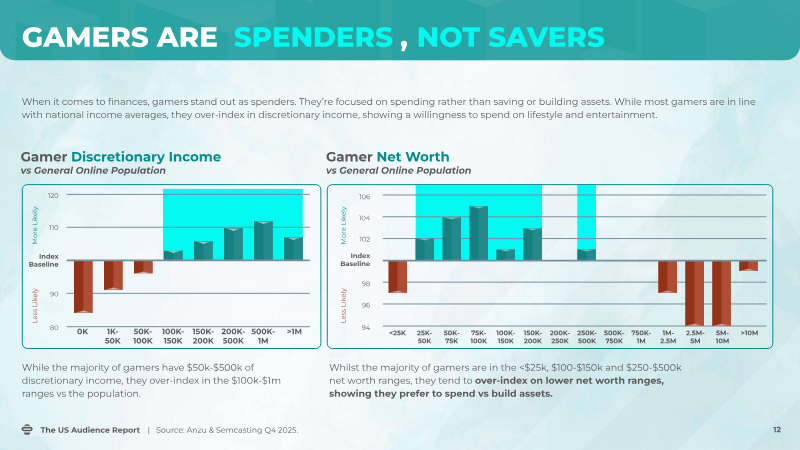

Anzu & Semcasting · 2025
ReportThe 2025 Guide to US Gaming Audiences: From Data to Personas
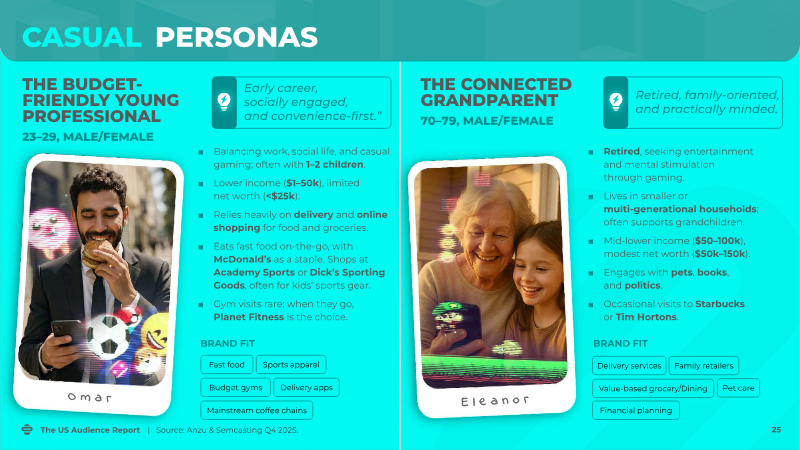
The 2025 United States gaming landscape reflects a profound demographic shift, moving away from the outdated stereotype of the isolated young male toward a mainstream, diverse population nearly evenly split by gender. Modern gamers are characterized by high levels of education and financial stability, with a significant portion of the audience falling into middle-to-high income brackets ranging from $51,000 to over $250,000 in net worth. This population views gaming as a social and familial cornerstone rather than a solitary pursuit, possessing substantial purchasing power that prioritizes immediate lifestyle quality, premium groceries, and discretionary spending over long-term asset accumulation. Physical activity and convenience define the daily habits of this audience, as they over-index in gym attendance and outdoor recreation. Consumer behavior remains nuanced across different genres; for instance, Action and Simulation players tend to be more tech-focused and affluent, whereas Casual and Arcade gamers often reside in multi-generational, value-conscious households. Despite these differences, a universal reliance on delivery services, mainstream fast-food brands, and budget-friendly fitness options persists across the entire segment. This suggests a consumer base that values efficiency and digital integration in their physical lives. The market is further segmented into distinct personas ranging from tech-savvy "Young Lifestyle Explorers" to financially secure "Golden Fans" over the age of 70. High-value opportunities for precision targeting exist within specific niches, such as sports gamers who dominate the highest income tiers or board and trivia enthusiasts who exhibit practical, family-oriented spending patterns. Geographically concentrated in hubs like Iowa and Hawaii, these diverse audiences offer brands a sophisticated landscape of consumers who defy traditional tropes, presenting a high-value target for advertisers across nearly every life stage and socioeconomic category.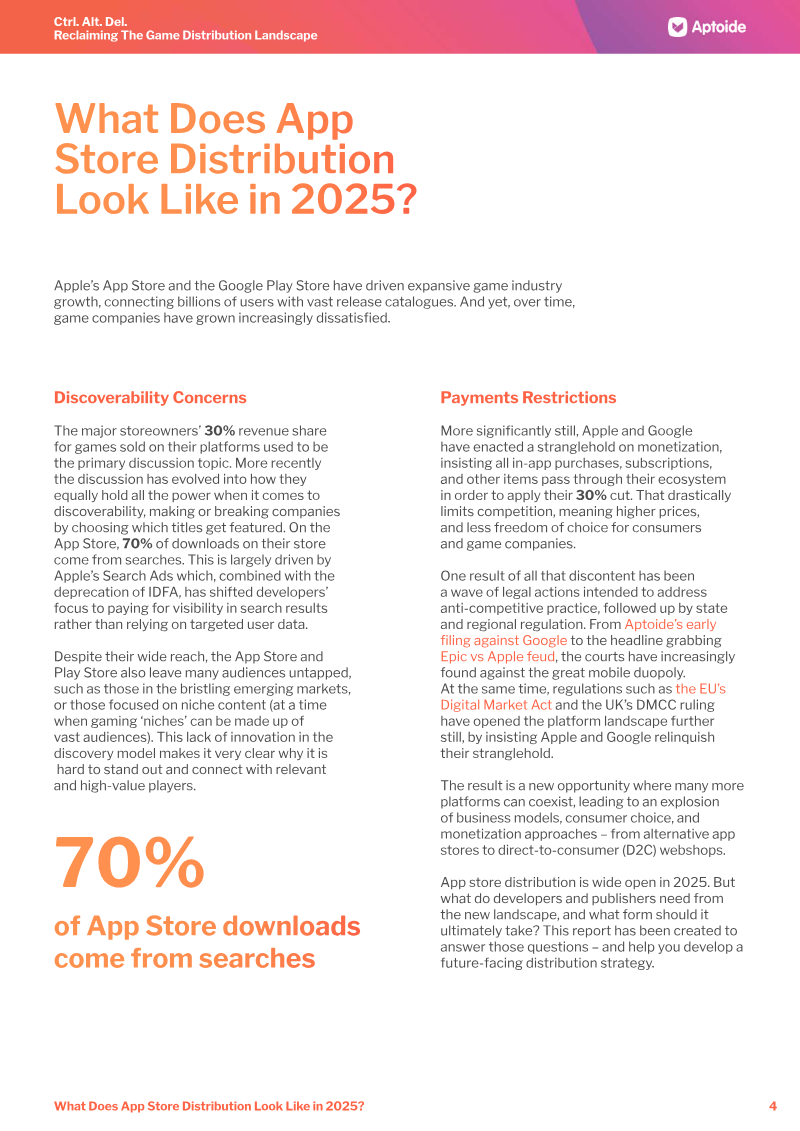
Aptoide · 2025
ReportReclaiming the Game Distribution Landscape
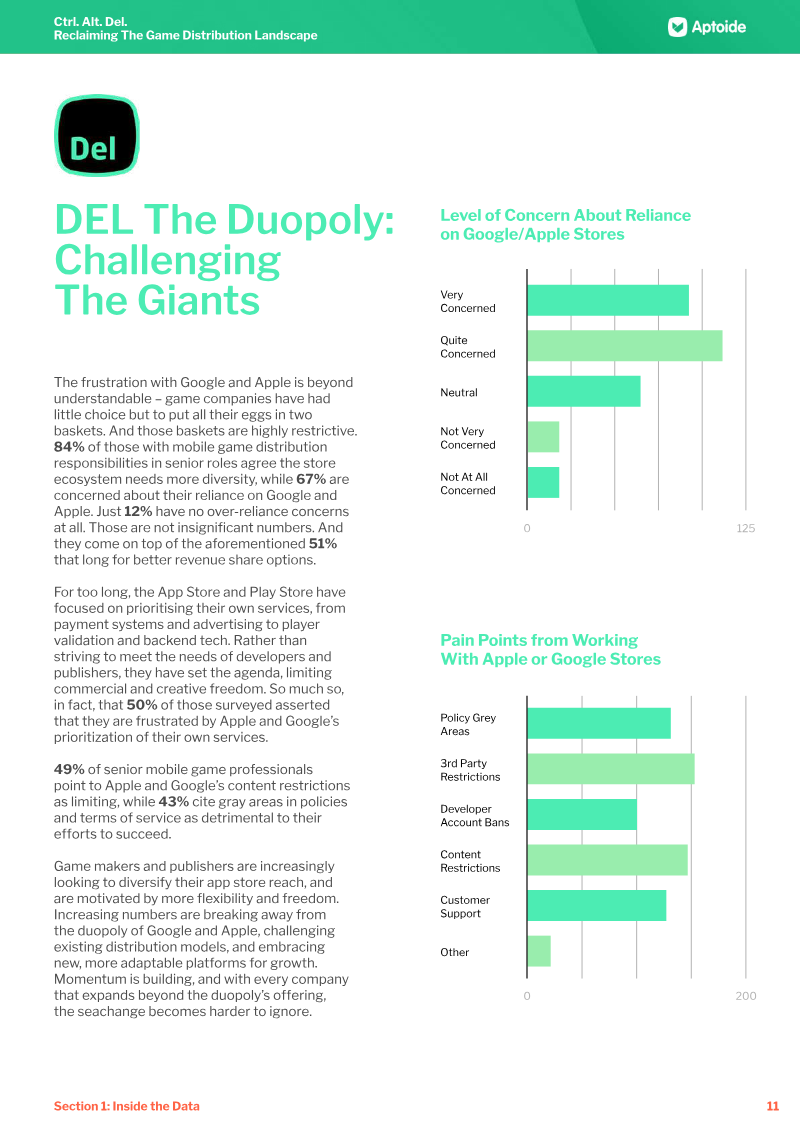
This analysis examines the shifting dynamics of the mobile game distribution market as of Summer 2025, focusing on the transition from a duopoly dominated by Apple and Google toward a more diverse ecosystem of alternative app stores. The central thesis posits that the industry is at a critical "reset" point where developers are increasingly seeking to reclaim control over their revenue, discoverability, and platform policies. By diversifying distribution strategies, game makers aim to bypass high fees and restrictive environments that have historically stifled commercial and creative potential. The findings are based on a survey of 304 senior-level mobile game development professionals from the United States and United Kingdom, all of whom work at companies with 250 or more employees. The research was conducted in April 2025 by Atomik Research on behalf of Aptoide. The data reveals significant industry dissatisfaction: 67% of developers are concerned about over-reliance on the two major stores, 51% cite high fees as a primary pain point, and 50% believe the dominant platforms unfairly prioritize their own services. Despite the current dominance of the major stores—which still account for roughly 87% of revenue for the majority of respondents—there is a clear trend toward adoption of alternative platforms. Approximately 74% of developers expect alternative stores to be a standard part of their distribution mix within five years. Furthermore, 73% of respondents anticipate double-digit revenue growth from these alternative channels. Key perceived benefits include access to new user bases (42.8%), greater policy freedom (42.4%), and improved discoverability through curated content and better marketing support. The scope of the analysis covers the global mobile gaming industry with specific emphasis on the US and UK markets. It concludes that while the Apple and Google stores remain essential for reach, the rise of alternative stores and direct-to-consumer webshops offers a necessary path for growth, risk reduction, and improved profit margins in an increasingly competitive landscape.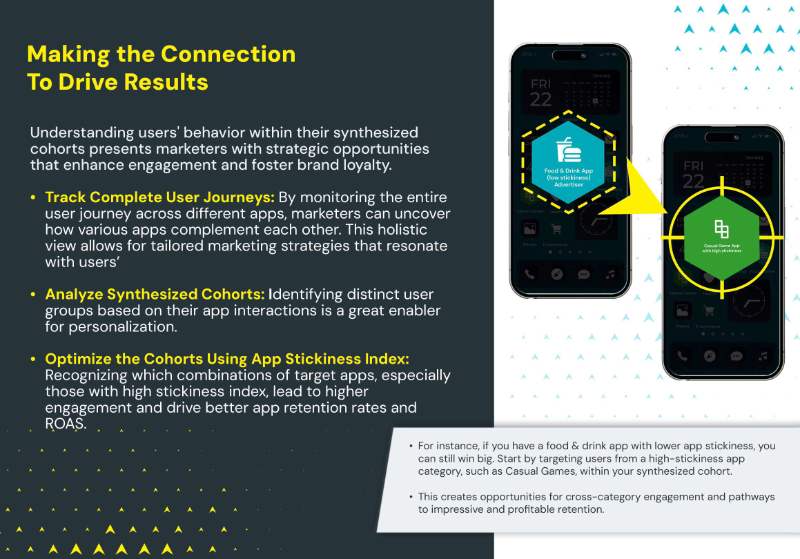


Aarki · 2025
ReportRetention Radar
The global mobile ecosystem is entering a period of maturation characterized by a 2.3% decline in installs, necessitating a strategic pivot from aggressive user acquisition toward sophisticated retention models. Because a 10% improvement in retention can yield profit increases of up to 90%, the industry is increasingly prioritizing the lifetime value of existing users. This shift is supported by the identification of distinct behavioral patterns between functional apps, which command high initial stickiness, and emotional categories like gaming, which foster long-term loyalty. By analyzing these "app-hopping" behaviors, marketers can identify high-value users who move fluidly between different app categories. Data across various gaming genres indicates that while retention naturally declines over time, Return on Ad Spend often grows significantly as players deepen their investment in narrative and premium features. For instance, simulation games frequently see a threefold increase in ROAS by the thirtieth day of engagement. Furthermore, significant cross-genre affinities exist, such as RPG players demonstrating a 40.2% engagement rate with non-gaming applications. These insights suggest that targeting "synthesized cohorts"—clusters of interconnected apps based on shared user habits—is more effective than traditional siloed marketing. To maximize engagement through 2025, the industry must adopt advanced technological frameworks, including deep neural networks and supervised AI, to facilitate surgical ad precision. Utilizing a "Stickiness Index" allows for the quantification of engagement patterns, enabling the deployment of dynamic product ads and automated event-based retargeting. By leveraging real-time post-install data and deep linking, advertisers can create frictionless, hyper-personalized journeys that capture users during high-intent moments. This methodology transforms brief digital interactions into sustained loyalty, ensuring that advertising spend is optimized across both gaming and non-gaming verticals globally.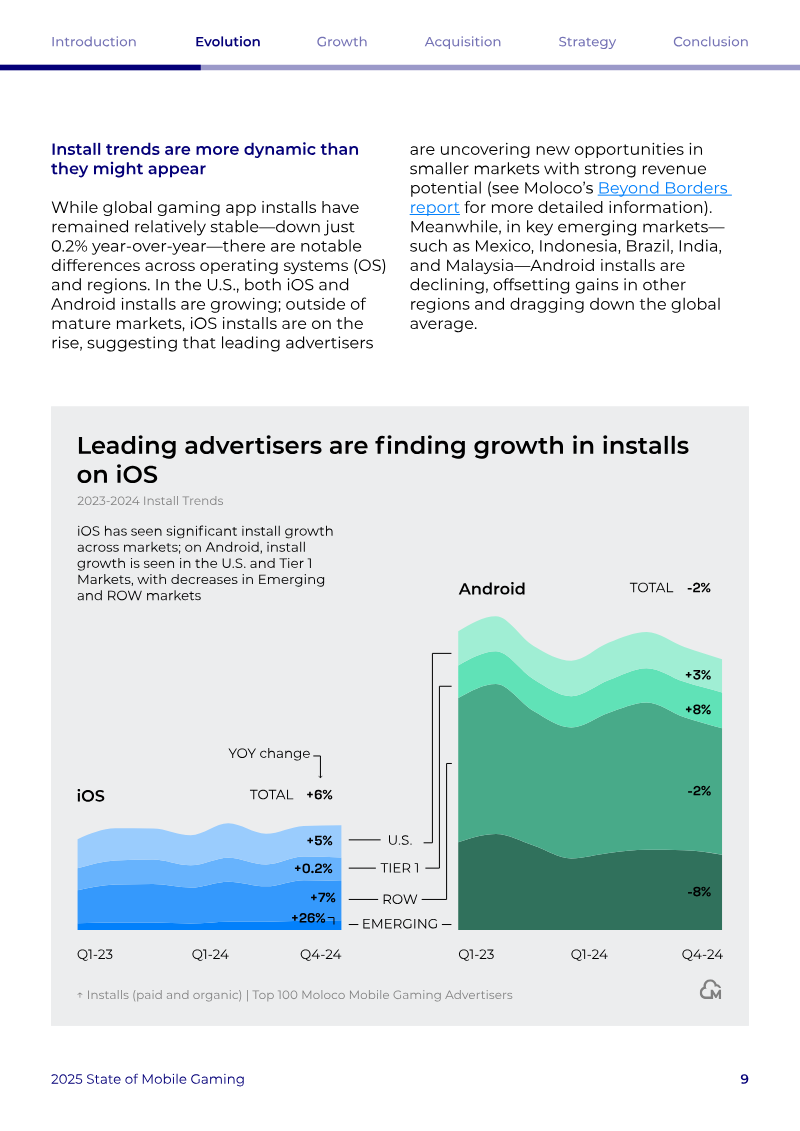
Moloco · 2025
Report2025 State of Mobile Gaming: In-App Purchase Trends of Leading Apps
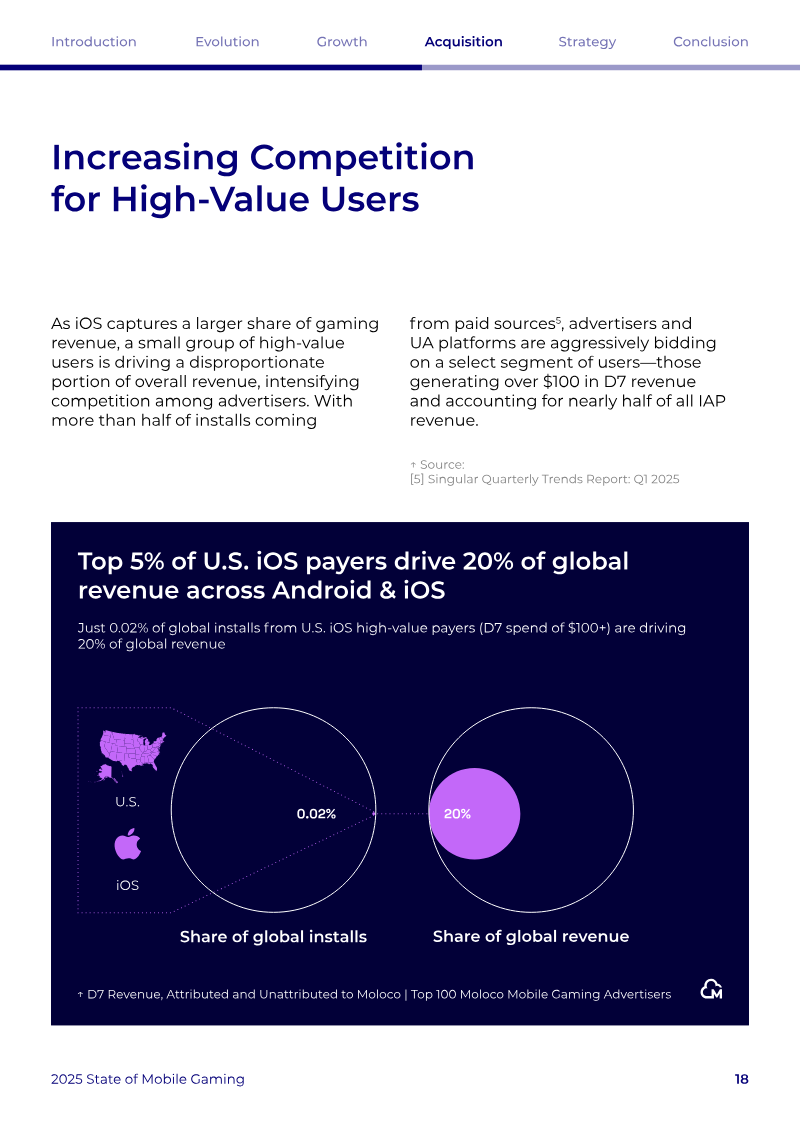
The 2025 State of Mobile Gaming report analyzes the transition of the mobile gaming industry into a new growth phase characterized by refined monetization and sophisticated user acquisition. Based on an anonymized dataset of 100 leading global gaming advertisers and Sensor Tower estimates spanning 24 months, the analysis tracks the evolution of In-App Purchase (IAP) trends across 2.3 billion projected players. The findings indicate that while global install volume remained flat in 2024, IAP revenue grew by 4%. This growth is driven by a 6% increase in install-to-payer conversion rates and improved long-term monetization, with Day 90 Average Revenue Per Paying User (ARPPU) rising by 6%. A significant shift in platform dominance has occurred, with iOS now generating 55% of global IAP revenue. High-value users represent a critical concentration of wealth; specifically, the top 5% of payers generate 48% of total revenue. In the United States, a mere 0.02% of global installs—representing high-spending iOS users—account for 20% of total global gaming revenue. Market dynamics show fierce competition for these spenders, with the top 1% of iOS winning bid prices increasing by 140% year-over-year. To counter rising costs in mature markets like the U.S. and Tier 1 regions, leading advertisers are diversifying into the Rest of World (ROW) and emerging markets, where iOS revenue grew by 19% and 31% respectively. Successful strategies among the top five advertisers include a heavy reliance on Return on Ad Spend (ROAS) optimization, a 5x higher investment in interactive playable creatives, and a 3x greater focus on re-engagement campaigns compared to the broader industry. The report concludes that the industry is moving toward a hybrid model where casual gameplay mechanics are blended with deep IAP structures to maximize lifetime value across a global audience.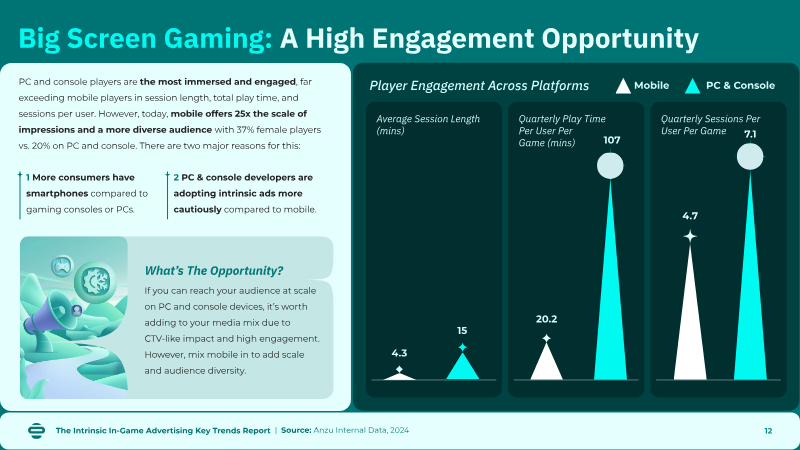

Anzu · 2025
ReportThe Intrinsic In-Game Advertising Key Trends Report H1 2025
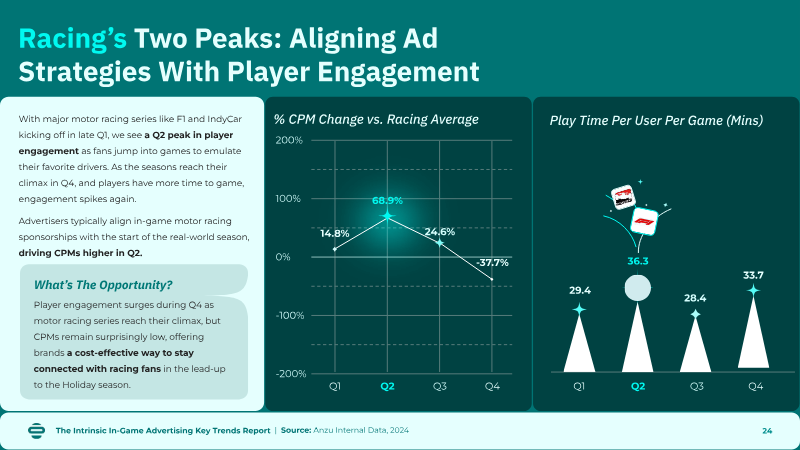
Intrinsic in-game advertising (IIGA) has transitioned into a measurable, high-impact media channel that allows brands to reach premium gaming environments through buying approaches similar to traditional digital and broadcast media. The primary thesis of this analysis is that gaming offers a unique, year-round engagement opportunity that remains consistent even when traditional channels like television and social media experience seasonal dips. By integrating non-disruptive, native ads into gameplay, advertisers can achieve significant full-funnel impact, including a 20-point lift in ad recall and a 21% lower cost per acquisition (CPA) compared to standard goals. The findings are based on aggregated internal data from 105 games and 333 direct advertisers, supplemented by third-party research from partners such as IAS, Lumen, and Comscore. The scope is global, with specific insights covering North America, Europe, LATAM, and APAC throughout the 2024 calendar year. While mobile currently offers 25 times the scale of impressions and greater audience diversity, PC and console platforms provide superior immersion, with significantly longer session lengths and higher total playtime per user. Key data points highlight that IIGA outperforms traditional digital formats in attention, delivering 2,957 attentive seconds per thousand impressions—nearly triple the performance of Facebook Infeed. Regional trends indicate that while North America and Europe command the highest CPMs, emerging markets like APAC and LATAM offer cost-effective growth opportunities. Furthermore, genre-specific data reveals that sports and racing titles see engagement peaks tied to real-world competitions, while simulation games offer a steady, female-skewing audience. The report concludes that advertisers should move beyond seasonal buying habits to capitalize on gaming’s "always-on" nature, particularly during Q1 when CPMs are lower but engagement remains high.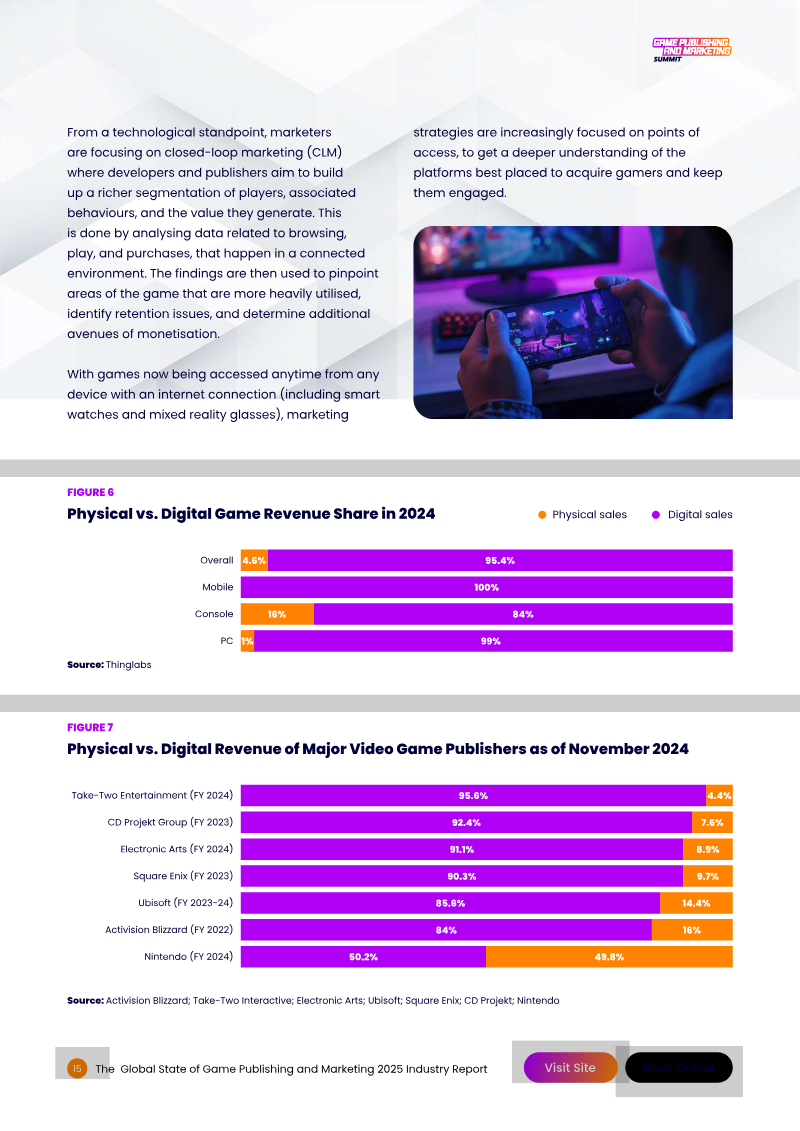
Game Publishing & Marketing Summit · 2025
ReportThe Global State of Game Publishing & Marketing 2025 Industry Report
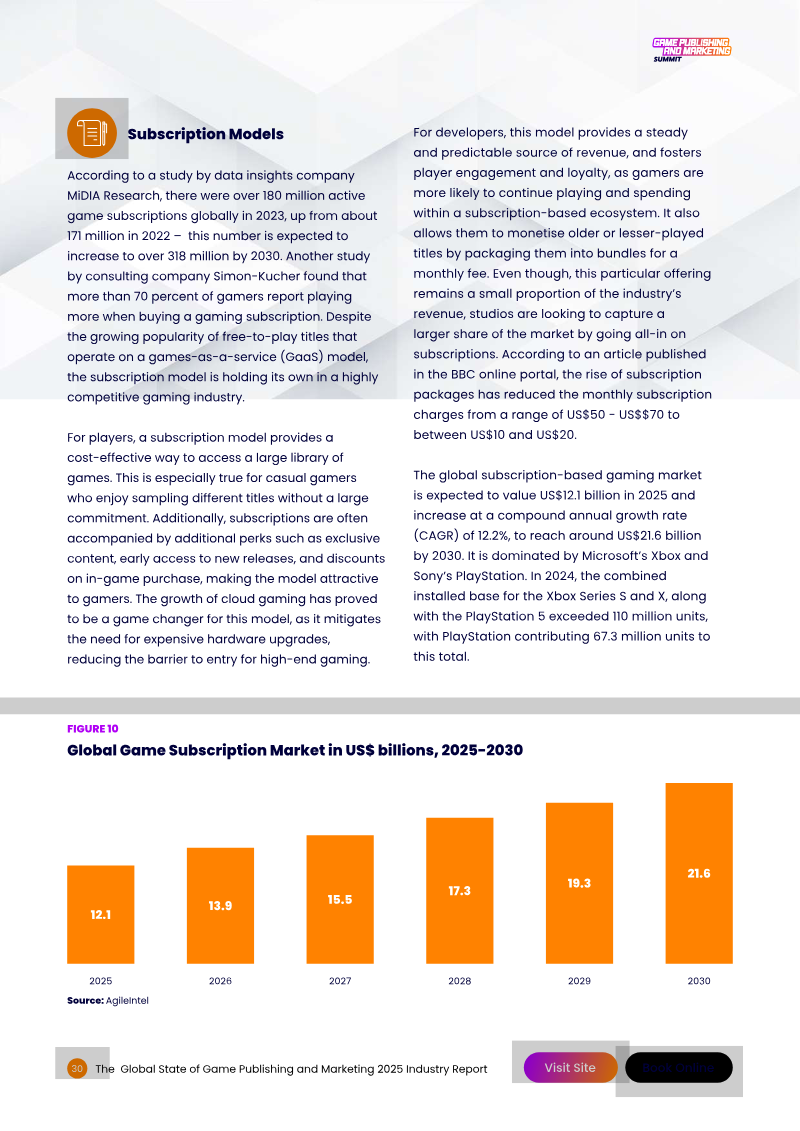
The global game publishing market is entering a period of significant expansion, with revenues projected to rise from $117.4 billion in 2025 to $150.5 billion by 2030. This growth is underpinned by a fundamental shift toward digital distribution, which already accounted for 95% of industry revenue in 2023. While traditional publishers maintain a competitive edge through high-budget user acquisition and advanced analytics, the democratization of the industry via platforms like Steam and the Epic Games Store has enabled self-published titles to achieve massive commercial success. Consequently, the industry is moving toward a hybrid landscape where multiplatform launches have increased by 40% to maximize player engagement and revenue potential. Strategic success in the current market relies heavily on closed-loop marketing and data-driven publishing. Developers are increasingly utilizing real-time telemetry and AI analytics to optimize player retention and monetization strategies. This is particularly evident in the rise of Live Service Games, with 95% of studios now developing titles designed for recurring revenue. However, community management and influencer marketing have emerged as equally vital pillars; approximately 40% of gamers now make purchases based on creator recommendations, and social touchpoints drive over 54% of player motivation to continue gameplay. Furthermore, transmedia collaborations, such as television adaptations of gaming franchises, have doubled their share of box office revenues, illustrating the power of cross-media synergy. The monetization landscape is further diversifying through the growth of subscription services and the esports sector. Subscriptions are expected to reach 318 million active users and a $21.6 billion valuation by 2030, while the esports market is projected to hit $87.7 billion in the same timeframe. To navigate this complexity, many developers are adopting publishing-as-a-service models and leveraging AI to manage diverse revenue streams across platforms. Ultimately, the integration of cross-platform development, which can boost revenue by up to 40%, combined with sophisticated digital marketing and community-focused strategies, defines the modern trajectory of the global gaming industry.

Sensor Tower · 2025
ReportFrom Games to the Big Screen: The Impact of IP Across Platforms
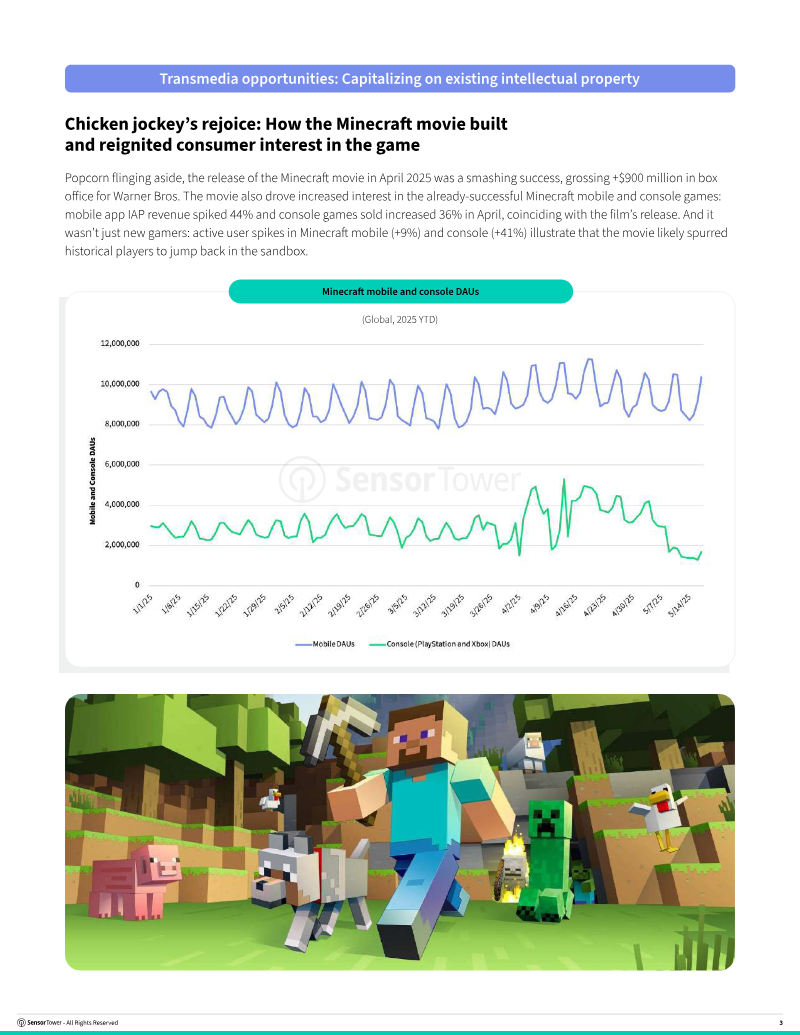
The entertainment industry is increasingly leveraging a transmedia strategy where video game intellectual property serves as the foundation for high-budget scripted content. This approach creates a symbiotic relationship between platforms, where the release of films and television series triggers a boomerang effect that revitalizes interest in the original games. Data indicates that these adaptations drive significant growth across multiple metrics, including active users, digital downloads, and in-app purchases, while simultaneously boosting the performance of the streaming services hosting the content. The scope of this analysis covers major cross-platform releases between 2024 and 2025, focusing on global mobile, PC, and console gaming segments alongside digital advertising and streaming app performance. Key findings highlight the success of the Minecraft movie, which grossed over $900 million and led to a 44% spike in mobile in-app revenue and a 36% increase in console sales. Similarly, the Fallout television series drove a 23% increase in Amazon Prime Video downloads and a massive 410% surge in daily sales for Fallout 4 on PC. The longevity of this impact is notable, with daily active users for legacy Fallout titles remaining 225% higher for up to 20 weeks following the show's premiere. Methodology relies on proprietary data from Sensor Tower, tracking digital market insights, app usage, and advertising spend. The data reveals that strategic marketing is essential to this success; for instance, Amazon increased its desktop video ad spend twentyfold to promote Fallout, specifically targeting gaming-focused platforms like Twitch and IGN. While results vary based on the faithfulness of the adaptation and the monetization model of the game, the overarching trend suggests that transmedia releases are a powerful tool for re-engaging historical players and attracting new audiences to established gaming franchises.
Newzoo · 2025
ReportMapping IP fandom with the Global Gamer Study
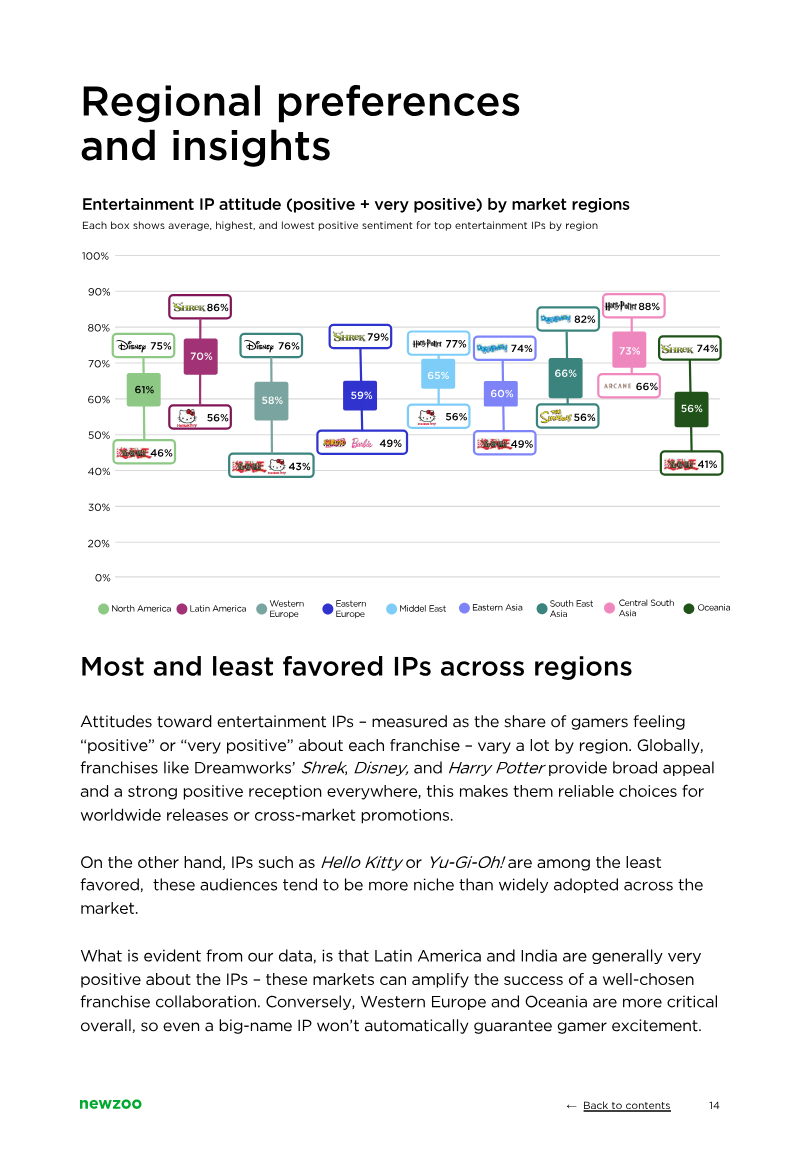
This analysis explores the intersection of intellectual property (IP) fandom and player engagement within the global gaming industry. The primary thesis is that while transmedia collaborations are essential for driving player acquisition and retention in a live-service landscape, the effectiveness of an IP is heavily dictated by regional awareness and cultural sentiment. Success in global gaming requires a move away from one-size-fits-all licensing toward market-specific strategies that align with local fanbases. The findings are based on the 2025 Global Gamer Study, which surveyed over 73,000 consumers across 36 markets, tracking awareness and attitudes toward 42 popular entertainment IPs. Data indicates that a majority of gamers in 24 of the 36 countries are more likely to play a game featuring their favorite IP. This influence is strongest in South Asia (74%) and Latin America (64%), while Western Europe and Oceania show more reserved engagement levels (45%). The research categorizes IPs into four quadrants based on the relationship between awareness and favorability. Global Favorites, such as Harry Potter and Disney, maintain near-universal recognition (90%) and high sentiment. Familiar Faces like Star Wars and Barbie possess high awareness but suffer from polarizing or lower favorability in specific regions. Hidden Gems, including Studio Ghibli and various anime titles, maintain niche global awareness but command intense loyalty in specific markets like Japan or Vietnam. Finally, IPs with Limited Appeal, such as Doctor Who or Percy Jackson, struggle with both low recognition and lukewarm sentiment outside their core territories. Geographic variations are stark; for instance, anime franchises like Dragon Ball achieve 85–90% awareness in Latin America and Southeast Asia, nearly double their recognition in the West. Conversely, Western staples like DC Comics see high awareness in the U.S. (70%) but significantly lower traction in Japan (21%). The study concludes that cultural resonance, linguistic accessibility, and historical distribution patterns are the primary drivers of IP success in the gaming sector.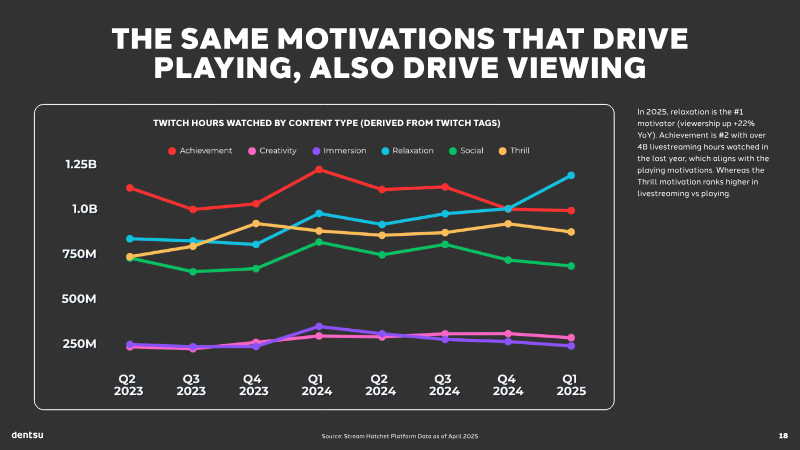

dentsu gaming · 2025
ReportGaming: Your Marketing Cheatcode
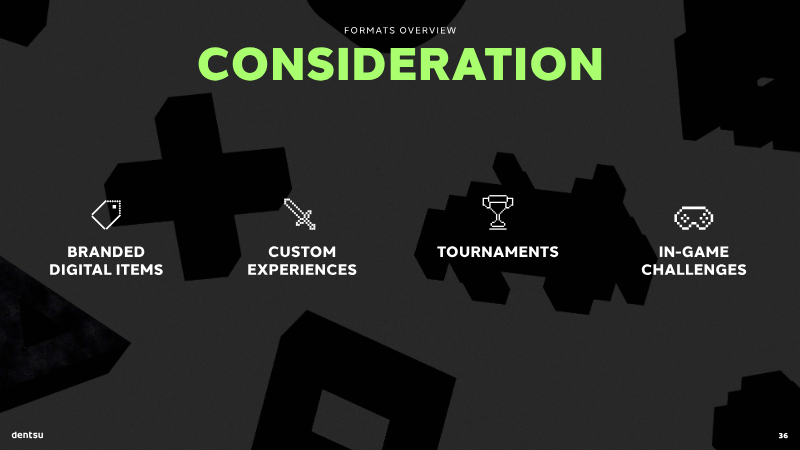
Gaming has evolved into a horizontal cultural layer encompassing 3.4 billion global players who utilize interactive platforms to build identity and community. Despite this massive reach, the sector currently receives less than 5% of global media investment, representing a significant disconnect between consumer attention and advertising spend. The industry is increasingly defined by transmedia expansion and social connectivity, particularly among Gen Z audiences who prioritize platforms like Roblox and Discord for brand discovery and social interaction. Success in this landscape requires a strategic shift from isolated sponsorships toward full-funnel integrations that align with specific player motivations, including relaxation, achievement, and immersion. The shift toward non-intrusive brand integration utilizes high-impact formats such as rewarded video and custom in-game partnerships to secure superior video completion rates and brand recall. Immersive strategies drive substantial consumer consideration, with 55% of players expressing interest in branded virtual items. Furthermore, custom experiences within gaming environments can yield up to 100x higher attention levels than traditional social media. Case studies involving major titles like Genshin Impact demonstrate that blending digital fandom with real-world value can result in triple-digit sales growth and heightened community engagement. As a full-funnel engine, gaming integrations now produce measurable lifts in awareness and consideration through interactive campaigns. Data indicates that gamified loyalty programs can increase purchase rates by 12% and guest spend by 64%, while in-game commerce on platforms like Roblox generates significant revenue for developers. Looking ahead, the industry trajectory is shaped by the expansion of cloud gaming and highly anticipated hardware and software launches, such as the Nintendo Switch 2 and Grand Theft Auto VI. These developments reinforce gaming's role as a primary driver of modern media consumption and commercial conversion.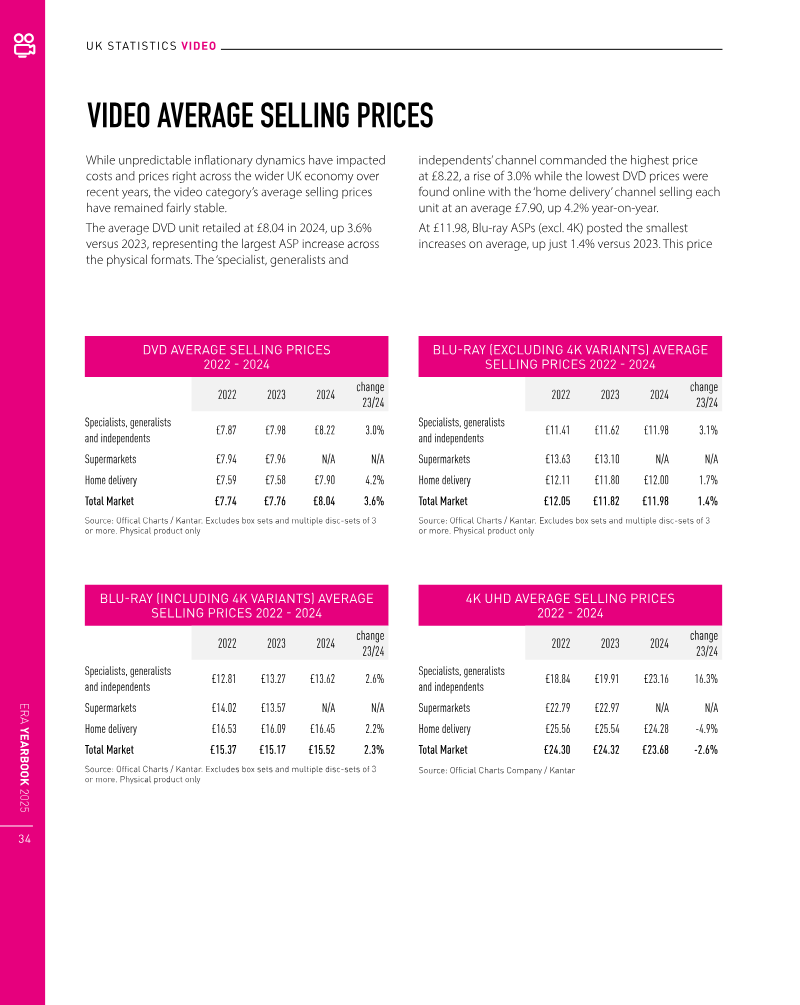
ERA · 2025
ReportChampioning the 25 Retailers and Digital Services Who Connect Music, Video and Games Creators with UK Fans Yearbook
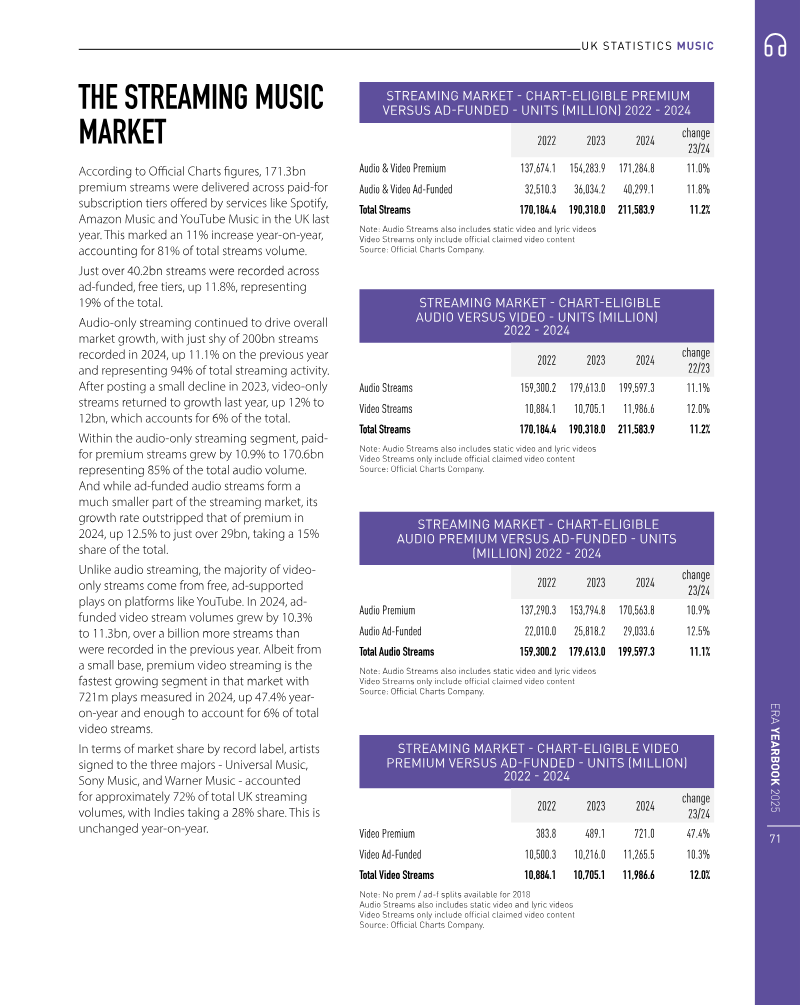
The United Kingdom’s entertainment market reached a historic milestone in 2024, achieving a record valuation of £12.0 billion. This performance marks twelve consecutive years of growth and a 50% increase in market value since 2019. The industry has undergone a near-total digital transformation, with streaming and digital services now accounting for 93% of total revenues. Subscription-based models have become the primary engine of this economy, representing over three-quarters of total consumer spend across the music, video, and gaming sectors. Video remains the largest individual segment, valued at £5.0 billion. This growth is fueled almost exclusively by Subscription Video on Demand (SVoD), which rose 8.3% to reach £4.46 billion, offsetting a sixteen-year decline in physical media. Conversely, the gaming sector experienced a 4.4% contraction to £4.61 billion. This decline was driven by a sharp 34.5% collapse in physical software sales and a cyclical downturn in hardware as major consoles reach maturity. Despite this, gaming remains overwhelmingly digital, with 98.6% of consumer spend occurring through online channels, particularly via mobile gaming and digital subscriptions. Music emerged as the fastest-growing sector, reaching a record £2.4 billion. While digital streaming accounts for 85% of this value, the music industry is unique for its resilient physical market. Vinyl LPs saw their 17th consecutive year of growth, with unit sales rising to 7.1 million. This resurgence has revitalized the high street; independent music shops now account for 24% of total outlets, up from just 2% in 2015. While supermarkets and traditional retailers are exiting the physical games and video space, specialist and independent retailers are capturing a five-year high in physical market share, supported by major promotional events and a consumer shift toward high-definition and collectible formats.

SocialPeta · 2024
Report