Reports in the Market (PC & Console) category.
The 2025 PC and console landscape is dominated by Steam, which recorded 450 million downloads and is projected to achieve a record $12 billion in premium revenue, reflecting a 15 percent year‑to‑date increase. PlayStation and Xbox follow with 376 million and 283 million downloads respectively, underscoring Steam’s clear lead in both user acquisition and monetisation. Across the combined market, action titles command the highest demand at 262 million downloads, while shooters and role‑playing games attract 189 million and 131 million downloads, indicating a strong preference for high‑intensity, narrative‑driven experiences among gamers.
Premium revenue accounts for the majority of earnings on the leading platforms, with Steam generating 79 percent of its income from premium sales and PlayStation reaching 83 percent, highlighting the continued viability of upfront purchase models despite the growth of free‑to‑play alternatives. The data suggest that while free‑to‑play titles remain a significant segment, the premium‑heavy ecosystem retains a decisive advantage in revenue generation.
Overall, the findings illustrate a globally integrated market in 2025 where PC distribution via Steam outpaces console rivals, genre preferences skew toward action‑oriented titles, and premium monetisation continues to dominate the financial structure of the industry.
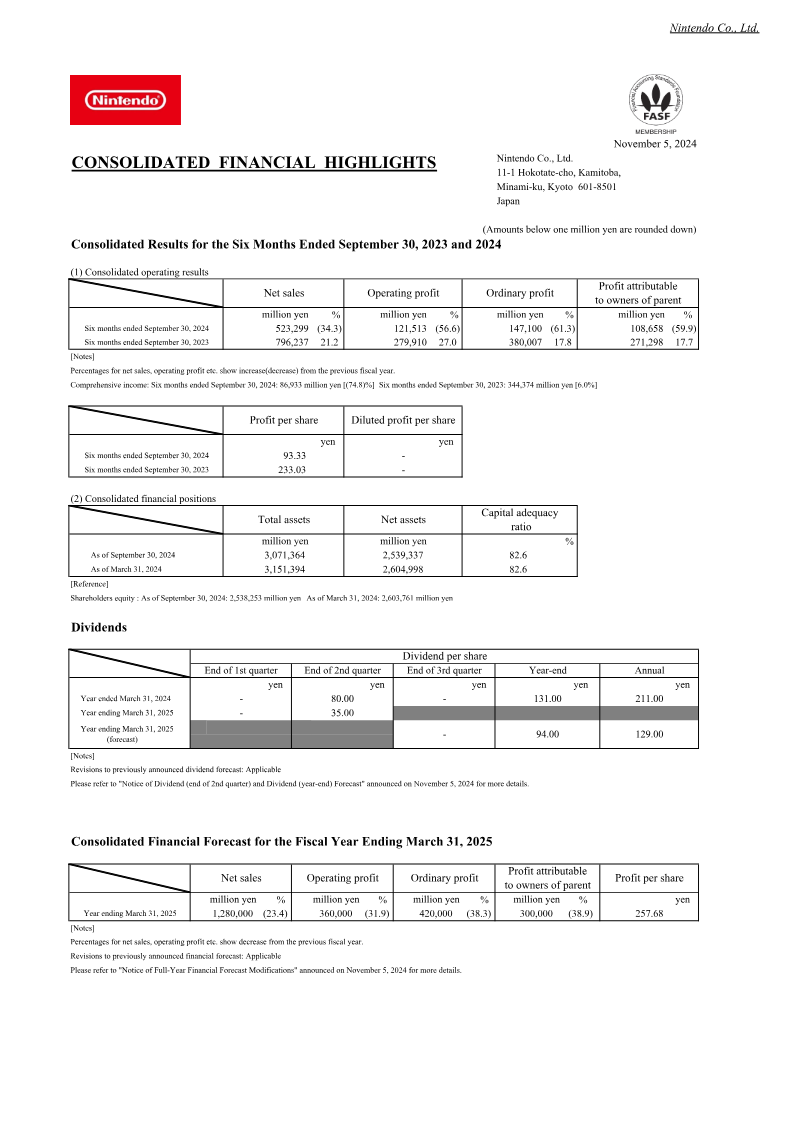
Nintendo’s consolidated financial results for the first half of the fiscal year ending March 31, 2025, reveal a significant year-on-year contraction in performance across all major financial metrics. Net sales fell by 34.3% to 523.2 billion yen, while operating profit declined by 56.6% to 121.5 billion yen. Profit attributable to owners of the parent saw a 59.9% decrease, totaling 108.6 billion yen. These results reflect a challenging comparison to the previous year, which benefited from the high-profile release of The Legend of Zelda: Tears of the Kingdom and the global success of The Super Mario Bros. Movie.
The downturn is primarily driven by declining hardware and software volumes as the Nintendo Switch enters its eighth year. Hardware sales reached 4.72 million units, a 31% decrease, while software sales fell 27.6% to 70.28 million units. Despite the overall decline, the platform maintained engagement with nine million-seller titles during the period, led by The Legend of Zelda: Echoes of Wisdom and Paper Mario: The Thousand-Year Door. Digital sales also saw a 26.5% reduction, and mobile/IP-related revenue dropped 43.3% due to the absence of movie-related income that bolstered the prior year’s figures.
Geographically, the business remains heavily export-oriented, with international sales accounting for 74.7% of total revenue. The financial position remains stable with a capital adequacy ratio of 82.6%, though total assets decreased slightly to 3.07 trillion yen. In response to first-half performance falling below initial expectations, full-year forecasts have been revised downward. The updated outlook projects annual net sales of 1.28 trillion yen and an operating profit of 360 billion yen, representing year-on-year decreases of 23.4% and 31.9%, respectively. Management intends to mitigate these trends by focusing on upcoming software releases and maintaining the "multiple systems per household" strategy.
The analysis presents a comprehensive review of investment and merger‑and‑acquisition activity within the console and PC video‑game sector for the 2023 fiscal year, positioning 2023 as an outlier driven primarily by Microsoft’s $68.7 billion acquisition of Activision Blizzard. Total deal value reached $69.5 billion across 200 transactions, a 612 % increase in value yet a 25 % decline in transaction count compared with 2022, and twice the combined value of the preceding five‑year period (2018‑2022). Investment volume fell to $627.8 million across 161 deals, while M&A volume surged to $68.8 billion in 39 deals, accounting for more than 99 % of North American M&A value. IPO activity contracted sharply, with six offerings generating $46 million in market capitalisation, down 85 % from the prior year.
Geographically, North America and Europe dominated private investment, contributing $184.7 million (29 % of volume) and $358.8 million (57 % of volume) respectively, while Australia and New Zealand saw limited activity aside from a government grant program. Investors favored micro‑studios (median six employees), whereas acquirers targeted slightly larger teams (median 39 employees). Blockchain‑related deals comprised 15 % of investment value but only 13 % of transaction count, highlighted by Mythic Protocol’s $6.5 million seed round.
Methodologically, the review counts only closed transactions, excluding announced deals, and treats SPAC proceeds as the investment amount rather than post‑transaction valuation. Data are drawn from a proprietary, sixteen‑year‑old database that tracks Western‑focused game‑industry deals across development, publishing, and technology, ensuring consistency and comparability across quarters. The findings underscore a market concentrated around a few mega‑deals, with modest activity elsewhere and a clear shift toward larger, strategic acquisitions.
The 2024 Global Indie Games Market Report by Video Game Insights analyzes the significant growth and evolving structure of the independent gaming sector on Steam from 2018 through September 2024. The central thesis posits that indie games have reached a historical milestone, with their revenue share doubling since 2018 to match the combined earnings of AA and AAA titles for the first time. This surge is largely attributed to the rise of "Triple I" games—high-budget independent projects with teams of over 50 people—which now account for more than half of all indie revenue.
Key findings highlight that 2024 was a record-breaking year driven by exceptional hits like Black Myth: Wukong and Palworld, which sold 20.6 million and 20.1 million units respectively. The data reveals an increasing concentration of wealth at the top of the market; excluding these two titles, all other 2024 indie releases combined generated less revenue than Black Myth: Wukong alone. Furthermore, the report identifies a trend toward studio maturity, noting that second and third releases typically outperform debut titles. Successful developers like Pocketpair and Sunlock Studios achieved massive hits only after releasing multiple previous games.
The scope of the analysis focuses on the Steam platform, segmenting the market into four categories: Triple I, Middle Market, Small Teams, and Hobbyists. While all segments saw a "boom" during the COVID-19 pandemic, the larger Triple I and Middle Market tiers have seen the most substantial long-term growth. Methodology involves proprietary algorithms and the Boxleiter method to estimate unit sales and gross revenue from public Steam data, adjusted for regional pricing and returns. The findings suggest that the traditional definition of "indie" is blurring as production qualities and budgets of top-tier independent games now rival those of major AAA studios.
The video game industry has entered a definitive era of remakes and remasters, fueled by a risk-averse development climate and the significant purchasing power of nostalgic Millennial consumers. These projects serve as a strategic hedge against the rising costs of original intellectual property, allowing developers to re-engage dormant fanbases while attracting new audiences through modernized graphics and gameplay. Success in this sector depends heavily on timing and the specific nature of the renewal. Remasters perform most effectively when released within five years of an original title to capitalize on hardware transitions. Conversely, full remakes require a longer gestation period, typically between nine and twenty-five years, to ensure that technological advancements are substantial enough to justify a full-price purchase.
Effective remakes must strike a delicate balance between preservation and modernization. Developers are encouraged to maintain the core essence and iconic moments of a title—such as specific art styles or dialogue—while aggressively updating outdated mechanics like quick-time events. Leveraging contemporary hardware capabilities, such as 3D audio and advanced rendering, is essential for meeting modern player expectations. By aligning these updates with a clear vision for modernization, studios can successfully bridge the gap between historical authenticity and current industry standards.
This 2024 analysis provides a comprehensive overview of the global gaming landscape, focusing on the strategic advantages of revitalizing established franchises. While the findings highlight clear pathways to commercial success through market-tested IPs, the data is intended for informational purposes and reflects the broader trends shaping the current development cycle. Ultimately, the strategic deployment of remakes and remasters reduces financial volatility for studios while ensuring that classic gaming experiences remain accessible and relevant in a rapidly evolving technological environment.
The 2024 Newzoo PC & Console Gaming Report presents a cautiously optimistic outlook for the global market, with 2023 revenues rising 2.6 % to $93.5 bn. Growth is largely driven by PC game sales, while console revenue increased modestly at 1.7 % YoY. Playtime is falling, and player growth is flattening: PC players are projected to grow at 1.6 % CAGR and console players at 3 % through 2026, making it increasingly difficult to expand the player base. Premium transactions dominate spending, accounting for roughly 56–57 % of total spend; live‑service and subscription models still lag behind full‑price titles, underscoring the need for studios to focus on high‑quality releases and robust content pipelines.
Fortnite and Roblox command over 60 % of total playtime in 2023, reinforcing a highly concentrated market where established platforms and annual franchises dominate engagement. Quarterly playtime has fallen 26 % since Q1 2021, with older titles accounting for more than 60 % of hours and new releases only about 8 %. Live‑service pay‑to‑play games capture the majority of new‑title revenue, making it challenging for fresh IPs to gain traction.
Concentration among publishers has tightened further: between 28 and 34 publishers captured 80 % of monthly active users in 2023, a trend that has been tightening since 2021. While the number of titles driving 75–90 % of MAU has remained roughly flat, playtime per user is falling. Over half of the top new releases are franchise titles, and remakes or transmedia adaptations can boost both new and legacy game MAU by 35–60 %.
Multi‑platform play is significant, with nearly half of gamers (47 %) playing on two or more platforms. Multi‑platform players spend 79 % of their time and represent 41 % of the total player base, indicating higher engagement and spend. Emerging markets are projected to outpace established ones with a 4.7 % CAGR versus 0.2 %, and cloud gaming is identified as a key entry point due to high awareness (32 %) and low hardware barriers. Expanding beyond a single platform—especially into mobile or cloud services—offers new revenue routes but requires tailored experiences and messaging for diverse audiences.
The analysis evaluates the free‑to‑play (FtP) segment on Steam, highlighting its dominant share of player engagement and the increasing difficulty for new titles to break through. In 2023, FtP games accounted for 51 % of total hours played on the platform, despite premium titles comprising the majority of releases. Engagement is highly concentrated: the top 25 FtP titles generate 88 % of all FtP activity, the top 10 capture roughly 70 %, and the top five hold nearly 60 % of concurrent users (CCU). Counter‑Strike 2 and Dota 2 continue to lead the charts, with eight of the ten highest‑CCU games in 2023 being FtP, while only one premium title (Rust) appears in the list.
The market shows signs of compression as high‑quality premium and paid‑live‑service games erode FtP share. Between 2021 and 2024, premium titles priced $10‑$50 grew from 31 % to 37 % of total playtime, and flagship releases such as Elden Ring and Hogwarts have boosted the over‑$50 segment. Nonetheless, FtP titles remain older on average; the top ten FtP games have a mean age of seven years, and only two new entries (Call of Duty Warzone and Naraka: Bladepoint) have entered the top‑ten
Thunderful Group’s interim report for the first quarter of 2024 details a period of significant financial decline and aggressive corporate restructuring. Net revenue fell 27.7 percent to 391.7 MSEK, while the group recorded an operating loss (EBIT) of 184.4 MSEK, a sharp reversal from the 19.2 MSEK profit reported in the same period the previous year. This downturn was driven by a 35.5 percent revenue drop in the Games segment and a 25.7 percent decrease in Distribution, largely due to weaker market demand for Nintendo Switch products and the underperformance of the internal title SteamWorld Build.
To address these challenges, the group initiated a restructuring program aimed at annual cost savings of 90–110 MSEK. This process involved a 72.4 MSEK write-down of capitalized development costs following the cancellation or divestment of twelve game projects. Strategic shifts include the divestment of the German publishing subsidiary Headup GmbH and the sale of Nordic Game Supply’s assets to reduce net debt. Despite these pressures, the group successfully extended its Nintendo distribution agreement for the Nordics and Baltics through March 2026 and reported 13.9 percent growth in its Amo Toys division.
The report covers the group’s global operations with a focus on European and Nordic markets for the period of January to March 2024. Financial data indicates a strained liquidity position, with cash and credit facilities dropping to 130.9 MSEK from 329.3 MSEK year-over-year. Management secured a bank waiver conditional on asset divestments and maintains that current funds are sufficient for continued operations. The overarching strategy moving forward emphasizes a simplified games portfolio, more rigorous project validation, and a balanced risk profile across internal and external development.
The global games market in 2024 is characterized by a period of stabilization and strategic restructuring following the post-pandemic correction. While the industry saw a revenue decline in 2022, recovery began in 2023 and is expected to continue through 2024, driven largely by the expanding install base of current-generation consoles like the PlayStation 5 and Xbox Series X|S. Despite this growth, the year is defined as a lean period for many companies as they navigate high interest rates, reduced investment capital, and a highly competitive landscape where a small number of titles dominate the majority of player engagement.
Key findings indicate a significant shift in business models and platform strategies. While live-service games remain the primary revenue drivers, the market is experiencing oversaturation, leading many developers to return to premium, finite gaming experiences. Growth in multi-game subscription services is expected to slow as they face competition from free-to-play social platforms like Fortnite and Roblox. Additionally, mobile developers are increasingly diversifying by bringing their titles to PC to combat rising user acquisition costs and stricter privacy regulations. Major hardware and distribution shifts are also anticipated, including the launch of a new Nintendo console and the introduction of an Xbox mobile store on Android.
The scope of this analysis covers global market trends across PC, console, and mobile segments, with revenue forecasting extending through 2026. The methodology combines internal market data and analyst perspectives with a survey of gaming executives and industry experts from companies such as Ubisoft, Iron Galaxy Studios, and Savvy Games Group. Emerging technologies like generative AI are identified as tools for increasing production efficiency, though they are not expected to transform game development at scale within the immediate calendar year. Overall, the industry is moving toward risk-reduction strategies, focusing on established intellectual properties and cross-platform accessibility to maintain stability.
The Game & Network Services segment demonstrates a robust market position characterized by a PlayStation 5 monthly active user base of 118 million and a significant increase in per-console spending, which currently averages $731. This financial performance is underpinned by a strategic shift toward a digital-first ecosystem and recurring revenue models, evidenced by 35% of PlayStation Plus subscribers migrating to premium tiers. Looking toward the FY24–26 period, the primary objective is to secure sustainable profitability by balancing traditional hardware sales with an expanded peripheral lineup and the integration of AI and hybrid cloud technologies to optimize engineering efficiencies.
The operational strategy for PlayStation Studios emphasizes a multi-format expansion of intellectual property across console, PC, and live service platforms. Following a period of aggressive studio acquisitions between FY21 and FY23, the focus has transitioned toward disciplined development frameworks and the management of a diversified portfolio. This portfolio includes high-performing tentpole franchises, such as Marvel’s Spider-Man 2 and Helldivers 2, alongside transformational live services and experimental titles. By leveraging broader corporate synergies, the segment aims to maximize the reach of its core IP while utilizing AI-driven tools to streamline production costs and timelines.
Future growth remains subject to a complex landscape of macroeconomic and technological risks. Intense market competition and rapid shifts in consumer technology necessitate constant innovation, while financial outcomes are sensitive to foreign exchange volatility, particularly involving the Yen, USD, and Euro. Furthermore, global stability is pressured by geopolitical conflicts and regulatory scrutiny, which may impact supply chains and international operations. Maintaining product quality and cybersecurity remains a critical priority as the segment navigates these external pressures to achieve its long-term financial targets.
Cooperative video games have emerged as a dominant force on the Steam platform, significantly overperforming relative to their total volume of releases. While only six percent of games launched in 2023 featured co-op mechanics, these titles accounted for thirty-six percent of all units sold. This trend has accelerated sharply in 2024, driven by massive breakout hits like Palworld and Helldivers 2. Market data indicates that Palworld alone represented nearly half of the forty million co-op units sold in the first half of 2024, illustrating a high concentration of success among top-tier titles.
The commercial advantage of cooperative play extends across the entire industry spectrum, from major publishers to small independent studios. A typical co-op game sells approximately 40,000 units on Steam, compared to just 5,000 units for non-cooperative titles. Even the bottom quartile of co-op games performs twice as well as their single-player counterparts. For larger publishers, the segment offers substantial scale, evidenced by over one hundred co-op titles surpassing five million lifetime unit sales. This consistent outperformance suggests that social mechanics provide a higher floor and a significantly higher ceiling for commercial viability.
The success of the genre is rooted in organic marketing and player psychology. Cooperative design naturally encourages word-of-mouth promotion, as players actively recruit friends to join their sessions. These games are characterized by high replayability and "memorable" moments that translate well to social media and live-streaming platforms. By creating shareable and streamable content, co-op games generate natural hype cycles that reduce the reliance on traditional advertising. Following a brief normalization period after the initial pandemic-driven surge, the current market trajectory confirms that social, team-based dynamics remain a primary driver of player engagement and revenue growth in the PC gaming sector.
The PC and console gaming market reached $93.5 billion in 2023, marking a 2.6% increase even as the industry enters a period of decelerating growth and intensifying competition. While total revenue remains substantial, average quarterly playtime has plummeted by 26% since 2021. This contraction is exacerbated by a heavy concentration of engagement within a small selection of "evergreen" titles and established platforms like Fortnite and Roblox. These games, which are over seven years old on average, now command more than half of all total playtime, creating a challenging environment for new market entrants.
Market dominance is increasingly consolidated among a shrinking group of approximately 30 publishers who control 80% of all monthly active users. In 2023, games six years or older accounted for over 60% of total playtime. Although new releases captured 23% of the market's attention, the vast majority of that share was claimed by annual franchise sequels. This leaves non-annual, original titles to compete for a mere 8% of total playtime, illustrating a significant barrier to entry for innovative or independent intellectual properties in the current landscape.
To navigate this stagnation, the industry is pivoting toward transmedia adaptations and cross-platform expansion. Film and television tie-ins have proven highly effective, driving an average 35% increase in monthly active users for associated titles. Furthermore, expanding established IPs to mobile and cloud platforms is essential for diversifying player demographics and reaching emerging markets in Latin America, Africa, and Southern Asia. Future success depends on capturing multiplayer-first audiences and leveraging cloud technology to bypass traditional hardware barriers, allowing publishers to tap into rapidly growing global player bases.