Europe
National and regional reports on the European games industry.
328 documents
Dutch Games Association · 2015
ReportDutch Games Monitor: The Netherlands 2015
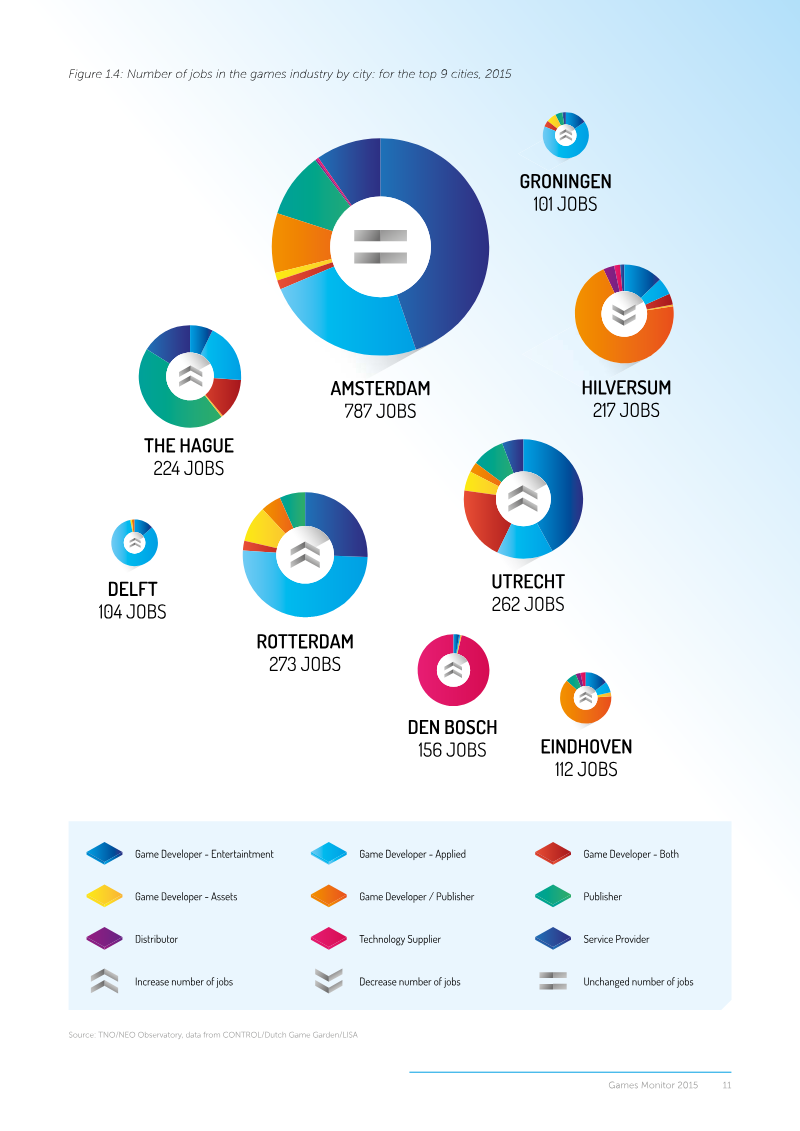
The Dutch games industry underwent a period of rapid expansion between 2011 and 2015, characterized by a 42 percent increase in the number of firms to 455 companies. Despite this growth, the sector remains dominated by small, young enterprises, with over half of all studios reporting annual turnovers below €100,000. While the industry employs 3,030 professionals, it faces structural challenges, including a high rate of business turnover, limited access to traditional financing, and a persistent shortage of specialized business and marketing expertise. Applied gaming remains a cornerstone of the Dutch market, accounting for 44 percent of development firms with a primary focus on education, healthcare, and professional training. Although the entertainment sector has overtaken applied gaming in total production volume, the industry as a whole struggles with market saturation and a lack of large-scale studios. When compared to international peers like Poland, the Dutch sector exhibits lower turnover per employee and a greater reliance on client-driven contracts rather than the hit-driven, intellectual property-focused models that have fueled success elsewhere. To ensure long-term sustainability, the industry must transition from a reliance on small-scale, project-based work toward the development of proprietary intellectual property and larger, more stable team structures. Bridging the gap between the high volume of game education graduates and actual market demand is essential, as is fostering stronger entrepreneurial skills within studios. By prioritizing strategic partnerships and risk consolidation, the Dutch games industry can move beyond its current state of fragmentation to achieve greater commercial viability and economic impact on both a national and international scale.
Dutch Games Association · 2015
ReportDutch Games Monitor: Main Facts & Figures 2015
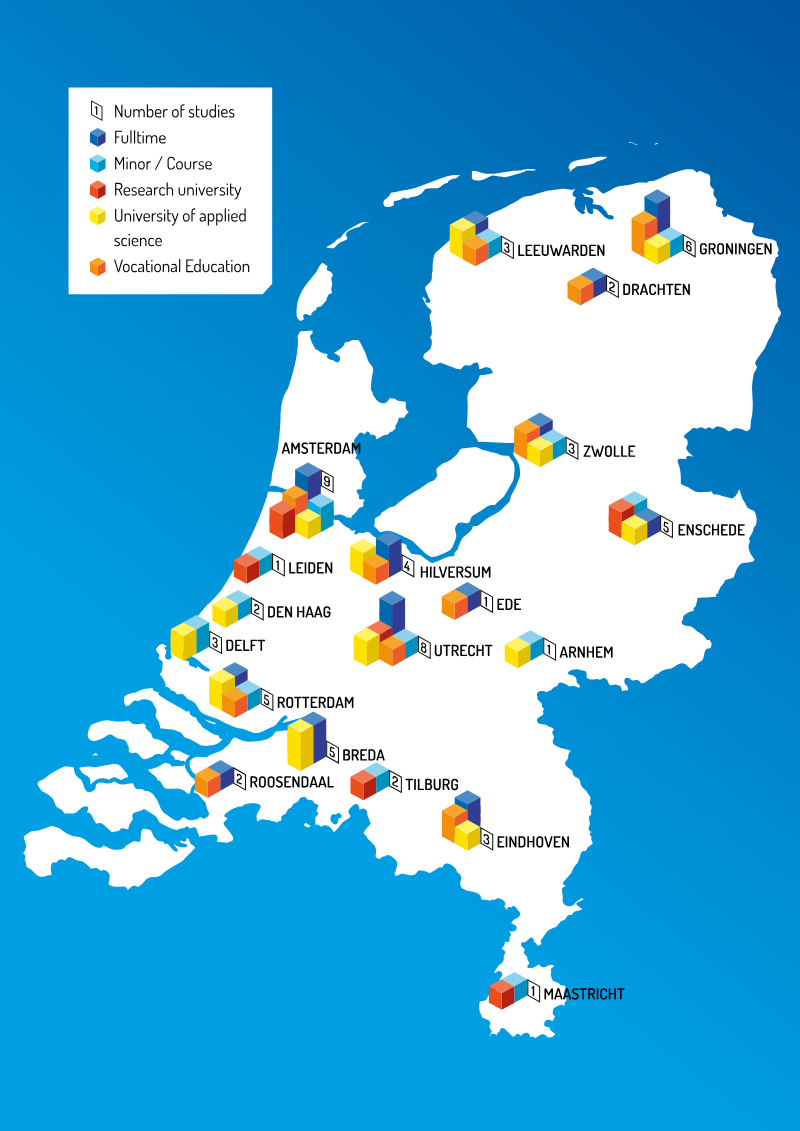
The Dutch games industry experienced significant expansion between 2011 and 2015, characterized by a 42% increase in the number of companies, which grew from 320 to 455. This growth was primarily driven by a surge in new, small-scale game development studios. Despite this rise in firm count, the industry remains dominated by micro-enterprises with an average of seven employees. While the total workforce expanded from 2,730 to 3,030 professionals, the rate of job creation was slower than the rate of company formation, reflecting the challenges start-ups face in scaling operations and achieving long-term sustainability. The industry is bifurcated into entertainment and applied games, with the latter maintaining a particularly strong foothold in the Netherlands compared to other European nations. Applied game studios, which focus on training, education, and health, faced significant market volatility between 2013 and 2014, though demand for these services rebounded sharply by 2015. To mitigate risks associated with the hit-driven nature of the entertainment market and the project-based cycles of applied games, many studios are shifting toward product-based models and forming strategic alliances for marketing and funding. Data for this analysis was gathered through a questionnaire sent to over 400 companies, with 130 responses, supplemented by industry roundtable discussions and existing databases. Financial performance remains modest, with most companies reporting annual profits under €100,000. While the number of game-related educational programs has increased by 25%, a persistent skills gap remains, as studios struggle to find employees with the necessary entrepreneurial and business acumen. Ultimately, while the Dutch ecosystem shows robust growth, the industry continues to grapple with the difficulty of transitioning from small start-ups to larger, commercially stable entities.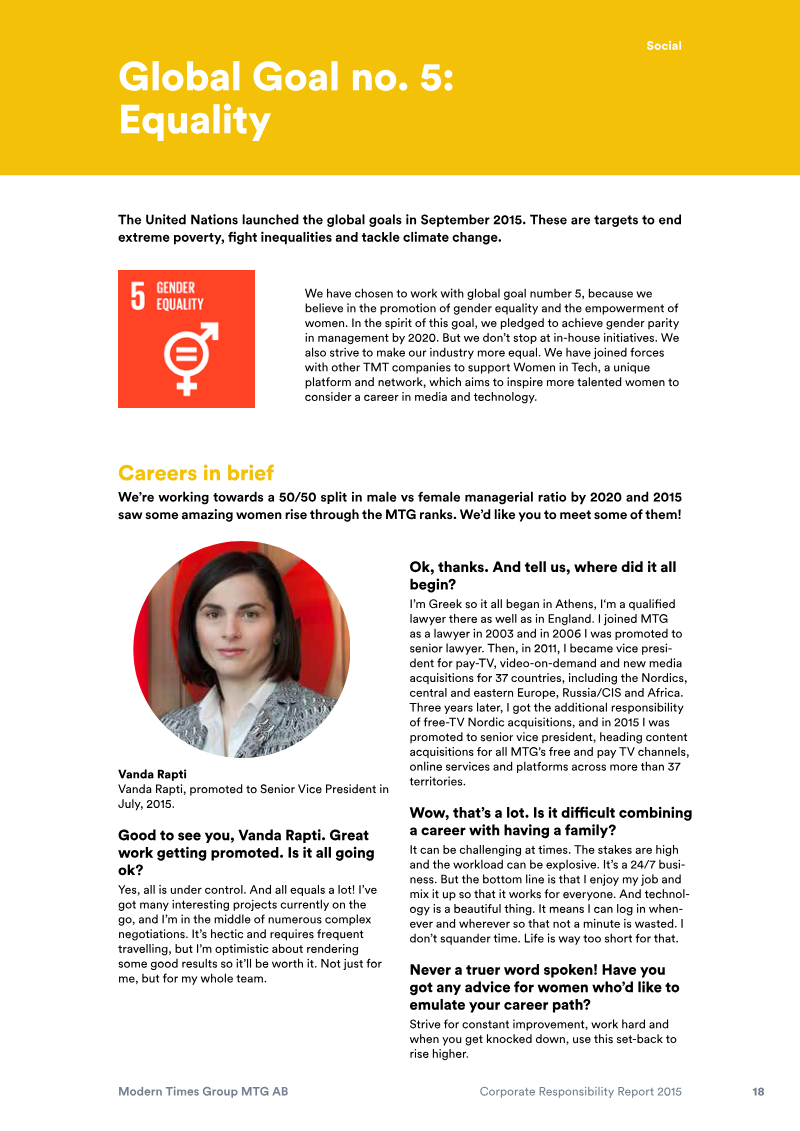

Modern Times Group · 2015
ReportMTG Corporate Responsibility Report 2015
In 2015 the media group placed corporate responsibility at the core of its strategy, integrating ethical governance, sustainability and gender-parity objectives across a global operation that spans 165 countries and includes broadcast, content localisation and e-sports segments. The company achieved a 96% compliance rate among 514 new hires—drawn from 38 nationalities—who signed a unified code of conduct, whistle-blower and anti-bribery policies aligned with the UN Global Compact and OECD guidelines, while stakeholder engagement was overseen by a dedicated board committee. Environmental performance showed mixed results: total carbon emissions rose 13% since 2010, driven largely by travel that accounted for 61% of emissions, and overall energy use increased 3%. Nevertheless, the firm earned a 95 C rating on the Dow Jones Sustainability Index for the third consecutive time, a CDP disclosure score of 95 C, and operates a “green” office equipped with more than 200 solar panels. Targets for 2016 include a 23% reduction in employee energy use (baseline 2010), expansion of renewable energy, and comprehensive data-privacy training in response to upcoming EU legislation. Social impact was highlighted by a 91% accessibility rate for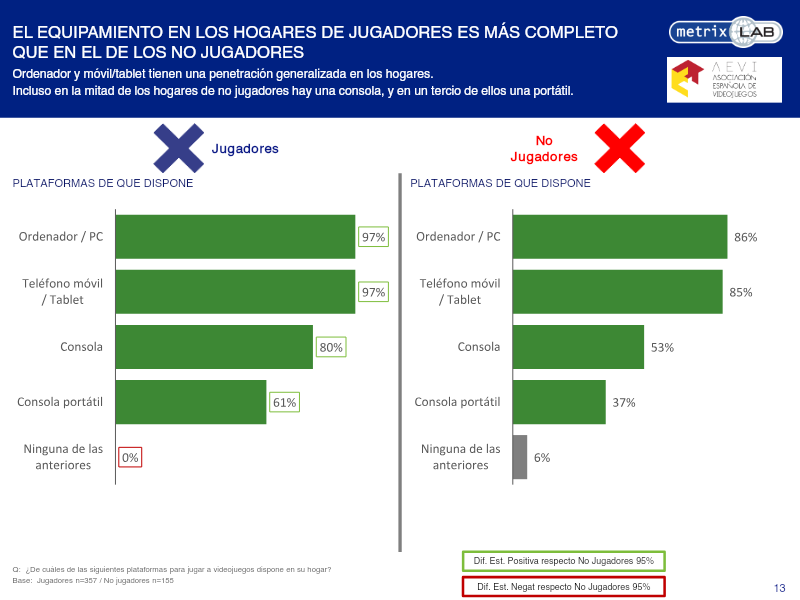
AEVI · 2014
ReportPadres y Videojuegos Hoy: España 2014
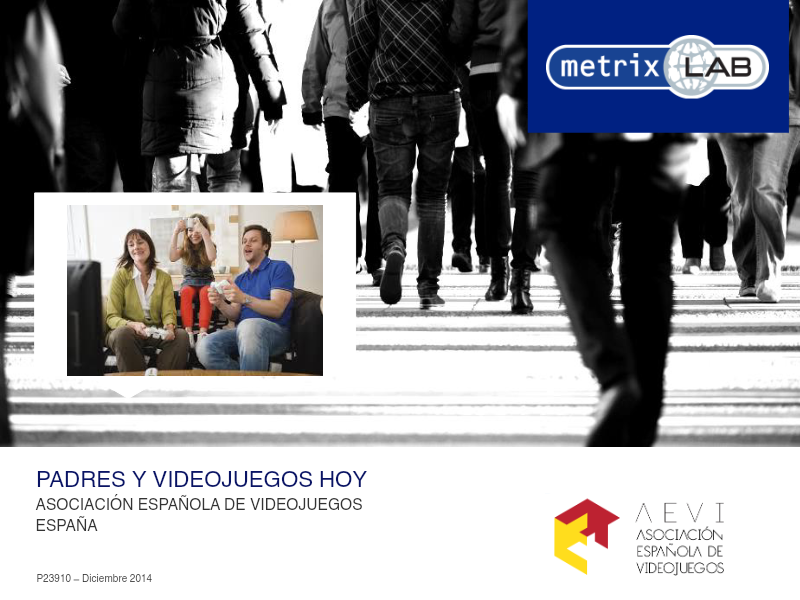
The research investigates contemporary Spanish parental attitudes toward video gaming, focusing on usage patterns, perceived competence, and consumer behavior during the 2014 holiday season. It reveals that a substantial majority—84%—of parents actively play video games and consider themselves technologically equal to or more knowledgeable than their children. This confidence translates into a notable educational dimension, with 40% of parents employing games as learning tools for their offspring. Family interaction emerges as a key driver, as more than half of the surveyed parents have maintained or increased their gaming time after becoming parents, citing shared play as a primary motivator. Economic analysis shows a modest decline in overall holiday spending on games compared with the previous year; however, parents who identify as gamers intend to allocate higher expenditures than non-gamer parents. Video games rank as the most coveted Christmas gift for half of the children surveyed, with a particular preference for physical console titles. Overall, the findings underscore a robust integration of gaming within Spanish households, highlighting parental confidence, educational utilization, and sustained consumer demand despite slight seasonal spending fluctuations. The study’s scope encompasses Spanish families during the December 2014 period, offering insight into parental influence on market dynamics across both digital and physical gaming segments.
Modern Times Group · 2014
ReportMTG Corporate Responsibility Report 2014
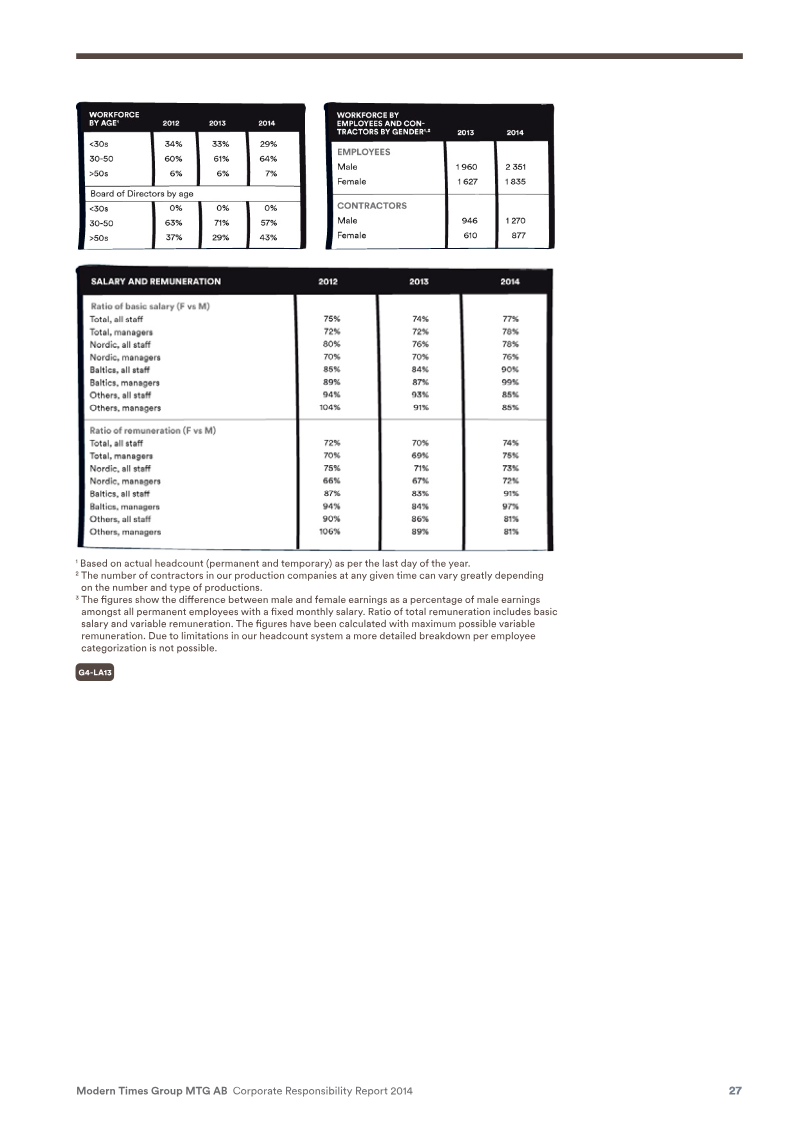
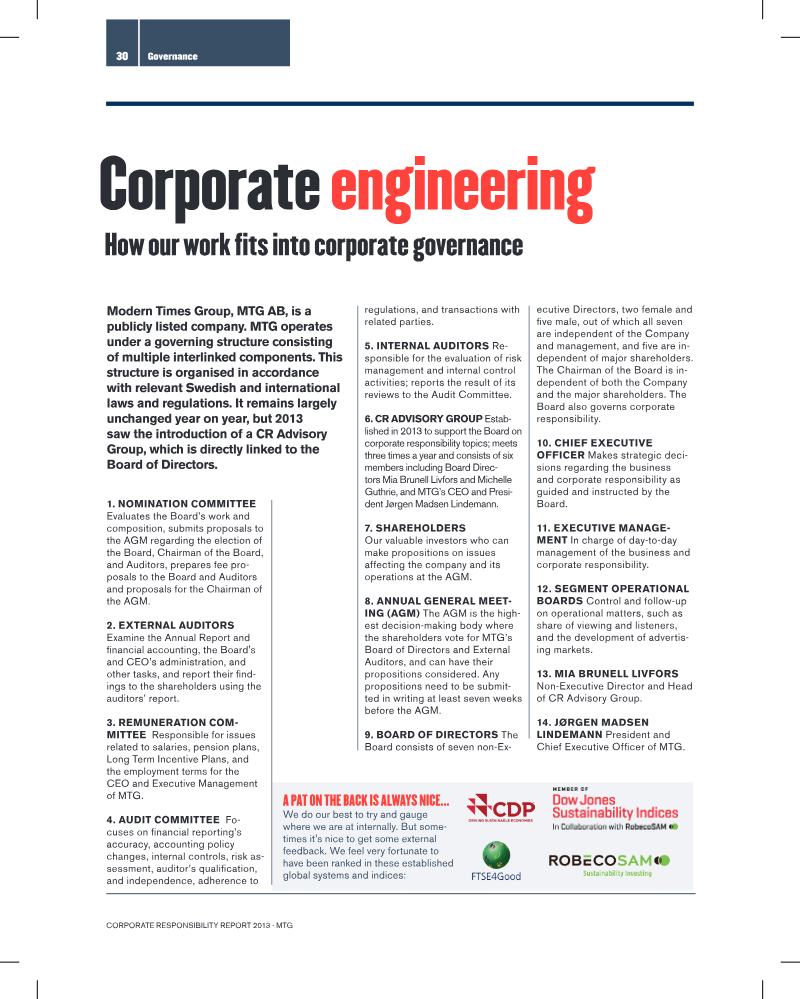
Modern Times Group positioned 2014 as a year of deepening corporate responsibility, linking its expanding digital portfolio to heightened standards in data-privacy, child protection, freedom of expression and sanctions compliance. The narrative underscores a strategic shift toward embedding ethical, anti-corruption and sustainability practices across a globally dispersed media operation. Financially, the company recorded net sales of SEK 16.7 billion, up from SEK 13.3 billion in 2012, while operating income contracted, reflecting investment in new digital initiatives. Governance was reinforced through a dedicated corporate-responsibility advisory group, multiple board committees and local representatives, ensuring that compliance mechanisms permeated all levels of the organization. A UN-Global Compact-aligned system saw 787 employees endorse an anti-bribery policy, the launch of a sanctions-risk register and an Interpol-backed anti-piracy project, alongside comprehensive updates to data-protection protocols. The workforce grew to 4,186 full-time equivalents, achieving an 84% appraisal completion rate and a zero-fatality safety record, with work-related accidents falling from ten to six. Diversity expanded to 44 nationalities and the gender-pay gap narrowed to women earning 75
AEVI · 2014
ReportDossier de Prensa: España 2014
AEVI was created in 2014 to replace aDeSe and to serve as the unified voice of Spain’s video-game ecosystem, encompassing publishers, developers, distributors and related agents. Its core mission is to promote domestic industry growth, attract investment, defend intellectual-property rights and foster a sustainable, responsible market that highlights the sector’s cultural and innovative value. The association now gathers companies that control more than 90% of the national distribution market, including major global publishers such as Activision-Blizzard, Nintendo, Sony, Electronic Arts, Ubisoft and Microsoft Iberia, as well as the first development member, Novarama. Industry data indicate that Spain ranks among the top five European and top ten global gaming markets, with 19 million players across all platforms. In 2013 total consumer spending reached €762 million—software €401 million, hardware €275 million and accessories €86 million—despite a 7% decline in physical sales that nevertheless halved the previous years’ downturn. Adult participation stands at 24% while 62% of minors play regularly. Regulatory focus centers on the PEGI self-rating system, introduced in 2003, and on pending legislative reforms to the Penal Code and Intellectual-Property Law aimed at curbing piracy, which cost the sector €284 million in 2013 and, if eliminated, could generate roughly 26 600 new jobs. AEVI also promotes major events, notably the second edition of Madrid Games Week in October 2014, positioning the capital as a key venue on the international exhibition circuit and providing a forum for industry debate.

Modern Times Group · 2013
ReportMTG Corporate Responsibility Report 2013
In 2013 the media group embedded sustainability within its core strategy, aligning business growth with responsible practices and earning inclusion in the Dow Jones Sustainability Europe Index and FTSE 4Good. Financially, the company generated €14.1 billion in net sales and €1.9 billion in operating profit while employing 3,361 staff and expanding into new European markets through the launch of its digital platform MTGx. Its corporate-responsibility framework is built on four pillars—media responsibility, employees and workplace, environment and community, and business ethics—each supported by concrete actions and measurable targets. Compliance and societal impact were central to operations. A dedicated “C-Team” ensured that broadcast and on-demand content met EU, UK (Ofcom, ASA) and local regulations, with 85% of programming already adapted for regional standards. The group leveraged its TV, radio and digital assets for charitable campaigns, delivering more than €4.3 million in media-time value for Typhoon Haiyan relief, €438 k for the “Angels over Latvia” tour, €115 k for a Lithuanian zoo-elephant project, and additional support for health, education and wildlife initiatives across Ghana, Estonia, Sweden, Bulgaria and other markets. Environmental performance improved markedly. The new London headquarters attained a BREEAM “Excellent” rating and installed roof-mounted solar panels that now supply the majority of its electricity, producing a quantifiable reduction in CO₂ emissions. The company’s CDP climate-change score rose to 88, reflecting stronger governance and disclosure. A materiality analysis highlighted data integrity, privacy and child-online-safety as top concerns, prompting new internal policies, anti-corruption training completed by all staff, and an updated Code of Conduct with 78% e-learning uptake. Gender equity showed progress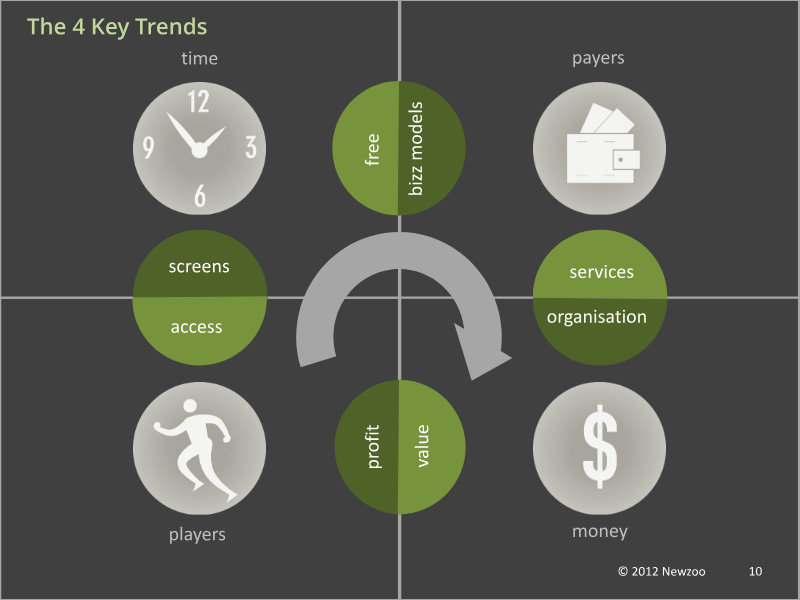

Newzoo · 2012
ReportThe UK Games Market: 2012 Summary Report
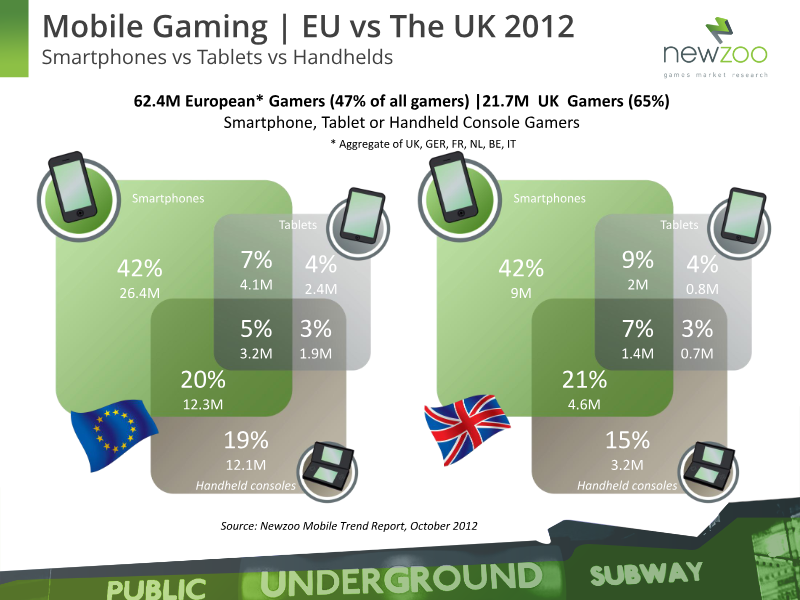
The 2012 UK Games Market report provides a comprehensive analysis of the gaming landscape in the United Kingdom, focusing on player demographics, platform usage, and evolving business models. The primary objective is to offer strategic insights into market growth by synthesizing consumer, transactional, and financial data. The analysis highlights a robust gaming environment, identifying 33.6 million active gamers in the UK—a 9% year-on-year increase—with 64% of these individuals engaging in paid gaming activities. The research utilizes a proprietary Screen Segmentation Model to categorize gaming behavior across four primary screens: computer, console, personal, and floating (mobile) devices. Findings indicate that while console and PC gaming remain dominant, accounting for 43% of total daily game time, mobile and social gaming are significant drivers of industry expansion. The data reveals that the average UK gamer utilizes 3.9 different platforms, reflecting a highly fragmented and multi-platform consumption habit. Furthermore, the report emphasizes that the industry is shifting toward "games as a service," where free-to-play models necessitate a delicate balance between consumer value and corporate profitability. Methodologically, the findings are derived from Newzoo’s extensive consumer research, which cross-analyzes over 200 variables across 12 countries. The scope of the report covers the UK market specifically, with comparative benchmarks against broader European and US trends. By tracking key growth indicators—including player counts, time spent, paying users, and total revenue—the analysis concludes that success in the modern market requires publishers to adapt to cross-screen accessibility and implement sophisticated, service-oriented business models to maintain long-term profitability.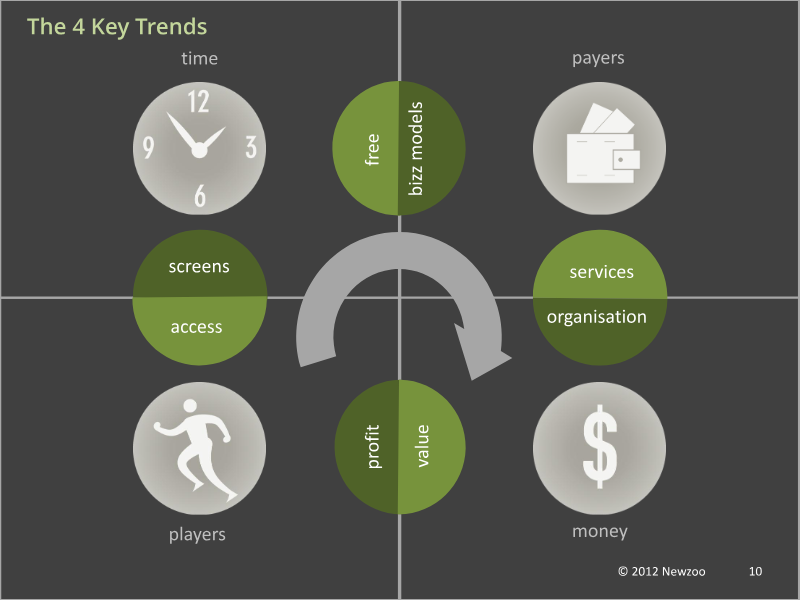
Newzoo · 2012
Report2012 Country Games Market Summary Report: Spain
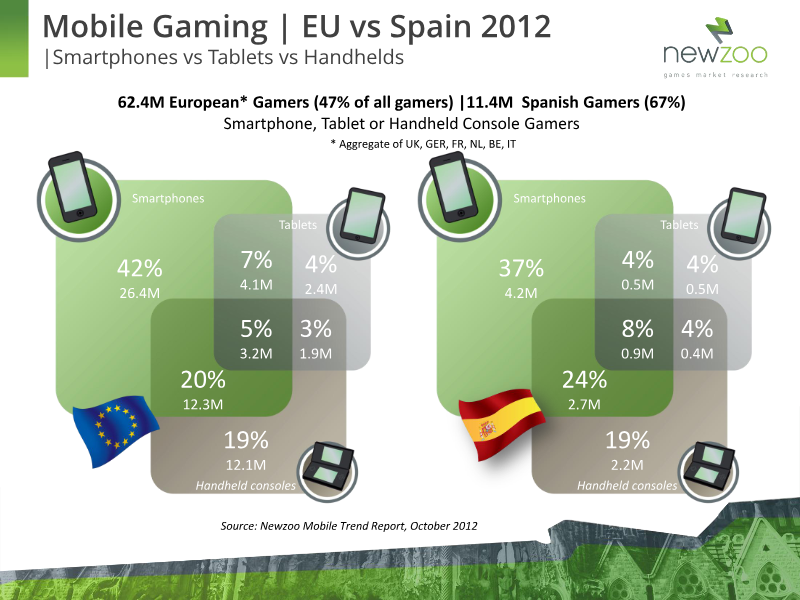
The 2012 Spanish Games Market Summary Report provides a comprehensive analysis of the gaming landscape in Spain, focusing on consumer behavior, platform usage, and market growth. With a total population of 46.8 million, Spain supports an active internet population of 24.8 million, of which 17 million are identified as active gamers. This represents a 13% year-on-year growth in the player base, with 9 million of these individuals classified as paying gamers. The market is characterized by high multi-platform engagement, as the average Spanish gamer utilizes five different platforms. Consoles remain the dominant medium, with 76% of gamers playing on them, followed closely by mobile devices at 76% and casual websites at 68%. Despite the prevalence of consoles, the industry is shifting toward online and mobile ecosystems, which now account for 61% of total game time. Financial performance reflects this transition, with the total market estimated at 1.9 billion euros in 2012, representing a 17% year-on-year increase in spending. Consoles capture the largest share of this revenue at 41%, though the rise of free-to-play business models is fundamentally altering how companies generate value and manage profitability. Methodologically, the report integrates consumer, transactional, and financial data to provide a holistic view of the market. It utilizes a proprietary Screen Segmentation Model to categorize gaming activity across entertainment, personal, and floating screens, allowing for a nuanced comparison between Spain and the broader European market. By tracking key growth indicators—specifically player counts, time spent, paying users, and total revenue—the analysis emphasizes that successful industry participants must prioritize accessibility and service-oriented business models to remain competitive in an increasingly fragmented digital environment.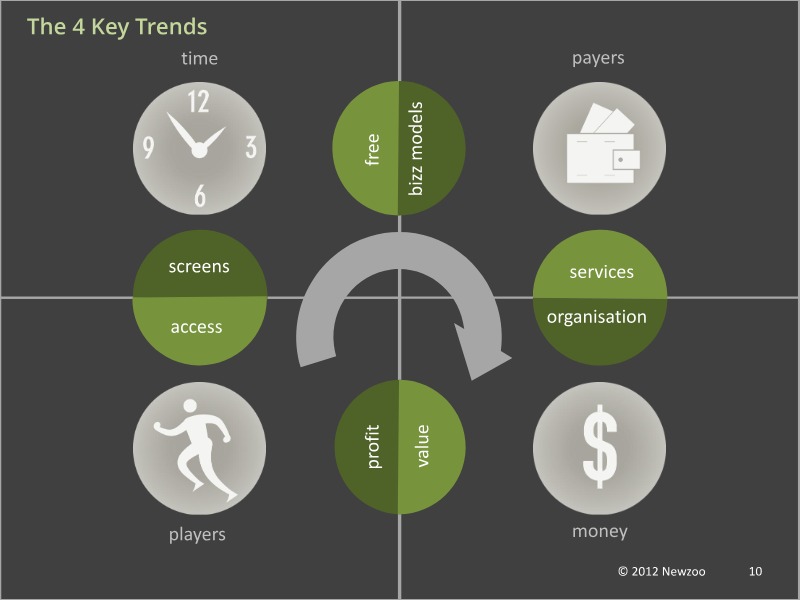
Newzoo · 2012
ReportThe Dutch Games Market: 2012 Summary Report
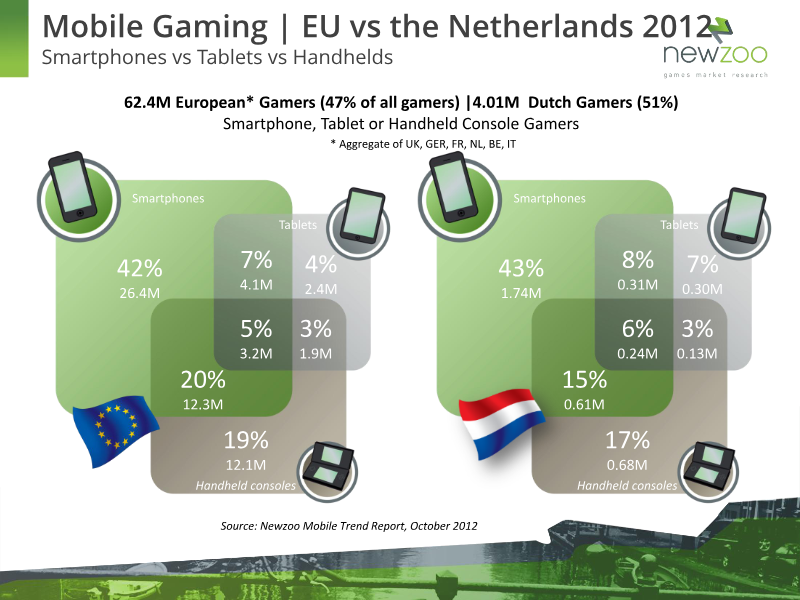
The 2012 Dutch Games Market report provides a comprehensive analysis of the gaming landscape in the Netherlands, focusing on consumer behavior, platform usage, and market growth indicators. The primary objective is to equip industry stakeholders with actionable insights into the evolving digital economy, where traditional business models are increasingly supplanted by free-to-play services. The analysis emphasizes that success in the modern market requires a strategic shift toward cross-screen accessibility and a continuous balancing act between consumer value and corporate profitability. Key findings indicate that the Netherlands hosts 8 million active gamers, representing approximately 45% of the total population. Among these, 3.5 million are identified as paying gamers. Platform engagement is diverse, with casual websites leading at 65% reach, followed by console games at 58% and mobile devices at 55%. Time allocation data reveals that casual and social websites account for 37% of total daily gaming time, while console and mobile platforms capture 19% and 16%, respectively. The report highlights a positive year-over-year growth trend across all key metrics, including player count, time spent, and revenue generation. The research utilizes a proprietary Screen Segmentation Model to categorize the market into computer, entertainment, personal, and floating screens. This methodology allows for a granular cross-analysis of consumer habits, revealing that 14% of Dutch gamers engage across all four screen types. Data is derived from a combination of consumer surveys, transactional records, and financial analysis, covering over 200 variables. By integrating these diverse data streams, the report offers a holistic view of the industry, positioning the Netherlands as a strategic test market for digital media products due to its central European location, robust internet infrastructure, and multilingual workforce.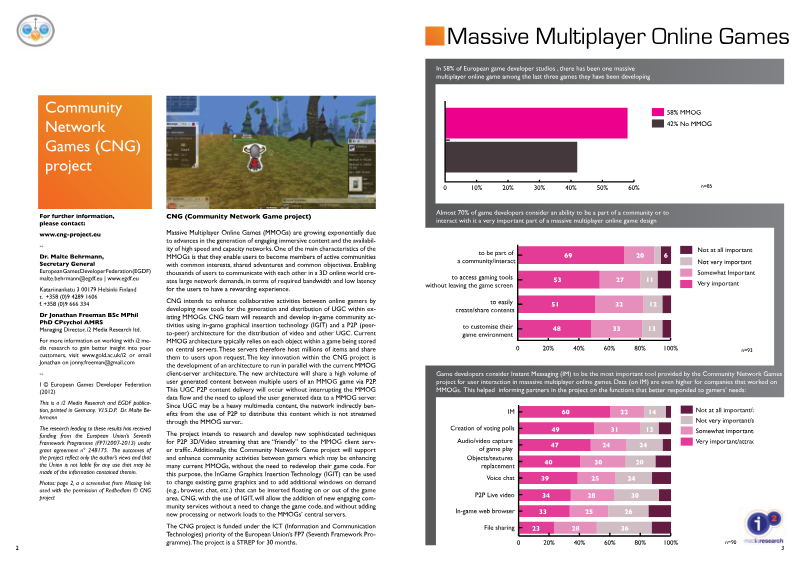
European Games Developer Federation · 2012
ReportEuropean Online Game Survey 2012
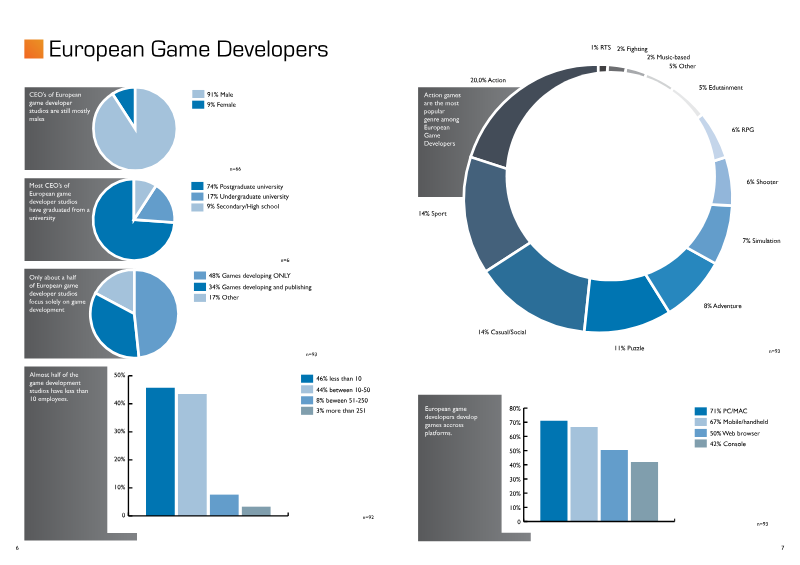
The European Online Game Survey 2012 provides a comprehensive analysis of the European game development landscape, focusing on industry trends, technical infrastructure, and gamer behavior. Conducted by the European Games Developer Federation and i2 Media Research, the study utilizes quantitative data from 93 industry members and qualitative insights from 1,154 gamers across Germany, Spain, France, Finland, Denmark, and Norway. The primary objective is to evaluate the operational realities of European studios and identify opportunities for enhancing community-driven gaming experiences. Key findings indicate that the industry is heavily invested in Massive Multiplayer Online Games (MMOGs), with 58% of surveyed studios having worked on an MMOG in their three most recent projects. Developers prioritize community interaction and user-generated content, viewing these as essential components of modern game design. To support these goals, the research highlights the development of peer-to-peer architectures and in-game graphical insertion technology, which allow for enhanced social features without requiring costly modifications to existing game code or central server infrastructure. The survey also details the technical profiles of European studios, noting that the sector is dominated by small-to-medium enterprises, with nearly half of all studios employing fewer than 10 people. Production environments are characterized by a strong preference for high-performance hardware, with a clear trend toward prioritizing processing speed over cost. Furthermore, the research segments the gaming audience into distinct categories—ranging from casual players to community-minded fanatics—to help developers optimize product development and monetization strategies. Ultimately, the findings underscore a shift toward integrated, high-performance social gaming experiences that minimize technical friction for the end user.
Dutch Games Association · 2012
Report