Skip to main content
Game Industry
Library
Ask AI
Cited answers
Search…
⌘
K
Library
Search
TL;DR
Connect your AI
PRO
Browse
Topics
Collections
Writers
Glossary highlights
Help & info
Subscribe
Game Industry
Library
Library
TL;DR
Search
Ask AI
Saved
Collections
Asia-Pacific
Asia-Pacific
Japan, China, Korea, Southeast Asia, India and Australia.
321 documents
Reports
Presentations
Whitepapers
Newest first
Oldest first
Title A–Z
Title Z–A
Koei Tecmo
Report
FY2024 Annual Data Appendix
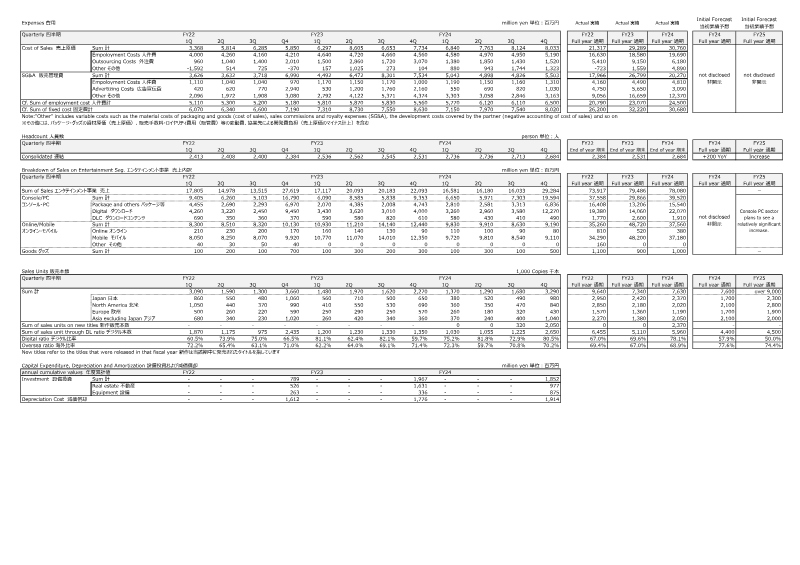
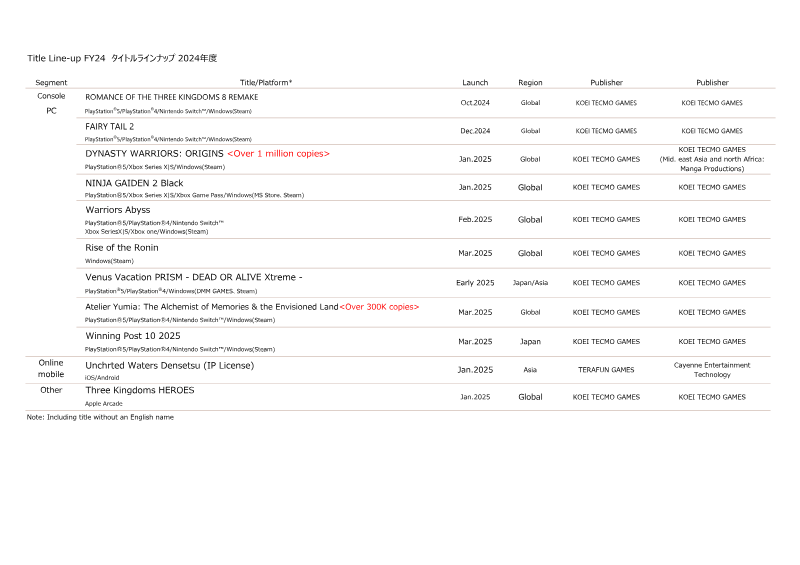
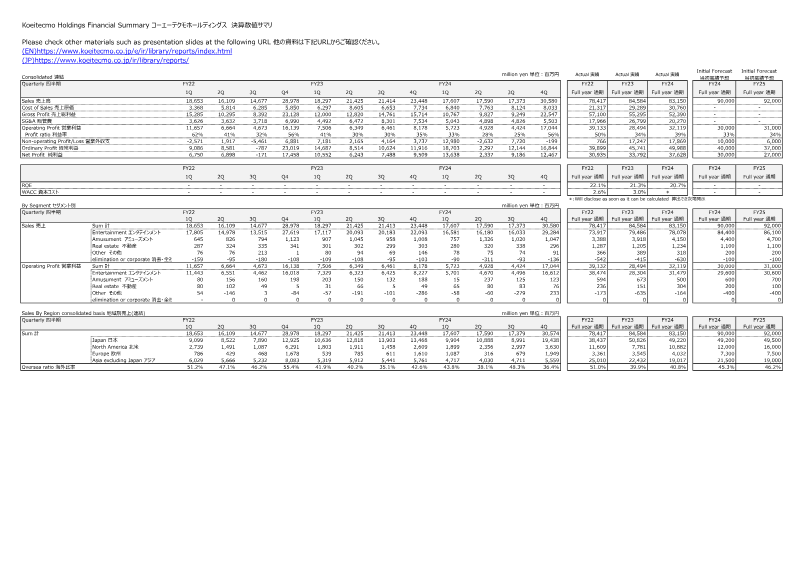
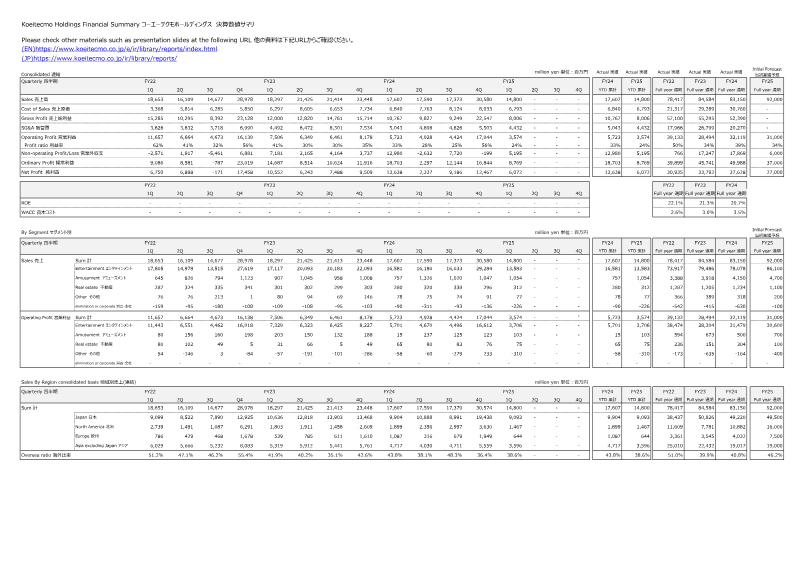
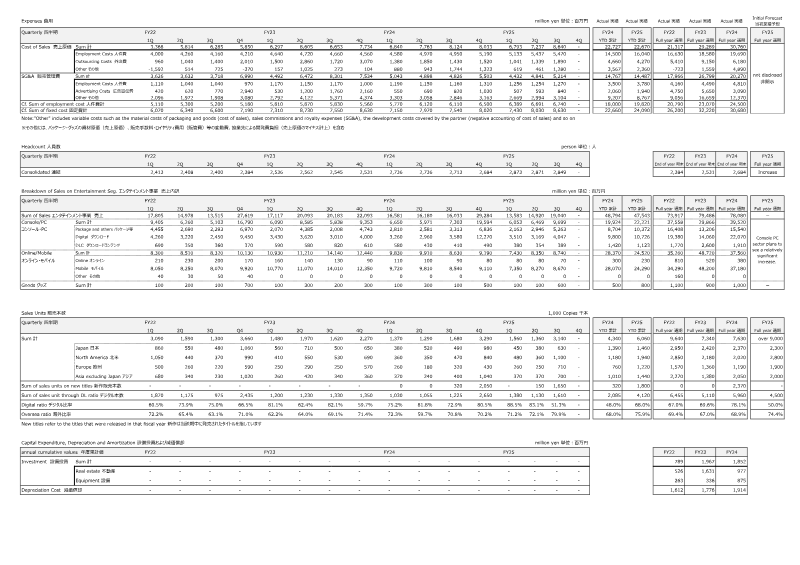
The FY2024 Annual Data Appendix presents a comprehensive financial and operational snapshot of Koei Tecmo’s performance across fiscal years 2022–2025, with detailed quarterly and full‑year figures for sales, cost of sales, gross profit, SG&A, operating profit, ordinary profit, and net profit. Sales peaked in FY22 Q4 at ¥28,978 million before declining to ¥17,590 million in FY23 Q4 and rebounding to ¥23,448 million in FY24 Q4. Gross profit margins fell from 62% in FY22 Q1 to 25% in FY24 Q4, reflecting rising cost of sales and SG&A. Operating profit followed a similar trend, with FY24 Q4 at ¥8,178 million versus ¥16,139 million in FY22 Q4. Net profit swung from ¥17,458 million in FY22 Q4 to a loss of ¥171 million in FY24 Q3, before recovering to ¥9,509 million in FY24 Q4. Return on equity rose from 20.7% in FY22 to 22.1% in FY24, while the weighted average cost of capital increased from 2.6% to 3.0%. Segment analysis shows the Entertainment division dominates revenue, contributing ¥73,917 million in FY24 and accounting for 94% of total sales. Amusement and real‑estate segments remain small, each under ¥5 billion annually. Geographic revenue distribution highlights Japan as the largest market (¥38,437 million FY24), followed by Asia excluding Japan (¥25,010 million) and North America (¥11,609 million). Overseas sales consistently exceed 40% of total revenue, peaking at 55.4% in FY24 Q4. Cost breakdowns reveal SG&A expenses rising from ¥3,626 million in FY22 Q1 to ¥8,301 million in FY24 Q3, driven largely by advertising and other variable costs. Employment costs increased modestly from ¥5,110 million to ¥6,500 million over the period. Capital expenditures remained modest, with FY24 cumulative investment at ¥1,967 million. Headcount grew from 2,413 employees in FY22 Q1 to 2,736 by FY24 Q4, a 9% YoY increase. Digital sales dominate the Entertainment segment, with digital download and DLC revenue accounting for over 60% of total entertainment sales in FY24. New title launches remain steady, with 2,370 units sold in FY24. The appendix also outlines the FY24 title line‑up, featuring high‑profile releases such as “Romance of the Three Kingdoms 8 Remake” and “Fairy Tail 2,” targeting global markets across console, PC, and mobile platforms. These releases are positioned to support the company’s strategy of expanding digital and overseas sales while maintaining strong domestic performance.
Koei Tecmo
Report
FY2025 1st Quarter Data Appendix: Koei Tecmo
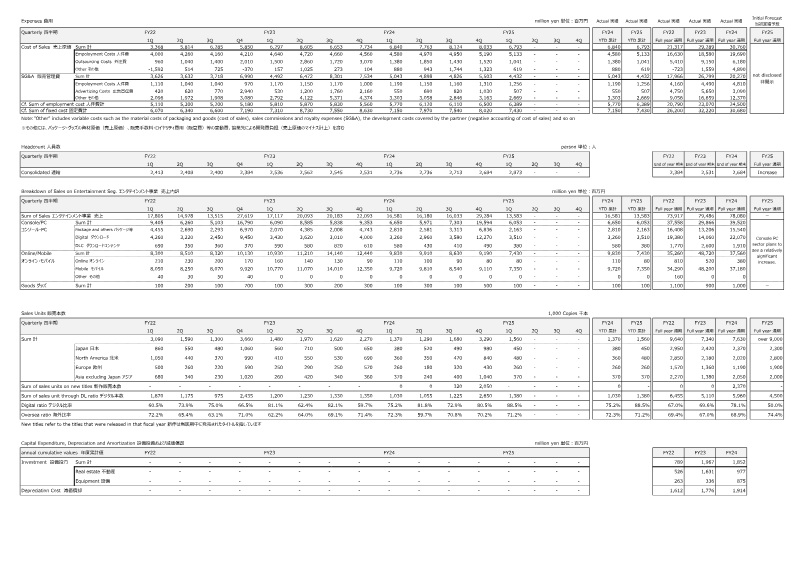
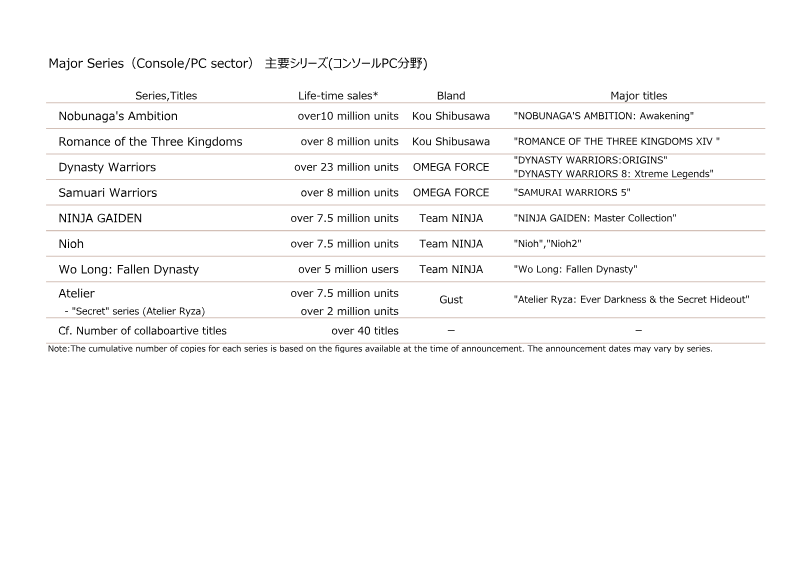
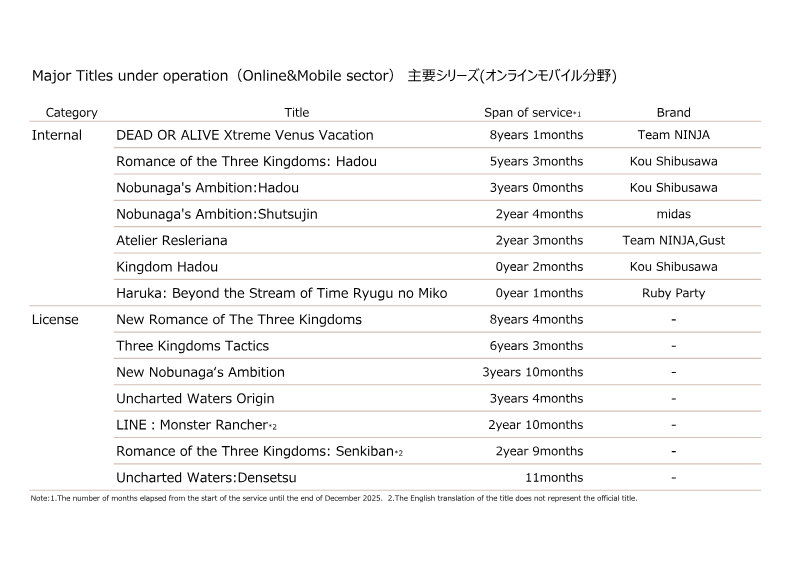
Koei Tecmo’s FY2025 first‑quarter financial appendix presents consolidated performance for the fiscal year 2024, with comparative data through FY2023 and projections to FY2025. Sales rose from ¥18.7 billion in Q1 2024 to ¥21.4 billion in Q1 2025, driven by a 20% increase in the Entertainment segment and a 30% rise in the Amusement division. Gross profit improved to ¥15.3 billion, reflecting a higher gross margin of 82% versus 78% in the prior year. Operating profit climbed to ¥11.7 billion, with SG&A costs rising modestly to ¥3.6 billion as marketing spend increased in the online and mobile sectors. Segment analysis shows Entertainment sales of ¥17.8 billion, Amusement ¥0.6 billion, Real Estate ¥0.3 billion, and Other ¥0.08 billion in Q1 2024, with Entertainment maintaining the largest share at 95%. Regional revenue distribution highlights Japan as the leading market (¥9.1 billion, 49% of total), followed by North America (¥2.7 billion) and Asia excluding Japan (¥6.0 billion). Overseas sales accounted for 51% of total revenue, up from 46% in the previous year. Capital expenditures totaled ¥789 million for FY2024, with real estate and equipment investments of ¥526 million and ¥263 million respectively. Depreciation expense reached ¥1.6 billion, consistent with prior periods. The appendix also details major series performance, noting that “Dynasty Warriors” and “Nobunaga’s Ambition” collectively exceed 30 million units sold, while online/mobile titles such as “DEAD OR ALIVE Xtreme Venus Vacation” and “Romance of the Three Kingdoms: Hadou” have sustained multi‑year service periods. Overall, Koei Tecmo demonstrates steady growth across core entertainment offerings, with strategic emphasis on digital and mobile platforms to sustain revenue momentum.
Koei Tecmo
Report
Financial Highlights: 2nd Quarter FY2025
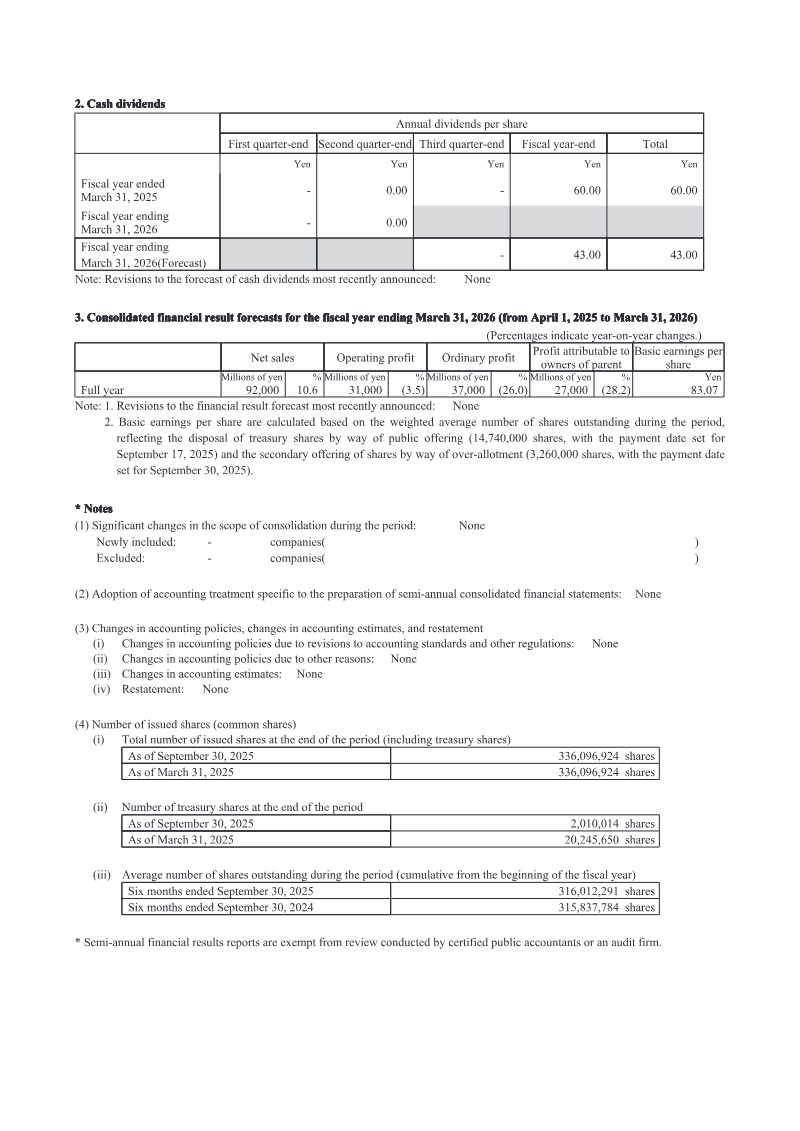
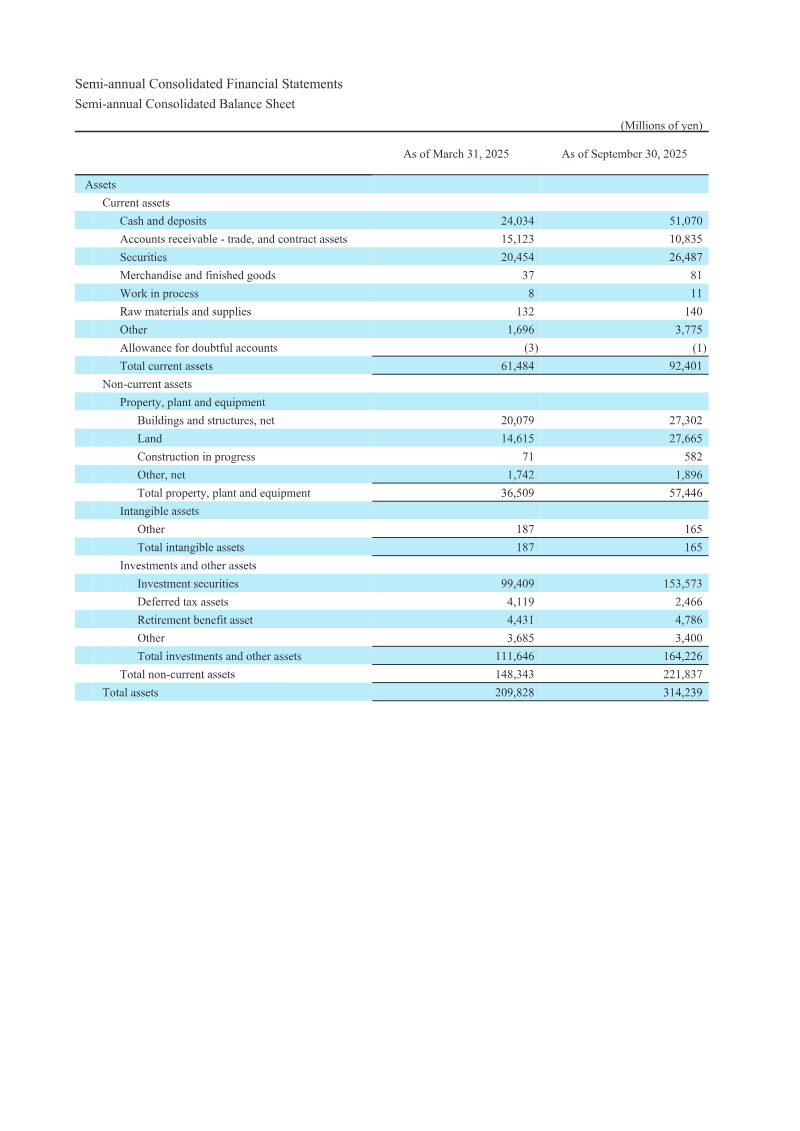
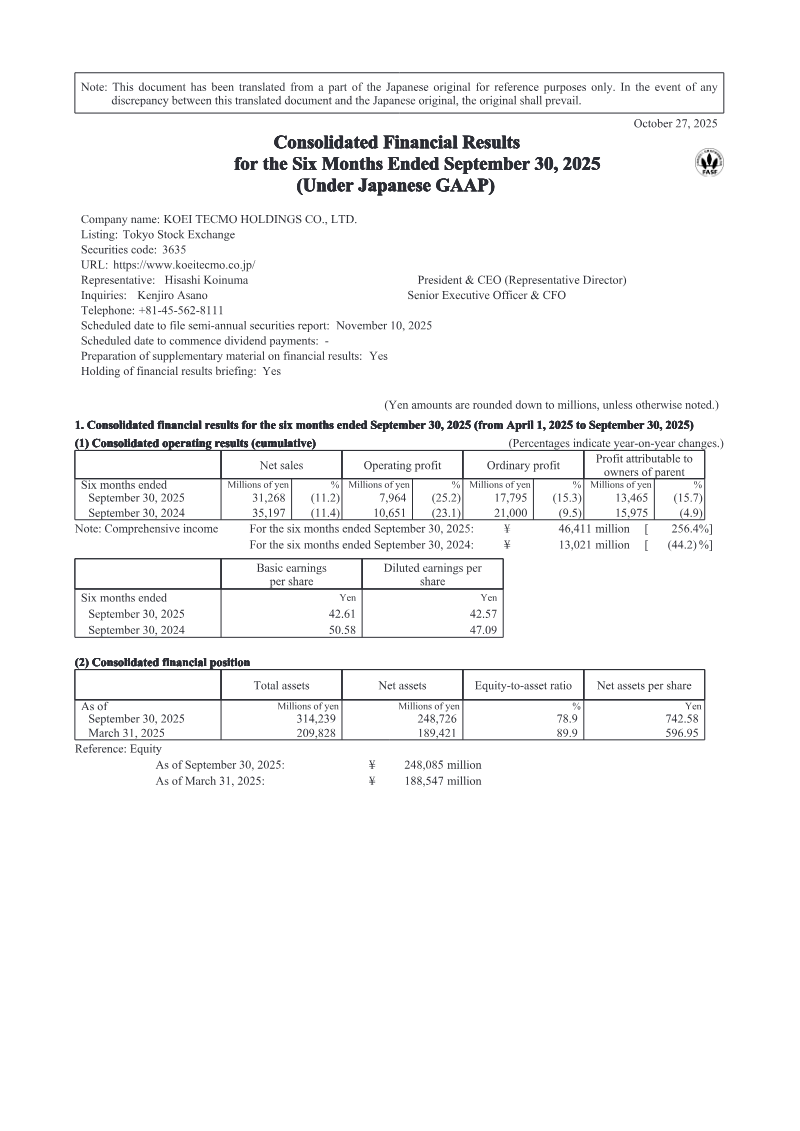
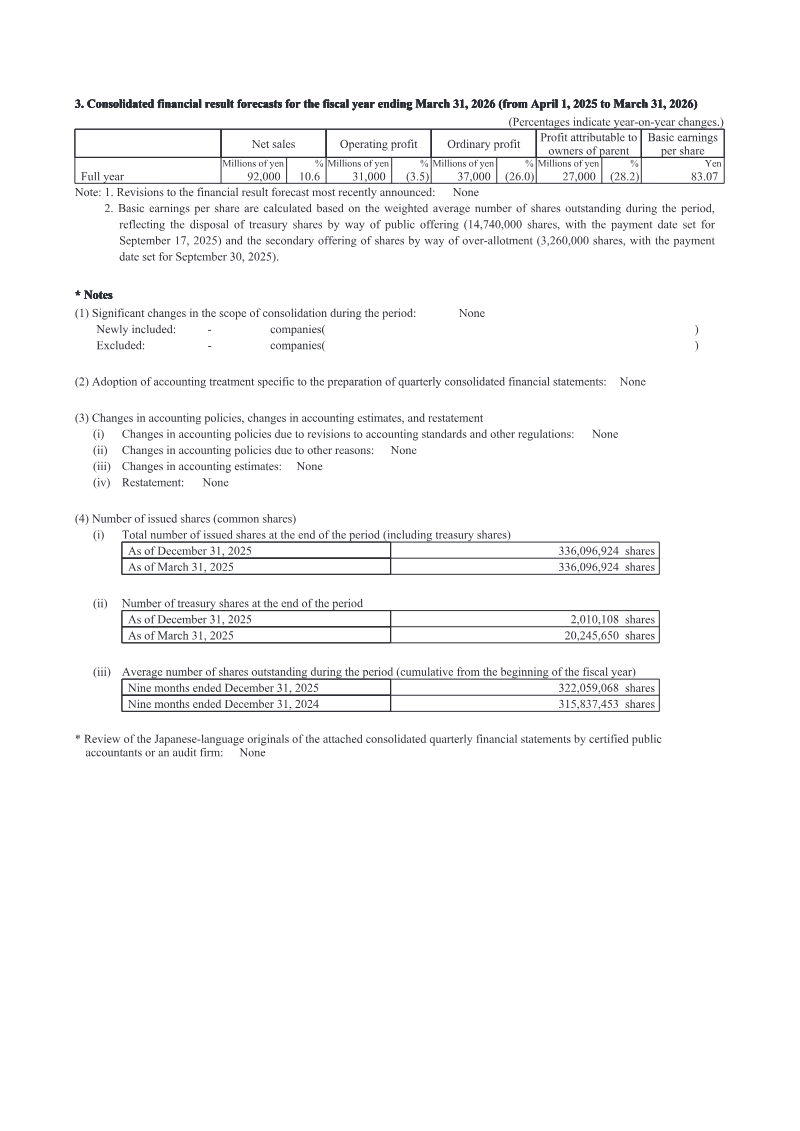
The financial highlights cover the first half of fiscal year 2025 for Koei Tecmo Holdings, a Tokyo‑listed video game and entertainment company. The six‑month period ending September 30 shows net sales of ¥31,268 million, down 11.2% YoY, while operating profit fell 25.2% to ¥7,964 million and ordinary profit declined 15.3% to ¥17,795 million. Comprehensive income surged 256.4%, driven largely by gains on investment securities and derivatives, reaching ¥46,411 million versus a 44.2% loss of ¥13,021 million in the prior year’s half. Profitability metrics reveal a decline in gross margin from ¥20,593 million to ¥17,238 million and operating margin from 30.6% to 25.4%. Net income attributable to the parent fell 15.7% to ¥13,465 million, with basic earnings per share decreasing from ¥50.58 to ¥42.61. Total assets increased 49% to ¥314,239 million, largely due to a rise in investment securities and cash balances. Net assets grew 31% to ¥248,726 million, with the equity‑to‑asset ratio improving from 89.9% to 78.9%. The report notes no significant consolidation changes, accounting policy shifts, or restatements. Treasury shares were reduced from 20.25 million to 2.01 million during the period, reflecting a public offering and secondary issuance. Dividend policy remains unchanged, with no cash dividends declared for the first half of FY 2025. The company’s financial position is strengthened by higher liquidity and a solid equity base, but operating performance has weakened relative to the previous year.
Koei Tecmo
Report
FY2025 Third Quarter Financial Highlights: Japan
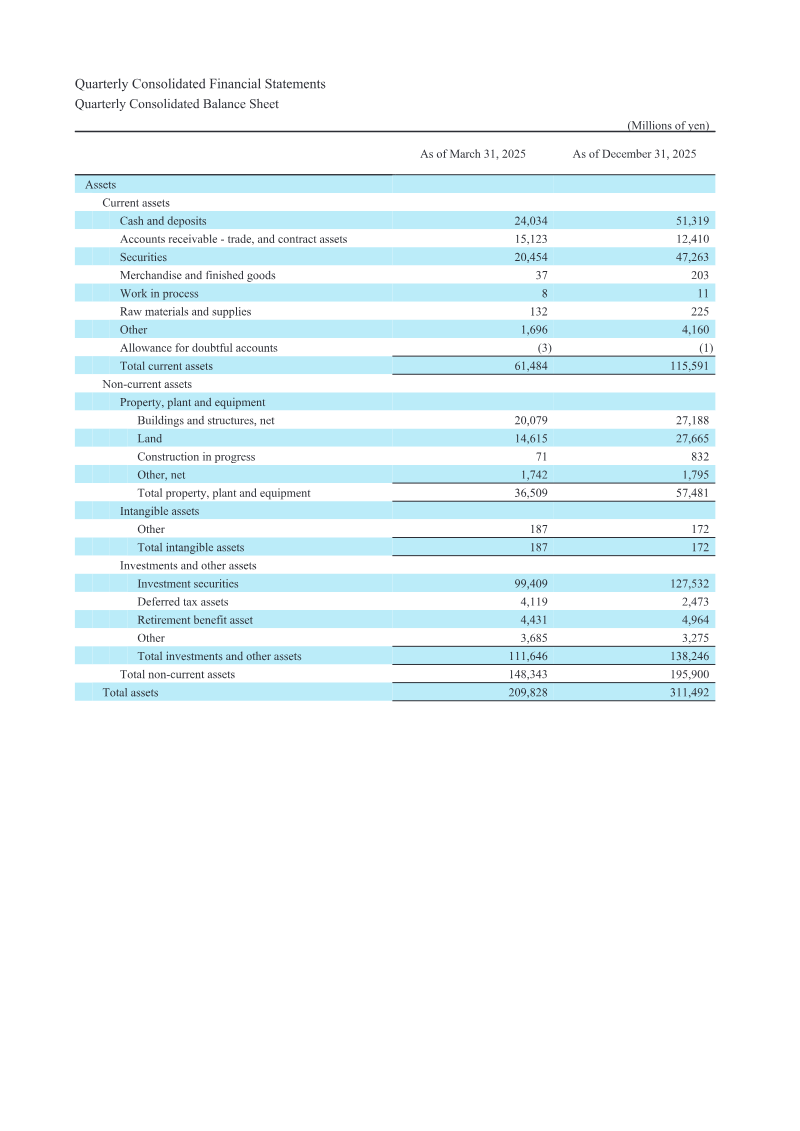
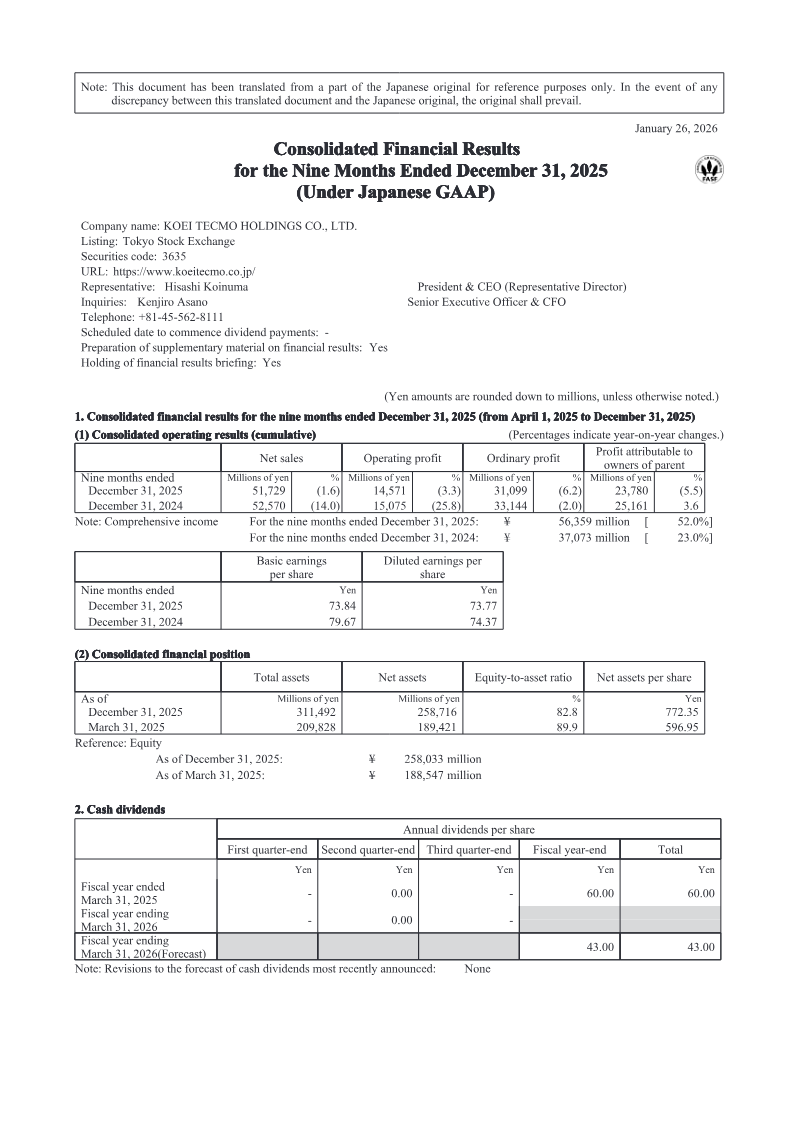
The FY2025 third‑quarter financial highlights for Koei Tecmo Holdings detail a modest decline in core operating metrics while comprehensive income rises sharply. Net sales for the nine months ended December 31, 2025 fell 1.6% to ¥51,729 million from ¥52,570 million in the prior year. Operating profit slipped 3.3% to ¥14,571 million, and ordinary profit decreased 6.2% to ¥31,099 million. Despite these contractions, comprehensive income surged 52.0% year‑on‑year to ¥56,359 million, driven by significant gains in non‑operating items such as interest income and foreign exchange gains. Basic earnings per share declined slightly to ¥73.84 from ¥79.67, reflecting a higher weighted‑average share count due to treasury share disposals and secondary offerings. Total assets expanded from ¥209,828 million at March 31, 2025 to ¥311,492 million by December 31, 2025, largely through increases in investment securities and property, plant, and equipment. Net assets rose to ¥258,716 million, with the equity‑to‑asset ratio improving to 82.8% from 89.9%. Treasury shares reduced dramatically, lowering the average number of outstanding shares to 322 million from 315 million. Dividend policy remains unchanged, with a forecast of ¥43.00 per share for the fiscal year ending March 31, 2026, and no revisions to cash dividend forecasts. The report covers Japan‑based operations for FY 2025, presenting consolidated quarterly financial statements without significant changes in consolidation scope or accounting policies.
Koei Tecmo
Report
Consolidated Financial Data: FY2025 3rd Quarter
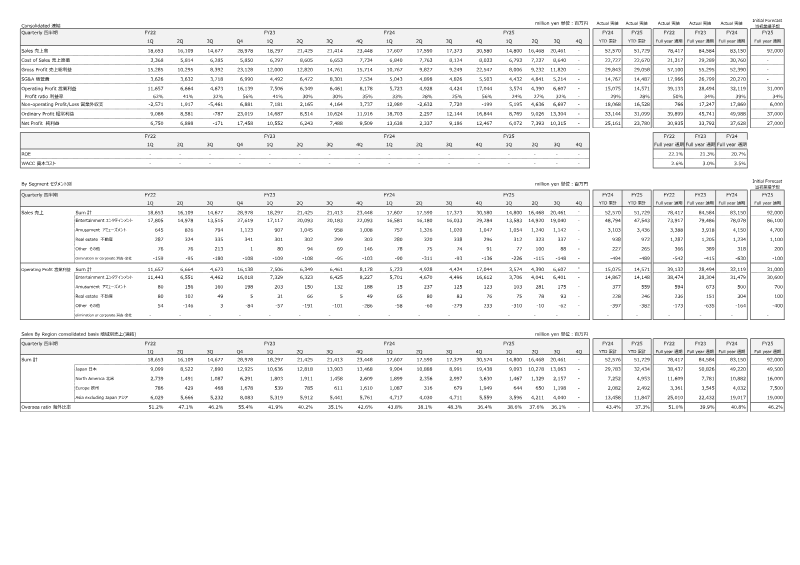
The consolidated financial data for FY2025 third quarter presents a mixed performance across the company’s core segments. Total sales reached ¥30,580 million in Q3 FY25, a 5.4% increase from the same period in FY24 but still below the ¥28,978 million recorded in Q3 FY22. Gross profit improved to ¥22,547 million, up 0.6% YoY, while operating profit fell to ¥17,044 million, a 15.5% decline driven by higher SG&A and cost of sales in the entertainment segment. Net profit for Q3 FY25 stood at ¥12,467 million, a 6.4% YoY increase, supported by a positive non‑operating profit of ¥3,737 million. Profitability ratios show operating margin at 56% and ROE rising to 22.1%, reflecting efficient capital use. Geographically, Japan remains the largest market with ¥19,438 million in Q3 FY25, followed by North America at ¥3,630 million and Europe at ¥1,949 million. Overseas sales accounted for 51.0% of total revenue in FY25, up from 46.2% in FY24, indicating a strategic shift toward international expansion. The entertainment segment dominated sales at ¥29,284 million (95% of total), with console/PC and online/mobile channels contributing 60.5% and 71.2% of digital sales respectively. Headcount increased from 2,384 to 2,531 employees by year‑end FY25, a 6.7% rise aligned with new product launches and expanded online services. Capital expenditures for FY25 totaled ¥1,967 million, primarily in real estate and equipment, while depreciation expenses reached ¥1,776 million. The data suggest a focus on sustaining growth through digital monetization and overseas market penetration, while managing cost pressures in traditional entertainment operations.
GREE
Report
Summary of Q&A: FY2016 4Q GREE Results Briefing
The briefing clarified GREE’s financial and strategic outlook for FY2016–FY2017. One‑off costs in Q4 were broken into advertising, rental and goodwill amortization, with rental increases reflecting upfront investments aimed at future cost reductions. These expenses are not expected to recur. Operating margin for Q1 FY2017 is projected to be slightly below normal due to continued upfront spending, particularly in game operations and North America; a return above 20% is contingent on new title releases. GREE plans to launch eight native games in FY2017, with a quarter‑backed schedule of one‑quarter releases for roughly two titles, though co‑development timelines remain fluid. Confidence in the release blitz has improved as development pipelines mature and release dates are refined based on competitive market conditions. Strategically, each studio is positioned to leverage core strengths: Wright Flyer focuses on action RPGs and IP integration, while Pokelabo targets GvG titles built on card‑battle expertise. Hit titles are defined by top‑ten App Store rankings in the games category. Financially, GREE aims to use its strengthened capital base to sustain long‑term game development and pursue selective M&A or IP acquisitions, exemplified by the 4Q acquisition of ad‑media firm ADFULLY. The scope covers domestic Japanese markets, with implications for North American expansion, and the time frame spans FY2016 Q4 through FY2017. The briefing relied on internal financial statements and strategic planning documents to outline cost structures, margin expectations, product pipelines, studio focus areas, success metrics, and capital deployment strategies.
GREE
Report
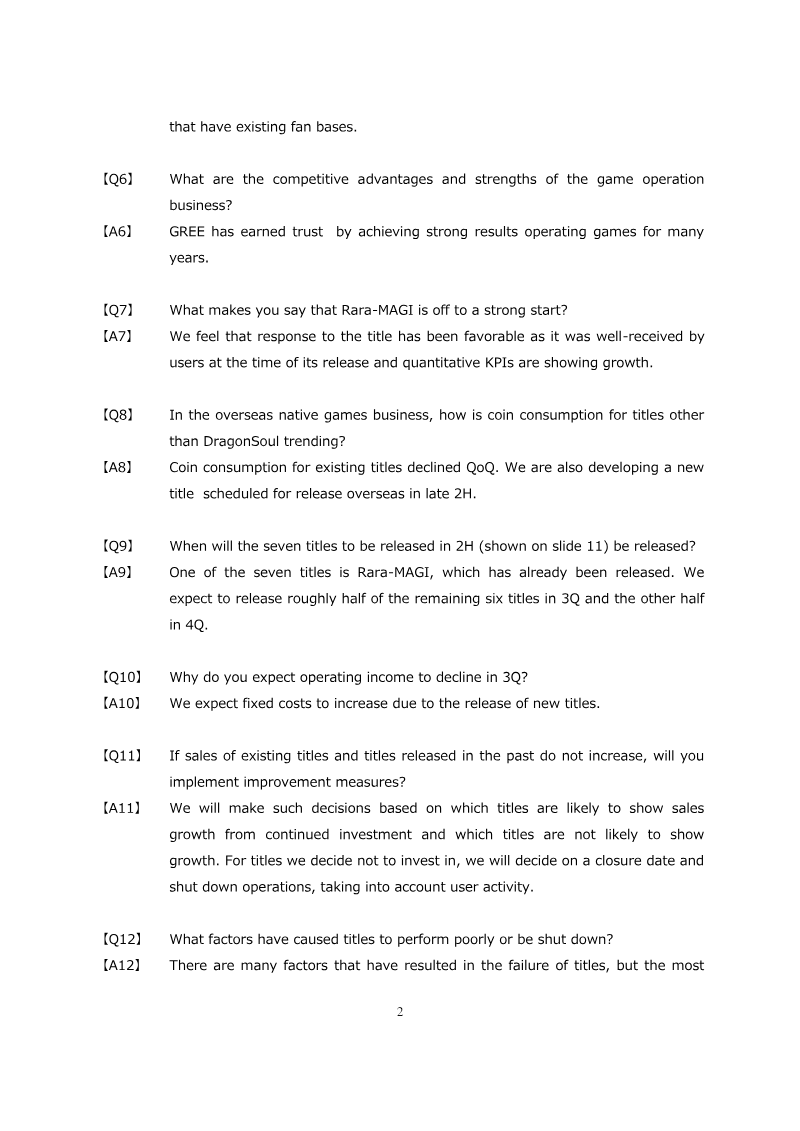
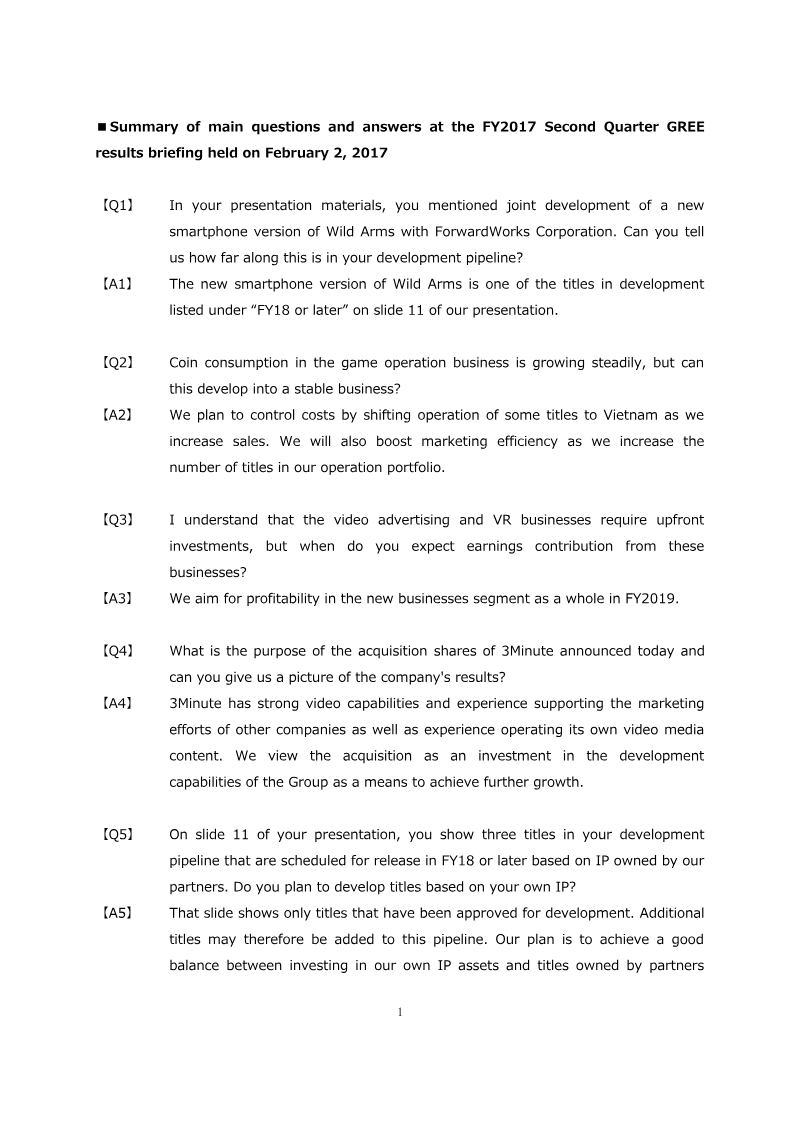
Summary of Questions and Answers: FY2017 2Q GREE Results Briefing
The briefing clarified GREE’s strategic focus for FY2017 and beyond. The company confirmed that a smartphone adaptation of Wild Arms, developed with ForwardWorks Corporation, remains in the FY18‑later pipeline. To stabilize coin‑consumption revenue from its game operation segment, GREE plans to shift operations of select titles to Vietnam and enhance marketing efficiency as its portfolio expands. New ventures in video advertising and virtual reality are expected to reach profitability by FY2019, while the acquisition of 3Minute is positioned as an investment in video‑content capabilities to support broader growth. Regarding intellectual property, GREE indicated that its development pipeline includes both partner‑owned IP and its own assets, aiming for a balanced mix. The company highlighted Rara‑MAGI’s strong launch performance and noted that coin consumption for other overseas native titles has declined quarter‑over‑quarter, though a new title is slated for late second half release. Seven titles scheduled for the latter half of the year will see roughly half released in Q3 and the remainder in Q4, with Rara‑MAGI already live. Operating income is projected to dip in Q3 due to increased fixed costs from new releases. GREE will evaluate ongoing titles, closing those unlikely to grow while reallocating resources to high‑potential games. Poor performance is attributed mainly to insufficient content depth or breadth at launch, and lessons learned will inform future development.
GREE
Report
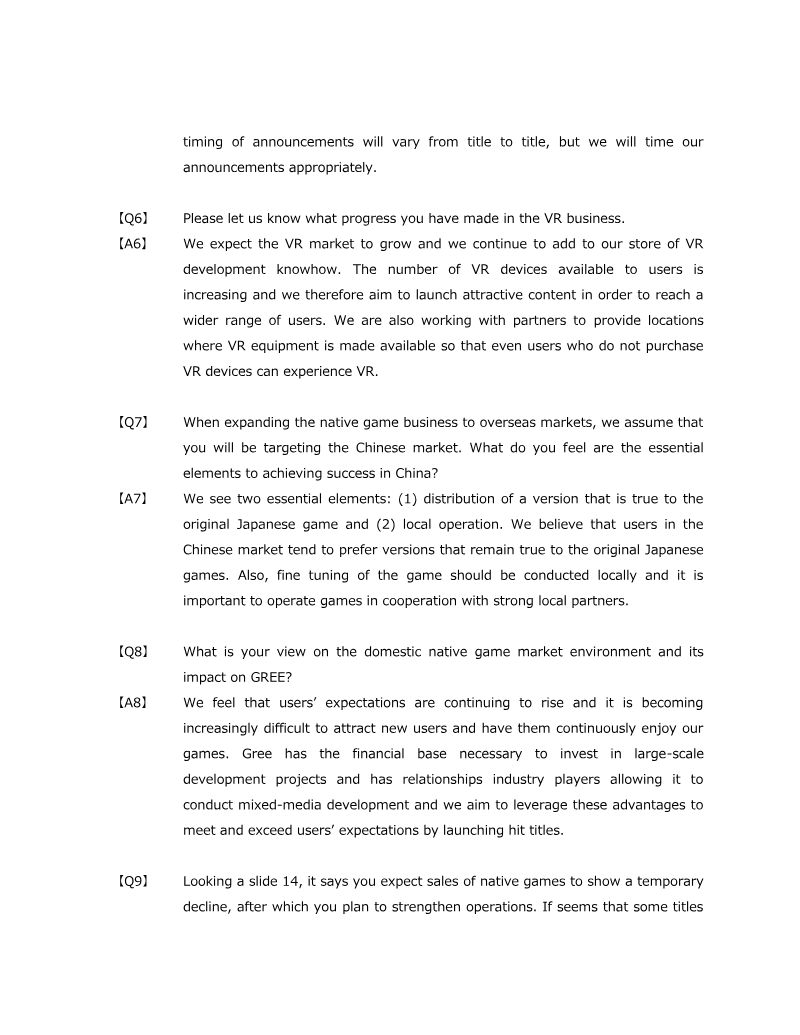
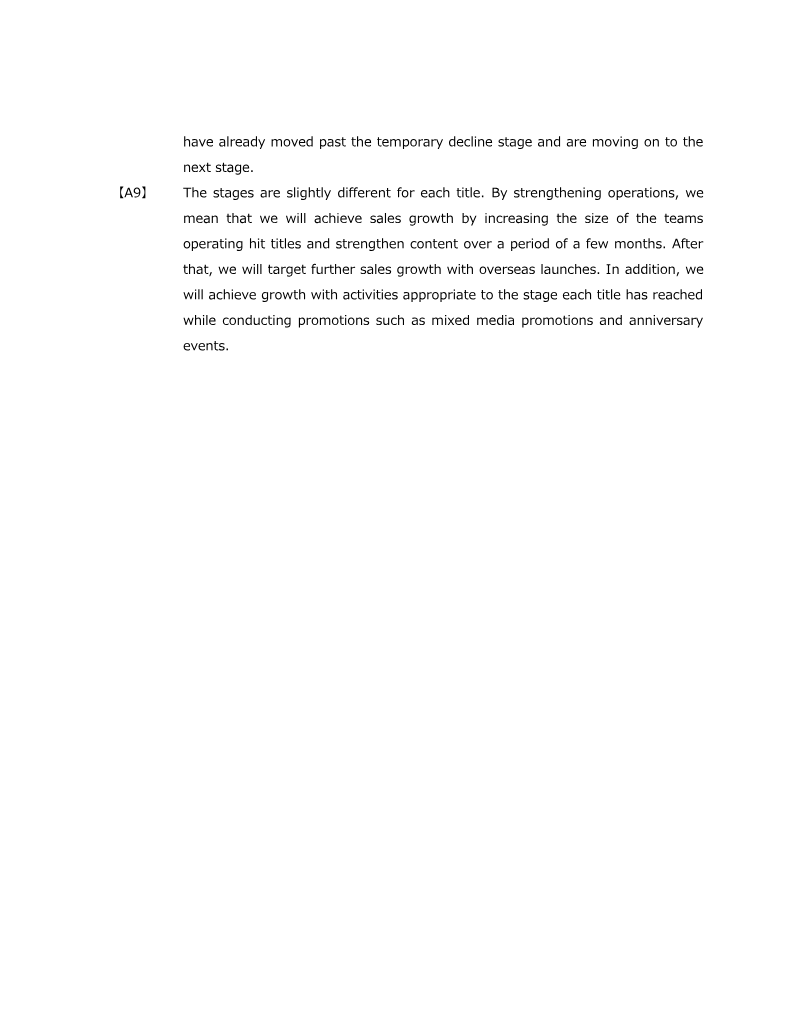
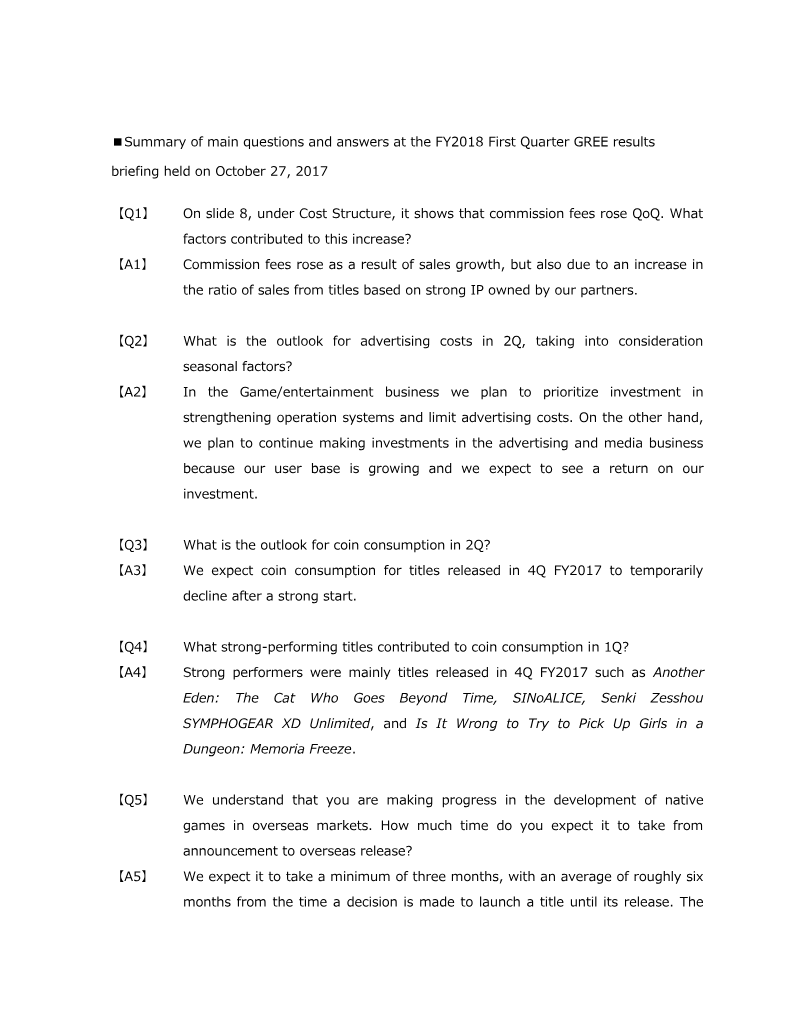
Summary of Main Questions and Answers at the FY2018 First Quarter GREE Results Briefing
The briefing, held on October 27 2017, focused on GREE’s first‑quarter FY2018 performance and future strategy. Commission fees rose quarter‑on‑quarter, driven by overall sales growth and a higher proportion of revenue from partner titles with strong intellectual property. Advertising spend outlook for the second quarter varies by segment: the game and entertainment arm will tighten costs while continuing to invest in advertising for its expanding user base, expecting a return on investment. Coin consumption is projected to dip temporarily after the strong start of Q4 FY2017 releases, yet titles such as Another Eden: The Cat Who Goes Beyond Time, SINoALICE, Senki Zesshou SYMPHOGEAR XD Unlimited, and Is It Wrong to Try to Pick Up Girls in a Dungeon: Memoria Freeze drove robust coin usage in Q1. GREE’s overseas native‑game development pipeline is expected to take a minimum of three months from announcement to launch, averaging six months. The company emphasizes delivering versions faithful to the original Japanese product and local operation for success in China, noting that Chinese users prefer authenticity and require localized fine‑tuning with strong local partners. In the VR arena, GREE is expanding its development knowledge base and partnering to provide access points for users lacking personal VR hardware, anticipating market growth. Regarding the domestic native‑game environment, GREE acknowledges rising user expectations and a challenging acquisition landscape. Leveraging its financial strength and industry relationships, the company plans large‑scale development and mixed‑media initiatives to deliver hit titles. Sales of native games are expected to experience a temporary decline before operations are strengthened—through larger support teams, content enhancement, overseas launches, and tailored promotional activities—to drive subsequent growth.
GREE
Report
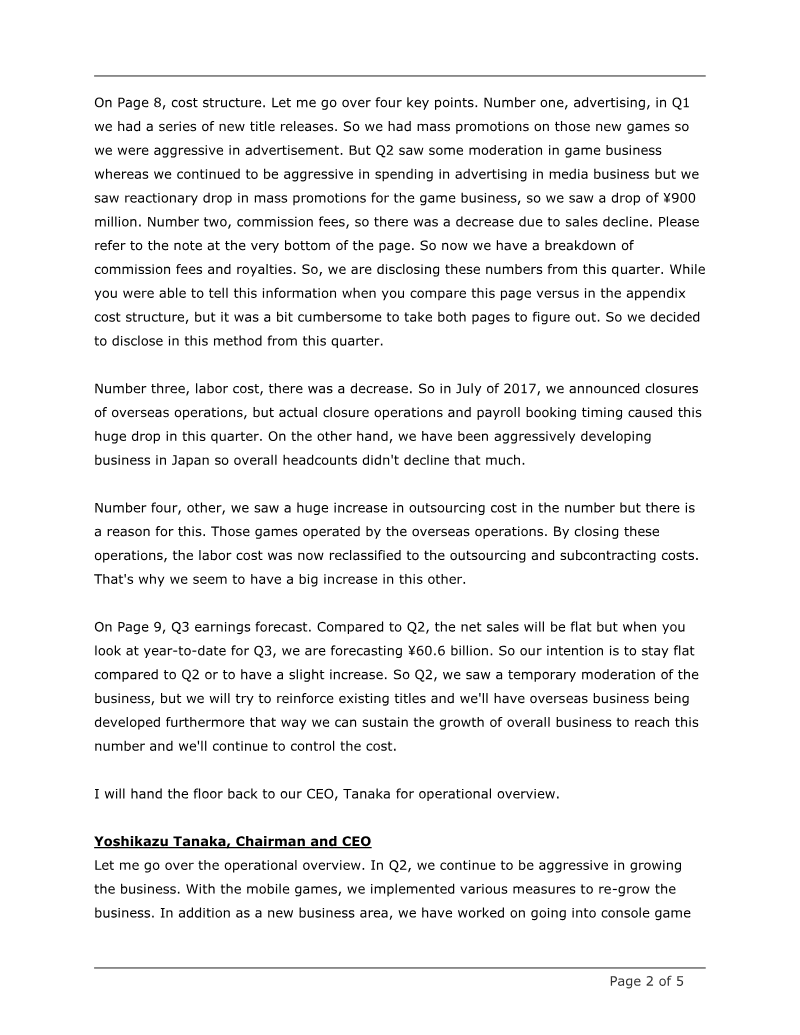
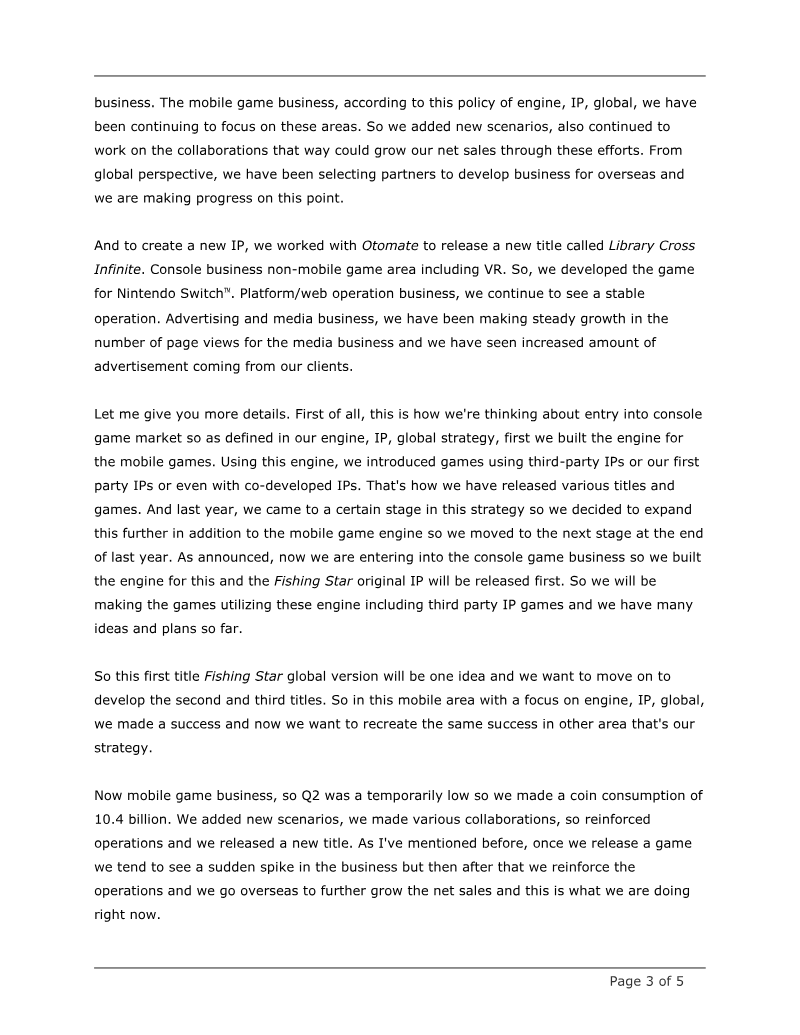
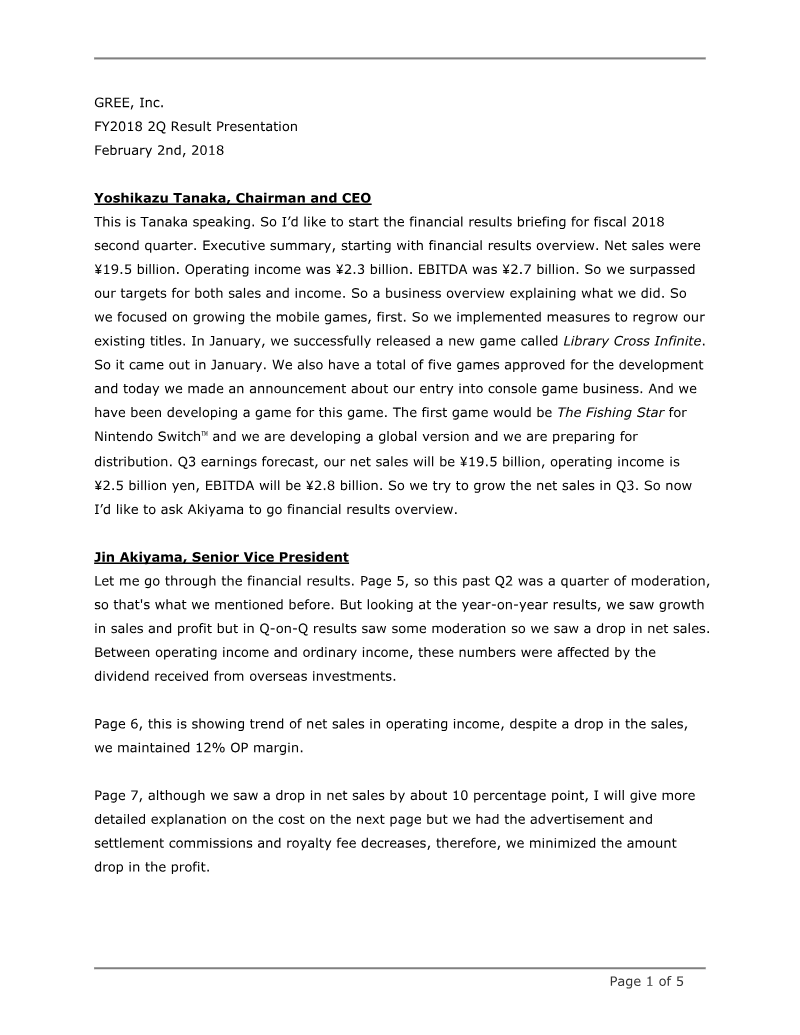
FY2018 2Q Result Presentation
GREE, Inc. reported FY2018 second‑quarter results on February 2, 2018, with net sales of ¥19.5 billion and operating income of ¥2.3 billion, exceeding targets for both metrics. EBITDA reached ¥2.7 billion. Year‑on‑year growth was achieved, though quarter‑over‑quarter sales moderated by roughly 10 percentage points; operating margin remained at 12 %. The company attributed the sales dip to reduced advertising spend and lower commission fees, while cost controls on labor and outsourcing mitigated profit erosion. A strategic shift toward console gaming was announced, with the first title “The Fishing Star” slated for Nintendo Switch and a global release in development. Mobile game performance was bolstered by the launch of “Library Cross Infinite” and ongoing content updates for titles such as Another Eden, Danmachi, SINoALICE, SYMPHOGEAR, and Puchiguru Love Live. Five new mobile titles are approved for development, with three slated for release this fiscal year. The FY2018 Q3 forecast projects flat net sales at ¥19.5 billion and operating income of ¥2.5 billion, aiming for a year‑to‑date total of ¥60.6 billion. GREE plans to sustain growth through aggressive title reinforcement, overseas expansion, and cost discipline across mobile, console, VR, advertising, and media segments. The presentation covered financial performance, cost structure adjustments following overseas operation closures, and a pipeline of upcoming releases across multiple platforms.
GREE
Report
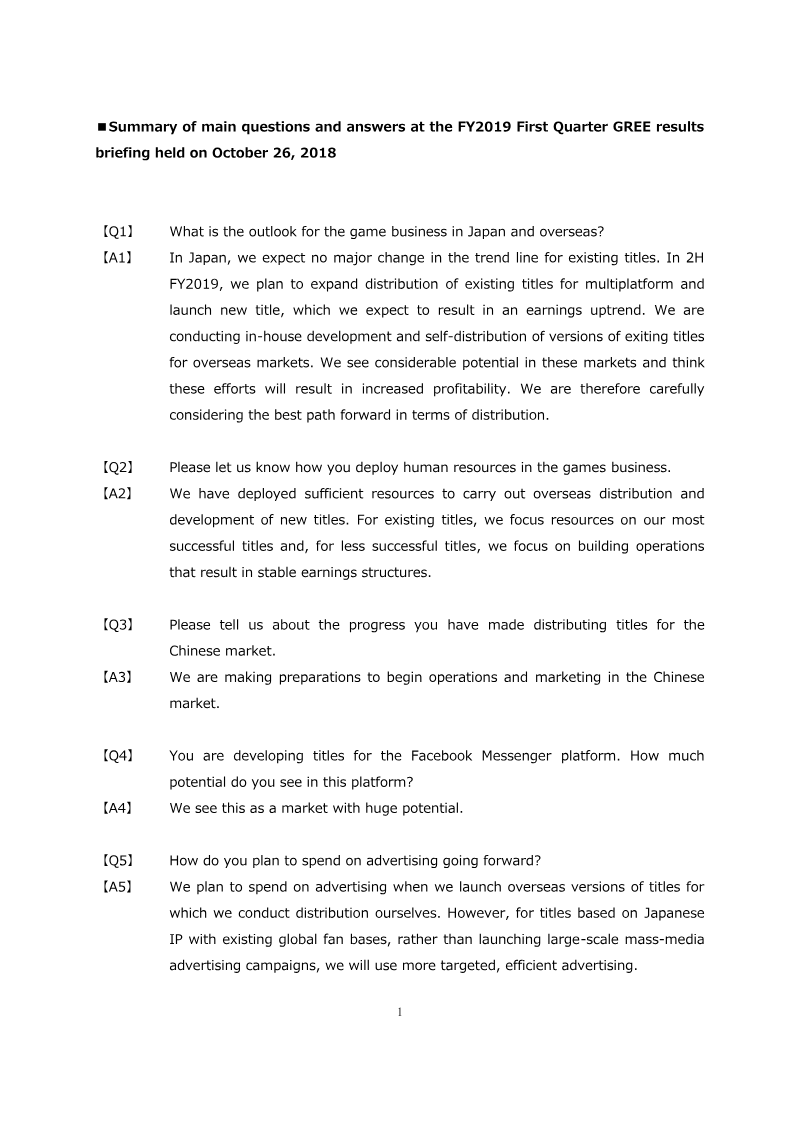
Summary of main questions and answers at the FY2019 First Quarter GREE results briefing held on October 26, 2018
The briefing clarified GREE’s strategic outlook for FY2019, emphasizing a steady domestic game portfolio while pursuing growth overseas. In Japan, the company expects no major shift in performance for existing titles but plans to broaden multiplatform distribution and launch new releases in the second half of FY2019, projecting an earnings uptrend. Internationally, GREE is developing and self‑distributing overseas versions of current titles, targeting markets with high profitability potential. Human resource allocation reflects this focus: sufficient staff are dedicated to overseas distribution and new title development, while existing titles receive concentrated support for top performers and operational stability for less successful ones. China is identified as a priority market, with preparations underway to initiate operations and marketing. The company also highlights the Facebook Messenger platform as a high‑potential channel for new titles, indicating an expansion into social media gaming. Advertising strategy will be selective; overseas launches of self‑distributed titles will receive targeted, efficient campaigns rather than broad mass media spend. Regulatory compliance and consumer protection are addressed through company‑wide measures to prevent gacha system issues, including strengthened evaluation protocols and employee training. The REALITY livestreaming platform for VTubers is in an exploratory phase, with ongoing data collection on technology, planning, and marketing to build know‑how for future content expansion. Overall, GREE’s FY2019 strategy balances domestic stability with aggressive international diversification and platform innovation.
GREE
Report
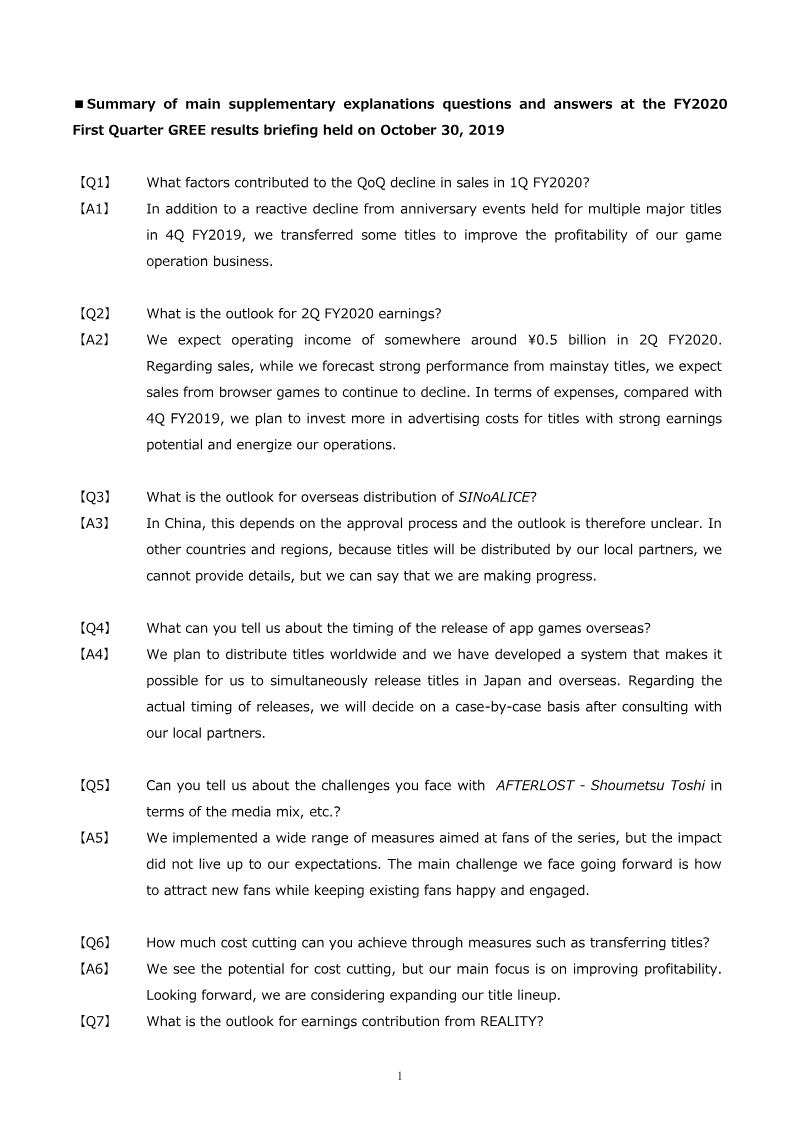
Summary of main supplementary explanations questions and answers at the FY2020 First Quarter GREE results briefing held on October 30, 2019
The briefing addressed key financial and operational questions for GREE’s first quarter of FY2020. A decline in sales was attributed to a reactive drop following anniversary events for major titles in the previous quarter and strategic title transfers aimed at improving profitability. Management projected operating income of roughly ¥0.5 billion for the second quarter, with strong expectations for core titles but a continued decline in browser game revenue; advertising spend was to increase on high‑potential games. Overseas distribution of SINoALICE remains uncertain in China due to regulatory approval, while other regions rely on local partners and progress is ongoing. Global release strategy now allows simultaneous launches in Japan and abroad, with timing set on a case‑by‑case basis after partner consultation. Challenges for AFTERLOST – Shoumetsu Toshi include attracting new fans while retaining existing ones, despite extensive fan‑targeted measures. Cost‑cutting through title transfers is viewed as a means to improve profitability, with plans to broaden the title lineup. Earnings contribution from REALITY depends on internal factors such as lifetime value enhancement and external 5G infrastructure development; the focus is on steady content portfolio expansion and platform functionality rather than rapid growth before full infrastructure deployment.
GREE
Report
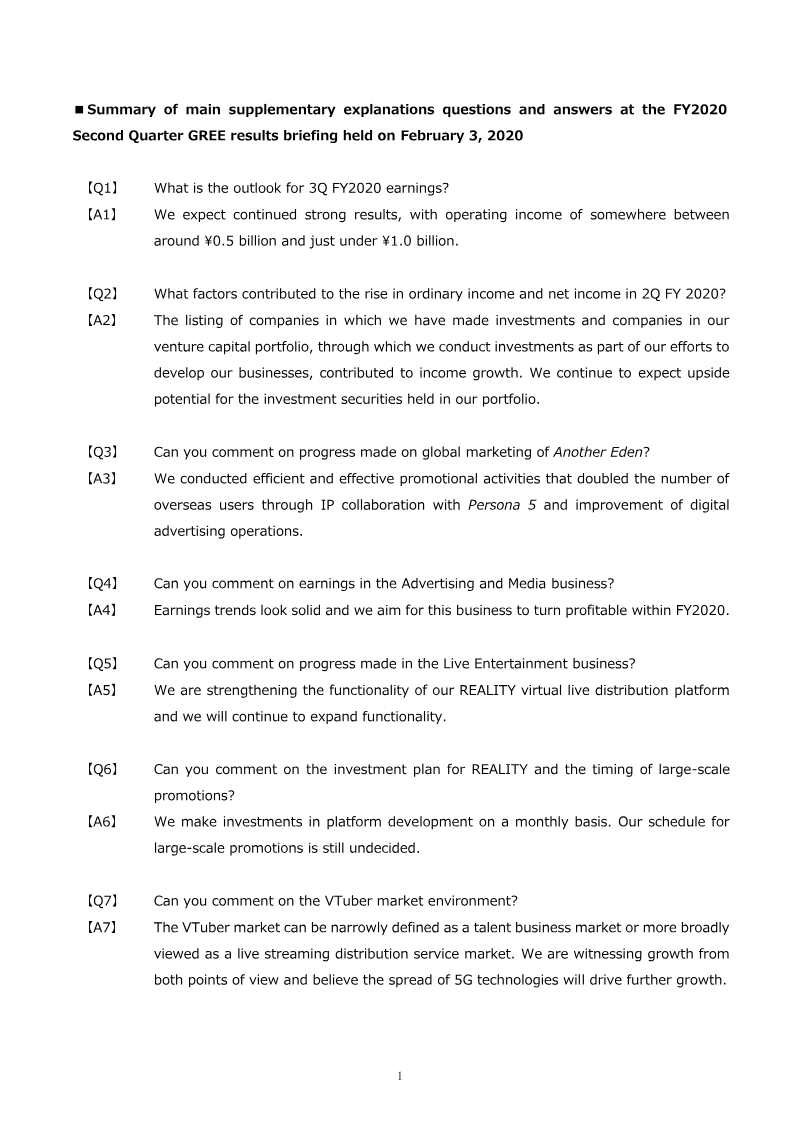
Summary of main supplementary explanations questions and answers at the FY 2020 Second Quarter GREE results briefing held on February 3, 2020
The briefing focused on GREE’s financial outlook, investment performance, and strategic initiatives across its entertainment and advertising segments. Management projected operating income for the third quarter of FY2020 to range between ¥0.5 billion and just under ¥1.0 billion, reflecting confidence in continued strong results. The rise in ordinary and net income during the second quarter was attributed to gains from listed companies and venture‑capital investments, with expectations of further upside in portfolio securities. Marketing efforts for the game “Another Eden” were highlighted, noting a doubling of overseas users through an IP collaboration with Persona 5 and enhanced digital advertising operations. In the Advertising and Media business, earnings trends were described as solid, with a target of achieving profitability within FY2020. The Live Entertainment division emphasized ongoing enhancements to the REALITY virtual live‑distribution platform, with monthly investments in development and an undecided schedule for large‑scale promotions. Regarding the broader VTuber market, management characterized it as both a talent‑based business and a live‑streaming distribution service, observing growth from both angles. The anticipated impact of 5G technology was cited as a catalyst for further expansion in the sector. Overall, the briefing underscored GREE’s focus on diversified revenue streams, strategic investment in emerging platforms, and a proactive marketing approach to sustain growth across its core business segments.
Previous
1
…
9
10
11
…
27
Next